REVIEW · TROGIR
Trogir 1.5-Hour City Tour
Book on GetYourGuide →Operated by www.south-tours.com · Bookable on GetYourGuide
Trogir feels like a film set of stone. In just 90 minutes, this walk threads through the UNESCO old town on a small island between the mainland and Čiovo. You’ll move at a relaxed pace, squeezing in views, courtyards, and the kind of narrow lanes that make history feel close.
I love two things most: the chance to stand right at the Romanesque portal of the Cathedral of St. Lawrence (St. Lovro), and the way your guide uses stories of Venetian rule and historic battles to connect the buildings. It’s not only pretty facades. It’s a guided walk that tries to make the stone feel human.
One thing to consider: it’s a short circuit, so it can feel like a set of big moments more than one tightly connected narrative. Also, entrance fees are not included, so inside stops may cost extra if you want to go in.
In This Review
- Key highlights worth your attention
- The UNESCO island vibe: what this 1.5-hour Trogir walk is really for
- St. Lawrence Cathedral and Radovan’s portal: the moment your camera will actually earn its keep
- Starting with defenses: St. Mark’s Fortress and Glorijet maršala Marmonta
- Kamerlengo Castle: the point where fortifications start to feel like a map
- Church of St. Dominic and the Benedictine Monastery of St. Nicholas: religious architecture you can actually spot
- City Loggia, the Chapel of St. Sebastian, and Knežev dvor: where civic power meets everyday religion
- Cathedral finish and the Romanesque portal payoff: why St. Lawrence is placed near the end
- Trogir North Gate: ending where the city boundary becomes a story
- Price and what you actually get for $47
- Guide quality: earnest storytelling makes the walk feel personal
- Who should book this Trogir walking tour
- Should you book this 90-minute Trogir city tour?
- FAQ
- FAQ
- How long is the Trogir city tour?
- Where does the tour start?
- What is the price per person?
- Is the tour guided in English?
- Are entrance fees included?
- Are transfers included?
- Can I get a full refund if I cancel?
Key highlights worth your attention
- UNESCO old-town focus in 90 minutes with a relaxed route through a compact medieval core
- St. Lawrence Cathedral and Radovan’s portal as the main architectural payoff
- Defensive-to-civic building sequence (fortress, castle, loggia, palace) that explains how the city was shaped
- Stories mixed into each stop: battles, mysterious characters, and Venetian-era influence
- English live guide who sets the tone and helps you notice details you’d miss alone
- Good value if you like guided “orientation” more than deep, ticket-heavy sightseeing
The UNESCO island vibe: what this 1.5-hour Trogir walk is really for
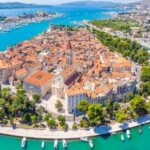
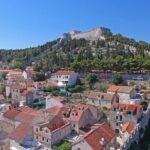
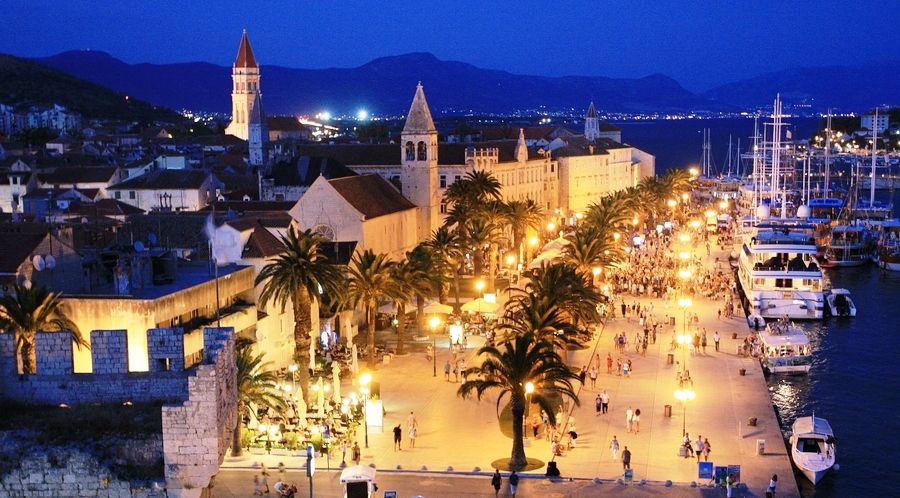
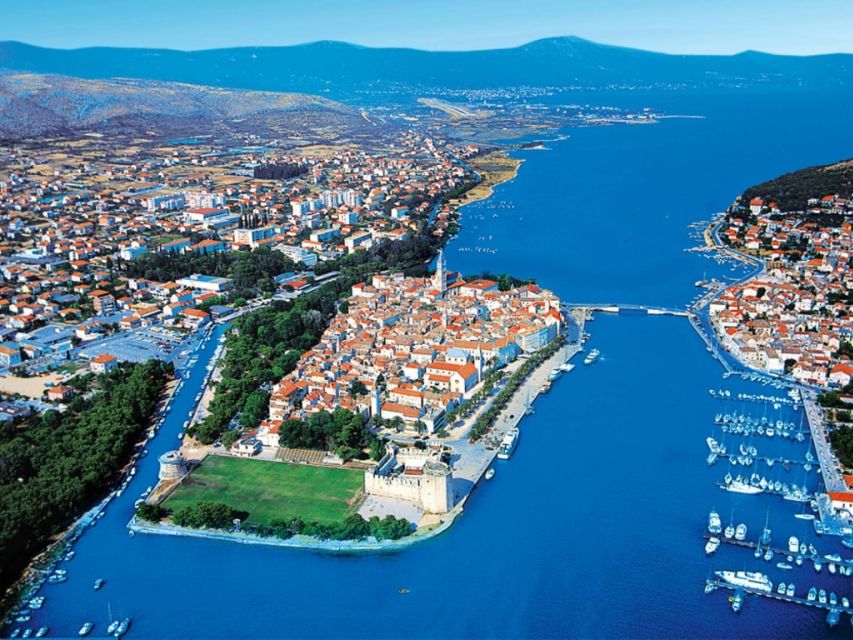
Trogir is the kind of place where the streets do the work for you. The city sits on a small island between Croatia’s mainland and the island of Čiovo, so you get constant water-in-the-background feelings while you walk. That matters, because the tour’s goal is atmosphere. You’re not cramming in distant neighborhoods. You’re seeing the medieval core the way it’s meant to be seen: on foot, close up, and without rushing the scale of the architecture.
The route is designed as a calm guided stroll through a UNESCO World Heritage Site. Expect narrow alleys, Romanesque and Renaissance courtyards, and even the sense that some modern interiors live side-by-side with older stonework. If you like orientation tours, this is one of the best formats for Trogir. You get a guided framework fast, then you can wander on your own afterward.
The starting point is the South Tours Travel Agency at Hrvatskih Mučenika 28 in Trogir. From there, the tour moves through major landmarks and ends at the North Gate, letting you finish where the old city’s boundaries feel most real.
You can also read our reviews of more city tours in Trogir


St. Lawrence Cathedral and Radovan’s portal: the moment your camera will actually earn its keep
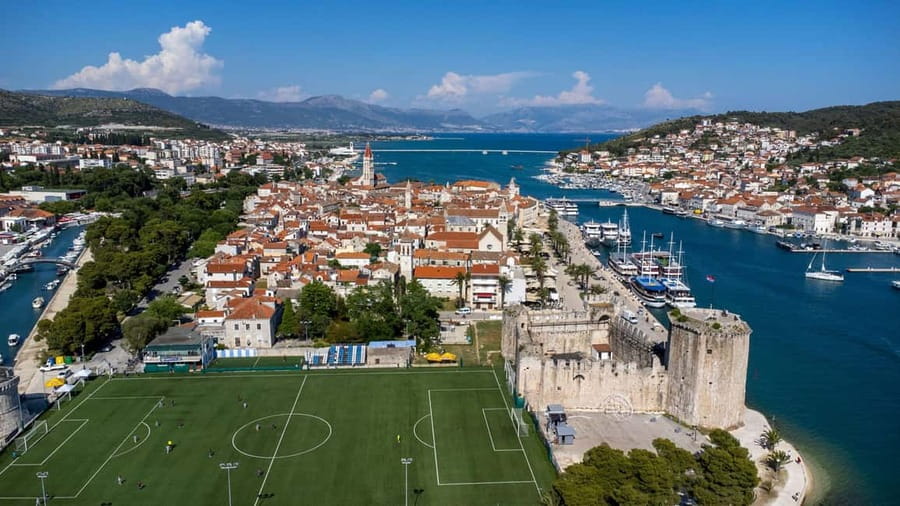
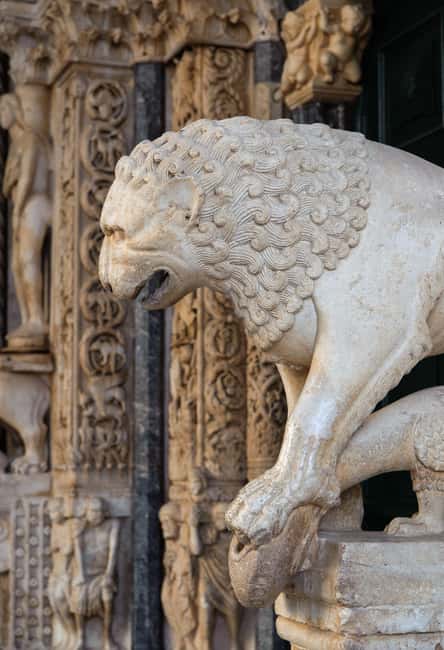
The center of gravity here is the Church of St. Lawrence, also known as St. Lovro. This is the stop that turns “pretty old town” into “I get it.” You’re there for the magnificent Romanesque portal of the cathedral, and for the sculptural work attributed to the Dalmatian architect Radovan.
What makes this portal special is the sheer storytelling weight it carries. There’s almost no detailed record of Radovan’s life or career. The work itself is what people keep returning to. And inside the portal’s sculptural program, you’ll hear about the relief of Kairos. Even if you don’t know the reference before you arrive, the guide’s explanation helps you see why that figure is talked about so often: it gives personality to a stone facade.
In practical terms, this is also the easiest stop to turn into your “memory anchor.” It’s visually strong, it’s a focal point in the city, and it’s the kind of detail you can point to later when you’re wandering independently. If you only have one guided experience in Trogir, I’d aim my time here first.
Starting with defenses: St. Mark’s Fortress and Glorijet maršala Marmonta
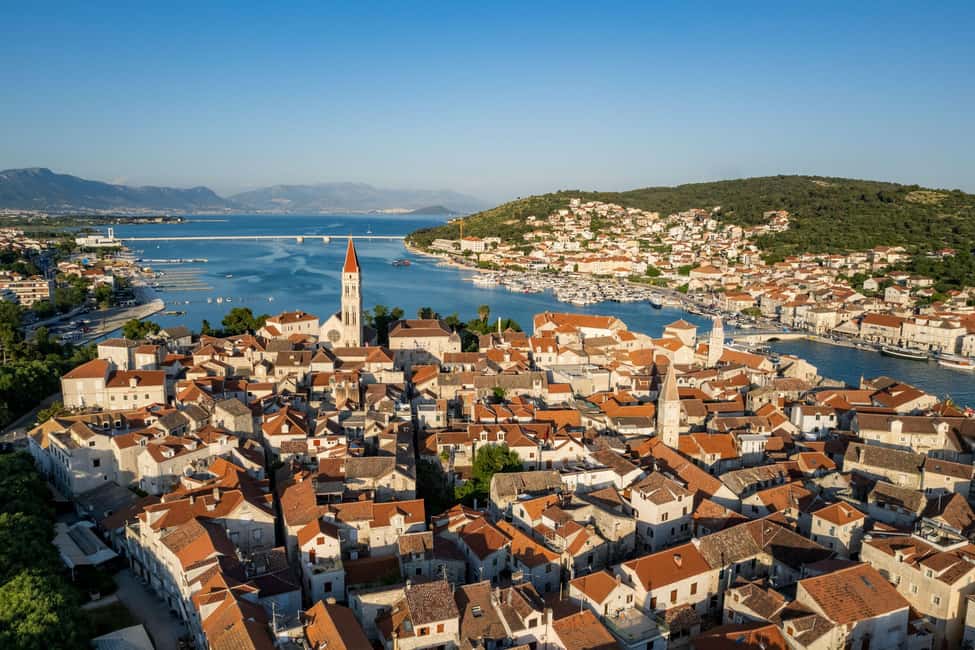
You begin with St. Mark’s Fortress, then move on to Glorijet maršala Marmonta. Even though the tour is only 90 minutes, these early stops matter because they change how you read the rest of the city.
When you see the fortress area and then the Glorijet maršala Marmonta landmark, the guide can connect the architecture to the city’s past conflicts. The tour highlights historic battles and mysterious characters, and the best way to understand that kind of history is to start where the city’s power and protection were likely concentrated. You start to notice how the town’s layout supports its story.
These first parts are also where you set your walking rhythm. Expect short guided segments (about ten minutes of walking between points) and frequent stops to look, listen, and ask yourself how the next building relates to the last. If you’re the type who loves “why is that here?” questions, you’ll enjoy the early sequence.
Kamerlengo Castle: the point where fortifications start to feel like a map
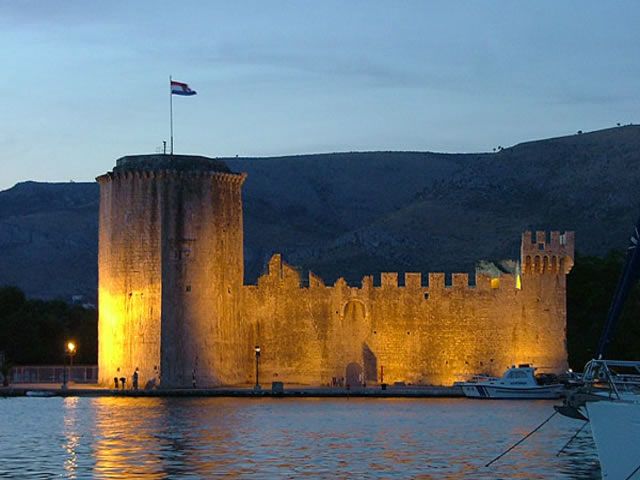
Next comes Kamerlengo Castle. This is another stop that helps you understand the city’s physical logic. The tour’s structure pushes you from one landmark to another in a way that makes Trogir feel planned, not accidental.
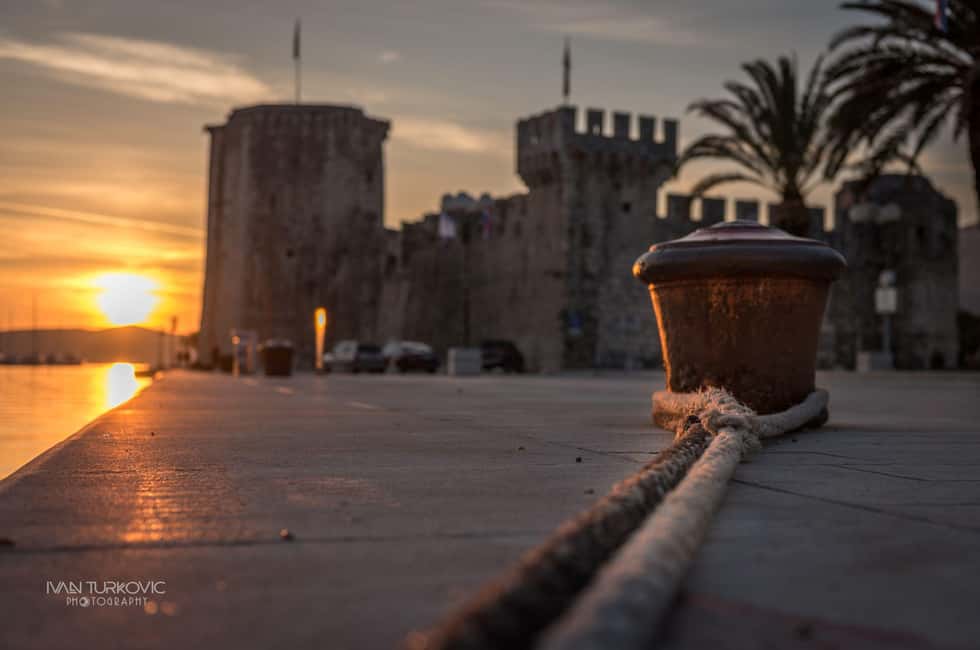
At Kamerlengo Castle, you’re looking at a major piece of the city’s defensive-era identity, and the guide’s stories of conflict and characters help the stone feel less static. Even if you don’t want to become a part-time medieval history student, the city’s “defense-to-life” transition becomes easier to grasp. That’s a big reason these fortification stops work: they give you context, so later churches and courtyards don’t feel like random photo backdrops.
One small caution: if you’re expecting a ton of time inside buildings, plan for mostly exterior viewing and brief guided looks. This tour is built around landmarks and street-level reading, not a ticket-heavy, all-day program.
Church of St. Dominic and the Benedictine Monastery of St. Nicholas: religious architecture you can actually spot
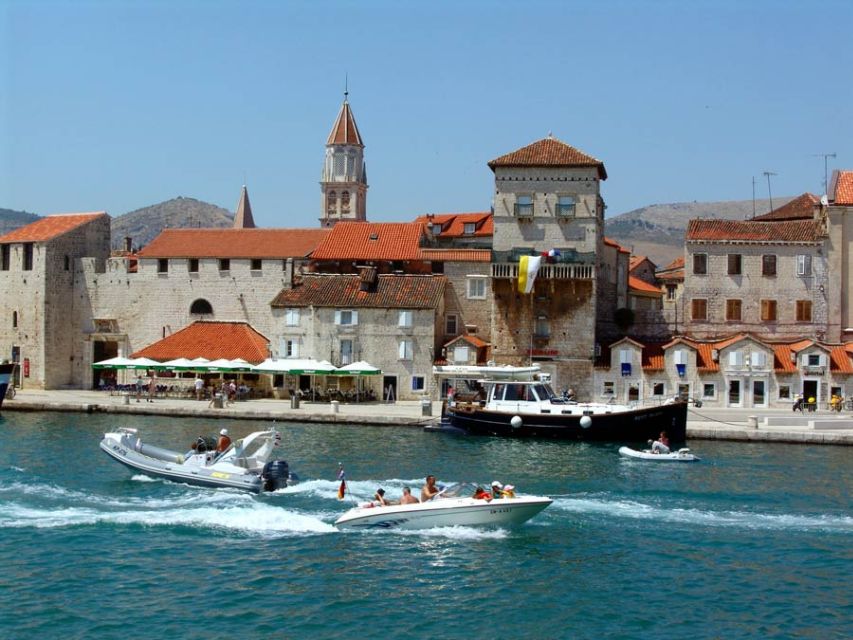
After the fortifications, the walk turns more spiritual and artistic with the Church of St. Dominic and the Benedictine Monastery of St. Nicholas. This is where Trogir’s architectural variety becomes obvious.
You’ll get guided tours at each stop, with the focus staying on what the buildings show and how they fit into the city’s broader European influences. The tour’s overall theme includes Romanesque and Renaissance courtyards, plus Venetian-era architecture that flourished under Venetian rule. Churches and monasteries are where you tend to see those layers most clearly, because their designs were meant to last.
At St. Dominic and the monastery, the value isn’t only in the buildings themselves. It’s in the way the guide helps you notice what changes from one era to another and why those details would have mattered to the people living there. If you like art and architecture in a practical way—meaning you want to understand what you’re seeing while you see it—these stops deliver.





City Loggia, the Chapel of St. Sebastian, and Knežev dvor: where civic power meets everyday religion
Then comes a run of stops that feel more public and political: the City Loggia, the Chapel of St. Sebastian, and Knežev dvor. This section is important because it broadens the city beyond cathedrals and fortifications.
The City Loggia adds a civic flavor. Loggias are the kind of spaces that connect architecture to public life, and on this tour, you’ll get guided context for why the location and style mattered. The Chapel of St. Sebastian shifts the mood back toward religious devotion. You’ll hear how small-scale sacred spaces fit into the larger city picture, especially when the guide is weaving together stories alongside the architecture.
Knežev dvor rounds it out by pointing you toward the administrative side of old Trogir. The name itself signals power, and the guide’s talk about characters and Venetian influence gives you a way to connect the palace-like feel with the human drama of the city’s past. This is also a nice section for photos, because the mix of building types creates visual variety in a short time.
Cathedral finish and the Romanesque portal payoff: why St. Lawrence is placed near the end
Even though the Cathedral of St. Lawrence is the headline highlight, it’s still placed as a major stop within the overall flow. You’ll visit it later in the walk after seeing enough other landmarks to understand how the cathedral fits into the city’s “big picture.”
That’s not accidental. By the time you reach the cathedral, you’ve already had the fortress, castle, churches, monastery, loggia, chapel, and palace all in your eyes. So when you get to the Romanesque portal, it feels like the climax rather than the first thing you saw and quickly forgot. The guide’s focus on Radovan and the relief of Kairos lands better when you’ve already learned to read the city’s architectural language.
In terms of pacing, this also helps you avoid fatigue. Trogir’s streets are charming, but they’re also narrow. Reaching the cathedral after a sequence of landmarks gives you a built-in reward.
Trogir North Gate: ending where the city boundary becomes a story
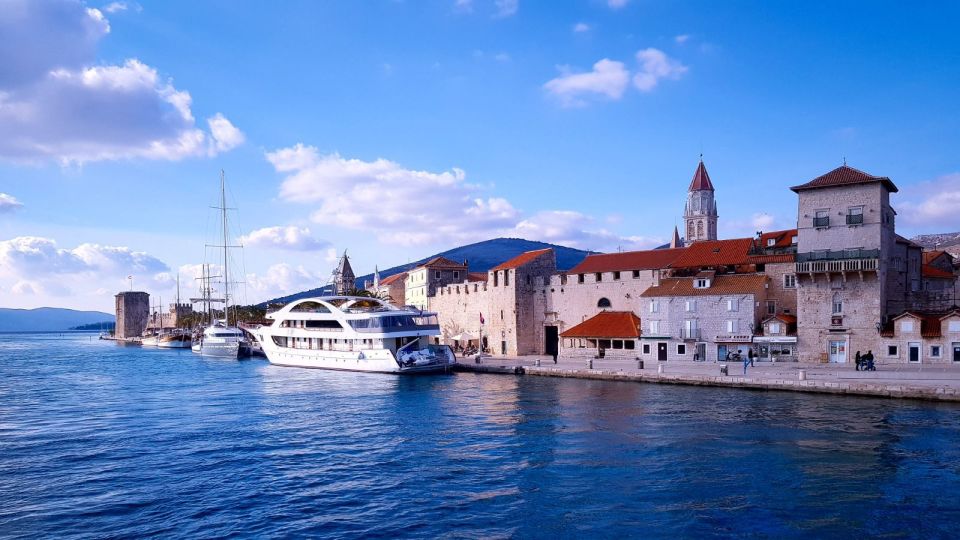
The tour ends at Trogir North Gate. Finishing here works because it turns your final minutes into a sense of place. You’re no longer inside the city’s compact interior without context. You’re looking toward the edge, which makes the whole route feel like a guided loop rather than a list of stops.
The North Gate is a logical last stop because it matches the tour’s structure: it starts with fortress and defenses, moves through religious and civic architecture, and closes with the city boundary. The guide wraps up the story so you can walk away with a clear mental map of what belongs where in Trogir.
If you plan to keep exploring afterward, this is also a helpful location. You’ve just gotten the framework, and now you can choose which lanes to return to based on what you liked most.
Price and what you actually get for $47
At $47 per person for a 90-minute English live guide tour, the value depends on what you want from your time in Trogir.
Here’s what you’re paying for: a guide and structured access to major landmarks in a compact UNESCO core. That’s a good deal when you’re seeing many different building types without needing to figure out the story yourself. It’s also a smart option if your day is tight and you want a fast orientation that you can build on with self-guided wandering.
Here’s what can affect total cost: entrance fees and food and drinks are not included. Transfers are also not included, so you need to handle getting to the meeting point on your own. In practice, that means your spend can rise if you decide to add paid interior visits after seeing what the guide highlights.
If you’re comfortable with mostly guided exterior viewing, $47 feels like a straightforward city orientation price. If you want lots of ticketed interiors on top, you’ll likely spend more.
Guide quality: earnest storytelling makes the walk feel personal
This is one of those tours where the guide can make or break the experience. The best versions of this walk feel like a conversation about the city, not a recital. You’ll hear about historic battles, mysterious characters, and the architectural influence of Venetian rule, with stops arranged so those stories make sense.
Some guides have earned extra praise for being enthusiastic and welcoming, and in at least one case the tour ran about 30 minutes longer because the group stayed engaged. That tells you something important: if your guide is running with the material and you’re asking questions, the tour doesn’t always have to feel like a hard stop.
You might even encounter a guide such as Sandra, who’s been described as very nice and experienced. The key takeaway for your planning: if you enjoy guides who connect details to story, you’re likely to have a stronger experience here than on a purely factual walking circuit.
That said, there’s also a potential mismatch to watch for. A couple of people felt the tour didn’t connect the pieces into a fully integrated narrative. If you need every stop to tie into one clear theme from start to finish, you may find the structure a bit more stop-and-go than you’d like. Your best move is to arrive with curiosity and be ready to follow the guide’s chosen thread as it changes from fortress to church to gate.
Who should book this Trogir walking tour
This tour is a good match if you want:
- A fast, guided orientation to a compact UNESCO old town
- Architecture first with stories that make details easier to remember
- A calm pace that covers major landmarks without exhausting you
It’s especially appealing for couples and independent travelers who like walking through atmospheric streets, want the cathedral highlight without planning it alone, and enjoy hearing how Venetian-era power and conflict shaped the city.
If you’re the kind of visitor who only likes tours that feel deeply themed and tightly connected end-to-end, you might compare options. With only 90 minutes, this walk aims for breadth and landmark coverage more than long-form interpretation.
Should you book this 90-minute Trogir city tour?
If your priority is getting your bearings fast and seeing Trogir’s key landmarks in a guided way, I’d say yes. The cathedral portal of St. Lawrence (St. Lovro) is the standout reason alone, and the rest of the itinerary helps you understand how the whole city fits together from defenses to civic spaces to gates.
Book it if you want a smooth introduction that leaves you time to wander afterward. Consider skipping or pairing with extra self-guided time if you know you want a longer experience with more ticketed interiors and one single continuous storyline.
FAQ
FAQ
How long is the Trogir city tour?
The tour lasts 90 minutes.
Where does the tour start?
You meet at the South Tours Travel Agency in Trogir, at Hrvatskih Mučenika 28.
What is the price per person?
The price is $47 per person.
Is the tour guided in English?
Yes, it’s a live tour guide in English.
Are entrance fees included?
No. Entrance fees are not included.
Are transfers included?
No. Transfers are not included.
Can I get a full refund if I cancel?
Yes. Free cancellation is available up to 24 hours in advance for a full refund.