REVIEW · SPLIT
Controversies behind Split and Croatia-Anthropologist guide
Book on Viator →Bookable on Viator
Split has more politics than tourists expect. This 2-hour city walk uses an anthropological lens to explain the arguments behind famous places, not just dates. I like how it connects old stone to today’s identity and local nerves.
My favorite part is the guide’s teaching style—Marin comes in ready, with iPad maps and visuals that make the stories click fast. One consideration: it’s a walking tour, and you may spend some time standing while listening, so plan for that if your legs are picky.
You’ll get a mobile ticket, the tour runs in English, and the group stays small (max 12). Admission is included for the Diocletian palace segment and also at the end viewpoint near Matejuška.
In This Review
- Key points you’ll feel on the walk
- A Split walking tour that reads the city like a debate
- Price and what $35 buys you in real terms
- Group size, language, and the pacing you should expect
- Meeting point and route flow across the center
- Stop 1: Palazzo di Diocleziano and the controversy behind one of Split’s anchors
- Stop 2: Obala Hrvatskog narodnog preporoda—where public life happens
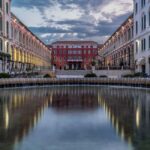
- Stop 3: Trg Braće Radić—Venetian roots, Ottoman pressure, and modern identity
- Stop 4: Narodni trg—human remains under your feet and the two-sided memory
- Stop 5: Šperun ulica—tourist-famous, story-light, until now
- Stop 6: Trg Franje Tuđmana—20th-century turbulence and the politics of memory
- Stop 7: Matejuška—ending with a famous view and a modern Split reality check
- What makes the guide style work so well
- Who should book this tour (and who might skip)
- Should you book this Split anthropological walk?
- FAQ
- How long is the Split tour?
- Is it in English?
- How big is the group?
- What tickets or admissions are included?
- Where do I meet and where does it end?
- What if the weather is bad?
Key points you’ll feel on the walk
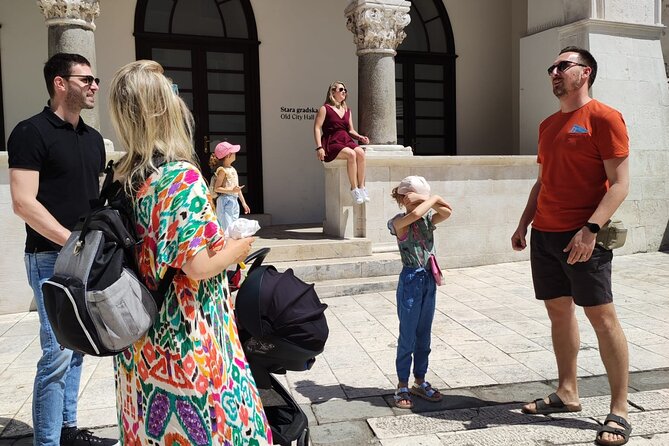
- Diocletian’s Palace as a lived controversy: you’ll hear how one site gets debated across eras, not treated as a simple monument
- Ottomans, frontiers, and today’s politics: the tour links historic struggles to how people talk about identity now
- Narodni trg under your feet: you get context for human remains and the mixed, tough layers of memory in one square
- Šperun ulica beyond postcard Split: even popular areas get explained through the stories people don’t usually notice
- End with modern Split at Matejuška: the walk finishes with a famous view plus a clear look at how the city feels today
- Small group attention: max 12 travelers means it’s easier to ask questions and keep pace comfortable
A Split walking tour that reads the city like a debate
This isn’t the usual see-then-forget itinerary where you collect facts and move on. The tone here is more like: why do people disagree about the same space? Split’s center is full of layers—ancient, Venetian-era, Ottoman-era, 20th century—and the guide treats those layers as part of daily identity, not museum content.
If you like history, great. If you like people, also great. The payoff is understanding why certain places feel charged—because they carry different meanings for different generations.
You can also read our reviews of more guided tours in Split


Price and what $35 buys you in real terms
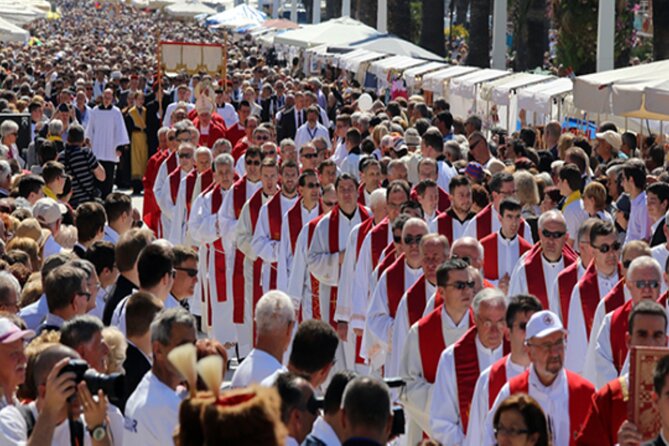
At $35 per person for about 2 hours, the value lands in a sweet spot—especially because you’re not only paying for narration. Some admission is included during the tour (the Diocletian palace segment and the final stop viewpoint near Matejuška), while other stops are free to enter.
So you’re getting two things for one ticket:
- a structured walking route that covers major parts of the center
- guided context that turns “pretty squares” into “why this matters” squares
In practical terms, this can be cheaper than doing a couple of separate site tickets plus a guide—if you care about meaning, not just access.
Group size, language, and the pacing you should expect
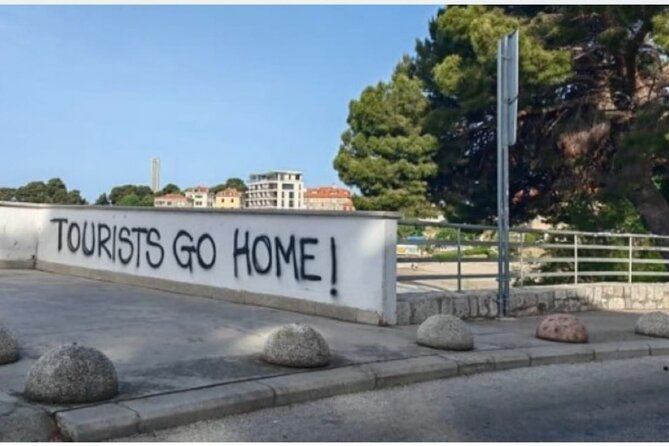
This runs in English and holds up to 12 travelers. That small size matters in Split’s center, where narrow streets and busy intersections can make big-group tours feel like a shove-and-go conga line.
The pace is designed to keep you moving through the city’s key points, but it’s still a walk. If you prefer tours where you sit often, this might ask more from you. A couple of people may find standing stretches tiring, so pick a comfortable day and wear shoes you trust.
Also keep an eye on weather. The tour requires good weather, and if it can’t run, you’ll be offered a different date or a full refund.
Meeting point and route flow across the center
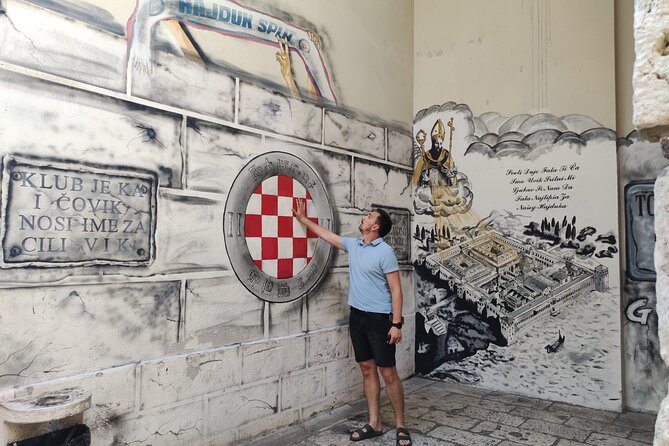
You start at Ul. kralja Tomislava 12, 21000 Split, and the walk ends at Trumbićeva obala 2, 21000 Split. In other words, you’re staying inside the city center—no bus rides, no long detours.
The itinerary is built like a story arc: start with the heavyweight controversy tied to Diocletian’s Palace, move through promenade and squares that anchor public life and political memory, then step into neighborhood context, and finally land at Matejuška for a modern wrap-up with a classic view.
Stop 1: Palazzo di Diocleziano and the controversy behind one of Split’s anchors
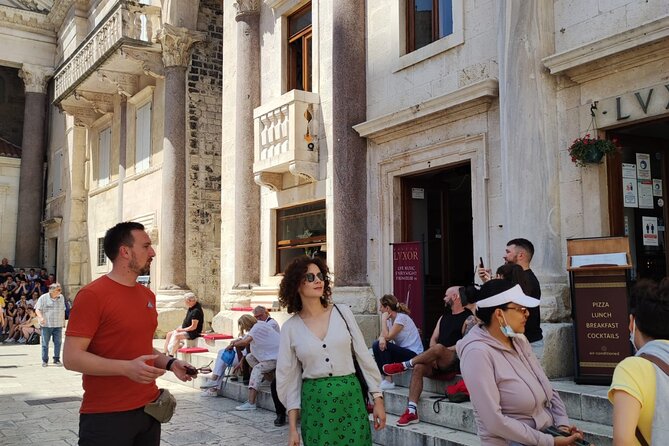
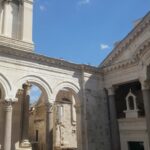
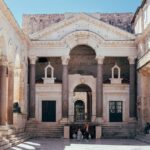
The tour begins at Palazzo di Diocleziano, and this is where you get the main theme: one fascination-packed site can also be a contested issue for locals across historical periods.
What makes this stop worth your time is the framing. Instead of treating the palace as a single approved narrative, the guide tells it through controversial historical and modern issues tied to the area. That means you learn to read the palace not just as architecture, but as a human argument—about ownership, meaning, and how the past keeps showing up in public life.
Duration at this stop is about 35 minutes, and admission is included. The guide also covers most of the center’s main locations around this idea, so you’ll see why it acts like the tour’s compass.




Stop 2: Obala Hrvatskog narodnog preporoda—where public life happens
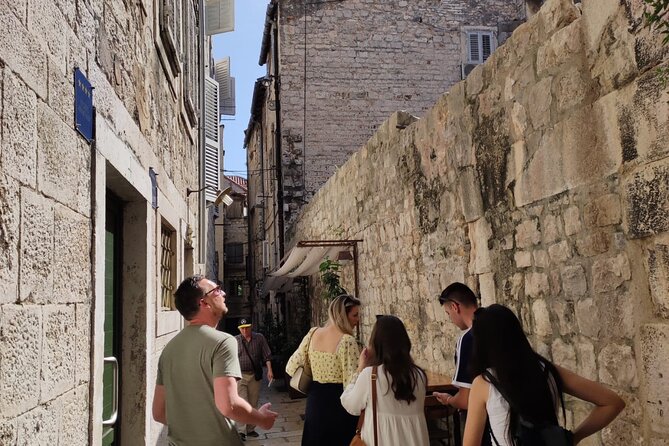
Next comes Obala Hrvatskog narodnog preporoda, the riva-style promenade where public life happens. This part of Split is less about “one monument” and more about the street-level rhythm of the city.
You’ll hear how this is also where important historical events took place. That’s a key skill the tour teaches: noticing that the places we use every day often have official history under the surface—sometimes comfortable, sometimes not.
This stop is shorter (about 15 minutes) and has no admission. It’s a nice reset—walk, look out, and get ready for the bigger, noisier stories of the squares.
Stop 3: Trg Braće Radić—Venetian roots, Ottoman pressure, and modern identity
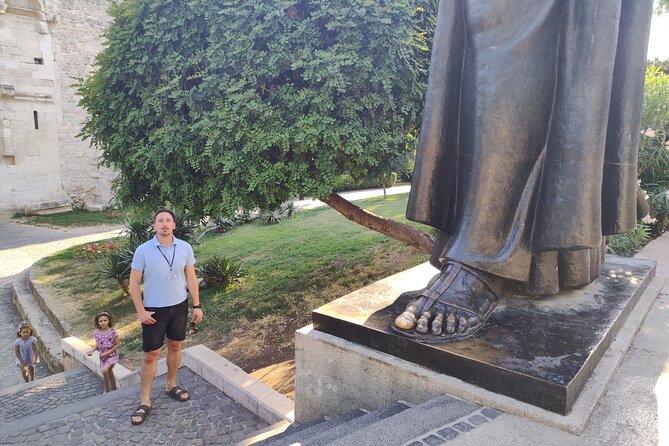
Then you reach Trg Braće Radić, described as the old Venetian square. The tour uses it to unpack turbulent times when Split was a frontier during the struggle against the Ottomans.
What I like here is the connection to today. The guide doesn’t leave the story in the past; you’ll hear how that period is perceived now, and why it still shapes politics and local identity.
This kind of discussion is exactly why a tour like this feels different from a standard “walk the old town” route. You’re learning the city’s emotional map—what parts of the past get used, downplayed, or debated.
Another short stop (about 15 minutes), free to enter. You’re mostly listening, watching the space, and learning how people interpret it.
Stop 4: Narodni trg—human remains under your feet and the two-sided memory
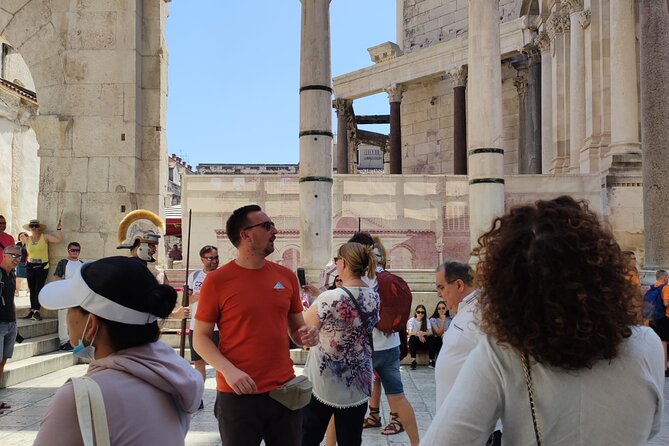
At Narodni trg, the tone gets heavier. The guide points out a less-known fact: human remains are under your feet because the location used to function as an ancient graveyard.
And then the story gets even more complicated. The same spot later hosted amazing events and also infamous ones. That mix matters. It shows how societies keep layering meanings onto places—sometimes by accident, sometimes by choice.
This stop also lasts about 15 minutes and is free. It’s one of those places where the tour makes you slow down for a moment, because the ground itself becomes part of the conversation.
Stop 5: Šperun ulica—tourist-famous, story-light, until now
Next is Šperun ulica, one of Split’s most famous neighborhoods. It’s popular for a reason, but the tour’s angle is that many visitors don’t know the story behind the neighborhood.
This stop is about 15 minutes, and it works like a reality check. You stop treating Split as a themed backdrop and start treating it as a place with social history—where the atmosphere you notice today has roots in earlier decisions, conflicts, and cultural change.
If you want your photos without losing context, this is the kind of stop that makes the pictures feel smarter later.
Stop 6: Trg Franje Tuđmana—20th-century turbulence and the politics of memory
At Trg Franje Tuđmana, the tour turns toward modern Croatian history. The square is named after the first Croatian president, and the guide uses that to discuss turbulent times at the end of the 20th century.
This part is especially aimed at explaining why history can still divide people. The guide frames it as a hard history lesson in Croatian schools, with issues that still shape how society talks and argues.
This is where the anthropological approach becomes very practical. You learn not only what happened, but how different interpretations can survive inside everyday street names and public spaces.
It’s about 15 minutes and free. You’ll likely leave this stop with a clearer sense of why the city’s debates aren’t just academic.
Stop 7: Matejuška—ending with a famous view and a modern Split reality check
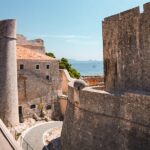
The tour ends at Matejuška, where you get the most famous view of Split. The walk finishes there (about 10 minutes), and the guide uses the viewpoint to deliver the final words of the tour and an insight into modern Split.
This ending matters because it gives your brain a place to land. You’ve spent the whole route in layered time—ancient, medieval, Ottoman-era frontier talk, Venetian influence, and late-20th-century memory. Then you step into a clear visual moment and a guided interpretation of what the city feels like now.
It’s also one of the few moments on the route where the story and the scenery fully work together instead of competing.
What makes the guide style work so well
The standout in the experience is Marin, described as extremely prepared and very warm and open. What that means for you on the street is fewer blank spots in the narration.
Marin uses maps and visuals on an iPad, and he clearly brings a teacher’s mindset: the information flows, but questions are welcome. You don’t just get a monologue—you get room to steer what you want to understand.
He also aims for comfort when possible, like finding shade. That’s not a small detail in the Adriatic summer heat, and it can make the difference between feeling grateful and feeling drained.
Who should book this tour (and who might skip)
I’d send you to this tour if:
- you like city history, but hate the dry, brochure tone
- you want to understand how the past shapes today’s identity
- you prefer small groups where you can ask questions
I’d suggest a skip or a different option if:
- you need mostly seated stops
- you want only light, purely scenic sightseeing with no heavy political memory
The content isn’t random. It’s designed around how Split talks to itself through controversial spaces, from palace arguments to squares with human remains.
Should you book this Split anthropological walk?
Yes—if your idea of a great Split day includes meaning, not just monuments. For $35, you get a structured center route, English narration, and included admission for key moments, plus a guide who knows how to explain the city without turning it into a lecture.
If you’re the type who notices street names, argues about history, or wants to understand why locals look at the same landmark differently, this will fit you well. Bring good walking shoes, plan for some standing, and pick a day with good weather so you don’t lose the whole arc.
FAQ
How long is the Split tour?
It runs for about 2 hours.
Is it in English?
Yes, the tour is offered in English.
How big is the group?
The tour has a maximum of 12 travelers.
What tickets or admissions are included?
Admission tickets are included for the Diocletian palace segment and also for the ending viewpoint near Matejuška. The other listed stops are free.
Where do I meet and where does it end?
You meet at Ul. kralja Tomislava 12, 21000 Split, and the tour ends at Trumbićeva obala 2, 21000 Split.
What if the weather is bad?
The tour requires good weather. If it’s canceled due to poor weather, you’ll be offered a different date or a full refund.