REVIEW · SPLIT
Split Quest Experience: Discover the City
Book on Viator →Operated by Questo · Bookable on Viator
Some cities are made for wandering. Split is.
This self-guided city game sends you through scenic spots and major monuments in roughly 1.5 to 2 hours, with your phone acting like your co-pilot. I like that you can control the pace, pause as needed, and still hit key places like Diocletian’s Palace and the Temple of Jupiter. The other big plus is the step-by-step directions, so you’re not guessing your way through tight old-town lanes.
One thing to consider: this is not a live guide. If you dislike app-based navigation or you arrive with a dead phone, you’ll feel it fast.
In This Review
- Key highlights at a glance
- How the Split Quest game works (and what you’re actually buying)
- The big decision: do you like games and directions?
- Walking loop: what 14 stops feels like in real time
- Sea views and local edges: Sustipanski Park, Branimira, Matejuška
- Streets that feel like Split, plus a quirky stop
- Landmarks with real names: Gregory of Nin and Marko Marulić
- Diocletian’s Palace zone: where the quest turns Roman
- Price and value: is $5.97 a fair deal?
- Practical tips so the app doesn’t mess up your day
- Who this experience fits best (and who should skip)
- Where things can fall short
- Should you book this Split Quest Experience?
- FAQ
- How long does the Split Quest Experience take?
- Is there a live guide with the experience?
- Where do I start and where does it end?
- What do I need on the day?
- Can I share one phone with multiple people?
- What time can I do it?
Key highlights at a glance
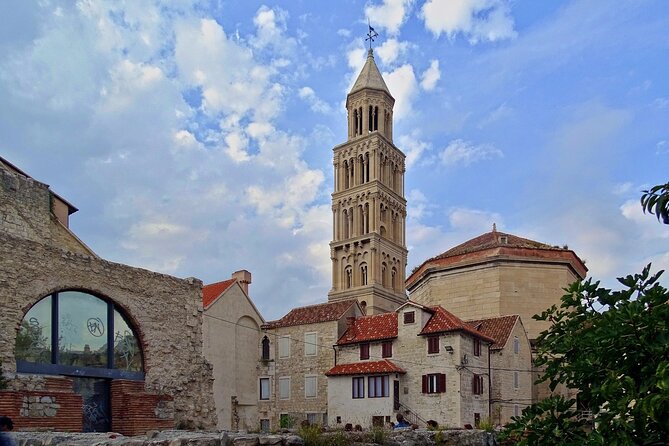
- Sjaš svijetliš svemiriš me kickoff in Sustipanski Park, where the city opens up to sea views
- Waterfront stroll along Obala kneza Branimira and down toward Matejuška
- A clue-driven walk through everyday streets like Neretvanska ulica, not just postcard stops
- Classic Split landmarks mixed in with oddballs, like the Weird Fountain (Prva voda)
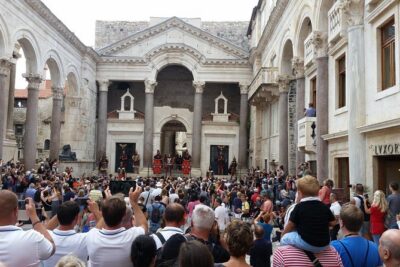
- A Roman-heavy route including Diocletian’s Palace gates, Jupiter’s Temple, and the Vestibul
- Built for flexibility: short stops, outdoor walking, and phone directions that keep you moving
How the Split Quest game works (and what you’re actually buying)
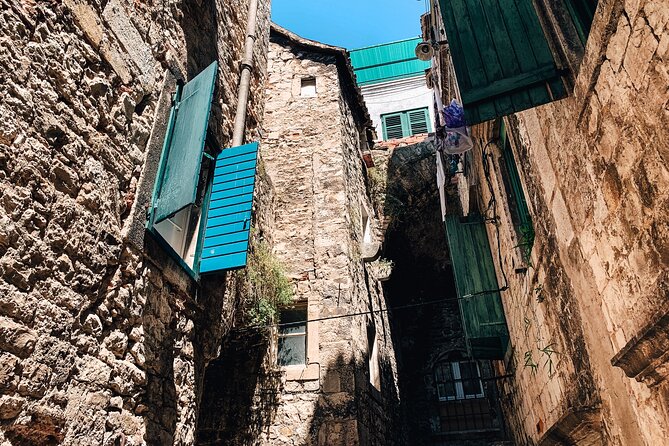
You’re buying a mobile exploration game called Questo. After you book, you get an email with instructions to download the app and play using the same email used for your purchase. On the day, you open the app, follow directions, and complete the story as you move from stop to stop.
This matters because it changes the vibe. There’s no person meeting you with a checklist. Instead, your phone becomes the guide: it shows exact directions to your next location and keeps the mystery thread going. The experience is also described as self-guided, open air, and designed to help you avoid the worst crowd crush—nice if you’ve ever tried to enjoy Diocletian’s Palace while fighting shoulder-to-shoulder foot traffic.
Your “group” can even share one phone. That’s a real value add if you’re traveling with friends or family and you don’t want to pay for multiple devices.
You can also read our reviews of more city tours in Split



The big decision: do you like games and directions?
If you enjoy problem-solving and walking with clear prompts, this is a fun way to see Split beyond the obvious. If you’d rather have a live human explaining details, then you may find the app format a letdown. And if your phone battery is weak, plan for that (more on this in practical tips).
Walking loop: what 14 stops feels like in real time
The route runs about 1 hour 30 minutes to 2 hours. Each stop is roughly 7 minutes, and the game is built around quick transitions. That makes it ideal for a “useful wandering” slot—right after lunch, before dinner plans, or as a first-or-second day activity when you want to learn the layout without committing to a long tour.
You start at Sustipanski Park (meeting point listed as Sjaš svijetliš svemiriš me, Sustipanski put). Your final destination is Peristil ulica near the central palace complex. After that, the app handles the navigation.
Here’s how the experience unfolds, stop by stop, and what each section is good for.
Sea views and local edges: Sustipanski Park, Branimira, Matejuška
Stop 1: Sustipanski Park (Sjaš svijetliš svemiriš me)
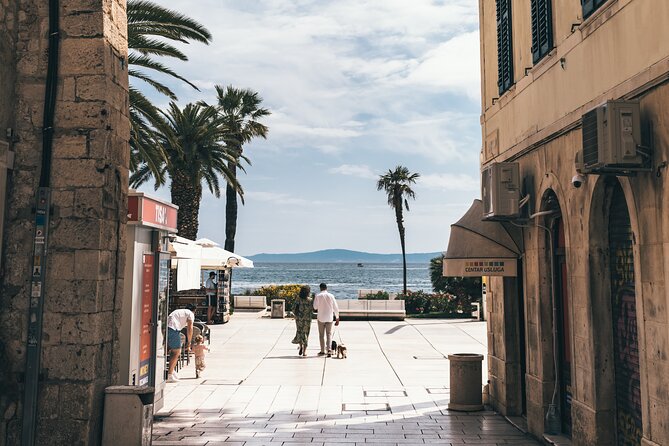
This is where the quest starts, and it’s a smart choice. Sustipanski Park is all about greenery and a relaxed setting with walking paths and benches. You’re close enough to the sea to catch the mood of Split—wind, salt air, and those long coastal lines that make the city feel effortless.
Stop 2: Obala kneza Branimira
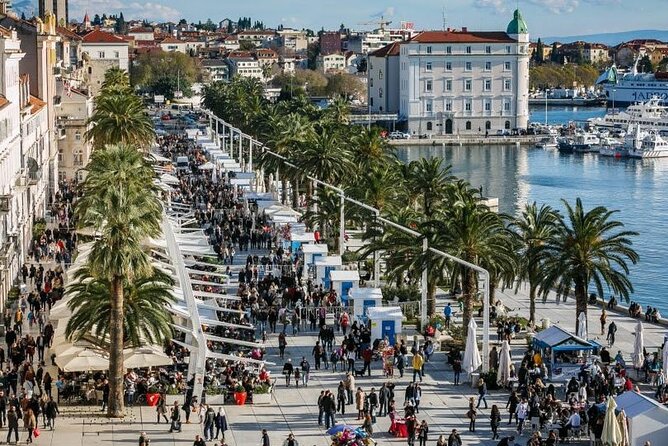
Next you hit Obala kneza Branimira, a waterfront promenade. This is the easy-going “walk and reset your brain” stretch. The pace is casual, and you can linger as long as you want before following the next directions.
Stop 3: Matejuška
Then you land at Matejuška, a small fishing harbor and marina. It’s described as retaining traditional, authentic charm. That’s the kind of change of scenery that keeps an app-based route from feeling mechanical. Instead of being stuck only among major monuments, you get a working harbor atmosphere that feels lived-in.
Streets that feel like Split, plus a quirky stop
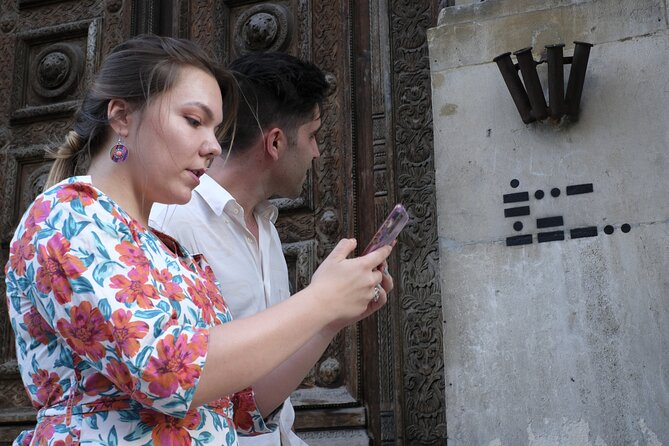
Stop 4: Neretvanska ulica
Neretvanska ulica is a regular Split street: residential buildings, shops, restaurants, and everyday movement. This is where you start feeling like the quest is taking you through real city life, not only sightseeing zones.
Stop 5: Ul. kralja Tomislava 2 (the Weird Fountain, Prva voda)
At Ul. kralja Tomislava 2, you’ll meet the Weird Fountain, locally called Prva voda. It’s noted as unique and somewhat quirky. Stops like this are exactly why a game format can work: the story gives you a reason to notice details you might otherwise walk past.




Landmarks with real names: Gregory of Nin and Marko Marulić
Stop 6: Gregory of Nin Statue
This one’s a heavyweight. The Gregory of Nin Statue is created by Croatian sculptor Ivan Meštrović and was erected in 1929. If you’ve only seen monuments that feel anonymous or generic, this helps you lock onto a specific artistic identity.
Stop 7: Marulićeva ulica
Then you move to Marulićeva ulica, named after Marko Marulić, a Renaissance poet and author often referred to as the father of Croatian literature. It’s a culture stop that keeps the route from being purely Roman and purely sea-focused.
Stop 8: Marko Marulić Statue
Right after the street name, you reach the Marko Marulić Statue. It’s positioned as an important part of Split’s cultural landscape, and it gives the literary thread a physical anchor.
Diocletian’s Palace zone: where the quest turns Roman
From here, the route leans hard into the palace complex, gates, and Roman-era structures. That’s where you’ll likely feel the biggest payoff—especially if it’s your first time in Split.
Stop 9: Diocletian’s Palace (Ul. Iza Vestibula 3)
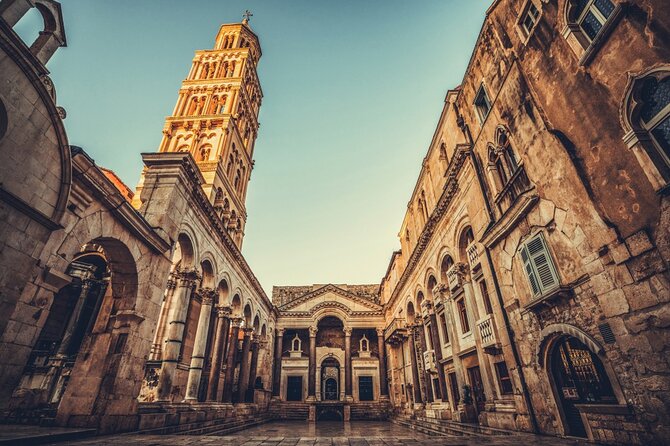
You’ll discover Diocletian’s Palace, described as a mix of Roman, Hellenistic, and Byzantine architectural elements. The key word here is variety. You’ll see walls, gates, columns, and courtyards that show how the area evolved over time rather than staying frozen in one era.
Stop 10: Iron Gate / Silver Gate
Next is the Iron Gate, also known as the Silver Gate and Porta Orientalis (Eastern Gate). It’s one of the four main entrances to Diocletian’s Palace. If you want one classic “I get it now” moment—this is one. Gates are where geography becomes obvious.
Stop 11: Papalić Palace (Papalićeva ulica)
Then you turn to the Large Papalić Palace (Velika Papalićeva palača), an 18th-century Baroque building. This is a useful pivot. It reminds you Split didn’t stop at Roman times. The city kept building, reshaping, and adding layers.
Stop 12: Dominisova ulica (Head on the Wall, Glava na Zidu)
On Dominisova ulica, look for The Head on the Wall, known locally as Glava na Zidu. It’s described as a sculpture affixed to a building wall, depicting a human head. This kind of strange-and-specific detail is exactly what makes an app quest feel like more than a checklist.
Stop 13: Jupiter’s Temple
Next comes Jupiter’s Temple, also called Hram Jupitera. It’s described as a historic Roman temple built in the 3rd century AD during construction of Diocletian’s palace. This is where you get a direct time connection—Roman engineering, Roman devotion, and Roman presence that still shows up in street-level sightseeing.
Stop 14: Vestibul (Vestibul)
Finally you reach Vestibul, described as an ancient entrance hall from Diocletian’s Palace. It served as the central and grand entrance leading to the emperor’s residential quarters. You end your walking loop at the Peristil ulica area, using the app’s directions to get there.
Price and value: is $5.97 a fair deal?
$5.97 per person is low enough that you can treat this as an easy-value activity. It also has a built-in cost advantage: the app format means you’re not paying for a live guide, and you’re paying for time and structure rather than an expensive vehicle or long guided session.
What makes it good value:
- The timing is tight (about 1.5–2 hours), so you’re not eating half a day.
- You get step-by-step directions on your phone, which reduces time wasted getting oriented.
- It includes flexibility. You can pause and continue, which helps if Split’s heat or crowds slow your pace.
The trade-off is you’re responsible for the experience working on your device. A low price can be a bargain—or a frustration—depending on your comfort level with phone-based guidance.
Also note: the listed opening window is 8:00 AM to 6:00 PM (daily). If you arrive late and the app route can’t be completed in that time, the value drops quickly.
Practical tips so the app doesn’t mess up your day
Here’s how to make the most of a phone-led city quest in Split.
- Charge your phone before you leave. Bring a power bank if you have one. You’ll be using it for directions during an outdoor walk.
- Download the Questo app and set up the account first. Use the same email you used for purchase, since the instructions tie to that.
- Screen brightness matters. Old streets can be shadowy, and you’ll want your map and prompts visible.
- Expect short stops. Each location is around seven minutes. If you want long photo sessions at every stop, you may run long and finish later than planned.
- Bring water. The route includes sea areas and stone monuments, so you’ll be outdoors. A small bottle makes the walking part much easier.
Who this experience fits best (and who should skip)
This is a great fit if:
- You like using your phone to guide you with clear next steps.
- You enjoy mystery-style prompts and prefer a structured walk over reading a bunch of plaques.
- You want a mix of Roman monuments and neighborhood streets in one loop.
- You’re traveling in a small group and are happy to share a phone.
It may be a poor fit if:
- You expect a live guide giving narration. The format is self-guided and uses the app.
- You strongly dislike app navigation or you often struggle with mobile ticketing and account setup.
- You’re planning to visit mostly for indoor museum time. This is open air and built for walking.
Also, the overall rating listed is 3.4 based on five reviews. One of the clearly stated frustrations is the app experience not matching expectations, specifically around the difference between a guided tour and a self-guided activity. So I’d treat this as a “know what you’re buying” type of product.
Where things can fall short
The main risk is expectation mismatch. If you book thinking you’ll get a traditional guide who talks you through the past, you won’t. You’ll be doing the explaining to yourself using whatever the app provides.
The second risk is tech friction. If the app doesn’t load smoothly, if you arrive without your account ready, or if you get lost because you didn’t follow prompts carefully, you’ll lose time—and the quest structure depends on moving from clue to clue.
Finally, because it’s a short walk loop, you may feel like you’re seeing things quickly. If you prefer slow, deep museum-style time, you may want to pair this with separate, longer visits at your favorite palace section afterward.
Should you book this Split Quest Experience?
Book it if you want an inexpensive, time-efficient way to learn Split’s layout and hit both Roman power sites and more everyday streets. The self-guided setup and phone directions are the whole point, and the pace suits travelers who want structure without feeling trapped in a rigid tour.
Skip it if you hate apps, need human narration, or are the type who wants to stay stuck in one place for an hour. Split rewards curiosity, but this format rewards follow-the-prompts focus.
If you’re comfortable with phone-based navigation and you want a walk that mixes sea views with Diocletian’s Palace highlights, this is a solid value at $5.97.
FAQ
How long does the Split Quest Experience take?
It usually takes about 1 hour 30 minutes to 2 hours to complete.
Is there a live guide with the experience?
No. This is a self-guided activity led by your phone in the Questo app. A live tour guide is not included.
Where do I start and where does it end?
You start at Sustipanski put, 21000, Split, Croatia (meeting point listed as Sjaš svijetliš svemiriš me). You end at Peristil ulica, 21000, Split, Croatia.
What do I need on the day?
You’ll want a charged phone. You must have downloaded the Questo app and created an account using the same email you used to purchase. The app provides directions to each stop.
Can I share one phone with multiple people?
Yes. The experience notes that several people can share a phone for the optimal experience.
What time can I do it?
It’s listed as available Monday through Sunday, 8:00 AM to 6:00 PM during the given date range.