REVIEW · SPLIT
Split: Diocletian’s Palace Private walking tour
Book on GetYourGuide →Operated by Split Guide · Bookable on GetYourGuide
Diocletian’s Palace turns Split into a giant time machine, with Roman streets still in use. I love how this private walking tour links major sights to real daily life inside the walls, so it doesn’t feel like reading plaques. You also get a tight plan that hits the Peristyle, the Cathedral story, the Vestibule, and the North Gate without wasting time.
Two things that really work for me: the Peristyle gives you the clearest “how power looked” moment in the palace, and the Cathedral’s pagan-to-Christian transformation is the kind of twist you can actually see with your own eyes. My one caution: because churches and events can affect access, you may need a small program adjustment on the day.
In This Review
- Quick hits before you go
- What you’ll get in this Diocletian’s Palace private walk
- Your orientation starts at the bronze model on Riva
- Why Diocletian’s Palace feels different from a normal museum
- The Peristyle: where power met worship
- Split Cathedral: from pagan mausoleum to Christian center
- The Vestibule: the grand entrance to Diocletian’s private world
- North Gate and Porta Aurea: the city’s most important entrance
- Inside a former guard corridor: St. Martin’s small church effect
- The value of a private max-10 tour (and when $135 makes sense)
- What the guide format changes about your Split day
- Practical tips that make the walk easier
- Who should book this Diocletian’s Palace walking tour
- Should you book this tour?
- FAQ
- Where does the tour start?
- How big is the group?
- How much does it cost?
- What languages are available?
- Is Diocletian’s Palace wheelchair accessible?
- Can the itinerary change if a site is closed?
- Is there a pay-later option and what about cancellations?
Quick hits before you go
What you’ll get in this Diocletian’s Palace private walk
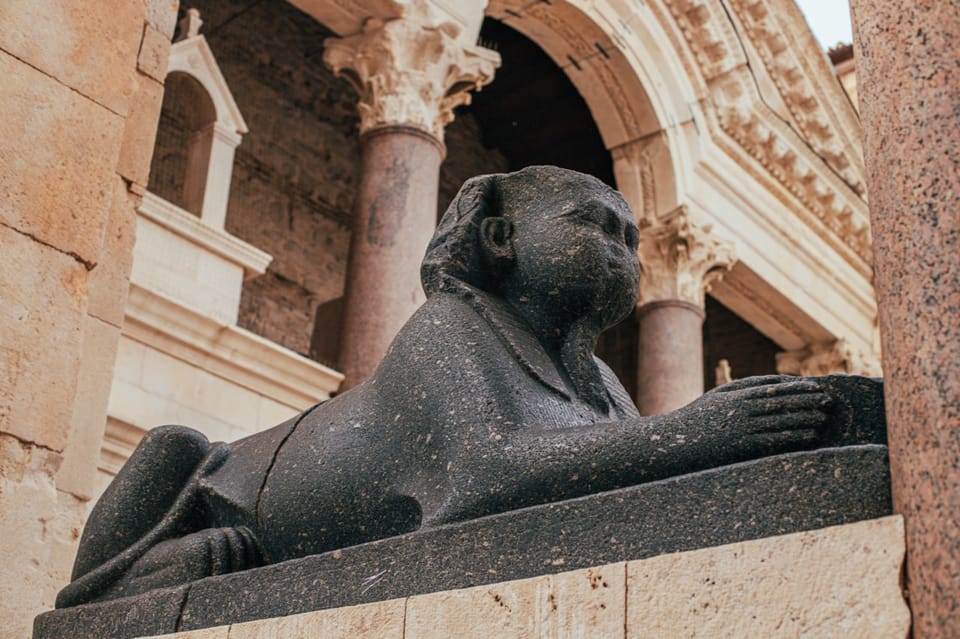
- Peristyle and Jupiter’s son: a key meeting space tied to Diocletian’s worship.
- Split Cathedral’s origin: the story of the palace mausoleum becoming a cathedral.
- Vestibule of the private chambers: the grand entry route tied to Diocletian’s inner world.
- North Gate (Porta Aurea): the most important Roman-era city gate, with history you can read in the stone.
- Church of St. Martin: a tiny church set inside the former guard corridor area.
You can also read our reviews of more walking tours in Split


Your orientation starts at the bronze model on Riva
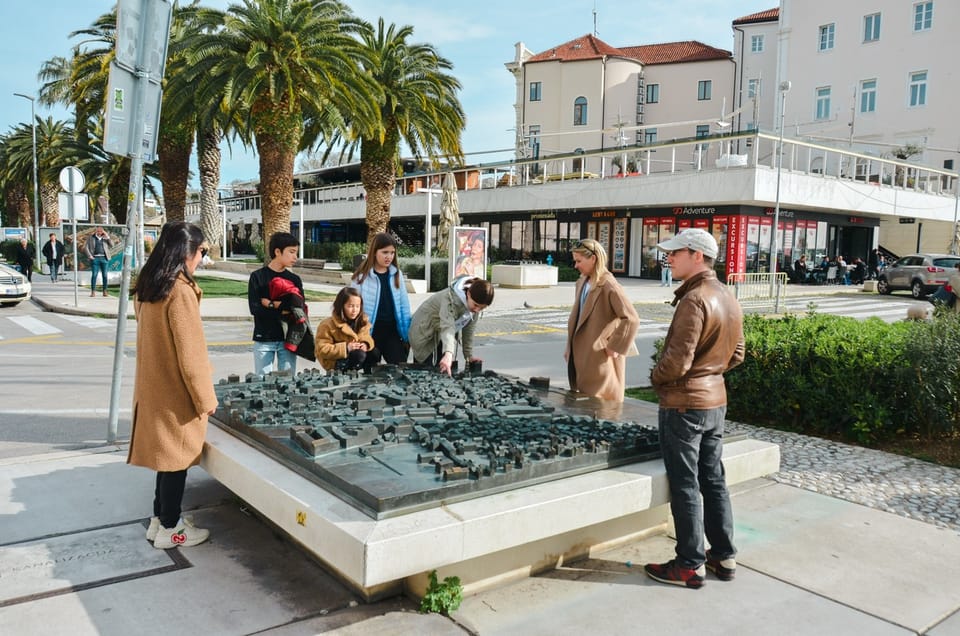
The tour begins at the bronze model of the city of Split, on the eastern end of the promenade Riva. That’s a smart start point because it lets you “see” the layout before you’re inside the maze of walls, courtyards, and corridors. It’s the kind of orientation that helps you later when you’re wandering on your own.
Because this is a private group capped at 10 participants, the guide can slow down when the palace gets confusing. And Split’s old center can be a bit of a blur at first—so having someone guide your feet and your eyes matters. The tour also ends back at the meeting point, so you’re not stuck trying to reverse-engineer a route.
Why Diocletian’s Palace feels different from a normal museum
Most historical sites act like sealed exhibits. Diocletian’s Palace acts more like a neighborhood built on top of ancient stone. That’s a big deal for your experience, because you’re not just looking at ruins—you’re walking through spaces that still belong to people in Split.
This lived-in feel changes how you understand the architecture. A doorway becomes a boundary between public and private life. A corridor becomes something you can imagine as a real movement path for guards, visitors, and officials. If you like history that connects to human scale, this palace hits well.
The setting also makes photography and first impressions easier. Instead of trying to picture the past alone, you can compare what you see now to what the guide explains about what the palace meant during Diocletian’s reign.
The Peristyle: where power met worship
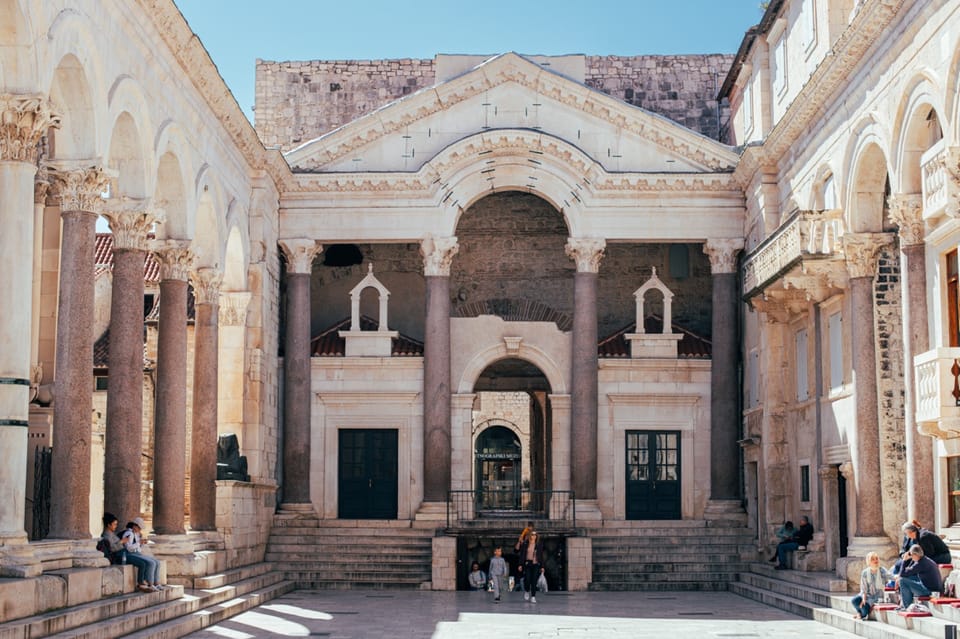
One of the tour’s biggest “aha” stops is the Peristyle, described as a central meeting place in Diocletian’s time. This area matters because it’s tied to Diocletian’s worship—specifically, him being treated as Jupiter’s son. So this isn’t just an open courtyard. It’s a stage.
I like Peristyle moments because they show the palace’s political logic. You can walk into the same kind of space where an emperor’s image wasn’t separated from religion. The guide’s job here is to connect the physical layout to the meaning of ceremonies and public appearances.
If you want an efficient way to understand how the palace worked, don’t skip this stop. It sets the tone for everything after, including the Cathedral story and the more guarded feel of the inner spaces.
Split Cathedral: from pagan mausoleum to Christian center
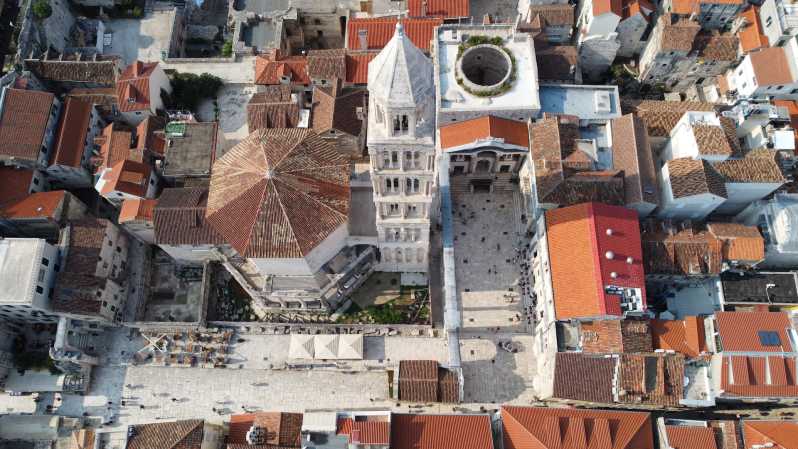
The tour also focuses on the Split Cathedral, which has a core origin story: it began as the mausoleum of Emperor Diocletian. With Christianization, the emperor’s remains vanished, and the structure shifted into a cathedral role.
What makes this part click is that you can see transformation in the way sacred meaning changes over time. The building becomes a record of political and spiritual shifts, even when you’re just outside looking at it. You’re not only learning dates—you’re learning how one space got reused and reinterpreted.
A guided explanation here helps you notice details you might otherwise miss. Even without technical architecture knowledge, you’ll come away with a clearer sense of why this spot carries so much weight in Split. It’s one of those “the story lives in the walls” locations where your imagination has something solid to grab onto.
You can also read our reviews of more private tours in Split






The Vestibule: the grand entrance to Diocletian’s private world
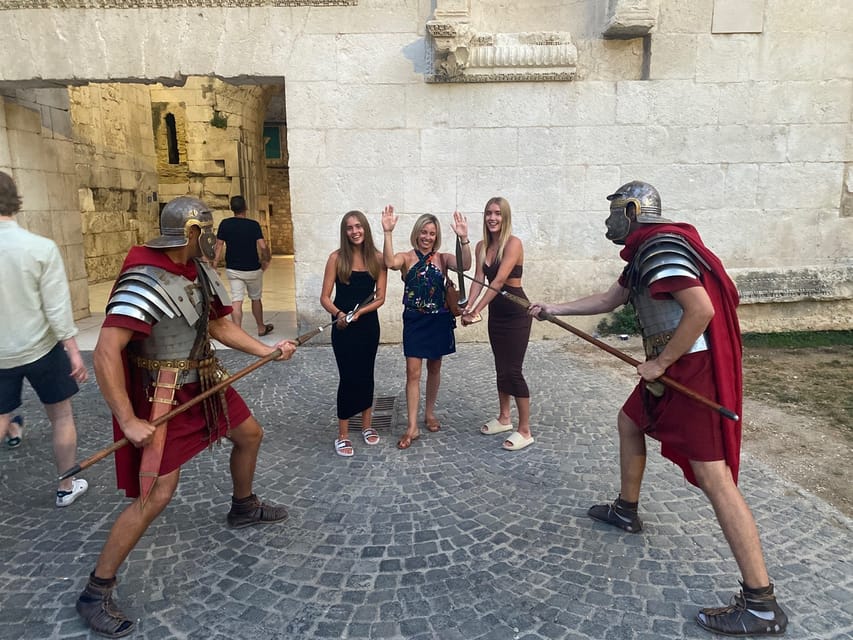
Next is the Vestibule, described as the grand entrance to Diocletian’s private chambers. This is a natural point to think about hierarchy. Who got to pass through here? Who would be received, and what would that reception signal?
For your understanding, the Vestibule helps you connect the palace to the emperor’s control of access. The guide frames it as a gateway to inner quarters and as a place where dignitaries were welcomed. Even if you’re not a “palaces are fun” person, this kind of access story usually lands, because it’s about human behavior: privilege, ceremony, and boundary-making.
This stop is also a good reality check for the whole tour. You start with public-sounding spaces like the Peristyle, then you move toward spaces that feel more restricted. That shift gives the palace a believable rhythm rather than a random list of sites.
North Gate and Porta Aurea: the city’s most important entrance

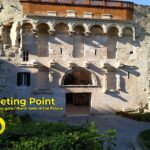
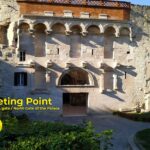
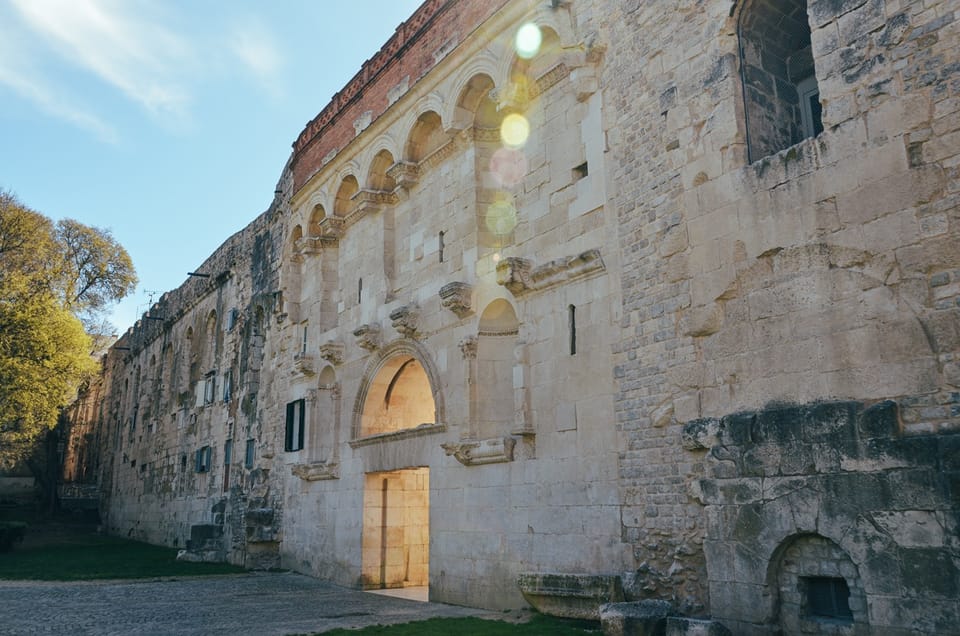
The North Gate is highlighted as the most important city gate during the Roman era, also known as the Golden Gate or Porta Aurea. This matters because city gates aren’t just entrances. They’re security, symbolism, and control—especially for an imperial complex.
When you focus on the North Gate, you’re also thinking about how Split functioned in Roman times. A palace like this needed controlled movement. It needed to manage who entered, when, and under what authority. The guide’s job here is to make the gate feel like part of the living system, not a decorative feature.
If you like architecture with clear purpose, this is a strong stop. The guide explains significance tied to architectural and cultural legacy, which helps you look beyond the surface.
Inside a former guard corridor: St. Martin’s small church effect
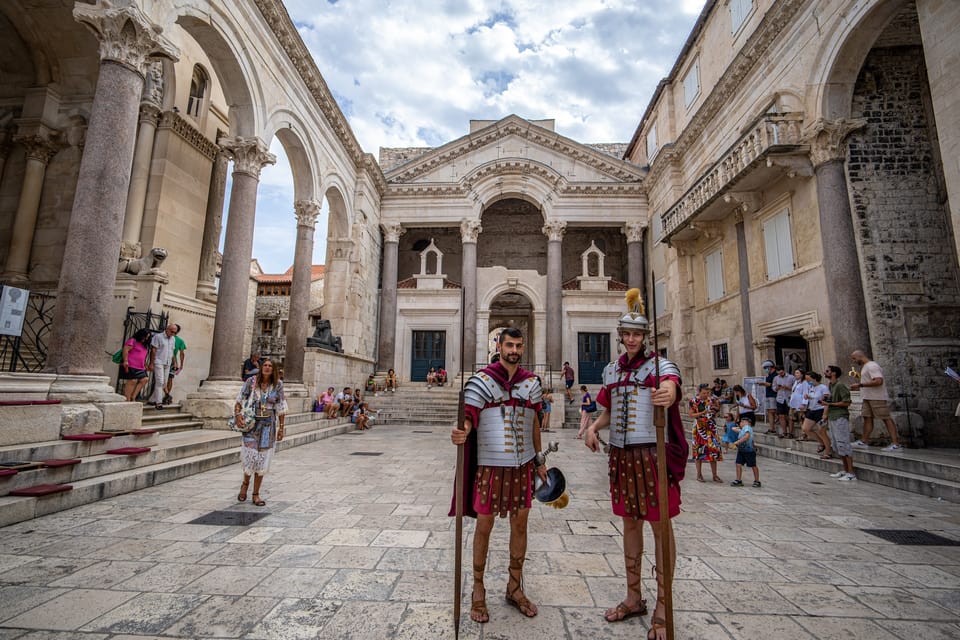
One of the most memorable details from the tour description is that inside the former guard corridor stands the Church of St. Martin, described as the city’s smallest church. That contrast is delicious: grand Roman structures with a tiny sacred space tucked into a functional corridor zone.
For you, this is the kind of stop that makes the tour feel human. It’s easy to get “big palace fatigue” when you’re focused on gates and courtyards. A small church tucked into an older corridor gives you a mental reset and a new angle on what the palace space has become over time.
Also, corridor settings are usually where stories feel the most believable. You can picture guards moving, visitors passing through, and later, a sacred space taking root in a location once built for control.
The value of a private max-10 tour (and when $135 makes sense)
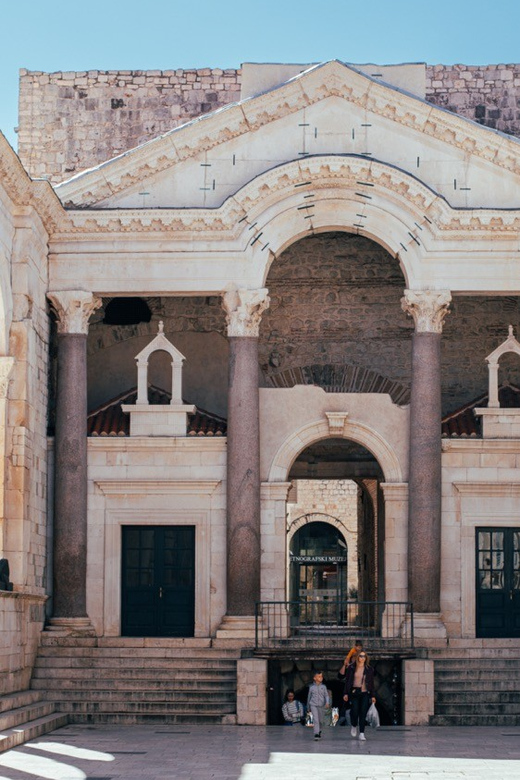
At $135 per person, this isn’t the cheapest way to see Diocletian’s Palace. But it’s priced in the zone where value comes from attention, not sheer quantity of stops. Because the group is capped at 10, you’ll get a smoother pace and more chance to ask questions when something doesn’t click.
This price is easiest to justify if you fall into one of these groups:
- You want the highlights with meaning, not just photos.
- You’d like a guided route that gives you a foundation for exploring the rest of Split on your own afterward.
- You prefer a calmer experience versus joining a larger group that moves like a school trip.
The experience is also described as individually customizable, which can help you get more out of the same core stops. If you’re especially interested in religion-and-power shifts, you’ll likely appreciate how the tour connects the Peristyle worship story with the Cathedral transformation.
If you’re traveling solo with low tolerance for paying for guidance, you might find the cost harder to swallow. But if you want your first visit to feel organized and explained, this is a fair match.
What the guide format changes about your Split day
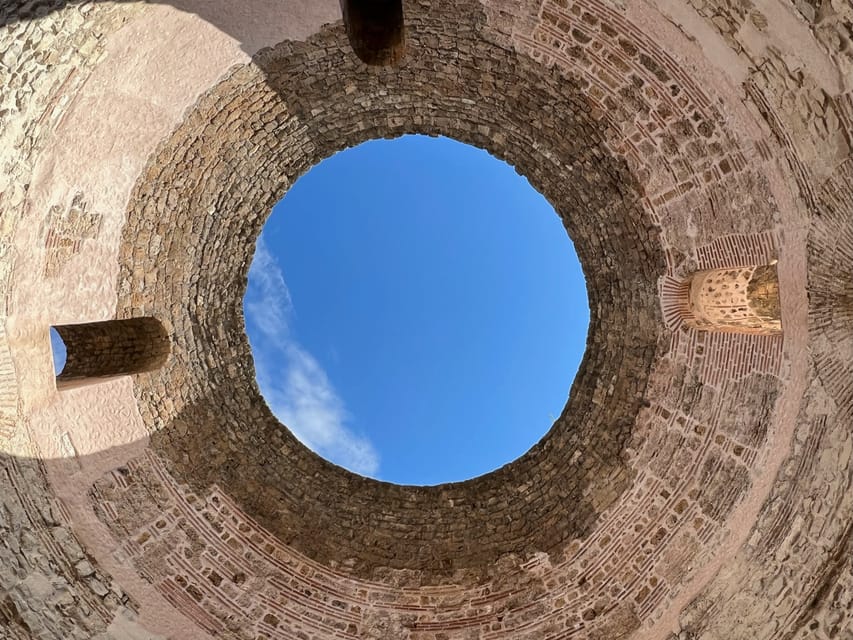
Even from the outside, the tour structure is designed for orientation and quick learning. One review praises the tour as an amazing way to see the highlights fast and get the lay of the land for the city center. That’s exactly what a good palace guide does: it helps you stop guessing.
A second review specifically calls out the guide Dana as enthusiastic and focused on making the tour unforgettable. While your guide could be different, the tour’s promise is consistent: the guide brings energy and helps you connect the dots between spaces.
In practice, the private setup tends to improve how you remember the day. Instead of collecting random facts, you get a sequence: Peristyle (worship), Cathedral (transformation), Vestibule (private access), North Gate (imperial entrance). That mental order is how the palace stops being overwhelming.
Practical tips that make the walk easier
Because the palace is partially not wheelchair accessible, you’ll want to think about your own mobility needs. The tour can be adapted with special needs if you inform the provider in advance. Even if accessibility isn’t an issue for you, it’s still worth knowing because it may affect which areas can be reached and how the route is paced.
Also, expect that some sights might not be visitable due to events or church services. If that happens, the program may shift slightly. I recommend you plan your expectations around highlights rather than assuming every single door will be open exactly as described.
One more small tip: wear shoes you trust. This is a palace walk through old stone pathways and tight spaces, and the day will feel better if your feet aren’t arguing with you.
Who should book this Diocletian’s Palace walking tour
This tour is a strong fit if you want:
- A private approach with a small group size (max 10).
- Guided context for major stops: Peristyle, Cathedral, Vestibule, and North Gate.
- A route that helps you understand what you’re seeing so you can explore Split with more confidence afterward.
It also suits couples and small families who don’t want to sprint between sites. If you like learning through place-based stories—where religion, power, and architecture overlap—you’ll likely find the content satisfying.
If you only want casual photo stops, you might not need a private guide. But if you want your first palace visit to feel clear and meaningful, this is the kind of structure that pays off.
Should you book this tour?
I’d book it if you want your visit to Diocletian’s Palace to feel organized, explained, and worth your time. The price is only really justified when a guide makes the connections between the stops, and this tour is built around those high-impact areas.
I wouldn’t rush if your schedule is tight or you’re hoping for a perfectly fixed “see everything, every time” checklist. With church services and events possibly changing access, you’ll get the best experience by focusing on the core highlights and trusting the guide to adjust the route.
If you want an efficient orientation into Split’s old center and a stronger story behind the stone, this private walk is a smart move.
FAQ
Where does the tour start?
The tour starts at the bronze model of the city of Split at the eastern end of the promenade Riva.
How big is the group?
The tour is designed for a group of maximum 10 participants.
How much does it cost?
The price is $135 per person.
What languages are available?
Languages offered are French, German, and English.
Is Diocletian’s Palace wheelchair accessible?
The site is partially not wheelchair accessible, but the tour can be adapted to special needs if you inform the provider in advance.
Can the itinerary change if a site is closed?
Yes. It may happen that some sights cannot be visited due to events or church services, and the program may be slightly changed.
Is there a pay-later option and what about cancellations?
You can reserve & pay later (book your spot and pay nothing today). You can cancel up to 24 hours in advance for a full refund.