REVIEW · SPLIT
Walking Tour of Split and Diocletian’s Palace
Book on Viator →Operated by Ancient Tours · Bookable on Viator
Split’s palace teaches fast. In about 90 minutes, you get the UNESCO heart of Diocletian’s Palace, plus a small group feel that makes it easier to ask questions. One real drawback: there are reports of hearing trouble when the palace is crowded and there are no headsets.
I like that this tour is set up for real schedules, with several start times and an English-speaking guide. You’ll also get a mobile ticket, and it runs on a simple route that starts and ends near the same spot in central Split.
In This Review
- Key things I’d circle before you go
- Diocletian’s Palace in 90 Minutes: what the walk really gives you
- Start at Peristil ul., then use the palace like a map
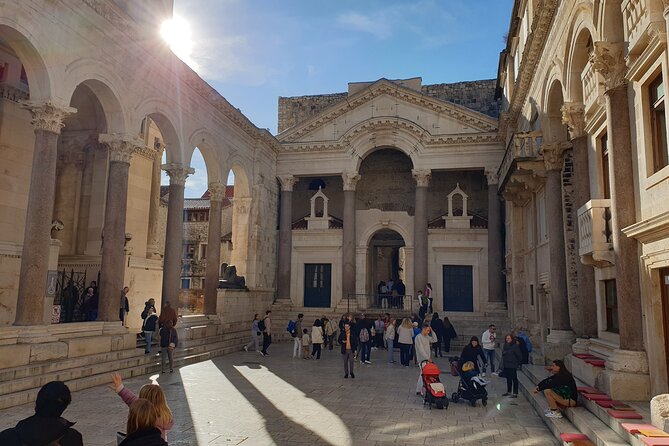
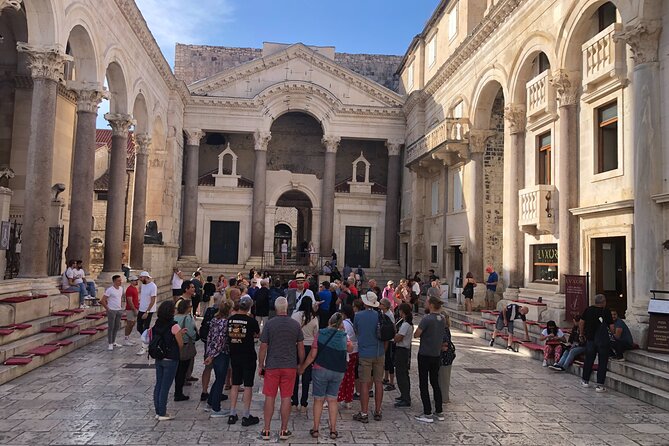
- Peristyle: the square that controls your sense of direction
- Vestibulum of Diocletian’s Palace: a quick stop with a living edge
- Substructures walkthrough: learning how the palace worked over centuries
- Golden Gate and Gregory of Nin: where history meets identity
- Riva Harbor: the bronze model that makes the palace click
- Fruit’s Square (Trg Brace Radic): Venetian walls and Marko Marulić
- Split Synagogue: a respectful pass-by, not a full visit
- Group size, stairs, and hearing: the real-world stuff that affects your experience
- Price and value: what $48.37 buys you (and what it doesn’t)
- Who should book this Split walking tour?
- Should you book this walking tour of Split and Diocletian’s Palace?
- FAQ
- How long is the Walking Tour of Split and Diocletian’s Palace?
- What language is the tour offered in?
- Is admission included for all the stops?
- What’s the main route highlight inside Diocletian’s Palace?
- What should I know about walking and stairs?
- Where do I meet the guide?
Key things I’d circle before you go
- Peristyle first: you start in the central palace square, so the rest makes sense fast
- Golden Gate + Gregory of Nin: a key entrance tied to local identity
- Riva Harbor with a bronze model: you’ll leave picturing how the palace sat in the city
- Substructures, not the museum: you learn function and history without getting stuck inside
- Venetian-era Fruit’s Square: Marko Marulić shows up in the middle of your walking route
- Pass-by Split Synagogue: a brief look at the Jewish story in Split
Diocletian’s Palace in 90 Minutes: what the walk really gives you
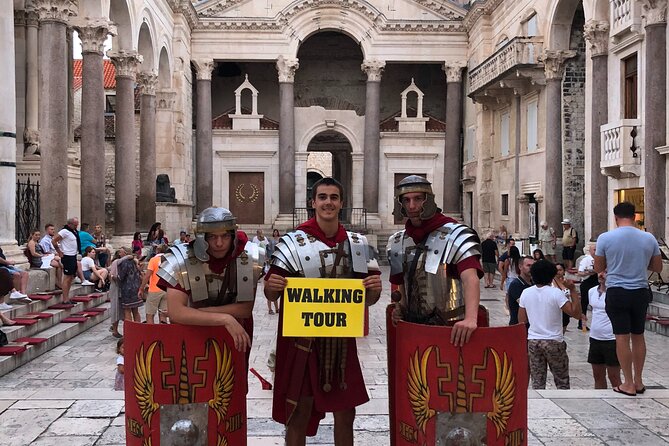
This is an orientation tour. Not a marathon. Not a deep-study archaeology lecture. It’s a fast way to learn how Diocletian’s Palace shaped Split—and how Split turned that ancient shell into daily life.
You’re basically walking a “greatest hits” loop inside and around the palace complex. The route is short enough to fit on a busy day, but detailed enough that you’ll know what you’re looking at when you wander on your own later.
You can also read our reviews of more walking tours in Split


Start at Peristil ul., then use the palace like a map

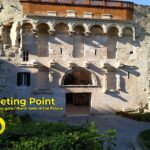
Your meeting point is Peristil ul. in central Split, and the tour finishes back there. That’s handy: you’re not trapped across town at the end, and it’s easy to link this with lunch, the promenade, or your next stop.
The palace is large, with uneven paving and lots of stairs. So your best move is this: plan to stay close to your guide for the whole route. If you drift back, you risk missing the main points—especially in busier sections.
Peristyle: the square that controls your sense of direction
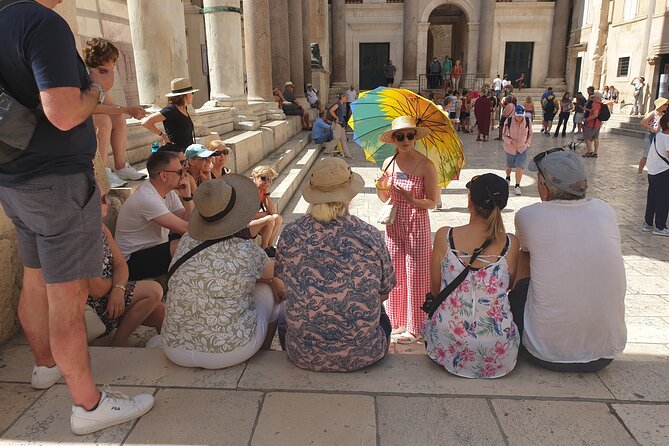
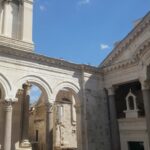
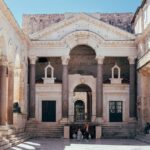
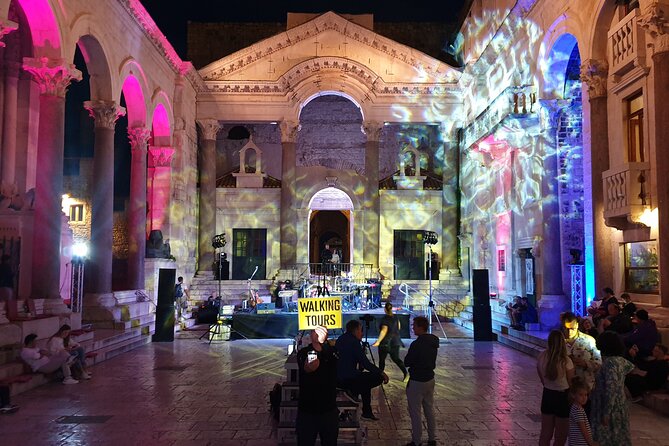
The walk starts at the Peristyle, the palace’s central square. This part matters because it’s the crossroads. From here, you can reach nearly all major areas within the palace.
Expect your guide to frame what you’re seeing: Roman planning, the idea of a palace as a self-contained world, and why Split’s later city life grew around these structures. It’s not just pretty stone—you’re learning the logic of the place.
Vestibulum of Diocletian’s Palace: a quick stop with a living edge
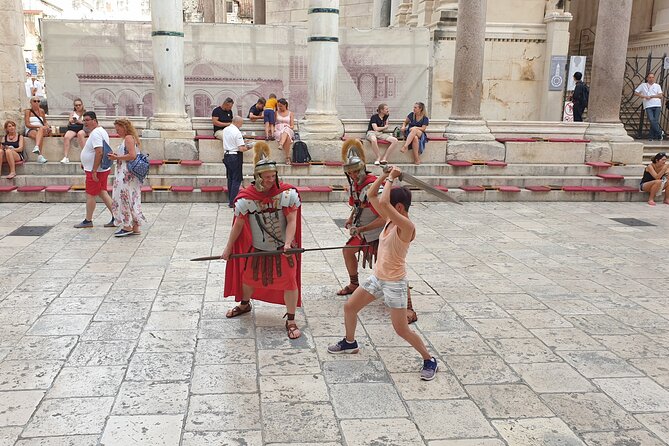
Next up is the Vestibulum, a key threshold space tied to Diocletian himself. It’s short—about five minutes—but it’s meant to give you context for how ceremonial movement worked in the palace.
The timing also leaves room for something special: there’s a chance you’ll hear traditional Dalmatian singing. Even if you don’t catch it, the guide’s explanation of the site’s role should make the space feel less like a photo-op and more like architecture with purpose.
Substructures walkthrough: learning how the palace worked over centuries
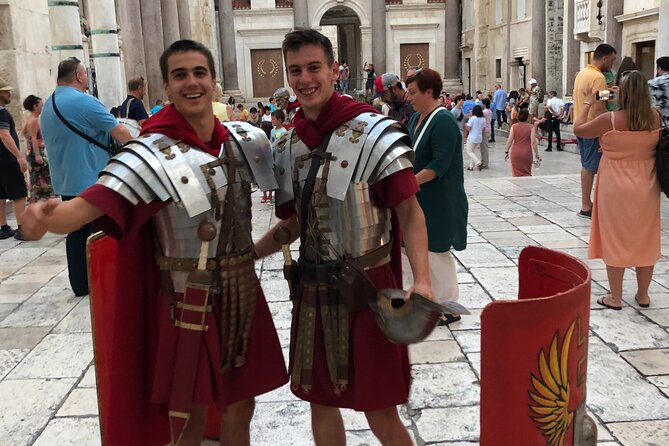
At the Diocletian Palace Substructures, you’ll get a focused look at the palace’s “under-world”—the areas that supported life above. You’ll learn about how these spaces were built and what they did, then you’ll move on before the route gets too heavy.
Important practical note: you won’t visit the paid museum portion during the tour. That’s a choice, not a mistake. If you want the extra ticketed experience, you can add the museum after your guided loop, when you already understand what you’re looking at.




Golden Gate and Gregory of Nin: where history meets identity

The Golden Gate is the main entrance to Diocletian’s Palace. You’ll get guided context for why this entrance mattered, and you’ll also spot the statue of Gregory of Nin.
Gregory of Nin is tied to local history and even language in the way the site is commonly explained here. It’s a good reminder that Split isn’t just Roman ruins—it’s a city that kept redefining itself long after the empire.
Riva Harbor: the bronze model that makes the palace click
Riva Harbor is where you shift from “walking through stone” to “understanding the whole layout.” You’ll see a bronze model of Diocletian’s Palace, which is a lifesaver if you struggle with imagining ancient complexes from street level.
Then you’ll connect that model to the promenade area—the story of Split’s Riva and how it evolved as a public space. This stop is often the point where the tour turns from facts into a picture you can keep in your head.
Fruit’s Square (Trg Brace Radic): Venetian walls and Marko Marulić
Fruit’s Square is a short walk in your loop, but it’s packed with meaning. You’ll hear about a 15th-century Venetian citadel and how this corner of Split reflects outside influence.
Then comes Marko Marulić, described as the father of Croatian literature. It’s a smart pairing: you’re seeing political and cultural layers in the same breath, all while you’re still in “walk mode,” not museum mode.
Split Synagogue: a respectful pass-by, not a full visit
You’ll pass by the 16th-century Split Synagogue and learn about the Jewish history in the city. This is not a full interior visit on this specific walk, since admission isn’t included.
Think of it as a guided introduction that puts the synagogue in context. If you want to go inside later, your tour won’t stop you—you’ll just need your own ticket for that part.
Group size, stairs, and hearing: the real-world stuff that affects your experience
This tour caps at a maximum of 20 travelers. In theory, that helps with attention, and many guides are described as funny and engaging. You’ll also likely get room to ask questions, which is where these tours can turn from a script into something more personal.
But here’s the tradeoff. Several people noted hearing issues at busy moments, often tied to the lack of earbuds or headsets. If you’re on the smaller end of the group and you position yourself near the guide early, you’ll improve your odds.
Also note the physical side. You should be prepared for uneven steps and up-and-down movement. The tour isn’t recommended if you have issues with high steps. If your mobility is limited, I’d look for a less stair-heavy option in Split’s old center.
One more practical caution: there was at least one reported case of a last-minute cancellation or a guide not showing up. I can’t predict that will happen to you, but I always think it’s smart to confirm close to departure if you’re traveling on a tight day schedule.
Price and value: what $48.37 buys you (and what it doesn’t)
At $48.37 per person, you’re paying for guided orientation through Diocletian’s Palace and key surrounding landmarks. For many first-time visitors, that’s a solid value because the palace can feel confusing without a framework.
The big “value catch” is admissions. Nothing is included as standard admission, and the tour doesn’t cover the paid museum parts (and it passes the synagogue rather than touring it inside). So budget a bit of extra money if you want to add museum entries afterward.
Still, this is often a good spend if you’re the type of traveler who learns best with a human guide. In the best cases, you leave with a clear sense of where everything fits—Peristyle, gates, substructures, harbor layout—so your self-guided time in Split gets better fast.
Who should book this Split walking tour?
Book it if you want a structured introduction early in your trip. With a short time window, this kind of route saves you from wandering the palace walls guessing what you’re seeing.
It also suits you if you like city history explained through real places: entrances, thresholds, public squares, and promenade spaces. That’s what this walk is built around.
If you hate stairs, struggle to hear in noisy crowds, or need quiet, consider another format. The core of the tour happens in a stone-and-stair environment, and hearing can be tough when lots of groups overlap.
Should you book this walking tour of Split and Diocletian’s Palace?
Yes, if you’re arriving in Split and want fast clarity. The route hits the palace’s key spatial moments (Peristyle, Golden Gate, substructures, and the model view) and then connects them to Split’s later layers like Gregory of Nin, Venetian-era Fruit’s Square, and Marko Marulić.
Think twice if you’re very sensitive to noise, because headsets aren’t included and the palace can get crowded. Also think ahead about admissions: this walk gives context, but it doesn’t automatically buy your way into every paid interior.
If you want the best outcome, do this early, stay close to your guide, and plan your museum visits right after—when the palace layout finally makes sense.
FAQ
How long is the Walking Tour of Split and Diocletian’s Palace?
It lasts about 1 hour 30 minutes.
What language is the tour offered in?
The tour is offered in English.
Is admission included for all the stops?
No. Admission tickets are not included. Some stops are described as free, but the substructures museum portion isn’t visited, and paid areas like the museum portion of the substructures are not included.
What’s the main route highlight inside Diocletian’s Palace?
You start at the Peristyle, visit the Vestibulum, pass through the Diocletian Palace Substructures, and end up at the Golden Gate area. You also see a bronze model of the palace at Riva Harbor.
What should I know about walking and stairs?
Most travelers can participate, but it’s not recommended if you have issues with high steps. Expect uneven steps and up-and-down walking.
Where do I meet the guide?
You meet at Peristil ul. (Peristil ulica), 21000, Split, Croatia, and the tour ends back at the same meeting point.