REVIEW · SPLIT
Split: Diocletian Palace & Old Town Guided Walking Tour
Book on GetYourGuide →Operated by APODOS TRAVEL AGENCY · Bookable on GetYourGuide
That first gate look does something to you. This quick tour turns Diocletian’s Palace into an easy-to-follow story, with Peristyle courtyard access and multiple famous doorways (Bronze to Iron) in under an hour. I especially like how you get the big landmarks and the smaller “how this worked” details, not just names on a wall. One thing to plan for: it’s a walking tour on uneven, cobblestone ground with about 15–30 steps.
You meet at Apodos Travel Agency near the Riva waterfront, then step into the UNESCO Old Town where Roman walls became home and later got medieval and Venetian layers. Your guide’s job is to make the layout make sense fast, and the guides highlighted by past guests (Ina, Natasa, Darko, Tin) seem to do that with humor and patience. The timing is tight—great for first-time orientation, less great if you want to linger for long photo stops everywhere.
In This Review
- Key things you’ll get
- Meeting at Apodos Travel Agency near Split’s waterfront
- Entering Diocletian’s Palace: gates, courtyards, and Roman scale
- Peristyle to private rooms: what makes this tour worth doing
- The bell tower of St Domnius: your payoff view
- Bronze to Iron Gates: reading the city’s layers on the move
- Fruit Square and the 15th-century Town Hall: where the stories get local
- How 50 minutes plays out on cobblestones
- Price and value: what $17 buys you in Split
- What this tour is like with real guides (Ina, Natasa, Darko, Tin)
- Who should book this guided walk
- Tips so you enjoy every stop instead of rushing
- Should you book this Diocletian’s Palace & Old Town guided walking tour?
- FAQ
- How long is the Split Diocletian’s Palace and Old Town guided walking tour?
- What’s the meeting point for the tour?
- Does the tour include a guided visit inside Diocletian’s Palace?
- Which sights are included on the route?
- Is St Domnius bell tower included?
- Is it wheelchair accessible?
- What languages are available for the live guide?
- What should I bring?
- Is there a ticket line to worry about?
- Is free cancellation available?
Key things you’ll get
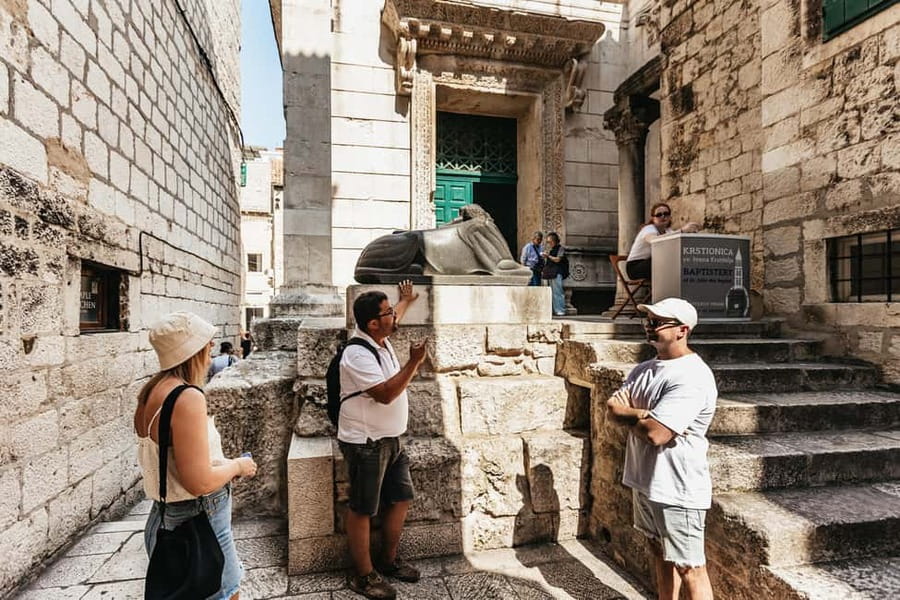
- Split’s main “why it still looks like this” explanation while you walk
- Peristyle courtyard access and a clear sense of the palace layout
- Stops at the Bronze, Silver, Golden, and Iron Gates that shaped movement in and out
- Context for St Domnius (Sv. Duje), including the bell tower views
- Time in Fruit Square plus the 15th-century Town Hall area details
- A fast way to see core sights if you’re short on hours
Meeting at Apodos Travel Agency near Split’s waterfront

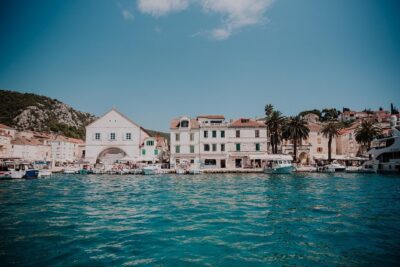
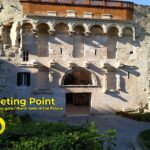
Most people start right where Split feels like Split: the Riva promenade, with cafés, palm trees, and sea wind doing their thing. Your official meeting point is Apodos Travel Agency. When you arrive, look for an open-top red bus next to the team, and staff wearing red or white shirts will help connect you with your guide.
This matters because Split’s Old Town streets can feel like a maze if you show up cold. Getting oriented at the right edge—at the busy waterfront—sets you up to move confidently once you’re inside the palace walls.
Practical note: a few guests said they had to wait a bit if the open-top bus was delayed. If the red bus is late, don’t panic—stay near Apodos and keep an eye out for the team.
You can also read our reviews of more walking tours in Split


Entering Diocletian’s Palace: gates, courtyards, and Roman scale

Diocletian’s Palace is one of those places where the architecture does the storytelling. Built in the 4th century AD for the Roman emperor Diocletian, it later became the heart of a living city. On your walk, you’ll step into spaces that used to be controlled, private, and ceremonial—and now function like normal city blocks.
The most satisfying part is how you don’t just hear that it’s “impressive.” You’re shown the mechanics of power and daily life:
- Major gates: you’ll walk past the Bronze, Silver, Golden, and Iron Gates, described as the original entry points that once protected the imperial complex.
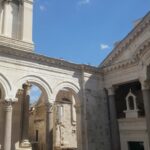
- The Peristyle courtyard: the tour includes access here, which is huge for orientation. It’s the kind of space where everything clicks—who would move where, and why the layout makes sense.
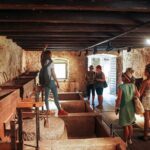
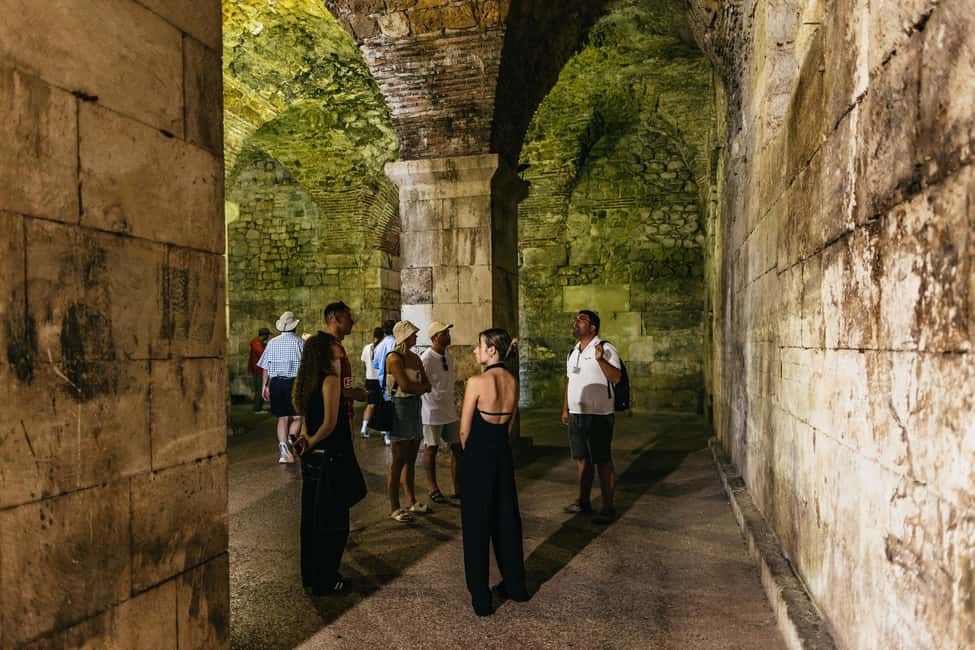
- Palace cellars and chambers: you’ll get time in areas like the cellars and Diocletian’s former private chambers, plus the private observatory.
The guide’s role is what turns stone into a story. Based on what people praise most, the best guides (Ina, Natasa, Darko, Tin) tend to explain the details clearly, then add context so you understand why different cultures shaped what you see. That’s the difference between taking photos and actually reading the place.
Peristyle to private rooms: what makes this tour worth doing
A self-guided walk can get you the highlights, but you’ll likely miss the “this is how it worked” layer—especially inside a site like this where boundaries blur (imperial palace, cathedral complex, medieval streets, and homes all mixed together).
This tour specifically includes:
- Peristyle courtyard access
- Exploration of the emperor’s private observatory
- Time around the imperial interiors, including Diocletian’s former private chambers
You’ll also get storylines about how Roman foundations became the backbone for later city life. One common theme in strong feedback is that guides help you see the palace not as a museum, but as a place people kept using and reshaping.
If you like history that answers real questions—How did residents live inside? How did power shift?—this format is ideal because it’s short and focused, and you’re moving the whole time.
The bell tower of St Domnius: your payoff view
From inside the palace world, you’ll also connect to Split’s religious landmark: St Domnius (Sv. Duje). The tour includes time at the cathedral and the chance to climb its bell tower.
This is a smart add-on. Courtyards and gates teach you scale at street level, but a bell tower climb gives you the big picture:
- You start to see how the Old Town spills beyond the palace walls.
- You understand why the waterfront matters so much.
- You get a practical mental map for the rest of your day.
It also helps that the guide keeps it moving. The tour is short (listed at 50 minutes), so you’re unlikely to get stuck in one spot for ages unless you’re very slow with photos.
Bronze to Iron Gates: reading the city’s layers on the move
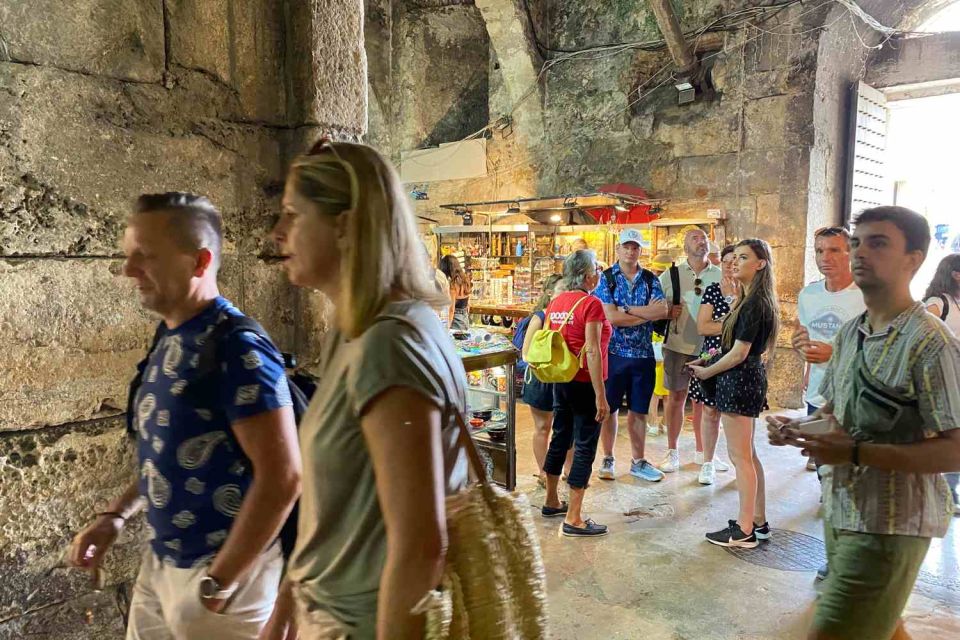
One of the best ways to understand Split is to treat it like a set of overlays. Roman engineering created the skeleton. Later, medieval and Venetian influences added character, adjustments, and new meanings to older spaces.
As you walk, your guide points out how those layers show up in real life:
- Roman entrances and protection (the gate sequence)
- Courtyard geometry that still guides foot traffic
- Later town development you can see as you wander through ancient streets
You’re basically doing a “fast map reading” exercise. And if you do this early in your trip, it makes everything after easier. The cathedral doesn’t just feel old—it feels positioned. Streets don’t just look historic—they feel arranged.
You can also read our reviews of more guided tours in Split





Fruit Square and the 15th-century Town Hall: where the stories get local
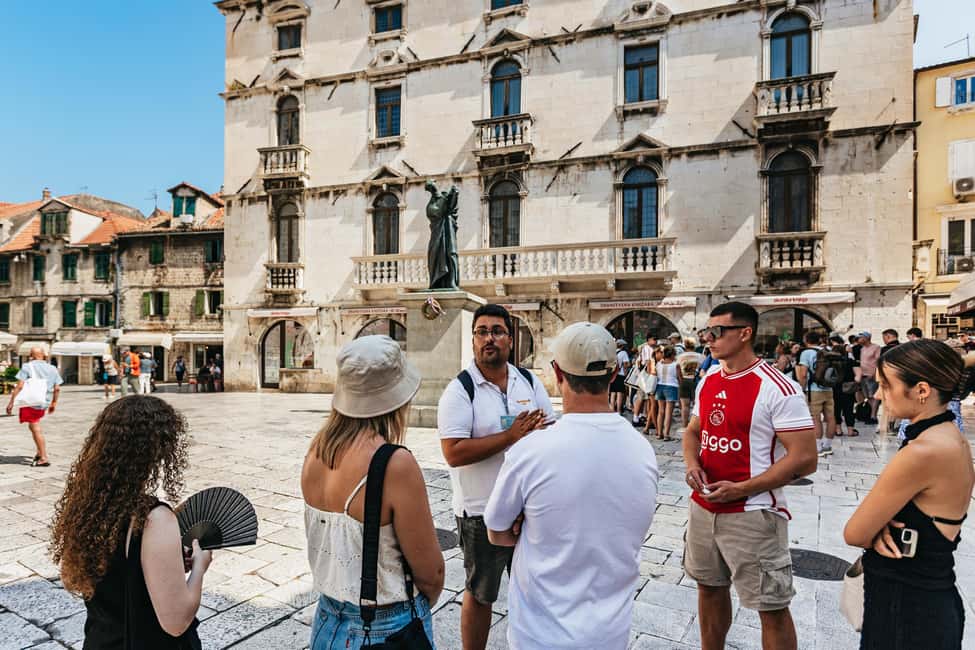
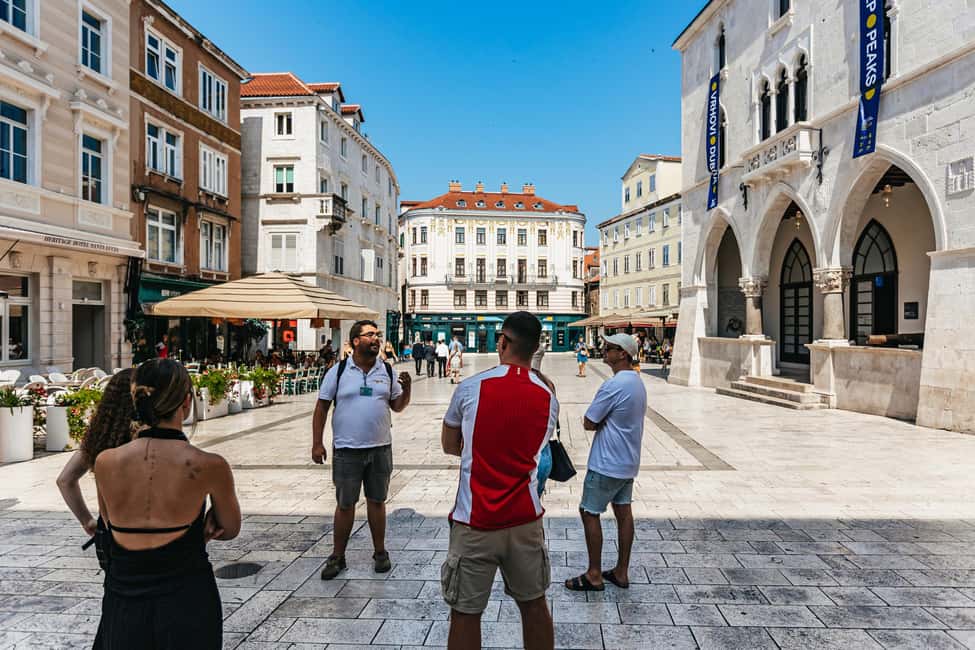
Not all the tour energy stays inside the palace walls. The walk also includes Fruit Square, with baroque monuments, plus insights into the 15th-century Town Hall.
These stops are valuable because they show how Split didn’t stop being important after Rome. You get a sense of civic life—markets, administration, and public spaces—shaped by centuries of residents.
If you like history that feels connected to daily routines, Fruit Square is a great bridge. It’s where the story changes from imperial to civic, from controlled palace life to public town life.
The tour also mentions a Benedictine stop as a hidden-interest type detail. Even if you’re not a specialist, these are the moments that help Split feel specific rather than generic.
How 50 minutes plays out on cobblestones
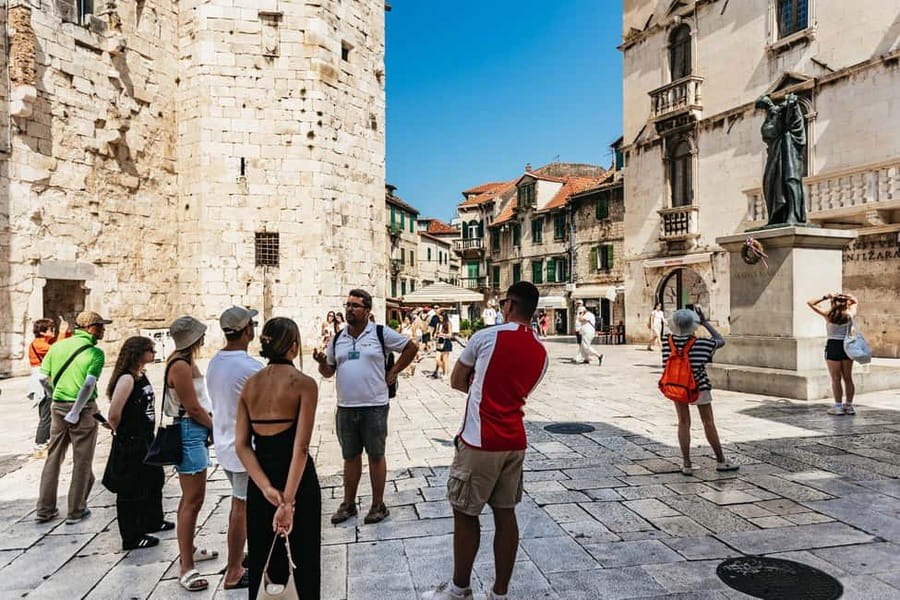
This is a short tour, and that’s both the benefit and the trade-off. You’re told to bring comfortable shoes, and the fine print notes you should be able to walk over uneven, cobblestone surfaces and handle 15–30 steps.
Here’s how that affects you:
- If you’re steady on your feet, you’ll love it because the pace keeps the energy high and the information doesn’t overstay.
- If you’re sensitive to uneven ground or you use mobility aids, check with the operator about route details. The tour is listed as wheelchair accessible, and some past guests mentioned help navigating paths with no/few steps for strollers and wheelchairs.
In other words: it can work, but don’t assume it’s like a flat museum floor. Wear shoes you trust.
Price and value: what $17 buys you in Split
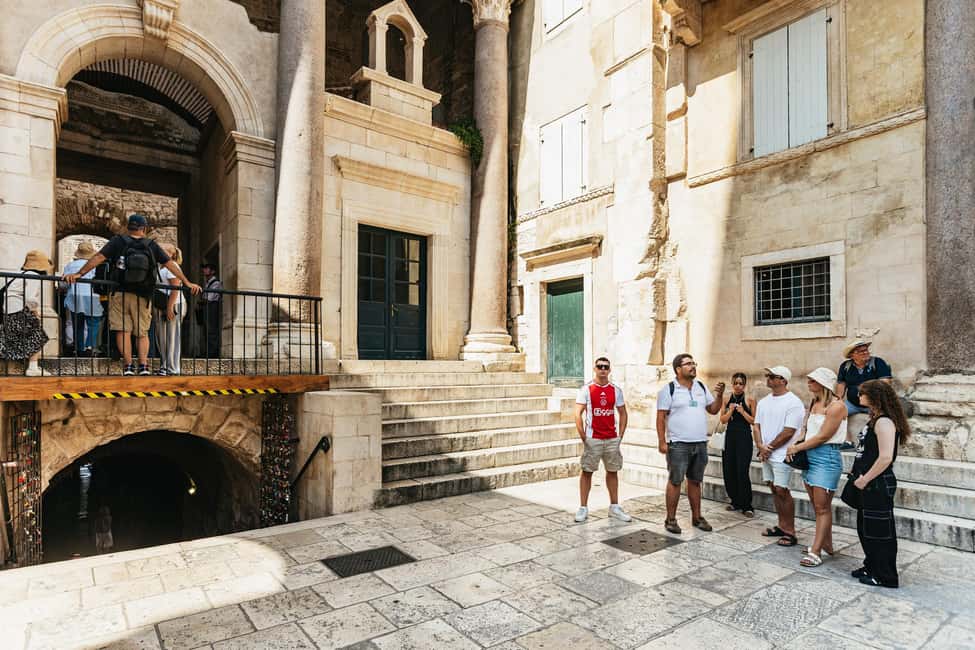
At $17 per person, the value comes from three things you can feel immediately:
- Time saved: major sights (gates, palace core areas, cathedral, and key squares) are packed into a short window.
- Understanding gained: instead of just seeing stone, you learn how the parts connect—especially the palace layout and how Split grew around it.
- Guide energy: many praised guides by name, including Ina, Natasa, Darko, and Tin. The consistent theme is clear explanations and a sense of humor, plus patience for questions.
Also, the tour includes skip-the-ticket-line for the palace experience. For a place this popular, that small advantage can matter more than you think.
If you only have a morning or a quick afternoon, this is the kind of price that feels reasonable because it buys orientation. If you have all day and you love slow wandering, you might prefer extra independent time. But for most first-timers, this price-to-time ratio is the point.
What this tour is like with real guides (Ina, Natasa, Darko, Tin)
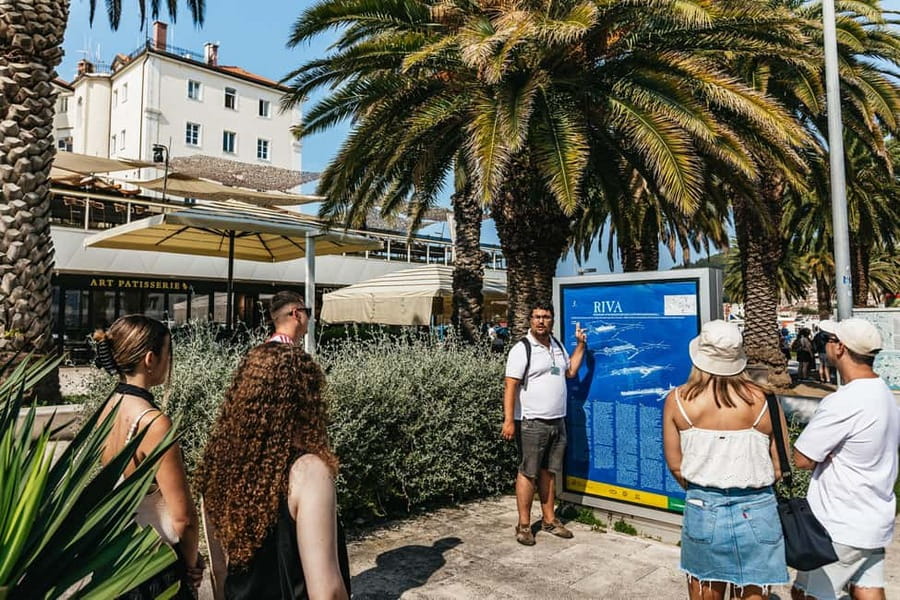
The tour is described as having live guides in English, Spanish, and Italian. Based on guide names highlighted by past guests—Ina, Natasa (also spelled Nataša), Darko, Tin—the standout traits seem to be:
- Clear, story-based explanations
- Humor that keeps you from zoning out
- Willingness to answer questions without making you feel rushed
That’s important because Diocletian’s Palace can be confusing if you don’t know what to look for. A good guide gives you “anchors,” like where the gates matter, what the Peristyle means, and why St Domnius is the view reward at the right moment.
Who should book this guided walk
I think this works best for:
- First-time visitors who want Split’s biggest landmarks explained fast
- People with limited time who still want more than selfies and a few obvious photos
- History lovers who prefer short, high-impact storytelling rather than long lecture-style tours
- Families who need a time-boxed walking plan (the tour length is a big reason it can be manageable)
If you’re the type who loves reading every inscription and sitting in silence with a coffee, you might want additional independent time after this tour. But as an introduction, it’s hard to beat.
Tips so you enjoy every stop instead of rushing
A few small choices make the difference here:
- Bring water, because you’re outside and moving.
- Wear comfortable shoes for uneven cobbles.
- On sunny days, bring sunglasses and a hat.
- On windy days, plan for long sleeves.
- Have your camera ready, especially for the gates and cathedral view.
And mentally prepare for the style: this is not a slow scenic stroll. It’s a guided route that keeps you moving and helps you connect the dots before your brain gets lost in the streets.
Should you book this Diocletian’s Palace & Old Town guided walking tour?
Yes, if you want a fast, high-value way to understand Split without getting overwhelmed.
Book it when:
- You want core landmarks covered in one go: gates, Peristyle, cathedral, Fruit Square, and Town Hall area context.
- You like having a guide explain how the palace became a living city.
- You want a short format at $17 that feels like an easy win for orientation.
Consider skipping or pairing with extra time if:
- You need lots of quiet time in museums or you dislike walking on uneven cobbles.
- You’d rather spend longer at the cathedral area and take your sweet time across streets.
If you’re doing Split for the first time and you want your bearings quickly, this is a sensible place to start.
FAQ
How long is the Split Diocletian’s Palace and Old Town guided walking tour?
The tour duration is listed as 50 minutes.
What’s the meeting point for the tour?
You meet at Apodos Travel Agency, near an open-top red bus. The team will connect you to your guide and are described as wearing red or white shirts.
Does the tour include a guided visit inside Diocletian’s Palace?
Yes. You get a guided walking tour focused on Diocletian’s Palace and Split Old Town, including key areas like the Peristyle courtyard.
Which sights are included on the route?
The tour includes access and stops such as Peristyle courtyard, the Bronze, Silver, Golden, and Iron Gates, St Domnius (Sv. Duje), and time around Fruit Square and the 15th-century Town Hall area.
Is St Domnius bell tower included?
The tour description says you can climb the bell tower at St Domnius for panoramic views.
Is it wheelchair accessible?
The tour is listed as wheelchair accessible. The info also notes you’ll need to walk over uneven surfaces and handle some steps, so it’s smart to plan accordingly.
What languages are available for the live guide?
The tour offers live guiding in English, Spanish, and Italian.
What should I bring?
Bring comfortable shoes, a camera, and water.
Is there a ticket line to worry about?
The experience is described as skipping the ticket line.
Is free cancellation available?
Yes. Free cancellation is offered up to 24 hours in advance for a full refund.