REVIEW · SPLIT
Walking Tour of Split with a ‘Magister’ of History
Book on Viator →Operated by DiocleSpot Tours · Bookable on Viator
Split grabs you fast, but the details matter. This walking tour turns the old city into a clear timeline, from Diocletian’s Roman palace to the medieval and Renaissance layers that grew right on top. I like that you get practical orientation at the start at Riva Harbor, then you move through key spots where the architecture actually shows the city’s changes over time.
Two things I really appreciate: the 3D reconstructions Toni Šare shares while you stand in front of the real stones, and the fact that you mostly stay outside major sites, so the history lesson moves at walking pace instead of museum pace. One consideration: you’ll be on your feet for about 1 hour 40 minutes to 1 hour 50 minutes, and some stops are best enjoyed only if the weather cooperates.
In This Review
- Key highlights you’ll feel in the walking pace
- Getting your bearings at Riva Harbor, with the palace wall in view
- What to watch for
- Peristyle of Diocletian’s Palace: the square you can still read
- Why this stop is worth 10 minutes
- Cathedral of Saint Domnius: the Roman mausoleum that kept its life
- A practical note
- Temple of Jupiter: spotting construction oddities from the outside
- What you’ll gain here
- Eastern (Silver) Gate to Golden Gate: the palace as a defended city
- Why the gates matter
- Grgur Ninski statue: language and identity in stone
- Best way to use this stop
- Vestibulum and Diocletian’s private residence: the “behind the scenes” part
- The quiet power of the walk
- Noble palaces, courtyards, and Venetian echoes near the city museum
- Why you’ll like the “courtyard only” approach
- Game of Thrones stops: when pop culture helps you see the city
- How to make it work for you
- The final walk-out at Piazza (Narodni trg): easy to keep exploring
- Toni Šare and the 3D method: how the tour teaches you to see
- The best part for first-timers
- Price, value, and how long 34.83 USD actually buys
- The one thing to factor in
- Who should book this walk
- Should you book it? My practical verdict
- FAQ
- What is the duration of the Walking Tour of Split with a Magister of History?
- How much does the tour cost?
- Is the tour offered in English?
- Do you enter museums or paid sites?
- Will you go inside the Cathedral of Saint Domnius or the Temple of Jupiter?
- How big is the group?
- Where does the tour start and end?
- Are there any mobile ticket or ticket requirements?
- What happens if the weather is poor?
Key highlights you’ll feel in the walking pace
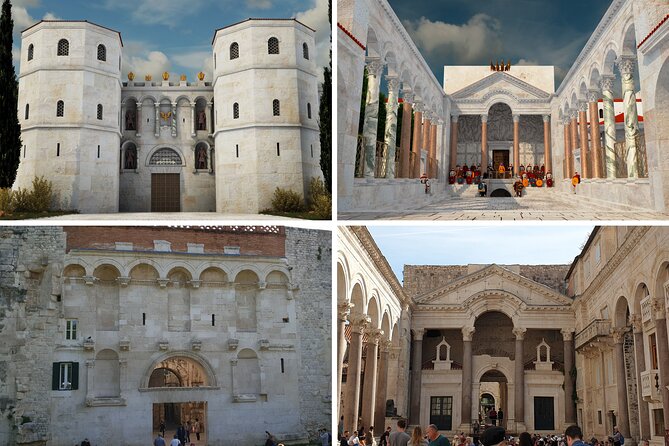
- 3D reconstructions from Toni Šare that make Diocletian’s palace feel whole, not ruined
- Roman structures plus later eras seen in order, without stopping at paid attractions
- Signature views from the gates with the Cathedral and palace walls in frame
- A small group cap of 18 so you can actually ask questions
- Game of Thrones filming stops if your group is interested plus a pass by the fan shop
- No museum detours inside (you see courtyards and exteriors instead)
Getting your bearings at Riva Harbor, with the palace wall in view
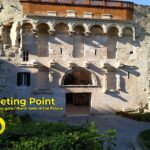
The tour starts where Split’s locals actually live: the waterfront at Riva Harbor, near the Brass Gate (Porta Aenea). Toni sets the stage right away. You’ll get an introduction to what’s ahead inside Diocletian’s Palace, using graphic and model-style representations to explain the layout before you start hunting details on your own.
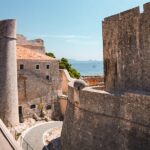
From here, you also catch one of those “oh, that’s what I’m looking at” moments: the southern wall of Diocletian’s Palace shows clearly from the Riviera. That single viewpoint helps you understand why the palace mattered, not as a distant monument, but as a working part of the city’s daily geography.
You can also read our reviews of more walking tours in Split


What to watch for
This first stop is short, around 15 minutes, but it’s a big deal for your brain. You’re learning the palace’s role before you start weaving through alleys, arches, and openings.
Peristyle of Diocletian’s Palace: the square you can still read
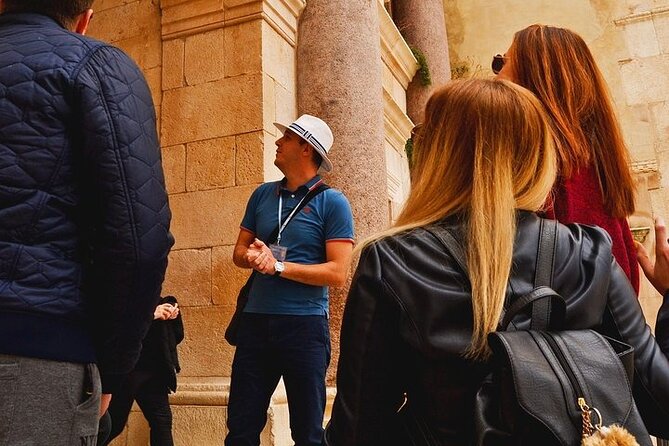
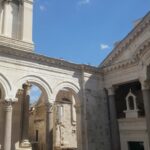
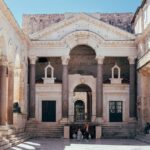
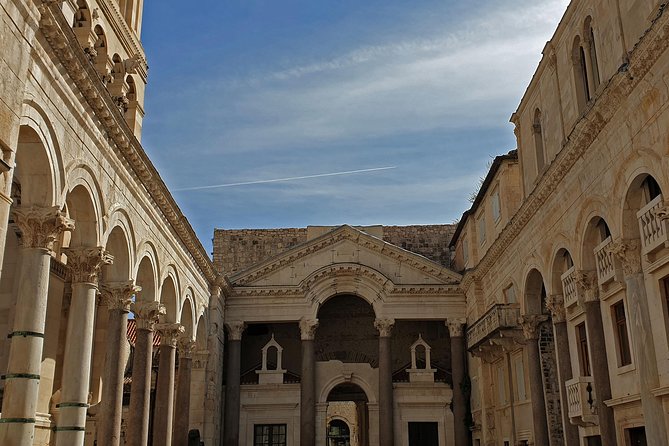
Next comes the Peristyle of Diocletian’s Palace, the central square where power and pageantry once played out. Toni keeps it focused: you’re not just standing in a cool ancient plaza; you’re learning how to “read” preserved Roman elements you might otherwise miss.
A key part here is the 3D reconstructions. Toni uses them to help you imagine the decorations and buildings as they were, not only as they survived. Even if only part of the palace remains today, the reconstruction approach gives you a sense of scale and placement.
Why this stop is worth 10 minutes
Peristyle is one of those places where the stones are still doing their job. Once you understand what used to sit where, the rest of the walk feels less random. You’ll connect the gates, entrances, and religious conversions with less effort.
Cathedral of Saint Domnius: the Roman mausoleum that kept its life
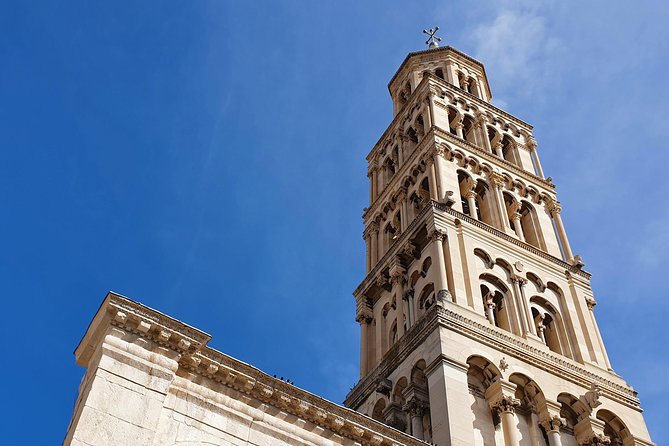
At the Cathedral of Saint Domnius, you’re close to one of Split’s best-preserved Roman structures: Diocletian’s mausoleum. The cool part is that the site is still in use, and Toni explains what you need to know without pushing you into a long visit.
You’ll learn the essentials about the bell tower and how the building was converted from a Roman tomb into a Christian cathedral. Toni’s approach is about understanding the switch in meaning, from imperial retirement space to a public religious focal point. Even without entering, you can grasp the transformation because the exterior and setting tell the story if you know what to look for.
You can also read our reviews of more historical tours in Split

A practical note
This stop is about 10 minutes. The tour does not include entry inside the cathedral.
Temple of Jupiter: spotting construction oddities from the outside
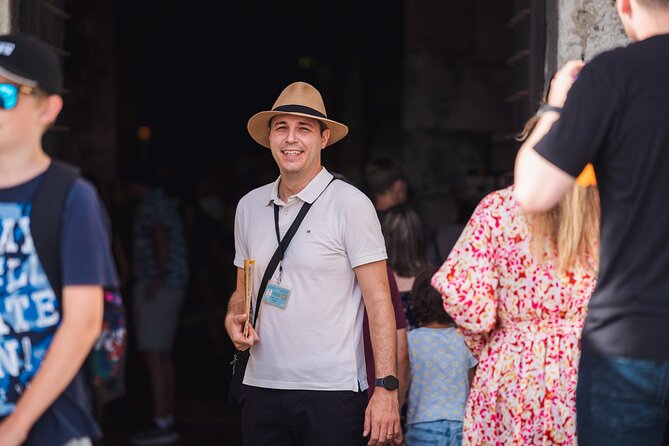
The tour then turns to the Temple of Jupiter, a late-Roman temple that’s described as one of the best preserved in the world. You won’t go inside, but you will look closely at what’s there and listen for Toni’s explanations.
This is where the tour gets extra fun if you enjoy architecture as a clue. Toni talks about anomalies and mistakes the Romans made while constructing it. That sounds nerdy, but it lands well on foot. It gives you permission to notice how buildings evolve under real-world constraints, not just how they look in ideal textbook diagrams.
What you’ll gain here
You’ll stop treating ruins like perfect snapshots. Instead, you’ll see them as projects—human work, done in stages, shaped by decisions.
Eastern (Silver) Gate to Golden Gate: the palace as a defended city
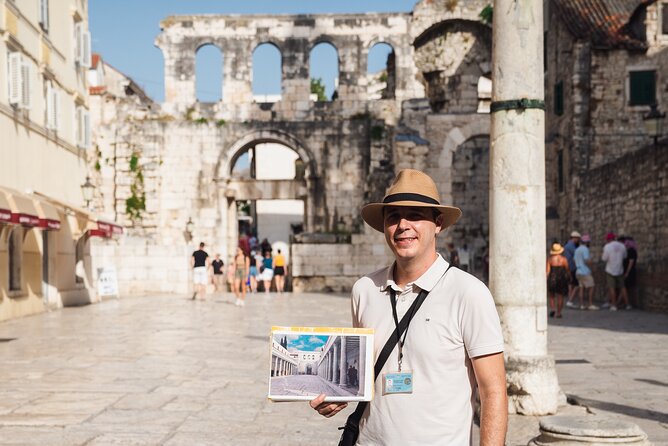
You’ll hit the Eastern (Silver) Gate for a quick 5-minute pause with big payoff: a strong view that frames the Cathedral (Mausoleum) on one side, the Silver Gate on the other, and the only preserved portion of the original road beneath. It’s a compact segment, but it ties together what came before and what comes next.
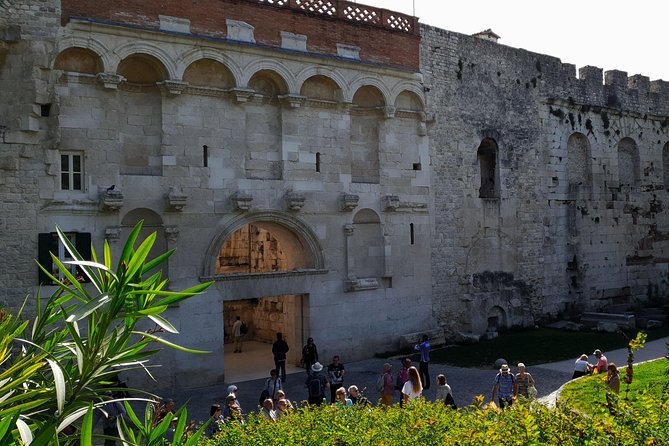
Then comes the Golden Gate, the palace’s main entrance and one of the most preserved. Toni points out why it’s memorable and decorated, and he uses it to explain how the medieval city repurposed Roman-built structures for defense. From here, you also get an excellent view of the northern wall and can see how later builders removed what they did not need.
Why the gates matter
If you only tour Diocletian’s Palace as a list of attractions, the experience can feel like a maze. Gates fix that. They show movement, borders, and how the city’s residents adapted Roman infrastructure to their own era.
Grgur Ninski statue: language and identity in stone
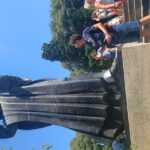
A short walk brings you to Grgur Ninski, one of Split’s most recognizable landmarks. Toni uses the statue as a doorway into early medieval Croatian culture, with a focus on what it represents and why it matters for Croatian language.
This stop is only about 5 minutes, so don’t expect a full lecture. Instead, think of it as a reminder that history here isn’t only Roman and ancient. It’s also about identity—how people lived, spoke, and built cultural meaning over time.
Best way to use this stop
Look at the statue first, then let Toni connect it to language and cultural history. The physical landmark becomes the mental hook.
Vestibulum and Diocletian’s private residence: the “behind the scenes” part
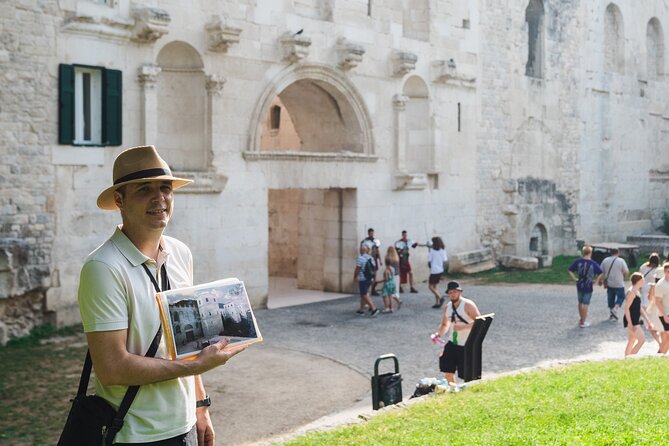
Now you move into the Vestibulum of Diocletian’s Palace, the ancient entrance to the emperor’s private residence. This is one of the tour’s more atmospheric segments because you’re walking the edge between public monument and private space.
Toni takes you around the remains of Diocletian’s private residence. The talk here focuses on how the palace wasn’t one single block of stone. It was designed with different zones and different purposes. Even if much of it is gone, the layout still shapes the feeling of where people moved and where they didn’t.
The quiet power of the walk
This part works best if you slow down your steps just a little. Let the guide’s explanation set the context, then look back at what you just passed through. You’ll start noticing the structure of the palace like a map.
Noble palaces, courtyards, and Venetian echoes near the city museum
As you continue through the palace area, Toni points out noble palaces belonging to important local families. You’re not only learning Roman origins here. You’re seeing how later wealth and politics used the same ground and adapted it into something more civic and more ornate.
You’ll also make room for a very practical cultural addition: the City Museum of Split courtyard. You do not enter the museum itself, but you stand in the courtyard within one of the best-preserved and beautiful Renaissance noble palaces. From outside and within the open space, Toni connects the architectural style to Venetian history, including how palaces like these appeared during Venetian influence.
Why you’ll like the “courtyard only” approach
It keeps you moving and keeps the story connected. You’re not forced to switch modes from walking tour to museum scavenger hunt.
Game of Thrones stops: when pop culture helps you see the city
One of the more modern perks is that Toni can point out Game of Thrones filming locations in Split if your group is interested. The walk may also include a pass by the fan shop.
This is not the core of the tour, but it’s a useful add-on. If you’ve watched the show, the extra context can turn random alleys into recognizable scenes. If you haven’t, the tour still works because it stays anchored in architecture and history.
How to make it work for you
If you care about the show, ask Toni to highlight the spots. If you don’t, you can simply let the detour happen in the background while you focus on gates, facades, and street lines.
The final walk-out at Piazza (Narodni trg): easy to keep exploring
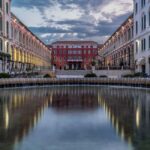
The tour ends at Narodni trg, Split’s main square, also known as Pjaca or Piazza Square. It makes sense to finish here. By the time you reach it, you understand the palace zone better, and from here you can orient quickly and head to sights or dinner without getting lost in the maze.
You’ll see the 14th-century Town Hall and other interesting structures around the square. It’s a calm closing moment that also acts like a launchpad for the rest of your day.
Toni Šare and the 3D method: how the tour teaches you to see
What makes this tour click is Toni’s teaching method. He doesn’t just point at stones and say dates. He uses 3D reconstructions and visual explanations early, then keeps returning to those mental images as you move.
That approach matters because Split’s old town can feel like a set of impressive fragments. Diocletian’s Palace is enormous, and what’s preserved can be scattered across entrances, walls, and courtyards. Toni’s job is to knit those pieces into a coherent picture while you’re still close enough to check the details yourself.
The best part for first-timers
If this is your first morning or first full day in Split, you’re likely to get your bearings fast. Even if you plan to visit sites later on your own, you’ll return to them with a clearer sense of why they’re placed where they are.
Price, value, and how long 34.83 USD actually buys
The price is $34.83 per person, and the tour runs about 1 hour 40 minutes to 1 hour 50 minutes. For that time, you’re getting a full guide-led route focused on key parts of Diocletian’s Palace and the surrounding historic core, plus demonstrations of sites with 3D reconstructions.
You’re also not paying for museum tickets as part of the experience. Some major stops note that admission tickets are not included (like the Cathedral of Saint Domnius and the Temple of Jupiter), and the tour also doesn’t enter museums or paid sites. That can be a money-saver if you prefer “look, learn, and keep walking” instead of booking multiple entries.
The one thing to factor in
Because most of the tour is outside, your comfort depends on weather. If rain or strong heat hits, your pace and patience can take a hit.
Who should book this walk
This works well if you want:
- A history and architecture orientation that helps you understand what you’re seeing
- A route built around big structural moments (gates, squares, cathedral conversion, palace zones)
- A small-group experience capped at 18 people, which makes it easier to ask questions
It’s also a good fit if you’re balancing a day with other plans. The tour is long enough to matter, short enough to still enjoy the rest of Split afterward.
Should you book it? My practical verdict
If you like your travel with clear context, this is a strong choice. The 3D reconstructions paired with key Roman-to-medieval stops are the main reason it feels better than a basic walk-through. You’ll also appreciate the pacing: you see a lot of the palace story without being trapped inside ticketed sites.
I’d skip it only if you hate walking in old streets, or if you strongly prefer museum entry over guided outdoor interpretation. Otherwise, this is the kind of intro that improves every photo you take afterward.
FAQ
What is the duration of the Walking Tour of Split with a Magister of History?
It lasts about 1 hour 40 minutes to 1 hour 50 minutes.
How much does the tour cost?
The price is $34.83 per person.
Is the tour offered in English?
Yes, it’s offered in English.
Do you enter museums or paid sites?
No. The tour does not enter any museums or paid sites.
Will you go inside the Cathedral of Saint Domnius or the Temple of Jupiter?
No. The tour explains what you need to know, but it does not include entering these sites.
How big is the group?
The maximum group size is 18 travelers.
Where does the tour start and end?
It starts at the Brass Gate (Porta Aenea) on Obala Hrvatskog narodnog preporoda 22, Split, and ends at Narodni trg (Pjaca) in Split.
Are there any mobile ticket or ticket requirements?
Yes, the tour uses a mobile ticket.
What happens if the weather is poor?
If canceled due to poor weather, you’ll be offered a different date or a full refund.