REVIEW · SPLIT
Split Walking Tour with Professor of History
Book on Viator →Operated by Split Walking Tour with History Professor · Bookable on Viator
Diocletian’s palace teaches faster on foot. This 2-hour 20-minute history walk pulls you through Split’s best-known Roman core with a real professor of history vibe, plus the kind of local context that makes the city click. I especially like how the tour starts where locals hang out on the Riva promenade, so you get daily Split life right away, not just monuments.
What I really enjoy is the way the route moves through Diocletian’s Palace from the underground to the central square and the imperial corridor. You’ll see major spaces like the substructures and the Peristyle, then get clear explanations that connect what you’re looking at to why Split still matters today. In groups led by Mario or Anita, the talk has humor and story momentum, not just dates and names.
One consideration: two of the biggest stops are mostly outside-only (Saint Domnius and the Temple of Jupiter). The guide will explain them in detail, but you’ll need extra time and a separate ticket if you want to go in after.
In This Review
- Key highlights at a glance
- Entering Split Through Riva Harbor (Porta Aenea start)
- The Riva-to-Ruins rhythm: how the walk keeps you oriented
- Diocletian’s substructures: the underground stop that changes everything
- The Peristyle: where Roman power meets street-level reality
- Vestibule (Rotonda): the imperial corridor explained
- Saint Domnius and Jupiter Temple: outside viewing with inside context
- Let Me Pass Street and the Golden Gate reveal how cities change
- Gregory of Nin and Marmontova Ulica: fun rituals with real stories
- Prokurative and Fruit’s Square: finish in the places people actually meet
- Price and value: what $24.19 buys you in real terms
- The main trade-off: outside-only stops and the wish to go in after
- Who should book this history-professor Split walk
- Should you book this Split walking tour?
- FAQ
- How long is the Split walking tour?
- What language is the tour offered in?
- Where does the tour start?
- How many people are in the group?
- Is admission included for all stops?
- Can I upgrade to a private tour?
- Does the tour include alcoholic beverages?
- What happens if the weather is poor?
- What is the cancellation policy?
Key highlights at a glance
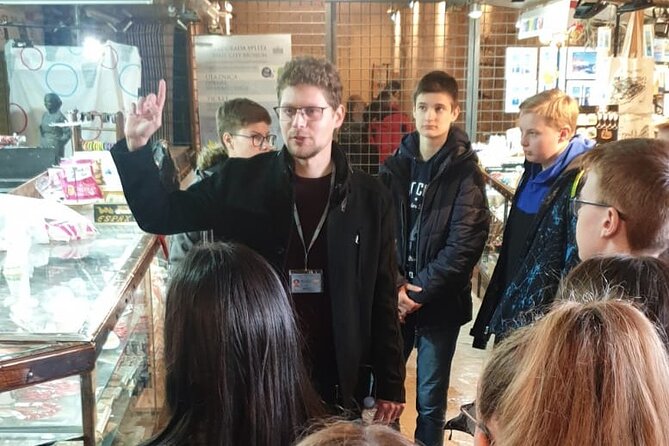
- Professor-led storytelling in English that keeps the walk moving and the facts understandable
- Small group up to 17 for better questions and more personal attention
- Diocletian’s Palace stops in sequence, from substructures to Peristyle and the Vestibule/Rotonda area
- Exterior-focused main landmarks, with clear guidance on what to look for if you visit later
- Local color built in, including the narrow Let Me Pass Street and the ritual toe-rub on Grgur Ninski
Entering Split Through Riva Harbor (Porta Aenea start)
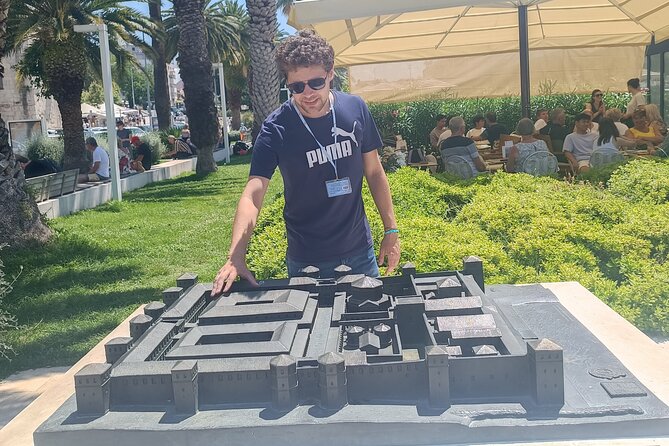
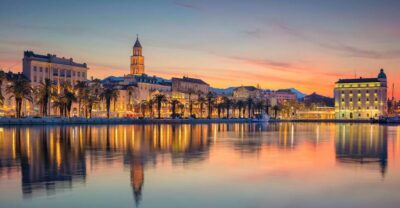
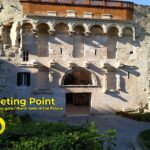
The meeting point is Porta Aenea, the Brass Gate, right by the waterfront promenade. It’s a smart place to begin because you’re already in the rhythm of Split: boats, salt air, and people watching. From there, you walk into the historic center with the tour framing what matters as you go.
I like that the start is on the Riva side, next to the model of the Palace. That small detail helps your brain switch on fast. You can picture the ancient layout before the guide starts pointing out the real remains around you. It’s also practical. You won’t waste time figuring out where things are. The tour gives you a path.
This first stretch is more than warm-up. Riva is where the local population spends time drinking coffee and enjoying the sun, and it’s where a lot of public life happens. So when the tour shifts from modern street life into Roman spaces, the contrast feels immediate instead of abstract. If you want to get your bearings fast, this approach works.
You can also read our reviews of more walking tours in Split
The Riva-to-Ruins rhythm: how the walk keeps you oriented
A good walking tour doesn’t just list stops. It teaches you how to read the city. Here’s the pattern I’d expect: short segments, then a clear explanation at each landmark, then a move that keeps you from getting stuck watching other people. The tour design also keeps stops timed so you’re not lingering too long in one hot spot.
The itinerary is built around Diocletian’s Palace, but you don’t walk in a straight museum line. You weave through the old town streets and squares so you keep switching perspectives: waterfront first, then the Palace core, then gates, then city streets and gathering spaces. That “rotate your viewpoint” style helps you connect Roman, medieval, and early-modern Split without it feeling like a history lecture.
One more plus: the group stays small (maximum 17). When the guide pauses for questions or checks whether everyone understands a detail, it lands better than in a large crowd where people can’t be heard.
Diocletian’s substructures: the underground stop that changes everything
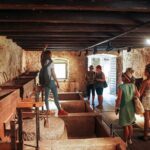
The Diocletian Palace substructures are one of those places that makes Split feel unreal. You’re stepping into basement halls from classical antiquity, and they’re described as among the world’s best-preserved complexes from that era. That phrasing matters because it sets expectations: this isn’t a cracked ruin you pass by. It’s a coherent space.
This is also a key reason the historic center of Split made it onto the UNESCO World Heritage List in 1979. The substructures aren’t just “part of the palace.” They’re a major piece of what made the whole area worth protecting. When a guide points that out, you start seeing UNESCO not as a logo, but as a shorthand for what’s truly rare.
Practical note: this is a free-ticket stop as part of the tour. That helps value because it’s one less place you have to pay separately during the walk. You’ll want to listen closely here, because once you understand what’s going on underneath, the later palace spaces make more sense.
The Peristyle: where Roman power meets street-level reality
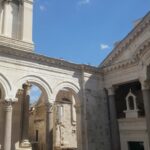
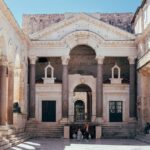
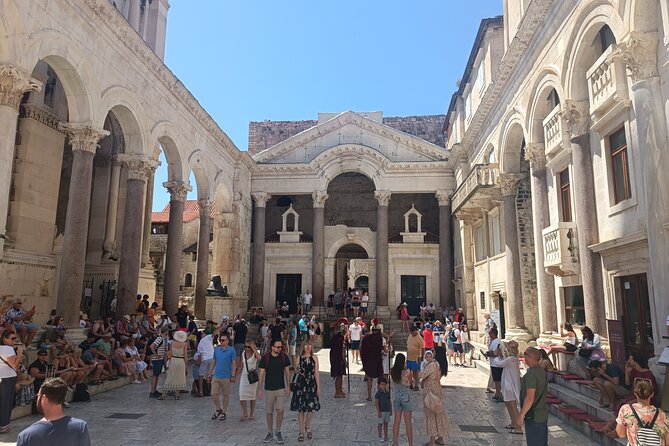
Next comes the Peristyle, the central square of Diocletian’s Palace. The tour frames it as a place intended for Diocletian as the living son of Jupiter. That’s a strong idea to visualize while you’re standing in the space. If you can picture the emperor appearing under the architrave and subjects approaching in formal submission, the scale of the square suddenly feels less like a pretty courtyard and more like a stage for authority.
What I like about this stop is how the guide helps you read movement. Roman power here isn’t only about buildings. It’s about posture and choreography: kneeling, kissing the hem of the scarlet cloak, or falling to the ground. Even if you’re just walking through, understanding the original behavior makes your eyes work differently.
Also, the tour keeps things moving. You don’t get stuck. You get meaning, then you move on.
Vestibule (Rotonda): the imperial corridor explained
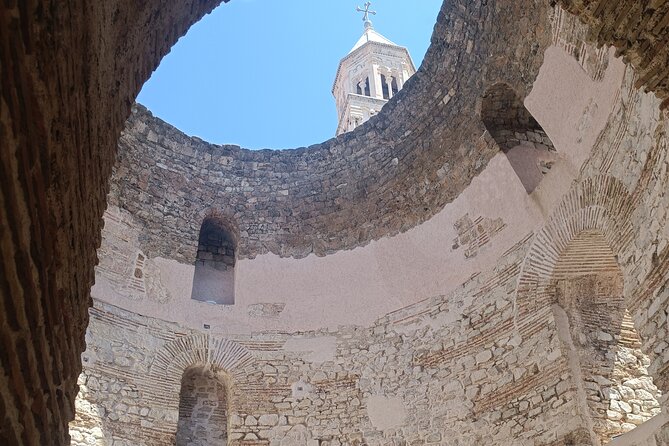
The Vestibule, also called the Rotonda, is described as the first section of the imperial corridor leading from the Peristyle to the imperial apartments. It’s a circular hall built up to the beginning of the 4th century, and it once had a dome.
I appreciate this stop because it gives you a sense of how the palace functioned day-to-day. The guide presents it as a grand meeting hall for selected audiences, such as ambassadors. So instead of thinking of the palace as only a fortress, you start picturing diplomacy and court life.
You’re hearing numbers too: about 17 meters high and 12 meters in diameter, which the guide uses to help you understand proportions. If you’ve ever felt lost in big ancient spaces, this kind of simple measurement anchoring helps a lot.
Admission is free as part of the tour, so again you’re not paying extra at key moments.
You can also read our reviews of more historical tours in Split

Saint Domnius and Jupiter Temple: outside viewing with inside context
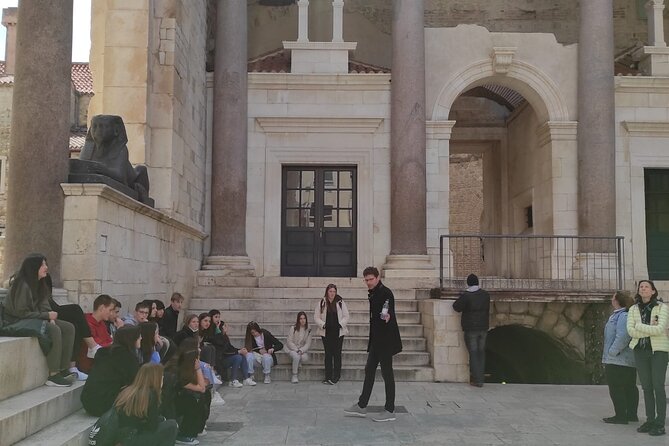
Two major landmarks come up next, and the tour is honest about how it handles them: you view Saint Domnius and the Temple of Jupiter from the outside only. Entrance tickets aren’t included, but you still get the kind of “what to look for” guidance that can make a later self-visit worthwhile.
Saint Domnius is described as a Roman temple, mausoleum, and church, depending on how you look at it. That line is useful because it pushes you to interpret the building through multiple eras instead of hunting for a single time period. The guide gives detailed information during the exterior stop, and then invites you to consider visiting after the tour if you want to go in.
The Temple of Jupiter is also outside-only during this walk. The tour explains Jupiter as the god of the sky and thunder and describes him as the supreme god in ancient Roman religion. Then comes a key twist: during history, the Temple was converted into a baptistery dedicated to St. John the Baptist. That kind of conversion story is exactly what makes Split feel layered.
If you like structures with a “before and after,” these two stops deliver. If you’re the type who wants to go in everywhere, plan extra time. The tour gives context now; you choose the deep look later.
Let Me Pass Street and the Golden Gate reveal how cities change
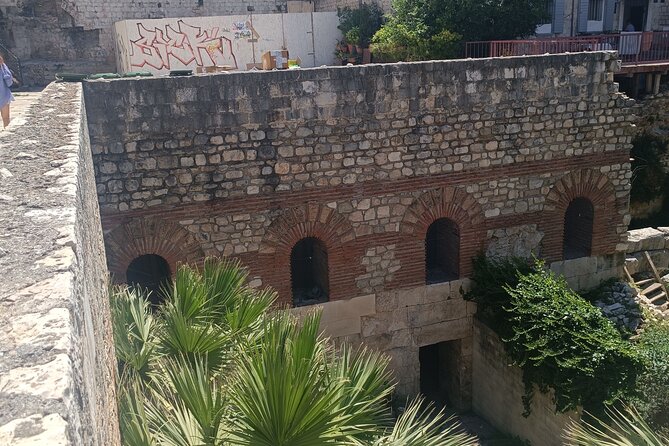
On the walk to the Golden Gate, you go through a small street between the ancient temple and a medieval building. Locals call it Let Me Pass Street, and they say it’s the narrowest street in the world. Even if you take that with a grain of skepticism (every city has a claim like this), it’s still a memorable pause because it shows how old spaces get squeezed and reused as new eras stack on top of each other.
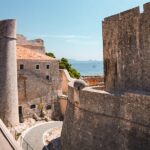
Then you reach the Golden Gate, also called the Northern Gate. This is one of the four main Roman gates into old town Split, built as part of Diocletian’s Palace. The guide explains its original role: it served as the main gate through which the emperor entered, and it was elaborately decorated to mark status.
One helpful part: the tour covers why it doesn’t look exactly like a perfect Roman gateway today. Over the Middle Ages, the gate was sealed off and lost its columns and statuary. In modern times, it reopened and was repaired, and it now serves as a tourist attraction.
That “then it was sealed, then it reopened” arc makes the gate feel less like a random photo spot and more like a surviving document.
The Golden Gate stop is also free-ticket during the tour.
Gregory of Nin and Marmontova Ulica: fun rituals with real stories
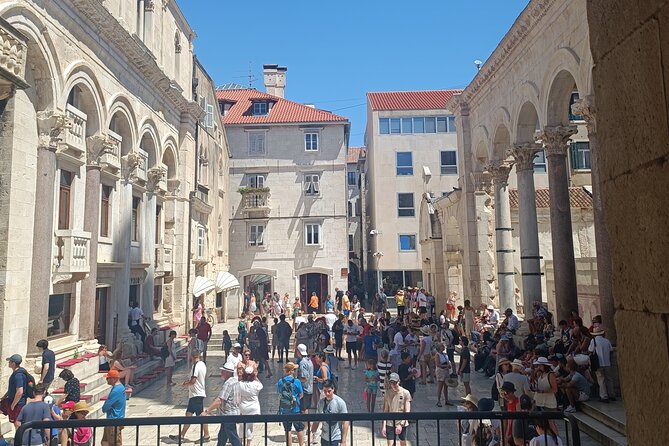
Split doesn’t only do solemn monuments. You also get humor and local legend.
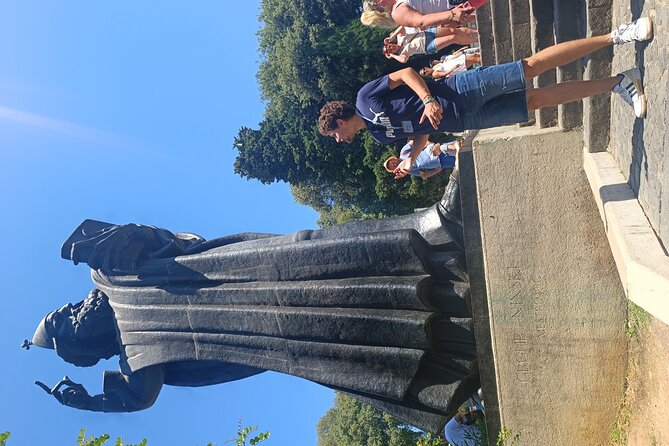
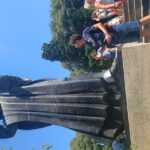
Grgur Ninski’s statue by Ivan Meštrović is a major stop, and yes, it’s the kind of place where people make the time for one small ritual. The tour explains the statue’s height (about 8.5 meters) and points out that rubbing the statue’s toe is said to bring good luck. The toe has been worn smooth and shiny from all that touching. That’s one of those details that turns history into something you can participate in without needing a ticket or a long line.
Then you walk to Marmontova Ulica, named after Napoleon’s marshal Marmont. The tour explains the link to urbanization in Dalmatian cities, and the citizens named their most beautiful street after him. That’s a neat reminder that Split’s story isn’t only ancient Romans and medieval bishops. The city kept shaping itself, even under later powers.
These stops are short, but they matter because they show how the city’s identity is carried in names, habits, and small acts.
Prokurative and Fruit’s Square: finish in the places people actually meet
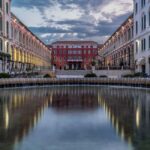
The tour rounds out at Republic Square’s Prokurative, a wide open square surrounded on three sides by neo-Renaissance buildings. The timing here is right: you’ve spent time in Roman spaces, then medieval-exterior context, then street-level stops. Finishing in a square helps your eyes relax and gives your brain a “city scale” reset.
After that, the final stop is Fruit’s Square (Trg Brace Radic). The tour describes it as a small, beautiful square where ladies used to sell fruits. The guide brings in an important monument too: the statue of Marko Marulić, described as the father of Croatian literature.
What I like about this ending is that it turns into a bridge between history and everyday life. The tour frames this as a spot for stories about Croatian history and gastronomy. So rather than ending at another Roman relic, you end at a place where you can imagine meals, conversations, and local routines.
Price and value: what $24.19 buys you in real terms
At $24.19 per person, the value here is strong for a few reasons. First, the price includes all fees and taxes, which matters because walking tours often nickel-and-dime you at the door. Second, multiple stops are listed as free-ticket within the tour, so you’re not building a separate line-item budget while you’re already on foot.
Third, the tour runs about 2 hours 20 minutes, which is a good sweet spot. It’s long enough to get meaning from the palace sequence and the old town context, but not so long that it feels like you’re spending your whole day walking and standing. In one example, a participant felt it ran around 3 hours. So if you’re time-tight, consider starting your day with a little flexibility.
Finally, small group size (up to 17) is part of the value. You’re not just buying access to places. You’re buying a professor-led explanation and enough breathing room to ask questions. That’s especially useful when you’re dealing with complex architecture like the Palace substructures and imperial spaces.
The main trade-off: outside-only stops and the wish to go in after
If you’re hoping for a ticketed indoor circuit, this tour has a built-in trade-off. Saint Domnius and the Temple of Jupiter are outside-only during the walk, and entrance isn’t included. The guide compensates by sharing detailed information anyway, so you leave with a map for your next stop.
That’s actually a smart compromise for most visitors. You get the big picture without adding extra check-in time inside. Then you can choose whether you want the extra time and ticket cost on your own schedule.
I’d recommend this setup if you like to self-direct your deeper visits later. If you prefer everything to be handled inside the group time window, you might find yourself wanting more.
Who should book this history-professor Split walk
This tour is a great fit if:
- you want context for what you’re seeing in Split Old Town, not just a list of sights
- you like hearing stories with humor, the kind guides like Mario tend to bring
- you want a small-group format that makes it easier to ask questions
- you’re visiting for the first time and want to get oriented around Diocletian’s Palace
It may be less ideal if you have extremely rigid time blocks and can’t stretch past the stated duration. Also, if you’re the type who hates standing without frequent seating breaks, you’ll want to plan for weather. One review mentioned the guide kept people in the shade when possible, which is a good sign for comfort.
One more practical upside: the tour ends back at the meeting point, which makes it easier to continue your day on your own afterward.
Should you book this Split walking tour?
I’d book it if you want the fastest path to understanding why Split works as a layered city. The professor-led approach helps you connect the spaces: Riva’s street life, the palace underground, the central power space, then gates and public squares where the city shows its later identity.
Skip it only if you specifically want an inside-only, ticket-heavy route where you don’t want to add extra stops after. Otherwise, $24.19 for a professor-style guided route through the core of Diocletian’s world is a very practical first-day move.
If you can, go with a mindset of curiosity. Bring comfortable walking shoes and a water plan, because even a well-paced tour includes standing and shifting viewpoints across ancient stone.
FAQ
How long is the Split walking tour?
The tour runs about 2 hours 20 minutes.
What language is the tour offered in?
It’s offered in English.
Where does the tour start?
It starts at Brass Gate (Porta Aenea), Obala Hrvatskog narodnog preporoda 22, 21000 Split, Croatia.
How many people are in the group?
The tour has a maximum of 17 travelers.
Is admission included for all stops?
Many stops are free with the tour ticket, but Saint Domnius and the Temple of Jupiter are not included. Those two are viewed from the outside during the tour.
Can I upgrade to a private tour?
Yes. The experience offers an option to upgrade to a private tour for a more personalized experience.
Does the tour include alcoholic beverages?
No. Alcoholic beverages are not included.
What happens if the weather is poor?
The tour requires good weather. If it’s canceled due to poor weather, you’ll be offered a different date or a full refund.
What is the cancellation policy?
Free cancellation is available up to 24 hours in advance for a full refund.