REVIEW · SPLIT
SPLIT-PRIVATE Walking Tour of Diocletian’s Palace & Old Town
Book on Viator →Operated by Walking Tour of SPLIT · Bookable on Viator
Split is one of those places where the past walks right alongside you. This private walking tour takes you inside and around Diocletian’s Palace and then through Old Town Split, using a guide’s stories to make the centuries feel connected. It’s timed well for first-timers, with a lot packed into about 2 hours.
I especially love how the tour mixes big, famous spots with the smaller “how this place actually worked” details. The second thing I love is the guide style: clear explanations plus enough humor to keep it from turning into a lecture, even when the group includes teens. You’ll also have a little flexibility because this is truly just your group.
One thing to consider: parts of the experience lean more historical than scenic. You spend meaningful time at the palace’s lower areas (and the optional museum/cellar-style admission costs extra), so if you want wall-to-wall outdoor views, plan for some indoor or under-palace time.
In This Review
- Key highlights to look for
- Entering Diocletian’s Palace: the 305 courtyard feeling
- Old Split streets: finding your bearings in medieval layers
- Cathedral of Saint Domnius: see it outside, choose whether to enter
- Riva Harbor: the waterfront anchor of your walk
- The Peristyle (Emperor’s Square): why Split still centers here
- Grgur Ninski Statue: a local hero moment
- Fruit’s Square (Trg Brace Radic) and Marul
- Narodni Trg: the biggest old-town square feeling
- Temple of Jupiter: optional interior, short outside look
- City Clock: a 24-hour time capsule
- Golden Gate: the beautiful main entrance moment
- Diocletian Palace Substructures: the part most people remember
- Vestibulum of Diocletian’s Palace: the emperor’s doorstep
- Price, group size, and why $240 can still feel fair
- Guides, pacing, and what the tour is really like
- What you should bring and how to time it in Split
- Should you book this Split private tour?
- FAQ
- How long is the SPLIT private walking tour?
- Is this tour private?
- What does the price include?
- Are entrance fees included?
- What optional admission costs might come up?
- Where does the tour start and end?
- Is the tour offered in English?
- Do I need a physical ticket?
- What is the cancellation policy?
- What happens if weather is bad?
Key highlights to look for
- Diocletian’s Palace (UNESCO) in a tight, first-time-friendly route through the palace’s main spaces
- Old Split town walk that helps you understand where to go next on your own
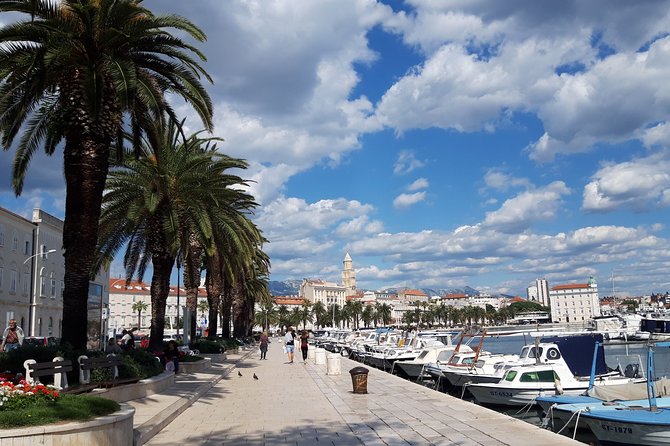
- Riva promenade start/finish for easy timing and photo opportunities at the waterfront
- Peristyle and Emperor’s Square moments that show why Split still centers on these spaces
- Five-hundred-year-old 24-hour City Clock that gives you a quick local time-capsule
- Optional add-ons like Saint Domnius and the Temple of Jupiter, if you want to go inside
Entering Diocletian’s Palace: the 305 courtyard feeling
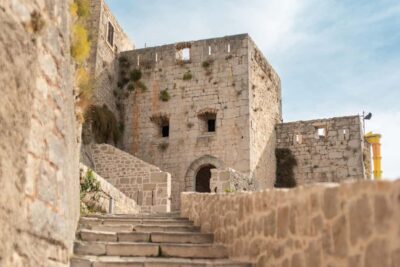
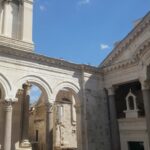
Diocletian’s Palace is the reason Split is Split. The tour begins with a guided introduction to the palace grounds, built in AD 305, and it immediately answers the big question: how did a Roman ruler’s fortress become a living old city?
This is not a “look at the stones and move on” style stop. Your guide links layout to daily life, so the arches, courtyards, and passages stop feeling random. You’ll get oriented fast, which matters because the palace is a maze of streets built right into Roman walls.
Quick value check: although the palace entry for the main guided portion is free within this tour, your time here sets up the rest of the walk. You’ll understand what you’re seeing when you later reach gates, squares, and the lower-level remains.
You can also read our reviews of more walking tours in Split


Old Split streets: finding your bearings in medieval layers
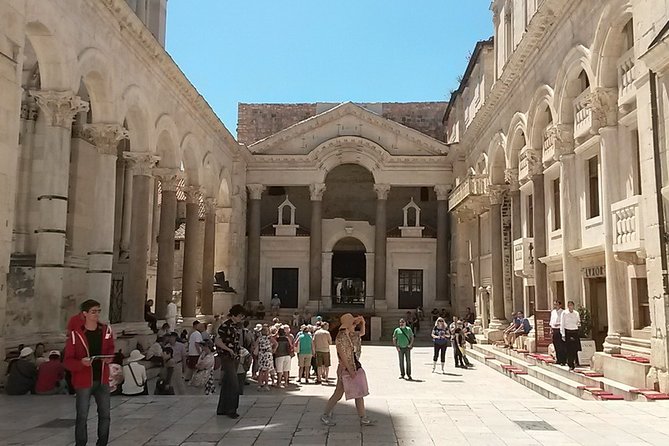
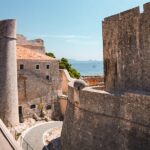
Right after the palace introduction, the route shifts into Old Split. This is where you’ll feel the “real city” part of the experience, moving through medieval streets that grew around the Roman structure.
The payoff is simple: once you learn the palace-to-town connections, you can keep exploring after the tour without constantly getting lost. If you’re doing your first day in Split, this is a smart way to get orientation while your brain is still fresh.
A small consideration: this portion stays focused and short. If you want a long free-roaming wander, treat this as your guided map, not your whole day in the old town.
Cathedral of Saint Domnius: see it outside, choose whether to enter
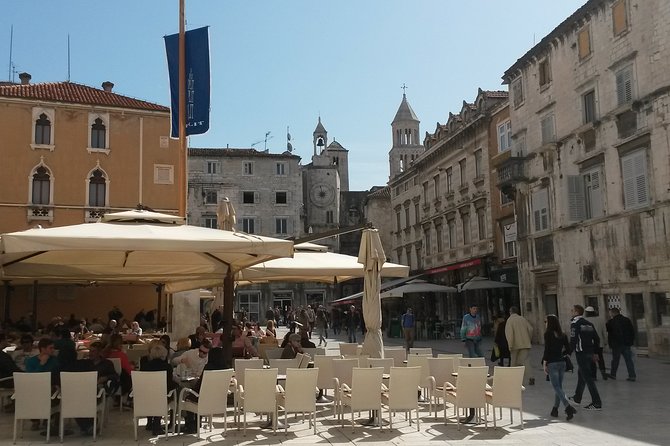
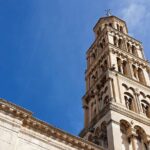
You’ll view the Cathedral of Saint Domnius from outside as part of the route, with an option to go inside if you want. The optional interior visit costs 3.5 EUR per person, so you can decide on the spot based on time and interest.
Even if you skip the interior, this stop still works. It adds a religious and cultural layer to the Roman story you’ve been hearing, and it helps you connect the palace era to the city that formed around it.
Tip: if your group includes people who like interiors, factor the optional fee into your budget early so nobody is forced to decide mid-moment.
Riva Harbor: the waterfront anchor of your walk
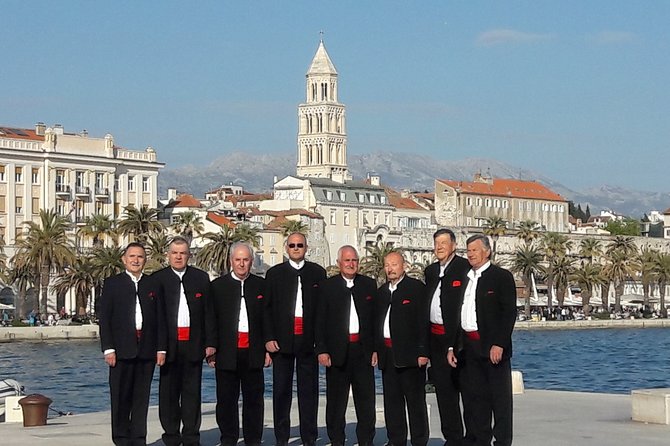
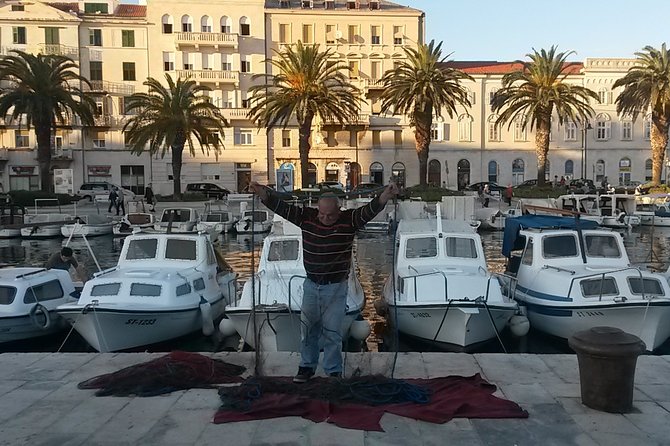
The tour starts and finishes at the Main Riva Promenade. This matters more than it sounds. Riva is where Split feels most like Split—light, sea air, and that classic Adriatic atmosphere—so it’s a good stage for meeting, gathering attention, and wrapping up.
It’s also practical. You’re close to a well-known public area, which makes the tour easier to slot into your day. If you want lunch after, you’ll have choices nearby.
The Peristyle (Emperor’s Square): why Split still centers here
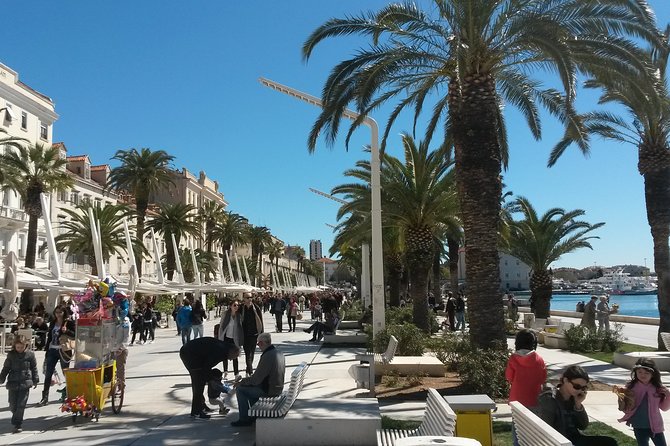
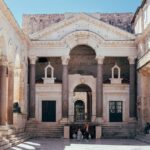
Next comes one of the most important spaces in the whole palace complex: the Peristyle, sometimes referred to as Emperor’s Square. This is the place that gives the tour its pulse. It’s the kind of Roman-imperial architecture that makes you understand why these spaces were power centers, not just fancy rooms.
This stop is brief, but it’s memorable. Your guide points out what makes the square function and what made it meaningful in the emperor’s world, then shows how its role shifted as centuries moved on.
If you only remember one “anchor moment” from the palace, make it this. The peristyle helps you visualize the scale and intent of Diocletian’s design.
You can also read our reviews of more private tours in Split





Grgur Ninski Statue: a local hero moment
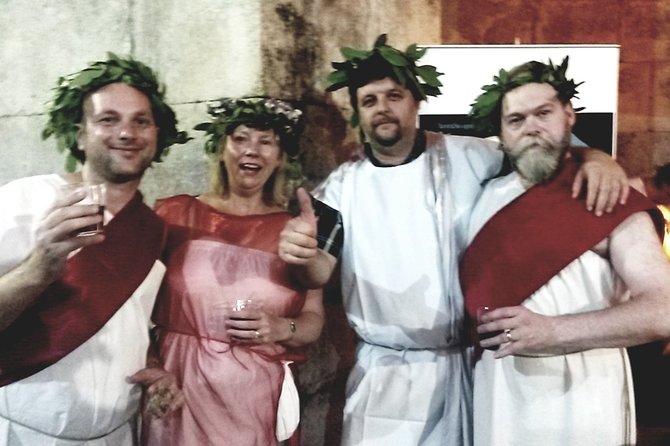
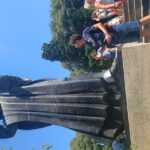
At the Grgur Ninski Statue, the tour zooms in on a major historical figure from Croatia. It’s a short stop, but it changes the tone. Instead of staying strictly in Roman times, you get a bridge to later identity—how the country’s story continues beyond the palace walls.
This is also one of those stops that helps kids and teens stay engaged. A statue-based moment is easier to grasp than a lecture-only explanation, and it gives your group something concrete to remember.
Fruit’s Square (Trg Brace Radic) and Marul
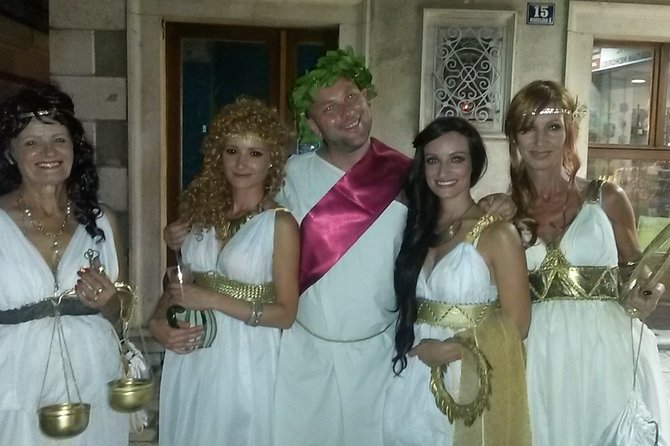
Then you’ll reach Fruit’s Square (Trg Brace Radic), a former green market area, anchored by a statue of Marul, described here as the father of Croatian literature.
This stop is great if your group likes culture as well as architecture. It reminds you that old cities aren’t just old buildings. They’re old traditions—markets, writers, public memory.
If you’re the type who takes notes, this is one of the spots where jotting down the name Marul can pay off later as you connect themes across your trip.
Narodni Trg: the biggest old-town square feeling
Narodni Trg is the next square on the route. It’s presented as the biggest and liveliest piazza in Old Town, and you’ll get a quick orientation around it so you know where it sits in the overall city plan.
A square like this helps your brain build a “mental map.” When you walk past it later on your own, you’ll remember the palace axis and the street flow that connects everything.
Temple of Jupiter: optional interior, short outside look
The Temple of Jupiter stop keeps things efficient. You’ll see it from outside, with an optional interior visit for 1.5 EUR per person.
I like this approach because it gives you control. If your group wants more, you can pay a little extra and see more. If you’d rather spend your time elsewhere, you can skip the interior and still get the main point.
Quick tip: if you’re traveling with mixed interests, make the optional interior a group vote. It’s one of the easiest places to say yes or no without derailing the pace.
City Clock: a 24-hour time capsule
The tour includes the City Clock, described as 500 years old and using a 24-hour system. This is one of those stops that feels small until it clicks.
Why it’s worth it: it’s not just a clock face. It’s a reminder that daily life in this city ran on rhythms shaped by older timekeeping practices. Your guide should connect that to how people organized routines, not just what the numbers looked like.
If your group loves practical details—like how people lived day to day—this will land well.
Golden Gate: the beautiful main entrance moment
You’ll then see the Golden Gate, described as the main and most beautiful entrance into Diocletian’s Palace. This is one of the route’s photo-worthy highlights, but it also does work for the storyline.
Gates are where power and movement meet. When you understand where people entered and why, the palace layout stops feeling like empty stone. It becomes a system.
Diocletian Palace Substructures: the part most people remember
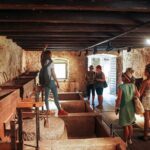
The route’s longest single block (about 20 minutes) is the Diocletian Palace Substructures, called the best preserved part of the palace. Importantly, admission here is not included.
This is where the experience often becomes less about walking streets and more about seeing how the palace was engineered from underneath. If your guide connects this area to the reason it was built and how it functioned, it can completely change how you picture Roman engineering.
And here’s the budget note: the tour data also mentions an extra admission fee for the Museum of Diocletian’s Cellars (€10 per person). That lines up with the “substructures/cellars” concept, so assume you’ll decide on this cost if you want the inside experience.
Consideration: if you’re allergic to paying add-ons, you may want to decide early whether you’ll do the cellars/museum portion. If you do plan to go, wear shoes you don’t mind walking in and standing in for a while.
Vestibulum of Diocletian’s Palace: the emperor’s doorstep
The final stop is the Vestibulum of Diocletian’s Palace, described as the main entrance to the emperor’s private residence. It’s short, but it’s a satisfying closer because it points to the idea of separation—public versus private space.
By this stage, you’ve covered gates, squares, and then the under-palace areas. Ending at an entrance helps the whole tour feel like it was shaped on purpose rather than a random checklist.
Price, group size, and why $240 can still feel fair
This tour is $240 per group up to 12 people. That’s a good deal structure for families or small groups, because the cost is not per person for the guide time and custom organization.
For solo travelers, it can feel pricey because you’re effectively paying for the group slot. But if you’re traveling with even two or three people, the math starts to look more reasonable fast.
Also, your guide is a licensed resident guide with a custom-designed itinerary. That’s part of what people rave about: the pacing, the humor, and the way the talk feels tailored to your questions. You’re paying for that human factor, not just for “standing near famous stuff.”
Guides, pacing, and what the tour is really like
This is a private tour, so your group won’t be competing with other people for attention. Based on the tour style described, the guide focuses on turning timelines and architecture into stories you can actually hold onto.
One repeated theme in the experience vibe is humor mixed with clear explanations. Guides like Josko/Joško/Joko show up in many accounts as the kind of host who can keep both adults and teens engaged, with a storytelling pace that feels like it’s moving, not drowning you in details.
There’s also a practical flexibility angle. Some guides are known for adjusting the route rhythm to what your group wants, and for small comfort decisions like taking shade into account when the sun is strong.
If you care about photo moments, aim for the palace squares and gates. Those are the spots where you’ll naturally pause, not the middle of a cramped passage.
What you should bring and how to time it in Split
Bring comfortable walking shoes. Even though the tour is only about 2 hours, you’ll move through uneven old streets and spend time in palace spaces where standing and looking can add up.
Also, bring a small amount of cash or card readiness for optional admissions. You may run into these costs:
- Saint Domnius interior option: 3.5 EUR per person
- Temple of Jupiter interior option: 1.5 EUR per person
- Museum of Diocletian’s Cellars: 10 EUR per person (not included)
If you’re budgeting tight, decide ahead of time what your group will skip.
Timing wise, start this early in your trip. The tour gives you the orientation you’ll use later as you wander Old Town on your own.
Should you book this Split private tour?
Book it if you want an efficient first pass through the Diocletian’s Palace-to-Old Town connection, with a guide who can turn the place into a story instead of a list. It’s a strong choice for families, couples, and history-curious travelers because the route is structured, the pacing is controlled, and the guide interaction matters.
Skip or rethink if your top priority is purely outdoor sightseeing. This experience includes time in the palace substructures/cellar-style area, and it also has optional interior tickets that can add to the total cost.
If you’re debating, I’d lean toward booking because it’s private, timed well, and it sets you up for the rest of Split with way less guesswork.
FAQ
How long is the SPLIT private walking tour?
It’s listed at about 2 hours.
Is this tour private?
Yes. It’s a private tour, and only your group participates.
What does the price include?
The price covers a private licensed resident guide and custom tour organization. The tour also includes the guided palace and Old Town portions as described.
Are entrance fees included?
Some are not. The tour data notes that entry to the Museum of Diocletian’s Cellars is not included, and optional interior visits (Saint Domnius and the Temple of Jupiter) also have separate fees.
What optional admission costs might come up?
Saint Domnius interior is an optional 3.5 EUR per person. Temple of Jupiter interior is an optional 1.5 EUR per person. Museum of Diocletian’s Cellars is listed as €10.00 per person and is not included.
Where does the tour start and end?
It starts at Obala Hrvatskog narodnog preporoda 22, 21000, Split, Croatia and ends back at the meeting point.
Is the tour offered in English?
Yes, it’s offered in English.
Do I need a physical ticket?
No. It’s listed as a mobile ticket.
What is the cancellation policy?
Free cancellation is available up to 24 hours in advance for a full refund.
What happens if weather is bad?
The experience requires good weather. If it’s canceled due to poor weather, you’ll be offered a different date or a full refund.