REVIEW · SPLIT
Private Split Walking Tour with Cathedral Entrance
Book on Viator →Operated by Tourdesksplit · Bookable on Viator
Split’s stone maze makes sense fast. This private 2-hour walk pairs cathedral entrance with live narration, so you don’t just look—you understand what you’re seeing.
I love the flexible pacing you get with your own group and a guide who answers questions as you go. I also like that all admission fees are included, including entry to St. Domnius Cathedral, so the tour keeps rolling instead of stopping for ticket hassles.
One consideration: the bell tower part is not included because it was listed as closed for renovation. If you’re set on climbing that tower, plan for an extra stop on your own.
Live narration by a certified local guide that keeps the story clear and human
St. Domnius Cathedral entry included (Diocletian’s Mausoleum) with time to look inside
Your route can flex to match what you care about—palace details vs old-town streets
UNESCO Diocletian’s Palace focus without a “herd and hustle” feel
Family friendly walking with a moderate fitness level requirement
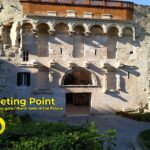
Mobile ticket + simple meeting point near public transport at the Model of the Palace
In This Review
- A 2-Hour Plan That Actually Fits Split
- Meeting at Obala Lazareta: Start With the Palace Model
- Riva Harbor to Diocletian’s Substructures: Start Where the Power Was
- The Peristyle and Palace Atmosphere
- Cathedral of Saint Domnius: The Entrance That Makes the Tour Worth It
- Beyond the Cathedral: Jupiter Temple Passing Moment
- Gates and Old Town Squares: Eastern Gate to Narodni Trg
- Zeljezna Vrata and the Palace Outer Rhythm
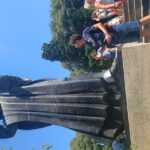
- Grgur Ninski Statue: A Short Stop With Big Local Flavor
- Price and Value: Why This One Costs What It Costs
- What You’ll Notice With Filip as Your Guide
- Who This Tour Is Best For (and Who Might Skip It)
- Should You Book This Private Cathedral & Palace Walk?
- FAQ
- How long is the Private Split Walking Tour with Cathedral Entrance?
- How much does the tour cost?
- Is it really a private tour?
- What’s included for tickets and admissions?
- Are there any parts of the cathedral or tower visits that are skipped?
- Where do we meet for the tour?
- What about weather and cancellation?
A 2-Hour Plan That Actually Fits Split
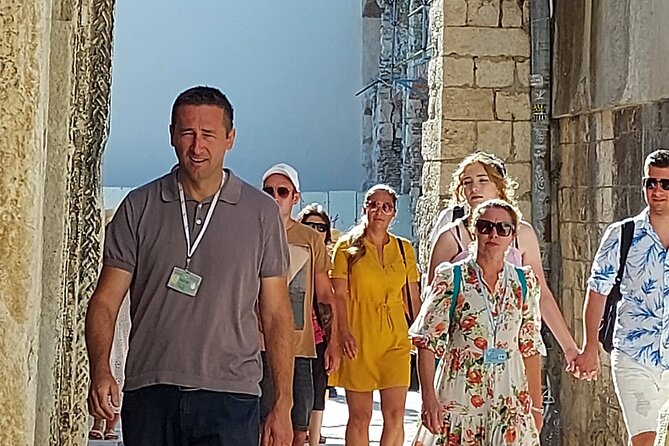
Split is a town where the past keeps showing up in your path. One minute you’re at the harbor, the next you’re staring at palace walls built for a Roman emperor. What makes this tour work is that it compresses the most meaningful stops into about two hours, at walking speed that feels doable rather than exhausting.
The private format matters here. You can slow down when something grabs your attention—like a gate detail or a ceiling area in the cathedral—and your guide can shift gears without waiting on a larger group. I find that this is the difference between seeing a site and getting why it exists.
The value angle is also strong: the tour price includes admissions, plus your guide and taxes. At $60.01 per person, you’re basically paying for expert time and not having to budget add-on tickets mid-walk.
Meeting at Obala Lazareta: Start With the Palace Model

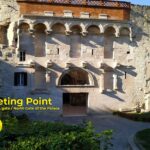
The tour starts at a very specific, very useful landmark: the Model of the Palace on Obala Lazareta 1. That’s helpful because it’s a straightforward “meet here” point in Split old town, rather than a vague street corner.
It’s also near public transportation, which is convenient if you’re moving around by bus, ferry, or on foot from your hotel. And since you receive confirmation at booking and the tour uses a mobile ticket, you’re not stuck hunting for paper tickets or the right line at the last second.
Timing tip: the tour is often booked around 70 days in advance on average. If you’re visiting in peak season or during a cruise-heavy week, booking earlier usually gives you more time-choice.
You can also read our reviews of more walking tours in Split


Riva Harbor to Diocletian’s Substructures: Start Where the Power Was
The walk begins at Riva Harbor. It’s quick—about 10 minutes—but it sets the right mood. You get your bearings and see how the palace and the old town connect to the waterfront life that still runs here.
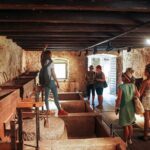
From there, you move into the heart of Diocletian’s complex with stops that focus on the palace’s working spaces, not just the postcard views. You’ll get a guided look at the substructures and then the Vestibulum area. These are the kinds of places where a guide earns their fee. Without context, they can look like “old rooms.” With context, they become parts of how the palace functioned.
Here’s what I like about this approach: the tour builds from structure to meaning. You’re not jumping straight to the big highlight. Instead, you’re learning the logic of the site: where movement happened, where authority lived, and how the palace relates to the later city.
Also, this is a good pace for questions. Your guide can explain why certain architectural pieces exist and how later generations used the space. If history is your thing, you’ll likely enjoy how the guide keeps tightening the connections between places.
The Peristyle and Palace Atmosphere
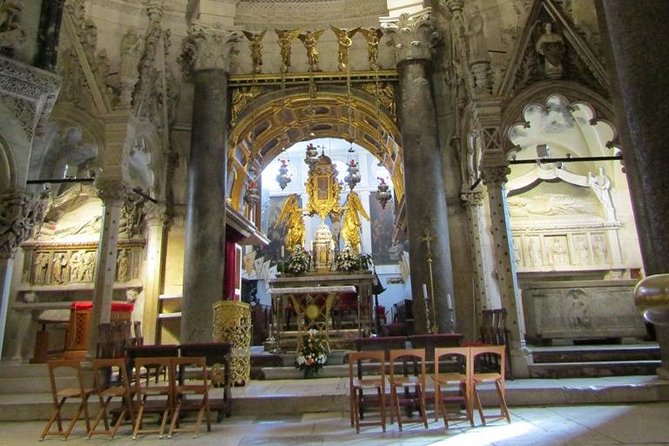
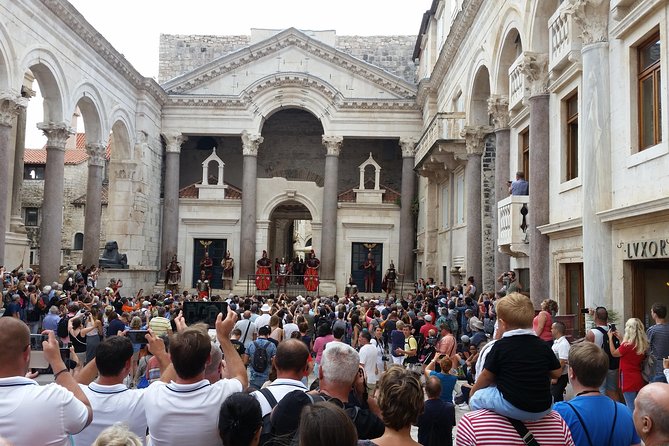
Next up is the Peristyle of Diocletian’s Palace with about 10 minutes of guided attention. This is one of the big “wow” zones because the layout gives you that sense of being inside a planned world.
But the tour doesn’t just point. It gives you a framework so you can actually read what you’re looking at—open space, entrances, and the way the palace courtyard shaped movement. Even if you’re not an architecture nerd (no shame), the Peristyle is where you start to feel the design.
This is also a stop where the private setup shines. You can linger a bit if the details catch your eye—stonework, alignments, or the way people move through the space now. In a larger group, you often don’t get that freedom.
Cathedral of Saint Domnius: The Entrance That Makes the Tour Worth It
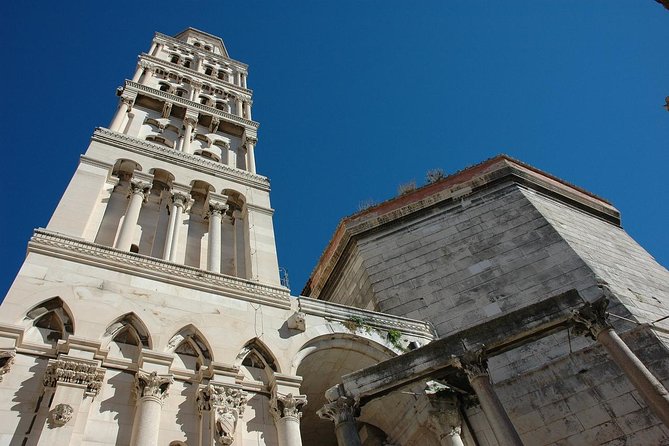
The central indoor highlight is St. Domnius Cathedral, which connects to Diocletian’s Mausoleum. You get about 20 minutes here with admission included.
What’s smart is that the tour focuses on the cathedral itself, not just an exterior glance. Inside, the story becomes more grounded and personal—this isn’t just massive stone. It’s a sacred space that grew out of the palace’s imperial setting, and the guide’s narration helps you connect those dots instead of treating it like a standalone church stop.
One heads-up: the tour notes that there’s no guided visit of the Bell Tower, because it was listed as closed for renovation. If you were planning to photograph the skyline from the tower, you’ll want to adjust your expectations and maybe save the tower for another day (if it reopens).
This stop is usually where people feel the tour’s “price-to-time” balance. You’re paying for included entry and a guide who can explain what you’re seeing while you’re inside.
Beyond the Cathedral: Jupiter Temple Passing Moment
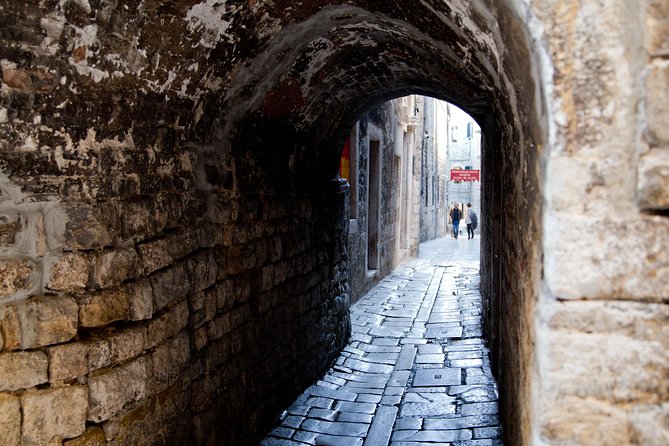
You’ll also pass by an ancient Jupiter’s Temple. It’s not a long stop, but it adds an extra layer to your understanding that Roman Split wasn’t only one palace—it was a whole network of sacred and civic spaces.
Think of this as a quick “breadcrumb” from your guide. It helps you keep noticing the old elements even when you’re walking through streets that look more modern at first glance. You may not spend a lot of time here, but it can make your walk feel less random.
You can also read our reviews of more private tours in Split






Gates and Old Town Squares: Eastern Gate to Narodni Trg
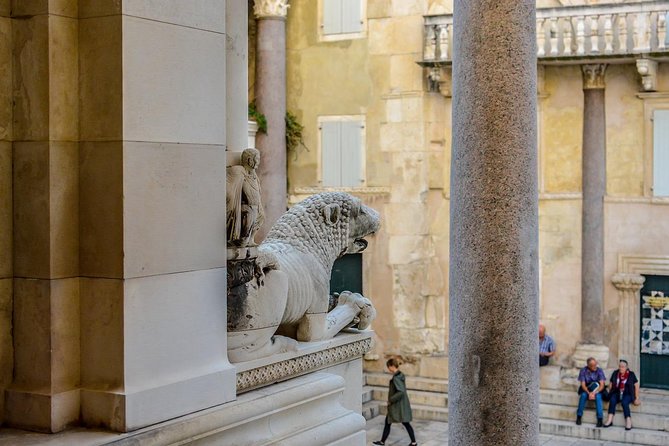
After the palace interior zones, the tour shifts to the edges and entry points that shaped the city. You visit the Eastern (Silver) Gate for about 5 minutes, then continue through other recognizable old town anchors.
You’ll see the Golden Gate and then move through Fruit’s Square (Trg Brace Radic) and Narodni Trg. These quick guided segments—often around 5 to 10 minutes each—work well because they keep you moving while still giving you context. Squares like these aren’t only places to stand and take photos. They’re where daily life meets old walls, and a guide can help you spot what’s Roman, what’s later, and what got rebuilt as the city changed.
You’ll also pass by the City Museum of Split from the outside. That’s a “taste” stop, not an inside visit, and it can be helpful if you want to decide later whether you want to commit time to museum galleries.
The theme across these stops is thresholds—gates, entrances, and the “in-between” spaces that connect the grand palace design to everyday city life.
Zeljezna Vrata and the Palace Outer Rhythm

Another gate stop comes next: Zeljezna Vrata, guided for about 5 minutes. This is the kind of small, easily missed landmark that becomes much more interesting with narration. Gates in Split weren’t just decoration. They controlled movement and defined lines between areas with different roles.
There’s also a second reference to Fruit’s Square later in the walk, this time with about 10 minutes of guided time. That repetition is not waste. It’s often how your guide can tie earlier palace points to what you’re seeing in the streets around you.
If you like your walks to feel like they have a storyline, this structure helps. You’re not doing 14 random stops. You’re watching a map turn into a narrative.
Grgur Ninski Statue: A Short Stop With Big Local Flavor
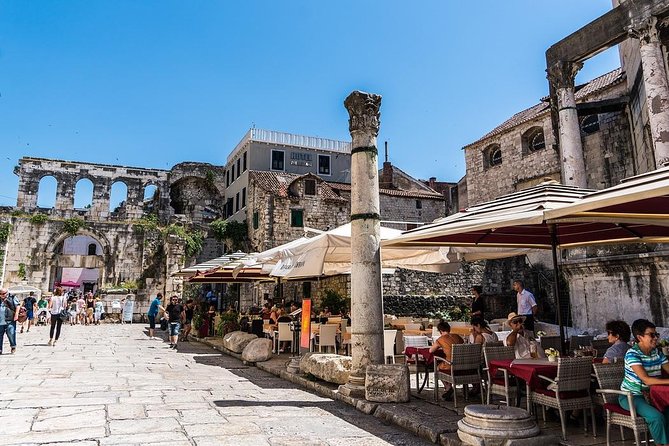
Near the end, you’ll get a short guided moment with the Grgur Ninski Statue. This is about 5 minutes. It’s quick, but it gives you a human, non-palace landmark to balance the Roman-heavy parts of the walk.
Even if you only stop for a minute or two, it helps the tour feel like it lives in today’s Split, not just ancient stones. That balance is part of why this tour works for both history lovers and casual visitors who still want meaning.
And it rounds off well because after cathedral and palace spaces, it’s nice to shift to something more directly tied to local identity.
Price and Value: Why This One Costs What It Costs
Let’s talk money without hand-waving.
You pay $60.01 per person for a private walking tour of about two hours with a certified local guide and all taxes, fees, and handling charges included. Plus, admission is covered, including entry into St. Domnius Cathedral.
Where this can be good value is the combination:
- Private time with narration you can ask questions in real time
- Included entry where you’d otherwise pay separately or lose time finding tickets
- A route that’s structured so you get palace meaning in a short visit
If you were to try to DIY this with limited time, you’d likely spend energy on working out where to go, what to look for, and how to sequence it. This tour buys you planning time back.
Also, since the guide customizes the itinerary to your interests, you’re not stuck on rails if you care more about palace spaces than the gates, or vice versa.
What You’ll Notice With Filip as Your Guide
Many of the standout comments focus on one guide name: Filip. People consistently describe him as friendly, engaging, and easy to understand in English. They also mention his ability to connect architecture and history into explanations that land quickly.
In a few notes, you also see small extras mentioned, like gelatos as a nice touch and even chocolates as a gift at the end. Those are not core tour logistics, so don’t treat them as guaranteed. But they do match the overall vibe people report: the tour feels personal, not mechanical.
One review even mentioned weather chaos with thunder and lightning and that everything still worked out. That’s a good reminder that Split weather can change fast, and a good guide keeps things moving without panic.
Who This Tour Is Best For (and Who Might Skip It)
This is a great fit if you:
- Want a private walkthrough instead of a group stampede
- Care about understanding Diocletian’s Palace beyond surface sightseeing
- Plan a short Split visit and still want a cathedral and palace story in one go
- Prefer your questions answered on the spot
It might be less ideal if your top priority is specifically climbing the bell tower. Since the bell tower guided portion is marked as unavailable due to renovation, you’d miss that part on this walk.
And if you’re traveling with super limited mobility, this is listed for moderate physical fitness. The route is walking-heavy old town and palace areas, so wear shoes that handle uneven stone.
Should You Book This Private Cathedral & Palace Walk?
Yes, if you want the palace story to make sense quickly and you’d rather pay for included access than figure it out on your own.
This tour earns its money in three ways: private guidance, entry included for St. Domnius Cathedral, and a route that hits the palace’s key spatial “anchors” (substructures, vestibulum, peristyle, cathedral) plus the gates and squares that stitch it to modern Split.
Book it earlier if your dates are flexible only on a specific day of the week. And if you’re tower-focused, do a quick check on whether the bell tower is open during your visit—because this tour is not built around that climb.
FAQ
How long is the Private Split Walking Tour with Cathedral Entrance?
It’s listed as about 2 hours.
How much does the tour cost?
The price is $60.01 per person.
Is it really a private tour?
Yes. It’s a private tour/activity, and only your group participates.
What’s included for tickets and admissions?
All admission fees are included, including inside visit of St. Domnius Cathedral (Diocletian’s Mausoleum). Other sites along the way are generally guided from the outside or have no admission included.
Are there any parts of the cathedral or tower visits that are skipped?
The tour states there is no guided visit of the Bell Tower, because it was listed as closed for renovation.
Where do we meet for the tour?
The start point is the Model of Palace, Obala Lazareta 1, 21000 Split, Croatia, and it ends back at the meeting point.
What about weather and cancellation?
The experience requires good weather. If it’s canceled due to poor weather, you’ll be offered a different date or a full refund. It also offers free cancellation up to 24 hours in advance for a full refund.