REVIEW · SPLIT
Storytelling World War II in Split Tour
Book on Viator →Operated by Ina Nikolic · Bookable on Viator
Split’s WWII story starts at the waterfront. This is a World War II storytelling walking tour in Split’s old center, led by local historian Ina Nikolic, with archival photos that show what stood where you stand today. You move through tight, meaningful stops that connect the war to the city’s most recognizable landmarks.
What I love most is the WWII archive photographs used during the walk, taken from the Museum of the City of Split collection and not just pulled from generic online images. I also like how Ina doesn’t treat history as frozen; she connects the Second World War to later conflicts and includes details like Jewish history when it fits the local story.
One consideration: the pace is mostly stop-and-explain, so you’ll do plenty of standing. The walking isn’t long, and at some points you may wish you had comfy shoes and a bit of patience.
In This Review
- Key things you will notice on this WWII Split tour
- Why this WWII walk works in Split’s old center
- Split Riva: where the tour starts and why it matters
- Green Market bombing story and the reality check it brings
- Eastern (Silver) Gate: the gate between eras
- Diocletian’s Palace Peristyle: which parts got attacked
- Narodni Trg and Marmontova Ulica: square and street under pressure
- Prokurative: prisons and executions, ending with weight
- Photos and storytelling techniques that actually help you remember
- Price and value: is $60.01 worth a 2-hour WWII walk?
- Timing, meeting points, and what to expect on the ground
- Who this WWII tour suits best (and who might not)
- Should you book this WWII storytelling tour in Split?
- FAQ
- How long is the WWII storytelling tour in Split?
- Is the tour offered in English?
- Does the tour include pickup?
- Where does the tour start and end?
- How many people are in the group?
- Are there admission fees for the stops?
- Is free cancellation available?
Key things you will notice on this WWII Split tour
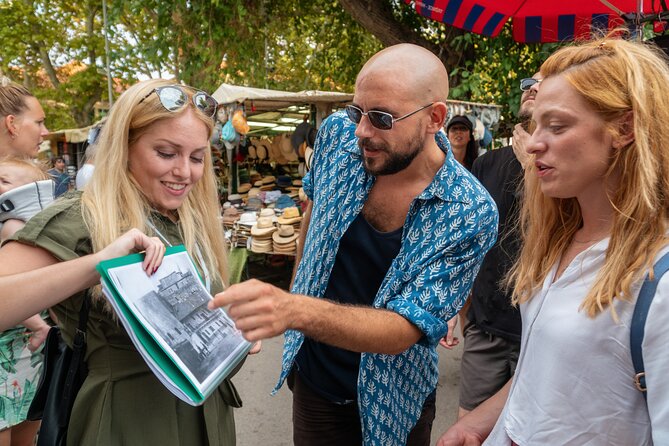
- Small group, max 15 people, which keeps the Q&A realistic
- Short timed stops (often 5–15 minutes each) that make the story feel focused
- Archive photos included, with permission to use them from the city collection
- Wartime events mapped onto familiar sights like Diocletian’s Palace and main squares
- Ending at Prokurative, where the tour tackles prisons and executions
- English guide with mobile ticket, plus pickup options when offered
Why this WWII walk works in Split’s old center
Split can feel like an open-air museum, but WWII here isn’t a museum topic. It’s layered into real streets, gates, and squares you already want to see. This tour is built around that idea: you get the context, then you’re standing on the exact kind of spot where the story happened.
The tour lasts about 2 hours, and that’s ideal for people who want a meaningful hit of history without losing a full day. The group stays small (up to 15 travelers), which matters because the guide can answer questions and adjust to what you’re curious about.
You’ll also get a local perspective that feels personal. Ina’s approach is storytelling first, facts second, and it helps the wartime details land where they should: in the texture of Split.
You can also read our reviews of more tours and experiences in Split.


Split Riva: where the tour starts and why it matters
Your meeting point is Obala Hrvatskog narodnog preporoda 27 in Split, and the walk begins at Split Riva. This is more than a convenient start. It frames the big question right away: when, where, and why did the war in Split start.
The Riva stop is brief (about 15 minutes), but it sets the tone. You start with the local timeline rather than getting dropped into isolated anecdotes. For first-time visitors, this is a smart move, because it helps you understand the rest of the route instead of just collecting place names.
If you’re the type who likes a clear “why this happened here” thread, this first stop gives it to you fast.
Green Market bombing story and the reality check it brings
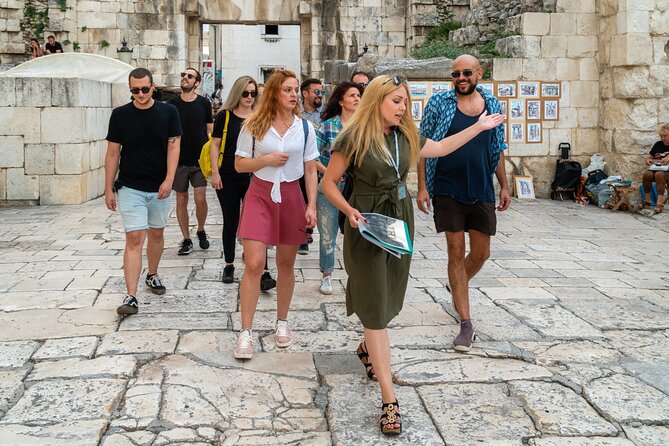
Next up is the Green Market, a 15-minute stop. Even if you’ve walked through market areas in other cities, this one turns into something heavier. You’ll hear about the most horrific bombing in Split.
This part works because the market is ordinary in a way that makes the wartime contrast sharper. Ina uses photos and explanation to connect the past to what people experience in the present. You’re not just learning that bombings happened. You’re understanding how that kind of violence changes daily life, plans, and neighborhoods.
Practical note: since it’s mostly a standing stop, take a moment to look around before the story starts. You’ll get more out of it when you can mentally place the past against the modern layout.
Eastern (Silver) Gate: the gate between eras
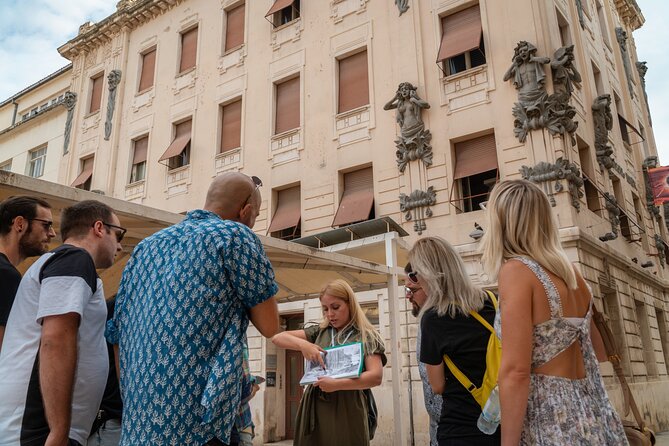
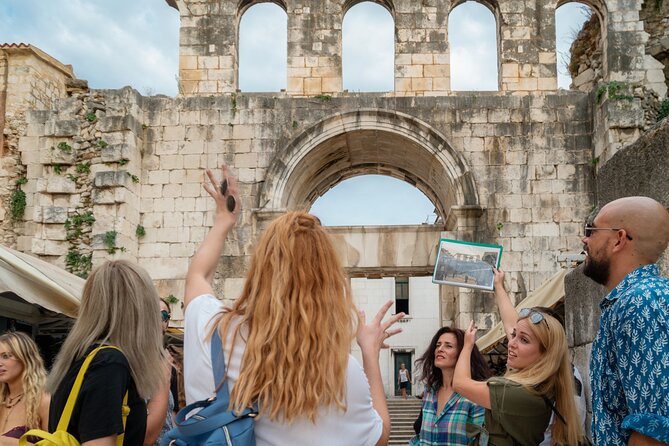
The Eastern (Silver) Gate stop is short—about 5 minutes—but it’s a strong “hinge” moment. You’re looking at the entrance to Diocletian’s Palace from the east, which turns your brain toward layers of time.
WWII doesn’t just sit on top of older history here. It collides with it. When you stand at a gate that belongs to Roman Split, you start to understand why the city’s stone bones mattered during later centuries too.
If you’re the sort of traveler who likes to connect architecture and history, this is a quick win.
Diocletian’s Palace Peristyle: which parts got attacked
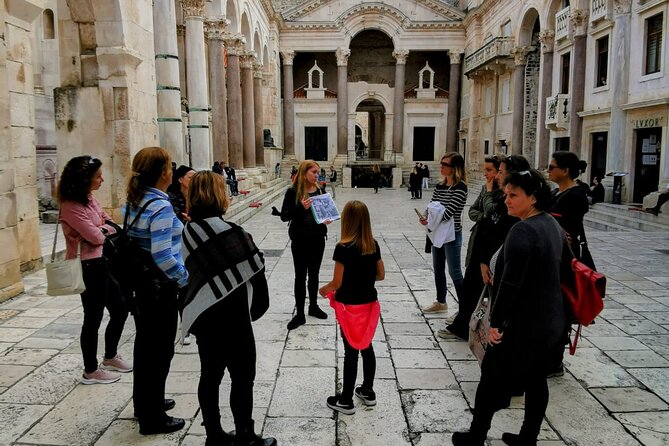
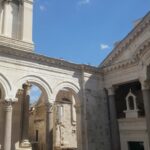
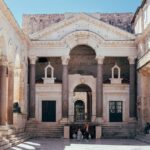
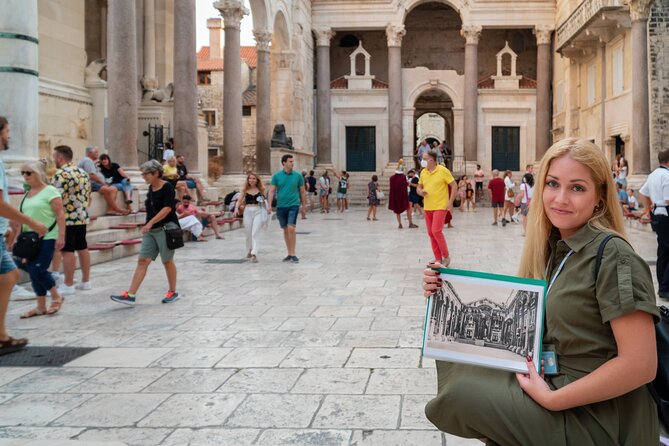
Then you move to the Peristyle of Diocletian’s Palace for about 15 minutes. This is one of the tour’s most visual moments. You’ll learn which parts of the palace were attacked during the war.
This is where the tour earns its name, storytelling world war II in Split. The Roman setting could easily stay purely ancient. Instead, the guide reframes it so you understand how WWII played out in spaces people still associate with old power and old order.
A good tip here: slow down and watch how your attention shifts. At first you’ll see the architecture. Then you’ll start seeing impact points and understanding why those locations had meaning during the fighting.


Narodni Trg and Marmontova Ulica: square and street under pressure
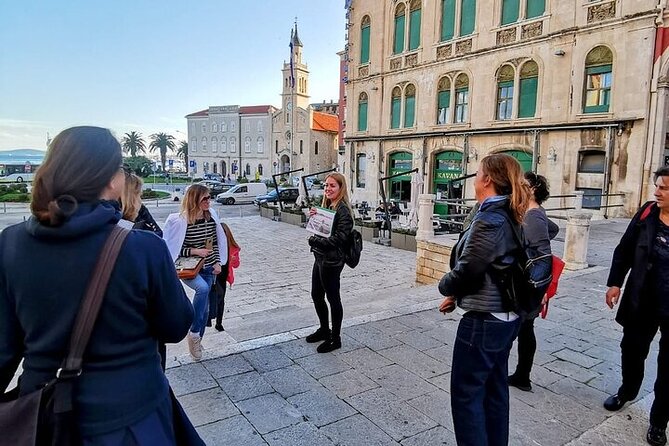
The tour continues to Narodni Trg, the city’s main square, for about 15 minutes. You’ll find out what terrible events took place there during the war. Squares are where people gather, where news spreads, and where everyday life becomes complicated fast. The guide uses that logic to make the story feel like it belongs in the space.
After that, there’s Marmontova Ulica, another short stop (about 5 minutes). This is the kind of “wait, this happened right here?” moment. It’s a main street, and the war’s horrors show up along ordinary routes instead of in remote locations.
One reason this itinerary is satisfying: it keeps bringing you back to how people actually move through a city. You go from waterfront to market to gate to palace to square to street. It’s a wartime route you could almost walk every day—except now you know what it once meant.
Prokurative: prisons and executions, ending with weight
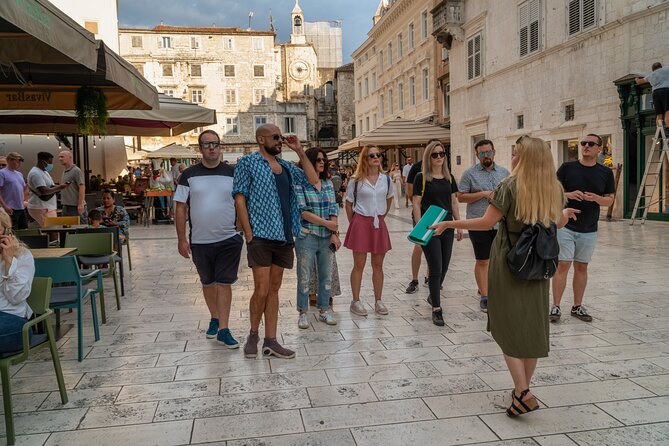
Your final stop is Prokurative (about 15 minutes), where the tour ends near Trg Republike / Prokurative square. This is the part that deals most directly with prisons and executions during the war.
This ending is important for a full understanding of WWII’s impact on Split. It doesn’t stop at bombings and buildings. It connects the war to what happened to people caught up in the machinery of conflict—people, not just geography.
If you want to keep your emotions balanced, plan a gentle next step after the tour. A long meal or a relaxed walk along the promenade is a good follow-up for processing what you’ve just learned.
Photos and storytelling techniques that actually help you remember
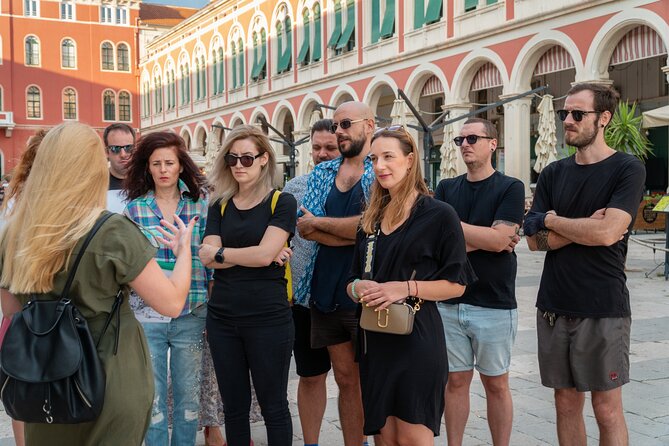
A big part of the value here is the way history is supported with visuals. You’ll see old WWII photographs that the guide has permission to use from the Museum of the City of Split archive. These images aren’t listed as permanent display items, which is part of what makes them feel special: they’re not just repeatable screen grabs.
In the same spirit, Ina uses photos and explanation to help you compare then and now. One review also mentioned aerial maps used to show perspective, which is a great tool in a city like Split where street angles can confuse your sense of distance and placement.
I like that the guide’s style keeps the story human. She’s a passionate local storyteller and historian, and her answers tend to go beyond a bare minimum “facts and dates” script. Even better: she welcomes questions, which turns the tour from a lecture into a conversation.
Price and value: is $60.01 worth a 2-hour WWII walk?
At $60.01 per person for about 2 hours, this tour sits in the “reasonable for a specialist guide” category. You’re not just paying for someone to point at buildings. You’re paying for a licensed local guide, archival photos, and an itinerary built around specific wartime locations in Split’s center.
Two details push the value up:
- Small group size (max 15), so you’re not fighting for attention
- Photos sourced from a city archive, not generic history images
Also, there’s pickup offered in some cases, which can save time if you’re staying away from the historical center. And you get a mobile ticket, which is simple on arrival.
This tour isn’t trying to replace a museum visit. It’s a street-level “how it affected real life” experience. If that’s what you want, the price makes sense.
Timing, meeting points, and what to expect on the ground
The tour is offered in English. It typically runs as a 2-hour walk, and you’ll likely spend most of that time at stops ranging from 5 to 15 minutes each.
You meet at Obala Hrvatskog narodnog preporoda 27 (start), and the tour ends at Trg Republike / Prokurative square. If you’re using pickup, it’s listed around Trajektna luka Split, Obala kneza Domagoja.
A helpful detail is that the meeting point can be flexible to suit group members in the center of Split. That can make your arrival easier if you’re juggling a tight itinerary.
Comfort note: because several stops are short but stationary, bring shoes you’re happy to stand in. This isn’t an all-day hike. It’s a guided story session in historic locations.
Who this WWII tour suits best (and who might not)
This is a great match if you want:
- WWII history tied to specific Split sites, not just general facts
- A guide who tells stories with photos and perspective
- A two-hour plan that fits into a busy visit
If you’re traveling with a teen or another history-curious person, this kind of guided narrative can be easier to follow than a textbook-style approach. The tour also leans into broader context when it connects to later events, which helps the subject feel relevant rather than trapped in 1940s-only framing.
Who might want to reconsider? If you hate standing still and prefer long walking routes with minimal stops, the format may feel a bit “stop and listen.” The walking distance isn’t the point here; the story is.
Should you book this WWII storytelling tour in Split?
Book it if you want Split to have a second layer: not just Roman glamour and waterfront views, but the wartime reality underneath. The combination of small group size, English storytelling, and WWII archive photographs gives you something you can’t easily replicate on your own with a map and a few plaques.
Skip it only if you’re mainly looking for a light sightseeing stroll. This is history with weight, especially at the end near Prokurative.
If WWII in Croatia interests you at all, this is one of the better ways to experience it, because it’s grounded in the exact streets and landmarks people still recognize today.
FAQ
How long is the WWII storytelling tour in Split?
The tour lasts about 2 hours.
Is the tour offered in English?
Yes, it is offered in English.
Does the tour include pickup?
Pickup is offered in some cases, including from Trajektna luka Split, Obala kneza Domagoja.
Where does the tour start and end?
It starts at Obala Hrvatskog narodnog preporoda 27, 21000, Split, Croatia, and ends at Trg Republike / Prokurative square in the historical center.
How many people are in the group?
The tour has a maximum of 15 travelers.
Are there admission fees for the stops?
Admission tickets are listed as free for each stop, and the tour includes the guide plus archive photographs.
Is free cancellation available?
Yes. You can cancel up to 24 hours in advance for a full refund.