REVIEW · SPLIT
Split: city center private walking tour 2 h
Book on GetYourGuide →Operated by Marina Mariposa Travel · Bookable on GetYourGuide
Split wears its Roman bones on display. This private 2-hour walk centers on Diocletian’s Palace and its cellars, then strings together the squares and viewpoints that make Split feel like one long story. I especially like the licensed guide who can match your interests and pace, and the chance to learn why places like Peristil and St. Duje matter today.
One thing to plan for: the big-ticket sights inside the palace and cathedral have entrance fees not included, and the cathedral requires covered shoulders and knees.
In This Review
- Key things to know before you walk Split’s old core
- Why this 2-hour Split format feels worth it
- Meeting point at Riva: start where Split feels alive
- Riva and the model: get oriented before you chase details
- Green Market: a local “in-between” that adds real texture
- Diocletian’s Palace: the heart of Split’s UNESCO core
- The cellars: where the imperial design becomes real
- Your guide can tailor this part
- Peristil: the palace courtyard that explains the power structure
- St. Duje Cathedral: Diocletian’s mausoleum legacy in stone
- Golden Gate and Gregory of Nin: quick hits that make photos better
- People’s Square (Pjaca) and the Old Town Hall area
- Fruit Square and Split Fishmarket: everyday life between masterpieces
- Finishing back at Riva: turn the tour into a plan
- Price and value: when $141 makes sense
- Who this tour fits best (and who should skip it)
- Practical tips so you don’t get slowed down
- Should you book this private Split walking tour?
- FAQ
- How long is the Split city center private walking tour?
- Where does the tour start?
- What’s included in the price?
- Are entrance fees included for the cathedral and cellars?
- Which language options are available?
- Is this tour a private group?
- Is the tour wheelchair accessible?
- What should I wear for entering the cathedral?
Key things to know before you walk Split’s old core
- Cellars of Diocletian’s Palace: you’ll see the preserved space that helped shape the imperial living area above.
- Game of Thrones filming spot: the palace cellars doubled for on-screen scenes.
- Private pace control: your guide can slow down for photos, questions, or a lighter walking rhythm.
- Peristil + St. Duje connection: you’ll understand how the palace, religion, and Split’s identity link together.
- Old-town squares with practical stops: you’ll pass Riva, People’s Square, and shopping zones rather than only monuments.
- Comfort matters: expect uneven old-stone surfaces and bring shoes you can trust.
Why this 2-hour Split format feels worth it
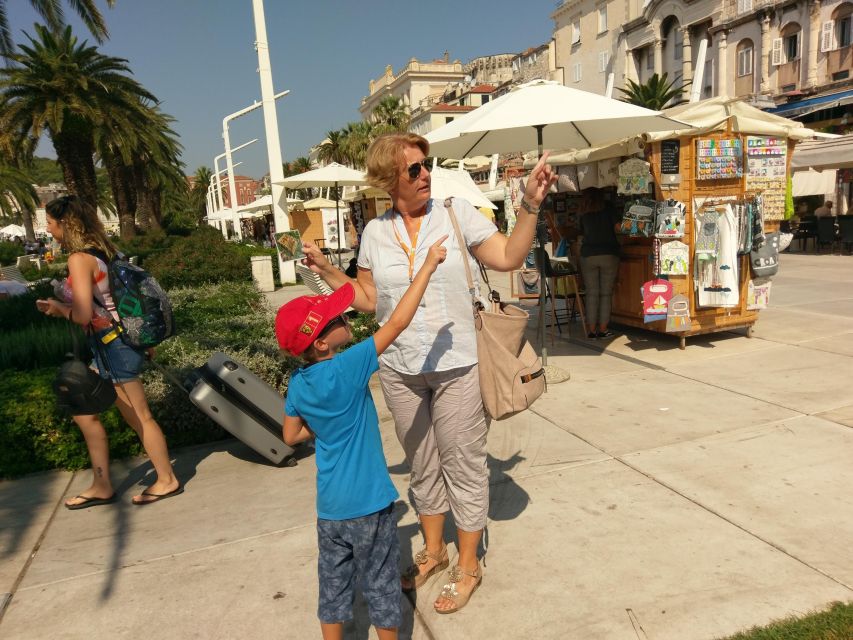
Split can be overwhelming. You arrive, you see stone everywhere, and suddenly every alley looks like it could be the main attraction. This tour keeps the focus on the places that explain Split best, without dragging you across the whole city.
The duration is also smart. Two hours is long enough to get oriented inside the UNESCO core, then short enough that you can still enjoy a slow wander afterward on your own. If you’re on a tight schedule, it’s a great way to get your bearings fast.
Price is per group, up to 20 people, so it can be surprisingly good value if you’re traveling with friends or family. If it’s just you or two people, it’ll feel more like a “treat” than a budget option—but you’re paying for a private licensed guide and a walk tailored to your tempo.
You can also read our reviews of more walking tours in Split


Meeting point at Riva: start where Split feels alive
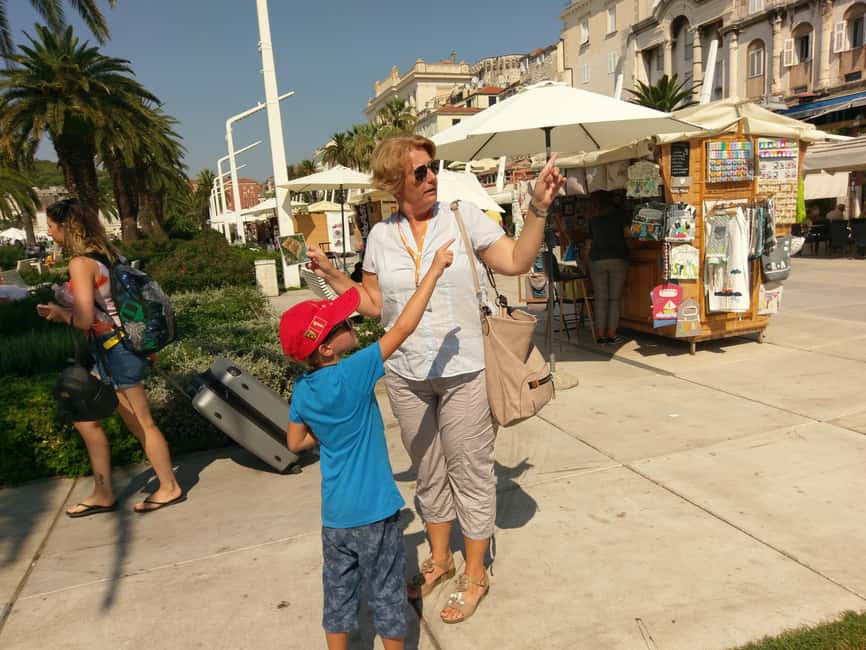
You meet on the promenade Riva, right in front of the entrance to Diocletian’s Palace cellars (Obala Hrvatskog narodnog preporoda 15b). Riva is where Split’s daily rhythm shows up first: people moving, cafes running, and the harbor energy doing its thing.
Starting here is practical. You’re not hunting for a hidden address deep in the old town, and you begin at the edge of the main sights so the tour naturally flows inward toward the palace complex and back out.
Riva and the model: get oriented before you chase details
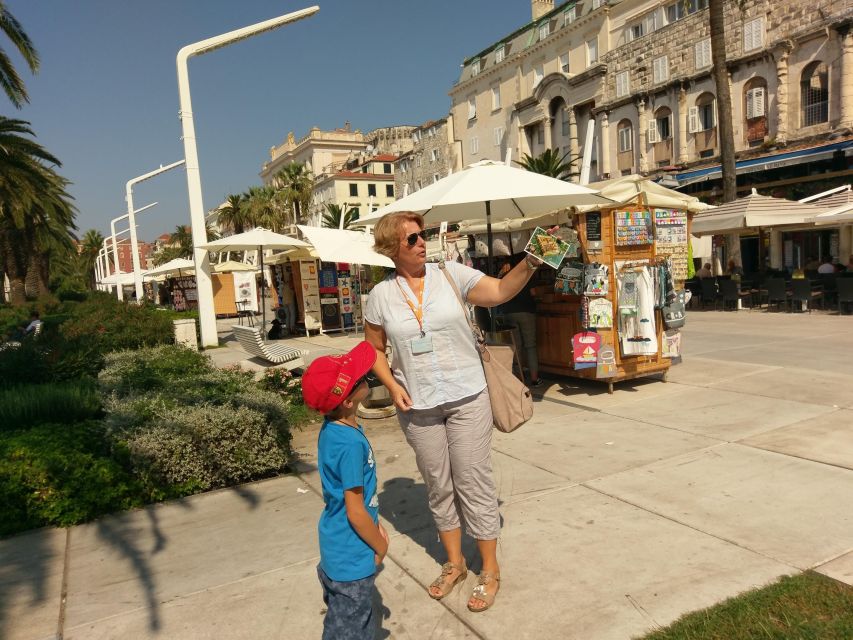
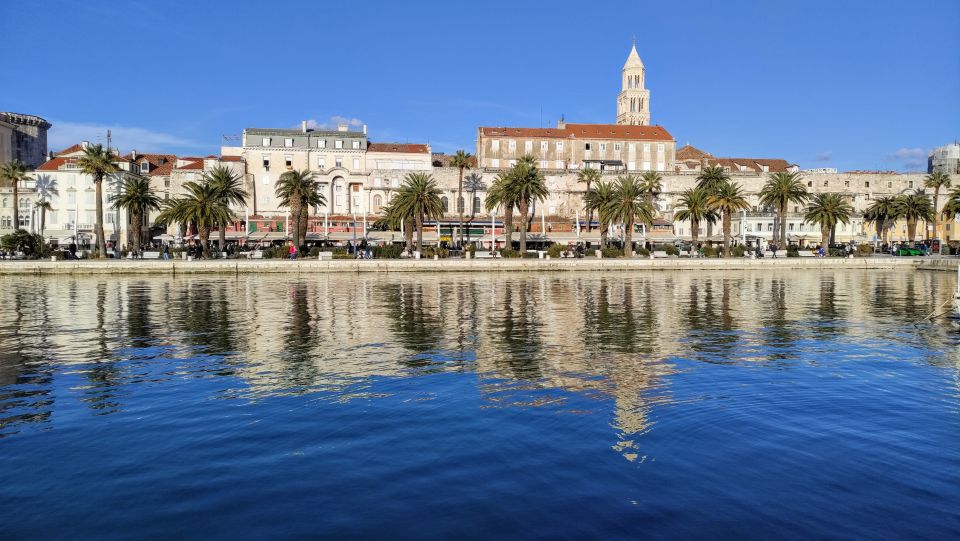
The first stretch is a short visit on Riva. This is where you can take in the waterfront views and understand where the old core sits in relation to the sea.
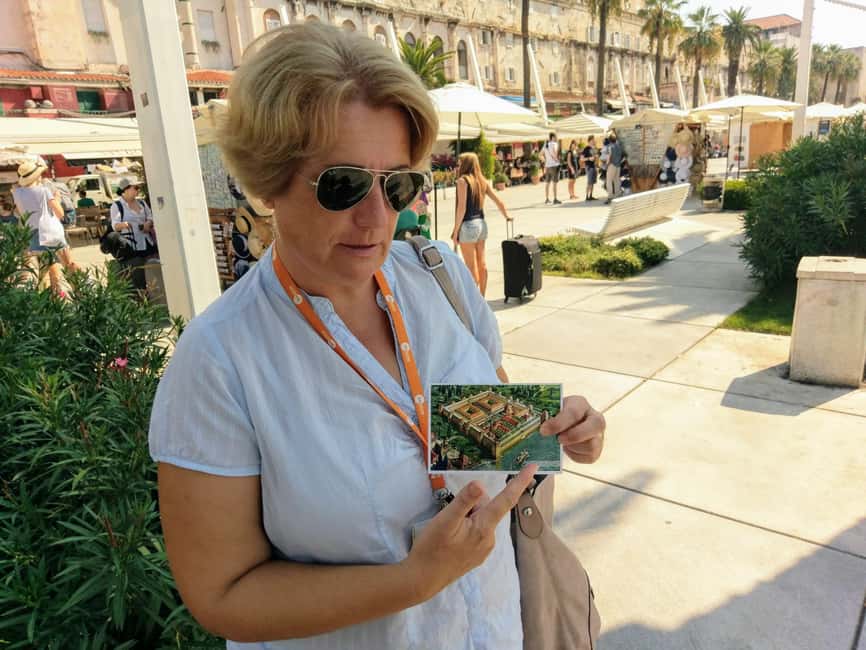
Then you start from the model of Split’s historical core. Even if you usually skip models, it’s useful here. Split’s layout can feel like a maze if you arrive cold; the model helps you map what you’re about to see so the palace and squares click into place.
Green Market: a local “in-between” that adds real texture
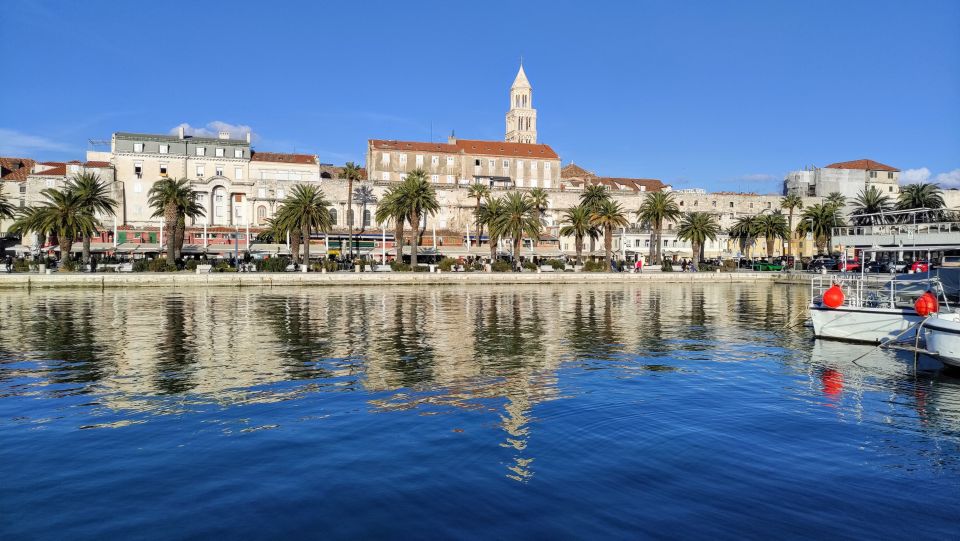
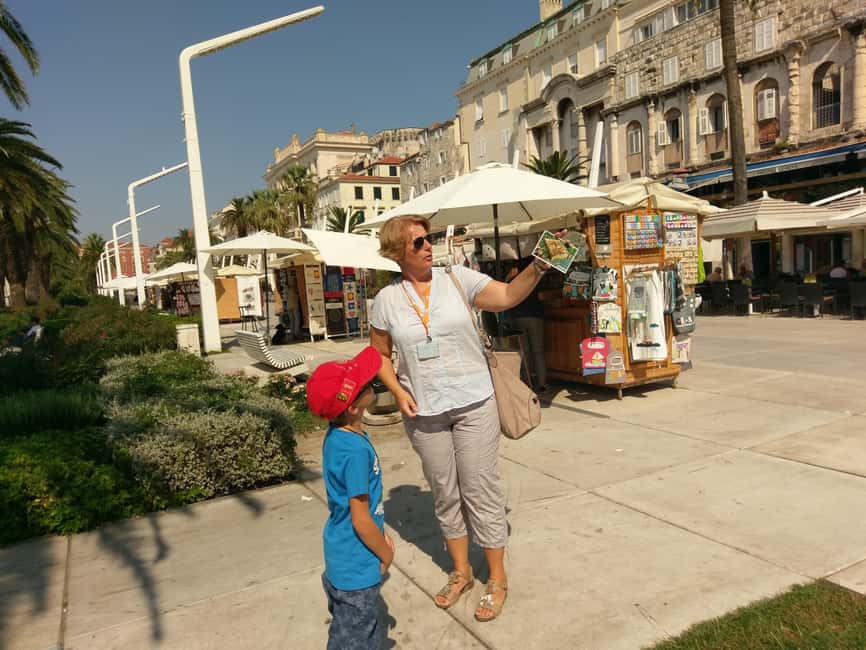
Next comes the Green Market (a quick stop with time for shopping). It’s not just a photo stop. It gives you a chance to catch local life in a small, concentrated way while your guide ties it into the wider story of the old city.
This kind of stop matters because Split isn’t only monuments. It’s also daily errands, food stalls, and people gathering in public spaces.
If you’re sensitive to crowds or prefer monuments only, you can still use the time efficiently. A quick browse is often enough to get the flavor without losing momentum.
Diocletian’s Palace: the heart of Split’s UNESCO core
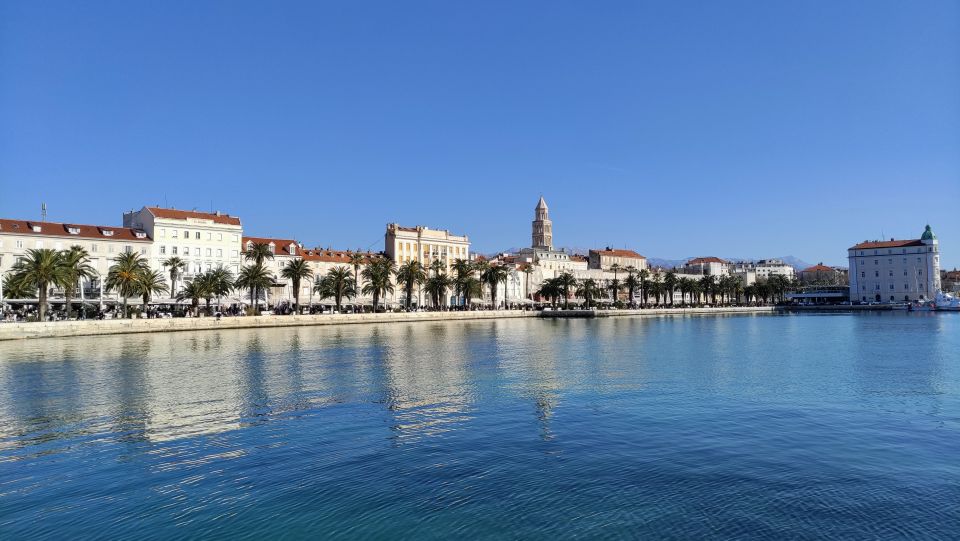
Your guided time inside Diocletian’s Palace is the centerpiece (about 45 minutes). This is the place that turns Split from “a pretty coastal town” into “an actual ancient system still in use.”
You’ll learn how the palace functions today—as the heart of the city—while also getting the key context of Diocletian’s imperial world. The palace isn’t just walls and arches. It’s a complex layout that shaped where later buildings, streets, and civic spaces formed.
You can also read our reviews of more city tours in Split



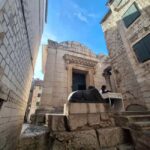

The cellars: where the imperial design becomes real
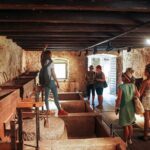
After the main palace orientation, you’ll visit the well-preserved cellars. The architectural idea here is practical: the cellars’ purpose was to support and elevate the imperial residential area above.
What makes this stop extra memorable is the connection to pop culture. The cellars have been used as a Game of Thrones filming location, and that detail often helps people “see” the space in a new way even after the novelty fades.
A small planning note: entrance fees for the cellars aren’t included, so expect to pay on arrival. If you want to control spending, factor that into your budget upfront.
Your guide can tailor this part
One advantage of going private is that you don’t have to accept a rigid script. If you care more about architecture, you can ask about design logic and materials. If you want storytelling, you can focus on how the palace became modern Split.
Guides here have earned consistent praise for explaining things clearly in English, French, or Croatian. In the guide examples shared by past visitors, Zrinka (also spelled Zinka) and Yvonna are names you may hear linked with humor and very strong French.
Peristil: the palace courtyard that explains the power structure
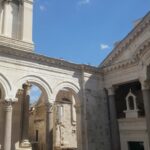
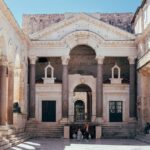
From there, you go up to Peristil. This was meant for Diocletian and connected to religious life, including the cult linked to the living son of Jupiter. Your guide should help you see why that matters—this isn’t random ornamentation. It’s how authority was displayed in space.
Peristil is also where you get the “wow” feeling that comes from scale. It’s open, elevated, and easier to appreciate after you’ve just spent time underground in the cellars.
St. Duje Cathedral: Diocletian’s mausoleum legacy in stone
Next you’ll admire the cathedral of St. Duje (St. Duje is Split’s patron). The cathedral originally served as the mausoleum of Diocletian, and it’s often described as the oldest cathedral in the world.
Just remember the dress rule: you need shoulders and knees covered to enter the cathedral. That’s not a casual suggestion. If your outfit is borderline, plan to bring a light layer you can throw on quickly.
Entrance fees to the cathedral aren’t included either, so expect that extra cost here as well.
Golden Gate and Gregory of Nin: quick hits that make photos better
After Peristil, you’ll move through the old-core highlights at a lighter pace, including a photo stop at Golden Gate. Even if you don’t stop for long, you’ll learn what you’re looking at and why it’s named and positioned the way it is.
Then you’ll pause by the Gregory of Nin statue for photos. This is one of those spots that becomes more meaningful when your guide explains its place in Split’s story instead of treating it like a random landmark.
These quick stops also help you keep energy for the rest of the walk. If you have limited stamina, the private format matters more here than in a long, rigid group tour.
People’s Square (Pjaca) and the Old Town Hall area
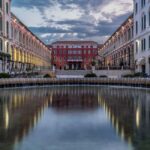
People’s Square, also known as Pjaca, comes up with time for a photo stop and a visit. It’s tied to the Venetian period, and it shows how Split’s influence didn’t stop with Roman times.
You’ll also have a chance for shopping and short breaks. That’s a real practical benefit because this part of town is full of tempting storefronts. With a guide, you can choose what’s worth a glance and what to skip.
Near here, you’ll also pass the Old Town Hall, with another short photo moment. It’s the kind of detail that makes the streets feel curated, even when you’re just walking between the big monuments.
Fruit Square and Split Fishmarket: everyday life between masterpieces
The tour continues with stops around Fruit Square and the Split Fishmarket. These aren’t long museum-style visits. They’re short, focused looks at how the city feeds itself and how commerce shapes street life.
Fruit Square is a good place to reset after cathedral and palace focus—less formal, more sensory. You’ll get the feel of the neighborhood’s rhythm without needing a long time commitment.
The fishmarket stop also grounds the experience. It’s the opposite of “ancient ruins in isolation.” Split still works as a living port city, and your guide helps you notice that the old stone surrounds daily habits.
Finishing back at Riva: turn the tour into a plan
You end back at the model area near the historical core. From there, returning to Riva usually becomes the natural next step—sit with a drink, compare what you saw underground versus above ground, and decide what you want to explore next.
If you’re hungry, Riva is where restaurants and cafes cluster, so it’s an easy transition from learning to relaxing. If you still have energy, you’ll also have a clear sense of where to wander deeper into the alleyways on your own.
Price and value: when $141 makes sense
At $141 per group (up to 20 people) for a 2-hour private walking tour, value depends on who’s in your group.
- With a full group, the effective cost per person can be quite low for a licensed guide plus a structured walk through the palace complex.
- With just a couple of people, it’s pricier on a per-person basis, but you’re still paying for a tailored pace and a guide who can explain the logic behind the architecture and squares.
Also, remember the add-ons: cathedral and cellars have entrance fees not included, so the total spend rises once you’re in. The good part is you can choose how much you want to do inside those spaces once you’ve been shown what matters.
Who this tour fits best (and who should skip it)
This tour fits best if you:
- want a first-time orientation to Split’s UNESCO core
- care about how Roman power still shapes modern streets
- like a guide who can adjust tempo for questions and photos
- prefer private over group dynamics, even for a short duration
It may feel less ideal if you:
- want a lot of wandering off into small alleyways all the time
- prefer a longer “stroll where you pick your route” rather than a guided highlight sequence
The upside is that the private format gives you a chance to ask for more street-level time—if your guide is open to it, you can often steer the balance slightly.
Practical tips so you don’t get slowed down
Wear comfortable shoes. You’ll be walking on uneven surfaces, and you’ll want to keep your footing steady in the palace area and old streets.
If you plan to enter the cathedral, dress with covered shoulders and knees. It’s the easiest way to avoid last-minute disappointment at the doorway.
If you’re budgeting, mentally separate:
- what you pay for the guide and tour experience
- what you pay for entrance fees on-site
That simple split helps keep surprises low.
Should you book this private Split walking tour?
Yes, if you want a clear, structured introduction to Split’s most important spaces—especially Diocletian’s Palace and its cellars—with a guide who can match your pace. Two hours is a sweet spot for first-time visitors who want meaning, not just screenshots.
I’d book it rather than rely on a quick solo wander if you value context: why Peristil was designed the way it was, how St. Duje connects to Diocletian’s mausoleum, and how Riva and the squares fit into the city’s daily life.
FAQ
How long is the Split city center private walking tour?
It lasts 2 hours.
Where does the tour start?
You meet on the promenade Riva, in front of the entrance to Diocletian’s Palace cellars, Obala Hrvatskog narodnog preporoda 15b, 21000 Split, Croatia.
What’s included in the price?
A licensed guide is included.
Are entrance fees included for the cathedral and cellars?
No. Entrance fees to the cathedral and cellars are not included.
Which language options are available?
The live tour guide is available in English, French, and Croatian.
Is this tour a private group?
Yes, it’s a private group.
Is the tour wheelchair accessible?
The tour is listed as wheelchair accessible.
What should I wear for entering the cathedral?
You need to cover your shoulders and knees to enter the cathedral, and you should wear comfortable shoes because there’s a lot of walking on uneven surfaces.