REVIEW · SPLIT
Essential Diocletian’s Palace Tour for First-Time Visitors
Book on GetYourGuide →Operated by KUKUVIA, Vl. Jelena Tanjić · Bookable on GetYourGuide
Split’s Roman bones are easy to see.
This small-group introduction turns Diocletian’s Palace into a clear, street-level story, starting at the Golden Gate and moving through the must-see sites you’d otherwise feel rushed about. I especially liked how the guide (Vl. Jelena Tanjić) mixes big history with practical context for today’s Split, so it feels like you’re learning the city instead of memorizing dates.
My other favorite part: the tour builds in a fun photo moment with Vestibule Dome Selfie time, plus you get a handpicked list of where to eat and what to do next (and even restaurant/bar voucher access). One consideration: this tour does not include access to the Substructures or the Bell Tower, so if those are top priorities for you, you may want a different option.
In This Review
- Key highlights you’ll feel right away
- Getting your bearings at Gregory of Nin and the Golden Gate
- The Palace story begins: Golden Gate to People’s Square
- Jupiter’s Temple and Peristyle: power, order, and space you can feel
- Cathedral of Saint Domnius: when ancient becomes part of daily life
- Vestibule stop and Dome selfie: a fun break that doesn’t kill momentum
- Diocletian’s Cellars and the walk toward Split Riva
- Price and time: does $17 feel like a smart buy?
- What’s not included (and who should care)
- Who this tour is best for in Split
- Should you book this Diocletian’s Palace tour?
- FAQ
- How long is the Diocletian’s Palace tour?
- How much does it cost?
- What’s included in the tour?
- Where does the tour start and end?
- Is the tour wheelchair accessible?
- Does the tour include access to the Substructures or Bell Tower?
Key highlights you’ll feel right away
- Tight 90-minute route that hits the Palace core without dragging
- Jelena Tanjić’s storytelling with a regional Balkan perspective from her years living in Split
- Golden Gate, Peristyle, and Jupiter’s Temple explained in plain, memorable terms
- Cathedral of Saint Domnius made understandable as a living landmark, not a relic
- Vestibule selfie at the Dome area for a real souvenir photo
- Vouchers and recommendations that help you eat and explore right after the tour
Getting your bearings at Gregory of Nin and the Golden Gate
Most first-time visitors start in Split and feel a little whiplash: sea views on one side, stone maze on the other, and suddenly you’re inside a Roman palace that’s been repurposed for centuries. This tour fixes that problem early.
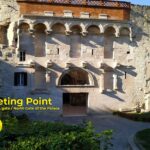
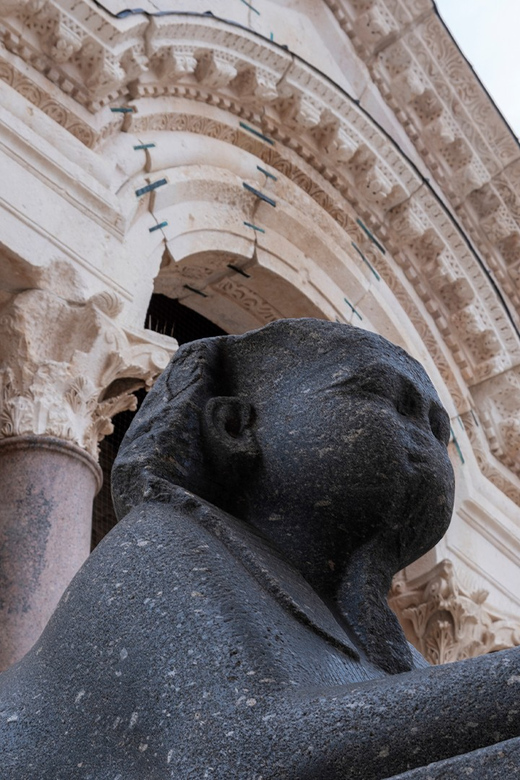
You meet in front of the statue of bishop Gregory of Nin, near the north entrance to the Palace called the Golden Gate. The meeting point matters because it places you at the exact kind of threshold Split loves: public street life on the outside, older structure and tighter passages on the inside. Once you step through, you can start understanding why Diocletian’s design still shapes where people walk, gather, and meet.
If you like tours that begin with orientation—what you’re looking at and why it matters—this start works fast. And because the group is limited to 10 participants, it’s easier to ask questions without feeling like you’re interrupting a show.
You can also read our reviews of more tours and experiences in Split.

The Palace story begins: Golden Gate to People’s Square

Right away, you’re guided through the Golden Gate itself, which is more than a dramatic entrance. It’s a clue to how the palace functioned: built for control, movement, and separation between spaces. You’ll get an easy explanation of what the gate represents and how it connected to the broader palace layout.
Then you move toward People’s Square, a key open area where you can see how the palace’s massive setting didn’t freeze the city in time. Instead, daily life filled the surrounding areas, and older boundaries became new meeting points.
What I like about this stretch is that it helps you stop thinking of Split as only Roman ruins. You start seeing it as a layered city where public squares and palace architecture share the same ground.
Jupiter’s Temple and Peristyle: power, order, and space you can feel
Once you reach Jupiter’s Temple and the Peristyle, the tour becomes easier to follow because these areas act like anchors. The guide’s job here is to give you mental pictures: what kind of space this was meant to be, how people would have moved through it, and why the design still affects sight lines today.
Jupiter’s Temple is often a quick stop on self-guided visits, but in this tour it gets the kind of context that makes you slow down. You understand the significance of the place within the palace world—why it was important, and how it connects to the larger idea of authority that the Romans liked to make visible.
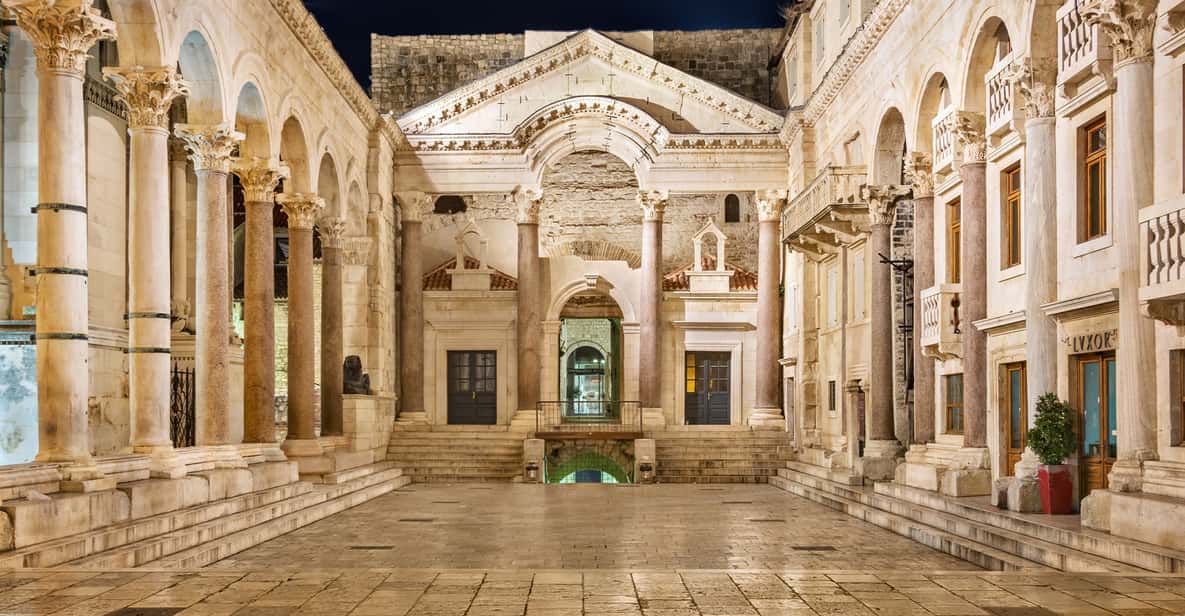
Then comes the Peristyle, the palace’s central open area. This is the spot where you feel the “scale” difference instantly. The peristyle isn’t just dramatic; it’s practical for your comprehension. If you’re trying to picture the whole palace, this is where the pieces start clicking.
One practical note: these spaces can get busy, especially around peak visiting hours. Having a guide helps because you’re not trying to read every stone while dodging crowds. You’ll know where to look, and when to just look.
Cathedral of Saint Domnius: when ancient becomes part of daily life
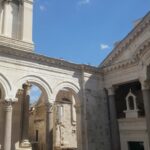
From the palace core, you step into the Cathedral of Saint Domnius. This is where Split can surprise you—because this isn’t only about what Diocletian built. It’s about what later generations made of it.
In the tour, you get the sense of continuity: how religious and civic life layered onto the palace fabric rather than replacing it entirely. The cathedral becomes a key part of understanding why Split feels so “alive” rather than like a museum.
I also like how the guide adds present-day context. Jelena is from Bosnia and Herzegovina and has lived in Split for many years, and that background shows in the way she links local identity to wider regional history. It’s not just facts; it’s the human angle—how people keep returning to the same spaces, generation after generation.
Vestibule stop and Dome selfie: a fun break that doesn’t kill momentum
You don’t get stalled in this tour. You also don’t get “only walk, walk, walk.” The Vestibul stop is where the experience adds a bit of lightness without losing the meaning.
You’ll spend time there with guided explanation, and then there’s Vestibule Dome Selfie time. It’s a small group activity, so it’s not awkward. The point isn’t fancy photography; it’s that you’ll have a clear, recognizable photo from inside the palace area that you can actually remember.
This is also one of the smartest moments to take a breather. By then, you’ve already learned the structure of the palace world (gate, squares, central spaces). The Vestibul gives you a more intimate, indoor feel, and the selfie gives you a natural pause before moving underground into the Diocletian’s Cellars area.


Diocletian’s Cellars and the walk toward Split Riva
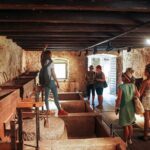
The tour finishes by guiding you through Diocletian’s Cellars, which add a different texture to the experience. Outside, you’re dealing with light, open space, and street-level orientation. In the cellars, everything shifts: it feels more enclosed and built for storage and function.
This is where the tour helps you understand why palace architecture isn’t only about aesthetics. It was practical. The guide’s explanation ties the cellars into the palace’s bigger purpose, so you leave with a clearer picture instead of a vague “cool underground rooms.”
From there, you finish toward Split Riva, the waterfront promenade where the city’s mood turns outward—sea air, motion, and the classic Split feeling of being in the center of it all. You’ll get a handpicked list of recommendations, plus voucher access for some of Split’s renomed restaurants and bars, which is ideal because it turns the tour into the start of your food plan.
Price and time: does $17 feel like a smart buy?
At $17 per person for about 1.5 hours, this is one of the more sensible ways to get oriented in Split’s top historic complex—especially if you’re traveling for the first time and you want your time to pay off.
Here’s what you’re actually getting for the money:
- A licensed guide with English language delivery
- An interactive, storytelling style approach (including humor and present-day context)
- Coverage of the major palace landmarks most first-timers want: Golden Gate, Jupiter’s Temple, Peristyle, Cathedral of Saint Domnius, Vestibul, and Diocletian’s Cellars
- Vestibule Dome Selfie included
- A curated list of recommendations after the tour
- Voucher access for discounted restaurant/bar experiences
If you compare this to piecing together multiple self-guided stops while constantly trying to decode context, the structure saves time and makes your photos more meaningful. You also avoid spending your first day in Split bouncing between landmarks with no clear narrative thread.
One scheduling consideration: it’s not wheelchair suitable, so if mobility is an issue, you’ll need another plan.
What’s not included (and who should care)
This is where you’ll want to be honest about your priorities. This tour focuses on the main palace areas and key landmarks, but it does not include access to the Substructures or the Bell Tower. If those are your must-dos, this specific experience may feel incomplete.
Also, because it’s a small-group walking format, it’s best when you can keep a comfortable walking pace. The route is designed for first-time orientation, not for long stays at every corner.
For most people—especially first-timers—the trade-off makes sense. You get a clean overview in a short time window, and you can always add more specialized palace access later.
Who this tour is best for in Split
I’d book this if you want:
- A clear introduction to Diocletian’s Palace and Split’s history and daily-life connections
- A small group setting where you can ask questions
- Storytelling that explains the places you see, not just where they are
- A guide who ties Split into a wider Balkan context, not only a narrow Roman timeline
- Real help after the tour—recommendations for where to eat and what to do next, plus voucher access
It’s also a solid fit for families and friends because the group stays small and the pace is designed to be relaxed. If you’re a solo traveler, you’ll also appreciate that you’re not stuck watching a guide talk into the distance—small group means more interaction.
Should you book this Diocletian’s Palace tour?
If you’re visiting Split for the first time and you want to understand what you’re looking at without turning your day into a homework assignment, I think this is a strong choice. The short duration, small-group format, and a guide like Vl. Jelena Tanjić—who can connect the Roman story to modern Split—makes the value easy to justify.
I’d skip it (or add another option) if you specifically want Substructures or Bell Tower access. And if wheelchair accessibility is required, this isn’t the right fit based on what’s stated.
Otherwise, this tour is a practical way to start your Split trip with confidence: you’ll come away knowing the key landmarks, having a fun photo memory from the Vestibul, and leaving with a plan for food and follow-up sights along Riva.
FAQ
How long is the Diocletian’s Palace tour?
The tour lasts about 1.5 hours.
How much does it cost?
It’s priced at $17 per person.
What’s included in the tour?
You get an interactive storytelling experience with a licensed guide, extensive knowledge of the city’s history, and Vestibule Dome Selfie time. You’ll also receive personalized recommendations after the tour and voucher access for discounts at some restaurants and bars.
Where does the tour start and end?
It starts in front of the statue of bishop Gregory of Nin and near the north entrance to the Palace called Golden Gate. It ends at Split Riva, near the meeting area.
Is the tour wheelchair accessible?
No, it’s not suitable for wheelchair users.
Does the tour include access to the Substructures or Bell Tower?
No. This tour does not include access to the Substructures or the Bell Tower.