REVIEW · SPLIT
Walking tour of Split old town and craft beer tasting
Book on Viator →Operated by Private Tourist Guide Croatia · Bookable on Viator
Two hours, then beer.
I like that this small-group walk pairs Diocletian’s Palace with a real craft-beer stop, and it’s guided by local expert Darijo, who keeps the details clear and answers questions as you go. I also love that the palace route is focused on standout spots you can only really appreciate with context. One heads-up: the tasting drinks are not included, so plan to pay for the beer portion.
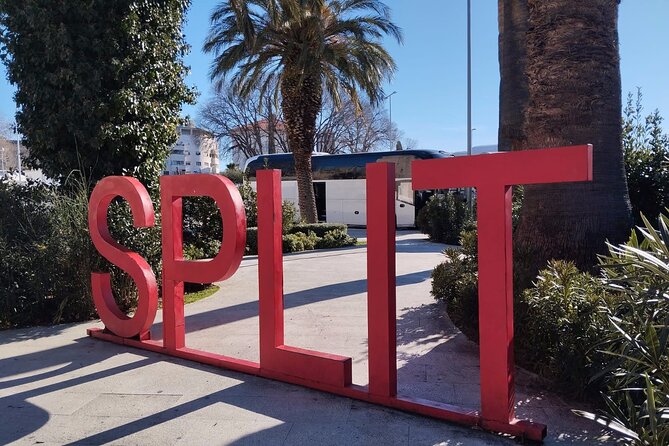
You meet at Split sign 21000 and the tour starts at 6:00 pm, with a mobile ticket and English guide. With a maximum of eight travelers, you don’t get shuffled along in a big crowd, and you’ll have time to ask things as the sights change from Roman to Venetian to modern Split.
The pacing is lively and centered on walking, so wear shoes you trust on old stone. You’ll see several major palace areas with admission marked as free, but one interior stop has an additional fee if you want to go in.
In This Review
- Key points to know before you go
- Entering Split’s old town at 6:00 pm
- Riva Harbor: why the waterfront became everyone’s living room
- Diocletian’s Palace cellars: vaulted late antiquity in plain sight
- Peristyle and Diocletian’s main axis: emperors, streets, and centuries
- A quick inside look: the optional interior fee stop
- Vestibulum acoustics and klapa singing (UNESCO-style sound)
- Triklinij and carpe diem: the emperor’s dining room
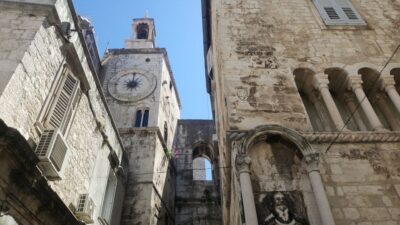
- From mausoleum to cathedral bell tower
- The Golden Gate, the wall, and an escape-route feeling
- Gregory of Nin’s statue: legend plus a photo spot
- Pjaca and Fruit’s Square: the old town’s changing names
- Chocolates, Guinness, and the quick side stories
- Leopold’s Craft Beer Bar tasting: what to expect
- Price and value: is $30.04 worth it?
- Who this tour fits best (and who might not love it)
- Should you book this Split old town + beer tour?
- FAQ
- What is the price of the Split old town and craft beer tour?
- How long is the tour?
- When does the tour start?
- What language is the tour offered in?
- How many people are in the group?
- What’s included in the tour price?
- What is not included?
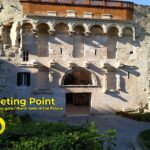
- Where do I meet the guide?
- Where does the tour end?
- Is the tour suitable for service animals and most travelers?
Key points to know before you go

- Small group (max 8): more conversation with Darijo and your guide
- UNESCO Diocletian’s Palace focus: cellars, Peristyle, Golden Gate, and more
- Evening timing: a 6:00 pm start that works well for old-town atmosphere
- Craft beer finish at Leopold’s: 30 minutes at a brewery that makes its own beer
- Most stops marked admission-free: you pay for the guide and the beer portion only
Entering Split’s old town at 6:00 pm
This is the kind of tour that makes sense once you’re already in Split’s old core and you want a plan for the evening. Starting at 6:00 pm also means you’re less likely to be walking in peak midday heat, and you get that slow shift from street noise to evening rhythm.
The pace fits a two-hour window: you’re not trying to see every single arch and column, you’re seeing the most meaningful pieces and learning what they were for. Since the guide is a professional, licensed local who lives in Split, the stories land with less textbook energy and more street-level clarity.
Bring comfortable footwear. The old town is full of uneven stone and quick turns, and you’ll be moving between squares and palace substructures.
You can also read our reviews of more walking tours in Split
Riva Harbor: why the waterfront became everyone’s living room
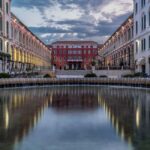
Your walk starts at Riva Harbor, the promenade area that frames modern Split’s daily life. The tour doesn’t treat it like a scenic postcard; it explains why this shoreline matters and how the palace waterfront area became the promenade locals use.
It’s a small stop, but it sets the theme: Split isn’t just a museum. The city still uses the same space patterns—just with new habits layered over old walls.
Diocletian’s Palace cellars: vaulted late antiquity in plain sight
Next you spend time in the palace substructures, including cellars and vaulted spaces. Even in a limited central section, you’ll get why these vaulted complexes are considered among the best preserved from late antiquity.
This is where you start seeing the palace as an engineered system, not just a collection of impressive ruins. The guide helps you connect the dots between what you see underground and what that meant for daily life in an imperial setting.
If you like photos, this area delivers. But the real value is mental. When you understand the space, the later stops make more sense fast.
Peristyle and Diocletian’s main axis: emperors, streets, and centuries
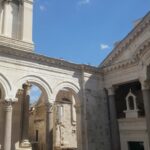
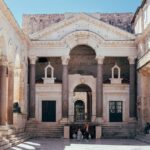
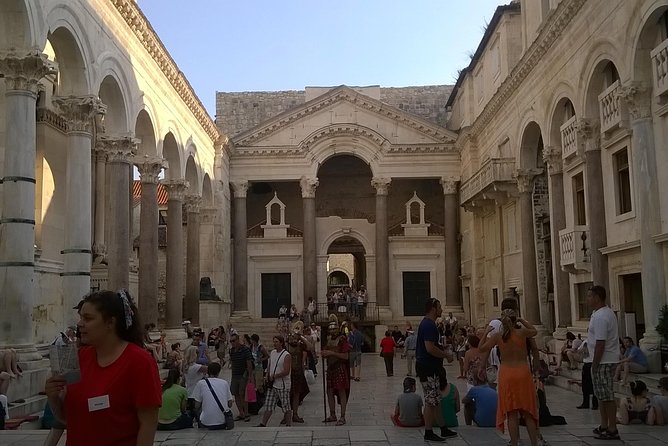
At the Peristyle of Diocletian’s Palace, you step into the classic open-square setting surrounded by columns. The guide frames what this place felt like when it was linked to imperial ceremony, so you don’t just look up—you understand the moment.
You also hear how Diocletian’s two main streets, the Cardo and Decumanus, were transformed by centuries of changing architecture. That idea—one plan stretched across time—helps you read modern Split more easily as you move outward after the palace.
A quick inside look: the optional interior fee stop
A bit farther along, there’s another antiquity viewpoint tucked between houses. The tour highlights it as a stop where you’ll understand why Robert Adam, the British architect who visited Split in the 18th century, put it on his list of Europe’s most beautiful monuments.
Worth knowing: visit to its interior is available for an additional fee. If you’re the type who loves seeing inside structures, this is your chance—if not, you can still enjoy the exterior and the guide’s context.
You can also read our reviews of more food & drink experiences in Split


Vestibulum acoustics and klapa singing (UNESCO-style sound)
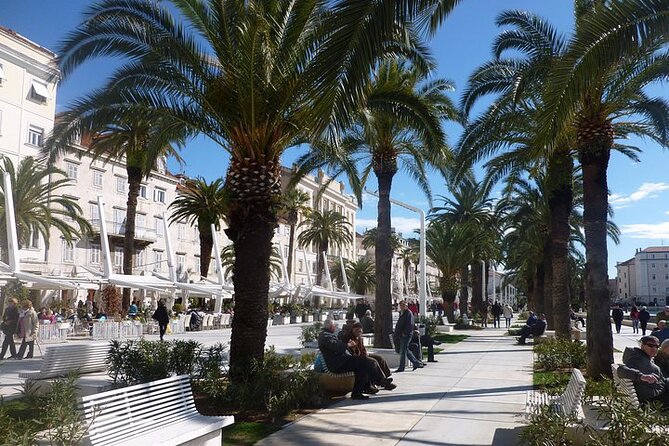
In the Vestibulum of Diocletian’s Palace, you get a circular space with an open ceiling that surprises people with its acoustics. The tour explains that it once served as a kind of lobby into Diocletian’s residential quarters—meant to impress visitors then, and still doing the job today.
Here’s the fun part: because of the sound, the place is used by klapa, the Dalmatian a cappella singing groups. The style is protected as world heritage by UNESCO, and it fits the building’s purpose so well it feels like the city kept the right use for the right room.
Even if you don’t catch a performance that night, hearing the acoustics explanation makes you listen differently.
Triklinij and carpe diem: the emperor’s dining room
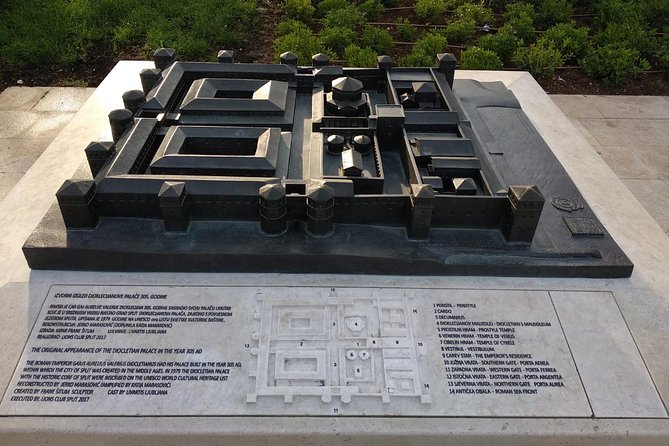
The Triklinij stop is one of the more memorable “this is what they ate” moments. You’re standing in what’s left of an emperor’s dining room, and the guide ties the layout to Roman dining habits.
You’ll also hear the explanation around vomitorium and how the guide connects it with the phrase carpe diem. It sounds like a cultural trivia moment, but it helps you understand how people moved, ate, and lived within a structure built to serve power.
From mausoleum to cathedral bell tower
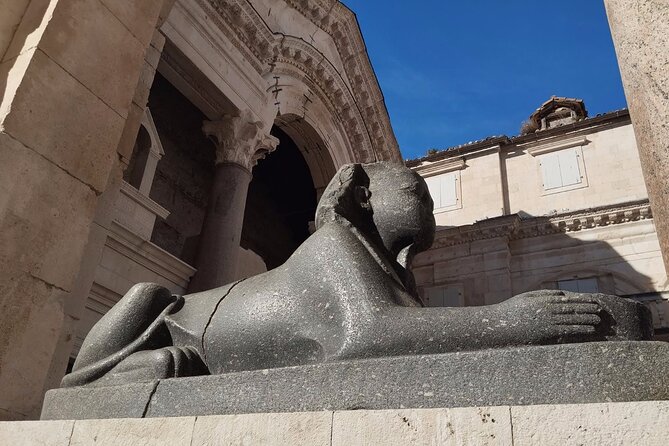
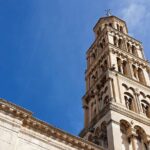
One of the later palace themes shifts from Roman empire to later Christian use. The tour covers how Diocletian’s Mausoleum became an impressive cathedral and spotlights the elegant bell tower on the Dalmatian coast.
This part works especially well if you enjoy seeing how buildings change roles without fully disappearing. It’s not just “Roman then church.” It’s one space, re-purposed in a way that still draws attention.
The Golden Gate, the wall, and an escape-route feeling
At the Golden Gate, you move into the palace’s fortified mindset. The guide points out that back in Roman times, it wasn’t simple to enter what was essentially a military camp.
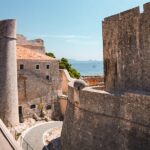
You’ll see monumental gates and the best preserved wall of the palace. The effect is a little different than the open squares: you start thinking about defense and control, and the palace stops feel more urgent.
Gregory of Nin’s statue: legend plus a photo spot
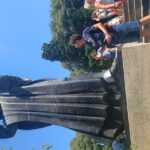
No Split old town route feels complete without Gregory of Nin. The guide leads you to the statue of Grgur Ninski, famous for its golden toe.
A legend says touching the golden toe helps wishes come true, so you’ll see people do it without thinking too hard. It’s corny in the best way—and it’s also a smart landmark for photos because it’s surrounded by open space.
Pjaca and Fruit’s Square: the old town’s changing names
Then you shift to two lively squares that show how layers of time keep rewriting the same urban stage.
At Pjaca, you explore a main square that changed its name several times through history. The guide helps you notice how the architecture reflects those eras, and you see the square as a living crossroads instead of a static ruin.
At Fruit’s Square (Trg Brace Radic), the tour calls out a standout example of baroque style architecture. You also hear how the Venetian Republic protected Split from Ottoman attacks, plus the role of Marko Marulić, often described as the father of Croatian literature.
These stops are shorter, but they’re useful. You finish the palace route and then you learn how the city kept moving.
Chocolates, Guinness, and the quick side stories
Along the way, there’s a surprisingly modern culture moment: a stop connected to a small chocolate producer in Split that won a Guinness world record for the biggest slab of chocolate in the world.
It’s brief, but it adds a layer of reality. Split isn’t only old stone. It also has quirky local makers and record-chasing pride.
Leopold’s Craft Beer Bar tasting: what to expect
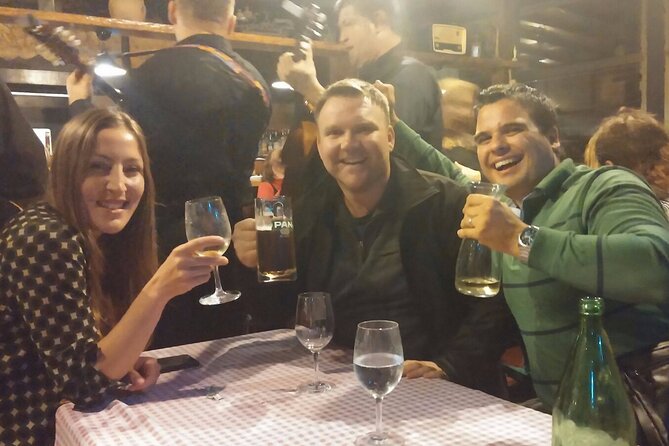
The tour ends at Leopolds Craft Beer Bar (Dosud ul 5). The walking part is around two hours, and the tasting block is 30 minutes, but beers and other drinks are not included.
The key detail is what kind of beer place it is: it’s described as a top craft beer destination that brews its own beer. In practice, that means you’re sampling something made in-house rather than just buying imported brands.
Since this is the one part you pay for directly, I suggest you check the vibe quickly once you arrive. If you prefer lighter styles, you can usually steer your order after you see the menu. If you love stronger flavors, ask the bartender what they recommend first.
Price and value: is $30.04 worth it?
At $30.04 per person, the value comes from what’s included rather than just the sightseeing list. You’re paying for a professional licensed guide who lives in Split, plus a structured walk through the UNESCO-listed Diocletian’s Palace areas.
Many of the major stops are marked as admission-free in the tour flow, which helps you avoid surprise entry fees while still getting into the right spaces. The one interior option comes with an additional fee, and the beer tasting drinks are extra, so your true total depends on how much you opt into.
If you’d rather do palace sightseeing on your own, you can. But if you want the building to make sense quickly—why the spaces worked, how streets changed, what the acoustics were for—this price buys that context.
Who this tour fits best (and who might not love it)
You’ll likely enjoy this if you want:
- A guided way to see Diocletian’s Palace without getting lost
- A small group with time for questions
- History that connects to what you’re seeing in modern Split
- A craft beer stop at the end that feels like a reward, not a separate plan
You might choose another format if you prefer a long, slow museum-style pace or if you don’t want to plan around a 6:00 pm start and a walking route.
Should you book this Split old town + beer tour?
Book it if you want an efficient evening plan that ties together UNESCO palace spaces and a satisfying craft-beer finish. Darijo’s style—knowledgeable about the palace and willing to answer questions—sounds like exactly what you need when you’re trying to turn ruins into real understanding.
Skip it only if you know you’ll hate paying extra for beer or you need tons of downtime between stops. Otherwise, this is a solid “see the essentials, learn the meaning, then toast the city” kind of outing.
FAQ
What is the price of the Split old town and craft beer tour?
The tour costs $30.04 per person.
How long is the tour?
It lasts about 2 hours, with an additional 30 minutes for the craft beer tasting.
When does the tour start?
The start time is 6:00 pm.
What language is the tour offered in?
The tour is offered in English.
How many people are in the group?
The tour has a maximum of 8 travelers.
What’s included in the tour price?
You get a professional, licensed local guide and sightseeing of Diocletian’s Palace, a UNESCO world heritage site.
What is not included?
Beers and other drinks are not included.
Where do I meet the guide?
The meeting point is at Split sign 21000, Grad, Split, Croatia.
Where does the tour end?
The tour ends at Leopolds Craft Beer Bar, Dosud ul 5, 21000, Split, Croatia.
Is the tour suitable for service animals and most travelers?
Service animals are allowed, it’s near public transportation, and most travelers can participate.