REVIEW · SPLIT
Experience Split With Local Professional Historian – Private
Book on Viator →Operated by Pomalo tours · Bookable on Viator
Split is one of those cities where stone tells stories. This private walk connects the dots from Diocletian’s Palace to everyday life in the old town. You’ll get 3D reconstruction images to help you understand what you’re seeing, even when parts are tucked into the palace maze.
What I like most is that the guide keeps the pace human while still hitting the big moments. You also cover the palace’s main spaces in a logical route, so it starts to feel like one clear picture instead of random sightseeing stops. The only drawback to watch for: the tour runs at a set time window on weekdays and it needs good weather, so plan around late afternoon conditions and comfortable shoes.
In This Review
- Golden Gate to Pjaca: the route that makes Split make sense
- Entering Split Through Golden Gate and Grgur Ninski
- Grgur Ninski Statue: One Person, Many Layers of Split
- Diocletian’s Palace: The Best-Preserved Anchor in the Center
- Peristyle and the Palace “Traffic”: How People Moved
- Jupiter’s Temple Outside: Roman Religion as Part of Daily Space
- St. Domnius Cathedral: Spot the Details First, Then Decide on Interior
- Vestibulum: The Palace Entrance to Private Space
- Riva Harbor: Where Split’s Life Likely Circulates
- Fruit’s Square and Pjaca: Small Public Spaces with Big Meaning
- What Makes the Guide Work So Well for Your Time
- Price and Value for a Private Group in Split
- Timing, Meeting Points, and What to Plan for
- Who This Tour Is Best For (and Who Might Want More Time)
- Should You Book This Tour?
- FAQ
- How long is the Split private historian tour?
- What language is the tour offered in?
- Where do we meet, and where does the tour end?
- What’s included in the experience price?
- Are admission tickets included?
- What if the weather is bad or I need to cancel?
Golden Gate to Pjaca: the route that makes Split make sense
Bold means this is a high-value part of the experience.
- Meet at Golden Gate, then use it as your anchor point for Diocletian’s Palace and nearby landmarks
- A master’s-degree local historian runs the show and adjusts the walk to real needs and questions
- 3D reconstructions help you visualize palace sections like cellars and dining areas
- Peristyle + cellars + triclinium are explained as how the palace actually worked, not just what it looks like
- Outside views of major religious sites (Jupiter Temple and St. Domnius Cathedral) with tips for what to look for later
- You finish on Pjaca Square, Split’s central public stage, with guidance on what to see next
Entering Split Through Golden Gate and Grgur Ninski
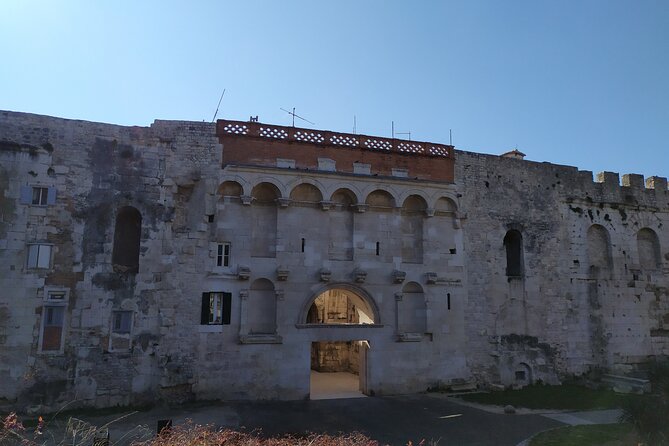
If you want Split to click fast, start at the right place. The tour begins at Golden Gate, the northern gate of Diocletian’s Palace. It’s not gold at all, just stone, but that tiny reality check is a good sign: you’ll get explanations that cut through the myths and sightseeing blur.
From here, the historian frames Split in a simple way: this gate matters because it tied the palace to the city outside it. You’ll also connect Golden Gate with something you’ll almost certainly notice during your time in Split—Gregory of Nin across the way. That pairing helps. Instead of learning isolated trivia, you start building a map in your head.
This is a great first stop because it’s short and focused, about 15 minutes. You’re also standing in a spot where you can see the relationship between landmarks, which makes the rest of the walk easier to follow. If you’re coming to Split with limited time, this opener is a strong investment.
You can also read our reviews of more private tours in Split


Grgur Ninski Statue: One Person, Many Layers of Split
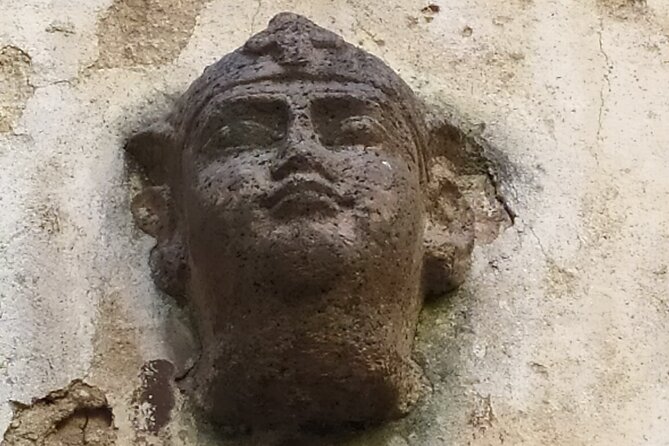
Right after Golden Gate, you move to the Grgur Ninski (Gregory of Nin) statue. This isn’t a quick pass-by. The guide tells stories and facts about the historical person Gregory of Nin and connects him to how Split honors him in stone.
You’ll hear why the monument is described as the highest one in Split dedicated to him. The talk also includes details about the sculptor of the monument, which makes the moment feel more grounded. Instead of only thinking, That’s a statue, you start noticing how public art signals identity.
Timing here is about 10 minutes. That’s perfect if you want context without turning the walk into a long lecture. The trade-off is that you won’t linger for photos forever, so bring your camera out quickly and let the guide do the explaining while you look around.
Diocletian’s Palace: The Best-Preserved Anchor in the Center
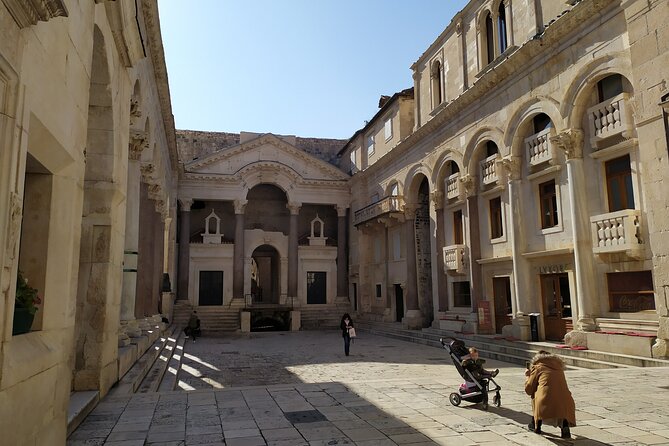
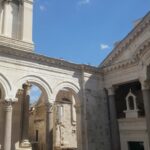
Next comes the big one: Palazzo di Diocleziano (Diocletian’s Palace). This is the main city monument in the old center, built by one of the most successful Roman emperors—Diocletian. What you get on this tour is not just a list of famous names. You get a guided understanding of how the palace functioned and how it later became part of a medieval city with its own rhythm.
You’ll spend roughly 20 minutes exploring key parts of the palace area, starting from Golden Gate. The guide points out and explains major spaces you’ll hear about throughout the tour, including:
- Peristyle
- Jupiter’s Temple (outside view)
- Diocletian’s Cellars (central substructure)
- Triclinium (the dining area)
- Mausoleum, now the Cathedral of St. Domnius (seen outside)
This is where the 3D reconstruction images come in handy. Palace ruins can be confusing. Walls, openings, and levels don’t always tell you what happened there. The guide uses a display book with reconstructions and pictures so you can picture what you’re looking at, instead of guessing.
One practical consideration: the palace streets and surfaces can require careful footing. The good news is that this is a private tour, so the historian can slow down and adjust the pace when needed.
Peristyle and the Palace “Traffic”: How People Moved
Now you step into the heart of the palace: the Peristyle. If you’ve ever wondered what the center of a giant Roman complex was for, this part explains it clearly.
The Peristyle is described as a central space that connected people while also dividing them from the emperor. That one detail changes how you look at the area. You start noticing how architecture can control movement and power, even when it looks symmetrical or grand.
From the Peristyle, you get a strong vantage point to understand how palace life was organized. The historian also connects the palace’s later changes to the expansion of Christianity—how buildings and usage evolved as the city moved beyond its original Roman identity.
Then you enter the central area of the cellars of Diocletian’s Palace. This is a major payoff because it shifts you from surface impressions to function and history. The guide explains how those substructures were used over time and why they mattered for the development of Split—and why they still matter now.
This segment also links into Triclinium, the dining space. The guide points it out and explains eating habits of emperors and Romans in general, plus how Emperor dining was organized. Even if you’re not a Roman-food person, the dining setup helps you understand class, routine, and the social rules of the palace.
Timing for this whole palace-center block is around 20 minutes. It’s enough to make the ideas stick without dragging your legs through more stone than you need.
Jupiter’s Temple Outside: Roman Religion as Part of Daily Space
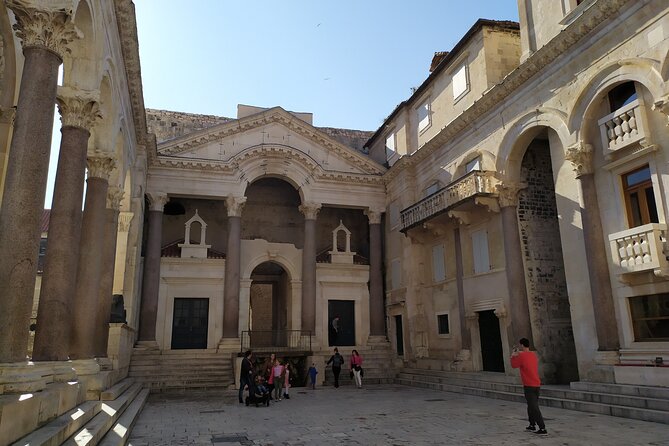
After the palace core, you look at the Temple of Jupiter from the outside. This stop keeps the pace light—about 10 minutes. But it’s still useful because it explains why temples weren’t separate from life. In the Roman world, religion was high-stakes, and worship spaces were a built-in part of residences and complexes.
The guide ties that general Roman religious importance to what you’re actually seeing here. That matters because it prevents the temple from becoming just another exterior photo stop. You’ll know what the space was for before you try to figure it out on your own.
If you’re the type who likes a little context before going in, this is a good match. The drawback is obvious: you don’t get a long, inside-style experience here. This is built around outdoor viewing and explanation.




St. Domnius Cathedral: Spot the Details First, Then Decide on Interior
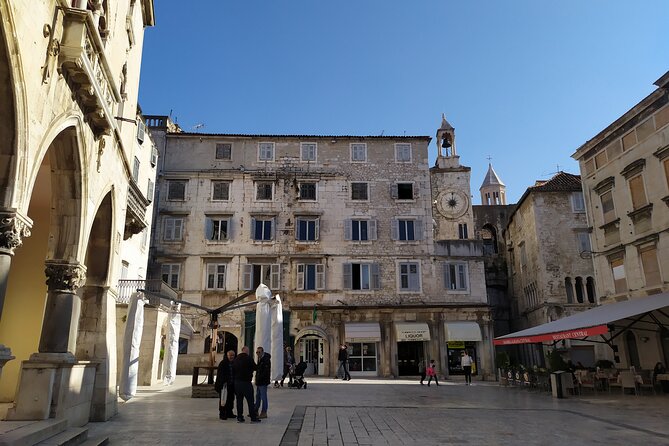
Next is the Cathedral of Saint Domnius. Like the Jupiter Temple, this is an outside visit focused on what you can see from where you stand. The guide points out significant parts and shares the story behind it.
One especially practical touch: you’ll get warnings about interesting things to watch for inside if you decide to visit later on your own. That gives you a smarter follow-up plan. When you return for interior viewing, you’re not starting from zero—you already know what details are worth your time.
This stop is about 10 minutes. Short and focused works well here because you’re balancing multiple major sights in roughly a two-hour tour. If you prefer slower, long indoor visits, you might later add extra time specifically for the cathedral interior.
Vestibulum: The Palace Entrance to Private Space
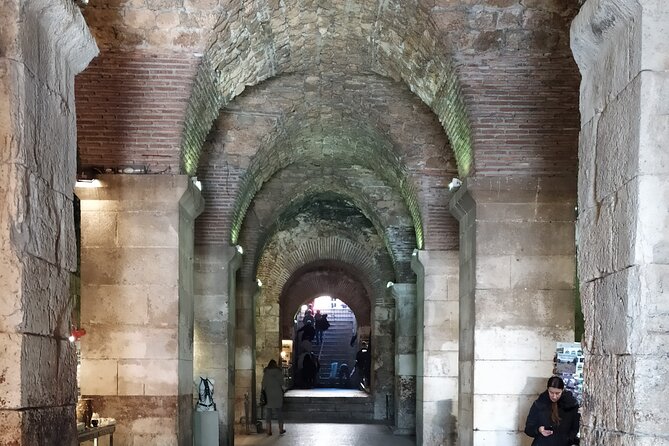
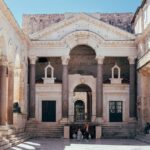
Then you go to the Vestibulum of Diocletian’s Palace, described as the pre-entrance to Diocletian’s private chambers. This stop is only around 10 minutes, but it’s one of the spots that makes the story feel human.
The guide explains how this space was decorated according to its importance and what its function was. You start understanding how even “in-between” areas mattered—how access was controlled and how the emperor’s private world contrasted with shared areas of the palace.
This is the kind of stop that pays off if you like transitions: public to private, city to emperor, Roman order to later city life.
Riva Harbor: Where Split’s Life Likely Circulates
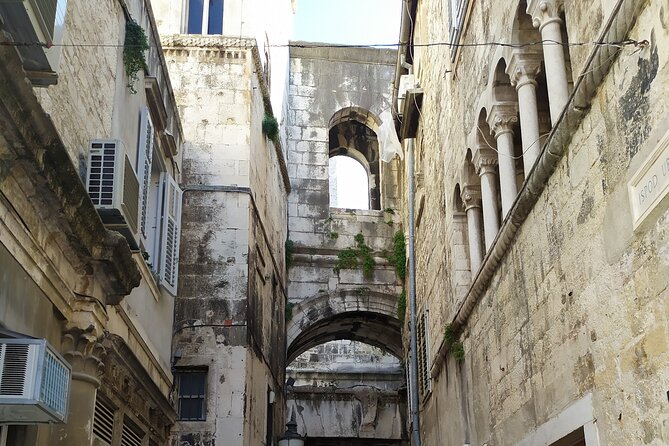
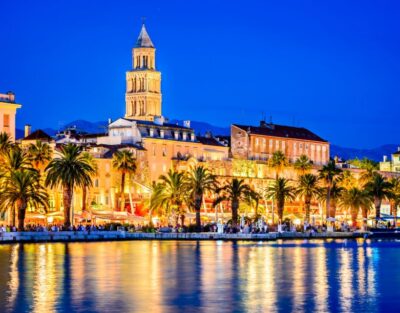
After the palace world, you move to the real city surface: Riva Harbor, the main promenade. You’ll hear how the promenade was built over the centuries and why it became central for locals.
This part is about 5 minutes, so treat it like a quick reset. After Roman architecture and religious sites, Riva helps you shift your brain back to how Split feels today—walking, meeting, and moving through the city.
Even with limited time, the guide’s explanation makes the promenade more than a pretty strip. It connects past changes to present-day habits.
Fruit’s Square and Pjaca: Small Public Spaces with Big Meaning
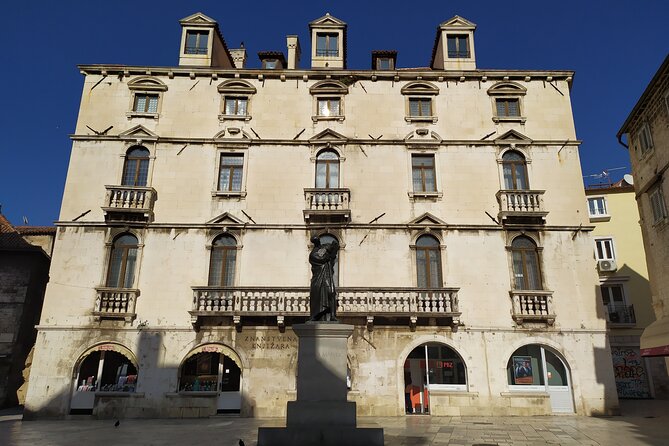
Next up: Fruit’s Square (Trg Brace Radic). This charming square gets its name from the guide’s explanation of why it’s called Fruit Square. You’ll also be pointed toward a significant monument in the middle and key sights around the edges.
Then comes the final major stop: Pjaca (People’s Square, also known as Piazza). The historian explains why Pjaca is the center of city happenings from medieval times to today. This isn’t just generic “this is the main square” talk. You’ll get the story of the square and what stands around it, including the old City Hall.
The tour typically ends on People’s Square. The meeting end point is Narodni trg 16 and the tour finishes after you discover secrets and interesting things around the square. You’ll also get advice on other places to see next, which is helpful if this is your first visit to Split.
What Makes the Guide Work So Well for Your Time
The tour is private, and that changes what’s possible in a two-hour format. A small group setup (up to 15 per group) means you’re not forced to rush because a crowd is moving you like luggage down the sidewalk.
The historian has a master’s degree in history, and the style shows in how they answer questions and keep the story moving. From what I’ve gathered about this tour’s guide approach, the best part is adaptability. When schedules get tight—like flight delays or dinner reservations—the walk can be adjusted so you still get the main story beats.
The guide also handles mobility needs with care. You won’t have to pretend everyone is fine. The pace can be managed, and you’ll be guided toward places to sit when needed. For a city like Split, where cobblestones and uneven surfaces are part of the experience, that kind of practical flexibility matters.
The other tool is the display book with 3D reconstructions and pictures. It turns “I kind of see something” into “I understand the shape and purpose.” Even if you’re not a history nerd, those reconstructions make the palace architecture much easier to follow.
Price and Value for a Private Group in Split
The price is $156.21 per group (up to 15) for about 2 hours in English, with a mobile ticket included. That structure can be a bargain if you’re traveling with a group of friends or family.
Here’s the value logic I’d use: you’re paying for a trained historian plus interpretation, not just directions. In two hours, most self-guided wandering turns into “look, photo, move on.” This tour gives you a framework—Rome, Christianity’s transition, public life in squares, and how everyday Split grew from the palace.
Also, the route ends right where you’ll likely want to be anyway: Pjaca Square in the center. That means you can keep exploring right after the tour without trekking across town.
One note on admissions: the tour lists no admission tickets as included. At the same time, the itinerary descriptions mark the stops as admission free. The safe way to think about it is: you should expect mostly outside viewing and guided explanation, and if you later choose to go inside a site on your own, you may need separate tickets.
Timing, Meeting Points, and What to Plan for
The meeting point is Golden Gate, Dioklecijanova 7, Split. The tour ends on Narodni trg 16, on People’s Square (Pjaca).
The listed weekday opening window is Monday to Friday, 5:00 PM to 7:00 PM. There’s also mention of flexible starting time, so it’s worth contacting before your tour date to line it up with your schedule.
Because this experience requires good weather, you should plan to be flexible. If the forecast looks rainy, you’ll benefit from choosing clothing and shoes that handle wet stone safely.
Pack like you’re walking through a historic old town. Comfortable shoes are the big one. After the tour, you’ll be positioned in the city center, so it’s a good lead-in to dinner or further exploring.
Who This Tour Is Best For (and Who Might Want More Time)
This is best for you if:
- You want a structured introduction to Split without spending half a day reading in circles
- You like Roman and medieval layers and want help connecting them
- You appreciate a guide who can explain what you’re looking at, then point you to what to notice later
- You’re traveling with at least a couple people and want private-group value
It may not be the best fit if you want long indoor time at major sites. This tour focuses on key stops and outside views, with explanations tied to the big palace areas and central squares.
Because the tour is only about two hours, it’s also ideal for first-timers who want clarity fast, not for people who want slow museum-style exploration.
Should You Book This Tour?
Yes, if you want Split to feel coherent quickly. The combination of a master’s-degree historian, a tight route built around Diocletian’s Palace, and 3D reconstructions makes the city easier to understand than wandering alone.
Book it especially if:
- You’re short on time but still want the big landmarks connected by real context
- You’ll benefit from a guide who can handle questions and adjust the pace
- You want to end right on Pjaca Square so you can keep exploring afterward
Skip it only if you already know the palace well and you’re mainly chasing deep indoor admissions. In that case, you might choose a longer self-guided plan and spend more time inside specific buildings.
FAQ
How long is the Split private historian tour?
It runs for about 2 hours.
What language is the tour offered in?
The tour is offered in English.
Where do we meet, and where does the tour end?
You meet at Golden Gate (Dioklecijanova 7, Split) and the tour ends at Narodni trg 16 on People’s Square (Pjaca).
What’s included in the experience price?
It includes a local guide with a master’s degree in history and 3D reconstruction images and pictures via a display book, plus a mobile ticket. Flexible starting time is also offered.
Are admission tickets included?
No admission tickets are included.
What if the weather is bad or I need to cancel?
This experience requires good weather. If it’s canceled due to poor weather, you’ll be offered a different date or a full refund. You can cancel for free up to 24 hours in advance for a full refund.