REVIEW · SPLIT
Small-Group Communist Tour of Split – Boutique group tour
Book on Viator →Operated by Pomalo tours · Bookable on Viator
Communism is in Split’s streets, not textbooks. This small-group tour traces Split’s communist past through WWII context and modern-day architecture you can actually see. With a local historian and history teacher guide named Boris, you’ll walk away with clear stories about how everyday life was shaped under Yugoslavia’s system.
I especially like two things: the guided, purpose-built route that links distant sites with minimal hassle, and the way the tour reads like a guided story instead of a checklist. You’re also chauffeured around in an air-conditioned private vehicle, so you spend your energy watching and listening, not getting yourself across town.
One thing to consider: this experience depends on good weather, and a few stops are outdoors. If you’re hoping for a pure old-town sightseeing loop, this is a sharper angle—politics, architecture, and the Yugoslav era are the main course.
In This Review
- Key points worth knowing before you go
- Entering Split Through Yugoslavia’s Communist Lens
- Meeting at Trg Franje Tuđmana: WWII context in 25 minutes
- Poljud Stadium and the China Wall: architecture as political messaging
- Koteks: the first shopping-mall idea under Yugoslavia
- Split 3 (Krstarica): Tito-era housing plans you can walk through
- Kopilica’s armored train: why Yugoslavia ended violently
- Price and logistics: why $108.14 can make sense here
- Who this tour suits best
- Quick practical tips for a smoother tour
- Should you book this Communist Tour of Split?
- FAQ
- How long is the Small-Group Communist Tour of Split?
- What is the group size limit?
- What language is the tour offered in?
- Where do we meet?
- Is transportation included?
- What’s included in the tour besides the guide and transport?
- Do the stops require admission tickets?
- What kind of stops should I expect?
- What happens if the weather is poor?
- Is free cancellation available?
Key points worth knowing before you go
- Small group (max 8), so it stays conversational instead of rushed.
- A local historian/teacher guide (Boris) connects buildings to policies and daily life.
- Dispersed sites are easy thanks to private, air-conditioned transportation.
- WWII to Yugoslavia to its violent end is covered in a clear, chronological way.
- Iconic architecture stops include Poljud Stadium, the China Wall, and Split 3.
- A typical soft drink (soda/pop) is included, a little taste of the era.
Entering Split Through Yugoslavia’s Communist Lens
This is not a vague theme tour. It has a clear purpose: you’re seeing Split as it relates to the Yugoslav communist period, from the war years that fed the new state to the structures that tried to shape daily life.
The best part for me is the balance. You don’t just hear slogans. You get stories about how housing, education, health, consumer life, and politics were supposed to work—then you see the physical evidence. Even if you’re not a hardcore history person, the architecture does a lot of the talking.
And because it’s a small group capped at eight people, you get room for questions. In one case, the tour even ran as a one-on-one experience, which tells you the operator is set up for a more personal pace when attendance allows.
You can also read our reviews of more tours and experiences in Split.

Meeting at Trg Franje Tuđmana: WWII context in 25 minutes
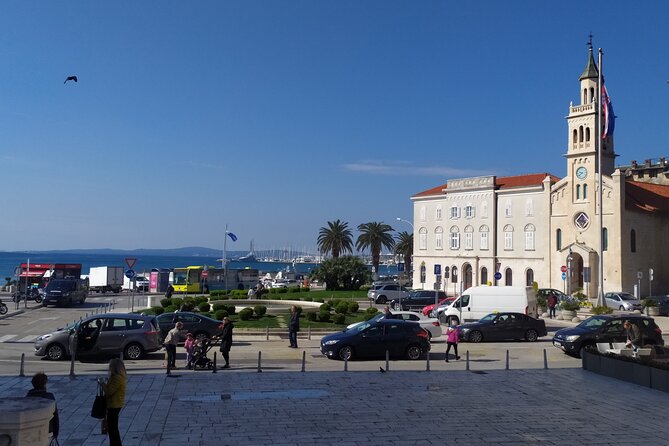
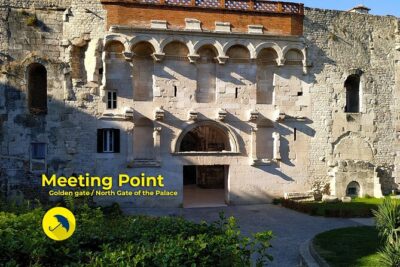
You meet at the bus station at Trg Franje Tuđmana in Split (near public transportation). The first stop is your setup: a quick introduction to the communist tour of Split and how WWII events in Split and Yugoslavia helped shape the birth of the new communist state.
You also see pictures showing damage in Split during the war. It’s a smart opener because it frames what comes next. Without that context, some of the later architecture can feel like just impressive concrete. With it, you start to understand why new systems and new building ideas mattered so much.
What to expect: a short, mostly informational start, with time designed to get everyone aligned before you move around the city.
Possible drawback: if you’re allergic to listening early in a tour, this first segment may feel heavy—but it makes the rest much easier to follow.
Poljud Stadium and the China Wall: architecture as political messaging
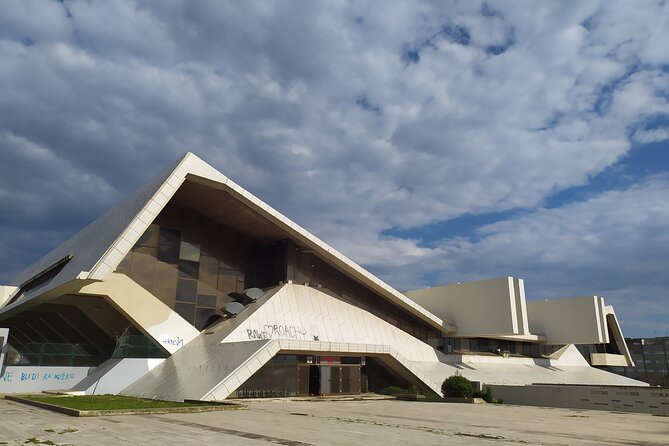
Next you get a short panoramic stop connected to Poljud Stadium. This place is a Split symbol tied to a specific communist-era moment: it was built to host major sports events in Yugoslavia, including the Mediterranean Games.
There’s also a strong “why this matters” angle. The tour explains how Poljud Stadium was included as an important example of Yugoslav architecture in a Yugoslavia architecture exhibition at MoMA in New York. That’s the kind of detail that helps you appreciate the scale and ambition of the design, not just the fact that it exists.
Right at the same area, you’ll hear about the China Wall, described as the widest existing building in Split and an example of Yugoslav socialist architecture. This is one of those stops where the guide’s job is crucial: they connect what you’re seeing to the bigger ideas behind it.
What to expect: a quick view-and-story pairing—enough time to learn why the buildings gained attention, but not so long you feel stuck waiting.
If you’re practical: bring your phone for photos, because this is one of the easiest places to get clear exterior shots.
Koteks: the first shopping-mall idea under Yugoslavia
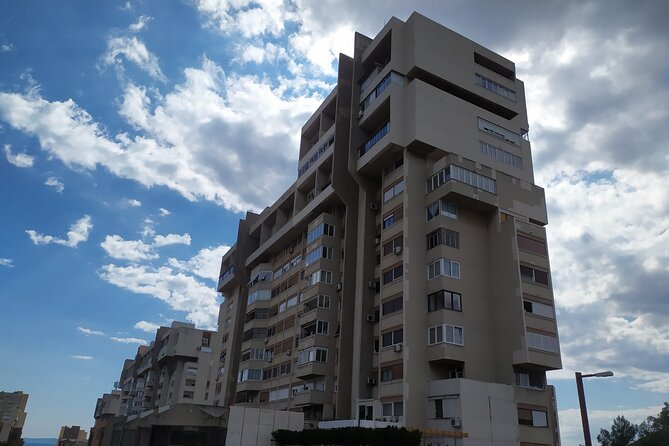
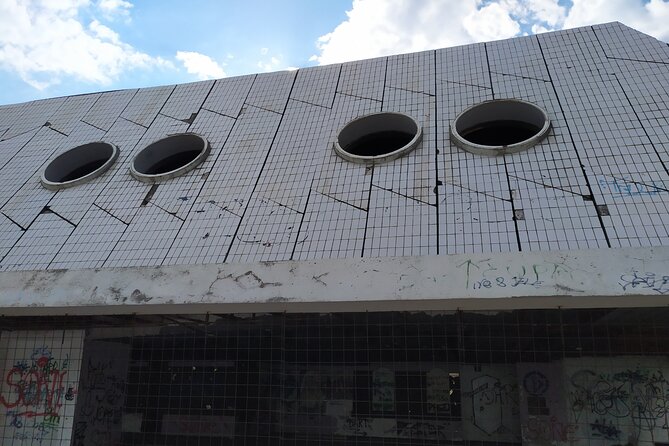
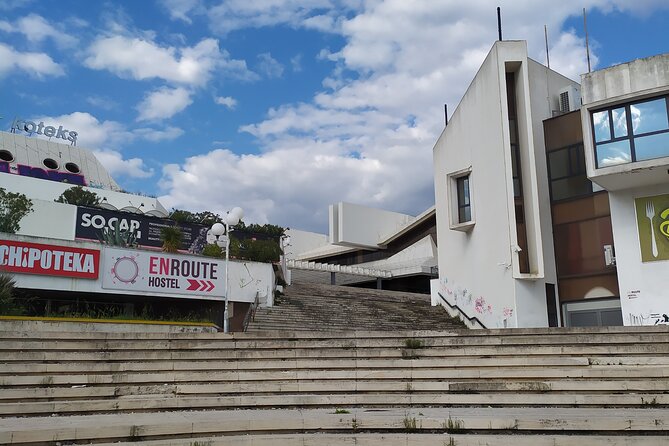
The tour then moves to Prodajni centar Koteks, where you’ll walk around what’s described as the first shopping mall in Yugoslavia. This is a fascinating shift from monuments and stadiums to the story of buying everyday stuff.
Here’s the key idea: under a socialist system, shopping wasn’t just commerce—it was controlled life. The tour explains how the concept of modern shopping was popular briefly, then faded as conditions changed over time.
You’ll also hear about consumer life as something between the open West and the closed East. The practical implication is important: people often had to be creative in how they sourced goods. It’s one of those topics that makes history feel real, because it explains what people dealt with day-to-day instead of just focusing on official narratives.
What to expect: about 30 minutes for a walk-and-listen stop.
Possible drawback: if you mainly want monumental architecture, this part may feel more story-driven than photo-driven.
Split 3 (Krstarica): Tito-era housing plans you can walk through
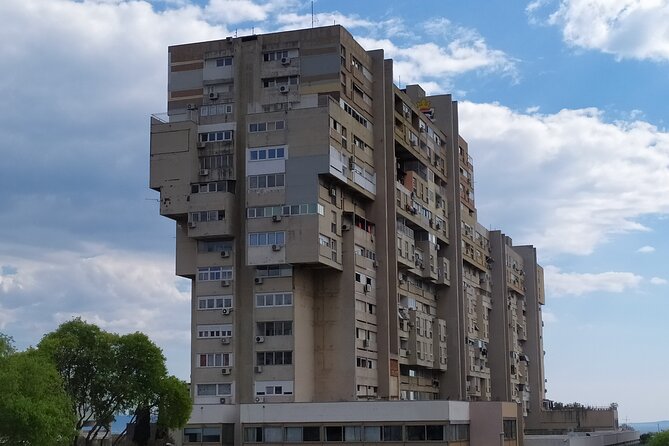
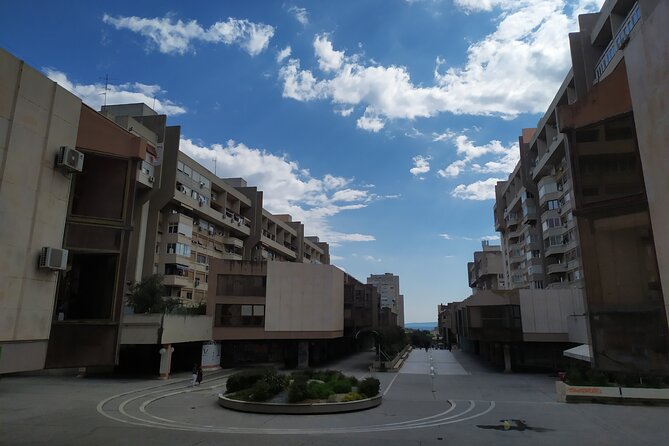
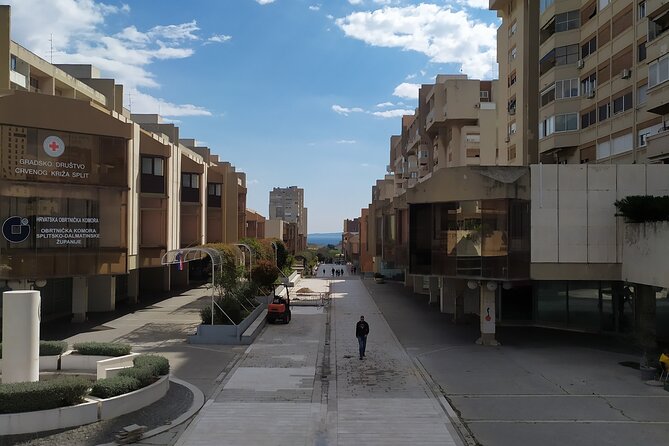
Stop four is the heart of the tour for many people who love cities and buildings. You’ll spend about 1 hour 10 minutes exploring Split 3 in the Krstarica area, a modern communist neighborhood purposely built to provide quality living, working, and resting.
The tour highlights how this project became known globally as an example of planned modern neighborhoods in Yugoslavia. You’ll also hear that Split 3 was recognized as an important residential project in a Yugoslavia architecture exhibition at MoMA in New York—again, the guide ties local buildings to international attention.
As you walk around, you’ll check different architecture styles and learn how local architects left their signature on each building. One building mentioned is called Cruiser. Even if you’re not an architecture nerd, the tour makes the differences readable by explaining what each style relates to in daily life and planning.
You’ll also connect the neighborhood to topics like:
- housing policy
- educational and health systems
- economy and social life
- politics, with emphasis on the dictatorship of Yugoslav leader Tito
What makes this stop valuable: Split 3 isn’t just a set of buildings. It’s a whole model for how the state thought people should live. When you see the layout and the design choices, the politics stop being abstract.
Time reality check: 1 hour 10 minutes is enough to see a lot of exterior detail and listen without rushing, but it will still feel like walking. Wear comfortable shoes and plan for some open-air time.


Kopilica’s armored train: why Yugoslavia ended violently
The final stop takes you to Split Predgrađe, associated with Kopilica railway station. This is where the tour shifts from the idea of a system to the consequences of its collapse.
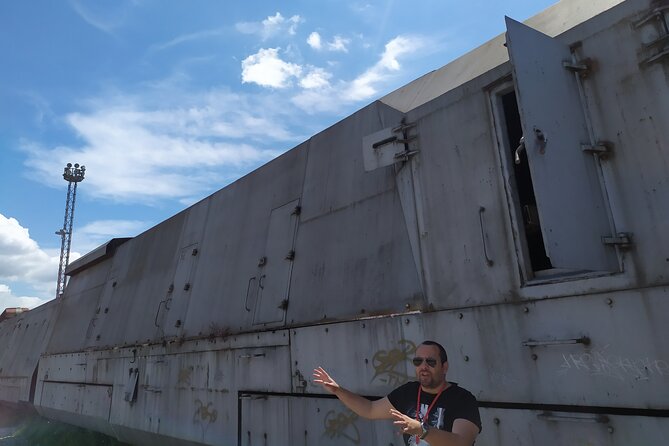
You’ll hear reasons why Yugoslavia didn’t survive and why the end in the 1990s was violent, including a bloody war. The emotional weight here matters, but the tour keeps it grounded by pointing to a specific symbol: an armored train displayed on the railway.
The armored train is presented as a symbol marking the beginning of the violent end of Yugoslavia. It’s a blunt visual reminder that political change can mean real danger and broken lives, not just headlines.
What to expect: a 30-minute storytelling-and-looking segment with the train as your anchor point.
Good to know: this final stop is one of the strongest “bookend” moments. After learning about planned life and planned buildings, you end with how that story ended.
Price and logistics: why $108.14 can make sense here
At about $108.14 per person for roughly 3 hours 30 minutes, this isn’t the cheapest way to see Split. But it’s also not trying to compete with budget walking tours.
Here’s what you’re paying for in practical terms:
- Private, air-conditioned transportation: your route covers dispersed sites, so you don’t lose half your day to transit and transfers.
- Small group size (max 8): you get a more interactive experience and less waiting.
- Expert-led narrative: the tour is built around communist-era themes, WWII context, and architecture tied to real systems.
- Included soft drink (soda/pop): it’s small, but it fits the theme and avoids the need to hunt down a snack midway.
Also, the tour is offered in English, with a mobile ticket. That’s useful if you hate printing stuff on vacation.
One extra tip: the tour is commonly booked about 10 days in advance. If you’re traveling in peak season or on a tight schedule, don’t wait until the last minute.
Who this tour suits best
This experience fits you if you like:
- architecture with a political backstory
- Yugoslavia-era design and city planning
- WWII context that connects to later social changes
- guided explanations that help you read what you’re seeing
It might feel less satisfying if you want only the classic postcard Split highlights with zero political framing. This tour doesn’t pretend that history is neutral. It chooses a focused lens, and you’re going to follow it.
If you’re traveling with family or friends, the small group size helps. But if your group has one person who hates history lectures, you’ll want to set expectations early.
Quick practical tips for a smoother tour
- Bring comfortable walking shoes. Even with the vehicle, you’ll walk at several stops.
- Plan for some outdoor time. The tour requires good weather.
- Wear light layers. Split weather can shift, and you’ll be moving between shaded stops and open areas.
- Have your camera ready for Poljud Stadium, the China Wall area, and the Split 3 exteriors.
- If you care about context, ask Boris questions early. The guide’s role is what ties everything together.
Should you book this Communist Tour of Split?
Yes—if you want Split to mean more than beaches and old stone, book it. The value comes from the guide-led narrative and the fact that you’re transported efficiently between specific sites tied to Yugoslav communist planning and life.
If you’re curious about how housing, sports, consumer life, and politics shaped the city—and you like learning by looking at buildings—this is a strong choice. If you only want a quick sightseeing hit, you might prefer a tour focused on the waterfront and Diocletian’s Palace. But for a deeper, slightly unusual view of Split, this one is a smart bet.
FAQ
How long is the Small-Group Communist Tour of Split?
The tour lasts about 3 hours 30 minutes.
What is the group size limit?
The tour has a maximum of 8 travelers.
What language is the tour offered in?
The tour is offered in English.
Where do we meet?
You meet at Autobusno stajalište Sv. Frane, Trg Franje Tuđmana, 21000 Split, Croatia.
Is transportation included?
Yes. It includes private transportation in an air-conditioned vehicle.
What’s included in the tour besides the guide and transport?
A typical soft local drink (soda/pop) is included.
Do the stops require admission tickets?
The provided stop information lists admission tickets as free.
What kind of stops should I expect?
You’ll visit multiple dispersed sites, including areas connected to Poljud Stadium, Koteks shopping, Split 3 neighborhood architecture, and Kopilica railway station with an armored train.
What happens if the weather is poor?
The tour requires good weather; if it’s canceled due to poor weather, you’ll be offered a different date or a full refund.
Is free cancellation available?
Yes, free cancellation is available up to 24 hours in advance for a full refund.