REVIEW · SPLIT
Private History Split Walking Tour in Spanish
Book on Viator →Operated by Ancient Tours · Bookable on Viator
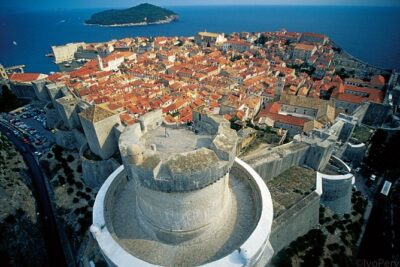
Diocletian’s Palace feels like a whole city. This private Spanish walking tour makes the palace’s stones and stories make sense fast, with a guide who keeps the pace readable and answers real questions. I love how the Peristyle acts like a command center for understanding what you’re seeing, and I also like the way the guide explains the emperor’s rise and the palace’s meaning. One possible downside: you’ll explore the palace substructures but skip the museum part, so if you want museum time, plan to add it later.
At 1 hour 30 minutes, it’s a compact tour that still covers the big moments. You’ll move through key spaces and viewpoints that connect Roman rule to Split’s later layers—Venetian, Jewish, and medieval Croatian history—without turning it into a marathon.
This is also a good “first day in Split” choice. The route starts at Peristil ulica and ends near the palace area, so you can pick up a drink, a gelato, or the rest of your sightseeing right after.
In This Review
- Key things you’ll notice on this Split palace walk
- Start at the Peristyle: your fast pass to the palace layout
- Jupiter to the Golden Gate: Rome, religion, and a statue with language ties
- Palace substructures: the part most people miss, explained in plain terms
- Bronze model at the harbor: connect the palace to Split’s everyday life
- Fruit’s Square and Marko Marulić: the Venetian layer you can spot
- Split Synagogue pass-by: a short stop with meaningful context
- Vestibulum of Diocletian’s Palace: the brief moment with atmosphere
- Language, guide quality, and why the $63.05 price can make sense
- So, should you book it?
- FAQ
- How long is the Private History Split Walking Tour in Spanish?
- Where does the tour start and end?
- Is this tour private or shared?
- What’s included, and are admission tickets included?
- Will I visit the museum part of the palace substructures?
- What language is the tour in?
- What’s the cancellation policy?
Key things you’ll notice on this Split palace walk
- Peristyle orientation: You start in the central square that links almost every major stop inside Diocletian’s Palace.
- Jupiter and Diocletian’s power story: You’ll learn how Diocletian framed his authority through his divine father, Jupiter.
- Golden Gate + Gregory of Nin statue: The main entrance isn’t just impressive; it’s tied to language and cultural identity.
- Substructures without the museum: You’ll see the construction and functions over time, but not the museum galleries.
- Riva promenade origins: You’ll connect the palace complex to the promenade vibe that locals love today.
- Synagogue pass-by stop: You learn the Jewish thread in Split, with entry not included.
Start at the Peristyle: your fast pass to the palace layout
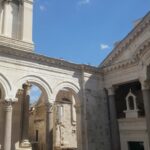
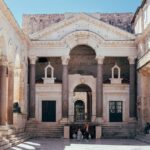
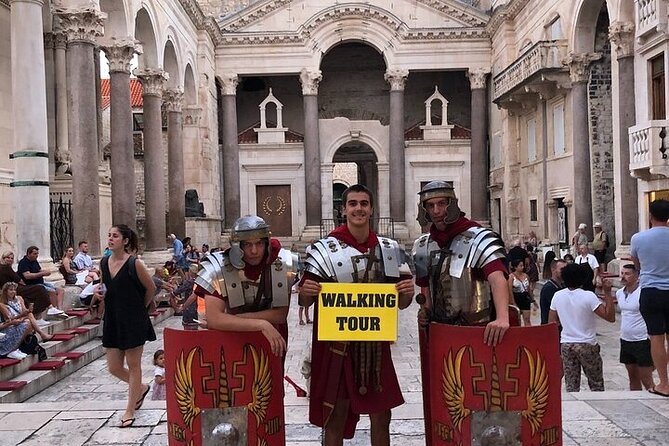
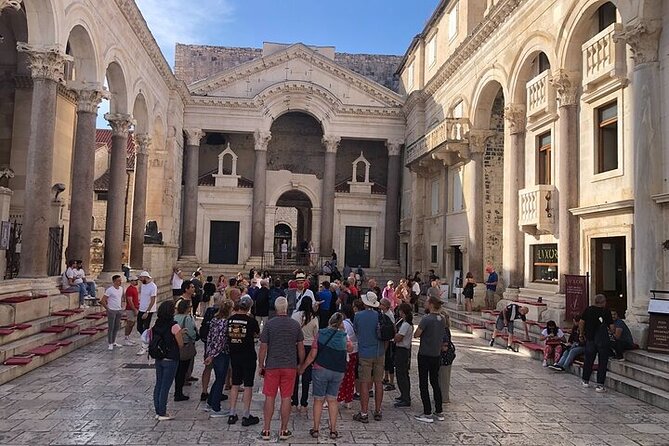
The Peristyle is where you want to begin if you’re not into getting lost in ancient corridors. It’s the palace’s central square, and from here you can understand how everything branches out. I like this approach because it turns random ruins into a map you can actually remember.
From the Peristyle, the guide frames Diocletian’s Palace not as a single monument, but as a working system. You’ll get the basics of who Diocletian was and why his palace mattered—then the rest of the walk becomes easier to follow. Even if you’ve seen photos, standing in the right spot changes how the whole place reads.
One practical note: this tour is described as not recommended for travelers with issues with high steps. So if stairs are a concern for you, keep an eye on the route pacing and be ready for uneven stone.
You can also read our reviews of more walking tours in Split


Jupiter to the Golden Gate: Rome, religion, and a statue with language ties
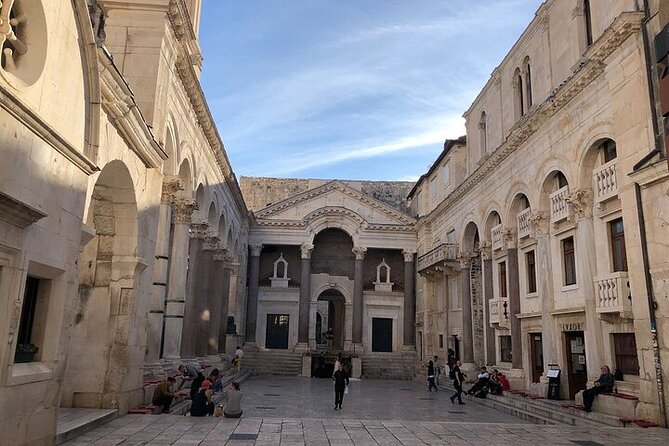
Next comes one of the most telling links in the story: Diocletian’s connection to Jupiter. You’ll hear about the Roman temple of Jupiter and how Diocletian considered Jupiter his divine father. It’s the kind of detail that helps you understand why Roman rulers used religion as politics—without needing a lecture that lasts all day.
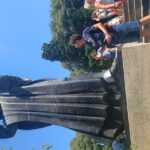
Then you’ll head to the Golden Gate, the main entrance of Diocletian’s Palace. This stop matters because it’s not only about grandeur. The guide also connects what you see to later history, including the statue of Gregory of Nin and why he’s important to Croatian history and language.
That’s the “wow” formula working here: you get the visual impact first, then the meaning. I think that’s a smart way to keep a 1.5-hour tour satisfying. If you only wanted photos, you’d still get plenty. If you want context, you won’t feel shortchanged.
Palace substructures: the part most people miss, explained in plain terms
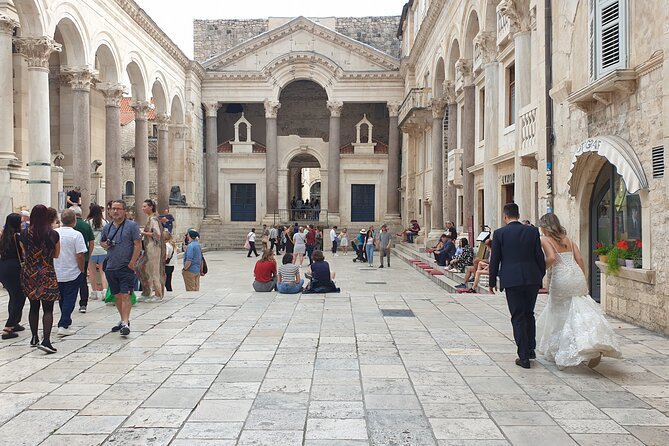
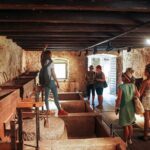
A big chunk of the value is time spent in the substructures area. These are the spaces that sit beneath and around the palace functions, and they help you understand how the palace was built to last—and to operate. You’ll learn about how the construction worked and what these substructures did for the complex over the ages.
Important for your expectations: you won’t visit the museum portion during this tour. The good news is you’ll still get the story and the physical layout, but museum time is left for later if you want it. I like this approach because it keeps the walking tour focused and avoids turning it into an all-day ticket event.
You’ll also move through the substructures more than once during the tour. That might sound repetitive, but it’s often exactly what helps you connect details. If you’re visual, seeing similar spaces at different points in the narrative can lock the whole system into place.
Bronze model at the harbor: connect the palace to Split’s everyday life
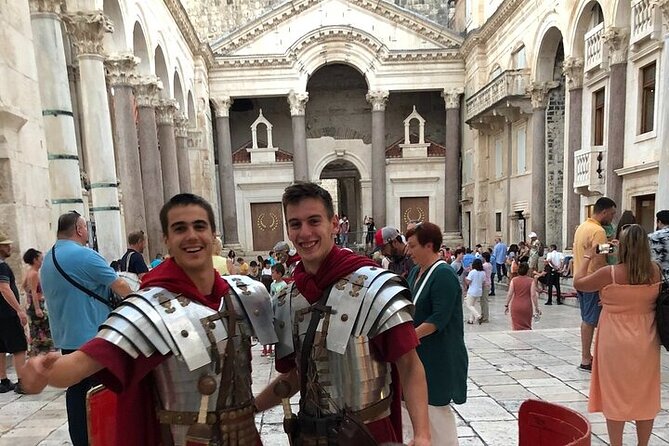
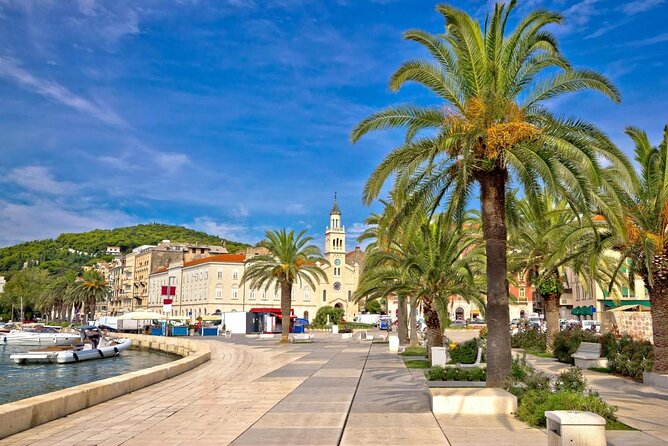
After the palace spaces, you’ll shift toward the Riva Harbor area. This is where the tour widens your lens beyond “ancient walls” and shows how Diocletian’s Palace shaped what Split became.
One of the neat moments is the bronze model of Diocletian’s Palace. That kind of model is worth it because it gives your brain a shortcut. Instead of trying to imagine what you saw 2000 years ago, you can compare it to the shape of the real place.
From there, the guide connects the palace to the history of Split’s Riva promenade. Even if you’re just sitting with an ice cream later, you’ll understand why this waterfront feels so tied to the city’s identity. It turns a casual walk into something that feels intentional.
Fruit’s Square and Marko Marulić: the Venetian layer you can spot
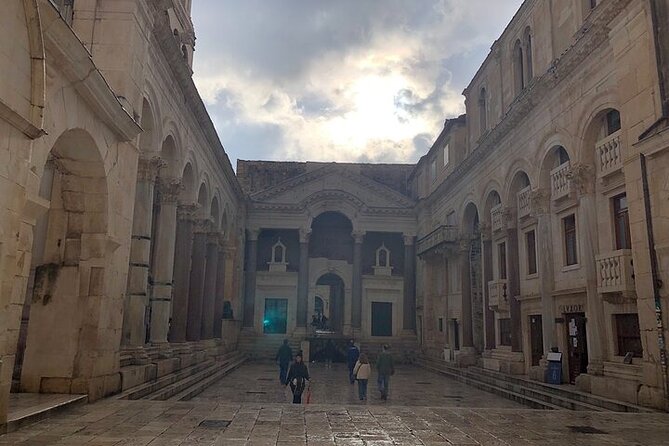
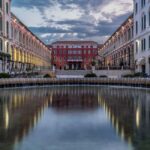
Then you’ll reach Fruit’s Square (Trg Brace Radic). This is one of those stops that proves the palace isn’t the only story in Split. You’ll learn about a 15th-century Venetian citadel linked to the square, which helps explain how control and architecture shifted over time.
You’ll also hear about Marko Marulić, described as the father of Croatian literature. If you’re into language and culture as much as architecture, this is a solid stop because it ties the city’s identity to ideas, not just buildings.
The practical benefit: this is where you’ll likely feel the tour’s pacing settle. It’s a moment to regroup visually, ask questions, and connect the Roman foundation to later European influence. If your feet start to feel it, this kind of square stop helps break the strain.
You can also read our reviews of more private tours in Split






Split Synagogue pass-by: a short stop with meaningful context
You’ll pass by the Split Synagogue, described as a 16th-century site. The tour explains the history of the Jewish people in Split, which adds an important human layer to all the palace talk.
Two things to keep in mind. First, it’s a pass-by stop, not an included admission visit. Second, since admission isn’t included here, you should treat this as a context stop—great for orientation, but not a replacement for a full synagogue visit if you want deeper access.
I like including these “in between” moments because they prevent the tour from becoming a one-note Roman story. Split grew through many communities, and this helps you see that the city’s history wasn’t only Christian or only Venetian.
Vestibulum of Diocletian’s Palace: the brief moment with atmosphere
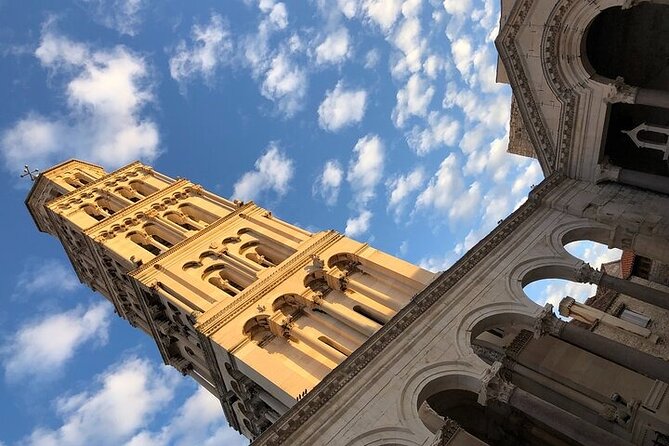
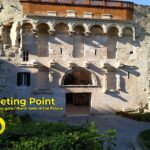
The tour ends this phase at the Vestibulum of Diocletian’s Palace. Here, you’ll see the vestibule of Emperor Diocletian and learn about its history. This stop is shorter, but it fits the arc of the walk: you started with the palace’s central logic, and you finish with a key entrance space tied to the emperor’s presence.
There’s also a possible bonus. Depending on circumstances, you might hear traditional Dalmatian singing. You shouldn’t count on it like it’s guaranteed, but the fact it’s a possibility tells you this tour is designed to connect you to the region’s living culture, not only its ruins.
After that, you’ll wrap back around toward the palace substructures again and then finish near where you started. That loop makes the whole experience feel tighter instead of “walk here, walk there, done.”
Language, guide quality, and why the $63.05 price can make sense
This is a private tour in Spanish. That matters more than people think, especially in complex places like Diocletian’s Palace, where names, dates, and themes can blur fast. When the guide is explaining in Spanish, you don’t have to translate in your head. Your understanding stays with you as you walk.
The reviews strongly point to one standout theme: the guide was attentive and explained the palace history clearly, staying responsive to questions. I’d expect that to show up in the way the tour handles tough-to-grasp ideas like Diocletian’s rise in power and the “why” behind Roman design choices.
About value: at $63.05 per person for about 1 hour 30 minutes, you’re paying for a focused, private format plus a guide who ties stops together. This can be a better deal than doing everything on your own if you want clarity and you like your history organized around key places. Add in that the tour uses a mobile ticket and includes a standard guide-led experience with no included admission tickets, and you’re paying mostly for time, expertise, and direction—not for multiple museum entries.
If you’re the type who enjoys questions and wants context while you’re still standing in front of the stone, this pricing usually feels fair. If you just want casual wandering with no explanation, you may decide it’s overkill.
So, should you book it?
Book this Private History Split Walking Tour in Spanish if you want a smart orientation to Diocletian’s Palace and the city around it, and you’d rather spend 90 minutes learning than hours guessing what you’re looking at. It’s especially good for first-timers in Split who want the key highlights: Peristyle, Jupiter context, the Golden Gate and Gregory of Nin, Riva Harbor, Fruit’s Square, and a meaningful pass-by of the synagogue.
Skip it or plan alternatives if museum time is your priority, because the palace substructures museum part isn’t visited on this tour. Also, if high steps are an issue for you, take the route into account and consider whether you need a gentler option.
If you like the idea of combining Roman power themes with Split’s later cultural layers—Venetian and Croatian literary identity included—this tour is a strong match.
FAQ
How long is the Private History Split Walking Tour in Spanish?
The tour runs for about 1 hour 30 minutes.
Where does the tour start and end?
It starts at Peristil ulica (Peristil ul., 21000, Split) and ends near Diocletian’s Palace in the Grad area of Split. The guide can take you back to the Peristyle if you ask.
Is this tour private or shared?
It’s private, meaning only your group participates.
What’s included, and are admission tickets included?
The guide is included. Admission tickets are not included, though several stops are marked as free within the tour experience. The Split Synagogue stop notes that admission is not included.
Will I visit the museum part of the palace substructures?
No. You’ll go through the substructures and learn about their construction and functions, but the museum part is not visited. You can visit it after the tour.
What language is the tour in?
The tour is in Spanish.
What’s the cancellation policy?
Cancellation is free. You can cancel up to 24 hours in advance for a full refund. If you cancel less than 24 hours before the start time, you won’t receive a refund.