REVIEW · SPLIT
History Split Walking Tour in German – Small group
Book on Viator →Operated by Ancient Tours · Bookable on Viator
Diocletian’s Palace feels like a living maze. This German-language walking tour helps you make sense of Split’s most famous landmark, while also connecting Roman power to what the city became later. It’s also run as a small group, which matters when you’re trying to hear stories over the street noise.
What I like most is how the guide turns architecture into clear “why it matters” history. You start with the palace layout, then you follow the human story—Diocletian’s rise from outsider to emperor—through real places, not dry dates. I also love the way the tour links big names to everyday culture, like Gregory of Nin and Marko Marulić, so you understand why these figures are still referenced today.
One consideration: the walk includes some areas with high steps, so it’s not recommended if stairs are a problem for you.
In This Review
- Key highlights to know before you go
- Why this German Split walking tour makes Diocletian’s Palace easier
- Start at the Peristyle: the palace’s central square you can’t miss
- Vestibulum: where the emperor’s space turns into a story (and maybe music)
- The substructures: seeing how the palace actually functioned
- Golden Gate and the statue of Gregory of Nin
- Riva Harbor: the palace model and why the waterfront feels so important
- Fruit’s Square and Marko Marulić: Venice, fortifications, and literature
- Split Synagogue: what you’ll see and what you won’t enter
- Pace, group size, and why it feels easy to keep up
- Price and value: is $165.08 worth it?
- Who this tour fits best (and who should skip it)
- What to do right after you finish
- Should you book this History Split Walking Tour in German?
- FAQ
- How long is the History Split Walking Tour in German?
- What is the group size limit?
- Where do I meet for the tour?
- Where does the tour end?
- What attractions are included, and are any entrances free?
- Is the Split Synagogue entrance included?
- Is the tour suitable for people who can’t handle many stairs?
- Is free cancellation available?
Key highlights to know before you go
- Small group max 20 helps the guide actually answer questions.
- Peristyle first gives you orientation fast inside the palace.
- Vestibulum stop includes a chance for traditional Dalmatian singing.
- Substructures pass-through explains how the palace worked beyond the showy rooms.
- Golden Gate + Gregory of Nin ties Roman Split to later Croatian language and identity.
- Riva model view connects the palace to Split’s modern waterfront vibe.
Why this German Split walking tour makes Diocletian’s Palace easier
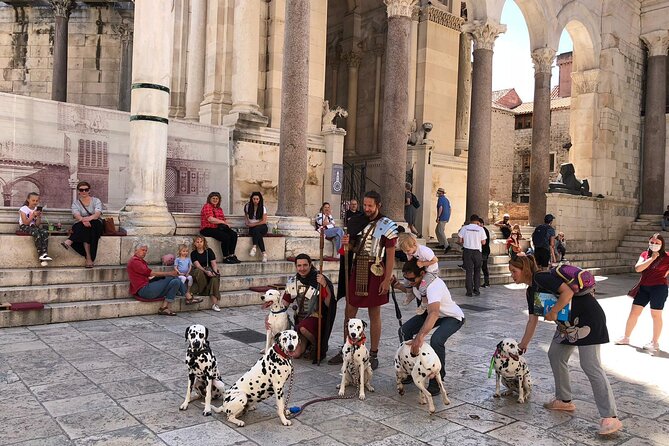
Split can feel confusing on your own. Diocletian’s Palace isn’t a single monument you see from one angle; it’s an entire neighborhood with streets, doors, and corners that keep reshaping your sense of direction. A good guide matters here, because the palace is basically a city inside a city.
This tour is designed around that reality. You don’t just “look at ruins.” You learn the internal logic of the palace—where people moved, why certain entrances mattered, and how power and daily life overlapped. And because it’s German-language, you’ll get the explanations without the strain of piecing together translations while you’re trying to read inscriptions and catch street-level cues.
You’ll also get a pacing that fits a quick first visit. The total time is about 1 hour 30 minutes, with short stops that build context without dragging you around all day. That’s the sweet spot for people who want a strong grounding before eating, swimming, and exploring more freely.
You can also read our reviews of more walking tours in Split

Start at the Peristyle: the palace’s central square you can’t miss
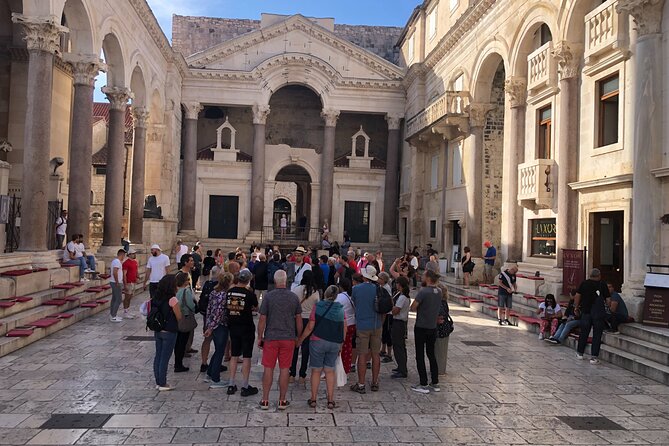
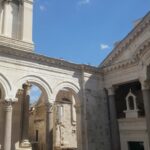
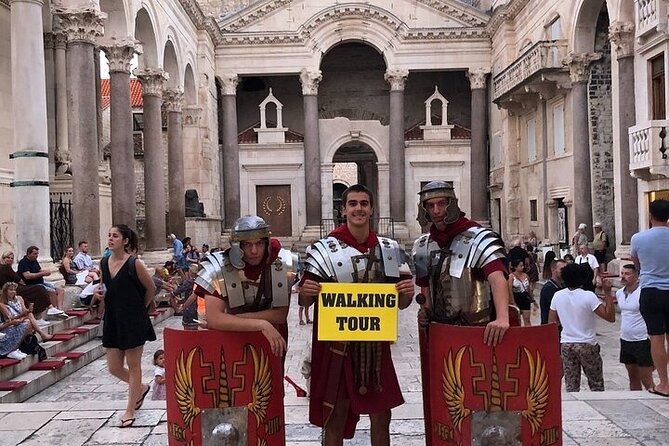
You begin at the Peristyle, the central square of Diocletian’s Palace. Even if you’ve never heard the word before, you’ll feel why it’s the perfect starting point. This is where paths branch out to key areas of the complex, so it acts like a map you can walk through.
On a self-guided stroll, you might wander and only later realize you skipped the “hub.” Starting here helps you get your bearings fast. The guide uses this stop to introduce how the palace was laid out and how it connects to the larger story of Split—so later places make sense instead of feeling like random stone.
This stop is about orientation and vocabulary. Expect to learn what the Peristyle represents in the palace’s design and why its central position mattered to both authority and movement.
Vestibulum: where the emperor’s space turns into a story (and maybe music)
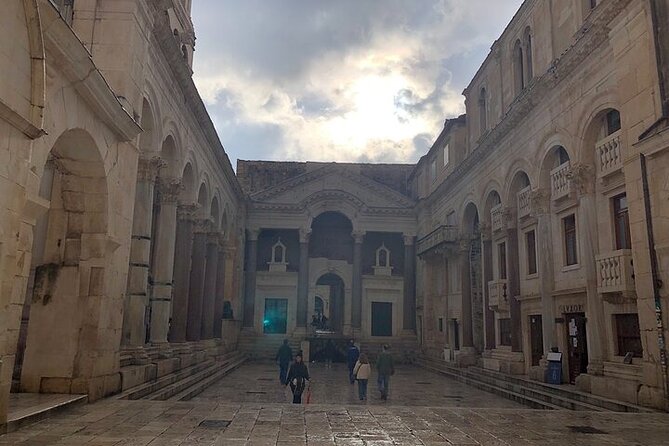
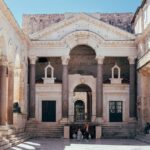
Next is the Vestibulum of Diocletian’s Palace—the vestibule tied to Emperor Diocletian. This is one of those stops where you’ll appreciate how guides can translate stonework into human meaning.
The point here isn’t just “this is a doorway.” You’ll learn how this space fits into the palace’s public image and the emperor’s role. There’s also a chance you’ll hear traditional Dalmatian singing. The wording in the tour info is “potentially,” so don’t count on a guaranteed performance—but it’s a nice reminder that Split’s cultural layers aren’t only historical. Sometimes they’re still audible in the right places.
This is also a good stop for questions. A short walking tour is most fun when the guide answers your curiosities on the fly—how Roman spaces were used, what changed over time, and what’s real versus reconstructed.
The substructures: seeing how the palace actually functioned
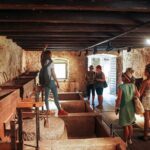
After the public-facing areas, you move down into the substructures. This is where the palace stops being “great views” and starts being “how it worked.”
The substructures are particularly valuable because they explain the palace’s construction and function across the ages. It’s easy to think of Diocletian’s Palace as a static ruin. These passages show it as something engineered for living and managing space—then reshaped by later needs.
A key detail: the tour goes through the substructures, but it does not include the museum part. That’s a plus if you’re short on time. You still get the architectural and functional story, without the longer museum detour. If you want more after the tour, you can visit the museum portion on your own.
One practical note: because these are passage-like areas, wear shoes with good grip. Even on a well-kept path, historic stone can be slick or uneven.
Golden Gate and the statue of Gregory of Nin
At the Golden Gate, the tour shifts from “palace interior logic” to “how the palace speaks to the city.” This is the main entrance area of the palace, so it’s a natural place to talk about symbolism and visibility—who the palace was built to impress, and how that message traveled into later Split.
You’ll also see the statue of Gregory of Nin and learn why he matters to Croatian history and language. This is one of those stops that makes the whole experience feel more relevant than pure Roman sightseeing. You’re not only learning about ancient walls; you’re learning about identity and memory—why a medieval/older figure is still referenced in the modern language story of Croatia.
If you like history that connects across centuries, you’ll appreciate this. It’s where Roman Split turns into a bridge toward later cultural development.
You can also read our reviews of more historical tours in Split

Riva Harbor: the palace model and why the waterfront feels so important
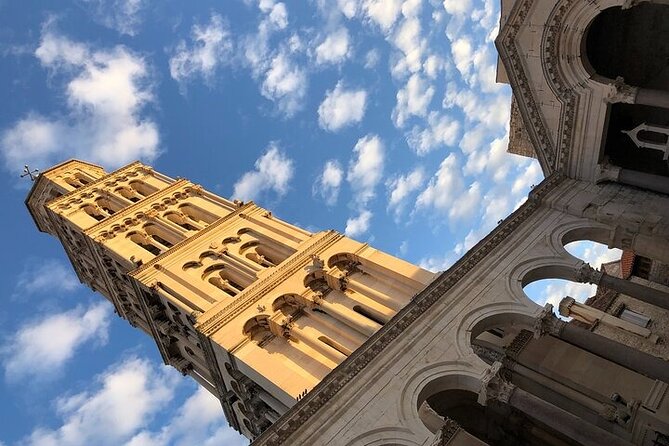
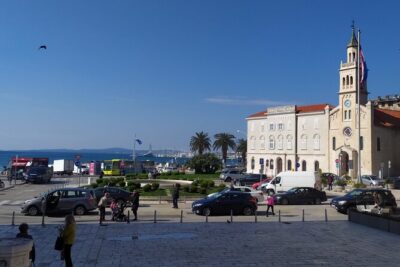
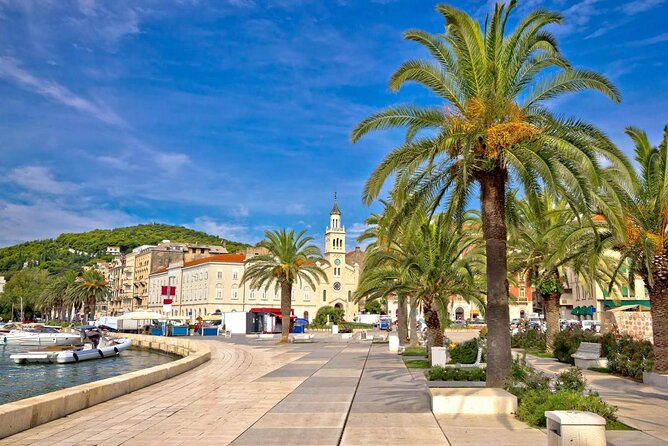
Then you head toward the Riva Harbor, where you’ll see a bronze model of Diocletian’s Palace. This is a smart move on the tour’s part. When you’ve walked corridors and passed doorways, a physical model helps your brain “zoom out” and understand the palace as a whole.
From here, the guide also explains the history of Split’s Riva promenade—how this famous waterfront became part of the city’s day-to-day life. Even if you don’t care about urban planning, it’s satisfying to learn why a place that looks like modern leisure has deep roots.
This stop also works well psychologically. By the time you reach the Riva area, you’ve had enough context to enjoy it, and you’re close to the kind of atmosphere that makes Split memorable—cafés, sea air, and people milling around the waterfront.
Fruit’s Square and Marko Marulić: Venice, fortifications, and literature
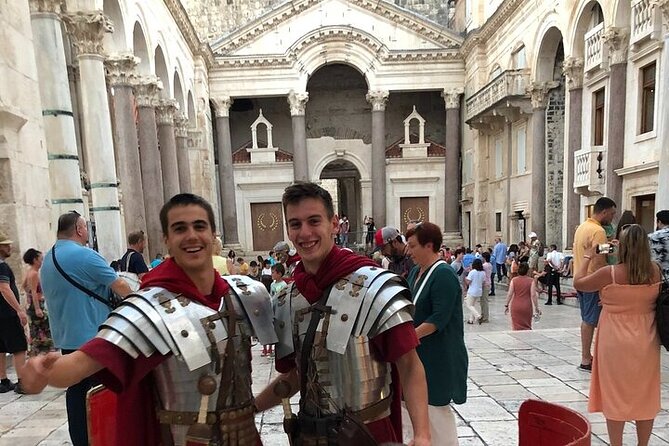
Next is Fruit’s Square (Trg Brace Radic). This is where the tour expands beyond Roman remains and into later layers of power and culture.
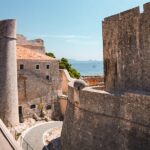
You’ll learn about a 15th-century Venetian citadel, and why the location mattered in that era. It’s a reminder that Split’s stonework history doesn’t stop with Diocletian. The city kept growing, adapting, and re-fortifying its spaces as new regional players shaped the Adriatic.
Then there’s Marko Marulić, described as the father of Croatian literature. That detail is more meaningful than it sounds. It ties the city’s identity to words and teaching, not only walls and rulers. If you’re the type who enjoys seeing how a place creates culture—not just architecture—this is a strong stop.
You’ll also notice how the square fits into daily life. Historic city centers like this are still used, not locked away behind rope.
Split Synagogue: what you’ll see and what you won’t enter
The last stop is the Split Synagogue, though the tour is designed to pass by it rather than include a full entry. You’ll learn about the history of Jewish people in Split and that the synagogue dates to the 16th century.
Important practical detail: the synagogue entrance is not included. So you’ll get the context from outside, and if you want to go in, you’ll need to arrange it separately.
This approach can be a good compromise. You still build a fuller picture of Split’s multi-faith past without turning the tour into a longer museum-style route. The result is a short history walk that keeps you moving.
Pace, group size, and why it feels easy to keep up
The tour runs for about 1 hour 30 minutes and keeps stops fairly brief. You won’t be standing in one place for ages. That helps if you’re visiting on a day with limited time in Split or if you’re battling changing weather.
Group size is capped at 20 travelers, which is a big deal in a place like this. In a larger group, the guide becomes more of a lecturer. In a smaller one, it’s easier to ask questions and hear the answers without shouting.
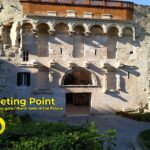
You’ll also find the meeting point is right in the palace area: at Peristil ulicaPeristil ul., 21000, Split, Croatia. The tour ends not far from where it starts, and the guide can help you get back to the Peristyle if you ask—handy when you want to continue exploring without re-navigating.
Price and value: is $165.08 worth it?
At $165.08 per person, this isn’t a budget tour. But it can still be good value if you care about context and you want a reliable, efficient way to understand the palace.
Here’s why: most stops include admission ticket free for those specific parts of the route. That means you’re paying mainly for the guide and the structure of the walk, not a stack of entry fees. The synagogue is the one explicitly marked as admission not included, so you should budget separately if you want to go inside.
Also, the time is short. You’re paying for a focused experience that gets you oriented quickly. If you’re spending only a day or two in Split, a well-led 90-minute tour can save you from aimless wandering and make the rest of your day more enjoyable.
If you’re the kind of person who likes to read plaques and piece together stories alone, you might not need a guide. But if you want the city explained in an organized sequence—in German—this price can feel reasonable.
Who this tour fits best (and who should skip it)
This walking tour is ideal if:
- You want a first-pass understanding of Diocletian’s Palace without getting lost.
- You prefer a guided story that connects Roman foundations to later Split.
- You enjoy asking questions and getting direct answers from a guide (including humor and quick explanations, based on the guide styles you’ll likely encounter).
It’s also a nice fit for people who don’t want a full-day museum commitment. The tour’s design keeps things moving, and you still have the option to add museum time later.
Skip or rethink it if:
- You have trouble with high steps or uneven historic surfaces. The tour is not recommended for that situation.
- You’re only interested in one monument photo. This is a “how the place works” tour, not a quick photo checklist.
What to do right after you finish
Because the tour ends near where you started, you’re set up for a smooth continuation. Once you’ve walked the key palace logic, you can roam with more confidence: eat somewhere near the waterfront, wander the surrounding old town, or head back to the palace area with fewer mental blanks.
Also, if you’re curious about the substructures museum part you didn’t enter on the tour, this is a natural moment to decide whether to add it.
If the weather cooperates, plan a slower second look. The best part of understanding the palace is noticing details you used to overlook—doorways, axes, entrances, and the way streets funnel your movement.
Should you book this History Split Walking Tour in German?
Book it if you want a small-group, German-language way to understand Diocletian’s Palace quickly and correctly. The tour’s biggest strength is that it teaches you the palace’s internal logic first, then connects it to later Split through places like Golden Gate, Gregory of Nin, and Marko Marulić.
Pass if your mobility is limited by stairs or if you prefer unguided exploration with your own reading. In that case, you might do fine on your own.
For most people—especially first-time visitors—this is an efficient, story-driven start that makes the rest of your Split day feel more meaningful.
FAQ
How long is the History Split Walking Tour in German?
It runs for about 1 hour 30 minutes.
What is the group size limit?
The tour has a maximum of 20 travelers.
Where do I meet for the tour?
The start point is Peristil ulicaPeristil ul., 21000, Split, Croatia.
Where does the tour end?
It ends not far from where it started, near Diocletian’s Palace in the Grad area of Split. The guide can take you back to the Peristyle if you ask.
What attractions are included, and are any entrances free?
Many stops have admission ticket marked as free, including areas like the Peristyle, Vestibulum, Diocletian Palace substructures, and the Golden Gate. The synagogue stop is marked as admission not included.
Is the Split Synagogue entrance included?
No. The tour passes by the synagogue and admission is not included.
Is the tour suitable for people who can’t handle many stairs?
It’s not recommended for travelers who have issues with high steps.
Is free cancellation available?
Yes. You can cancel for a full refund up to 24 hours in advance.