REVIEW · SPLIT
Sightseeing Split’s Roman Ruins: A Self-Guided Audio Tour
Book on Viator →Operated by VoiceMap Audio Tours · Bookable on Viator
Diocletian’s Palace is right under your feet. This self-guided smartphone audio walk turns UNESCO-listed Roman ruins into a story you can pace yourself through, and I love the self-paced freedom (no crowd herding) plus the lifetime access to the English audio whenever you want to return. One thing to consider: you need your own smartphone and headphones, and the GPS can occasionally place you a bit off at the very start.
You’ll begin on the Riva area and work through the palace and surrounding old-town sights, using GPS so you don’t feel stuck guessing where to go next. The walk is about 1 to 1 hour 15 minutes, and it’s set up as a private activity, meaning only your group uses the route—though you’re still exploring on your own.
In This Review
- Key Highlights at a Glance
- Why Diocletian’s Palace Works So Well as a Self-Guided Audio Walk
- Price and Value: What $14.99 Really Buys in Split
- Start at the Model on the Riva, Finish at Fruit Square
- Diocletian’s Palace Highlights: From Cellars to the Peristyle
- Riva into the Palace
- Brief stops in the palace cellars
- Triclinium area and nearby museum stop
- Peristyle and Vestibulum quick moments
- Jupiter’s Temple area
- Gates and Sacred Sites: Silver Gate, Cathedral, Golden Gate, Synagogue
- Inner-Town Stops: Traces of Palaca Cindro, Old City Hall, Standarac, Chapel
- Fish Market to Fruit Square: Ending With Real City Energy
- How VoiceMap Works Here (and How to Avoid App Frustration)
- Tour Length, Pace, and Who This Fits Best
- Should You Book This Self-Guided Roman Ruins Audio Tour?
- FAQ
- How long is the self-guided audio tour?
- Where does the tour start and end?
- Does the tour work offline?
- What’s included with the $14.99 price?
- What do I need to bring?
- Can I choose my start time?
Key Highlights at a Glance
- Lifetime English access to the audio, maps, and geodata (use it once or revisit later)
- Offline support so the experience keeps working even with sketchy cell service
- GPS-based navigation that helps you stay oriented through Diocletian’s Palace
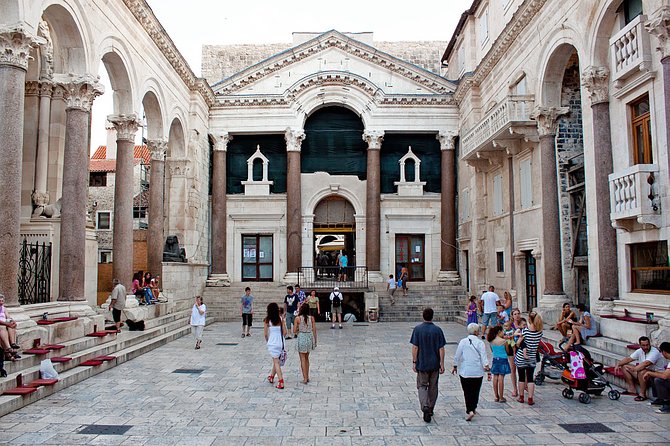
- Brief stops at major palace landmarks like the Peristyle and Jupiter’s Temple areas
- Ends at Fruit Square, right where you can roll right into more wandering and snacks on your own
Why Diocletian’s Palace Works So Well as a Self-Guided Audio Walk
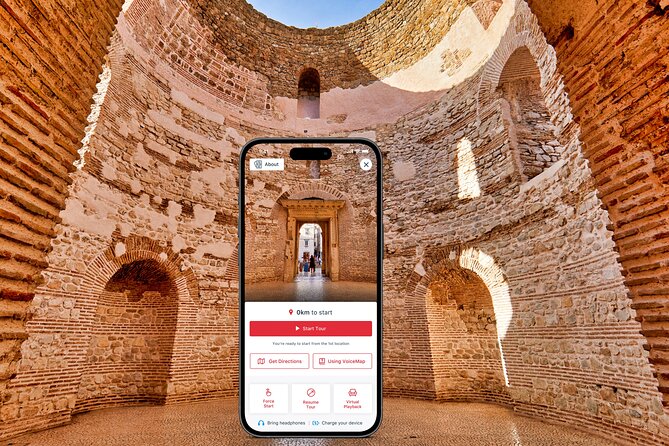
Split’s Roman core is like a layered cake. One moment you’re standing in normal city life; the next, you’re reading the shape of an ancient palace layout in the streets and stonework around you. A self-guided format fits that vibe perfectly, because you can slow down when something catches your eye and speed up when you’re just moving through.
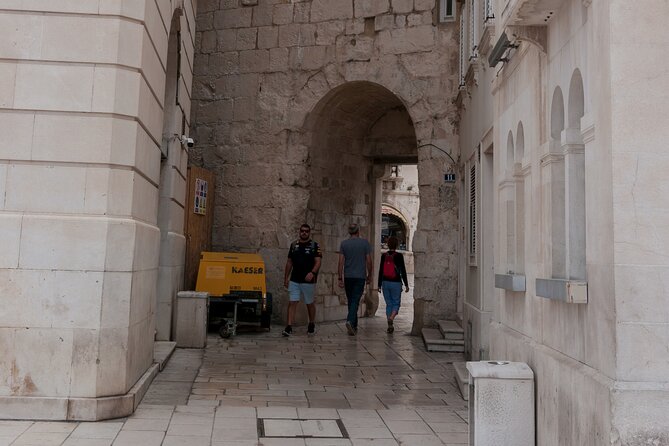
The big win here is control. You’re not trying to keep up with a group while your phone buzzes every time you fall behind. Instead, you follow the audio at the right moments and let GPS guide you along the route through Diocletian’s Palace and the surrounding highlights. That freedom matters especially in places where lanes are narrow and turn-offs are easy to miss.
I also like that this isn’t just a “look at this wall” walk. The audio is built to explain what you’re seeing and to provide stories you may not naturally uncover on your own while wandering. That gives you a sense of context—without forcing you into a rigid schedule.
You can also read our reviews of more guided tours in Split


Price and Value: What $14.99 Really Buys in Split
At $14.99 per person for an audio walking tour, you’re paying for two things: convenience and interpretation.
Convenience first. You don’t need to line up for a guided tour, and you can start when it fits your day. Second, interpretation. You’re not paying for museum entry or attractions along the way—this is strictly an on-the-street audio experience—so you’re spending your money on the narrative and directions that connect the sites.
Here’s what you get for that price:
- Lifetime access to the tour in English
- The VoiceMap app for Android and iOS
- Offline access to audio, maps, and geodata
Here’s what’s not included (and matters for value):
- No tickets/entrance fees for any museums or sights en route
- No smartphone or headphones
- No transportation or food/drink
If you’re the type who enjoys walking and learning as you go, this is good value because it’s low-cost compared with many guided options, and it doesn’t trap you in one set start time. If you’re expecting museum tickets included, you’ll want to plan those separately.
Start at the Model on the Riva, Finish at Fruit Square

The route is designed as a simple arc across central Split: start near the historic core, move through Diocletian’s Palace, then carry on through other old-town stops, ending at the local hub of Fruit Square.
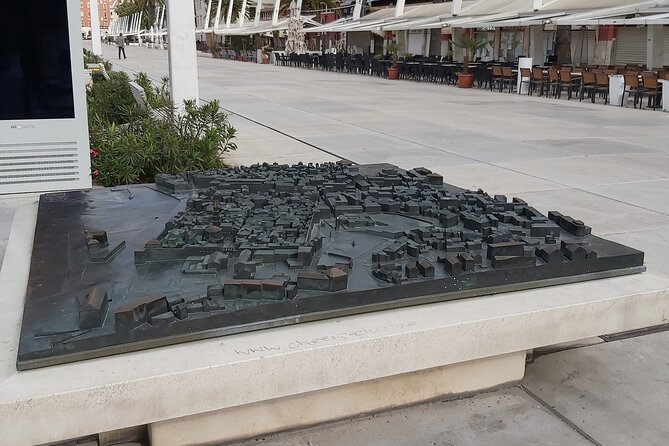
Start: Model of the historical core of the city of Split, Obala Hrvatskog narodnog preporoda 23 (near the Riva area)
End: Radić Brothers Square (Fruit Square), Trg Braće Radić 5
What I like about this kind of route design is the payoff at the end. You don’t end on the outskirts where you must think about transit or taxis. Fruit Square is a natural place to keep walking, grab a drink, or pivot to other sights nearby.
Timing is also flexible. The audio is available essentially all day (the listing shows daily hours from 12:00 AM to 11:59 PM), so you can do it before lunch, between plans, or as a late-afternoon orientation walk.
Diocletian’s Palace Highlights: From Cellars to the Peristyle
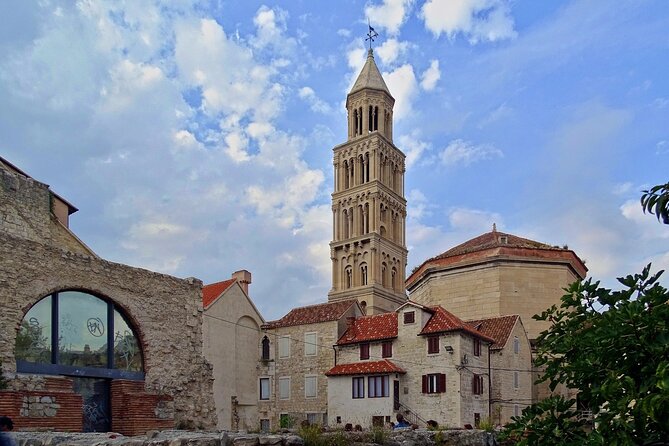
The heart of the walk is Diocletian’s Palace—Split’s Roman engine room—and the audio keeps you moving through key palace zones without making you navigate alone. The pacing is also built for “walk and listen,” with several places where the tour stops briefly so you can absorb what’s around you.
Riva into the Palace
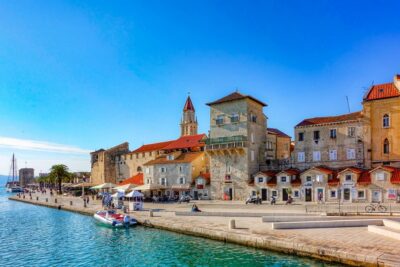
You begin on the Riva, the waterfront area that helps you get oriented fast. From there, you head into Diocletian’s Palace, and the tone shifts into a more structured tour flow—more stop-and-hear than random roaming.
You can also read our reviews of more tours and experiences in Split



Brief stops in the palace cellars
The route includes a brief stop in the cellars, along with passing Mozaik Podrum. Even though the tour doesn’t promise museum-style entry fees, these stops are useful because they interrupt the walk. You get a chance to connect the story to the physical spaces you’re standing in.
Practical tip: when the audio tells you to stop briefly, actually stop. It’s usually the difference between understanding the setup versus just hearing trivia while walking through.
Triclinium area and nearby museum stop
Next comes Triclinium, followed by the route passing the Museum. The way it’s structured here is helpful: you don’t get overwhelmed by too many stops back-to-back, but you do get enough points along the way that the palace layout starts to make sense.
This is one of the best parts of a well-made audio tour. You can stand in a confusing spot and still understand why it matters, because the commentary ties the pieces together for you.
Peristyle and Vestibulum quick moments
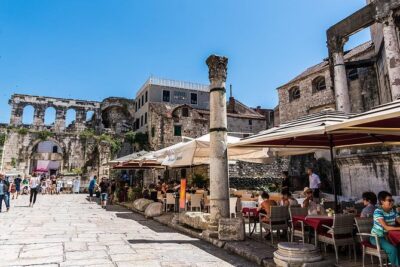
The tour then stops briefly at the Peristyle and later at the Vestibulum. These are the kinds of landmarks where your brain starts mapping space: open areas, transitions, and “how you moved through” the complex.
I like that the audio doesn’t rush you past these zones. Even a short pause gives you enough time to notice how the surrounding streets and structures relate to the palace layout.
Jupiter’s Temple area
The tour stops briefly at Jupiter’s Temple. In Roman sites, temple areas often feel like landmarks even when you’re not sure what you’re looking at at first glance. The audio helps you frame it—so you don’t just walk past something you don’t understand.
Gates and Sacred Sites: Silver Gate, Cathedral, Golden Gate, Synagogue
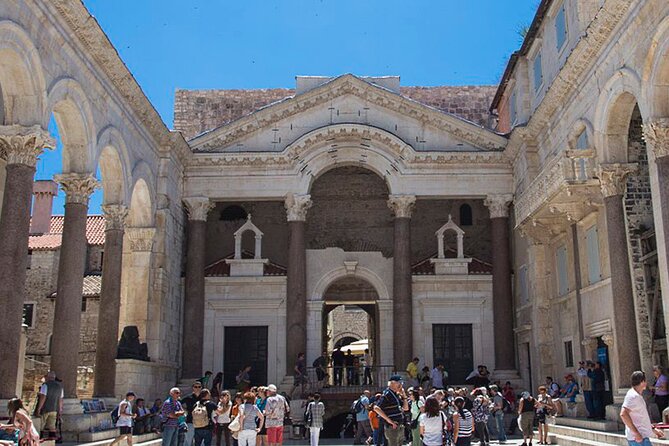
After you’ve worked through the palace core, the route expands into the wider old city feel, using distinct landmarks like gates and major religious sites. This is where audio shines because it can explain connections you wouldn’t catch just by scanning street signs.
You’ll pass:
- Palaca Cindro
- Silver Gate
- Cathedral
- Golden Gate
- Synagogue
You’ll also hear stories tied to what you’re seeing as you move between these points. The sequence is useful because gates aren’t just “cool looking.” They’re transition points—places that shape how you experience the city as you go deeper. Likewise, religious landmarks change the mood of a street, and the audio helps you understand why those spots are important in the larger puzzle of Split’s historical layers.
One practical drawback: passing many major landmarks means your attention has to stay on. It’s easy to nod along while walking fast. If you want the most from this tour, slow down slightly whenever you’re in the middle of a dense cluster of sights.
Inner-Town Stops: Traces of Palaca Cindro, Old City Hall, Standarac, Chapel

The walk keeps moving through the old-town maze with stops and passes that feel like “pause points” for the story.
You’ll encounter:
- A stop at a statue
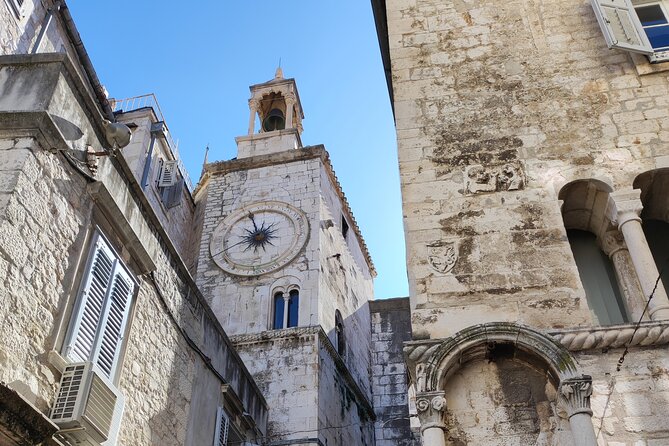
- The route passing the old city hall
- Standarac
- A Chapel
These are exactly the kinds of places that benefit from an audio guide. On your own, you might see a statue, a historic civic building, or a chapel and think it’s just another pretty corner. With the tour running, you get a framework—what it is, why it’s there, and how it fits into the overall Roman-and-beyond story.
I especially recommend keeping your sound up enough to hear clearly through street noise, because older city streets can be noisy even when you’re not in a big crowd. That’s the difference between the audio becoming “background” versus becoming your on-the-go explanation.
Fish Market to Fruit Square: Ending With Real City Energy
Near the end, the tour shifts from ruins and landmarks toward local daily life, which makes the finale feel natural instead of abrupt.
You’ll pass the fish market, then go through the square, and finish in Fruit Square.
This last stretch is valuable because it helps your brain connect the past to present-day street life. After walking through palace zones and monumental points, the fish market and open square give you a reset. It’s a good time to grab a snack, sit for a minute, or simply continue exploring without needing to consult directions again.
Ending at Fruit Square also helps with plans. You can pivot to other walks, restaurants, or ferry/bus connections depending on what’s next for your day.
How VoiceMap Works Here (and How to Avoid App Frustration)
This tour runs through the VoiceMap app on Android and iOS, and it includes offline access to audio, maps, and geodata. That matters in Split because you’re walking a lot and you don’t want your experience to depend on signal strength.
Here’s what you should do before you start:
- Download the tour after booking and before your walk so the audio is ready offline
- Bring headphones (not included) and test them for volume
- Make sure location services are on so GPS navigation can do its job
- Fully charge your phone, or at least confirm you won’t be at 5% after an hour of map use
One small warning based on the experience quality: GPS can be slightly off right at the beginning. You can recover quickly—just follow the tour’s prompt once you’re correctly positioned rather than panicking at the first mismatch.
Tour Length, Pace, and Who This Fits Best
Duration is about 1 hour to 1 hour 15 minutes. That length is ideal for people who want Roman sights without sacrificing a whole morning.
As a private activity for your group, you also avoid the feeling of being “managed.” But remember: it’s still self-guided. There’s no promise of live Q&A.
This is best for:
- Budget-minded walkers who want good context without paying for a guide
- People who dislike rigid meeting times
- Anyone who likes learning at their own pace while moving through real streets
It may not fit as well if:
- You want a lot of interaction and on-the-spot answers
- You’d rather not rely on a phone for navigation and audio
Should You Book This Self-Guided Roman Ruins Audio Tour?
I’d book this if you want an efficient, low-cost way to understand Diocletian’s Palace while walking Split at your own tempo. The lifetime access, offline capability, and GPS navigation are practical perks that make it easier to trust your route and enjoy the story instead of worrying about logistics.
Skip it if you don’t want to bring headphones or use your phone as your guide. And if you expect museum entry tickets included, plan those separately.
If you’re comfortable listening on the go, this is a solid way to turn a short walk into a much more meaningful one.
FAQ
How long is the self-guided audio tour?
It takes about 1 hour to 1 hour 15 minutes.
Where does the tour start and end?
It starts at the Model of the historical core of the city of Split (Obala Hrvatskog narodnog preporoda 23) and ends at Radić Brothers Square (Fruit Square) on Trg Braće Radić 5.
Does the tour work offline?
Yes. Offline access is included for audio, maps, and geodata.
What’s included with the $14.99 price?
Lifetime access to the tour in English, the VoiceMap app (Android and iOS), and offline access to audio, maps, and geodata.
What do I need to bring?
Bring your own smartphone and headphones. Transportation and food/drink are also not included.
Can I choose my start time?
Yes. After booking, you download the app and can set off at a time that works for your schedule (hours shown as daily from 12:00 AM to 11:59 PM).