REVIEW · SPLIT
Split: Old Town Guided Evening Walking Tour
Book on GetYourGuide →Operated by popular tours · Bookable on GetYourGuide
Split at night has a special pace. This 70-minute old town walking tour is built around the places that still shape the city today—especially Diocletian’s Palace—so your evening feels like a focused history walk without the usual museum-stomp. I like that you get a guide to point out the big structures you’d otherwise miss, and I also like the cool-down factor: it’s designed for evenings so you can avoid the hottest summer temperatures. One thing to watch: the meeting point can be easy to miss if your map pin is off, so arrive a few minutes early and go by the signs.
The tour goes beyond surface sightseeing by moving through key UNESCO-listed spaces and showing you how the palace and old town connect. I also appreciate that a guide can customize on the spot—on one tour, the guide added Jewish heritage details because the group was small. The only real drawback is timing: with just about an hour plus walking time, you’ll need to decide what you want to linger on later, since this tour is intentionally efficient.
In This Review
- Key things to know before you go
- Why an evening tour works so well in Split’s Old Town
- Meeting at Split port: find the big SPLIT sign
- Diocletian’s Palace: 1,700 years of stone underfoot
- Peristyle Square: the palace’s central moment
- Underground cellars: how the Romans used the space below
- Temple of St. Jupiter and the Cathedral of St. Duje
- Learning in a small, local way: what Duje’s guiding style can mean for you
- World Heritage walking speed: value beyond the postcard view
- Logistics that matter: duration, language, and what to plan afterward
- Who should book this Split evening walk
- Should you book the Split Old Town Guided Evening Walking Tour?
- FAQ
- How long is the Split Old Town Guided Evening Walking Tour?
- What are the main places you visit during the tour?
- Where does the tour start and how do I find it?
- Does the price include hotel pickup or drop-off?
- Is the tour offered in English?
- How much does the tour cost?
- Is this tour timed to avoid the hottest weather?
Key things to know before you go
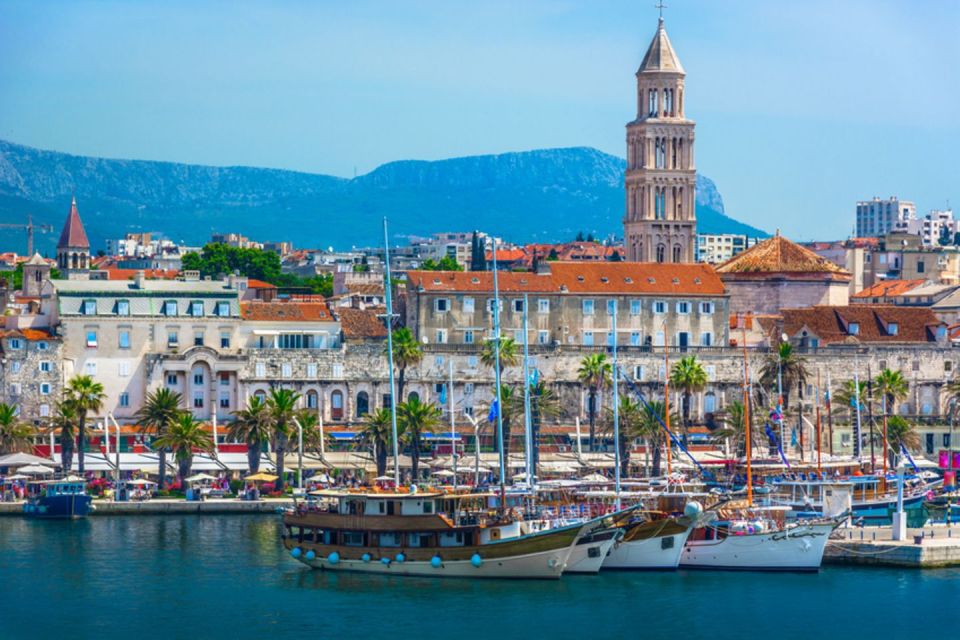
- Diocletian’s Palace as your backbone: you’ll walk parts of a palace complex that’s about 1,700 years old and now wrapped into the city.
- Peristyle Square stop: expect a classic centerpiece of the palace area, not just a quick photo moment.
- Underground cellars: you’ll go below street level to understand how space was used under the palace.
- Temple of St. Jupiter and Cathedral of St. Duje: major religious landmarks appear during the walk.
- UNESCO World Heritage setting: you’re literally moving through an area recognized for its historic value.
- English guide + small-group potential: the guide Duje customized his route when the group was small.
Why an evening tour works so well in Split’s Old Town

If you’re doing Split in summer, midday can feel like work. This evening walk is timed for a calmer, cooler feel, so you can focus on the streets and stories instead of sweating through your plan. It’s also described as a romantic option, which makes sense: you’re walking through stone streets and big Roman-era spaces under softer light than mid-afternoon.
The best part for me is that the tour isn’t trying to turn Split into a checklist of random stops. It’s built around the most important clusters—Diocletian’s Palace and the old town around it—so every turn you take has a reason. You’re not just passing sights. You’re learning how the layout connects.
One practical note: because the tour is about 70 minutes, it’s not built for long questions at every stop. If you like to linger, plan to spend extra time after the tour in the area that hooks you most.
You can also read our reviews of more walking tours in Split



Meeting at Split port: find the big SPLIT sign

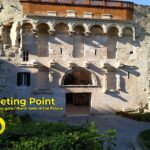
This tour starts at the Split port area, at Trg Braće Radić. The most reliable way to locate your guide is visual: stand in front of the large red SPLIT sign. Your guide should be holding a sign that says My Special Tour.
Bring two habits with you:
- arrive a few minutes early, and
- ignore the temptation to trust a map pin blindly.
There’s a straightforward caution here: at least one person missed the tour because the starting point was marked incorrectly on their map. That doesn’t mean the tour is poorly run—it means you should plan to navigate by the on-the-ground signs instead of trying to solve the geography puzzle five minutes before departure.
The end point is the same place you start, back at the meeting point. No long tail. You can then decide where you want to walk next.
Diocletian’s Palace: 1,700 years of stone underfoot

Your walk is anchored by Diocletian’s Place, which is the old name used here for Diocletian’s Palace. This is the core “wow” factor in Split: it’s a palace complex that’s been standing for around 1,700 years, and today it functions as part of the living city.
What makes this stop valuable on a guided walk is that it helps you read the place. With a guide, you’re more likely to notice how the palace area isn’t just ruins. It’s a structured environment with spaces that shaped movement, worship, daily life, and control.
If you’re coming without a deep background, don’t worry. The guide’s job is to translate the layout into something you can understand while you’re walking. If you’re already a Roman-history fan, you’ll still appreciate having a local steer your attention to the right corners rather than relying only on guesswork.
A small caution: because the palace is integrated into streets and buildings, the experience depends on how the group moves through the area. You should expect a steady walking pace and short stops—good for seeing a lot, not as good for taking hours to wander on your own.
Peristyle Square: the palace’s central moment
Peristyle Square is one of the major palace landmarks you’ll see. Think of it as a centerpiece—one of those spaces that helps you understand why the palace was designed the way it was, not just how it looks today.
On this kind of guided walk, Peristyle works as a reset point. After moving through side streets and passageways, you get a moment that feels like the “main room,” where your guide can connect the earlier stops (palace setting) to what comes next (the religious landmarks and the underground spaces).
The practical win here is timing. You get to see Peristyle as part of a structured route rather than trying to find it on your own in the old town maze.
Underground cellars: how the Romans used the space below
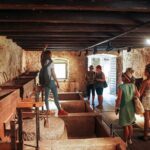
One of the most interesting parts of the tour is the visit to underground cellars. Even if you’ve seen photos of Split’s palace area, the cellar stop adds a totally different layer: you’re experiencing a space that’s literally under the main world you see at street level.
This is where a good guide matters. Cellars can feel like “just another room” unless someone explains why they’re there and what they might have been used for in the broader palace system. The tour frames it as part of the palace story—so you’re connecting the walk above to the functions below.
For practical comfort, go in with the mindset of a quick, guided look rather than a long exploration. You’ll be moving through as part of the route, which keeps the tour on its 70-minute schedule.
If you don’t like enclosed underground areas, it’s worth considering before booking. The information provided doesn’t specify how deep or how long the time is underground, so treat this as a planned stop you’ll likely want to be mentally prepared for.
You can also read our reviews of more guided tours in Split





Temple of St. Jupiter and the Cathedral of St. Duje
The tour includes two big religious landmarks: the Temple of St. Jupiter and the Cathedral of St. Duje.
Why this matters: it helps you see how history layers over time in Split. You go from a Roman-era temple association (Jupiter) into a cathedral tied to St. Duje (Domnius). Even if you don’t focus on theology, these sites show how the city’s identity was shaped again and again.
On a walking tour, these stops are also about orientation. Your guide can help you understand where each building sits in the broader palace and old town layout, so it feels connected instead of random.
One small consideration: religious sites can be active or have rules depending on the moment. The tour data doesn’t mention dress codes or entry limitations, so keep your expectations flexible and follow any on-site guidance.
Learning in a small, local way: what Duje’s guiding style can mean for you
The standout praise in the tour’s feedback points to the guide experience. One review specifically called out Duje for providing a great overview of Split’s history and heritage, and for tailoring the route based on group size.
That customization isn’t a small detail. When the group is small, the guide has room to adjust what you cover and how deeply you go. In this case, Duje added information about the city’s Jewish heritage. That tells you something important about what to expect from the tour: it’s not one rigid script that ignores people’s interests.
If you want the most value from the guide, come with at least one curiosity, like:
- How the palace became part of the city
- Why certain spaces are grouped together
- What different eras contributed to the same neighborhood
Then ask a question when your guide pauses. Since the tour is about an hour and change, smart questions can help you get more out of fewer stops.
World Heritage walking speed: value beyond the postcard view
This tour is designed around a UNESCO World Heritage site. That wording can sound abstract until you’re actually walking it. In practice, it means you’re moving through an area where preservation and significance are part of the reason the route exists.
For you, the value is simple: a guide keeps the pace purposeful. Without guidance, old town routes can turn into photo stops and wandering. With guidance, you start to understand why you’re seeing certain structures and how they connect.
Let’s talk price for a second. At $20 per person for a walking tour + guide, you’re paying for interpretation and navigation, not just access to sights you could find alone. For many visitors, that’s a good trade—especially when you’re short on time and want the highlights in one go.
The tour excludes hotel pickup and drop-off, which is normal for city walking tours. You’re meant to meet at Split port and handle getting yourself there.
If you’re comparing it to free self-guided options, the difference is that you don’t have to piece the story together from signs and maps. You get a live person making the connections while you walk.
Logistics that matter: duration, language, and what to plan afterward
This is an English-language guided tour. The tour runs for about 70 minutes with your guide, plus the time it takes to gather at the start and walk between stops.
Because you end back at the meeting point, your evening plan stays flexible. You can keep exploring the palace area if it captured you, or you can pivot to dinner and other nearby streets without figuring out a new departure location.
A good approach: treat the tour as your orientation pass. Afterward, pick one or two places you want to revisit more slowly. This is especially helpful if you’re the type who likes to understand first, then linger second.
Also, the tour is positioned for romantic evenings and for beating summer heat. If you’re traveling during the warmer months, an evening start can make Split feel more relaxed, which improves how much you actually remember.
Who should book this Split evening walk
Book this tour if you:
- want a guided overview of Diocletian’s Palace and the surrounding old town
- prefer evenings over midday when it’s hot
- like seeing major landmarks in a short time without spending hours planning
- want a local guide who may personalize details for your group (DuJe’s customization is a good sign)
It may not be ideal if you:
- need long stops at each site
- dislike any chance of underground or enclosed spaces
- strongly rely on map pins and can’t be bothered to find the starting signs
Should you book the Split Old Town Guided Evening Walking Tour?
I think this one is a solid choice when you want efficient value and real context. For $20, you’re getting a guide, a structured route, and time in the main palace-and-old-town area, including the underground cellars and the religious landmarks like the Temple of St. Jupiter and the Cathedral of St. Duje. The glowing feedback around Duje’s explanations and customization also suggests the guide can bring the city to life, not just recite facts.
My advice: book it, but don’t gamble on navigation. Plan to find the guide by the big red SPLIT sign at Trg Braće Radić and the My Special Tour sign. If you do that, you’ll start smoothly and spend your time on the parts that matter.
If you’re a fan of UNESCO sites and want to understand Split’s layout quickly—this evening walk is a smart move. If you’re the type who loves slow wandering all on your own, consider saving that energy for later tonight after the tour ends where you started.
FAQ
How long is the Split Old Town Guided Evening Walking Tour?
The tour lasts about 70 minutes.
What are the main places you visit during the tour?
You’ll see Diocletian’s Palace (referred to as Diocletian’s Place), Peristyle Square, underground cellars, the Temple of St. Jupiter, the Cathedral of St. Duje, and other parts of the old town.
Where does the tour start and how do I find it?
The meeting point is at Split port, Trg Braće Radić. Meet in front of the big red SPLIT sign. Your guide will have a sign that says My Special Tour.
Does the price include hotel pickup or drop-off?
No. Hotel pickup and drop-off are not included, so you’ll need to make your own way to the meeting point.
Is the tour offered in English?
Yes, the tour is listed as English.
How much does the tour cost?
It costs $20 per person.
Is this tour timed to avoid the hottest weather?
Yes. The tour is described as a good evening option to avoid hot summer temperatures so you can enjoy the historical walking route.