REVIEW · SPLIT
Walking tour of Split with an Art Historian
Book on Viator →Operated by Aspalathos Guided Tours · Bookable on Viator
Split can feel like a maze. This walk makes it make sense.
You start at Strossmayer Park (Đardin) and then move straight into the Roman core of Diocletian’s Palace, guided with an art-and-architecture lens. I love that the tour is paced for real looking, not just rushing from one “must-see” to the next.
Two standout things I like: you get major landmarks explained in context (Roman street plans, palace entrances, and how daily life shaped the space), and you also learn the local folklore beats that make Old Town feel alive. You end at the Riva waterfront with practical next-step tips for exploring further on your own.
One thing to consider: this is a walking tour with unavoidable steps and some uneven stone. If walking is a challenge for you, it’s worth thinking carefully before booking.
In This Review
- Key points at a glance
- Where you meet Josipa: starting at Strossmayer Park’s fountain
- From Đardin to Diocletian’s palace tower: learning to read the city
- Gregory of Nin at 7 meters: toe-touching and other local myths
- Golden Gate to Cardo Maximus: Rome’s main street in real scale
- Hidden garden vibes and the Iron Gate “platinum story”
- The Peristyle: where the palace’s drama becomes obvious
- Saint Domnius at the Peristyle: seeing the mausoleum story without entry
- Let Me Pass (Pusti me da prodjem) Street: narrow, famous, and meaningful
- Vestibulum photo pause: acoustics, photos, and possible klapa singing
- Palace substructures shortcut to Riva: the quieter underworld (partially)
- Finishing on Riva Harbor: your end point and next steps
- Price and value: what $30.23 buys for a 2-hour art-and-architecture walk
- Timing, pacing, and the “small group” advantage
- Who this tour fits (and who should rethink it)
- Should you book this Split walking tour with Josipa?
- FAQ
- How long is the Walking Tour of Split with an Art Historian?
- Do we enter the Cathedral of Saint Domnius or other paid sites?
- Are there admission fees at the stops?
- Is the tour in English?
- What’s the walking like? Is it suitable if I have mobility limits?
- Where does the tour start and end?
Key points at a glance
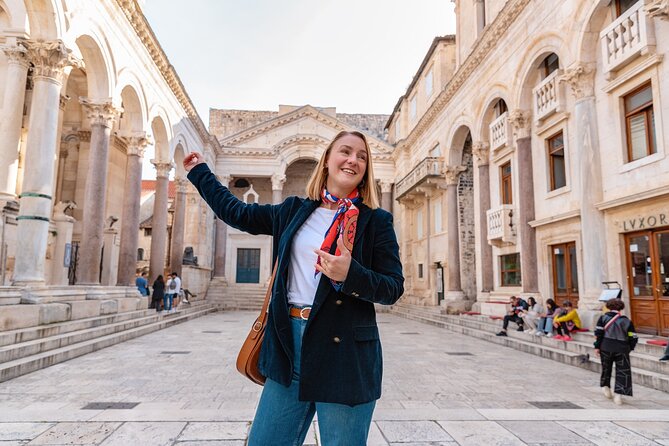
- Small group size (max 10): easy to hear and ask questions without feeling swallowed by the crowd.
- No paid-site pressure: you see the story engine of the palace without entering museums or paid attractions.
- Stops tied to meaning: gates, streets, and corners each get a reason to exist, not just a date.
- Photo-friendly moments: the plan includes several “pause here” spots inside and around the palace.
- Local culture details: from the famous Gregory of Nin toe ritual to street memories that Split locals actually talk about.
Where you meet Josipa: starting at Strossmayer Park’s fountain
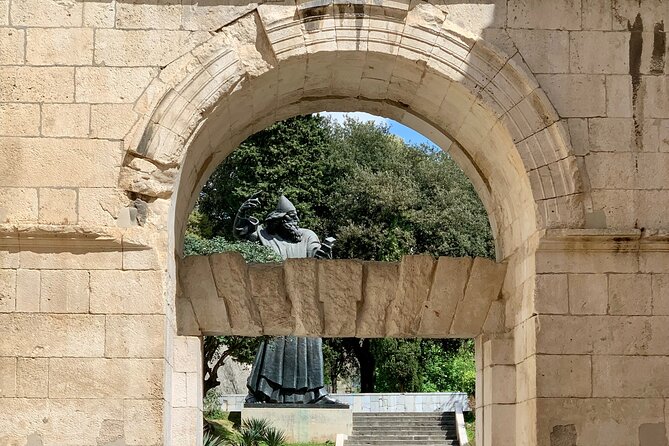
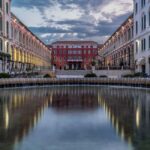
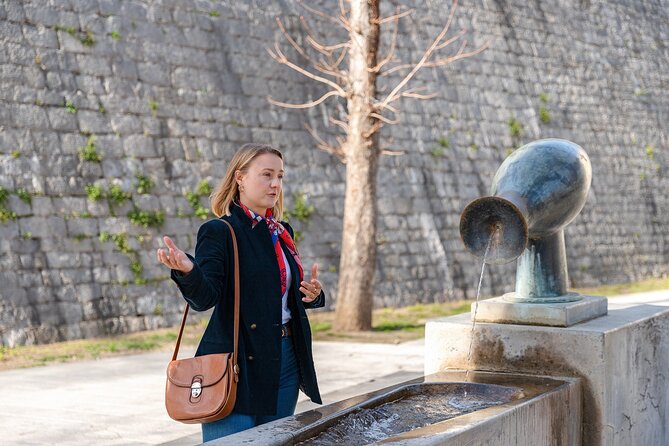
Most Split tours begin inside Old Town. This one starts in the calmer, greener Strossmayer Park, locally called Đardin, at Strossmayerova Fountain. That first minute matters more than you’d think, because it sets the theme: water.
Your guide, Josipa, frames Split as a place where Roman engineering still shapes what you see today. The talk about water isn’t abstract. It connects to the palace’s survival and the way the peninsula developed for centuries. If you’ve ever wondered why Split feels both Roman and thoroughly Croatian, this opening is your answer in plain language.
Meet at: Ul. kralja Tomislava 12, 21000 Split (near the central fountain).
Duration range: about 1 hour 40 minutes to 2 hours, so you’re not committing a whole morning just to “get oriented.”
You can also read our reviews of more walking tours in Split

From Đardin to Diocletian’s palace tower: learning to read the city
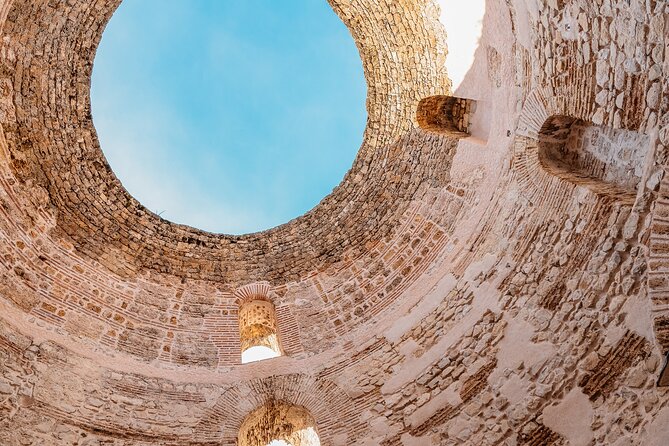
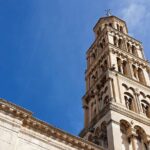
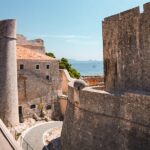
Stop 2 is a smart move: instead of leading with the most famous face of the palace, you start with a less glamorous but revealing viewpoint—Tower 2 of Diocletian’s palace. It helps you understand something that’s easy to miss when you’re wandering on your own: you’re not just looking at old walls. You’re looking at a defensive, planned living space that became a city.
From here, your guide helps you travel back roughly 1,700 years in your mind. That time jump is what makes the rest of the walk click. Suddenly, the next walls, arches, and passageways aren’t random—they’re part of how the palace functioned.
And because this is a walking route with mostly outdoor stops, you won’t waste time juggling ticket lines. You’ll move steadily, with short pauses that are long enough to register what you’re seeing.
Gregory of Nin at 7 meters: toe-touching and other local myths
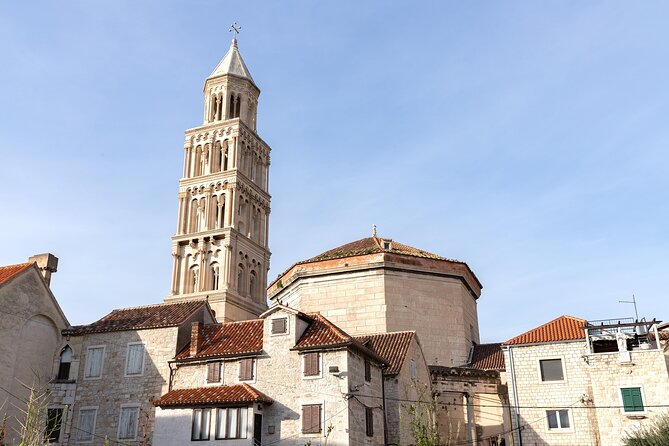
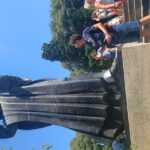
Next comes one of Split’s most memorable sights: the Grgur Ninski Statue, a towering bronze figure that stands about 7 meters tall. This stop is short, but it hits a key reason why people love this city: art and history aren’t stored in glass. They’re in the street, in everyday rituals.
Yes, there’s the classic toe-for-good-luck moment. But Josipa ties it to why the monument became part of popular culture. You’ll hear how the statue lives in Split’s public memory, not just in art books.
Practical tip: when you spot the statue, take a second to orient yourself—Golden and Northern gate entrances are coming up soon. Looking from the “right direction” makes it easier to follow the palace plan.
Golden Gate to Cardo Maximus: Rome’s main street in real scale
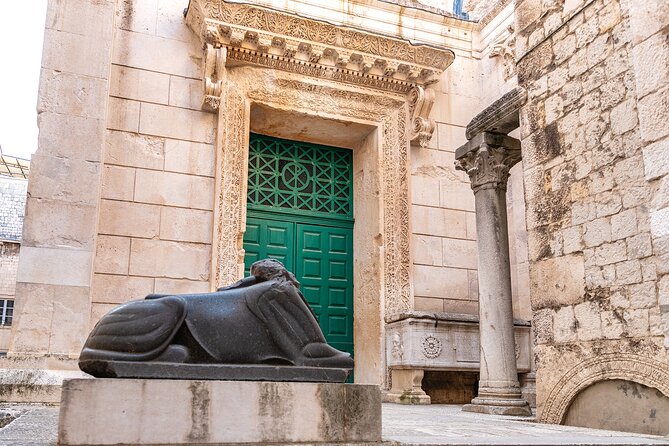
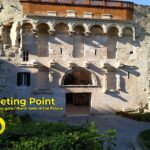
The Golden Gate is one of the palace’s key entry points (the northern entrance). You’ll learn how it fits into a larger system: four major entry points into Diocletian’s Palace.
Then comes a big concept delivered in a way that’s easy to grasp: the palace’s streets were laid out like Roman infrastructure—especially the main north-south route. You’ll walk along Cardo (also described as the main Roman street stretching from north to south), heading toward the palace’s monumental center.
This section works especially well if you’re the type who gets annoyed by vague tours. Here, the guide connects architecture to movement. You start to understand why certain spaces feel ceremonial and others feel functional.
Hidden garden vibes and the Iron Gate “platinum story”
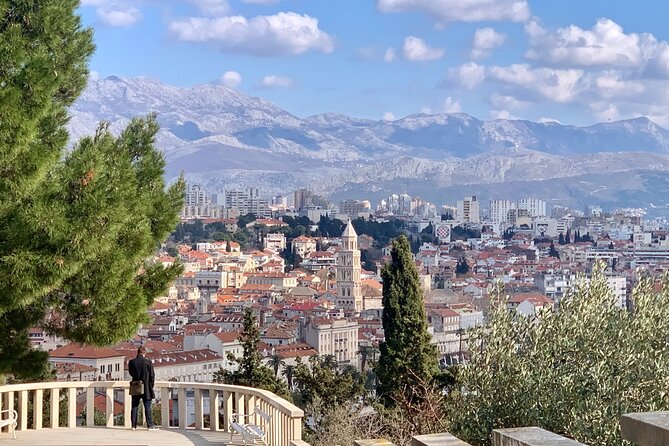
After you pass into the palace, the walk continues along Cardo Maximus and then through a small detour toward a hidden garden inside the palace. It’s not about finding a secret like a video game level. It’s about showing you how the palace contains surprises—controlled pockets of calm inside a massive urban shell.
Then you reach the Iron Gate. This stop is one of those “tiny moment, big meaning” scenes. You’ll hear why the Iron Gate was historically the city’s most valuable gate—described as the palace’s kind of platinum entrance. Even if you don’t remember the exact wording later, the point lands: gates weren’t just decoration. They were power, access, and identity.




The Peristyle: where the palace’s drama becomes obvious
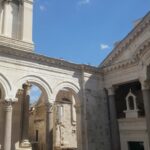
As you approach the Peristyle of Diocletian’s Palace, the scale changes. You go from linear streets and corners to a more monumental, open feel. The guide explains the Peristyle’s origin and the story it carried through time.
This stop is valuable for two reasons:
- You get the “why” behind the grandeur, not only the “what.”
- You learn to notice architectural cues—the transitions that tell you when you’re moving from one era or one function to another.
If you’ve looked at a lot of Roman ruins before, the Peristyle still feels different here because it’s not abandoned. It became part of living space in ways that are visible in the stone and layout.
Saint Domnius at the Peristyle: seeing the mausoleum story without entry
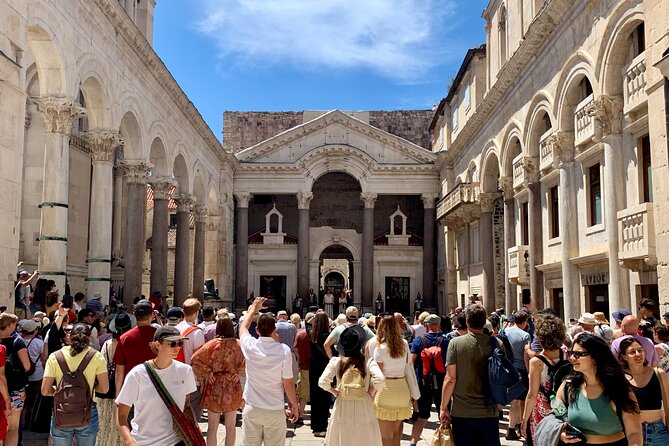
You’ll stand on the Peristyle while learning about Cathedral of Saint Domnius. Here’s the key: it began as a Roman mausoleum for the Emperor and later became a Christian cathedral.
Important: the tour does not include entering paid sites or paid museums. So you’ll get the core understanding from outside the ticketed area, while keeping the walk moving.
This approach can be a relief if you’re trying to cover Split efficiently. You’re not stuck waiting for cathedral entry rules or splitting your time into separate museum visits.
Let Me Pass (Pusti me da prodjem) Street: narrow, famous, and meaningful
One of the most charming stops is Let Me Pass (Pusti me da prodjem) Street. It’s less than 10 meters long and about 57 centimeters wide—so yes, it’s one of the narrowest streets in the world. But the tour’s angle is more interesting than the trivia.
Josipa connects it to Split’s memory culture. The street isn’t famous only because it’s tiny. It’s honored in a more public way in the city, giving you that sense that locals treat these odd corners as part of identity.
If you want a quick “wow” photo that still feels tied to place, this is one of the best stops.
Vestibulum photo pause: acoustics, photos, and possible klapa singing
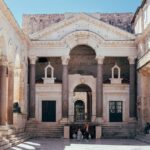
Then comes the Vestibulum of Diocletian’s Palace, now famous as an open-air photo spot. You’ll pause to admire the scenery and capture a couple of shots.
This stop has another layer: the space can be a great listening point for klapa singing, because it’s known for its acoustics. Even if there isn’t singing happening during your exact visit, the guide’s mention helps you understand why people come here—this isn’t just a photo wall. It’s an audio-aware architectural space.
Palace substructures shortcut to Riva: the quieter underworld (partially)
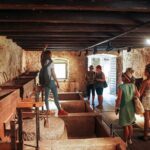
Now you head toward the waterfront using a “shortcut” through the Diocletian Palace Substructures. The change is noticeable. The feel shifts from the bright, social Peristyle area to darker, more archaeological zones.
You won’t explore the entire substructure network on this tour. The reason is simple: those deeper interior portions have additional admission fees, and time constraints keep the walk focused. But the guide explains the broader story and points you toward the idea of a separate guided visit if you want to go further.
This section is one of the best ways to understand Split’s layered city life. You see how the palace isn’t one monument. It’s a building complex, with spaces that made sense for different needs.
Finishing on Riva Harbor: your end point and next steps
You pop back out near the sea at Riva Harbor, where the tour slows into a final stroll. Riva works as a street, promenade, and square at the same time, so it’s a good place to come down from “Roman mode” and switch back to “Split mode.”
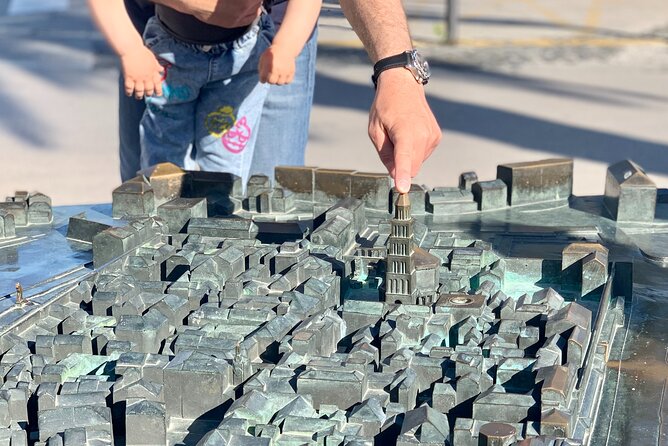
Then the walk ends at a bronze model of the historical core: Model of the historical core of the city of Split on Obala Hrvatskog narodnog preporoda 23. The guide recaps what you just saw and shares her favorite tips for exploring further.
If you’re short on time and want your next 2–3 hours planned intelligently, this ending is practical. You leave knowing not only what to see, but how the old town layout actually works.
Price and value: what $30.23 buys for a 2-hour art-and-architecture walk
At about $30.23 per person for roughly 1 hour 40 minutes to 2 hours, this tour offers strong value for a few reasons:
- You cover a dense cluster of top sites in one route, with frequent short explanations that keep the story coherent.
- You avoid paid-site time sinks. Most stops are free entry, and the tour explicitly does not include museums or paid interiors.
- You get interpretive guidance, not just dates. You’re learning how streets, gates, and public rituals fit into the bigger Roman-to-medieval-to-modern transformation.
Also, the small group cap of 10 travelers helps you actually hear the guide and ask questions. In this part of Croatia, crowds can be the hidden tax. This format avoids a lot of that friction.
Timing, pacing, and the “small group” advantage
The walk is designed to be comfortable. Expect:
- frequent short pauses (usually about 5–10 minutes),
- mostly flat-ish walking but with some uneven stone,
- a pace that supports questions without stopping your momentum.
The tour runs rain or shine, so it’s best to plan for weather. In summer, don’t underestimate heat. This itinerary stays in the open and includes steps, so you’ll want sun protection and a water bottle.
The meeting point sits near public transit, which helps if you’re juggling cruise schedules or ferry arrivals. And the operator notes the group will wait up to 10 minutes past the scheduled start time, so aim to arrive a little early.
Who this tour fits (and who should rethink it)
This walking tour is a great match if you:
- love art, architecture, and how buildings shape daily life,
- want a fast but meaningful orientation before exploring on your own,
- prefer small groups where you can ask questions.
It’s also a good pick if you’re trying to avoid ticket complexity. Because the tour does not enter paid sites, you’re not splitting time across multiple entry rules.
Consider a different plan if:
- walking for this length is difficult for you, since there are unavoidable steps and some uneven areas,
- you need fully step-free routes (the tour doesn’t promise step-free access).
The good news is that “most people can participate,” but you should be honest about your comfort and safety.
Should you book this Split walking tour with Josipa?
Yes, I think you should book it if you want your first Split day to feel like a guided map plus a story. The route hits the most important “read the city” moments—Đardin, palace gates, the Peristyle, Saint Domnius from the outside, and the quick stops like Let Me Pass Street that make the city memorable.
Skip it only if you’re already planning to spend hours inside ticketed interiors. This tour is built around outside understanding and a clean route with minimal paid-site friction.
If you’re unsure, choose an early time slot when possible. Even without changing the itinerary, starting earlier usually helps you feel more space around you as you walk.
FAQ
How long is the Walking Tour of Split with an Art Historian?
It runs about 1 hour 40 minutes to 2 hours.
Do we enter the Cathedral of Saint Domnius or other paid sites?
No. This tour does not include entering paid sites or museums. The Cathedral is explained from the Peristyle area, but you do not go inside.
Are there admission fees at the stops?
Most stops are listed as free. The tour also notes that deeper exploration of the Diocletian Palace Substructures would involve additional admission fees, so you won’t cover everything inside on this itinerary.
Is the tour in English?
Yes, the tour is offered in English.
What’s the walking like? Is it suitable if I have mobility limits?
It includes unavoidable steps and some uneven areas. Most people can participate, but if you have difficulty walking, you should consider your comfort and safety before booking.
Where does the tour start and end?
It starts at Strossmayerova Fountain, Ul. kralja Tomislava 12, Split, and ends at the bronze model of Split Old Town on Obala Hrvatskog narodnog preporoda 23 on the Riva waterfront.