REVIEW · SPLIT
Split Old Town History Walking Tour
Book on Viator →Operated by Gray Line Croatia · Bookable on Viator
Roman ghosts in daylight sound pretty great. This 1.5-hour Old Town history walk is built around Split’s most important anchors, from the waterfront riva to Diocletian’s Palace and out to the main squares, with a guide who brings the place to life with story-based context. I really like how the tour keeps you moving through real spaces you can still see and touch, not just a facts-only lecture.
Two things stand out for me. First, you get free entry to the major sites along the route, so your money goes to the guide and the experience instead of ticket lines. Second, you’ll likely hear clear, place-specific explanations from your local guide—examples from past tours include guides like Anita, Iva, Toni, and Petra, and the common thread is energy plus practical local advice like where to eat, drink, and wander next. The main drawback to plan around: if you’re booking through a third-party app and something goes wrong, it can be a hassle to untangle, so it’s smart to double-check any day-before message and keep your confirmation handy.
In This Review
- Quick hits before you go
- Starting on Split’s riva: where the city’s story begins
- Diocletian’s Palace cellars: the Roman world under your feet
- St. Domnius Cathedral: when an emperor becomes a story
- The Vestibulum’s open dome: an acoustics moment
- Temple of Jupiter: the old ritual, re-used as baptism
- Triklinij: where imperial banquets happened
- Golden Gate and Gregory of Nin: the luck ritual
- Narodni trg (Pjaca): Venetian-era buildings and a working square
- Fruit Square (Trg Brace Radic): from markets to baroque fronts
- What you’ll get from the guide (and why it matters)
- Price and value: why $30.23 can make sense
- Timing, schedule, and weather reality
- Comfort and walking: what to bring
- Best for whom (and less ideal for whom)
- A quick note on smooth check-in and possible hiccups
- Should you book this Split Old Town History Walking Tour?
- FAQ
- How long is the Split Old Town History Walking Tour?
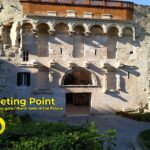
- Where do you meet and where does the tour end?
- Is the tour offered in English?
- What’s included in the price?
- Are admission tickets included for the sights?
- Does the tour run in bad weather?
- Can I get a full refund if I cancel?
Quick hits before you go
- Free-entry stops keep the cost focused on your guide and your time
- Diocletian’s Palace underworld: cellars and Roman substructures beneath the emperor’s residence
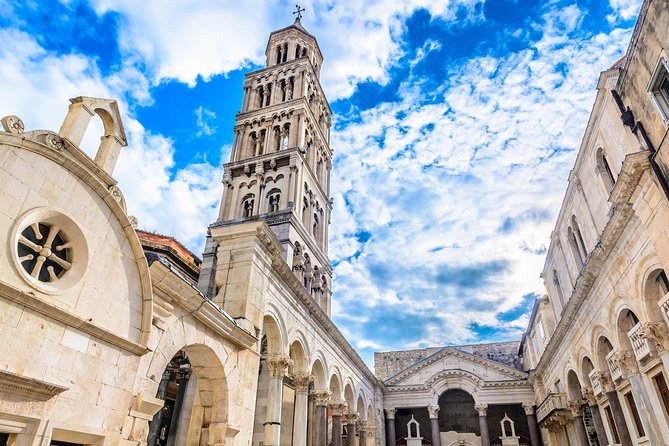
- St. Domnius context: Roman columns and a cathedral tied to the old mausoleum story
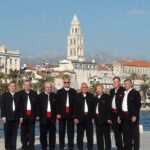
- Acoustics in the Vestibulum: the tour notes the possibility of hearing traditional klapa singing
- Golden Gate + Gregory of Nin tradition: rub the statue’s toe for luck before you head into the squares
- Small group ceiling (up to 20) makes it easier to ask questions
Starting on Split’s riva: where the city’s story begins
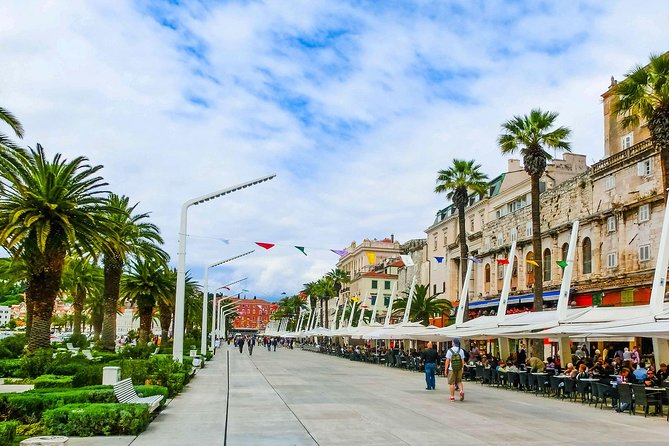
You meet at Obala Hrvatskog narodnog preporoda on Split’s waterfront. This is not a random starting point. The riva area helps you get your bearings fast: sea views, the city layout, and the sense that Split grew up around trade, travel, and everyday life near the water.
From here, your guide sets the tone. You’re not just “walking a route,” you’re learning how Split is layered—Roman foundations, medieval and later buildings, and the modern city living right on top of it. That framing matters, because once you understand the geography of Diocletian’s world, everything inside the palace makes more sense.
Practical note: the tour is about 1.5 hours total. That’s long enough to see meaningful sights, but short enough that you can still do a meal and a self-guided stroll afterward.
You can also read our reviews of more walking tours in Split



Diocletian’s Palace cellars: the Roman world under your feet
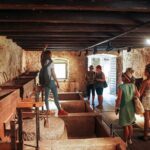
One of the best parts is stepping into the Peristyle and Diocletian’s Palace Cellars. These are the preserved substructures underneath the palace. If you usually think of Roman ruins as open-air columns and broken stones, these chamber-like spaces shift the perspective. You’re getting a view of the support system behind the emperor’s residence—places that helped hold up the life above.
This stop also works as a mental reset. You come from the bright waterfront, then you go under. The difference in sound, light, and scale makes your guide’s explanation stick. It’s also the kind of stop where a good guide can quickly answer the big question: how did people actually live around this massive complex?
St. Domnius Cathedral: when an emperor becomes a story
Next you move into the heart of the palace area with St. Domnius Cathedral (from the Peristyle and Cathedral of St. Domnius). The key draw here is the mix of Roman and Christian meaning. You’ll see Roman columns and then the cathedral itself, which is tied to the idea that it used to be the emperor’s mausoleum.
Even if you’re not a museum person, this stop tends to click because it shows how power changes shape over time. A mausoleum belief becomes a cathedral reality. Split didn’t preserve the past in a museum case—it kept using it, reshaping it as the centuries moved on.
Time is short at this stop, so if you like to linger, aim to do a longer return visit later. The tour is meant to give you the map and the story beats.
The Vestibulum’s open dome: an acoustics moment
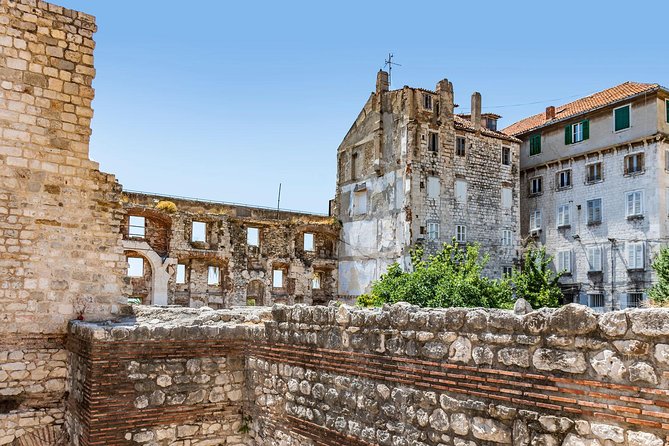
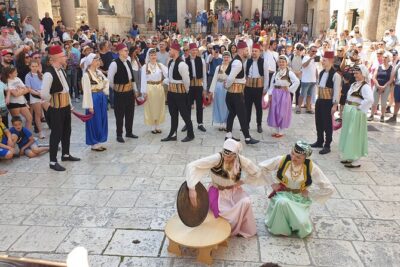
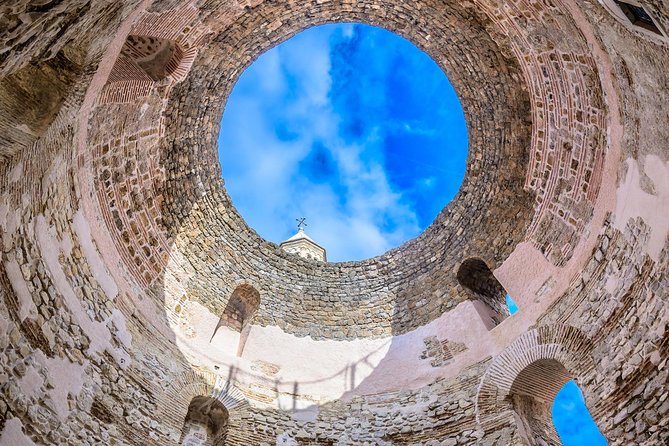
Then you stand in the Vestibulum of Diocletian’s Palace, with a circular open dome. Here, the tour description notes impressive acoustics and that you might catch traditional klapa singers if you’re lucky.
Whether or not music happens, you’ll still enjoy the architectural effect. That dome makes sound behave differently, and it’s an easy way to feel what these rooms were built for—social life, movement, and ceremonies, not just sightseeing.
If you’re the kind of person who plans around photos, this is also one of the more cinematic stops. Just remember: if it’s crowded, keep moving and let your guide keep the pace.
Temple of Jupiter: the old ritual, re-used as baptism
The Temple of Jupiter stop is a clever “watch this change” moment. It’s described as a former Roman temple that later became a baptistery, with ancient sculptures and a preserved sarcophagus.
This is the sort of historical layering that makes Split stand out. People often expect ruins to be frozen. Here, you see reuse. The architecture shifts meaning, but parts of the earlier world are still physically present in the room.
If you like history that’s connected to real objects, this stop delivers. The preserved items and the change of use give you something concrete to think about as you continue walking.
You can also read our reviews of more historical tours in Split




Triklinij: where imperial banquets happened
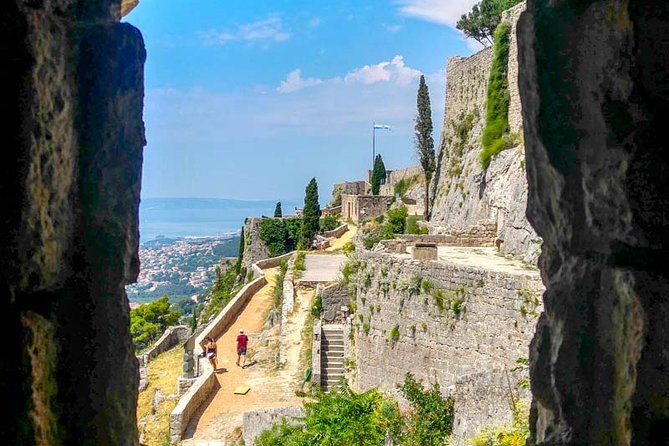
Next is the Triklinij, the dining space where Diocletian hosted lavish banquets. Your guide shares insights into Roman dining culture and imperial luxury.
This stop is brief (about 5 minutes in the tour flow), but it’s a good payoff because it answers a human question: what would it have felt like to be inside this power center, eating in a setting built for status?
You might find it helps to picture meals as diplomacy and display. In an empire, dinner wasn’t just eating—it was ranking, politics, and performance. A solid guide can make that come alive quickly.
Golden Gate and Gregory of Nin: the luck ritual
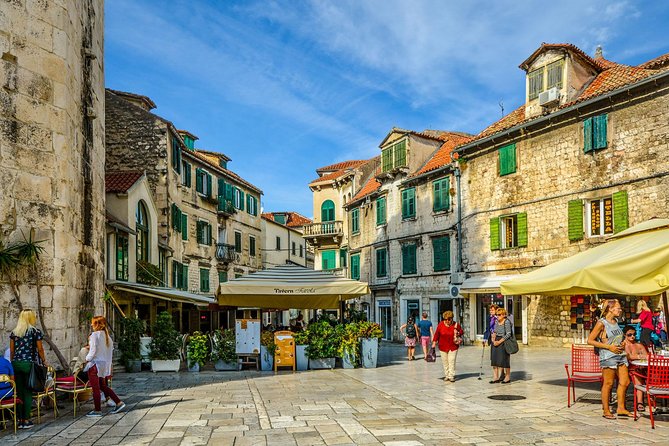
When you reach the Golden Gate, you exit through the grandest of the palace gates (the tour also notes there are four gates in total). This is a nice transition from the dense interior back into the open feel of the old city streets.
Outside, you stop at the statue of Gregory of Nin. There’s a local tradition: rub the statue’s toe for good luck. It’s a small thing, but it’s the kind of local custom that makes a history walk feel like an actual living city experience, not just a chronological checklist.
Narodni trg (Pjaca): Venetian-era buildings and a working square
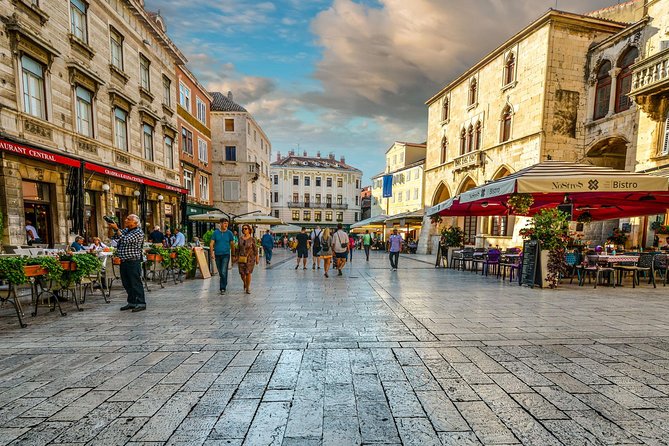
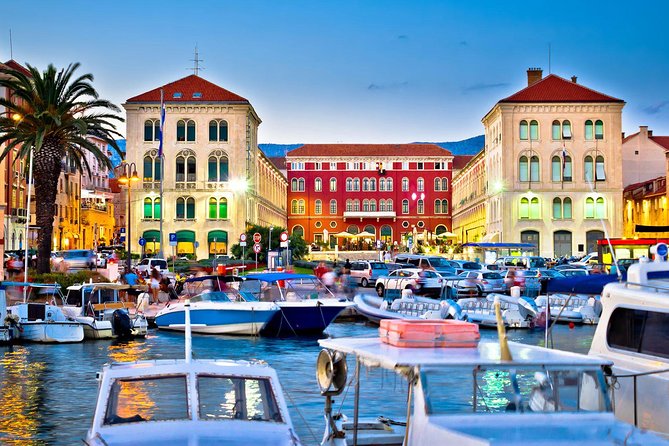
Then you stroll through Narodni trg (Pjaca), a historic square surrounded by Venetian-era buildings and an old city clock, with cafés active around it.
This is where the tour shifts from “Roman complex” into “how Split functions day to day.” You’re seeing a space that’s been a meeting point for a long time, now used for modern social life. Even if you don’t stop for a long coffee, the vibe helps you understand why locals keep circling back to the same areas.
If you’re planning your next moves, this is a good moment to ask your guide what to do with the rest of your day. The tour is designed to provide insider tips on where to eat, drink, and explore—and this square is exactly the kind of place where those suggestions become practical.
Fruit Square (Trg Brace Radic): from markets to baroque fronts
The last “street-level” stop before you return is Fruit’s Square (Trg Brace Radic). The name ties to older fruit markets, while today the area is framed by baroque palaces and daily city life.
This stop is shorter, but it’s a useful contrast. It shows you that Split’s history isn’t only monumental. It’s in commerce, in everyday routines, and in how the city evolves its public spaces.
By the time you return to the waterfront at the end of the walk, you’ve got the full loop in your head: water, empire, faith, reuse, and living city streets.
What you’ll get from the guide (and why it matters)
The tour includes a professional licensed local guide, and that is where much of the value lives. A great guide does two things well:
- They connect each stop to a bigger story (Roman foundations, later meanings, and why the complex matters).
- They give you actionable local tips—where to eat, where to drink, and what else to explore.
From the review patterns provided, many guests highlight the guides’ passion and strong communication. Names that came up include Anita, Iva, Toni, Petra, Katarina, and Rocco, and the praise consistently points to clear explanations and friendly question time.
Price and value: why $30.23 can make sense
At $30.23 per person for about 1.5 hours, the price is reasonable—especially when you consider that the major stops on the route are listed as free admission tickets. You’re paying for the guide’s time, organization, and interpretation, plus the “you don’t need to figure this out alone” benefit for an area that can feel overwhelming.
This is also a smart buy if it’s your first day in Split. You get a guided orientation across the most important sights, so your self-guided exploring afterward is faster and more confident.
If you prefer total independence and you already know Diocletian’s layout well, you could walk it on your own. But in that case, you’ll miss the quick historical links that make the palace feel coherent instead of random rooms.
Timing, schedule, and weather reality
The tour notes two departure times, which is useful if you want to avoid the busiest part of your day or you’re trying to fit the walk before dinner plans.
It also operates in all weather conditions, so you should dress for rain or sun. The route includes outdoor sections around squares and streets, plus indoor/covered spaces inside the palace complex. If it’s hot, plan on slower breathing, more water breaks outside the tour window, and good shoes.
Comfort and walking: what to bring
This is a walking tour of central old streets and palace areas. Reviews mention the experience is not suitable for wheelchairs, which is a heads-up that the ground can be uneven and there may be stairs or awkward angles.
For most people, it’s manageable, but I’d still pack the basics:
- Non-slip footwear (the stones in old towns can be slick)
- A small rain layer if showers are possible
- A light layer for evening if you’re taking a later departure
Also, pets aren’t allowed, and children must be accompanied by an adult—so plan families accordingly.
Best for whom (and less ideal for whom)
This tour is best if you:
- Want a high-impact first orientation to Split’s Old Town
- Like history that you can connect to physical spaces
- Enjoy asking questions and getting local food and wandering suggestions
It may be less ideal if you:
- Want to spend long periods inside each monument. This walk is a “hits package,” not a slow museum day.
- Have mobility needs that don’t work with uneven surfaces (the tour isn’t suited for wheelchairs).
A quick note on smooth check-in and possible hiccups
Most trips run fine, and the feedback is strongly positive. Still, there is at least one type of issue worth noting: when tour bookings get canceled or not found in the system, it can turn into a frustrating desk conversation.
My practical advice: keep your mobile ticket/confirmation ready, and if you get any message about changes, check it against your booking screen right away. If something seems off, be firm but calm, and ask the desk to verify with the reference you have.
Should you book this Split Old Town History Walking Tour?
I’d book it if you want a focused, story-led walk through Split’s most important Roman and medieval layers—especially at this price point with free-entry stops and a licensed local guide. The length is perfect for a first day, and the guide component is the main reason it works so well.
Skip it or consider alternatives only if you need a slower pace, have mobility constraints, or you dislike walking tours with multiple quick stops. Otherwise, this is one of the more efficient ways to understand why Split looks the way it does.
If you want to get the most out of it, do one simple thing: come hungry for context. Ask your guide where to go next, then spend the rest of the day letting the history map guide your feet.
FAQ
How long is the Split Old Town History Walking Tour?
It runs for about 1 hour 30 minutes.
Where do you meet and where does the tour end?
You meet at Obala Hrvatskog narodnog preporoda 21, 21000 Split, Croatia, and the tour ends back at the same meeting point.
Is the tour offered in English?
Yes, it’s offered in English.
What’s included in the price?
A professional licensed local guide is included.
Are admission tickets included for the sights?
The tour description lists admission tickets for the stops as free.
Does the tour run in bad weather?
Yes, it operates in all weather conditions, so dress appropriately.
Can I get a full refund if I cancel?
Yes. Free cancellation is available if you cancel up to 24 hours in advance for a full refund.