REVIEW · TROGIR
Split and Salona Cultural Heritage Day Tour from Trogir
Book on GetYourGuide →Operated by www.south-tours.com · Bookable on GetYourGuide
Split feels like a movie set built over real history. You get a guided walk through Diocletian’s Palace and then a trip to Salona’s Roman ruins, where the past is still big enough to walk through. It’s a good way to connect the living city streets to the ancient world just outside them.
Two things I especially like about this tour are how the guide works through the major landmarks in a logical route, and how Salona goes beyond a quick photo stop. One possible drawback: the tour’s free time for lunch and shopping can be tighter than you’d hope, and the guide’s focus can lean heavily toward history over open-ended Q&A.
In This Review
- Key points before you go
- Split and Salona: why this is a smart use of your time in Dalmatia
- Walking Split: Diocletian Palace and the classic landmarks you’ll actually understand
- Peristil, Golden Gate, and the palace structure: how the route teaches you the city
- St. Duje Cathedral, Gregory of Nin, and Marko Marulic: history you can point at
- Free time in Split: use it for lunch and browsing, but stay flexible
- The ride to Salona: swapping postcard city views for Roman scale
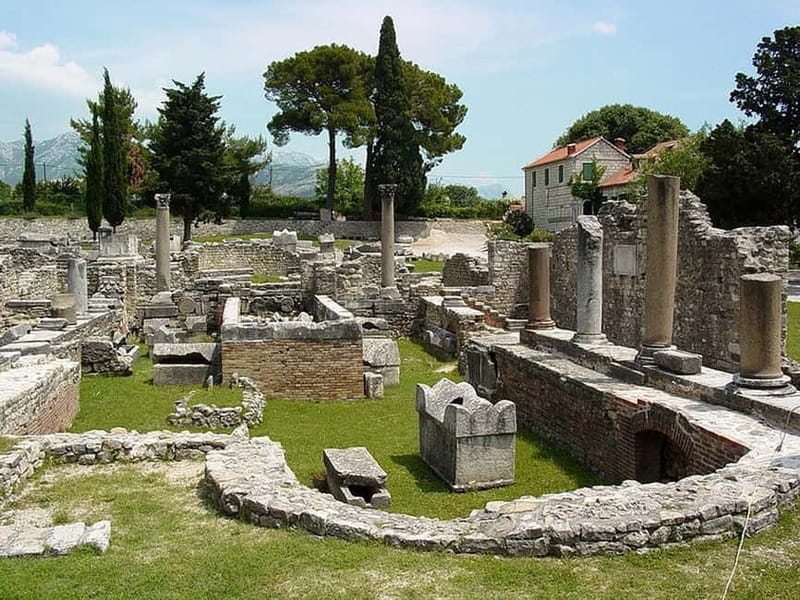
- Inside Salona: basilica, sarcophagi, and the outdoor amphitheater energy
- The museum stop (and why it’s worth your attention)
- The big outdoor stops: amphitheater and coliseum
- Pace, group dynamics, and how the guide affects your experience
- Duration and timing: the 4-hour listing vs the longer narrative
- Price and value: is $170 per person a fair trade?
- Should you book the Split and Salona Cultural Heritage Day Tour from Trogir?
- FAQ
- How long is the Split and Salona tour?
- Is the tour guide available in English?
- Does the tour include Salona entry tickets?
- Do I need to bring money for meals?
- Is hotel pickup available from Trogir?
- What does the tour include besides the guide?
- Can I book a private group version?
Key points before you go
- Diocletian Palace first, then the rest of Split: you get the frame of the city, not random sightseeing
- Major sights covered: St. Duje Cathedral, Peristil, Gregory of Nin, the Golden Gate, and more
- Salona with admission included: you’ll see the museum pieces and the outdoor Roman monuments
- Skip-the-line helps at the Salona entry point
- English live guide, with a real human pace: some groups get a patient explanation style, others move quickly
- Plan for your own lunch and browsing: included time can vary, so don’t count on a long sit-down meal
Split and Salona: why this is a smart use of your time in Dalmatia
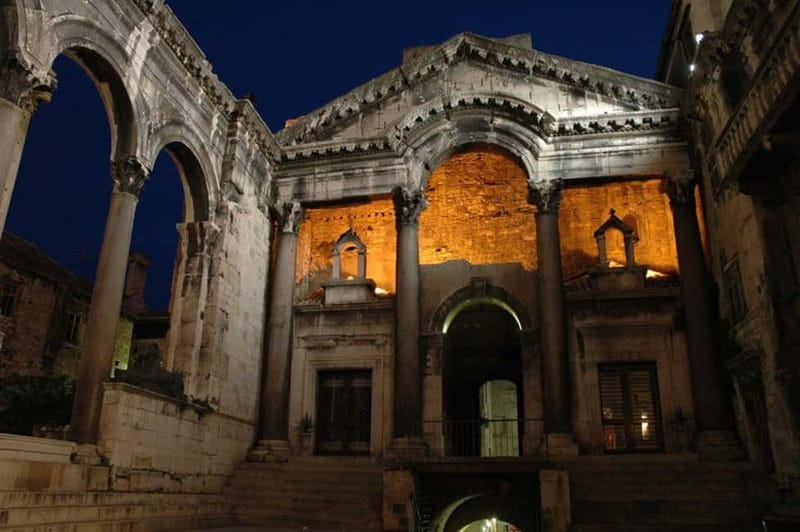
If you’re basing yourself around Trogir, this type of outing is a practical way to get two “levels” of Roman-era Croatia in one go. In Split, you’re inside the most famous residential complex from the Roman period still being actively lived in and reshaped over centuries. In Salona, you’re looking at the large-scale remains of a major Roman city that’s often compared to Pompeii because it lets you feel how everyday monumental life looked long ago.
What I like about this format is that it doesn’t stop at a single highlight. You’re not only seeing pretty facades; you’re getting the story of how the palace, the cathedral, and the street landmarks relate to the city’s layout. Then you jump out to Salona to see what a Roman provincial capital could look like on its grander scale.
You can also read our reviews of more historical tours in Trogir

Walking Split: Diocletian Palace and the classic landmarks you’ll actually understand
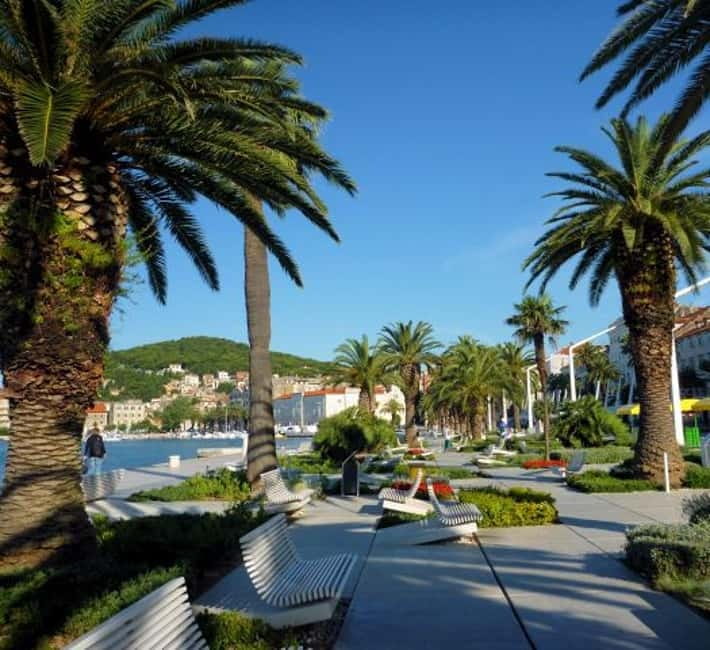
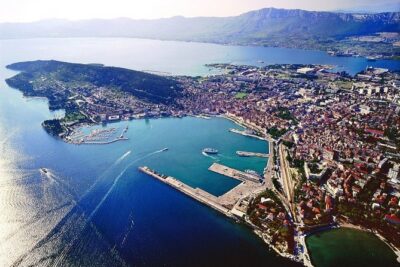
Your time starts with a guided walking tour of Split’s central sights, focused on the key structures that define the city. The anchor is the 4th-century Diocletian Palace, which is more than a monument. It’s the reason the streets feel the way they do: narrow lanes, strong sightlines, and public spaces that grew around Roman walls and gates.
Expect the guide to connect the dots as you move. You’ll also pass major stops that help you orient yourself quickly:
- St. Duje Cathedral (a big religious landmark tied into the palace story)
- Peristil (the palace’s grand central court area)
- Vestibul (part of the palace complex you’ll feel as you walk through the structure)
- Riva (the waterfront area that makes Split feel like a real port city, not just a museum)
- Golden Gate (a dramatic entrance point that helps you picture the palace as a fortress)
- Gregory of Nin (the statue that anchors a lot of the old town’s social life)
- Marko Marulic and the city clock (two “you’re in Split now” landmarks that help bring modern civic identity into the same walk)
Here’s the practical value: if you arrive in Split for the first time, this kind of route helps you build a mental map fast. After that, even your wandering feels smarter.
Peristil, Golden Gate, and the palace structure: how the route teaches you the city
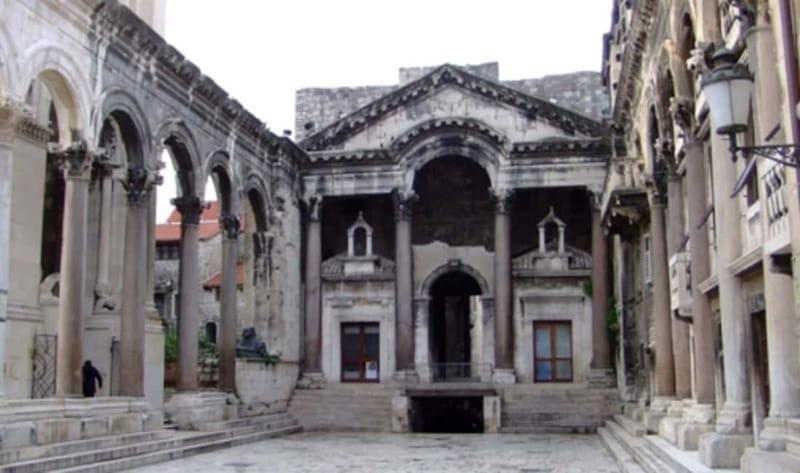
A palace courtyard and a grand entrance might sound basic, but Diocletian’s Palace is one of those rare sites where the architecture explains itself once someone points out the patterns. On this tour, you don’t just look. You walk through the relationships between spaces—gate to street to court to public focal points.
This matters because Peristil is not only visually impressive; it’s the “center of gravity” for the palace. Seeing it with context makes it easier to understand why so much of Split’s life grew around this layout. The Golden Gate and Vestibul add that sense of scale and defense. Even if you’re not a hard-core architecture person, you’ll probably find yourself imagining who used these routes and what daily movement looked like when the palace was still functioning as a palace complex rather than a living old town.
St. Duje Cathedral, Gregory of Nin, and Marko Marulic: history you can point at
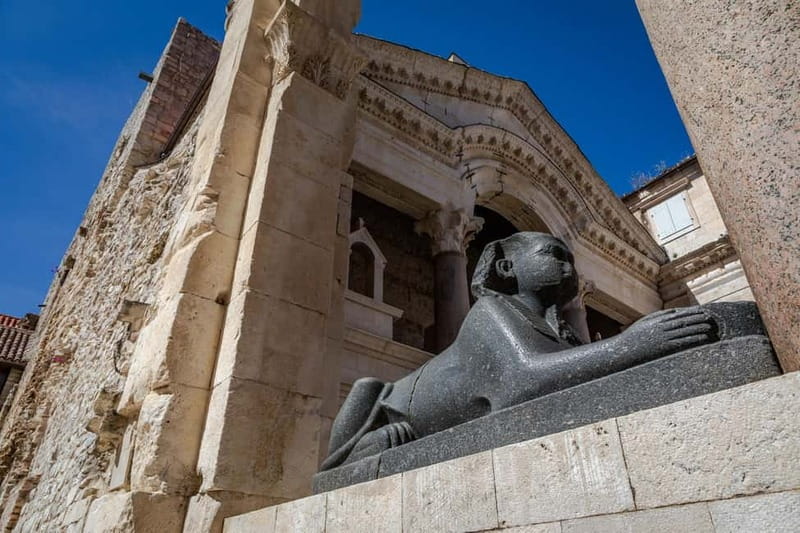
Split’s famous landmarks aren’t all about Roman stone. You’ll also hit points where later centuries are layered onto the original Roman framework.
- St. Duje Cathedral gives you a strong anchor for the religious heart of the area.
- Gregory of Nin is one of those statues that’s impossible to miss once it’s pointed out, and it’s a helpful stop because it signals where the walk becomes “city life” rather than strictly “ancient walls.”
- Marko Marulic and the city clock ground the tour in Split’s identity beyond the Roman era.
One small thing to keep in mind: this is described as an English live guided experience with an experienced tour leader. That usually means you’ll get clear structure and building-by-building explanations. But if you’re the type who loves digressive questions, consider bringing specific, focused ones. On at least one run, the guide’s explanations were strong while the interaction stayed quite history-specific.
Free time in Split: use it for lunch and browsing, but stay flexible
After the walking portion, you’ll get some free time to relax, grab lunch, and do a bit of shopping in the old town. That’s a nice break in the middle of a heritage day because you’ll likely want to cool down, eat something Croatian, and take photos at your own pace.
Here’s the realistic note: the tour description clearly includes free time, but the exact feel of that break can vary. If you’re counting on a long sit-down meal or a leisurely browse through shops, keep your schedule flexible. I’d plan lunch as a “grab-and-enjoy” moment rather than a long, slow experience.
A good approach: eat close to where you’re already walking after the guide finishes, so you don’t waste time backtracking. That lets you turn the free window into momentum instead of logistics.

The ride to Salona: swapping postcard city views for Roman scale
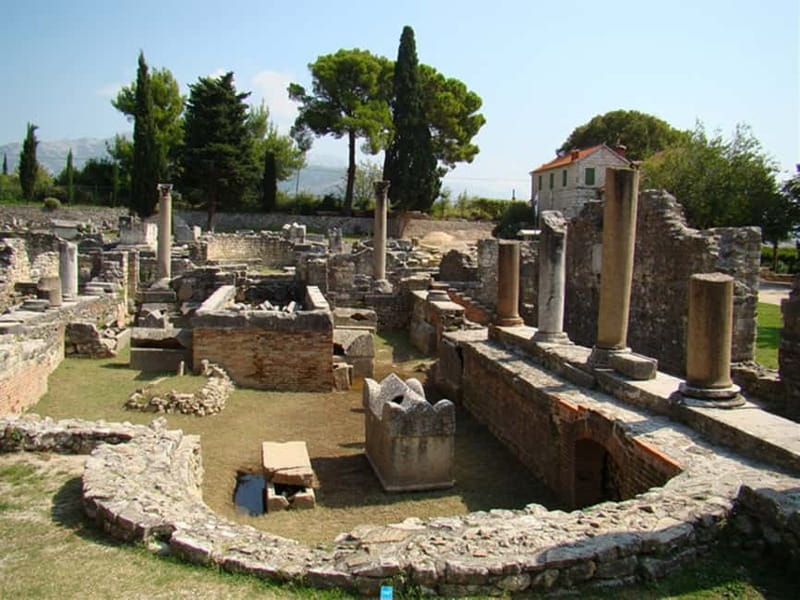
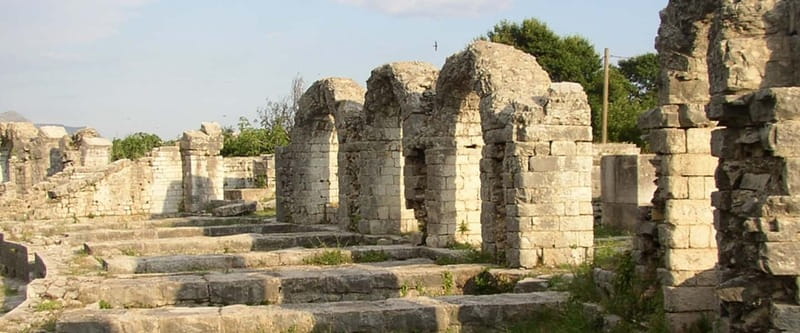
Then you head to Salona, located on the Dalmatian coast. This is where the tone changes from streets and gates to open archaeological space. Salona is often described as Croatia’s Pompeii, and whether you’ve seen Pompeii before or not, the comparison makes sense: you’re dealing with major remains of a once-thriving Roman city, not just a few scattered stones.
You’ll travel by air-conditioned vehicle with a driver. That’s a comfort boost compared with doing everything on foot, especially if the day is warm.
Also, your tour includes admission tickets for Salona, and it notes skip-the-ticket line. That matters because archaeological sites can have lines that chew up the little time you have once you’re in the area.
Inside Salona: basilica, sarcophagi, and the outdoor amphitheater energy
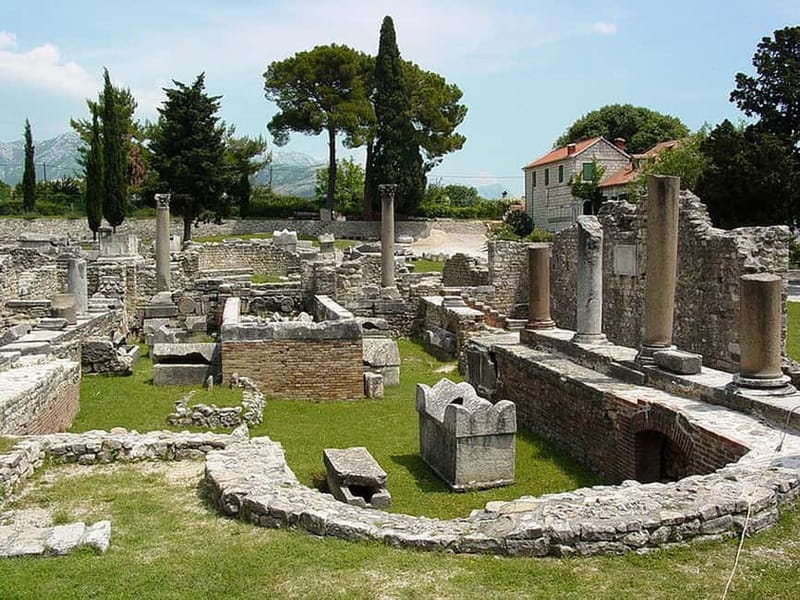
Salona is the kind of site where you’ll probably move between two modes: museum-like viewing and outdoor monument viewing.
The museum stop (and why it’s worth your attention)
The plan includes time connected to the Archaeological Museum of Split for Roman basilica elements and fine marble sarcophagi. If you’ve ever wondered why ancient burial art looks so detailed, this is the kind of stop where you can actually connect that craftsmanship to the scale of the city that produced it. A museum piece also helps you understand what you’re seeing outdoors, instead of treating the ruins like separate attractions.
The big outdoor stops: amphitheater and coliseum
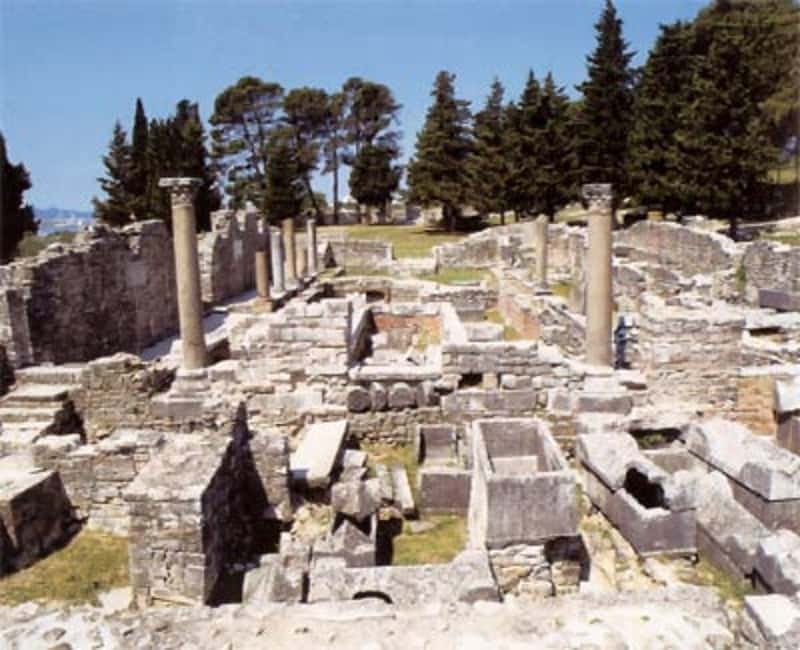
Then you go to Salona’s Roman amphitheater and the coliseum. These spaces are made for feeling scale. Stand inside or close to the structure and you immediately grasp why Roman public life centered on gatherings. Even without a deep background in Roman entertainment, you’ll get the sense of how crowds moved, where the action likely happened, and why these buildings were designed for visibility and control.
What I like here is that the guide can help you read the site quickly—where to focus, what to look for, and how the different monuments relate. If you’re a first-timer in Roman ruins, you’ll leave with way more than a set of photos.
Pace, group dynamics, and how the guide affects your experience
This tour is built as a structured walk plus a second-site visit. That generally means a brisk, efficient pacing style—you’ll see a lot, and you won’t have hours to wander randomly.
Your experience will depend partly on the guide’s communication style. One strong positive note from the described experiences: a guide showed patience when English wasn’t very clear, and made sure understanding was happening. That’s a big deal in Croatia, where group language skills can vary.
At the same time, be aware of a potential mismatch: if you want a conversational deep Q&A about every detail, you might find some guides stick to the planned history and explanations. If you want more interaction, come with a couple of specific questions like:
- How did the palace’s layout influence daily life in Split?
- What makes Salona different from other Roman sites in Croatia?
You’ll get more out of the experience if you steer the conversation where you care.
Duration and timing: the 4-hour listing vs the longer narrative
One thing I’d double-check before you book: the materials give two different timing cues. The activity details say duration 4 hours, while the narrative describes arriving in Split for a 6-hour cultural heritage tour.
That doesn’t mean you should panic—it means you should verify the exact schedule for your date/option. When you look at availability and starting times, confirm the real “door-to-door” length so you can plan lunch, transport back, and the rest of your day around Trogir.
Price and value: is $170 per person a fair trade?
At $170 per person, this is not a budget outing. So the question isn’t only whether the price feels high; it’s whether it replaces other tours or saves you time and effort.
Here’s where the value likely comes from:
- You’re getting a guided walk through central Split, covering many landmark stops in one coherent route.
- You get Salona admission included, plus skip-the-ticket line, which reduces wasted time.
- You travel by air-conditioned vehicle, which is a comfort and time-saver from Trogir’s region.
- The itinerary combines walking + museum-linked viewing + large Roman ruins, which is more than a single-site tour.
Where the price can feel less worth it is if your main goal is slow touring, lots of independent wandering, or a long free lunch window. If you’re the kind of person who wants extended shop time and a relaxed pace, you may want to pair this with more flexible independent time before or after.
My advice: treat it as a structured “greatest hits with context” day. If that’s your style, $170 starts to look like paying for time savings, expert routing, and entry convenience.
Should you book the Split and Salona Cultural Heritage Day Tour from Trogir?
Book this tour if you want an efficient, guided way to understand Split’s Roman foundation and then see Salona’s major Roman remains without having to plan every stop yourself. It’s a strong choice for first-timers who want the city mapped out quickly and for history-minded travelers who enjoy museum pieces as well as outdoor monuments.
I’d think twice if your top priorities are slow wandering, lots of shopping time, or a very interactive guide style. The tour is designed to cover major sights and keep moving, and the “free time” portion may not stretch as long as you imagine.
If you do book, come prepared with two expectations: (1) you’ll see many landmarks in a tight window, and (2) you’ll get more out of it by asking focused questions. That’s the sweet spot.
FAQ
How long is the Split and Salona tour?
The activity details list a duration of 4 hours, but the narrative description references a 6-hour cultural heritage tour. Check the exact schedule and starting times for your option before you go.
Is the tour guide available in English?
Yes. The tour uses a live guide in English.
Does the tour include Salona entry tickets?
Yes. Admission tickets for Salona are included, and skip-the-ticket line is noted.
Do I need to bring money for meals?
Meals and drinks are not included, so you’ll want to plan for lunch on your own during the free time.
Is hotel pickup available from Trogir?
Pickup is optional and may be possible at your hotel, depending on the option you book.
What does the tour include besides the guide?
It includes an air-conditioned vehicle with a driver, an experienced tour leader, and Salona admission tickets.
Can I book a private group version?
Yes. Private group availability is offered.