REVIEW · TROGIR
Trogir; Private walking tour of higlights of Trogir
Book on GetYourGuide →Operated by Kaius · Bookable on GetYourGuide
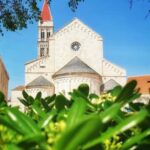
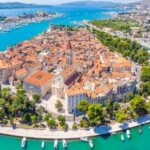
Trogir is a walkable stone museum. This private walking tour threads the medieval streets with stories that make the town feel lived-in, not just photographed. I especially liked how the guide ties the Cipiko Palaces to the noble families who shaped this place, and I loved getting close to the Cathedral of Saint Lawrence and its standout portal.
One thing to think about: this is a walking route through older stone lanes, so it can feel a bit uneven and slow if you’re not comfortable on cobbles or you’re arriving straight from a travel day.
In This Review
- Key highlights to look for on this Trogir walk
- Entering Trogir at the North City Gate
- Cipiko Palaces: noble families written into stone
- St. Lawrence Cathedral and its masterpiece portal
- City Loggia and City Hall: where civic life happened
- Kairos: the Greek god of a happy moment
- Riva promenade views, palm trees, and anchored ships
- Fortress Kamerlengo: the closing image you’ll remember
- Private-group value: what $129 gets you (and when it’s worth it)
- What you’ll be doing on the ground (pace, comfort, and timing)
- Who this tour is best for (and who might want a different style)
- Should you book this Trogir highlights tour?
- FAQ
- Where does the tour start?
- Where does the tour end?
- Is this a private tour?
- How many people are in a group?
- What is included in the price?
- What languages is the tour offered in?
- Which main sights are included?
- Is there a typical walking sequence?
- What if weather changes plans?
Key highlights to look for on this Trogir walk
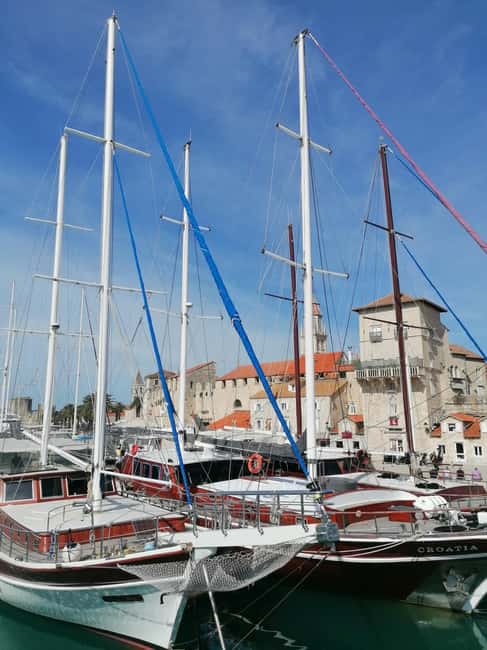
- North City Gate start: easy reference point to meet your licensed guide inside the old core
- Cipiko Palaces: architecture plus the human story of the noble families behind it
- St. Lawrence Cathedral portal: the kind of detail you miss when you rush
- City Loggia and City Hall: understand where civic power played out
- Kairos story: the Greek good of happy moment makes the artwork feel less random
- Riva promenade and Fortress Kamerlengo: a sea-view finish paired with a fortress closing image
Entering Trogir at the North City Gate
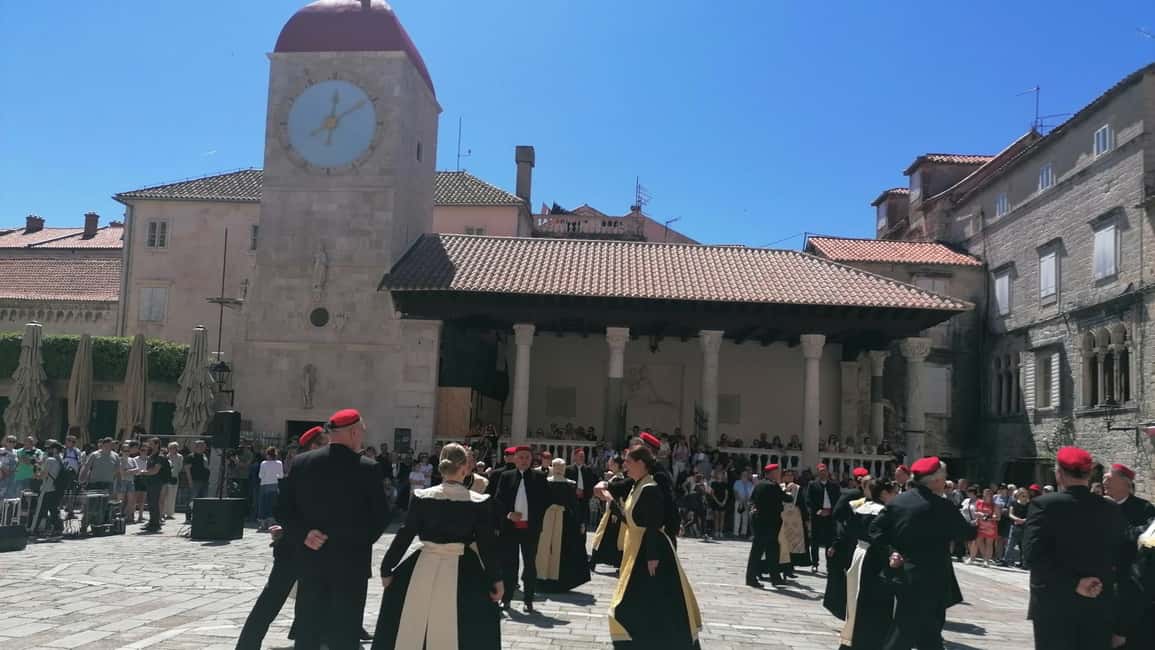
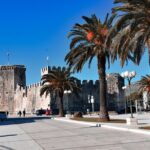
The tour kicks off right in front of the north city gate, which is the main entrance into the historic core. That matters more than you might think: meeting at a big, recognizable spot helps you avoid that stressed last-minute scavenger hunt in narrow lanes.
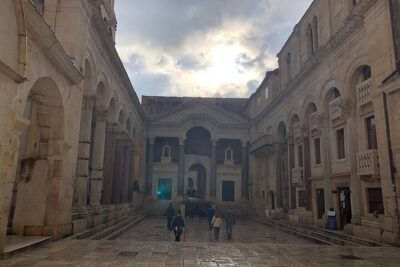
Once you’re inside, the tone shifts quickly. You’re not just looking at buildings—you’re moving through the same kind of streets that have guided people for centuries. And because this is private (up to 8 people), you can ask small questions as you go, like what to focus on in the next façade, or how one building connects to the bigger picture.
Your guide is licensed, and they’re also there to help with more than just the walk. Expect practical recommendations for the rest of your Trogir / Dalmatia time, which is handy if you want a few good ideas beyond the obvious.
You can also read our reviews of more walking tours in Trogir
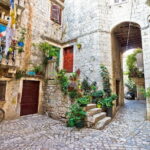
Cipiko Palaces: noble families written into stone
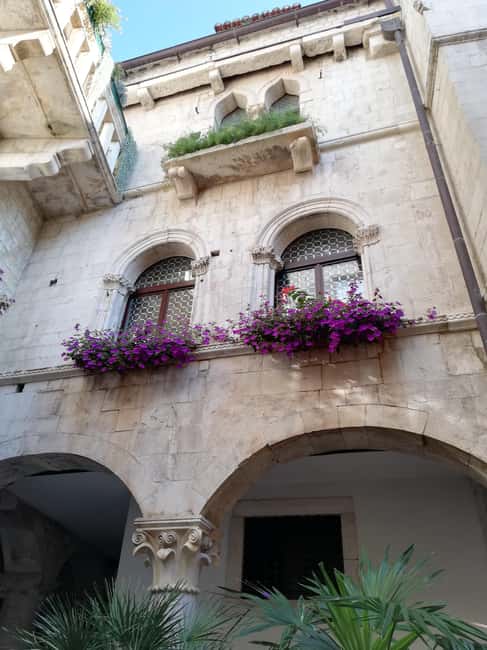
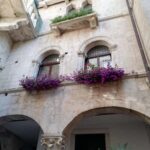
Cipiko Palaces are one of those places where the architecture really earns your attention. As you approach, you’ll see more than “pretty old buildings.” The guide puts names and motivations behind the stonework, especially through the story of the noble families.
What I like here is the way the tour connects art and respect. You’ll hear about how families collected stone fragments to show their respect for the past. That detail changes how you look. Instead of treating decorations like random ornaments, you start seeing them as deliberate choices—status, memory, and influence all pressed into the design.
This is also where a private format shines. If your group is the kind that likes stopping to compare façades, you’ll have room to do it. If you’re more of a keep-moving type, the pace still works because the guide can adjust to your energy level.
St. Lawrence Cathedral and its masterpiece portal
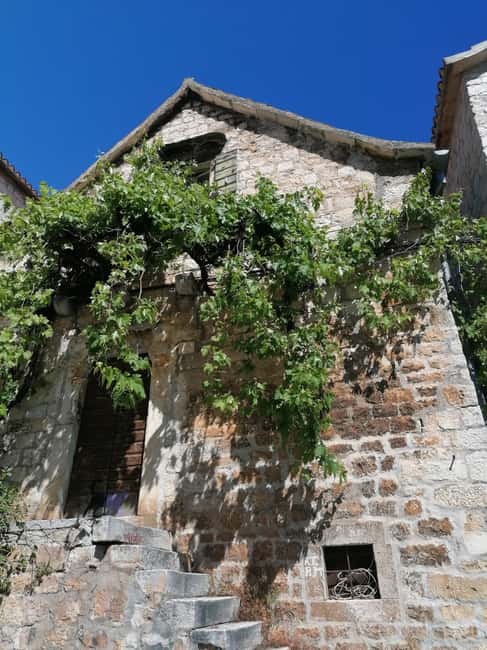
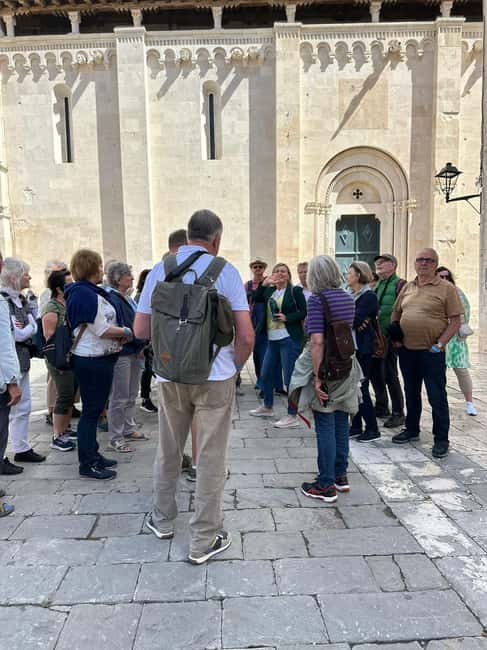
The walk then turns to the Cathedral of Saint Lawrence, and specifically the masterpiece portal. This is the stop where you slow down without being told to.
Portals are often treated like a quick photo moment. On this tour, you’ll learn how the portal functions like a statement—something meant to be read and admired at close range. That’s the big advantage of a guide: you’re not guessing what you’re looking at. You’re being pointed toward the parts worth noticing.
It also helps that Trogir’s story goes back over 3600 years. With that context in your pocket, the cathedral doesn’t feel like an isolated monument. It starts to feel like a chapter in a much longer human timeline—Greek influence, later generations, and the ongoing effort to build meaning into public spaces.
If you like architecture and you enjoy explanations that make buildings feel personal, this stop is the kind that sticks with you.
City Loggia and City Hall: where civic life happened
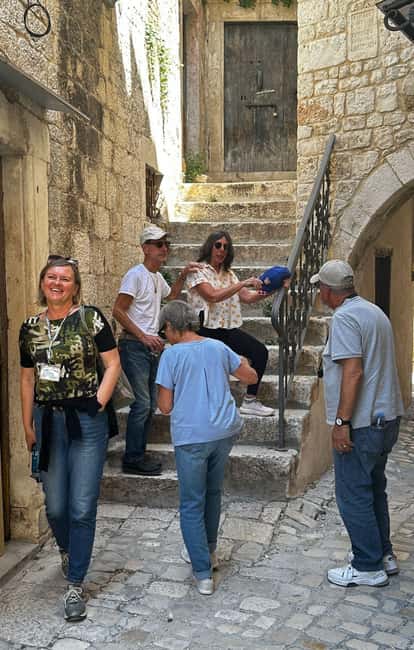
Next up is the City Loggia and City Hall. These stops aren’t just “look at the building.” They’re about understanding the setting for decision-making and public life.
In old towns, civic power is often hidden in plain sight—shaped through architecture, placement, and what gets displayed. The guide explains the secrets of these buildings, which turns the route from sightseeing into a quick crash course on how the town worked.
I find these kinds of stops underrated. They help you stop treating Trogir like a backdrop and start treating it like a place where real people negotiated, governed, and represented themselves. By the time you reach the next story, you’ll already be thinking about who had influence and why.
Kairos: the Greek god of a happy moment
Then comes one of the more memorable moments: the story of Kairos, the Greek god of the happy moment. It’s a smart inclusion because it breaks the purely architectural rhythm of the walk.
Here’s why it matters: Kairos gives you a theme. Instead of seeing symbols as decoration, you start connecting them to human ideas—timing, opportunity, and the feeling that a moment is exactly right.
And since the town has attracted major masters since ancient Greek times, this kind of story helps you connect the dots between culture, creativity, and what you’re walking past. You’ll also hear that Greek masters lived in Trogir and created some of their famous masterpieces here—so the idea of Kairos isn’t floating off on its own. It’s grounded in the town’s longer artistic tradition.
You can also read our reviews of more private tours in Trogir



Riva promenade views, palm trees, and anchored ships
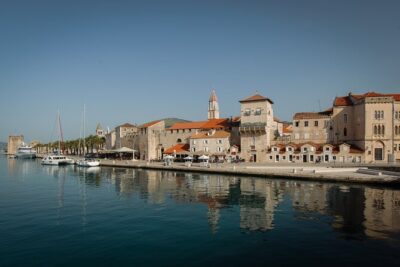
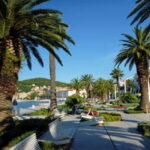
After the tighter stone core, you get a classic Mediterranean reset at the Riva promenade. This is where the sea view helps your brain catch up.
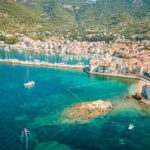
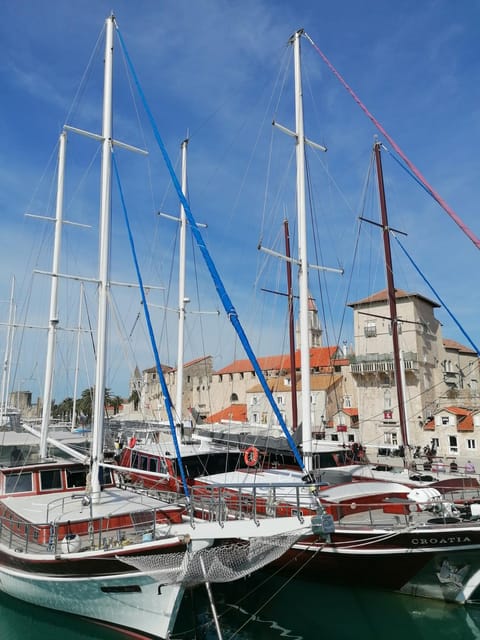
The tour highlights a typical scene: sea, palm trees, and anchored ships. That sounds simple, but it does a lot for the experience. It gives your eyes a break from façades and gives you a sense of how the harbor and water always fed daily life here.
I like this part because it balances the “architecture talk” with something you can just enjoy. If your group includes people who want a mix—stories plus scenery—this is where everyone relaxes.
Fortress Kamerlengo: the closing image you’ll remember
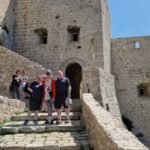
The tour concludes at Fortress Kamerlengo, described as impressive, and it’s a strong ending choice. Fortresses don’t just look dramatic; they summarize the town’s relationship with defense, control, and protection.
Even if you’re not a “history textbook” person, it helps. You stand there and your mind naturally links the fortress to the streets you walked moments ago. The tour gives the route a shape: entry through the gate, core highlights, sea views, and a finish with a defensive presence.
At the end, the activity can end back at the meeting point (the north city gate), but it can also end at another point that suits you. That flexibility is practical if you want to continue on your own for food, photos, or a water view detour.
Private-group value: what $129 gets you (and when it’s worth it)
This tour costs $129 per group up to 8. That can look steep if you’re thinking solo, but the math changes fast if you’re traveling with friends or family.
Here’s how I’d judge value:
- If you can fill a group (or at least most of it), you’re effectively buying the guide’s time rather than paying a per-person fee.
- If you care about explanations (not just photos), a licensed guide pays off because you’re getting context for multiple landmarks in one go.
- If weather or timing is tricky, private tours are easier to manage since your guide can pace and adjust for your group.
If you’re traveling as a duo or a small family, it can still be good value—just do the quick per-person check before booking so you’re comfortable with the cost.
What you’ll be doing on the ground (pace, comfort, and timing)
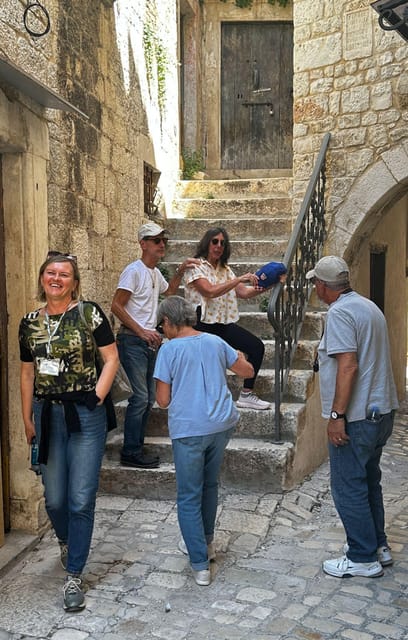
This is a walking highlights tour, so it’s best thought of as a concentrated old-town stroll rather than a bus-and-stop format. The streets you’ll cover are medieval, which usually means cobbles and uneven surfaces. Wear shoes that you trust.
As for timing, one key practical note: if the weather turns ugly, the guide can shift plans. In at least one case, an unexpected storm over Trogir led to pushing the tour forward by around three hours. That’s a reminder to pack for changing conditions and to keep a little flexibility in your day.
Languages are English and German, so you’ll be able to follow comfortably if either works for you.
Who this tour is best for (and who might want a different style)
I think this highlights format fits best if you:
- want the main stops inside Trogir’s historic core without overplanning
- enjoy stories that link people (noble families, Greek influence) to buildings
- like a small-group feel where your questions don’t get squeezed out
It may be less ideal if you:
- want a long, slow wander with lots of free time to roam alone between stops
- dislike walking on older stone lanes
- need very frequent rest stops (the route is built around landmark flow)
If you’re the kind of person who likes to understand what you’re looking at, you’ll get a lot from the way the guide connects architecture, civic life, and Greek-era ideas like Kairos.
Should you book this Trogir highlights tour?
Yes—if you want a smart, guided way to see the big-name Trogir sights (Cipiko Palaces, St. Lawrence Cathedral, City Loggia, City Hall, Riva, and Fortress Kamerlengo) without getting lost in the details yourself. The private format, capped at up to 8 people, makes it easier to get answers and to match the pace to your group.
Book it especially if you care about context. The tour doesn’t just point at buildings; it explains why they mattered—through noble families, civic spaces, and that Greek-threaded Kairos story that turns symbols into meaning.
If you’re visiting in bad weather or you’re sensitive to walking surfaces, I’d plan for flexibility and wear comfortable shoes. Then you’ll be set for a focused, satisfying old-town walk that ends with great views and a strong finale.
FAQ
Where does the tour start?
It starts in front of the north city gate, the main entrance to Trogir’s old town.
Where does the tour end?
It ends back at the meeting point (the north city gate). You can also end at another point that suits customers.
Is this a private tour?
Yes, it’s a private walking tour of highlights in Trogir.
How many people are in a group?
The price is per group up to 8 people.
What is included in the price?
A licensed tour guide is included.
What languages is the tour offered in?
The tour is offered in English and German.
Which main sights are included?
The tour includes the Cipiko Palaces, the Cathedral of Saint Lawrence (with its portal), the City Loggia, City Hall, the Riva promenade, and Fortress Kamerlengo.
Is there a typical walking sequence?
The walk begins at the north city gate, goes through the historic core highlights, reaches the Riva promenade for sea views, and finishes at Fortress Kamerlengo.
What if weather changes plans?
If weather hits, the guide may adjust the timing to keep the tour workable, such as shifting the tour by a few hours.