REVIEW · SPLIT
Trogir & Split – Private tour of two UNESCO cities
Book on Viator →Operated by TEMPER TRAVEL · Bookable on Viator
Two UNESCO cities, one smooth morning plan. I like how this tour pairs Trogir’s Cathedral area with Split’s Diocletian’s Palace so you see two very different kinds of ancient city at a walkable pace.
What I especially enjoy is the guided approach: you spend time inside St. Lawrence’s Cathedral in Trogir (not just outside photos), then you step into the palace’s key open space, the Peristyle, where Roman design still shapes how you move today. One thing to consider: with just about five hours total, the route is efficient, so it’s not built for slow, long coffee stops between sights.
In This Review
- Key things that make this tour work
- Trogir and Split in 5 hours: the smart pacing
- Trogir’s UNESCO streets and Central Square: why this start matters
- Inside St. Lawrence’s Cathedral: the one stop you’ll be glad is included
- The Golden Gate and Peristyle: where Split’s story starts to feel real
- Narodni Trg, Prokurative, and the Riva: reading modern Split with Roman leftovers
- Guide and driver quality: the quiet value in a private tour
- Price and value: is $161.10 per person a fair deal?
- Who this tour suits best (and who should think twice)
- Helpful moments to plan around
- Should you book this Trogir and Split private tour?
- FAQ
- What is the duration of the tour?
- What time does the tour start?
- Is pickup included?
- Is this a private tour?
- Do I need to buy an entrance ticket for St. Lawrence’s Cathedral?
- Are there any other entrance fees included?
- Is transportation provided?
- What’s included for food or drinks?
- What if the weather is poor?
- What is the cancellation window?
Key things that make this tour work
- Private transport + pickup means less stress between Trogir and Split
- St. Lawrence’s Cathedral entry included so you get the interior, not only the façade
- UNESCO walking beats driving for the historic core feel in both cities
- Diocletian’s Palace Peristyle is the big architectural anchor in Split
- Harbor-side finales at the Riva help you understand how Split lives now
- Guide support you can count on: the English-speaking guide Boško is specifically praised for clear explanations, and driver Pablo is noted for safe driving
Trogir and Split in 5 hours: the smart pacing
This is a practical format if your time is tight but you still want real city structure, not just a couple of photo stops. You start in Trogir with a historic-center walk, then shift to Split for the day’s second half, centered on Diocletian’s Palace and the public squares that grew around it.
The tour’s timing is efficient: you get a mix of longer blocks (like the cathedral time) and shorter “orientation” pauses (squares and gates). That matters because both Trogir and Split reward walking, but they also punish aimless wandering. A good guide helps you get your bearings fast so your time feels intentional.
Because it’s private, you’re not rushed by a crowd schedule. Still, keep one expectation in mind: five hours means you’ll see highlights with context, not every alley and side chapel. If you love to linger and read everything you can find, plan for shorter sight stops and save a return trip for later.
You can also read our reviews of more private tours in Split

Trogir’s UNESCO streets and Central Square: why this start matters
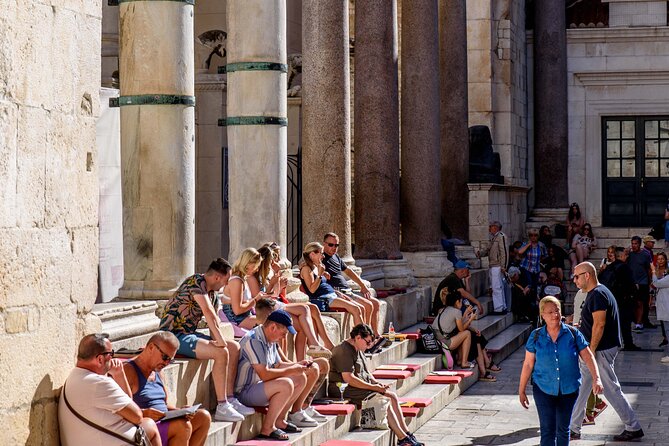
Trogir’s historic center is the kind of place where you understand the past by simply walking it. You begin with about an hour in the old city core, where narrow lanes and old stone work together like a living timeline—more than a backdrop, it’s a system.
Then you break briefly at Central Square, a short stop that’s actually useful. A square is where you can pause, look around, and feel how the city connects: street to church to daily life. That short reset helps you appreciate the next stop because you’re no longer walking blindly—you’re mentally mapping what you’re about to see.
What to watch for: the way buildings frame sightlines. In a compact UNESCO core like Trogir, one corner can reveal the next landmark. If you’re tempted to speed through, resist it for just a minute at a time. Those small pauses are what turn this from a checklist into a place you remember.
Possible drawback: Trogir’s streets can feel tight and busy during peak hours, so comfortable shoes matter more than you might expect. This tour is mostly walking, and you’ll want your feet on your side.
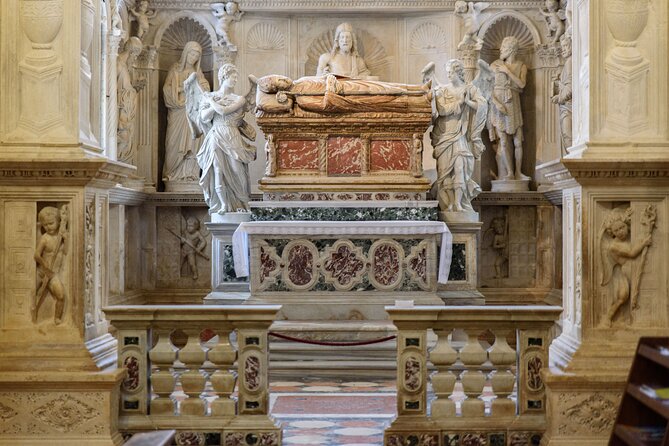
Inside St. Lawrence’s Cathedral: the one stop you’ll be glad is included
Trogir’s big church moment is St. Lawrence’s Cathedral, and the best part is that the cathedral entrance is included. That changes the experience. You’re not left standing outside, guessing what’s worth seeing. You get to go in for about 20 minutes.
Even if you’re not a church architecture expert, interiors tend to hit differently when you’ve already seen the streets and façades outside. You arrive already oriented, then you switch from “city picture” to “religious space” mode. It’s a good contrast that prevents the tour from feeling repetitive.
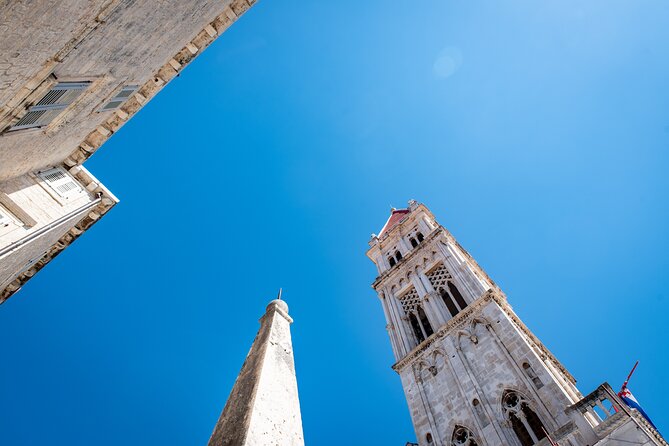
The cathedral is known for its striking portal, and while your time indoors is limited, that portal reputation is worth remembering as a visual cue. When you see the stonework and proportions in person, you’ll understand why people call Trogir The Stone Beauty.
Tip for your time inside: don’t try to absorb everything at once. Pick one element—portal details outside you may have noticed, or a single interior view—then give it your full attention for a minute or two. You’ll leave feeling like you really saw something, even with a short visit.
The Golden Gate and Peristyle: where Split’s story starts to feel real
Once you move to Split, the tour’s structure turns from medieval streets to something more forceful: Diocletian’s Palace. You start with the palace gate area, including the Golden Gate stop.
This is where the setting explains the legend. The tour points out the moment Diocletian entered the main palace gates when he retired—an idea that makes the architecture feel like it has a pulse. You’re standing at a threshold that carried someone’s life shift from power to withdrawal.
Overlooking the gates, you’ll also see the statue of Croatian bishop Grgur. That’s not just decoration; it’s a reminder that these Roman walls didn’t stop at antiquity. They kept being reused, retold, and claimed by later generations, which is the key theme of Split.
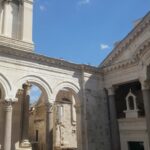
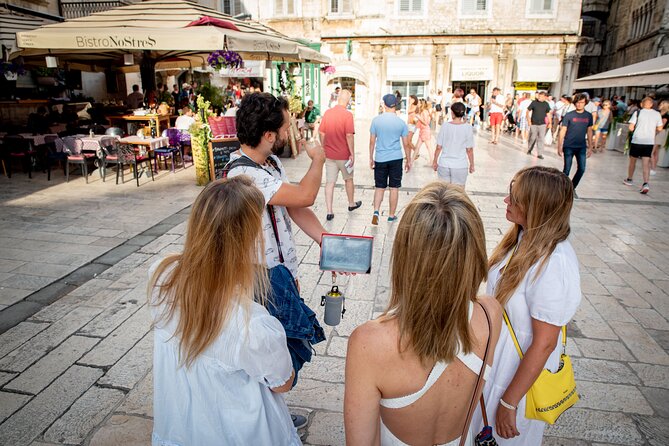
Next comes one of the most important spaces in the entire experience: the Peristyle. This is described as the geographical and spiritual center of the palace, and the name matters less than the effect. Open space inside an ancient complex does two things for you:
1) it gives you a clear sense of scale, and
2) it helps you understand why this palace wasn’t only a fortress—it was a working city.
You get about 20 minutes here, which is enough to look, orient, and connect what you just learned to how people currently move through the area.
Narodni Trg, Prokurative, and the Riva: reading modern Split with Roman leftovers
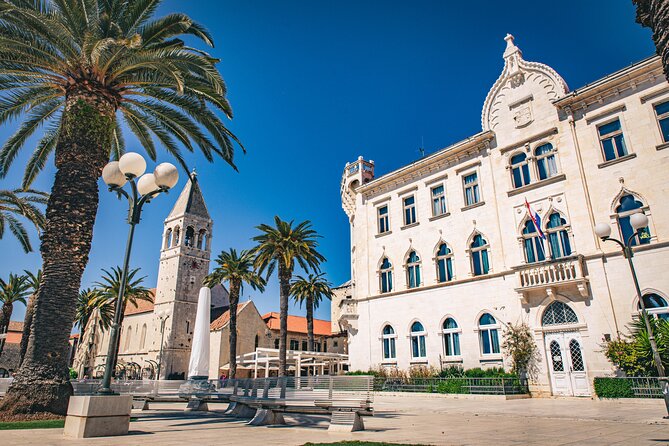
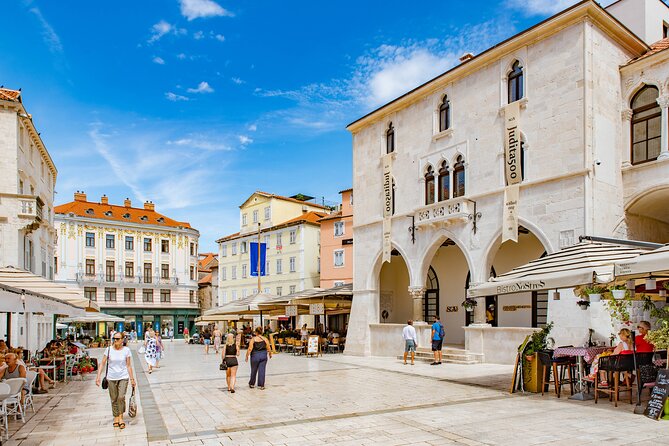
After the palace core, the tour shifts to the public spaces that make Split feel like a living city—Narodni Trg, Prokurative, and finally the Riva Harbor promenade.
Narodni Trg is a short stop, around 10 minutes, but it’s chosen for a reason. It’s the central stage of everyday city life, where residents meet and chat, including the ever-present talk of football. That’s a practical reminder: the city you’re seeing isn’t a museum after-hours. It’s still used the same way people have used town squares for centuries—social pause, people-watching, and debate.
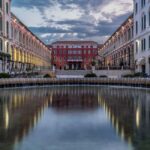
Then you move to Prokurative (also called Republic Square), where the tour notes a resemblance to St. Mark’s Square and includes a view toward the harbor and the Riva. This is a good section for photos, but it’s also a good “breather.” You can sit with the view and let the palace imagery fade a little so you can think like a modern visitor again.
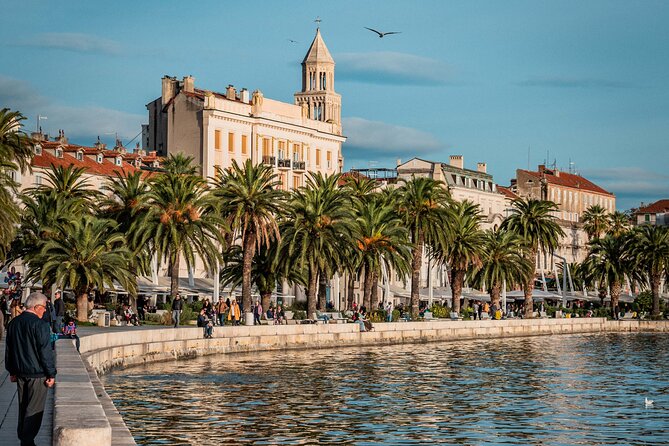
Finally, you finish at the Riva promenade—about 15 minutes. The Riva is presented as Split’s living room and main venue for everyday theatre and legendary events. Even with a short stop, it lands because it’s where you can feel how the city’s energy flows: seaside, movement, and people doing normal life in a dramatic setting.
If you want to make the last stop count: arrive ready to slow down. This is the easiest part to rush, but it’s also where the city mood sticks with you longest.




Guide and driver quality: the quiet value in a private tour
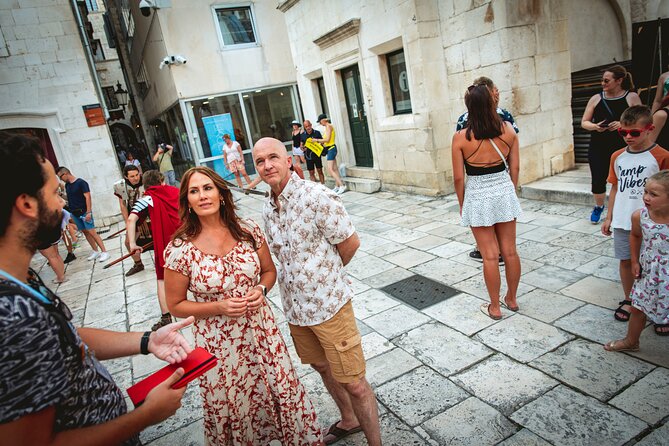
This kind of private tour only feels easy if the people behind it are good. In this case, you’re set up with an English-speaking licensed guide, and the tour experience is specifically praised for strong guidance.
I love that this isn’t just “driver drops you, guide passes you off.” Your guide, Boško, is called out for being very knowledgeable in feedback, which matters for exactly this route. When you’re pairing Trogir’s UNESCO streets with Split’s Diocletian story, you need explanations that connect the dots quickly. Otherwise, you end up with two separate sightseeing days that never quite click into one bigger story.
On the transportation side, driver Pablo is praised for safe driving. That’s not a luxury detail. It’s part of the comfort that keeps a short day from becoming tiring. With a private modern air-conditioned vehicle included, you’re less dependent on timing tricks and long waits.
Price and value: is $161.10 per person a fair deal?
At $161.10 per person for about five hours, this isn’t a “cheap” add-on. But it also isn’t overpriced for what’s bundled.
Here’s what you’re getting for your money, in practical terms:
- Pickup and private transportation with a professional driver in an air-conditioned vehicle
- English-speaking licensed guide to tie Trogir and Split together
- Entrance fee to St. Lawrence’s Cathedral (so that interior visit is truly included)
- Coffee and/or tea
- Mobile ticket support and a private format where only your group participates
If you compare this to doing both cities on your own, the guide time alone can save you from losing hours figuring out what to prioritize. Add the included cathedral entry and the comfort of door-to-door pickup, and the price starts to make sense for a first-time UNESCO sampler.
Also, there’s a note about group discounts. If you have a small group (friends or family), ask before you lock it in—sometimes the private format becomes an even better value when split.
Who this tour suits best (and who should think twice)
This fits well if you:
- want two UNESCO destinations without complex planning,
- prefer a guide-led walk through key highlights,
- value inside access (cathedral interior) rather than only outdoor sightseeing,
- like having set pacing when your day is packed.
It may not be your best match if you:
- want to spend long hours inside museums or keep moving at a slow, open-ended pace,
- get restless when time at each stop is fixed (some stops are intentionally short),
- are traveling only for detailed architecture study and want more time per monument.
Weather is also a factor. The tour notes it needs good weather, and if it can’t run due to poor conditions, you’ll be offered a different date or a full refund. That matters most for your comfort while walking between compact historic areas.
Helpful moments to plan around
This tour starts at 9:00 am, so treat it like a morning mission. Start the day with water and a snack if you’re the type to get hungry before noon, because the day is structured around fixed stops rather than long breaks.
Since it’s a private tour, you can also think strategically about your priorities. If you care most about one place—like the palace core or the cathedral—tell your guide what you want emphasized. The tour is designed around highlights, but a good guide can often fine-tune focus within the time limits.
Also, keep an eye on footwear. Old stone streets and promenades can be slippery or uneven depending on conditions, and you’ll cover enough walking that “almost comfortable” shoes turn annoying fast.
Should you book this Trogir and Split private tour?
I’d book it if you want a focused UNESCO day that doesn’t waste time. The blend of Trogir’s cathedral interior plus Split’s Diocletian’s Palace core plus the Riva waterfront gives you a complete arc: ancient foundations, then modern daily life layered on top.
I’d pause before booking if you’re the kind of traveler who needs lots of free time to wander without timing pressure. This is a planned route with set stop lengths, and while it’s private, it still aims to fit major highlights into a short window.
If you do book, take the weather note seriously. When the morning is clear, the harbor-side finish and the cathedral area feel much more rewarding. And if you want a smooth experience, this is the kind of tour where a strong guide like Boško and a safe driver like Pablo can quietly make the whole day feel effortless.
FAQ
What is the duration of the tour?
The tour runs for about 5 hours.
What time does the tour start?
The start time is 9:00 am.
Is pickup included?
Yes, pickup is offered at the agreed location.
Is this a private tour?
Yes. Only your group will participate.
Do I need to buy an entrance ticket for St. Lawrence’s Cathedral?
No. The entrance fee to St. Lawrence’s Cathedral in Trogir is included.
Are there any other entrance fees included?
The information specifically lists the cathedral entrance fee as included; other admission tickets are listed as free for the remaining stops.
Is transportation provided?
Yes. You get private transportation with a professional driver in a modern, air-conditioned vehicle.
What’s included for food or drinks?
Coffee and/or tea are included.
What if the weather is poor?
The experience requires good weather. If it’s canceled due to poor weather, you’ll be offered a different date or a full refund.
What is the cancellation window?
You can cancel up to 24 hours in advance for a full refund.