REVIEW · SPLIT
Private Walks & Storytelling – the best small group tour in Split
Book on Viator →Operated by Walking tours with The Storyteller Croatia · Bookable on Viator
A good city walk should teach you how to see—not just where to stand. This private Split tour is built around local storytelling, led by a licensed guide who ties folklore to the real streets you’re walking. I particularly like the small-group feel (up to 10) and the way the guide mixes Diocletian’s Palace scale with everyday local moments.
One thing to think about: some stops involve admission tickets that are listed as not included, so you may want a little cash or a card ready for the few paid segments.
In This Review
- Key things that make this walk worth your time
- Why Split’s story works best at walking speed
- Porta Aenea start point: you get your bearings fast
- Riva Harbor: the slow life that locals keep
- Under the palace: Diocletian’s substructures feel like time travel
- Peristyle and Peristil: the imperial open square
- Saint Domnius Cathedral: tiny, old, and hard to miss
- Temple of Jupiter to St. John’s era: faith changes buildings
- Let Me Pass Street (Pusti me da prodjem): the city’s sense of humor
- Narodni Trg: where “new old town” begins
- Nadalina chocolate: food talk that you’ll remember
- Golden Gate and Grgur Ninski: end inside the city’s loop
- Price and what you’re actually paying for
- What to expect in real terms (pace, language, and the “private” feel)
- Practical tips: how to get the most out of every stop
- Who should book this private storytelling walk
- Should you book Private Walks & Storytelling in Split?
- FAQ
- How many people are in the group?
- How long is the walking tour?
- Is the tour offered in English?
- Where do we meet, and where can the tour end?
- Is the tour a “mobile ticket” experience?
- Are admission fees included?
- What happens if the weather is poor?
- Is there a time window for tours each day?
Key things that make this walk worth your time
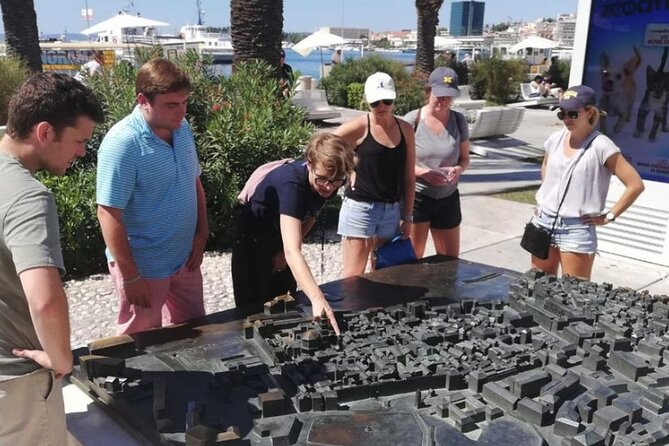
- Local stories at street level: you’ll learn the why behind the walls, gates, and legends you’d otherwise walk past.
- A guided route through “above” and “below” the city: Roman substructures add a different feel fast.
- Flexible pacing and interests: the tour is designed to focus on what matters to you.
- Smart mix of landmarks and small stops: from palace squares to a narrow “let me pass” street.
- A chocolate break that feels local: a stop at Nadalina with samples (and food talk).
- Designed for mixed ages: the storytelling approach works well for adults and teens in the same group.
Why Split’s story works best at walking speed
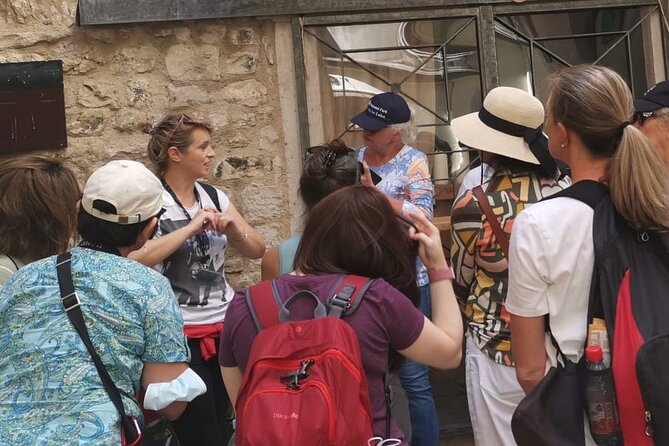
Split can feel like two cities at once: the postcard waterfront above and the Roman city brain underneath. This tour gives you the connective tissue—how the old empire, medieval life, and modern routines share the same stone.
The best part is that the guide doesn’t treat history like museum wallpaper. You’re asked to notice how people live around the remains, how faith altered buildings over centuries, and how small details (a street name, a gate alignment) carry meaning.
You can also read our reviews of more private tours in Split


Porta Aenea start point: you get your bearings fast
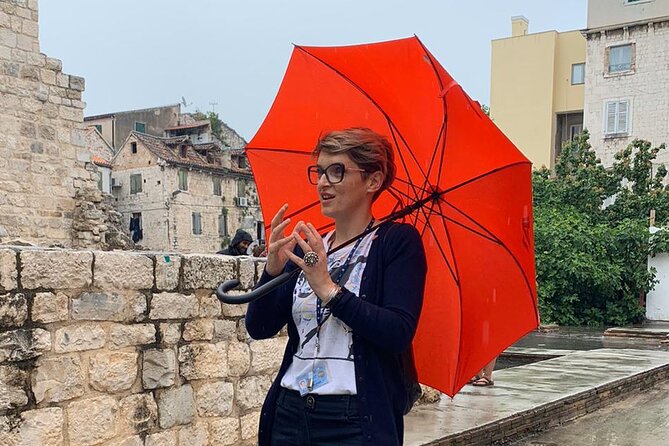
You meet at the Brass Gate (Porta Aenea) on the waterfront side. Even before you enter deeper old-town lanes, it’s a strong starting spot because you can look back toward the sea and understand why Split grew the way it did.
This matters because the palace complex can feel like a maze if you’re wandering alone. With a guide in front, you’ll learn quick landmarks—so later, when you’re on your own, you won’t feel lost or stuck doing guesswork.
Riva Harbor: the slow life that locals keep
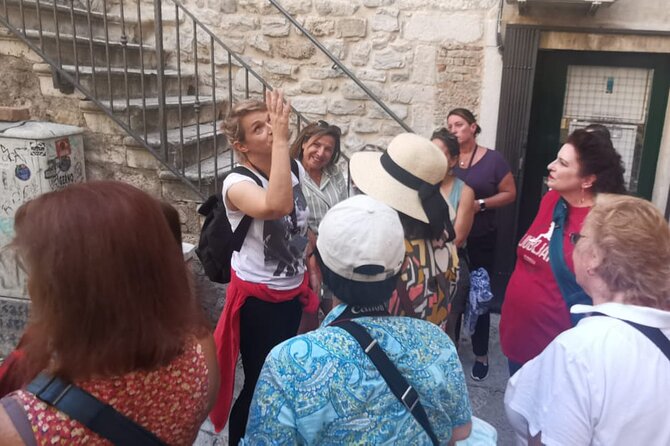
The walk begins at the Riva Harbor, where the city’s rhythm shows up in plain sight. People linger. They watch the water. They take their time. That calm tempo becomes the backdrop for everything else you’ll see.
Then you move toward the old town and Diocletian’s Palace, where the tour shifts from mood to structure. You’ll hear how locals still live among Roman walls—laundry between centuries, daily sounds in the same lanes emperors once used. It’s not just “look at ruins.” It’s “how did this become normal life?”
A practical note: this first stretch is where you’ll start building your mental map. If your feet get tired later, you’ll still have the “why” of the layout.
Under the palace: Diocletian’s substructures feel like time travel
Leaving the brighter streets, you step into the substructures of Diocletian’s Palace. This is where Split gets cooler—physically and emotionally. The ceiling, the stonework, the feeling of being below street level makes the past feel close, not abstract.
You’ll also understand the logic of the palace: this complex wasn’t built only for display. It supported work, trade, and daily endurance. That perspective changes how you read the rest of the palace ruins above.
The small drawback here: it’s a short segment, but it can be dim and cool. If you’re the type who runs hot, bring a light layer. Your pace stays relaxed, but you’ll likely slow down just from the environment.
Peristyle and Peristil: the imperial open square
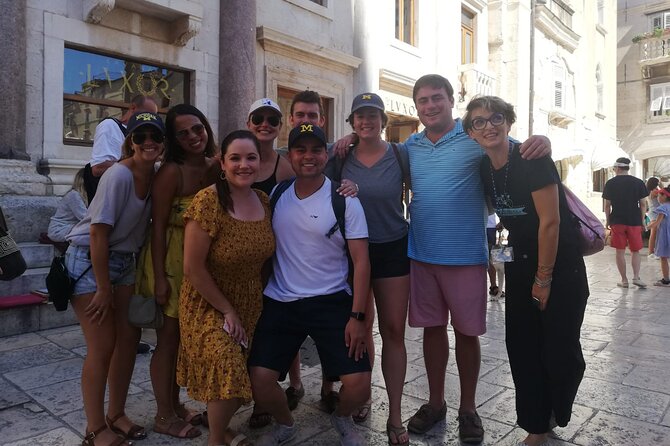
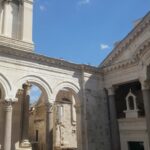
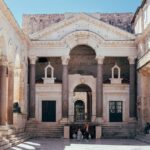
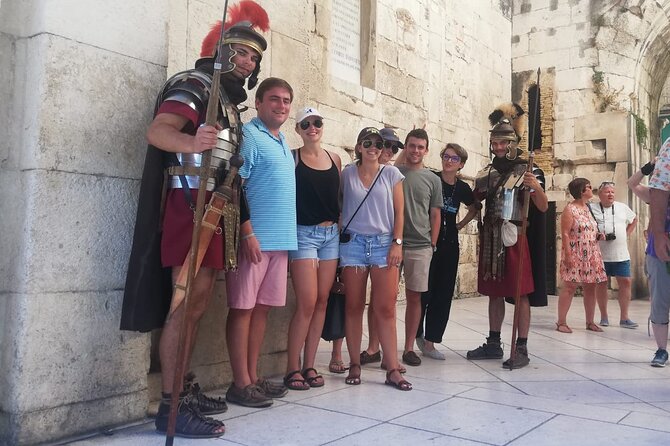
Next comes the Peristyle (Peristil), the open square inside the palace. Standing there, you finally grasp why this place was designed like a stage. It’s open, but framed. You can see sightlines and imagine ceremonies without a single prop.
This is also where the guide’s storytelling style shines. You’ll hear about what happened behind palace walls—then connect it to modern Split’s slow way of life, including the idea of pomalo (take it easy). It’s a cultural lens, not just a fun word.
If you like your history tied to daily behavior, this stop is a keeper.




Saint Domnius Cathedral: tiny, old, and hard to miss
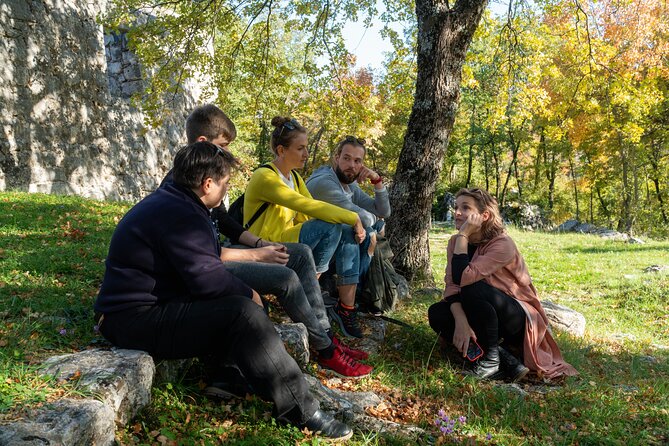
The tour heads to the Cathedral of Saint Domnius, tucked into the palace’s main square area, near the tall bell tower. Even when you’re not searching for it, it’s difficult to miss because it sits in that classic “only-in-old-town” spot—protected, but central.
What you’ll take away is scale through understatement: one of the smallest and oldest cathedrals in the world (as presented on the tour), tucked into Roman space. It’s a reminder that religions and power centers often re-used what they didn’t destroy.
Ticket note: this stop is listed as admission ticket not included. If you’re hoping to go inside, budget time and payment accordingly.
Temple of Jupiter to St. John’s era: faith changes buildings
From the waterfront edge, you move through the palace substructures again toward the Temple of Jupiter. The site is used on purpose to explain the divine connection between Diocletian and Jupiter—sky, thunder, king of the gods energy tied to imperial symbolism.
Then the tour adds the next layer: during the Middle Ages, the temple was converted into a baptistery dedicated to St. John the Baptist. So you’re not just learning about Rome—you’re watching the building get reinterpreted across eras.
Ticket note: the Temple of Jupiter stop is listed as admission ticket not included. If you want to see it fully, plan for that cost as part of your tour day.
Let Me Pass Street (Pusti me da prodjem): the city’s sense of humor
Right between ancient and medieval spaces, you’ll walk through Let Me Pass (Pusti me da prodjem) Street. It’s a short stop, but it’s the kind of detail that makes Split feel lived-in and specific rather than generic.
The local idea here is that it’s the narrowest street in town. Even if you only see it for a couple minutes, it gives you something you can remember later when you’re comparing cities.
This is also a good moment for photos, but keep your group flow in mind. Narrow streets are narrow for a reason.
Narodni Trg: where “new old town” begins
As the city expanded beyond the palace walls, Narodni Trg became part of Split’s westward growth—the “new old town” idea. This is where you sense a layered Europe in stone: influences arriving over time, but still unmistakably Split.
The guide’s storytelling approach helps you connect architecture to movement—who lived here, where city life shifted, and why certain neighborhoods feel more blended than the palace core. It’s a nice contrast after Roman scale and palace symmetry.
This stop is brief, so treat it like a waypoint where you refill your mental energy before the tour’s final highlights.
Nadalina chocolate: food talk that you’ll remember
Walking toward the end, you get a stop at Nadalina, one of the guide’s favorite chocolate places. It’s timed so you’re not just hungry—you’re ready to learn how to taste.
You’ll get samples of locally flavored chocolate and some stories tied to food production. This is the kind of break that turns the tour from sightseeing into actual experience.
If you have a sweet tooth, it’s worth it just for the pause. If you don’t, it still works because the guide uses this stop to explain how local flavors show up in everyday life.
Ticket note: this stop is listed as admission ticket included, and samples are part of the experience.
Golden Gate and Grgur Ninski: end inside the city’s loop
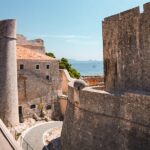
Near the finish, you’ll reach the Golden Gate (Porta Aurea), one of four main Roman gates into Diocletian’s Palace. It’s not just a landmark. It’s a lesson in planning: the gate’s location ties into routes toward Salona, Diocletian’s birthplace and capital of the Roman province of Dalmatia.
This stop helps you understand how the palace wasn’t closed off. It was connected—strategically and politically.
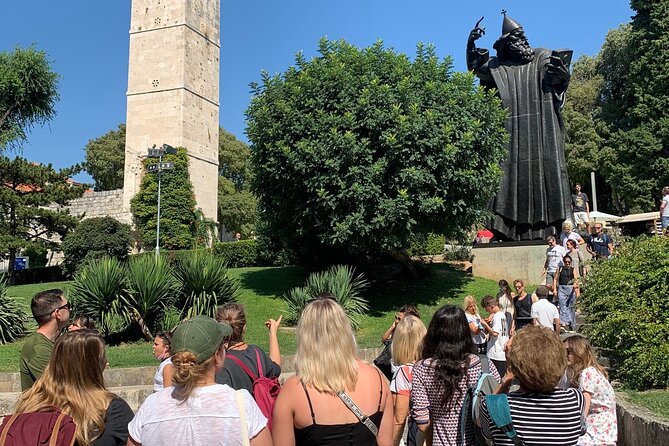
Then you finish at Grgur Ninski Statue, positioned with the 4th-century antique wall around you and modern life in front of you. The tour ends with a local tradition and a wish, which is a charming final note: old stone plus present-day faith and manners.
Ticket note: this final segment is listed as admission ticket included.
Price and what you’re actually paying for
The tour is $238.34 per group (up to 10), for about 1 hour to 1 hour 40 minutes. On paper, that sounds like a “just take me somewhere” cost. In practice, you’re paying for two big advantages:
First, you’re buying a licensed, local guide who interprets the city for you. Second, you’re buying time that’s tailored to what you care about. The guide can steer emphasis toward the details you lean toward—whether that’s Roman engineering, medieval changes, or modern Split life.
Small group size matters here because you’re not forced into a rigid script. Questions can happen naturally, and the pacing stays comfortable.
Also, this activity tends to get booked ahead. Plan earlier rather than later if you’re traveling in peak season.
What to expect in real terms (pace, language, and the “private” feel)
You get an English-offered tour, and the format is a true small group up to 10. It’s long enough to hit meaningful stops but short enough that it won’t steal an entire afternoon from your plans.
There’s a mobile ticket involved, and the meeting point is easy to find—right at Porta Aenea. The tour runs Monday through Sunday, 8:00 AM to 9:00 PM, which is helpful if you want to start later after lunch.
The end point is flexible. You can choose where you’d like to finish—so you’re not stranded far from dinner. The tour provider adjusts the ending based on what you tell them at the start.
Practical tips: how to get the most out of every stop
Wear shoes that handle uneven old-town pavement. Split’s palace core is historic, not stroller-friendly.
Bring sun protection. Even when the palace gives shade, the walk starts by the waterfront and includes outdoor viewpoints. If you run cold easily, add a light layer for the substructures since they can feel cooler.
If you’re traveling with a mixed-age group, this format works because it’s story-driven rather than lecture-driven. You’ll still get clear history, but it’s delivered in a way that keeps attention.
And if your schedule is messy (late arrivals, timing issues), this guide approach includes practical help. You can also ask for recommendations for food, coffee, and what to do next.
Who should book this private storytelling walk
This is a great fit if you want more than “stand here, take photo.” You’ll enjoy it if you like:
- learning how places connect across time (Roman to medieval to modern)
- getting a city map you can reuse the rest of your trip
- a tour that can handle different interests in one group
It’s especially good for first-timers to Split who want the palace and waterfront landmarks—but also want the smaller details that make the city feel personal.
Should you book Private Walks & Storytelling in Split?
Yes, if your goal is to understand Split quickly and accurately through stories tied to real spaces. You’ll get a licensed guide, a manageable walking length, and a route that covers the Roman backbone and the modern lived-in feel—plus a food stop that doesn’t feel like an add-on.
Skip or swap if you only want big, dramatic sights and don’t care about folklore, slower pacing, or inside visits where admission may be extra. For most people, though, this is one of the best ways to get your bearings without rushing.
FAQ
How many people are in the group?
The tour is limited to a maximum of 10 travelers, so it stays small.
How long is the walking tour?
It runs about 1 hour to 1 hour 40 minutes.
Is the tour offered in English?
Yes, it’s offered in English.
Where do we meet, and where can the tour end?
You start at the Brass Gate (Porta Aenea), Obala Hrvatskog narodnog preporoda 22, Split. The tour ends at Ul. Stari pazar 9, Split, but you can tell the guide where you’d prefer to finish and they can adjust.
Is the tour a “mobile ticket” experience?
Yes. The tour includes a mobile ticket.
Are admission fees included?
Some stops include admission tickets, and others are listed as not included. Also, all fees and taxes are noted as not included overall.
What happens if the weather is poor?
This experience requires good weather. If it’s canceled due to poor weather, you’ll be offered a different date or a full refund.
Is there a time window for tours each day?
Yes. Tours run Monday through Sunday from 8:00 AM to 9:00 PM.