REVIEW · SPLIT
Split and Trogir Half Day Guided tour
Book on Viator →Operated by Redono d.o.o. · Bookable on Viator
Split and Trogir in one outing feels like cheating. You start at Golden Gate in Split, walk through Diocletian’s Palace highlights, then roll into Trogir for guided old-town time and your own wandering.
What I really like is how the tour makes Diocletian’s Palace feel understandable, not just impressive. Another win: you get pro guiding plus an air-conditioned vehicle between towns, so you spend your energy on sights instead of logistics.
One possible drawback: this is a walking-focused day. Even if it is mostly manageable, you still cover a lot of ground in a short window, and limited-mobility folks may find it tiring.
In This Review
- Key highlights worth knowing
- Golden Gate to the Palace Substructures: Split’s story starts underground
- Peristyle to the Harbor: the Split you can actually walk through
- The van ride to Trogir: why the change of town matters
- Trogir old town stops: city hall, main square, and the big religious landmarks
- The pacing reality: 5 to 6 hours and a lot of feet
- Guides can make or break it: the storytelling effect
- Price and value: what $60.49 buys you in real terms
- Tickets, what’s included vs. paid, and how to plan your day
- Practical tips so this half day stays fun
- Who this tour suits best (and who might want a different plan)
- Should you book the Split and Trogir half-day guided tour?
- FAQ
- FAQ
- How long is the Split and Trogir half-day guided tour?
- What is the price per person?
- Is the tour offered in English?
- Where is the meeting point?
- Do I get to spend time on my own in Trogir?
- Is transportation included?
- Are monument entrance tickets included?
- Are food and drinks included?
- What is the maximum group size?
- What is the cancellation policy?
Key highlights worth knowing
- Two major Dalmatian old towns in one half day: Split first, then Trogir.
- Game of Thrones filming connection: Diocletian’s palace substructures are part of the story.
- Guided stops that move at a human pace: shorter time slices, with breaks built in.
- Trogir free time: you get room to look around, not just march nonstop.
- Most key palace areas don’t require paid admission: several stops are ticket-free.
- Small-group feel (up to 50 max): it’s designed to stay conversational.
Golden Gate to the Palace Substructures: Split’s story starts underground
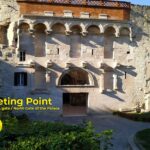
The tour meets at the Golden Gate (Dioklecijanova 7), which is a great choice. You begin right at the palace edge, so the whole layout makes sense as you move inside and then back out to Split’s streets.
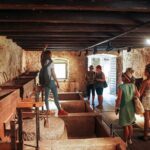
First stop is the Diocletian Palace Substructures, also called the basements. These are the kind of spaces that make you look twice. The description here includes a famous pop-culture tie-in: this is a location tied to filming of Game of Thrones. Even if you have never watched the show, the atmosphere in these underground-feeling areas is the point. It’s a reminder that this complex was built for real life, not postcard posing.
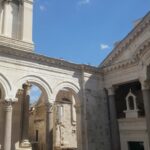
Next you step up into the palace proper with the Peristyle, the ancient main square. This is where you start to see how power, religion, and everyday movement were squeezed into one site. A guide helps you connect details like columns, street alignments, and why this was the center of the residence.
Then comes the Vestibulum, the ancient entrance area. This stop is short, but it matters. You’re learning the logic of entry points and circulation—how people approached, where they gathered, and how the palace shaped movement in Split for centuries.
Finally at this stage, you’ll walk through the Golden Gate area again in the tour flow—basically using it as your anchor. If you ever get turned around in Split, this kind of repeating landmark is exactly what you want.
You can also read our reviews of more guided tours in Split

Peristyle to the Harbor: the Split you can actually walk through
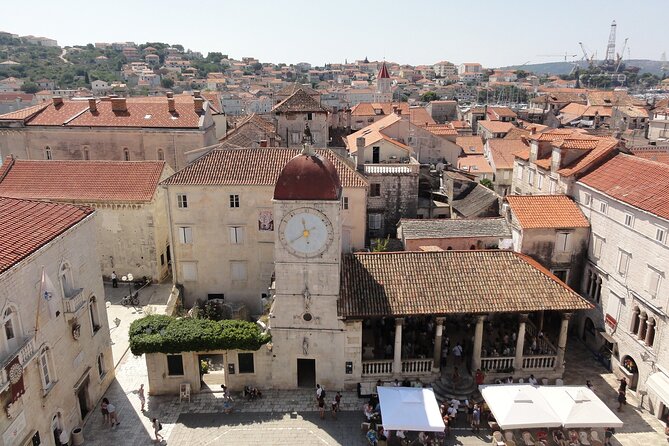
Once you’ve handled the palace highlights, the tour shifts to Split as a living town. That change of scenery is part of the value here: you see the heavyweight ancient stuff, then you get to enjoy the everyday city.
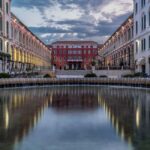
The tour includes Riva Harbor, a promenade-style stretch where you can look out at the water and get your bearings. Even in a group, this is one of those stops that works for different travel styles. If you like photos, you’ll have angles. If you like people-watching, you’ll get that too. And if you just want a breather after the palace, it’s an easy transition.
Then you hit Fruit’s Square (Trg Brace Radic). This is one of the more interesting squares in Split, and the time you spend here usually gives you something useful: a sense of how locals use public spaces. Squares in Croatia often act like living rooms—shops, cafes, and foot traffic meeting in the middle. You’re not stuck in museum time; you’re in city time.
It’s also a good moment to ask the guide quick questions. In my experience, this is when guides can point out what to do next: where to walk after the tour, which streets to avoid if you want calmer lanes, and what areas are worth lingering in.
The van ride to Trogir: why the change of town matters
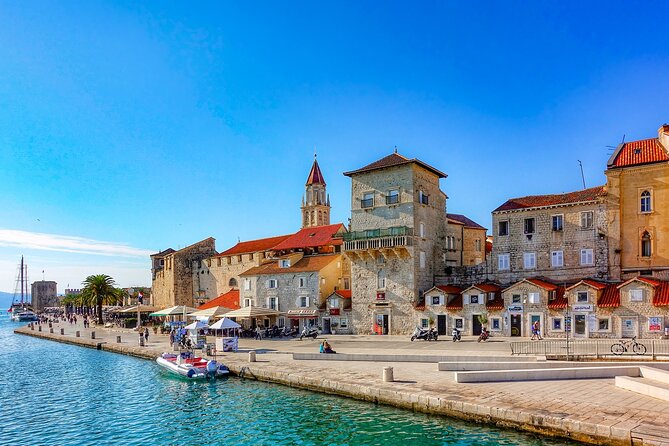
After Split, you’re taken to Trogir on an air-conditioned vehicle. The data doesn’t spell out the exact ride length, but the purpose is clear: you’re not meant to do the crossing as part of your sightseeing.
This matters more than people think. If you’ve ever tried to connect two towns on your own, you know how much time can vanish in transit. Here, that stress is removed, and your guided time stays focused.
Trogir also changes the vibe. Split can feel big and layered in a busy way. Trogir tends to feel more compact and concentrated—so even a half day there can be rewarding, especially if someone helps you understand what you’re seeing.
Trogir old town stops: city hall, main square, and the big religious landmarks
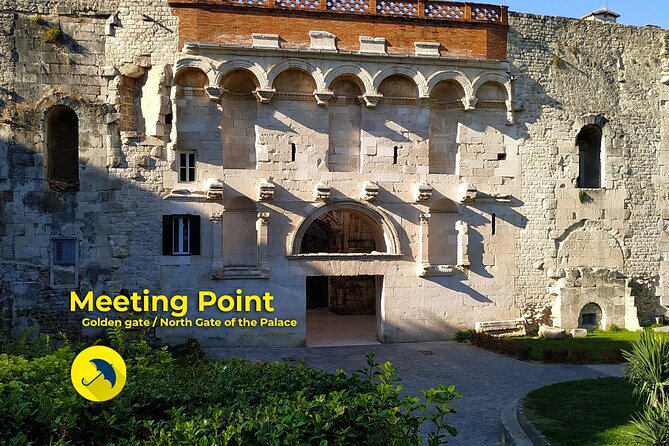
Trogir is where you start stacking beautiful details. The tour hits several core areas in a logical sequence, and you also get free time in Trogir, which is crucial. It lets you step out of guide mode for a bit and just enjoy the streets.
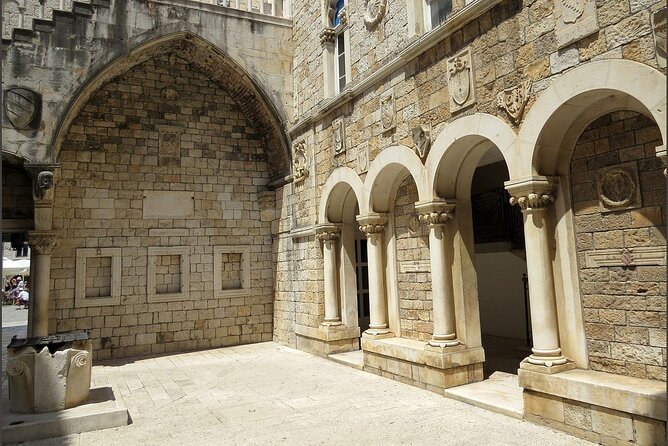
You begin with Ajuntament Trogir (city hall). Even if you only spend about 10 minutes there, it sets the theme: Trogir’s civic life is part of the architecture you’re seeing. Then you move to Central Square, the main square with multiple sights and explanations. This is one of the places where guides can make the difference between a nice square and a meaningful square.
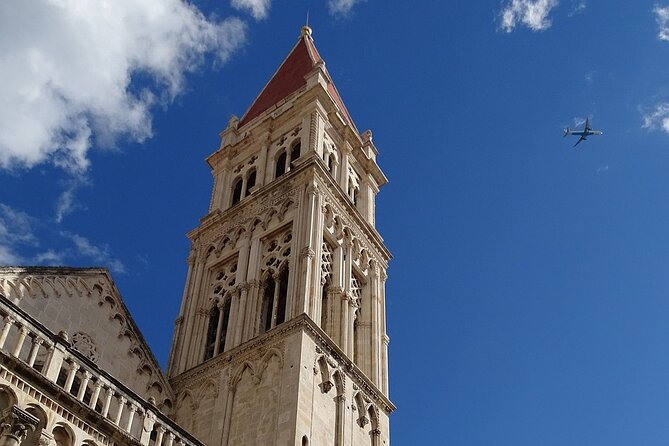
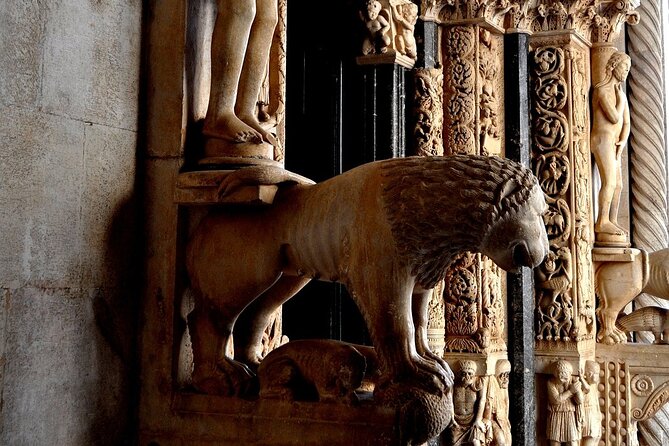
After that, you get Saint Lawrence’s Cathedral. This is dedicated to the patron of the city, and the important practical note is that the cathedral entrance is not included. In other words: you can still appreciate the exterior and the general context from the guide, but if you want inside, you’ll need to pay the entry ticket on your own.
Next is St. Sebastian, which is described as a memorial place today. If you’re walking with your eyes open, this is often where you’ll notice how religious sites and commemorative spaces overlap in this part of the Adriatic.
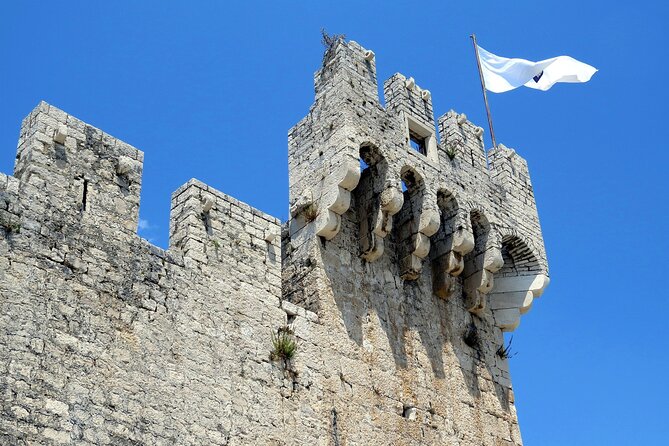
Finally, the tour includes Kula Karmelengo, a fortress built by the Venetians. The entry ticket for this stop is also not included. Fortresses can be a mixed bag depending on your interest level—some people love the defensive design and views, while others prefer the old town lanes. If you skip paid entry, you can still learn why it exists and how it relates to the wider history of the city.
The pacing reality: 5 to 6 hours and a lot of feet
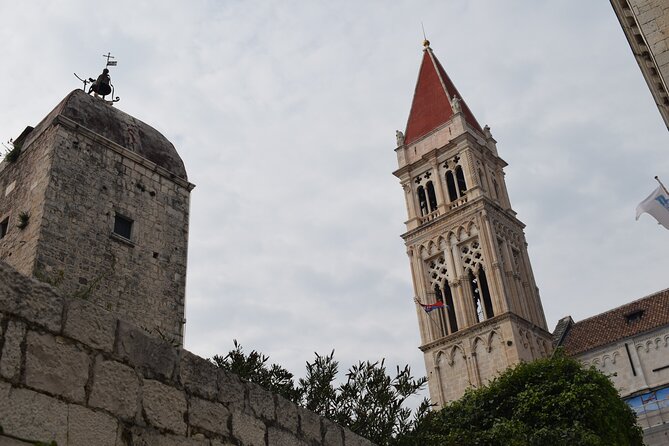
This experience runs about 5 to 6 hours and is built around multiple timed stops. Most of the palace and city segments are short on purpose. You’ll typically be moving from one key sight to the next rather than spending one long block inside a single monument.
So yes, there is a lot of walking. One useful note from people who have done it: the walking tends to be a manageable effort, with not much steep uphill in the experience. Still, the overall footprint is real. If your legs tire quickly, plan for rest breaks and keep your pace steady.
Also watch the free time. You’ll have time in Trogir, but your exact ability to roam will depend on how the day flows with your group. This is a group tour, and if anything shifts the schedule (crowds, timing differences), it can compress your personal exploring time.
My advice: treat this as a great orientation + highlights day. If you want Trogir slowly, like hours and hours slowly, pair it with extra time before or after you do the tour.



Guides can make or break it: the storytelling effect
A big reason this tour scores high is the way guides talk about the buildings. More than dates, it’s about turning stone and space into something you can picture.
You might get a guide such as Antonia, Antoinette, Ante, Ivana, Mia, Frane, or Slavico. The common thread is enthusiasm and a clear explanation style. One guide, Ante, is described as a local history student, and that kind of background often shows up in how he connects the dots between the palace layout and the city streets.
What I love in this setup is that you’re not stuck with a scripted lecture. The shorter stops give the guide space to point out small details in context—where you’re standing, what this space was for, and why it looks the way it does now.
And because it’s a smaller group experience (up to 50 max), you’re more likely to get answers to questions. You can ask things like where the best photo angles are, or which streets are most pleasant to wander after the tour.
Price and value: what $60.49 buys you in real terms
At $60.49 per person, the price is best understood as a package deal: professional guiding, air-conditioned transport, guided walks in Split, guided old-town time in Trogir, and time to explore on your own.
A key value point is admissions. Many of the included sights in the Split-and-palace portion are listed as admission ticket free. The stops that are not included for entrance are Saint Lawrence’s Cathedral and Kula Karmelengo. That means you can plan your spending more easily.
What is not included is also clear: food and drinks, plus those entrance tickets just noted. So if you want to visit inside everything, you should mentally budget for additional tickets.
Group discounts exist, and there is a mobile ticket option. That doesn’t sound exciting, but it often saves stress on busy days—especially in a place like Split where crowds can slow check-in.
If your goal is maximum “wow per hour” without organizing two towns yourself, this pricing structure tends to make sense.
Tickets, what’s included vs. paid, and how to plan your day
Here’s the practical way to think about the admission part:
- In Split, the timed palace and key areas listed are ticket-free within the tour stops.
- In Trogir, you can expect some highlights to be outside of paid entry, but Saint Lawrence’s Cathedral and Kula Karmelengo have entrance tickets that are not included.
So your planning depends on your priorities:
- If you’re happy with exteriors and guided context, you may spend little extra beyond the tour price.
- If you want inside views and stronger architectural details, you’ll likely pay for at least one of those entrances.
Also remember: food isn’t included. Bring a plan for how you’ll handle a meal or snack during free time. Even a simple stop can save your energy for the afternoon walking.
Practical tips so this half day stays fun
This itinerary is the “see it and understand it” style, which means you’ll get more out of it with a little prep.
Wear comfortable walking shoes. You’ll be on your feet through palace areas, squares, and promenade streets. Bring a camera, because both towns give you lots of angles—palace stone, harbor views, and Trogir’s central streets.
Dress for changing weather. The tour operates in all weather conditions, and you’re advised to dress appropriately. In practice, that means layers that you can adjust if conditions turn.
Arrive at the meeting point ready to go. The start is at the Golden Gate area (Dioklecijanova 7, Split), and the tour ends back at the same meeting point.
If you’re sensitive to heat or crowds, plan for that reality too. Split and Trogir can get busy, and the day’s flow depends on the group. Having realistic expectations helps: this is a highlights tour, not a slow stroll with long museum breaks.
Who this tour suits best (and who might want a different plan)
This is a good fit if you want:
- a first taste of Split and Trogir without figuring out routes,
- guided context for major landmarks like Diocletian’s Palace and Trogir’s central sights,
- and a structured half day that still leaves you time to roam in Trogir.
It may be less ideal if:
- you have trouble with sustained walking,
- you require lots of downtime between stops,
- or you want long, independent time inside paid monuments.
If you fall into any of those buckets, consider a more customized pace or adding extra hours to Trogir outside this tour, so you’re not forced to choose between paid entrances and personal exploring.
Should you book the Split and Trogir half-day guided tour?
I’d book it if your priority is getting oriented fast and squeezing the best of Split’s palace core plus Trogir’s old-town highlights into one outing with transport handled for you. The structure is built for learning while you walk, and the price looks fair when you consider that many Split-area stops are ticket-free within the tour flow.
Skip this one—or at least adjust your expectations—if you need lots of time in Trogir or you struggle with walking. The schedule is tight by design. You’ll get value from the guidance, but you won’t get a slow, leisurely Trogir day.
FAQ
FAQ
How long is the Split and Trogir half-day guided tour?
It runs about 5 to 6 hours.
What is the price per person?
The price is $60.49 per person.
Is the tour offered in English?
Yes, the tour operates in English.
Where is the meeting point?
The start is at Golden Gate, Dioklecijanova 7, 21000, Split, Croatia, and the tour ends back at the meeting point.
Do I get to spend time on my own in Trogir?
Yes, the itinerary includes free time in Trogir.
Is transportation included?
Yes. You travel by air-conditioned vehicle, with round-trip transportation from Split included.
Are monument entrance tickets included?
Many stops are listed as admission ticket free, but entrance tickets are not included for Saint Lawrence’s Cathedral and Kula Karmelengo.
Are food and drinks included?
No. Food and drinks are not included.
What is the maximum group size?
The tour has a maximum of 50 travelers.
What is the cancellation policy?
Free cancellation is available up to 24 hours before the experience starts for a full refund, and the tour may be canceled due to poor weather with an offered alternative date or full refund.
If you want, tell me your travel dates and whether you’re coming from a cruise ship or staying in town, and I’ll suggest a tight schedule for what to do before and after this tour in Split and Trogir.