REVIEW · SPLIT
Diocletian Palace & Split Walking Tour
Book on Viator →Operated by Tourdesksplit · Bookable on Viator
Split’s Roman maze feels built for photos. This walking tour of UNESCO Diocletian’s Palace and Old Town mixes standout archaeology with streets you can practically see on screen, thanks to Game of Thrones filming locations and a guide who keeps the story moving.
I especially like the way the route hits both big architectural moments and the smaller gates and passages that tie the whole place together. You’ll also get plenty of photo opportunities, plus quick context at each stop so you don’t just stare at stones.
One consideration: it’s a walking-focused tour with a moderate fitness level, so wear comfortable shoes and expect a steady pace more than a slow sightseeing stroll.
In This Review
- Key takeaways before you walk
- Why this Diocletian’s Palace walking tour makes sense in 90 minutes
- Meeting at Riva Harbor and getting your bearings fast
- Diocletian’s Palace substructures: where the story starts
- Peristyle to gates: Eastern (Silver) Gate and Golden Gate
- The City Museum moment: a quick visual stop, not a ticketed one
- Squares and streets: Fruit’s Square, Narodni Trg, and Pjaca energy
- Game of Thrones filming locations: fun add-on, not random sightseeing
- Old Split finale: Grgur Ninski statue and time to wander
- Price and value: what $109 buys you in Split
- Guide matters: the role of Filip (and how it shows)
- What to wear, bring, and plan around this walk
- Should you book this Split walking tour?
- FAQ
- Where does the tour start and where does it end?
- How long is the Diocletian Palace & Split walking tour?
- What is included in the price?
- Do I need to buy tickets for the sites?
- Is this tour family friendly?
- How do the child rates work?
- What is the maximum group size?
- What fitness level do I need?
- Is there a mobile ticket?
- Can I cancel for a full refund?
Key takeaways before you walk
- A local guide-led loop starting at Riva Harbor and returning there afterward, so you don’t have to figure the route out alone
- Diocletian’s Palace highlights covered efficiently: substructures, Peristyle, Vestibulum, and the bigger palace story
- Gates and squares in a logical order, including the Eastern (Silver) Gate, Golden Gate, Fruit’s Square (Trg Brace Radic), and Narodni Trg
- Game of Thrones filming locations woven into the walk so the town feels connected, not random
- Max group size of 15, which makes questions easier and the pacing more tour-friendly
- Mostly admission-free stops, with City Museum views kept outside since tickets aren’t included
Why this Diocletian’s Palace walking tour makes sense in 90 minutes
Split can feel like a lot at once. You step off a harbor-side walkway and suddenly you’re in a walled Roman complex, then you’re in lively squares, then you’re back at the water. This tour is built for that exact feeling. It gives you a guided path through UNESCO Split’s core without turning it into a long day of wandering.
The value is in the structure. You’re not just collecting landmarks. You’re getting the “what it was” and “how it worked” behind Diocletian’s Palace—plus the fun layer of filming locations tied to your pop-culture memory. The combination makes the ruins easier to understand and more fun to photograph.
The pacing is also a smart match for most first-time visitors. The tour runs about 1 hour 30 minutes, and it keeps moving between key stops instead of lingering at just one site. If you’re the type who likes an overview that sets you up for later self-guided exploring, this format fits.
You can also read our reviews of more walking tours in Split



Meeting at Riva Harbor and getting your bearings fast
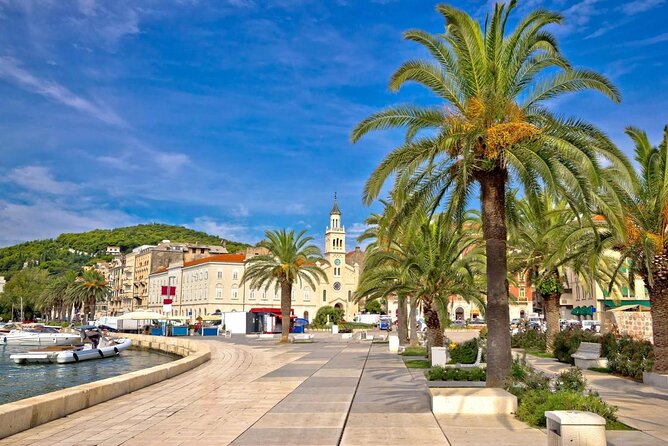
You start at Obala Hrvatskog narodnog preporoda, 21000, Split and begin at Riva Harbor. That first stop matters more than it sounds. The harbor is the town’s hinge point—water on one side, old streets on the other. Getting oriented here helps everything else click later.
You’ll get a guided introduction with a short, practical feel: where you’re going, what to look for, and how Diocletian’s Palace relates to everyday Split life now. It also sets expectations for the walk. This tour is not about long museum time. It’s about walking, seeing, and understanding in real locations.
If you’re using a map or GPS, I’d still double-check the meeting point. One review notes that booking info can sometimes be off about the exact starting spot, so plan to arrive a few minutes early and confirm you’re at the right harbor-side location.
Diocletian’s Palace substructures: where the story starts
The tour’s backbone is the area around Diocletian’s Palace—and the early stops focus on the parts that help you visualize how the palace functioned.
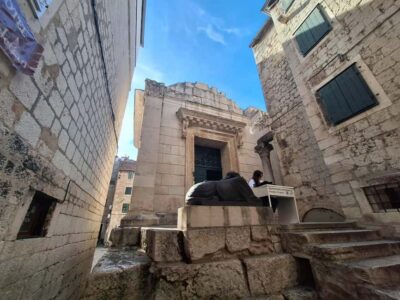
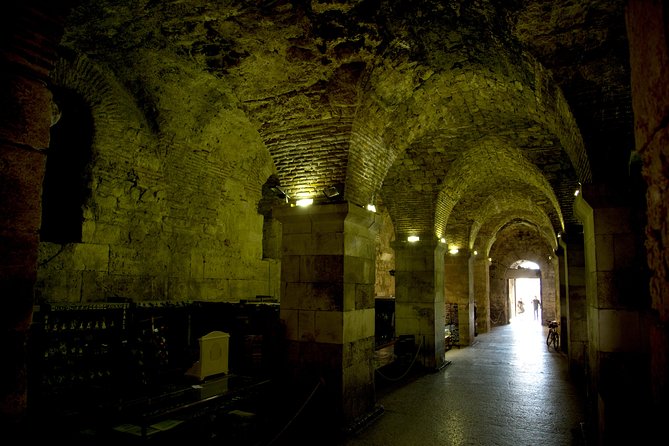
First, you visit the central part of the Palazzo di Diocleziano substructures. Even if you’re not an archaeology expert, this is the point where you start seeing the logic: heavy stone, layered spaces, and the sense that these weren’t decorative buildings—they were built to last and to manage movement.
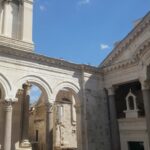
Then you move to the Peristyle. This is where the architecture feels most “readable” as a designed space. A guide helps you understand what you’re looking at, and why the open courtyard vibe matters. It’s one of those places where you can take a few photos and still feel like you learned something, not just captured a pretty ruin.
You also get the Vestibulum visit. These kinds of transitional spaces can be easy to overlook on your own. With a guide, you’ll understand why doors, halls, and passageways are important in a palace complex that’s still shaping Split’s street layout.
Practical note: most of these stops are short. That’s a plus for time, but it also means you’ll want to listen closely during the brief explanations so you don’t miss the connections.
Peristyle to gates: Eastern (Silver) Gate and Golden Gate
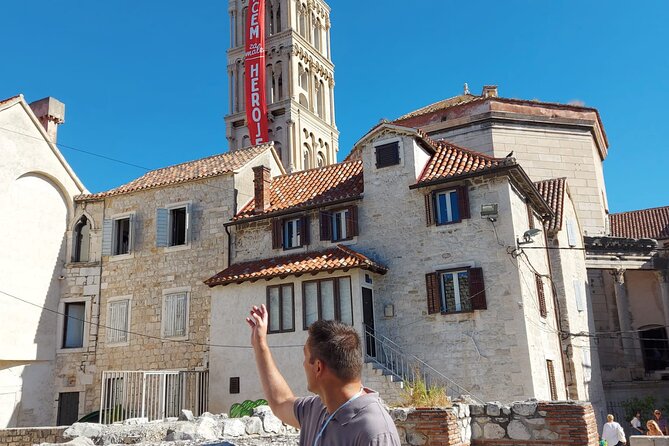
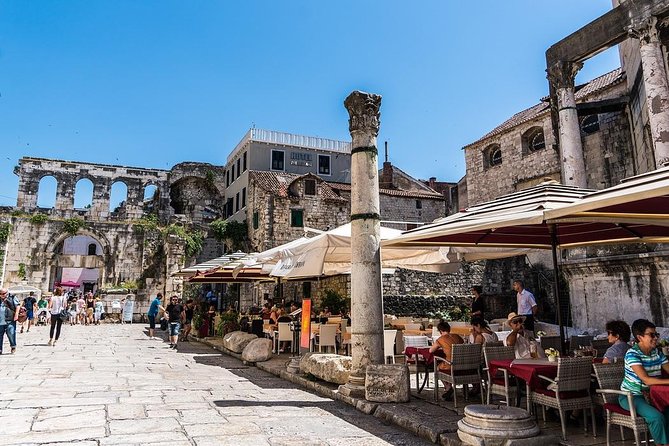
Once you’re inside the palace area, the tour shifts toward the boundaries—especially the Eastern (Silver) Gate and the Golden Gate. Gates are more than entrances. They’re about control, access, defense, and flow of people.
The Eastern (Silver) Gate stop is brief but useful. It gives you a sense of orientation—where this side of the palace faced, and how the palace edges shaped the town. Even if you’re only there for a few minutes, it helps you stop thinking of the palace as one big block and start seeing it as a set of organized zones.
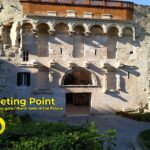
Then the walk brings you to the Golden Gate, with more time for guided context. This is where the tour helps you connect palace function to what you can still see today. The result is that when you spot doors, walls, and openings later during free time, you’re more likely to recognize what they might have meant.
This part of the tour is also where the photography tends to go from “pretty angles” to “I get it now.” The palace gates give you height, depth, and strong lines—plus you’re learning what those lines represent.
The City Museum moment: a quick visual stop, not a ticketed one
At the City Museum of Split, you’ll see the site from outside. It’s labeled as an outside view, and admission isn’t included for this moment.
Think of this stop as a pause for context, not a deep museum detour. You’re getting a marker: yes, this is part of a broader cultural story, and you’re in the right neighborhood. If you want museum time, you can plan it separately after the tour. The tour itself keeps you focused on the walkable highlights.
If you’re someone who likes to fully commit to interiors, this may feel too short. But for most people, it’s the right choice given the tour’s tight duration.




Squares and streets: Fruit’s Square, Narodni Trg, and Pjaca energy
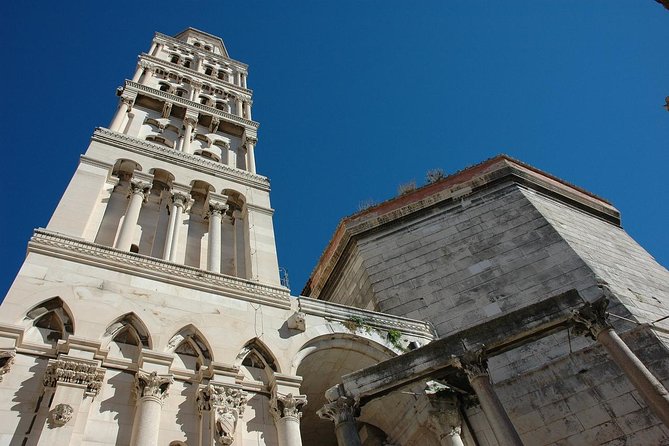
After the palace core, the walk shifts to Split’s street-life rhythm. You visit Fruit’s Square (Trg Brace Radic) and later Narodni Trg. These are the kinds of places where Diocletian’s Palace stops feeling like ancient history and starts feeling like a living city.
At Fruit’s Square, the guide’s job is to help you read the space: what the square is, how squares act as gathering nodes, and why they matter when you’re navigating Old Town. Even if you don’t eat or shop right at that moment, you’ll understand why locals use these areas constantly.
Narodni Trg adds another layer by pulling you toward the “center” feeling of old Split. With a guide, you’ll get the connective tissue between palace architecture and the public spaces around it.
This is also where the tour incorporates Venetian Clock and the broader Old Town square framework. The clock isn’t just a photo opportunity. It’s another signpost that different eras left their fingerprints on the same city streets.
Game of Thrones filming locations: fun add-on, not random sightseeing
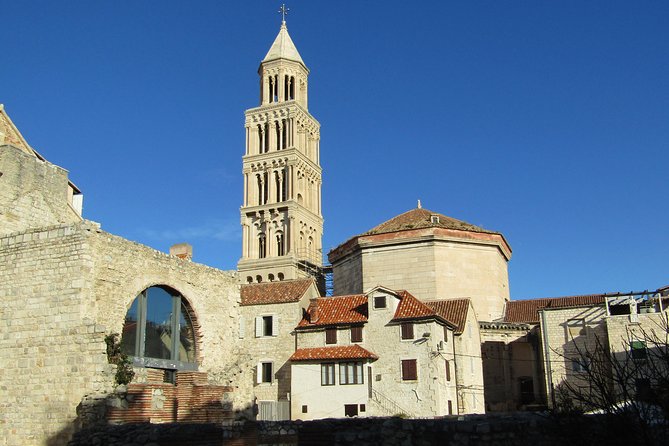
The tour includes Game of Thrones filming locations, and that’s where the experience gets extra memorable. Instead of treating the series as a gimmick, the guide points you toward recognizable filming spots and helps you understand how the town’s real structure creates the screen-friendly look.
I like this approach because it makes your viewing experience smarter. When you later rewatch scenes (or compare what you remember), the setting makes more sense. You’re not chasing rumors—you’re walking a curated path where the connection is explained.
It also helps keep attention during the short stops. When the guide ties a corner, a gate, or a square to something you recognize from the show, the ruins feel more immediate and less abstract.
Old Split finale: Grgur Ninski statue and time to wander
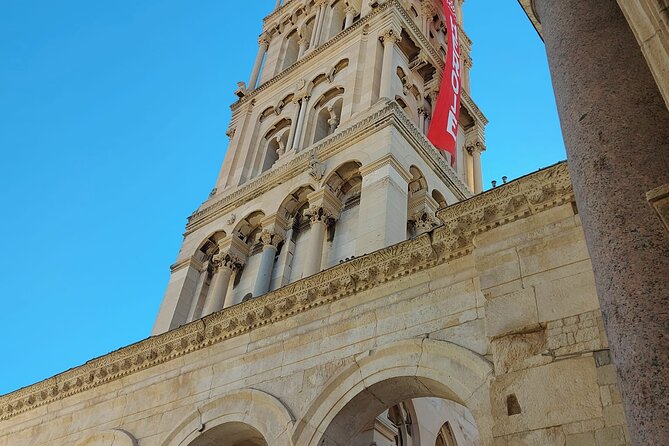
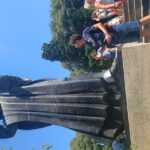
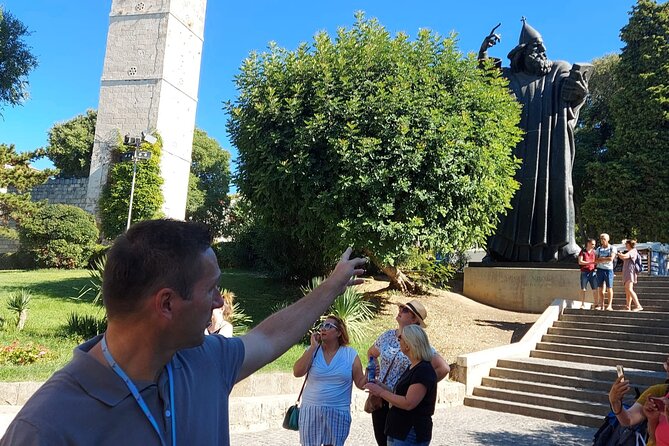
The end of the tour brings you to Grgur Ninski Statue for a short guided experience, then into Old Split for more independent-feeling time.
Why end here? Old Split is the area where you can turn guided knowledge into your own choices. Once you’ve got a mental map of gates, palace zones, and key squares, you’re ready to wander without getting lost in the wrong direction.
The statue stop is brief, but it gives you a cultural anchor beyond Roman stones. Then the tour wraps with you in a place where eating and shopping are natural—easy to grab a bite or pick up souvenirs while the day still feels fresh.
If you’re planning your day around meals, this ending point is practical. You’ll likely be hungry after all that walking and stair-level switching between harbor, palace zones, and Old Town streets.
Price and value: what $109 buys you in Split
At $109, you’re paying for a guided overview that compresses a lot of UNESCO-area sightseeing into about 1 hour 30 minutes. That price can feel high if you’re thinking of self-guided walking. But the tour’s value is in what you don’t get on your own: the guided connections, the short explanations that turn ruins into a coherent story, and the time-saving route logic.
There’s also a cost-benefit advantage in the way the itinerary is set up. Many stops are listed with admission as ticket free, and key visits like parts of the palace and the gates are covered without you needing to buy extra entry fees as part of the tour flow. The City Museum stop is an outside view, with admission not included, which keeps the tour streamlined.
Add in a maximum group size of 15, plus a local guide, and you get more than a stamp-and-go walk. You can ask questions, hear context, and still finish in time to continue your day. For many first-timers, that alone is worth it.
Finally, the guide quality seems to be a major reason people rate this tour so highly. One review specifically praises Filip for tying history together and staying conversational while keeping pace. Another mentions the right amount of time for an overview and that the guide answered questions without dragging the schedule.
Guide matters: the role of Filip (and how it shows)
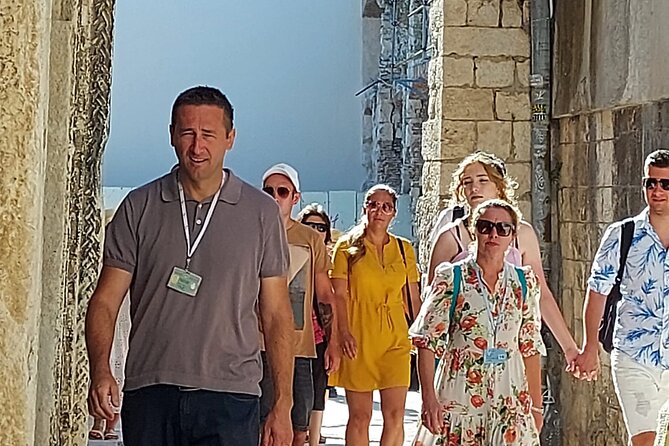
When a tour works well, it’s because the guide can do two things at once: keep you moving and make you understand what you’re seeing. In the feedback you shared, Filip is repeatedly singled out for strong communication and for handling questions in a way that keeps momentum.
You’ll feel it most in the palace stops—because Diocletian’s Palace isn’t one simple monument. It’s a complex layout, and the “why” behind each section can be confusing without someone translating it. A good guide makes those connections quickly, which is why people talk about value so much here.
Also, the tour is family friendly. That doesn’t mean it turns into a kids-only lecture. It just suggests the explanations are manageable and the overall tempo works for mixed ages.
What to wear, bring, and plan around this walk
This is a walking experience with a moderate physical fitness level. That means you should come prepared in a practical way:
- Wear comfortable shoes you trust on uneven stone.
- Bring water and basic sun protection, especially in warmer months.
- Keep your phone charged for photos, because gates and palace spaces offer excellent picture angles.
- If you want to see more after the tour, plan a meal or light shopping in Old Town since the end point lands you there naturally.
And here’s a small mental tip: go into the palace area expecting transitions. You’re moving between substructures, courtyards, and passageways. The guide’s explanations will make more sense if you pay attention to how one space connects to the next.
Should you book this Split walking tour?
If you want a fast, guided way to understand Diocletian’s Palace and the surrounding UNESCO streets—plus you care about Game of Thrones filming locations—this is an easy yes. The structure is efficient, and most stops are admission-free, which keeps the tour from turning into a piecemeal add-on day.
Book it if:
- you’d like an organized overview in about 90 minutes
- you prefer learning from a local guide rather than reading plaques all by yourself
- you want a route that ends in Old Split, so your next steps are simple
Skip it (or consider a slower alternative) if:
- you dislike walking and want long interior time in museums
- you need a more relaxed, low-pace sightseeing schedule
For most first-time Split visits, this tour is a smart way to get your bearings fast—and leave with the kind of context that makes everything you see afterward feel clearer.
FAQ
Where does the tour start and where does it end?
The tour starts at Obala Hrvatskog narodnog preporoda, 21000, Split, Croatia. It ends back at the meeting point.
How long is the Diocletian Palace & Split walking tour?
It runs for about 1 hour 30 minutes.
What is included in the price?
The tour includes a local tour guide, family-friendly setup for kids as described, and all taxes, fees, and handling charges. It also uses a mobile ticket. Many site visits on the route are listed as admission ticket free.
Do I need to buy tickets for the sites?
For most stops, admission is listed as free. The City Museum of Split stop is an outside view and admission is not included.
Is this tour family friendly?
Yes. Children up to 12 years old are free of charge if accompanied by a participating adult.
How do the child rates work?
The child rate applies only when sharing with 2 paying adults, and children must be accompanied by an adult.
What is the maximum group size?
The tour has a maximum of 15 travelers.
What fitness level do I need?
A moderate physical fitness level is recommended.
Is there a mobile ticket?
Yes, the tour uses a mobile ticket.
Can I cancel for a full refund?
Free cancellation is available up to 24 hours before the experience start time for a full refund. If you cancel within 24 hours, the amount paid is not refunded.