REVIEW · SPLIT
Semi-Private Balkans Tour; Split to Athens or Corfu in 14 Days
Book on Viator →Operated by Choose Balkans · Bookable on Viator
Balkan towns have a way of grabbing you fast. This semi-private route strings together major UNESCO stops, Ottoman-era sights, and mountain-and-coast scenery with pickup in Split and a guide running the show.
I love the practical setup: you get private transportation and logistics handled day after day, so you spend less time figuring things out. I also like the mix of big landmarks (Mostar, Sarajevo, Kotor, Ohrid, Meteora) with smaller, meaningful stops that feel local. One possible drawback: the drives between countries are long, and some walking is on uneven terrain, so you’ll want solid shoes and a flexible mindset.
In This Review
- Key things I think you will care about
- Split to Mostar: Stari Most, bazaar streets, and Blagaj’s spring
- Sarajevo: bullet holes, Latin Bridge, and a city with many layers
- Kotor and Budva: the defensive layout of old streets and the coast view game
- Albania’s storytelling stops: Rozafa, Shkodra, and Mrizi i Zanave slow-food time
- Kosovo on the move: Gjakova bazaars, Decan monasteries, and Rahovec wine country
- Kruja and Tirana: medieval resistance, Byrek breakfasts, and Bunk’Art 2
- Ohrid, St Naum, and Berat: lake views, monastery water, and 1001 windows
- Gjirokaster, Ioannina, and Meteora: Stone City fortresses to legendary sunset rocks
- Ending in Athens or Corfu: a ferry transfer that keeps the trip moving
- Price and logistics: is $5,153.85 good value?
- Should you book this tour?
- FAQ
- What time does the tour start in Split?
- Where does the tour start and where can it end?
- How long is the tour?
- What size group is this tour?
- Are breakfasts included?
- Are lunches and dinners included?
- What’s included for entrance fees?
- Is ferry travel included?
- Do I need to tip?
- Can I cancel or change the booking?
Key things I think you will care about
- Max 10 people means you’re not just a number, and questions actually get answered
- Split pickup at 7:30am sets a clear start, then the rest of the days run on a schedule
- UNESCO-heavy route across the region, from Mostar and Kotor to Ohrid, Berat, Gjirokaster, and Meteora
- Breakfast included (13 times) plus guided site visits where entry tickets are already covered
- Two ending options: Athens or Corfu via Igoumenitsa ferry
- Food moments are built in, like Byrek breakfast in Tirana and slow-food farm time in Albania
Split to Mostar: Stari Most, bazaar streets, and Blagaj’s spring
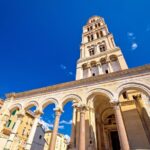
Day 1 starts with you meeting the plan at 7:30am in Split. You’ll have the morning before pickup to enjoy Split on your own, then a local representative shuttles you to the border where you meet your tour leader. From there, the trip shifts into high gear.
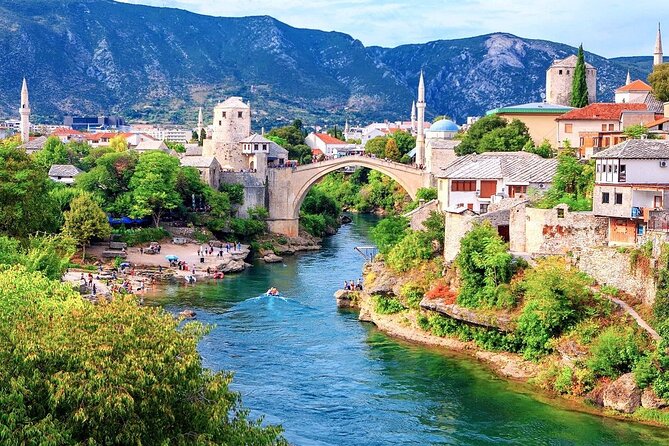
Mostar is the first big hit. You’ll see Mostar Old Bridge (Stari Most), a UNESCO landmark built in a classic Islamic architectural style in the 16th century. It’s the kind of place where you understand why people photograph it over and over: the bridge sits like a visual anchor for the whole city story.
After that, you’ll wander the Old Bazaar area, with colourful streets and the feel of a working historic town. This is where the city’s “old and new” contrast shows up fast: Turkish bazaars and mosques live alongside reminders of more recent history, including the stones with Don’t Forget messages. The stop includes time to explore rather than a rushed checklist.
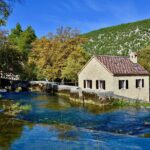
Then you head to Blagaj tekija outside Mostar, at the foot of a cliff with bright blue water in front. Blagaj is known for the spring of the river Buna, and you’ll get a full hour here, which matters because the scenery is the point. This is a good pause in the middle of a packed day, especially if you like places where nature and architecture share the same frame.
Small tip for day 1: bring water and wear grippy shoes. Mostar’s streets can be uneven, and walking time adds up quickly once you start exploring.
You can also read our reviews of more private tours in Split
Sarajevo: bullet holes, Latin Bridge, and a city with many layers
Day 2 takes you from Mostar to Sarajevo, with a day built around contrast. Sarajevo is described in terms that actually fit: medieval roots, Ottoman influence, and Austro-Hungarian details all sit in the same city blocks. You’ll notice reminders of the Yugoslav War too, including bullet holes and cannon marks, which gives the city a sharp emotional realism rather than just postcard charm.
You’ll have walking on uneven terrain, plus visits to areas tied to the medieval Bosnian Kingdom and the Ottoman and Austria-Hungarian parts of town. Sarajevo’s nickname as the real European Jerusalem is really about the mix you can see on the street: markets, bazaars, mosques, churches, and synagogues.
The highlight is Latin Bridge, where you’ll learn how WWI was triggered. The bridge name comes from the Catholic quarter connection called Latinluk in Ottoman times. It’s one of those “history you can stand next to” stops, and the tour includes time for you to absorb it rather than just pass by.
In the afternoon, you’ll get free time in the old town for food and a breather. This is where Sarajevo tends to reward curiosity: you can follow your nose to grilled meats and local sweets, then come back when you feel recharged.
Consideration: Sarajevo is emotionally heavy in places. If you prefer light and fluffy, pace yourself on the ruins and memorials, and use the free time to reset.
Kotor and Budva: the defensive layout of old streets and the coast view game
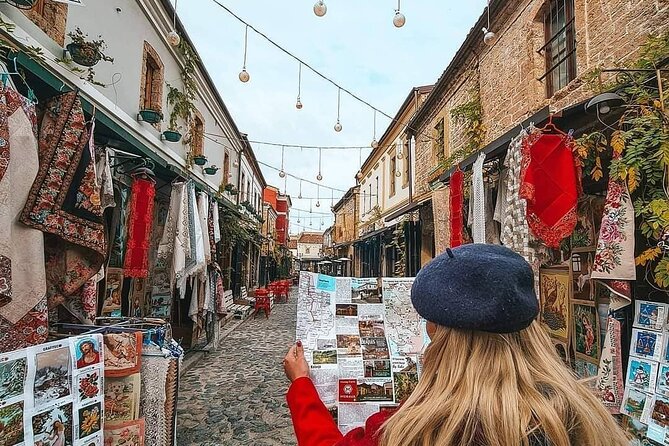
Day 3 moves you toward Kotor in Montenegro, and the city does not play fair with straight lines. Kotor’s old-town layout looks chaotic on purpose, designed to confuse intruders who came to plunder. It’s a perfect example of architecture that doubles as defense, and it’s the kind of detail you only catch when someone points it out.
You’ll wander through the warren of narrow cobblestone streets, then visit Saint Luke’s church, significant to locals as a symbol of unity. The stop is free of entry-ticket fuss, and you’ll have the afternoon to explore more at your own pace.
Overnight puts you near the Montenegrin Riviera, which helps with the next day’s coast rhythm.
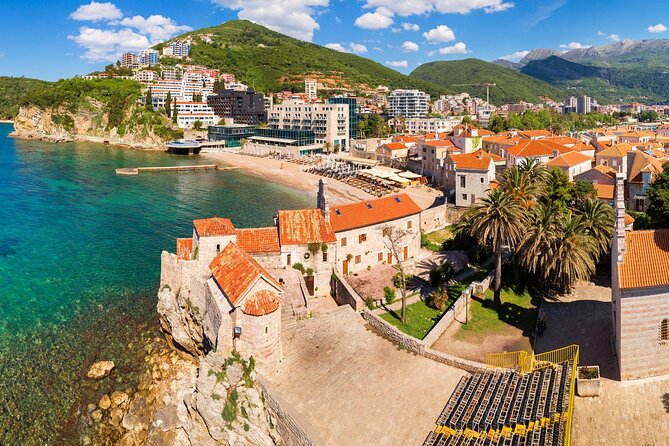
Day 4 starts with Budva, divided into Old Budva and New Budva. Old Budva gives you medieval and historic church stops like St. Ivan church and St. Mary, while New Budva feels modern with shopping and restaurants. The split is useful because it helps you decide what mood you’re after: history strolls or a livelier seaside town vibe.
On the way toward Albania, you stop near Sveti Stefan for the big-photo coastline moment. It’s historically tied to fishing, but the island is now used as an exclusive residential resort, so you’re viewing from the coast rather than hopping onto the island. Still, the look of it from the shore is strong enough to justify the photo stop.
Then you head inland toward Rozafa Castle, with scenery over the lake and the three rivers flowing toward the Adriatic. From a travel value standpoint, this is a smart use of time: you get history plus a wide view in one go.
Finally, you reach Shkoder, one of Albania’s oldest cities. You’ll hear about the castle walls and how the town’s architecture leans Venetian. If timing lines up, the February carnival festival is mentioned as a possibility, though it’s only for certain dates.
Footwear note: you’ll do plenty of old-town walking here, so go with shoes you can trust on stone and slopes.
Albania’s storytelling stops: Rozafa, Shkodra, and Mrizi i Zanave slow-food time
This section of the trip feels like it changes gears from coast-and-stone sightseeing into food, farming, and craft culture. Day 5 starts with Mrizi i Zanave and its slow-food approach. You’ll take a farm tour and learn how the business supports jobs for hundreds of people in the surrounding area, plus how it preserves and processes local bio products.
What I like about this stop is the way it connects daily life to food. You’re not just eating somewhere nice, you’re seeing how the farm repurposed old communist buildings for storage and product work. You also get time for lunch on your own, or to buy fresh produce if that’s your thing.
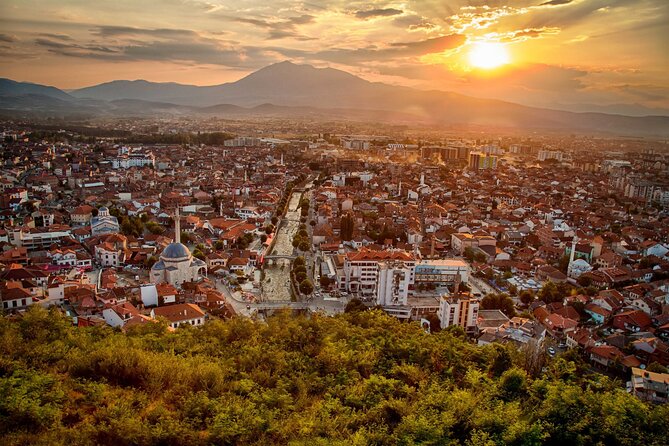
Then you drive to Prizren, described as Kosovo’s cultural capital. It’s positioned as a crossroads with Illyrian roots and Byzantine-Ottoman connections, and the old town stretches around the river. The city has bridges that cross over the water, which helps you understand why the streets feel layered and varied.
You’ll visit Sinan Pasha Mosque for its arabesque design, then have more time to explore Prizren, including the view from the fortress above town. That fortress view matters because it gives you scale, and you can see how the river shapes the whole place.
Food and timing: The trip gives you room to eat on your schedule. Lunch isn’t included, but the time windows are set up so you can choose local dishes instead of grabbing something generic in transit.
Kosovo on the move: Gjakova bazaars, Decan monasteries, and Rahovec wine country
Day 6 continues the Kosovo thread with three stops that feel very different from each other.
First is Gjakova, home to the oldest and largest bazaar of Kosovo. Even after being destroyed through multiple conflicts, it was rebuilt to a similar state, and it’s presented as a good place to both eat and look at traditional handmade crafts. If you like markets, this is a strong stop because it’s not only about shopping, it’s about seeing how a local economy restarted after hardship.
Next is Decan Monastery, known for its white colour and for the fact that Orthodox monks still inhabit the monastery and make organic food such as cheeses. UNESCO recognition comes from the frescoes, including their 14th-century portrayals and the Palaeologan renaissance style. This stop reads as quiet and serious, which is a nice contrast to bazaar noise.
Then you head to Rahovec, framed as Kosovo’s viticulture capital. The tour connects grape growing to very long cultivation history, with vineyards on rolling hills at specific altitudes. There’s also an annual wine festival in September, though whether you’ll catch it depends on your travel dates.
Practical tip: if you’re not used to church sites, dress modestly and keep shoulders and knees covered. Even when it seems informal, it helps you move through without awkwardness.
Kruja and Tirana: medieval resistance, Byrek breakfasts, and Bunk’Art 2
Day 7 takes you to Kruja, a symbolic center of Albanian resistance against the Ottoman Empire in the 15th century. Kruja sits on rocky mountainous terrain about 560 meters above sea level, which you feel when the streets slope and the air changes.
You’ll explore Kruja Castle and the medieval Old Bazaar, described as one of the biggest and oldest in the Balkans. It’s the place for souvenirs, but also for the slow browse: carpets, handmade items, small workshops. The castle tour includes details about hidden paths used by locals during times when enemies surrounded the area.
Day 8 shifts into Tirana, and this is where the tour gets more “you eat, you walk, you learn.” You’ll meet with a local companion and start with a local breakfast at Tregu Çam. You’ll try Byrek, and you’ll learn the basic idea of dough with fillings like cheese, meat, or spinach. The point here is not just food. It’s the route to food you wouldn’t find alone.
Then there’s Çam bazaar, connected to the Albanian Çam community. You can buy goods and bargain, and it’s set up as a neighborhood-style experience rather than a museum stop.
The walking continues through Tirana’s neighborhoods, with local pastries for dessert and a coffee culture stop. You’ll join locals at a cozy café to taste traditional Albanian coffee, then keep moving through colorful buildings and street markets where people sell fresh produce.
Lunch is not included here, but a big feeding moment is: Pazari i Ri, including the Bicycle bazaar, the New Bazaar, and an Albanian lunch you try together at your own stop. The menu mentioned is Qofte meatballs with bread, plus a vegetarian alternative with baked bread and Albanian gjize (cottage cheese). You’ll also taste Albanian raki.
Day 8 ends with BUNK’ART 2, turned from a nuclear bunker into a museum. It’s framed as a video museum experience about communist army history and daily life under Enver Hoxha’s regime. It’s a heavy ending, but it gives you a real sense of how people lived rather than only what leaders did.
Consideration: Day 8 is packed with short stops and lots of walking. Build in water breaks, and don’t plan any extra sightseeing afterward if you can avoid it.
Ohrid, St Naum, and Berat: lake views, monastery water, and 1001 windows
Day 9 moves you from Kosovo into North Macedonia, with Struga as the first stop. It’s tied to the Drini River, and you’ll have time for a quick drink near its source. That kind of pause helps after days of dense culture stops.
Then it’s on to Ohrid, UNESCO-listed, and described as one of Europe’s oldest human settlements. You’ll hear how Ohrid Lake and surroundings have UNESCO status and how the area ties back to Illyrian tribes. You’ll also visit key religious and architectural points, including St. John viewpoint church, St. Nicolas church, and Halveti Hayati Tekke.
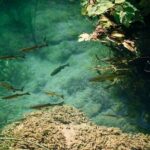
Day 10 begins at St Naum monastery, at the source of the River Crni Drim where the lake water begins its flow. The monastery sits in Galicica National Park, and you’ll see the crystal-clear water reflecting greenery and mountain peaks. The stop includes entry, so you don’t have to manage that piece.
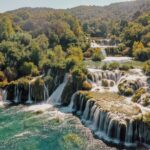
Still on the way, there’s a stop in Tushemisht, described as a hidden nature-and-hospitality break with warm welcome. Then you’ll visit Driloni National Park, where springs form a small lake surrounded by greenery, and you’ll notice weeping willows along the shore. This is another “reset” stop, and it helps you keep the trip from feeling like nonstop cities.
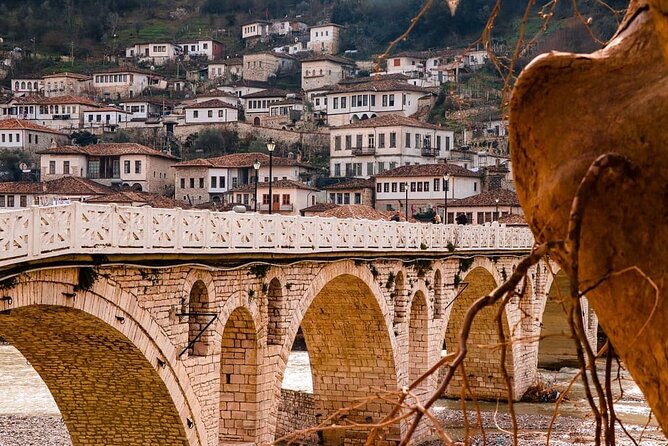
Day 11 is Berat, UNESCO World Heritage, known as the town of 1001 windows. Walking the narrow stone streets gives you the stacked window look the name refers to, plus the sense of multiple eras layered over each other. People still live inside the castle walls here, which makes the place feel lived in rather than frozen.
You’ll visit Berat Castle and the National Iconographic Museum Onufri for Onufri’s famous reddish colour used in church art. Then there’s Gorica Bridge, a quick stop that adds another view angle of the city.
Practical tip: Berat’s streets are narrow and steep in places. Take your time, and use the free moments to pause rather than rushing for photos.
Gjirokaster, Ioannina, and Meteora: Stone City fortresses to legendary sunset rocks
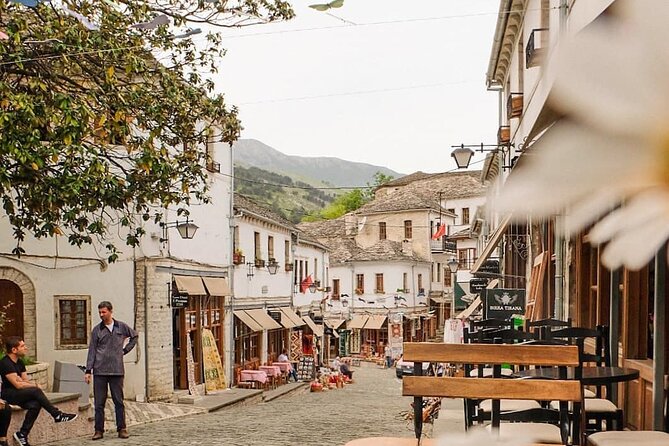
Day 12 brings you to Gjirokaster, UNESCO-listed and nicknamed the Stone City. You’ll hear that every house resembles a small fortress, and that the city’s feel is defensive and compact. The tour focuses on the castle and the bazaar areas.
You’ll visit Gjirokastra Castle for the best-preserved medieval-town vibe, plus Gjirokastra Bazaar, including a visit to one of the best-preserved houses with original, authentic details. The stop is a good mix of architecture and everyday craft life.
Day 13 takes you toward Greece with Ioannina as the first stop. The old town is described as having Byzantine and Ottoman architectural remains, and you’ll tour Ioannina Castle, with narrow streets and historic buildings inside. You’ll also have time for cafes and Greek cuisine.
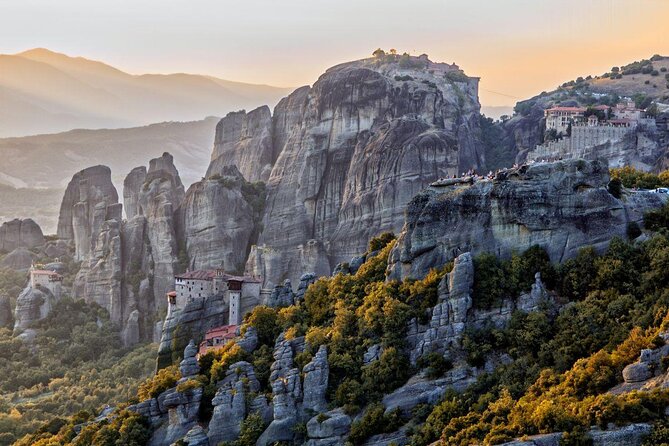
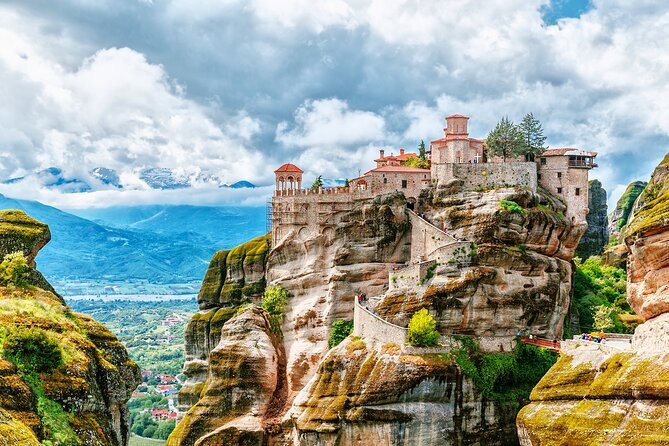
Then it’s off to Meteora, UNESCO-listed monasteries built in the 14th and 15th centuries on rock formations. The tour sets up time to experience one of the best sunsets you can ever catch there, framed as a major event of the day. Even if you’ve seen sunset viewpoints before, Meteora tends to land differently because the rocks are so unusual.
Consideration: Meteora can be weather-sensitive. Dress in layers so you can handle temperature swings while waiting for sunset.
Ending in Athens or Corfu: a ferry transfer that keeps the trip moving
Day 14 is a clean finish. You’ll transfer toward Athens, or you’ll go to Igoumentisa Port for a ferry to Corfu port, with ferry tickets included. Either way, the day is about closing out calmly after the intensity of crossing countries and cultures.
This ending choice is practical. If you want an art and museum finish, Athens is a logical match. If you want island-style recovery time, Corfu gives you an easier pace after days of touring.
Small advice: plan a lighter day after the tour ends. Your feet, your attention, and your patience all need a reset after this much movement.
Price and logistics: is $5,153.85 good value?
The price for this 14-day route is high on paper, but it’s more reasonable when you look at what’s included.
You’re paying for private transportation, a professional tour leader, and hotel stays with breakfast in 3-star hotels. You’re also not juggling daily ticket purchases for the sights marked as included, plus you get tourist taxes, road and international car insurance costs, and fuel handled. On top of that, the tour includes hotel pickup in Split and a defined end in Athens or Corfu, with ferry tickets included for the Corfu option.
For the money, the big value is time and stress reduction. This is a lot of borders and route changes, and the design of the itinerary suggests that someone is coordinating timing so you’re not stuck on the side of the road figuring out the next step. The group limit of 10 people also helps you keep the trip feeling organized without turning into a huge bus tour.
The main “cost” you should factor in is your own spending: lunches, dinners, drinks, snacks, and souvenirs are not included. So budget meals accordingly, and treat the food stops as opportunities to eat well rather than pressure to eat everything in one day.
Should you book this tour?
Book it if you want a structured cross-country route with private transport, breakfast included, and UNESCO sites connected into one story. This is a strong fit if you like guided context—history explained while you stand in the place—and you don’t want to spend your vacation solving logistics.
Skip it if you hate long driving days, or if you prefer slower travel with fewer moves between each major stop. Some days run with a lot of walking and uneven terrain, and the itinerary is built for momentum.
If you want a Balkan trip that feels organized, grounded, and guided from Split all the way to Greece, this one is worth considering. Just go in with comfortable shoes, patience for border-country driving, and an appetite for learning while you walk.
FAQ
What time does the tour start in Split?
The tour starts with hotel pickup in Split at 7:30am.
Where does the tour start and where can it end?
It starts in Split, Croatia. It ends either with a transfer to Athens or a transfer to Igoumentisa Port for the ferry to Corfu.
How long is the tour?
The duration is about 14 days.
What size group is this tour?
The maximum group size is 10 travelers.
Are breakfasts included?
Yes. You get accommodation with breakfast for the overnights, and breakfast is included 13 times.
Are lunches and dinners included?
No. Lunches, dinners, drinks, and snacks are not included.
What’s included for entrance fees?
Entry tickets are included for the sites that are listed as will be visited.
Is ferry travel included?
Yes. Ferry tickets are included for the transfer from Igoumentisa Port to Corfu port. The tour overview also mentions a ferry crossing on Lake Koman as part of the route.
Do I need to tip?
Tips are not a must in the Balkans, but the recommendation is to tip the tour leader and driver as an international practice for good service.
Can I cancel or change the booking?
This experience is non-refundable and cannot be changed for any reason.