REVIEW · SPLIT
Split: 1.5-Hour Walking Tour and Diocletian’s Palace
Book on GetYourGuide →Operated by www.south-tours.com · Bookable on GetYourGuide
Split’s palace feels like living archaeology. I love how this tour gets you into the Diocletian’s Palace cellars and also slows down for Saint Domnius Cathedral, so you’re not stuck doing quick look-and-go photos. One caution: it’s real walking on old, uneven streets, so it’s not a great match if you have limited mobility or trouble with stairs.
In 90 minutes to 2 hours, you move between the palace and the surrounding old town, watching the architecture shift from Roman-era bones to later additions into the 20th century. Guides like Sandra, Ana/Anna, Ivan, and Jelena bring it to life with local perspective, practical shortcuts, and story-driven context (including pointers tied to Game of Thrones filming spots).
In This Review
- Why This Split Tour Works So Well (Roman Palace + Real Town)
- Key Highlights You’ll Actually Feel During the Walk
- Getting Oriented Fast: Gates, Squares, and the Game of Thrones Museum Stop
- Diocletian’s Palace: The 4th-Century Power Center Under Your Feet
- Why the cellars matter (and why you’ll like them)
- The architectural mix: Roman, then later centuries
- Peristyle and the Black Granite Sphinx: Details That Make the Palace Feel Real
- Saint Domnius Cathedral: The Oldest Catholic Church Claim Comes with Roman Bones
- Vestibul Photo Stop: Quick, Worth It, and Easy to Skip Wrongly
- Riva Waterfront and Marjan Hill Views: Why You Should Finish Near the Water
- Price and Value: Is $41 a Smart Use of Time?
- Who This Tour Suits Best (and Who Might Prefer Something Different)
- Tips to Make Your 90 Minutes to 2 Hours Feel Effortless
- Should You Book This Split Walking Tour?
- FAQ
- How long is the Split walking tour?
- Where does the tour start?
- What’s included in the price?
- Are entrance fees included?
- Is food and beverages included?
- Which languages are offered?
- Is the tour refundable if my plans change?
- Is this tour suitable for people with limited mobility?
Why This Split Tour Works So Well (Roman Palace + Real Town)
If you only have a short window in Split, you need two things: a strong introduction to Diocletian’s Palace and a quick sense of how the modern city actually lives inside it. This tour gives you both. You start at the edges—gate by gate—then work inward, so the palace stops feeling like a museum and starts feeling like a neighborhood with history underneath your feet.
And the stops don’t feel random. The route takes you from the palace’s public face to the quieter, more human parts: the cellars, the main square spaces, and then out again to the waterfront. You get views too. When you finish near the Riva promenade, you’ll have a better sense of where everything sits, including how Split opens up toward Marjan Hill.
The tone is also smart. The pace is designed for a longer attention span than the usual grab-bag highlights. If you’ve ever walked around a historic site with no guide and ended up guessing what you were looking at, you’ll appreciate the way someone explains what you’re seeing while you’re still standing in front of it.
Key Highlights You’ll Actually Feel During the Walk
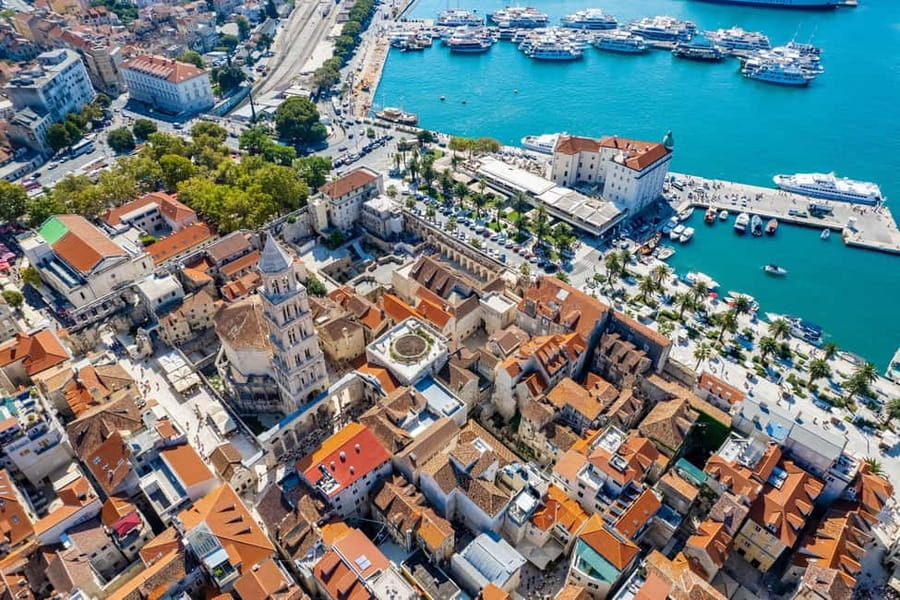
- Roman cellars inside Diocletian’s Palace: go underground and connect the palace’s power to its everyday workings
- Saint Domnius Cathedral: built from an Imperial Roman mausoleum, tied to the oldest Catholic church claim
- A gate-to-gate palace route: South Gate, plus glimpses of the palace’s other boundaries
- Peristyle details you’ll miss on your own: including the black granite Egyptian sphinx
- Local streets, Fruit Square, and the waterfront: small squares and promenades that show how the city functions today
You can also read our reviews of more walking tours in Split



Getting Oriented Fast: Gates, Squares, and the Game of Thrones Museum Stop
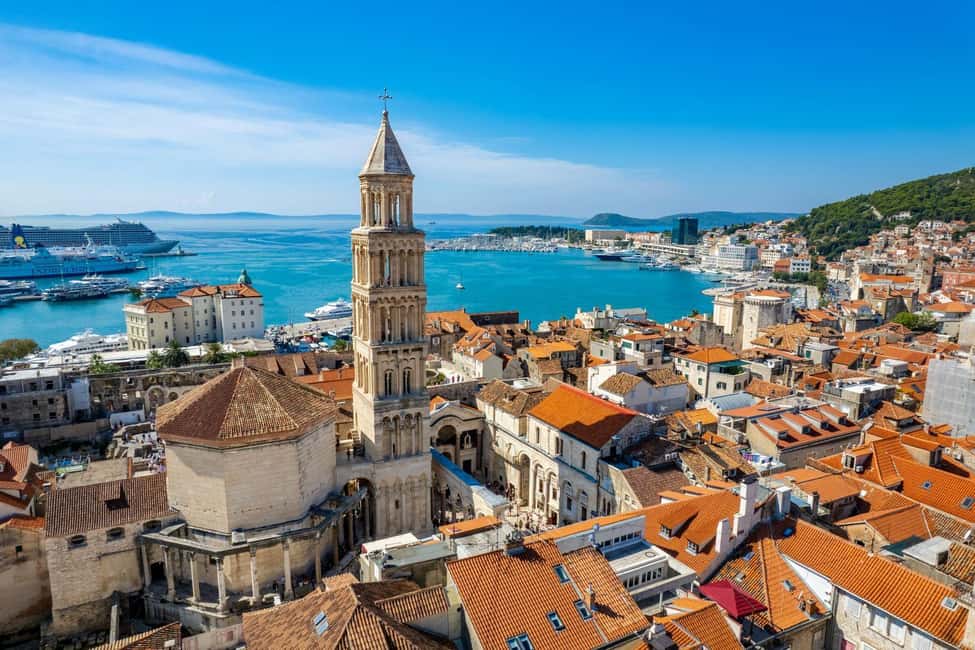
The tour starts with a short walk in Split’s old center, and the exact meeting point can vary depending on the option you book—think around the South Tours Travel Agency, or near major entry points like Golden Gate. From the beginning, the big win is that you’re learning the city as a system, not as a checklist.
You’ll pass by spots that pop up in modern pop culture, including a stop connected to the Game of Thrones Museum. Even if you’re not chasing TV locations, this works because it breaks the ice. Your guide can use that familiarity as a bridge into older layers of Split—how this place went from Roman planning to medieval growth and then into a modern waterfront city.
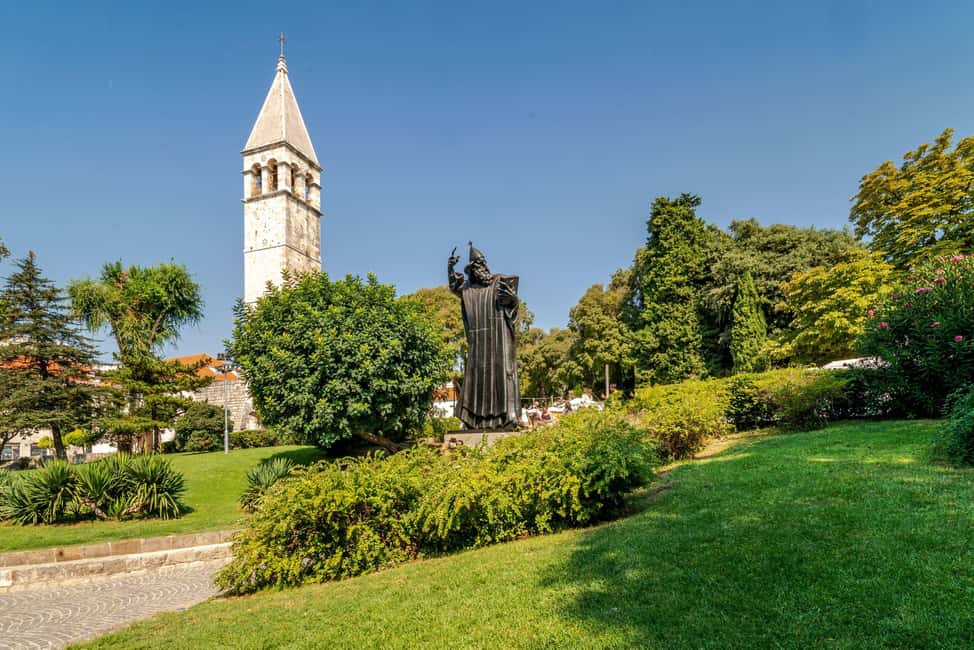
Then you move into public squares such as People’s Square, and into smaller, everyday-feeling places like Fruit Square (Voćni Trg). The point here isn’t the square itself; it’s what your guide reads into it. Fruit Square is tied to the site of an old fruit market, which helps you understand how commerce and daily life filled the space around the palace long after Rome.
Practical note: the tour is about 90 minutes to 2 hours, so these early segments are efficient. If you hate walking before you’ve had coffee, just know the whole experience is built to be quick and focused.
Diocletian’s Palace: The 4th-Century Power Center Under Your Feet
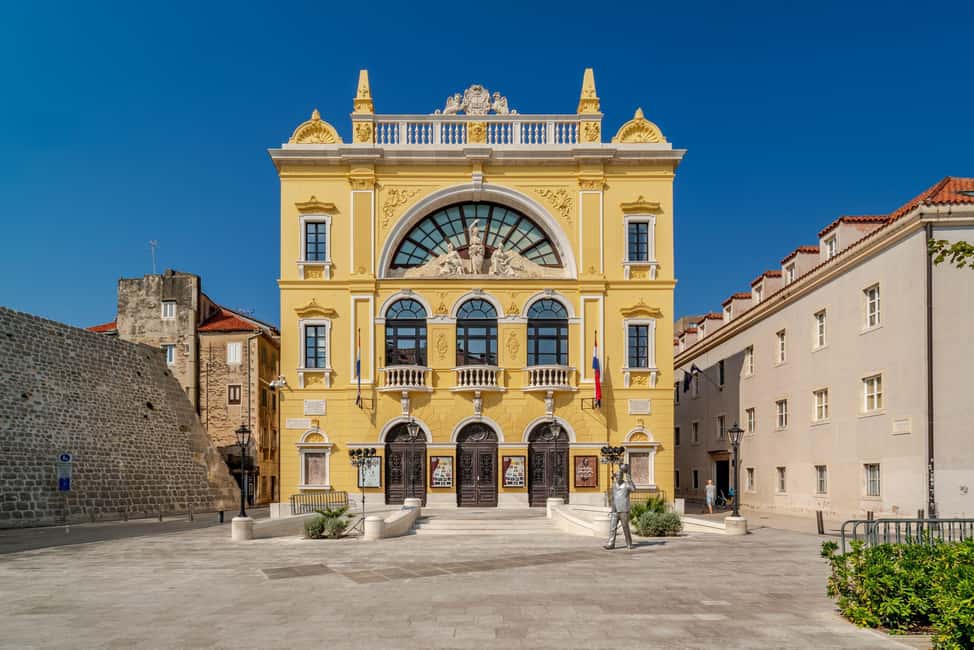
Once you reach Diocletian’s Palace, the atmosphere changes fast. You’re standing in a complex built for the Roman emperor Diocletian at the turn of the 4th century AD. Even if you’ve read about it before, it lands differently when someone shows you how the layout works.
This is where you get the most satisfying payoff: you’re not just looking at stones; you’re walking from the palace’s edge toward the more important internal spaces. You’ll follow the route from the South Gate area through major palace grounds, then toward the cellars and the main square spaces.
Why the cellars matter (and why you’ll like them)
The palace cellars are a standout because they answer a basic question: how did a huge Roman complex actually function? Underground spaces like these were practical—storage, operations, the behind-the-scenes world that made the palace work as a machine.
What I like is that this stop connects to the human side of architecture. You’re learning that grandeur wasn’t only about columns and walls. It was also logistics: where things were kept, where activity happened away from the public.
The architectural mix: Roman, then later centuries
Split isn’t frozen in time. As you move through the palace and surrounding streets, you see a mash-up of eras. The tour points out the shift from the Roman period to later additions—including buildings reaching into the 20th century. That matters because it keeps you from imagining Split as one clean “Roman” moment. It’s more like layers in a shoreline city: every era built on what came before.




Peristyle and the Black Granite Sphinx: Details That Make the Palace Feel Real
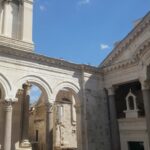
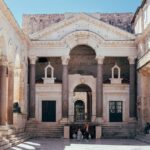
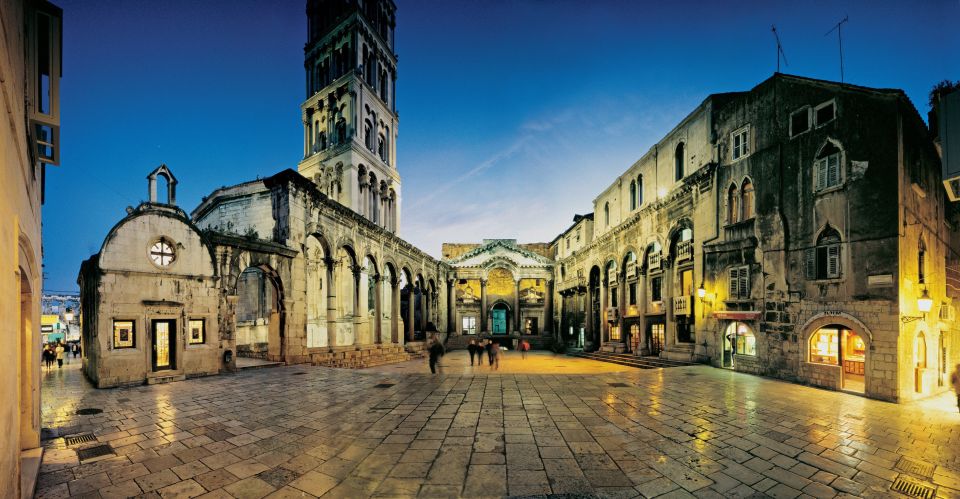
Inside the palace, you’ll spend time around the Peristil (Peristyle) area. This is one of those spaces where you can easily wander and feel impressed but still not understand why a certain view is important. With a guide, you’ll know what to notice.
One detail you’ll hear about is the last remaining Egyptian sphinx in black granite located in the Peristyle area. Even if sphinxes sound like a random collectible, it’s a clue to the reach of Roman taste and Roman power. It’s not just decoration—it’s proof that the palace wasn’t built to copy one single culture. Romans collected, repurposed, and displayed symbols across the empire.
Peristyle spaces also help you read the palace layout. When you know what a peristyle is and why it was used, you’ll start seeing how the palace’s open/closed rhythms guide movement.
One drawback to expect: if you don’t like spending time on intricate architectural points, this part can feel slower than you want. But if you enjoy “wait, that’s why that matters” moments, you’ll likely eat this up.
Saint Domnius Cathedral: The Oldest Catholic Church Claim Comes with Roman Bones

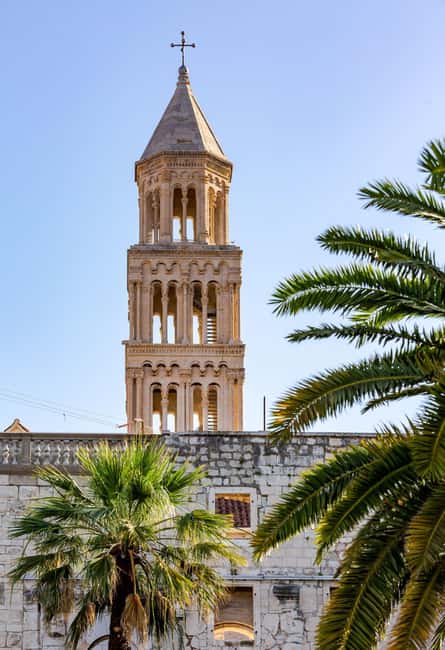
The tour’s cathedral stop is Cathedral of Saint Domnius—often described as the oldest Catholic cathedral in the world. It’s especially compelling because it wasn’t created on an empty site. The cathedral is said to have formed from an Imperial Roman mausoleum.
That’s the key concept to remember as you enter the space: you’re not only looking at a church built by later hands. You’re inside a setting where Roman and Christian meanings overlap. It’s one of the clearer ways to grasp how Split’s religious life grew out of the earlier imperial world.
Your guide will point out what you’re likely seeing and how it connects to Diocletian’s era. Even if you’re not a deep church-history person, this stop tends to work because it’s understandable. Roman mausoleum becomes cathedral—people kept reusing sacred space instead of starting from scratch.
Vestibul Photo Stop: Quick, Worth It, and Easy to Skip Wrongly
After the cathedral area, you’ll reach the Vestibul for a photo stop and short guided walk. This is the kind of place many people rush past because it looks like a passageway more than a destination.
But in a tour like this, the vestibule moment is useful. It helps you line up your photos with the palace layout so you’re not just snapping random doors and arches. You’ll also get one more short chunk of explanation that ties the palace walk together.
If you like getting a final set of “now I get it” framing before you head back out into the streets, this stop earns its place.
Riva Waterfront and Marjan Hill Views: Why You Should Finish Near the Water
The walk brings you down to the Riva waterfront promenade. This isn’t just a scenic ending. It’s a way to reset your brain after the density of the palace.
From the promenade, you get panoramic views of Marjan Hill, and you’ll better understand Split’s shape: palace walls up close, then open water and a hill that gives the town its skyline.
This ending also matches what you need for the rest of your day. After a guided tour, you’ll be more confident wandering on your own—finding shortcuts and knowing how to return to key areas without constantly retracing your steps.
Price and Value: Is $41 a Smart Use of Time?
At around $41 per person for a 1.5 to 2 hour guided walk, this tour is priced like a classic short old-town orientation plus palace deepening. The big reason it’s a good value is that you’re getting access to the palace’s cellars and structured context for multiple major sights in one pass.
Two costs to remember: entrance fees and food/drinks are not included. That means the true “budget” cost depends on which entrances you plan to pay for on your own. Still, a guided route is often the best way to justify the time—especially in a place like Split where the palace is confusing even when it’s gorgeous.
For me, the best value moment is the guide-led explanation in the palace interior. If you were touring alone, you’d likely spend extra time trying to figure out what mattered most. Here, you’ll spend that time watching the city reveal itself gate by gate.
Who This Tour Suits Best (and Who Might Prefer Something Different)
This walk is ideal if:
- You want a first-time Split orientation that doesn’t take half a day
- You care about Roman sites but also want to understand modern life in Split’s old streets
- You like guides who add context and small story details that help you remember what you saw (many guides mentioned in the experience are described as enthusiastic and story-forward, including Sandra and Ivan)
You might want to skip or reconsider if:
- You struggle with long walking or uneven old-town surfaces (this isn’t recommended for people with limited mobility)
- You want a longer, slower cathedral-and-museum day only focused on the palace interiors (this tour is intentionally tight)
Tips to Make Your 90 Minutes to 2 Hours Feel Effortless
- Wear comfortable walking shoes. Old stones don’t forgive tired feet.
- Bring water. Even in shoulder seasons, Split’s streets add up quickly.
- If you want easier timing, check available start times and choose what fits your energy level. An evening slot can be more comfortable than peak daytime heat.
- In the palace, stop when your guide stops. If you rush ahead, you’ll miss the details—especially the Peristyle objects like the black granite sphinx.
Should You Book This Split Walking Tour?
If you’re trying to make Split click fast—Roman palace, cathedral, and waterfront all in one tidy plan—this is a smart booking. The strongest selling point is the combination: cellars + Saint Domnius + a guided path through the palace layout, then out into real old-town spaces like Fruit Square and the Riva promenade.
I’d book it if you want confidence to explore after the tour. You’ll leave knowing where you are, why things are where they are, and how Split’s layers of time connect.
Skip it if mobility is an issue or if you’re looking for a more leisurely, all-day museum-style pace. In that case, you’ll probably feel rushed.
FAQ
How long is the Split walking tour?
It runs about 90 minutes to 2 hours.
Where does the tour start?
The meeting point can vary depending on the option booked, with possible locations including around South Tours Travel Agency and areas like Golden Gate.
What’s included in the price?
A live guide for the duration of the tour is included.
Are entrance fees included?
No. Entrance fees are not included.
Is food and beverages included?
No. Food and beverages are not included.
Which languages are offered?
The tour guide is available in English and Spanish.
Is the tour refundable if my plans change?
Free cancellation is available up to 24 hours in advance for a full refund.
Is this tour suitable for people with limited mobility?
It is not recommended for people with limited mobility and is not suitable for mobility impairments. Comfortable walking shoes are recommended.