REVIEW · SPLIT
Split: Guided Walking Tour in English
Book on GetYourGuide →Operated by Tours In Croatia · Bookable on GetYourGuide
Diocletian’s Palace makes Split a living puzzle. In just 90 minutes, an English-speaking local guide helps you connect the dots between Diocletian’s Palace and the everyday life that grew up around it, while you stroll through narrow stone streets and medieval buildings. I especially like how this tour turns big monuments into small, human stories, and how it adds local culture context, not just dates and names.
One thing to plan for: entrance fees aren’t included, so if you want to go inside churches or museums, you’ll need extra time and ticket purchases on your own.
In This Review
- Key highlights you’ll care about
- Why Diocletian’s Palace is the heartbeat of Split
- Starting on Obala Hrvatskog Narodnog Preporoda 21 with Gray Line
- The 90-minute route: seeing Split’s story in a single loop
- Peristyle, apartments, and the mausoleum: the palace essentials that make sense
- Living inside history: how locals shape the palace-era city
- How the guide brings Split to life in English
- What $29 gets you in 90 minutes (and when it’s a smart buy)
- Entrance fees: what you’ll pay extra for (and how to handle it)
- Questions to ask your guide for maximum payoff
- Who this walking tour suits best in Split
- Should you book this Split walking tour?
- FAQ
- Where does the tour start?
- How long is the walking tour?
- Is the tour in English?
- What’s included in the price?
- Are entrance fees included?
- Can I cancel for a full refund?
- Is there free cancellation right up to departure?
- Is the tour wheelchair accessible?
- Are pets or unaccompanied minors allowed?
Key highlights you’ll care about
- Fast orientation of Split’s historic center without getting lost in the stone maze
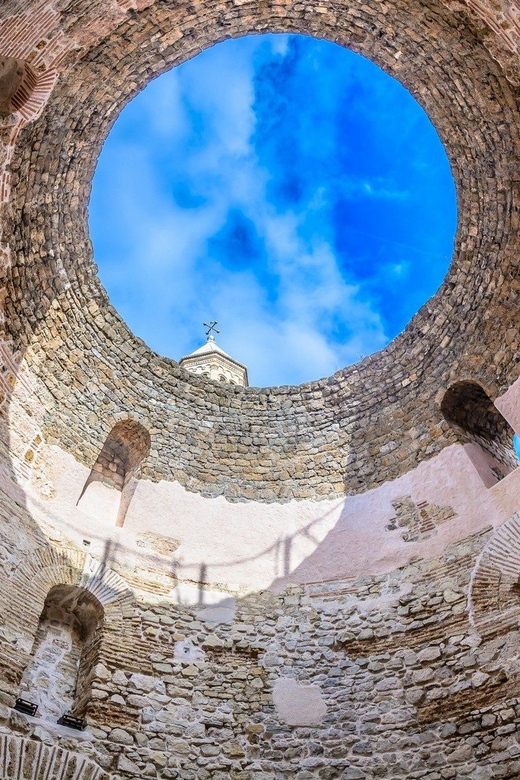
- Diocletian’s Palace essentials, including major courtyard and burial-area features
- Local culture focus, with customs and lifestyle woven into the history
- English guidance for 1.5 hours, ideal for a first day in town
- Guide helps with ticket logistics, even though entries cost extra
Why Diocletian’s Palace is the heartbeat of Split
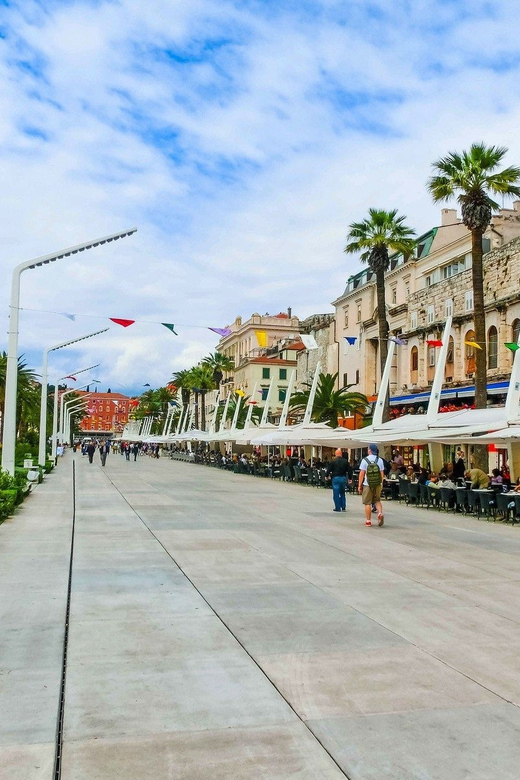
Split can feel like one long history lesson, but this is the shortcut that makes it click. Diocletian’s Palace sits at the center of town, and everything around it grew in orbit of that Roman-built core. When you see the palace layout and its key areas, Split stops being random old streets and starts becoming a plan you can understand.
The palace isn’t just ruins on a postcard. It’s an extraordinary power center that dates back about 1,700 years, and it still shapes the city today. As you walk, you’ll pick up how the city grew around the palace, then added medieval extensions over time.
The best part is the way the guide connects architecture to daily life. You’re not only learning what was built; you’re learning why the city kept living there.
You can also read our reviews of more walking tours in Split


Starting on Obala Hrvatskog Narodnog Preporoda 21 with Gray Line

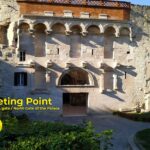
Your tour begins at the Gray Line office, Obala Hrvatskog Narodnog Preporoda 21, in Split. Arriving a few minutes early is worth it, since you’ll want to settle in and be ready to start walking smoothly.
This meeting point matters because it puts you close to the historic core. In other words, you’re not spending your paid time commuting across town before you even reach the good stuff. Once you’re underway, the pace is set for a clear, 1.5-hour walk that hits the main monuments without turning into a marathon.
Bring comfortable walking shoes. The old town streets are stone, and you’ll be moving often.
The 90-minute route: seeing Split’s story in a single loop

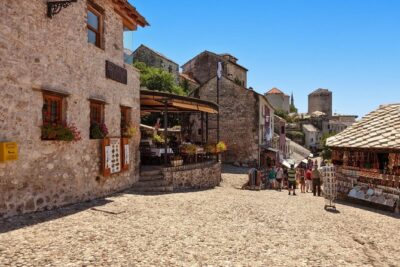
This tour is designed for first-time orientation. In about 1.5 hours, you cover the main monuments of Split with a local English-speaking guide, moving through narrow stone lanes and around significant historic structures.
You’ll get the “big timeline” view fast: Roman foundation first, then later medieval layers. The guide’s job is to help you notice transitions, like where Roman structure gives way to later additions. That matters, because if you wander alone, it’s easy to see old buildings as separate sights instead of as a connected whole.
The pace is also practical. You’ll get plenty of time to look closely while still keeping the momentum needed to see the palace highlights and key features inside and around the core.
Peristyle, apartments, and the mausoleum: the palace essentials that make sense
One of the tour’s core moments is the monumental court of the Peristyle. This isn’t a generic stop. It’s the kind of place where the architecture helps you understand how power worked in the Roman world, including how access to important imperial spaces was organized.
From there, you’ll also hear about the imperial apartments and the mausoleum. Even if you only remember a couple of names, these sections give you a framework for reading the palace. You start imagining movement through space: where people would enter, how the layout guided access, and why the tomb area was such a significant statement.
What I like here is that the guide doesn’t treat these as just ruins. They’re framed as components of an original system, and that makes the walk feel logical instead of chaotic.
Living inside history: how locals shape the palace-era city
Split isn’t a museum that’s sealed off from real life. As you explore different features of the palace complex, you’ll learn that people still live within the walls. That detail changes the whole feel of the tour.
You’ll hear about local customs and traditions as part of the context for what you’re seeing. The goal is to help you understand Split as a living city with Roman roots, not just a list of monuments. In practical terms, this kind of explanation helps you spot what’s old versus what’s actively used, which can make your later self-guided wandering far more rewarding.
If your guide is someone like Petra or Gabrijela, you may notice an emphasis on local culture and everyday life, not only chronology. In past departures, both names have been linked with clear English and strong local context, plus helpful direction for what to eat and where to go after the tour.
You can also read our reviews of more guided tours in Split





How the guide brings Split to life in English
This is an English-language guided walking tour, so you’re not stuck trying to decode signage alone. A good guide does two jobs at once: giving you the story and helping you understand what to look for while you’re standing there.
Expect a strong focus on the palace’s role in the city’s growth. You’ll also get explanations that connect the Roman layout to what you can still see in Split’s historic center today. The best tours do this with a sense of flow, and this one is built around that idea: you’re guided through the key spaces so you can form a mental map.
Also, I like that Q&A is part of the experience. When you’re standing in a place like the palace, it’s natural to have questions. A tour like this is the time to ask why things are arranged the way they are and how later eras changed the original plan.
What $29 gets you in 90 minutes (and when it’s a smart buy)
At $29 per person for a 1.5-hour walking tour, the value comes from two things: time and interpretation. You’re paying for someone to point out what matters and explain how it all fits together in Split’s story. If you try to do that solo, you’ll likely spend time searching for the right context or missing the connections.
You also get the benefit of being guided through key UNESCO-level material without needing to plan every stop in advance. That matters if you only have a day or you want your first afternoon to do the heavy lifting.
One more practical note: the price includes taxes and VAT, so you’re not likely to get hit with random add-ons during the tour itself. The one clear extra cost is entrance tickets for churches and museums, which is common for guided city tours.
Entrance fees: what you’ll pay extra for (and how to handle it)
Entrance fees are not included. That means if churches or museums you pass (or discuss) are ticketed, you’ll need to buy those separately. The good part is that your guide can help you with the details and point you to where to purchase tickets.
The simplest strategy is to think of the walking tour as your orientation layer. You’ll learn what’s important and why, then you can decide after the tour which indoor stops are worth your time and money. That avoids the classic problem of spending your guided hours waiting for entry lines or paying for stops you don’t actually care about.
If you’re the type who likes photos and exterior views, you might find you’re happy with what you see during the walk plus one or two targeted ticket visits afterward.
Questions to ask your guide for maximum payoff
To get the most out of any historic walk, you need to do a little active listening. Here are good questions that match what this tour is built to cover:
- What’s the most important part of the palace layout for understanding Split today?
- How did the city grow around Diocletian’s Palace after the Roman era?
- Which areas best show the shift from Roman design to later medieval extensions?
- Where should I go next if I want more examples of everyday life inside the historic core?
- If you had one local food suggestion after this, what would it be?
You’ll get more out of the tour if you ask at least one or two questions while you’re there, rather than saving everything for later. Your guide can connect your question to what you’re standing next to, which is when the answers actually stick.
Who this walking tour suits best in Split
This tour is a strong fit if you want a clear introduction to Split’s historic center. It’s also ideal when you like learning through walking rather than sitting and reading.
It’s not wheelchair accessible, and it isn’t suitable for wheelchair users. Pets aren’t allowed, and unaccompanied minors aren’t allowed. Children must be accompanied by an adult, so families should plan on staying together the whole time.
If you’re visiting churches or museums anyway, the lack of included entrance fees becomes less of a deal-breaker. If you’re not planning any ticketed stops, you might still love it for the outdoor palace highlights and the cultural context.
Should you book this Split walking tour?
I’d book this 90-minute English walking tour if you want a smart first look at Split that explains why the city looks the way it does. It’s good value for $29 because you’re buying context and direction, not just walking.
Skip it only if you already feel confident about Roman-to-medieval Split history and you’re mainly looking for ticketed museum time. Otherwise, this is exactly the kind of orientation that makes the rest of your day easier—because once you understand Diocletian’s Palace, the rest of the old town starts speaking the same language.
FAQ
Where does the tour start?
Meet at the Gray Line office at Obala Hrvatskog Narodnog Preporoda 21, Split.
How long is the walking tour?
The tour duration is 90 minutes (listed as a 1.5-hour walking tour).
Is the tour in English?
Yes, the live tour guide speaks English.
What’s included in the price?
You get the 1.5-hour walking tour, an English-speaking guide, and all taxes and VAT.
Are entrance fees included?
No. Entrance fees for churches and museums are not included.
Can I cancel for a full refund?
Yes. You can cancel up to 24 hours in advance for a full refund.
Is there free cancellation right up to departure?
The policy is free cancellation up to 24 hours in advance for a full refund.
Is the tour wheelchair accessible?
No. This tour is not wheelchair accessible.
Are pets or unaccompanied minors allowed?
Pets are not allowed, and unaccompanied minors are not allowed. Children must be accompanied by an adult.