REVIEW · SPLIT
Split highlights – Evening walking tour
Book on Viator →Operated by TEMPER TRAVEL · Bookable on Viator
Night in Split turns the palace walls into theater. This evening walking tour is a smooth way to learn how Diocletian’s world shaped today’s city, with standout stops like the Golden Gate and the Peristyle when the light shifts. I love that it mixes big monuments with real city squares, so you get both history and a feel for where locals actually hang out.
The tour is also made for practical sightseeing: a licensed English-speaking guide, a group capped at 8, and a pace that keeps you moving without rushing. One thing to plan for: the palace area can get busy at night, so if you hate crowds, you’ll want to be ready to share space around the most popular viewpoints.
In This Review
- Key highlights you’ll actually notice
- Golden Gate at 7:00 pm: the easiest entry to old Split
- Diocletian’s Palace at night: Golden Gate to Peristyle
- Cathedral of Saint Domnius: Roman roots you can still touch
- Inside the Vestibulum: where klapa sound fits the setting
- Pjaca and Prokurative: the squares where Split watches itself
- Riva Harbor at dusk: your city-living-room moment
- Prva Vidilica na Marjanu: the viewpoint finish that makes the walk worth it
- Price and value: why this $39.74 tour often feels like a bargain
- Who should book this evening tour (and who might skip it)
- Should you book this Split evening walking tour?
- FAQ
- How long is the Split evening walking tour?
- What does the tour cost?
- Is the tour offered in English?
- How many people are in each group?
- Where do I meet the guide, and where does the tour end?
- Are entrance tickets included for the stops?
- What happens if weather is poor?
Key highlights you’ll actually notice
- Small group (max 8): easier questions, less waiting, and better pacing through tight lanes
- Diocletian’s Palace after dark: you see the complex at night, when it feels more atmospheric
- Photo-ready route: Golden Gate to Peristyle, then out to Pjaca, Prokurative, and Riva for skyline and harbor views
- Sphinx at Peristyle: a 3,500-year-old guardian detail you won’t want to miss
- Local sound moment: the Vestibulum stop is tied to hearing klapa singing
- Marjan viewpoint finish: you end with a terrace view over the whole city
Golden Gate at 7:00 pm: the easiest entry to old Split
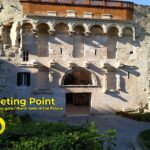
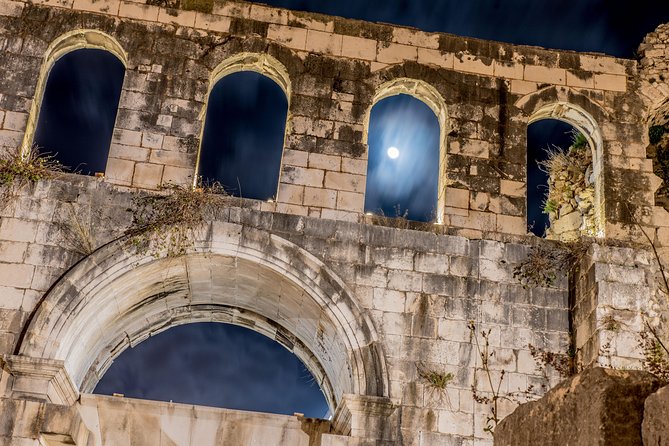
You start at Golden Gate (Dioklecijanova 7) at 7:00 pm, which is a smart time. Late afternoon turns into evening, shop lights come on, and the palace complex shifts from daytime monument to something closer to a living stage. It also helps with timing: you avoid the worst midday heat, and you’re not still searching for your footing when the sun goes down.
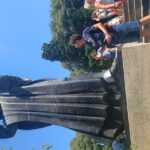
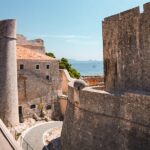
From the first minutes, this tour sets you up for wayfinding. The Golden Gate isn’t just a gate. It’s the entry to the story of Emperor Diocletian retiring here and staying put, shaping Split around his palace plan. And yes, there’s a practical detail tucked into the stop: the statue of Croatian bishop Grgur, overlooking the gate, is said to bring good luck to passengers. It’s the kind of touch that makes you look up at the right moment instead of just walking by stone.
This is also where you’ll feel the value of a small group. With only up to 8 people, your guide can point out what matters—what to look for, what to ignore, and how the palace links to the surrounding city. If you’re coming in on a flight and still dealing with jet lag, the route is straightforward enough that your brain can latch onto the big picture fast.
You can also read our reviews of more walking tours in Split


Diocletian’s Palace at night: Golden Gate to Peristyle
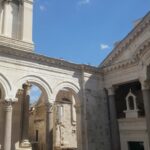
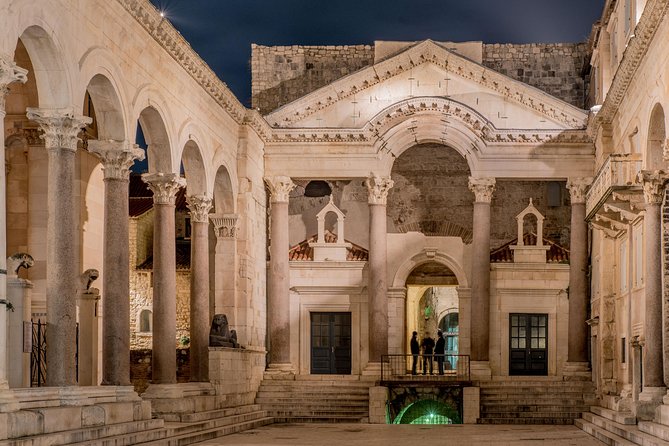
After Golden Gate, the tour pushes you deeper into the palace’s core with Peristyle, the palace’s geographic and spiritual center. This is the stop that often makes people go quiet, because the space feels monumental even when it’s crowded. It’s also one of the easiest ways to understand how Diocletian’s residence worked as a self-contained world.
Here’s the detail I think makes the difference: the Peristyle is guarded by a 3,500-year-old sphinx. The age alone is jaw-dropping, but what you’ll notice is how the guide connects it to the layout. You’re not just looking at objects; you’re learning what role this square played—where power intersected with daily movement.
And the timing matters. In the evening, the palace walls catch softer light, and the Peristyle area can feel like a stage set. That’s also why you should expect people. Multiple stops in this tour lead to the most photogenic parts of Split’s old center, so you may share your view with other groups. The upside is that you’re there at the right time to see the atmosphere; the downside is less elbow room near the most popular corners.
Cathedral of Saint Domnius: Roman roots you can still touch
From Peristyle, you move to Cathedral of Saint Domnius, once Diocletian’s mausoleum. That’s not a trivia fact—it changes how you experience the building. Even from outside (and from the quick look the tour provides), you’re seeing layers of time: Roman engineering repurposed for later worship.
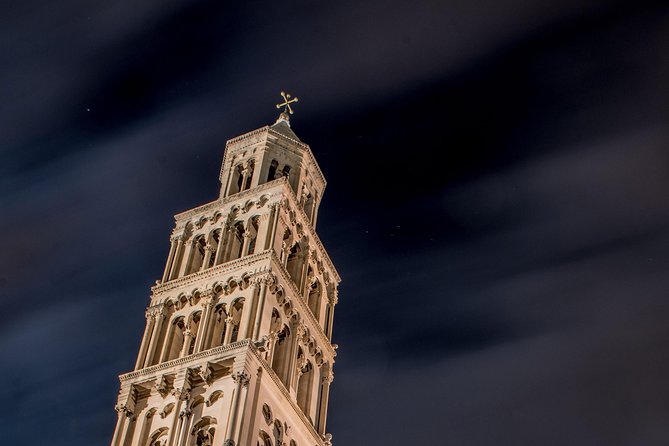
One of the best things about this stop is that it gives you a clear landmark. It’s described as the oldest building in the world that still has a cathedral setting, and in front of it you’ll spot the Romanesque bell tower. You don’t need to be an architecture expert to feel the impact. The tower adds height and drama to the skyline, while the cathedral site anchors the story of how Split grew from imperial residence into a living city.
Important practical note: admission to the cathedral is not included. That means you’ll either enjoy the exterior and surroundings with your guide, or you can decide on your own if it’s worth paying to go inside. If you’re the type who wants to see interiors, bring that extra cost mindset. If not, you’ll still get plenty from the placement and context.
Inside the Vestibulum: where klapa sound fits the setting
Next you step into the emperor’s chambers through the Vestibulum, described as a striking round hallway. The key reason this stop works is the sensory angle. In this area, you can hear local klapa singing, which turns stone corridors into something more human.
This is the kind of moment I recommend to lean into. Instead of rushing for photos, give yourself a few minutes to listen. Klapa is the sound of the region, and hearing it in a palace interior makes the history feel less like a lecture and more like a soundtrack to place.
The guide’s job here is to connect the dots without turning it into a technical speech. You’ll hear enough to understand what you’re looking at—this isn’t random walking, and the stop isn’t just a scenic detour. It’s placed to show how Diocletian’s palace isn’t only ruins and remnants; it’s part of modern street life and cultural rhythm.
Pjaca and Prokurative: the squares where Split watches itself
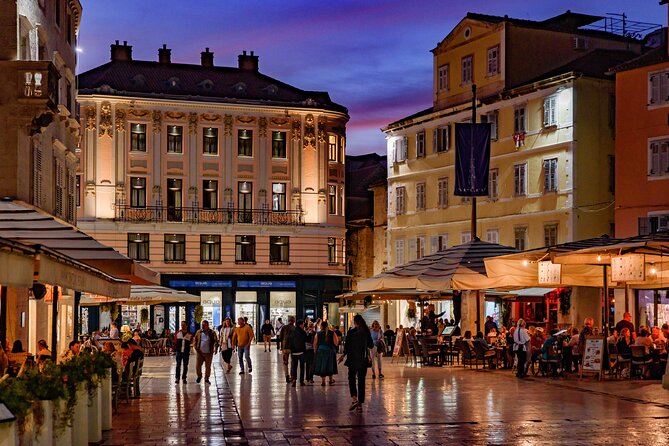
After the palace core, the tour shifts you toward the city’s social heartbeat. First is Pjaca, the central stage of everyday life in Split. The description is simple: people come to rest, meet, see, and talk—and yes, football ends up in the conversation. That’s not an exaggeration; it’s how public squares work in many places, and Split is no exception.
Pjaca also helps you reset. You’ve been in high-stone history for a stretch. Now you’re in open space, with locals moving around in real time. This stop is where you start understanding that Split isn’t a museum you visit; it’s a city you move through.
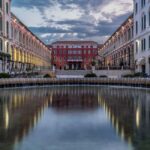
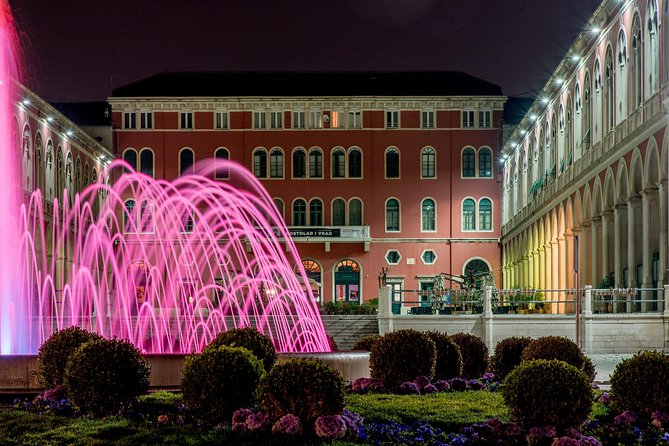
Then comes Prokurative, officially Republic Square, which is compared to Venice’s St. Mark’s Square in its style and openness. You’ll also get a view angle toward the harbor and the promenade-side vibe. The value here is practical: these squares act like orientation anchors. Once you see how Prokurative frames the harbor, the rest of the evening makes more sense.
You can also read our reviews of more evening experiences in Split





Riva Harbor at dusk: your city-living-room moment
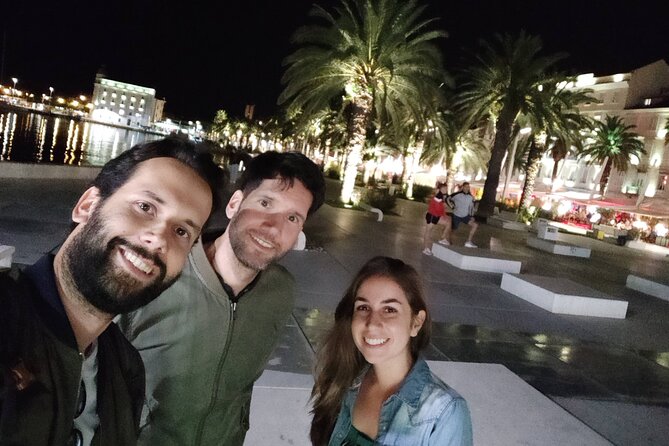
From Republic Square, you reach Riva promenade, Split’s living room and the most important public place in town. In practical terms, this is where your walking tour payoff starts to feel real. The harbor views hit differently in the evening, when light bounces off water and the promenade becomes a moving stage.
This stop is described as a venue for legendary events, but you don’t need that kind of background to appreciate it. You just need to look around and notice how the promenade functions: people strolling, chatting, gathering. Your guide’s comments help you connect it back to the city’s layout, so you understand why this area matters.
If you’re the type who wants photos, this is where you’ll likely slow down. If you’re not, it’s still valuable as a mental break. You’ve spent time with palace gates and cathedrals; Riva gives you a gentler pace and a wide view that helps your brain store the city in the right order.
Prva Vidilica na Marjanu: the viewpoint finish that makes the walk worth it
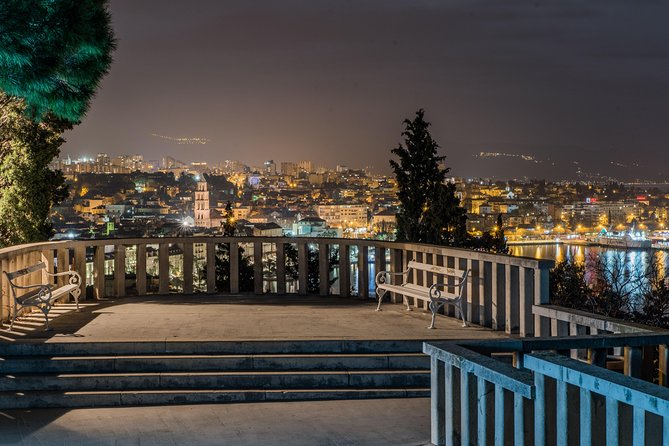
The tour ends with Prva Vidilica na Marjanu, a terrace viewpoint reached by about a 15-minute walk from the old town. This is a great choice for an evening tour because a final view gives you closure. You stop looking at individual buildings and start seeing Split as a whole—how the palace sits in the historic core, how the waterfront stretches out, and how the city spills beyond the center.
You’ll be told it’s the perfect way to end, and the idea is correct: a panoramic moment makes the history you saw earlier feel connected to the geography. It also helps you plan the rest of your trip. Once you’ve seen the city from above, it’s easier to choose where to wander next.
One more practical note: because this is an evening walk with a viewpoint finish, good footwear matters. Even when the route is friendly, you’re dealing with old-stone streets and some uphill effort. It’s not described as extreme, but it’s enough that you’ll feel it if you’re in soft flip-flops.
Price and value: why this $39.74 tour often feels like a bargain
At $39.74 per person, this tour sits in a comfortable mid-range zone for popular European city experiences. What makes it feel like value is that you’re paying for more than “a walk with a guide.” You’re getting a licensed local English-speaking guide, a tight route, and enough stops to build a coherent mental map of Split.
The biggest value lever is timing. This is booked fairly far in advance on average (about 38 days), which is a hint that people want this exact evening circuit. When a tour sells that far out, it usually means the itinerary lands where it should: the palace at night, the city squares, and a finish with a view.
Also, many stops are set up with free admission. The cathedral is the notable exception—Saint Domnius admission is not included—but you’re still shown the key external experience and context. So you get a lot of sights without a stack of add-on tickets.
Last, the review pattern is consistent: guides like Bosko Papic, Pavle, and Luka get called out for making the city feel alive, not just reciting dates. One traveler even highlighted that the palace can get busy and that the tour is especially useful early in your visit for orientation. That’s exactly the kind of value I look for.
Who should book this evening tour (and who might skip it)
This tour is a strong fit if you want an evening plan that does three things well: gives you palace context, shows you how Split lives in its squares and harbor, and ends with a viewpoint that makes your first day feel complete.
I’d especially recommend it if:
- You’re short on time and want wayfinding fast
- You like your history explained in human terms, not only stone facts
- You want a smaller group experience rather than a crowded marching line
You might want to think twice if:
- You hate crowds and are sensitive to busy palace areas in the evening
- You plan to skip cathedral interiors altogether and only want highlights you can see instantly from the street (in that case, you may decide to DIY parts of the route)
Should you book this Split evening walking tour?
Yes, I’d book it if you want your first taste of Split to connect the palace story to how the city feels right now. The night timing is a real advantage, and the small group size makes it easier to ask questions and get the kind of practical recommendations people love to hear—especially from local guides like Bosko Papic, Pavle, and Luka.
For the best experience, go in expecting a mix of iconic stone and real city life. Wear comfy shoes, be ready for a bit of crowding around the palace core, and give yourself those final minutes at the Marjan viewpoint. That’s where the tour stops being a collection of stops and turns into a clear picture of Split.
FAQ
How long is the Split evening walking tour?
The tour runs about 1 hour 30 minutes to 2 hours.
What does the tour cost?
It costs $39.74 per person.
Is the tour offered in English?
Yes, it’s offered in English.
How many people are in each group?
The tour has a maximum of 8 travelers.
Where do I meet the guide, and where does the tour end?
Meet at Golden Gate, Dioklecijanova 7, 21000 Split, Croatia. It ends at Vodoskok at Trg Franje Tuđmana, with the meeting point at the fountain at the beginning of the Riva promenade.
Are entrance tickets included for the stops?
Most of the listed stops are marked as free. The Cathedral of Saint Domnius has admission not included, so you may need your own ticket if you want to go inside.
What happens if weather is poor?
The tour requires good weather. If it’s canceled due to poor weather, you’ll be offered a different date or a full refund.