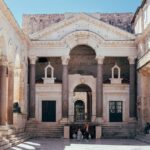
REVIEW · SPLIT
Split: Old Town and Diocletian’s Palace Walking Tour
Book on GetYourGuide →Operated by popular tours · Bookable on GetYourGuide
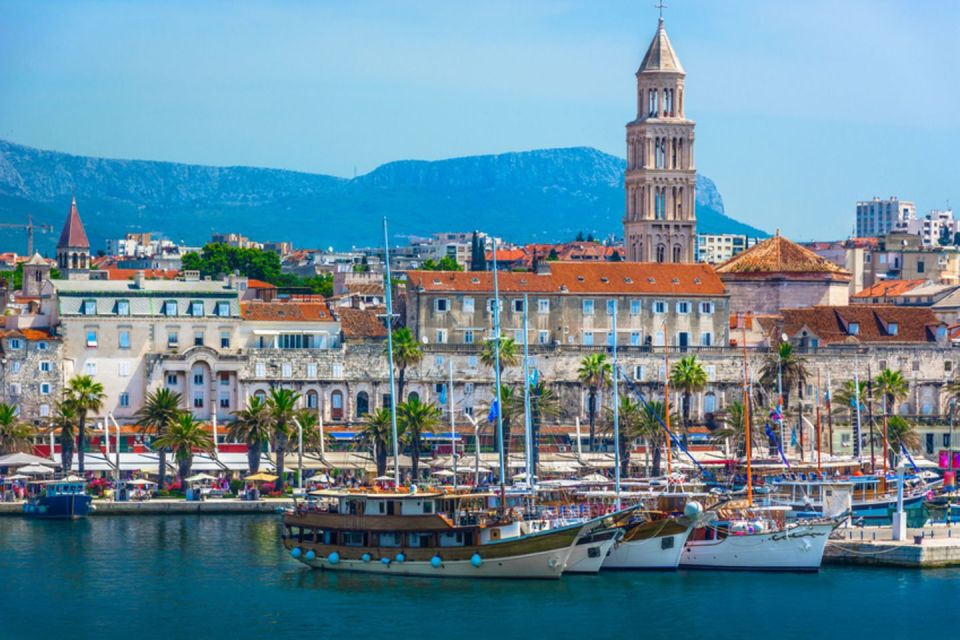
Roman walls meet everyday street life in Split. This Old Town and Diocletian’s Palace walking tour turns a UNESCO site into something you can actually walk through, with an English guide and stops that feel more like a route than a lecture.
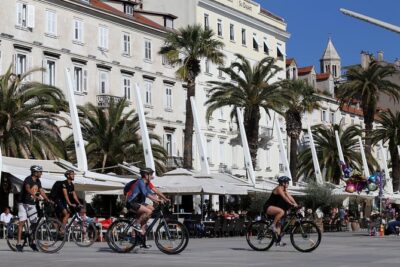
I especially love the walk from the port area into the palace complex, because the city feels lived-in the whole way. And I like that the route hits big visual anchors like Peristyle Square and the Cathedral area (including St. Duje / Domnius), not just random corners.
One thing to consider: it’s only one hour, so it moves at a steady pace. Also, based on at least one recent problem report, keep an eye on the guide showing up on time and confirm the meeting point before you start.
In This Review
- Key highlights you’ll feel on the route
- Meeting point: find the red sign, then relax
- The first walk: old streets and palace-scale thinking
- Diocletian’s Palace: walking inside a 1,700-year structure
- Peristyle Square: where the palace’s logic becomes clear
- Underground cellars: the tour’s best contrast
- Temple of St. Jupiter: Roman religion in built form
- Cathedral of St. Duje (Domnius): where layers overlap
- How long it really takes (and what that means for you)
- Price and value: $18 for a targeted route
- The one snag to know about: guide reliability
- Who this tour suits best
- Should you book this Split Old Town and Diocletian’s Palace tour?
- FAQ
- What is the tour duration?
- How much does it cost?
- Where do I meet the guide?
- Is hotel pickup included?
- What language is the tour in?
- What stops are included?
- Is the palace part of a UNESCO World Heritage Site?
Key highlights you’ll feel on the route

- Peristyle Square: the palace’s grand open space, where the Roman layout becomes obvious fast
- Underground cellars: a quick look below the level of normal street life
- Temple of St. Jupiter: a classic Roman stop that explains how beliefs shaped architecture
- Cathedral of St. Duje / Domnius: where ancient and later Split history overlap in one visit
- St. Francis church: a practical last stop to tie palace-era themes back to the surrounding city
- Simple logistics: it starts and ends at the same point near Split’s port (no hotel pickup needed)
Meeting point: find the red sign, then relax
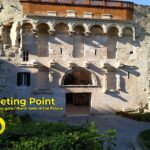
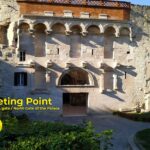
This tour starts at Split port, on Trg Braće Radić. You’re looking for a big red sign that says SPLIT. Your guide will carry a sign that reads My Special Tour.
Why I think this matters: when a tour is short, you don’t want to burn time playing phone tag. Go a little early, do a fast scan for the red sign, and you’ll likely spot your group quickly.
Also note: hotel pickup and drop off are not included, so plan to reach the meeting point on your own. The good news is that starting near the port usually means you’re already in the right part of town for your first sightseeing day.
You can also read our reviews of more walking tours in Split


The first walk: old streets and palace-scale thinking

After you meet, the tour shifts into “how this city was built” mode. Even in a modern city, Split’s old streets and squares give you clues—street width, building spacing, and the way key spaces funnel people toward major landmarks.
You’ll have about one hour total. So you’ll want to treat this as orientation with specific Roman stops. It’s not set up as a slow museum crawl. Instead, it’s designed to help you understand why Diocletian’s Palace matters, using walking and a few big visual targets.
If you’re the type who likes your history with your feet moving, this pacing is a plus. If you want time for photos, coffee breaks, or lingering explanations, you may find the rhythm a bit brisk.
Diocletian’s Palace: walking inside a 1,700-year structure

Diocletian’s Palace is a UNESCO World Heritage Site, and the tour takes you through it as part of the living city. That’s the key idea: you’re not touring a sealed-off ruin. You’re moving through a complex that has been turned into streets, rooms, and religious spaces over time.
Your route typically includes stops that let you see the palace like a functioning plan rather than a single monument. You’ll be guided to:
- Peristyle Square (the showpiece gathering space)
- underground cellars (down where daily operations and storage make sense)
- major religious landmarks connected to later Split life
This is where the tour gives real value. Instead of only talking, you see how power, utility, and belief were layered into the same walls.
Peristyle Square: where the palace’s logic becomes clear
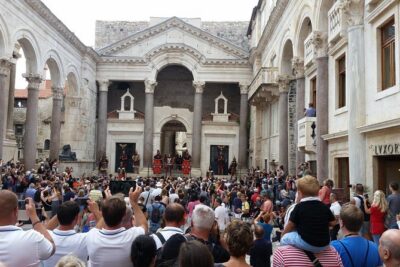
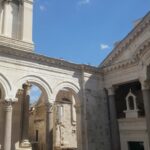
Peristyle Square is the kind of place that helps you stop thinking in “ruins” and start thinking in “Roman design.” It’s open, structured, and visually it explains why the palace was built to be more than a private residence.
When your guide points things out here, you’ll understand the layout faster than you would by reading about it later. You get the sense of scale—the way courtyards, access points, and surrounding buildings work together.
Practical tip: wear comfortable shoes. You’ll move through uneven historic surfaces, and you’ll want your footing for quick turns and stair steps.
Underground cellars: the tour’s best contrast
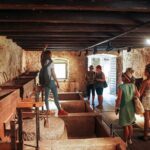
One of the more memorable parts is the stop for the underground cellars. Going below the level of the normal streets adds contrast instantly. You go from bright open spaces into a more tucked-away sense of function—storage, working areas, and the behind-the-scenes side of palace life.
Even without a long explanation, the physical shift makes the story easier to grasp. You see why a powerful residence would need space that didn’t interrupt daily grandeur.
Because the tour is only one hour, you shouldn’t expect a long, deep exploration down there. But you should expect a clear “before and after” feeling: palace above, palace operating below.




Temple of St. Jupiter: Roman religion in built form
Next on the route is the Temple of St. Jupiter. This is one of those stops where the name itself signals an overlap: Roman-era sacred space, then later layers of meaning connected to Split’s Christian history.
You’ll likely be able to connect architecture to belief more quickly during this part of the tour. Temples weren’t just places for worship—they were statements. The guide’s job is to help you read the structure as Roman power expressed in stone.
This is also a good moment to slow down for a minute, even if the group moves on quickly. Look around: it’s easier to spot patterns when you actually stop instead of walking past.
Cathedral of St. Duje (Domnius): where layers overlap
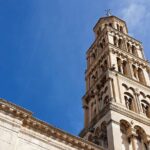
The tour includes the cathedral complex area—commonly described as the Cathedral of St. Duje and also known as Domnius. This is a major reason to do the palace tour with a guide instead of trying to guess the meaning of everything on your own.
Why? Because the palace isn’t just Roman. Split is a city built over time, and the cathedral area shows how later faiths and traditions claimed and adapted older spaces.
You’ll also have a stop by the St Francis church. Think of it as a bridge: you leave the palace-focused stops and connect the story back to the surrounding city fabric.
If you like your sightseeing with a clear timeline, this portion helps you connect the dots between Diocletian’s era and what came after.
How long it really takes (and what that means for you)
The tour is 1 hour on an English-language route. That short window makes it easy to fit into a day packed with other Split sights. It also means you’ll get less time for wandering on your own during the tour.
Here’s how I’d use it on your calendar:
- If it’s your first day in Split, this is a strong start. You’ll leave with a mental map of the palace and key cathedral area.
- If you already know the basics, you might treat it as a quick, guided sanity check—some context, then you go explore more freely after.
Because the route includes both above-ground and underground elements, the pacing stays efficient. Just be ready for “move, look, listen, move” rather than a slow, relaxed stroll.
Price and value: $18 for a targeted route
The price is $18 per person, which is genuinely reasonable for a guided walking tour that includes specific palace stops. You’re not paying for a long time on a bus. You’re paying for someone to guide you through a UNESCO site and point out what you’re looking at.
Is it the cheapest way to see Diocletian’s Palace? Probably not. But the value comes from time. In a short visit, a guide can help you understand things you might miss if you just walk in and hope for the best.
If you’re traveling as a solo person or a couple and you want a fast “core highlights” version of the palace complex, this price-to-time ratio is hard to beat.
If you’re traveling with multiple people and you’re comfortable exploring independently, you may decide to self-tour and read up first. But if your goal is clarity and a smooth start, the guided format is the point.
The one snag to know about: guide reliability
I did find one issue mentioned in the available reviews: a person reported the guide did not show up at the appointed time, and they received no compensation.
That doesn’t mean this happens all the time, but it’s enough to be smart. Here’s what I recommend:
- Arrive early enough to spot your guide sign.
- Take a quick photo of the meeting point sign area for yourself, if that helps you stay calm.
- If the guide is late, don’t wait forever—move into problem-solving mode quickly so your short tour doesn’t evaporate.
It’s a small reminder that even in a simple one-hour tour, timing matters.
Who this tour suits best
This tour fits best if you:
- want a guided way to understand Diocletian’s Palace without spending hours
- like walking through real neighborhoods, not just museum rooms
- appreciate getting pointed to the big landmarks like Peristyle Square, the cathedral area, and the main palace religious stop
It may be less ideal if you:
- want lots of free time to wander without a group pace
- need a slower rhythm for photos and lingering reading
- prefer private, customizable explanations rather than a fixed route
Should you book this Split Old Town and Diocletian’s Palace tour?
I’d book it if you want a focused, guided “highlights + orientation” pass through one of Split’s most important sites. For $18 and about an hour, it’s a practical way to turn Diocletian’s Palace from confusing stone into something you can explain to your friends.
I’d think twice if guide timing is a huge deal for you and you can’t afford any lateness on a packed schedule. In that case, plan buffer time around the meeting point and double-check the sign you’re looking for.
FAQ
What is the tour duration?
The tour lasts about 1 hour.
How much does it cost?
It costs $18 per person.
Where do I meet the guide?
Meet at Split port, Trg Braće Radić. Find the big red sign that says SPLIT, and look for the guide holding a sign that says My Special Tour.
Is hotel pickup included?
No, hotel pickup and drop off are not included.
What language is the tour in?
The tour is offered in English.
What stops are included?
The route includes Diocletian’s Palace areas such as Peristyle Square, underground cellars, the Temple of St. Jupiter, the Cathedral of St. Duje (Domnius), and a stop by St Francis church.
Is the palace part of a UNESCO World Heritage Site?
Yes. The tour focuses on Diocletian’s Palace as a UNESCO World Heritage Site.
If you want, tell me what day you’re in Split and what else you’re planning nearby. I can suggest how to slot this 1-hour walk so it actually improves the rest of your day.