REVIEW · SPLIT
Walking Tour Split
Book on GetYourGuide →Operated by Sol Travel Croatia · Bookable on GetYourGuide
Roman walls, local stories, and an easy walk.
This walking tour is one of the most straightforward ways to get the lay of Split’s Old Town fast, with a licensed guide leading you through Diocletian’s Palace and the key landmarks that make the city tick. Guides like Anna and Victoria G are praised for turning history into something you can actually picture, with Roman-era details that click into place as you walk.
What I really like is the stop list. In about 1.5 hours, you’ll cover headline sights such as the Cathedral of St. Duje, the Peristyle, Jupiter’s Temple, Vestibul, the Golden Gates, Grgur Ninski, plus Pjaca and Fruit Square—so you’re not piecing together your day one guess at a time. And at the end, you can ask your guide what else is worth doing around the city center while your questions are still fresh.
One possible drawback: tickets and entrance fees for sights aren’t included. That means a few moments you expect to be fully “inside” may cost extra, and the overall time is tight—great for orientation, not for long, slow lingering.
In This Review
- Key highlights you’ll feel right away
- Why Split’s Diocletian’s Palace makes this walk worth it
- Meeting at the National Theatre: quick logistics, clear start
- The UNESCO palace route: Peristyle, Vestibul, and Jupiter’s Temple
- Golden Gates to Grgur Ninski: symbols you’ll spot again later
- Cathedral of St. Duje: when Roman walls turn into a living city
- Pjaca and Fruit Square: a smart finish for photos and a food plan
- Price and value: what $28 buys you in real terms
- Making the most of a 1.5-hour pace (without feeling rushed)
- Who this tour suits best (and who might want more time)
- Should you book this Split walking tour?
- FAQ
- How long is the walking tour?
- Where does the tour start?
- Does the tour end at the same place?
- How much does the tour cost?
- What languages is the tour offered in?
- What is included in the price?
- Are entrance tickets included?
- Which sights are covered during the walk?
- Can I ask the guide about what to do after the tour?
- What is the cancellation policy?
- What does reserve now & pay later mean?
Key highlights you’ll feel right away
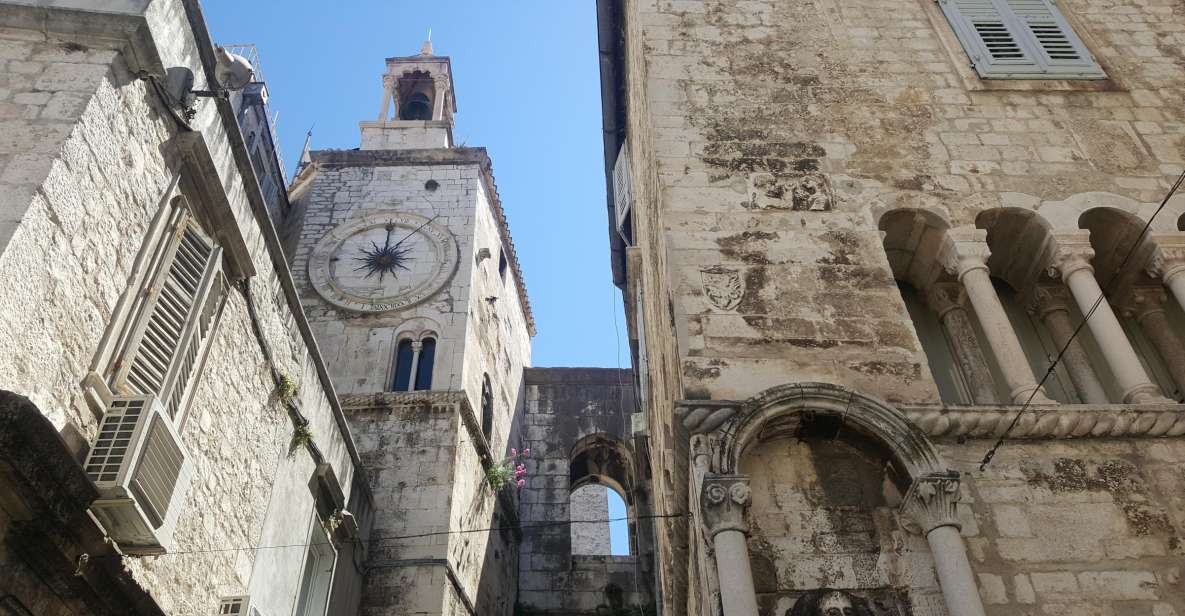
- UNESCO Diocletian’s Palace walk through the most important parts of the ancient complex
- Curated Roman-to-modern context so the Old Town makes sense, not just looks cool
- Top sights packed into 1.5 hours, including Peristyle and Jupiter’s Temple
- Golden Gates and Grgur Ninski—two spots that help you read the city like a map
- Pjaca and Fruit Square for a quick taste of everyday Split life
Why Split’s Diocletian’s Palace makes this walk worth it
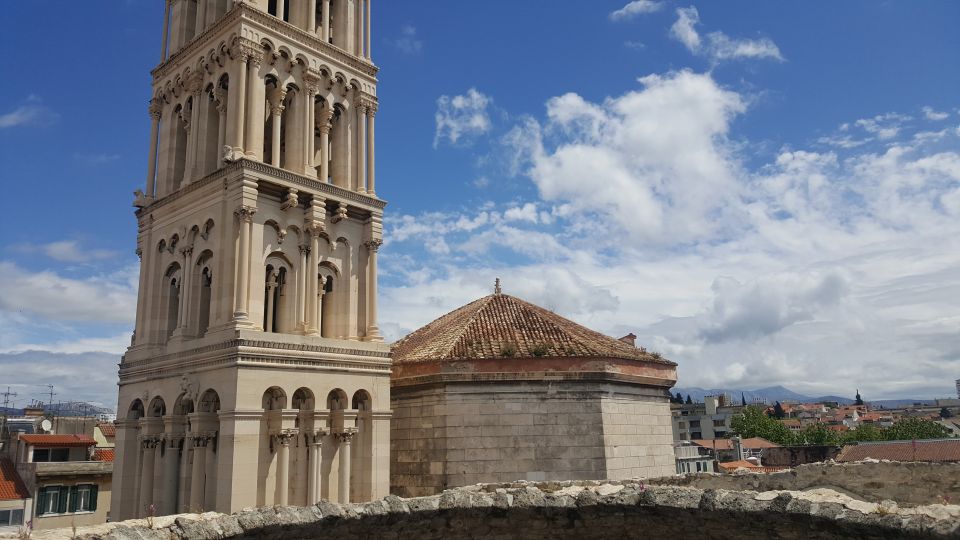
Split is famous for a strange, wonderful reason: part of the Old Town is basically built on top of an ancient palace. That’s why this tour works. Instead of tossing Roman history at you in one big lecture, you walk the spaces where the story actually happened.
Diocletian’s Palace is UNESCO-protected, and the tour route is designed around the parts that people most often miss when they wander on their own. Your guide points out what you’re looking at—how the palace was organized, how it connects to the street grid today, and why certain structures keep showing up in photos and postcards.
The best payoff is when the place stops feeling random. After an hour, you start recognizing the logic: open courtyards, ceremonial entries, and key landmarks that anchor the city’s identity.
You can also read our reviews of more walking tours in Split



Meeting at the National Theatre: quick logistics, clear start
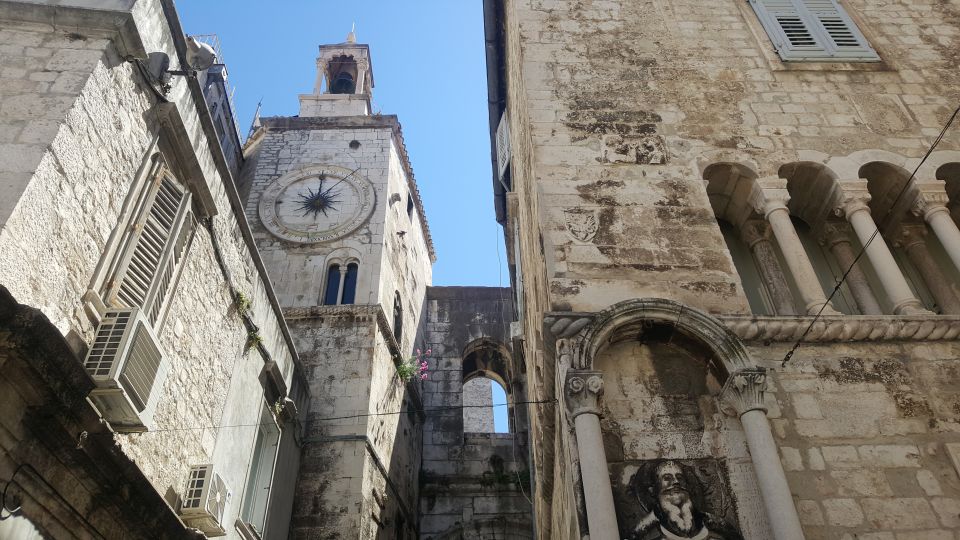
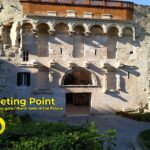
You meet in front of the National Theatre in Split, Trg Gaje Bulata 1 (21000). The good news is that it’s a central, obvious landmark—no wandering around trying to find the group.
The tour ends back at the meeting point. That matters more than it sounds. You get a clean circle of time—then you can head off on your own for lunch, a beach break, or whatever you planned next.
Timing is also part of the value. The duration is about 1.5 hours, and starting times depend on availability. If you’re trying to “spend less, see more,” this is built for you.
The UNESCO palace route: Peristyle, Vestibul, and Jupiter’s Temple
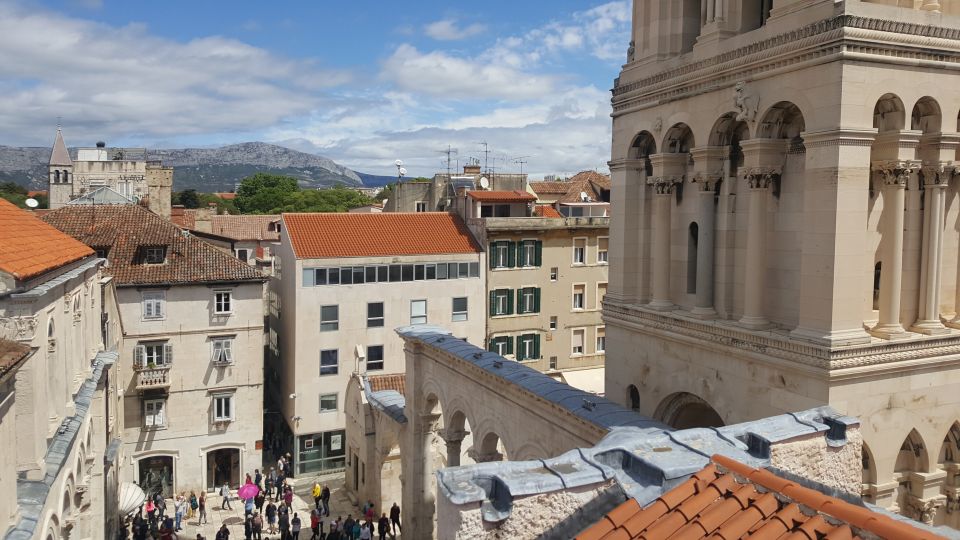
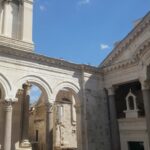
Inside the palace area, you’ll spend the bulk of your time on the major Roman anchors. Even if you’ve seen palace ruins before, this kind of layout is different because Split’s Old Town grew around it, not beside it.
Here’s how the main stops tend to land:
- Peristyle: Think of this as a core courtyard space. Your guide will help you read it—where you are in relation to the palace’s original ceremonial flow, and how the open layout shaped movement and daily life.
- Jupiter’s Temple: You’ll understand why people talk about it so much. It’s not just a structure; it’s a symbol of what Roman power looked like, and why religion and authority were intertwined in public spaces.
- Vestibul: This kind of space is easy to skip when you’re moving fast. With a guide, you notice the transitions—how you move from one kind of area to another, like passing through different layers of the palace’s original purpose.
The big benefit here is interpretation. You’re not just collecting photos; you’re learning how to recognize patterns: where important entrances sit, where ceremonial movement concentrates, and how the palace layout shapes the modern Old Town streets.
Golden Gates to Grgur Ninski: symbols you’ll spot again later
Once you’ve walked the palace core, the tour shifts to the sights that help you understand Split’s identity beyond the ruins. This is where the tour becomes more than archaeology.
You’ll see the Golden Gates, a memorable entry point that gives you a visual cue for the power-and-pageantry side of the Roman story. Even if you don’t memorize every detail, your brain will remember the structure because it’s such a clear marker in the Old Town.
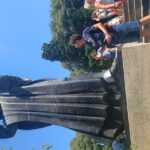
Then comes Grgur Ninski—a statue people love because it’s unmistakable and human. A good guide connects the statue to the bigger picture of who shaped Split across eras, not just who built the palace. The result is that you start thinking like a local: culture isn’t frozen in Roman stone; it continues through names, language, and public memory.
If you plan to walk on your own afterward, this section helps you. You’ll find yourself orienting quickly, because the landmarks act like signposts.
Cathedral of St. Duje: when Roman walls turn into a living city
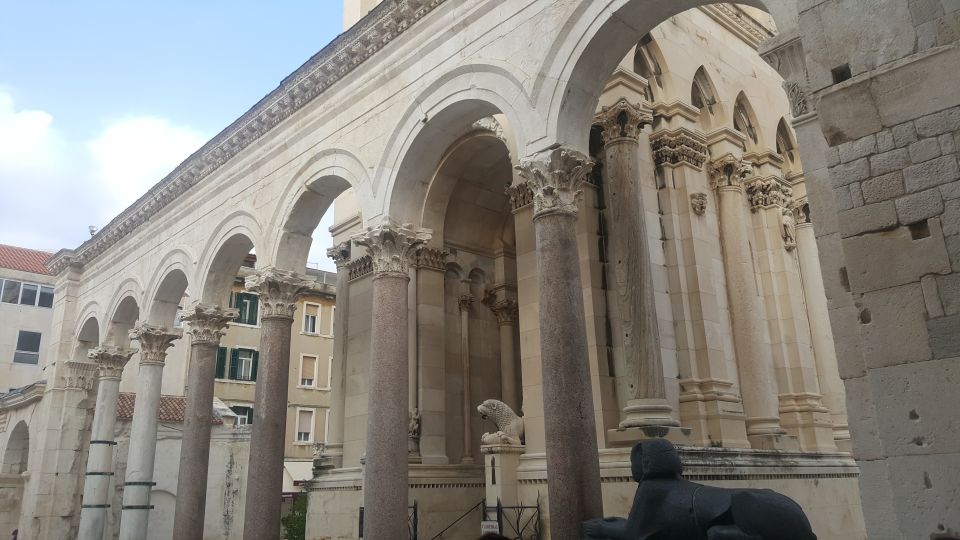
The Cathedral of St. Duje is one of those places where you feel the layers. You’re looking at a site that carries religious significance, but you’re also inside a setting that grew out of an earlier world of Roman architecture.
This is a strong stop for anyone who wants their guide to connect dots. With a licensed guide leading the way, you’re more likely to notice the shifts in style, the reason this building matters to Split, and how Split’s identity kept changing without losing its sense of place.
And because the tour keeps moving (this is still a walking tour with a set time), you get a focused version of the story. You’re not stuck in one spot for a whole afternoon. You leave with enough understanding to choose what to revisit later.




Pjaca and Fruit Square: a smart finish for photos and a food plan
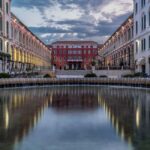
After the big-history moments, the walk lands in public squares that feel like where people actually live. Pjaca and Fruit Square are perfect for this finishing stretch because they’re visually open and easy to explore without needing a ticket.
This part of the tour is also practical. You can use it to set up your next move. If you’re hungry, you’re in the right area. If you want coffee, it’s easy to pivot. If you’re taking photos, you’re in a section of town where the streets naturally funnel you toward good angles.
One of the best extras is that you can ask your guide what to do next around the city center. That’s valuable because it turns a standard sightseeing loop into a personalized day plan. You’re not just checking boxes—you’re getting local priorities.
Price and value: what $28 buys you in real terms
At $28 per person for about 1.5 hours, this tour is priced like an efficient orientation session. You’re paying for three things you can’t easily replicate on your own: a licensed guide, a walking route that hits the right highlights, and context that makes the palace and Old Town read like a story.
Tickets and entrance fees are not included, so you should expect a little extra if you choose to go inside certain sights. But even without that, you’re getting the core experience: the palace walk and the key landmarks that most people come to Split for.
Where the value really shines is time. If you have only part of a day, you don’t want to spend it hunting down the right viewpoints, decoding signage, and second-guessing what matters most. This route does that work for you, and it leaves you with a cleaner plan for the rest of your day.
Making the most of a 1.5-hour pace (without feeling rushed)
This is a short, focused walk. That’s good news, but you should show up ready.
- Wear comfortable shoes. The palace streets and Old Town streets can be uneven in spots.
- Bring curiosity and questions. The best guides are happy to adjust on the fly—especially if you ask what you should see after the walk.
- Plan for photos, but don’t block the group. The best way to get pictures is to pause briefly in view points while the guide keeps moving.
Also, choose your language option based on comfort. The tour runs in English and Spanish with a live guide, so you’ll get the explanation out loud rather than relying on your phone at every stop.
Who this tour suits best (and who might want more time)
This walking tour is ideal if you want a high-impact introduction to Split’s Old Town and the palace complex without overthinking it. It’s also a good fit for first-timers who want their day to start with structure, not a wandering free-for-all.
It’s especially strong if you care about learning the why behind what you’re seeing. The guides praised for the tour’s storytelling approach—people name Anna and Victoria G for being engaging and clearly passionate. You can expect a history lesson that stays connected to what you’re standing in front of, including Roman times and how the area developed into modern Split.
If you’re the type who loves long interior visits, museum time, or slow café hopping, you might want to add extra free time after the walk—or do this early and revisit one or two stops later at your own pace.
Should you book this Split walking tour?
If you want the essentials of Split’s Old Town and Diocletian’s Palace in a tight, walkable format, I’d book it. The price is reasonable for a guided route that covers the biggest sights—Cathedral of St. Duje, Peristyle, Jupiter’s Temple, Golden Gates, Grgur Ninski, Pjaca, and Fruit Square—while giving you enough context to explore smarter afterward.
Book it even more confidently if you like guided storytelling. The strongest signal from the experience is guide quality—engaging, enthusiastic, and eager to show you the city through local eyes. Just remember to budget for any entrances that require tickets, and treat it as your orientation base camp for the rest of your Split day.
FAQ
How long is the walking tour?
The tour lasts about 1.5 hours.
Where does the tour start?
It starts in front of the National Theatre in Split, Trg Gaje Bulata 1, 21000, Split, Croatia.
Does the tour end at the same place?
Yes, it ends back at the meeting point.
How much does the tour cost?
The price is $28 per person.
What languages is the tour offered in?
The live guide offers Spanish and English.
What is included in the price?
Included are a licensed tour guide, a walking tour around Split city center, and insurance.
Are entrance tickets included?
No. Tickets and entrance fees for sights are not included.
Which sights are covered during the walk?
You’ll see major sights including the Cathedral of St. Duje, Peristyle, Jupiter’s Temple, Vestibul, the Golden Gates, Grgur Ninski statue, Pjaca, and Fruit Square.
Can I ask the guide about what to do after the tour?
Yes. You can ask your guide for recommendations for additional activities around the city center afterward.
What is the cancellation policy?
You can cancel up to 24 hours in advance for a full refund.
What does reserve now & pay later mean?
You can book your spot without paying immediately.