REVIEW · SPLIT
YOUR BEST PRIVATE TOUR – amazing Split and Diocletian’s palace
Book on Viator →Operated by Private Tour Guides Split, Hvar, Dubrovnik - Olynta Phos · Bookable on Viator
Split starts making sense when you walk its ancient streets.
This private tour is built around Diocletian’s Palace and the Old Town’s key squares, with a licensed guide keeping it flexible to your pace. The timing also helps: it’s designed for a morning start, when viewpoints feel calmer and you can actually think.
What I like most is how the guide turns stones into a timeline. You’ll see the palace from street level, then head under it to understand how Diocletian’s “real life” worked before the city grew around his walls. Second, you get the Old Town rhythm too: gates, squares, and small stops like the Nistrins? No—Nadalina chocolate and local landmarks that most self-guided walkers miss.
One consideration: it’s a walking tour in the Old Town, so expect stairs and uneven surfaces, and warm weather can feel like a weight. Also, entrance fees aren’t included, and the chocolate stop is specifically noted as closed on Sundays—so your exact route may shift.
In This Review
- Key reasons this private tour works so well
- Morning light and the palace, before the crowd swarm
- Where the tour begins: the Riva Harbor orientation
- Diocletian’s Palace: how gates and streets organize the whole place
- The substructures: the 1700-year-old “beneath it all” lesson
- The Peristyle and the palace rooms you can actually picture
- Eastern and Golden Gates: Roman planning in real-world form
- Sweet stop and small landmarks: chocolate, Ninski, and local squares
- The Split synagogue and the Jewish quarter footprint
- Price and value: what $124.34 buys you in real time
- Who should book this private palace-and-old-town tour
- Final call: should you book it?
- FAQ
- How long is the private tour?
- Is this tour truly private?
- Are entrance fees included?
- Do you offer hotel pickup?
- Where is the meeting point?
- Will the chocolate stop happen on Sundays?
Key reasons this private tour works so well
- Morning start strategy for better light and fewer people at the start of your day
- Riva Harbor warm-up so the palace area feels less random the moment you begin
- Two-level palace storytelling: you’ll tour the palace spaces and also the preserved substructures
- UNESCO-layered architecture from Roman planning to medieval Split and beyond
- Small, memorable local stops like Nadalina cokolada, Grgur Ninski, and the synagogue area
- Flexible private format where your guide can adjust timing and priorities
Morning light and the palace, before the crowd swarm
Split’s top sight is Diocletian’s Palace, but the secret is that the palace is more enjoyable when you’re not fighting foot traffic. This tour is scheduled to start in the morning window (about 1 hour 50 minutes to 2 hours 10 minutes total), which means you’re likely arriving when the streets are still manageable and details are easier to spot.
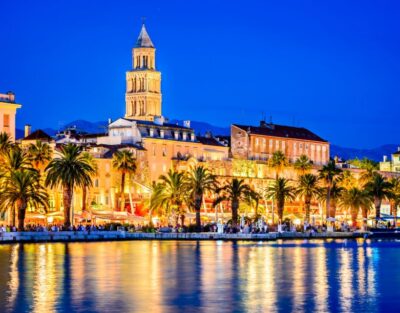
You’re also getting a “how to read the city” rhythm. The guide starts at the Riva, Split’s coastal promenade—your city’s living room—so you’re not just dropping into ruins. Instead, you’re learning the logic of the place as you go: gates lead to corridors, streets connect to squares, and the entire complex becomes easier to understand.
You can also read our reviews of more private tours in Split

Where the tour begins: the Riva Harbor orientation
The tour meeting point is set at Luka Split on Obala kneza Domagoja 7. If you’re staying in Old Town Split, pickup is possible from your hotel—but only if you’re in that Old Town area. If you’re arriving by cruise ship, pickup happens at the port dock exit gate.
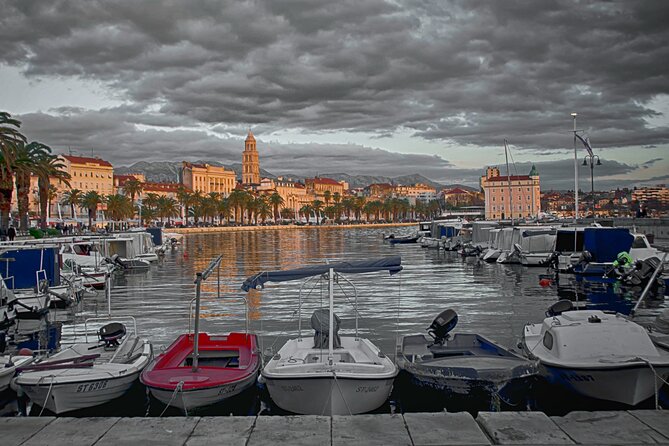
Once you start, you begin on the Riva Harbor promenade. The guide gives you a short introduction to Croatia and Split, then you transition toward the palace. This first stretch matters more than it sounds. It’s the moment where you get your bearings fast—and later, when you’re inside the palace walls, you’ll recognize streets and gates instead of wandering.
Diocletian’s Palace: how gates and streets organize the whole place
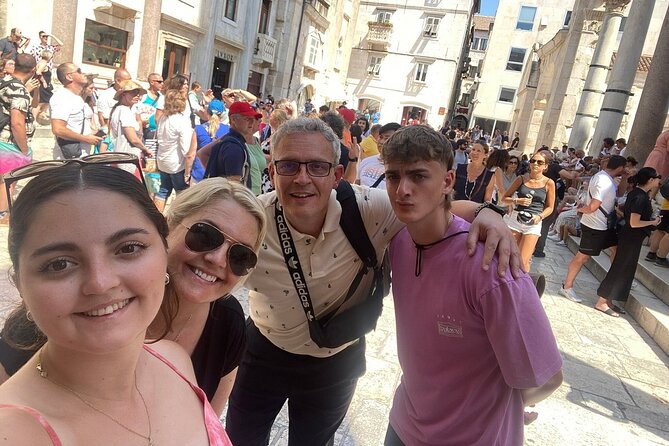
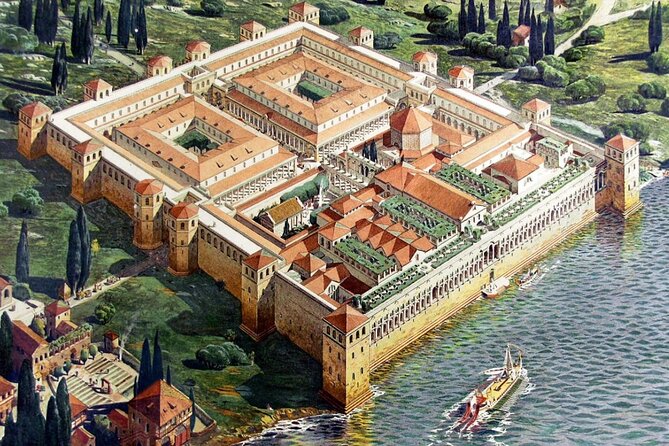
You’ll enter Diocletian’s Palace through the Southern gate for the main palace walk (about 90+ minutes for the palace interior time block). The guide frames it as one of the best-preserved Roman monuments from the 4th century AD—Diocletian’s emperor’s retirement home at first, then later a medieval city as Split grew.
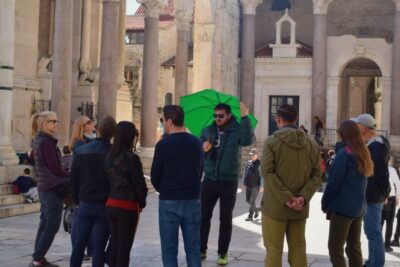
This is where having a guide pays off. Without one, it’s easy to see “cool old buildings” and stop there. With the guide, you start understanding the palace as a functioning Roman plan that later got reused by ordinary city life.
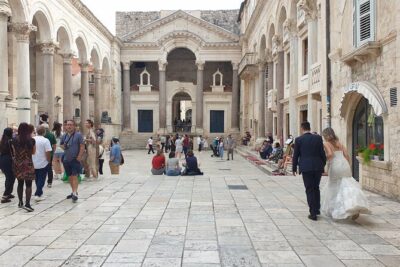
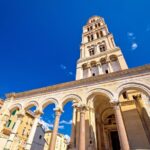
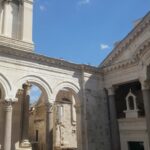
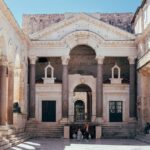
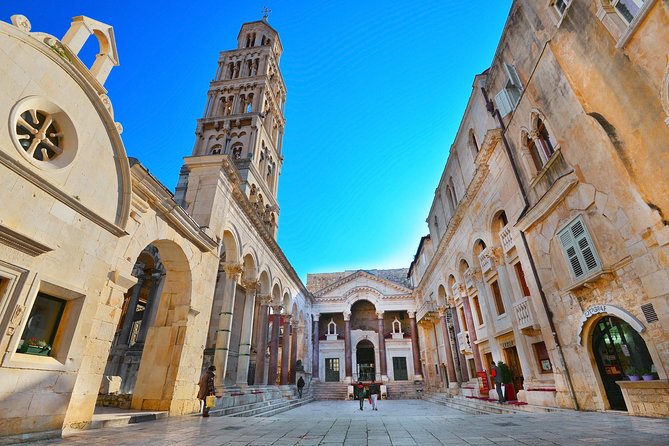
You’ll also see the palace’s central Peristyle square, surrounded by mixed architectural layers. Think Roman foundations, then Egyptian and ancient references you can still sense in the way the space is arranged, then medieval elements and modern traces around the edges. It’s a visual timeline more than a museum label.
And yes, the palace experience includes the world’s oldest cathedral, which is one of those facts that sounds dramatic until you’re standing near the area where it belongs. The point isn’t just the superlative—it’s that Split kept building on top of itself for centuries.
The substructures: the 1700-year-old “beneath it all” lesson
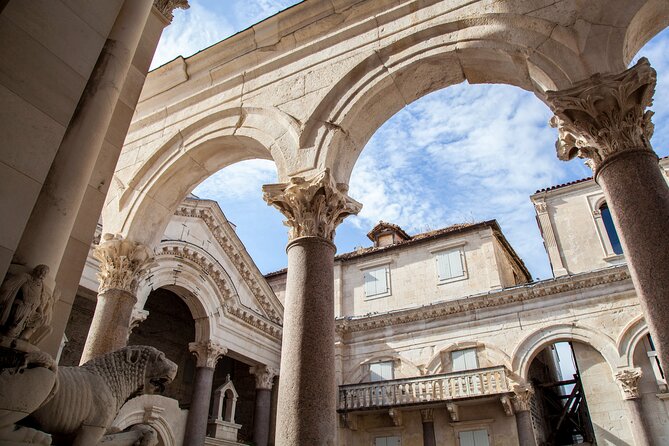
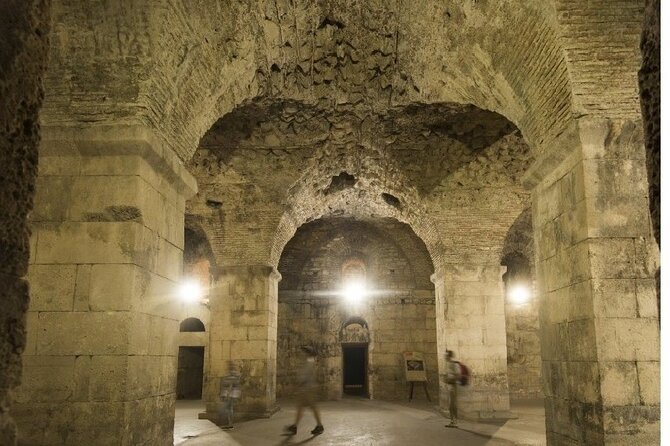
One of the strongest parts of this tour is the visit to the palace substructures. You enter the palace through the Bronze gate to reach the most incredibly preserved basements—about a 1700-year-old look at what sat under imperial life.
This section is not just a hallway of ruins. It’s structured around Diocletian as a person: how he rose to emperor, how he ruled, the glory years, and his abdication and retirement. The guide also talks about construction and the architectural concept behind the palace.
A detail I especially like in this part is the mention of stone from Brac used in the palace building. That single point helps you connect the palace to the wider region. Split’s story isn’t only local; it’s part of a Mediterranean supply chain and power network.
There’s also a historical chain that’s worth paying attention to: nearby Salona was important as a Roman capital town, and invaders from the north destroyed Salona and helped transform the palace into the medieval town of Split. In other words, what you’re seeing in the palace is Roman power, then survival, then adaptation.
Expect this portion to be around 30 minutes, with the guide explaining the architecture while you walk through it.
The Peristyle and the palace rooms you can actually picture
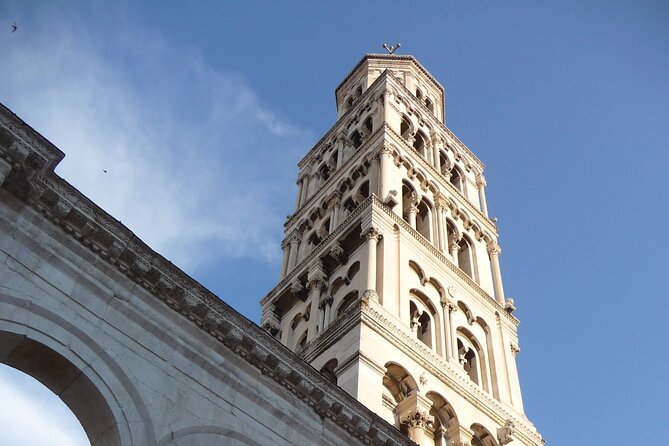
After the gates and inner streets, you spend focused time at the Peristyle, the palace’s central square. This is where you can feel why the palace worked as a kind of city within the city. The space is framed by different styles across eras, including mentions of a cathedral bell tower and noble palaces.
From there, you may stop at the Vestibulum of Diocletian’s Palace, described as a circular building that served as a lounge and an entrance to the emperor’s private chambers. If conditions and schedules align, there’s sometimes an opportunity to hear Dalmatian klape singing here. Even if it’s not happening, the guide’s explanation helps you imagine the room’s purpose.
This is also a “slow down” moment. The palace can rush you if you’re trying to sprint from photo spot to photo spot. The guide will keep the pace readable, and you’ll be able to notice the small architectural cues without feeling lost.



Eastern and Golden Gates: Roman planning in real-world form
The tour touches key access points: the Eastern (Silver) Gate and then later the Golden Gate. The Eastern gate is described as the start of the main Decumanus street and is tied to the east palace gate and the beginning of that main axis.
Then you move back toward the Golden Gate, the palace’s main entrance. Here, the guide explains the Roman streets Cardo and Decumanus concept and the road relationship toward Salona, the Roman capital town. It’s one thing to learn these names; it’s another to walk past the logic of how a Roman city directed people.
This is where you’ll likely notice how the palace’s entrances shaped who went where—and why later medieval streets grew along those same lines.
Sweet stop and small landmarks: chocolate, Ninski, and local squares
Not every stop is a major monument. That’s good. The tour includes a local chocolate stop at Nadalina cokolada, with a couple of sweet treats using Mediterranean fruit or herbal flavors. The tour notes this place is closed on Sundays, which means you’ll either skip it or your guide will swap it for another moment.
You’ll also see the Grgur Ninski statue, the large statue of the 10th-century Croatian archbishop by sculptor Ivan Mestrovic. It’s the kind of spot you can skim quickly, but a guide will help you connect why this figure matters to Croatian identity and why the monument became a focal point for the Old Town.
From there, you move through the medieval Split squares:
- Narodni Trg, the main medieval square, with the City Hall and surrounding palaces
- Fruit’s Square (Trg Brace Radic), with the Marko Marulic statue in the center
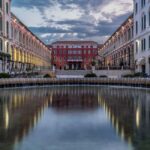
- Prokurative Square, a pleasant open space surrounded by neo-Renaissance buildings, often compared to St. Mark’s Square in Venice
I like how these stops change the pace. After the palace’s heavy Roman structure, the squares feel like the city’s everyday living room—less “rule of an empire,” more “this is where people actually meet.”
The Split synagogue and the Jewish quarter footprint
The tour includes a visit to the Split Synagogue and the surrounding 16th-century Jewish ghetto area. This is historically significant even when you’re not chasing religious architecture. The guide frames it as part of the layered story of coexistence within Old Town spaces.
You’ll also get the fact that this synagogue is the third oldest operating synagogue in Europe. Again, it’s the kind of detail that can feel like trivia until you stand there and realize how long community life has continued in the same urban fabric.
Price and value: what $124.34 buys you in real time
At about $124.34 per person, you’re paying for a private, licensed guide and a route that’s tightly focused on the most important palace areas and Old Town connections. This isn’t a bargain-basement “walk around and point” situation; it’s built around interpretation—especially in the substructures portion, where the context is everything.
Entrance fees aren’t included, so you should budget extra for any ticketed elements you might want during the stops. But the tour does include guide time, a custom-made program, and the core of what most people come to Split for: Diocletian’s Palace and the cathedral area, plus the city’s key squares and a synagogue visit.
The timing also adds value. This tour is often booked about 60 days in advance, so if you’re traveling in peak season, securing your morning slot can be a smart move. You’re not just buying history—you’re buying a smoother, less frustrating experience.
Who should book this private palace-and-old-town tour
This is a great fit if you want to:
- Get a clear understanding of Diocletian’s Palace without feeling like you need a guidebook
- Enjoy a morning walk through Old Town Split with room to ask questions
- Focus on major sites plus a few local cultural stops like chocolate and the Ninski statue
- Travel as a group that prefers privacy over joining a large tour bus crowd
It’s also worth considering if you care about layered history: Roman emperor planning, later medieval conversion into a functioning city, and visible traces across centuries.
One note for families: children under 11 are listed as touring free of charge, as long as they’re accompanied by an adult.
Final call: should you book it?
If Diocletian’s Palace is your main goal, I’d book this. The biggest reason is the pacing and structure. You’re not just ticking off photos—you get palace context from the street and from underneath it, plus a guided walk through the medieval squares that make Split feel like a real city instead of a historic set.
Book it if you can handle Old Town walking in the time of year you’re going. Consider it carefully if you want a very slow, sit-down-heavy itinerary or if you’re traveling on a Sunday and want that specific chocolate stop.
If you want your Split day to feel organized, intelligent, and still fun, this private tour is a strong bet.
FAQ
How long is the private tour?
The tour runs about 1 hour 50 minutes to 2 hours 10 minutes.
Is this tour truly private?
Yes. It’s a private tour/activity, meaning only your group participates.
Are entrance fees included?
No. Entrance fees aren’t included. The stops list both free and paid entry items.
Do you offer hotel pickup?
Pickup is offered only if you’re staying in Old Town Split accommodation. If you’re not in Old Town, you’ll meet at an Old Town meeting point instead.
Where is the meeting point?
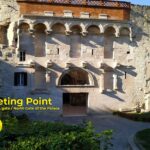
The start is at Luka Split, Obala kneza Domagoja 7, Split. If you’re not staying in Old Town, the alternative meeting point is at the bronze model at Riva (Obala hrvatskog narodnog preporoda 23).
Will the chocolate stop happen on Sundays?
The tour notes that Nadalina cokolada is closed on Sundays, so it will likely be skipped or replaced.