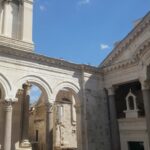
Split’s old center feels like a time machine with good shoes. This guided walk ties together Diocletian’s Palace and the city’s top landmarks in a tight loop, so you understand what you’re looking at without getting lost. With Nikol leading in English, you’ll get clear context and plenty of time for questions as you move from one Roman-to-medieval moment to the next.
I really like two things about this tour: the focused pacing (about 1 hour 30 minutes) and the way the guide connects big-name monuments to smaller details you’d otherwise miss. You’ll spend real time at the Peristyle, then shift into the Cathedral of Saint Domnius—where the bell tower is basically Split’s visual signature. The final stop, the Temple of Jupiter, rounds out the Roman story with a “how did this all fit together?” feeling.
One thing to plan for: the old town includes some stairs and uneven surfaces. It’s not described as a marathon, but if you dislike steps or rough ground, wear grippy shoes and expect short climbs.
In This Review
- Key highlights you’ll actually feel
- Split Old Town, but make it understandable
- Price and what you get for $41.70
- Where you meet and how the morning flows
- Stop 1: The Peristyle of Diocletian’s Palace
- Stop 2: Cathedral of Saint Domnius (bell tower + treasury)
- Stop 3: Temple of Jupiter inside Diocletian’s Palace
- Why this exact order helps you understand Split
- The guide experience: what makes it feel personal
- Who should book this (and who might not)
- Practical tips before you go
- Should you book? My take
- FAQ
- How long is the Discover Split’s Hidden History guided walking tour?
- What language is the tour offered in?
- Where do I meet, and when does it start?
- How many people are in the group?
- Are admission tickets included?
- Is coffee or tea included?
- Is the tour suitable for most travelers?
- What’s the weather requirement?
Key highlights you’ll actually feel
- A 90-minute “orientation loop” through the Roman core so Split’s center makes sense fast
- Nikol’s Q&A style keeps the tour interactive rather than a lecture
- Peristyle courtyard focus on what Diocletian built and why it matters
- St. Domnius Cathedral has more than a bell tower including its treasury and Glagolitic documents
- Temple of Jupiter ends the Roman thread with one of the best-preserved palace-era temples
Split Old Town, but make it understandable
Split can be a head-scratcher at first. You arrive in the middle of a Roman palace, then suddenly you’re staring at a cathedral that looks like it belongs to a completely different era. That’s exactly why I like this tour format: it gives you a simple timeline you can hold in your head while you walk.
You’re not just ticking off monuments. The route is structured around the way Diocletian’s Palace functioned, then how later Split life adapted those spaces. In a short tour, that’s gold. You finish with the kind of mental map that helps you wander confidently on your own afterward—without needing a printed guide every five minutes.
The group stays small (up to 15), which matters more than you might think in tight historic spaces. With fewer people, you can actually hear the guide, and you’re more likely to get answers to the specific questions that pop up while you’re standing in the exact spot the story refers to.
You can also read our reviews of more walking tours in Split



Price and what you get for $41.70
At $41.70 per person for about 1 hour 30 minutes, the value comes from three practical things:
- A certified English-speaking local guide (not a vague audio tour).
- A guided walk through Split Old Town that helps you connect the dots.
- Admission tickets included for the stops covered during the tour.
Now, there’s one nuance worth noting. The stop descriptions indicate admissions are included for the sites on the route, while the overall listing also mentions optional entrance fees. To avoid surprises, think of it this way: the tour is designed to cover what’s needed for the experience at the stated stops, but if you want extra add-ons beyond what’s included, you’d pay those separately.
Where you meet and how the morning flows
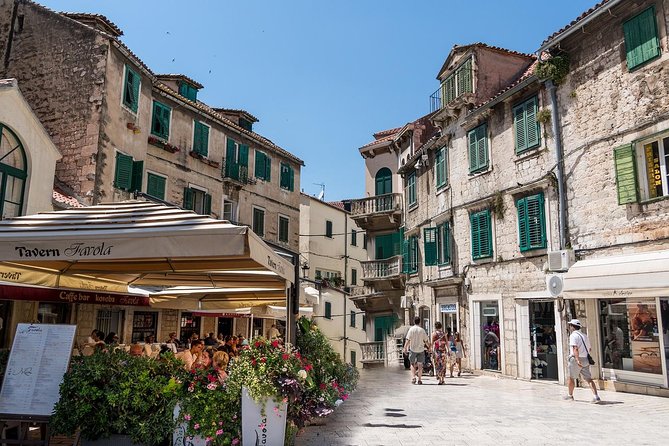
You’ll meet at Obala Lazareta 3, 21000, Split, with a start time of 9:00 am. The tour ends back at the meeting point, so you don’t have to worry about finding your way out of the maze afterward.
You’ll also use a mobile ticket, which is handy if you’re already juggling phones, water bottles, and that one charger that always seems to disappear. Confirmation comes when you book, and the experience is offered in English.
And yes, bring the basics:
- comfortable walking shoes (old stone + stairs)
- a small bottle of water if you tend to get thirsty
Coffee and/or tea aren’t included, so don’t plan on a post-tour cup being part of the deal.
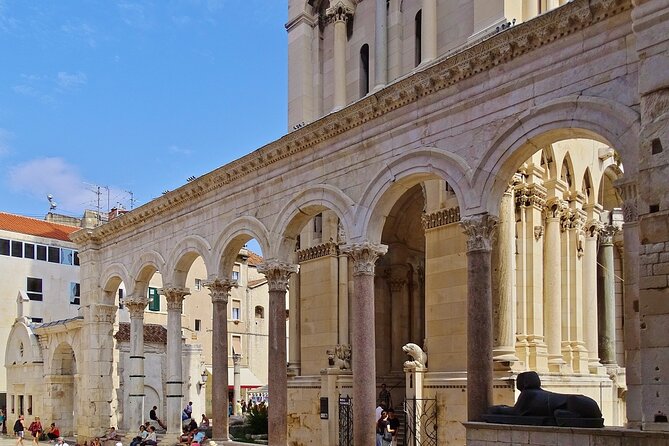
Stop 1: The Peristyle of Diocletian’s Palace
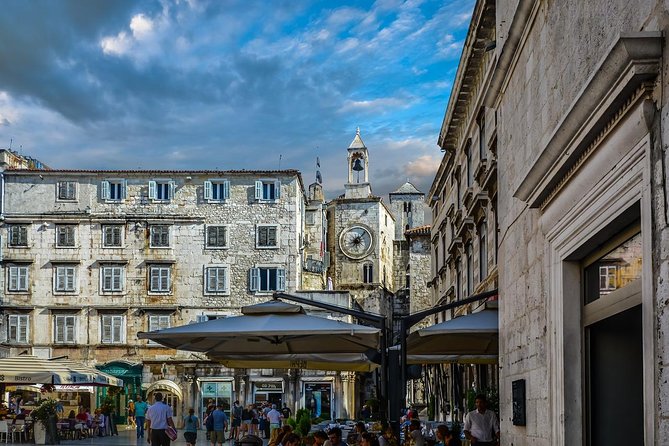
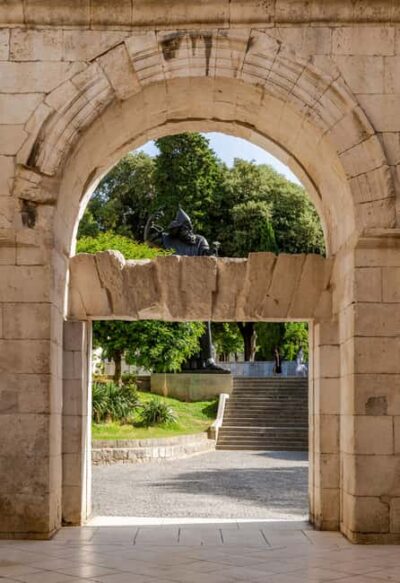
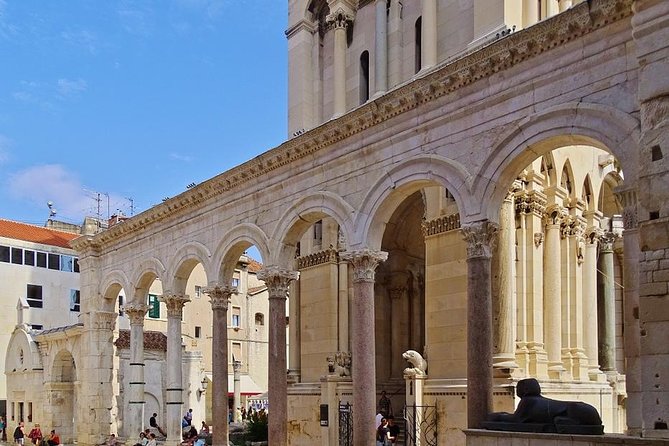
This is where Split feels most theatrical—in a Roman way. The Peristyle is the palace’s beating heart, originally a courtyard within Diocletian’s fortress. If you’ve ever wondered how Roman power expressed itself through architecture, this is the moment it clicks.
What you’ll do here:
- Spend about 30 minutes in the space that functioned like an interior public stage.
- Learn how the palace courtyard was designed to handle crowds and daily life inside the fortress walls—not just elite living rooms.
Here’s why this stop is valuable even if you’ve seen Roman ruins before: the Peristyle isn’t just a pretty courtyard. It’s the organizational center for everything around it. When you understand how the courtyard worked, the later landmarks stop feeling random. They start feeling like they were built into a system.
One practical thought: because you’ll be standing and looking at details, it helps to have your phone charged for photos. The Peristyle is one of those spots where you’ll want to capture angles, especially if you plan to come back later and re-check what you learned.
Stop 2: Cathedral of Saint Domnius (bell tower + treasury)
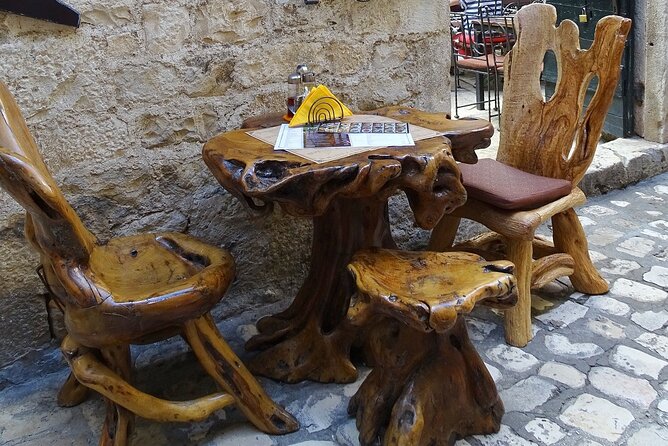
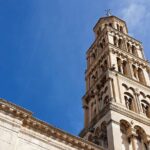
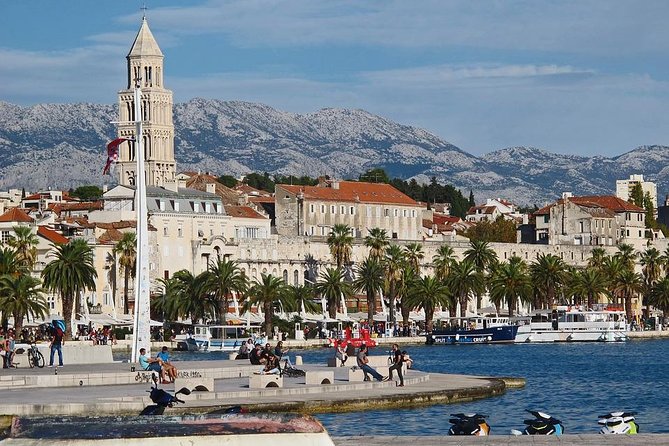
If Split had a single “brand logo,” it would likely be the bell tower of Saint Domnius. This stop earns attention for a simple reason: it’s instantly recognizable from key views around town. But the tour goes further than the postcard angle.
The cathedral’s story begins with Diocletian. It was built as a mausoleum for him, and the narrative ties Diocletian to the last major period of Christian persecution in the Roman world. Even if you don’t track every historical nuance, you’ll appreciate the bigger point: power changes religion, but the architecture keeps talking.
What you’ll notice during your 30-minute stop:
- the bell tower that became an emblem of Split
- an original colonnade of 24 columns still circling the exterior
- and a look at the treasury, which is described as housing reliquaries, icons, church robes, illuminated manuscripts, and documents written in Glagolitic script
That Glagolitic bit matters. It’s the kind of detail that makes a guided tour worth it. Without a guide, you might notice the building and move on. With one, you understand that these objects connect Split to broader Slavic and early Christian cultural threads.
Drawback to keep in mind: this isn’t a slow museum detour. It’s a guided walk with timed stops. If you want to linger deeply inside the treasury area, you’ll likely want to plan a return visit later when you can go at your own speed.
You can also read our reviews of more guided tours in Split





Stop 3: Temple of Jupiter inside Diocletian’s Palace
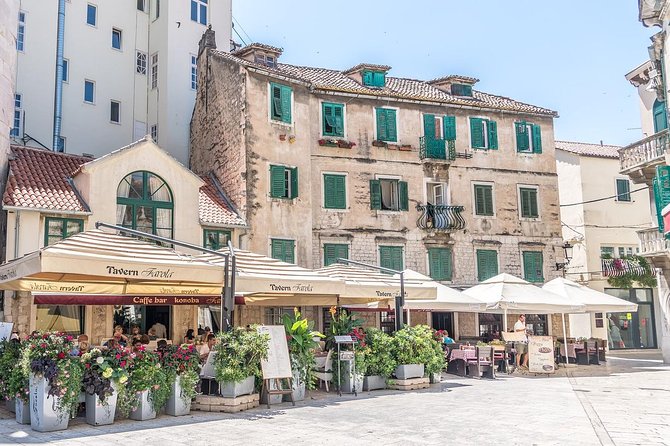
Your last stop is shorter—about 15 minutes—but it’s a strong finish. The Temple of Jupiter is from the 3rd century and is considered one of the most well-preserved Roman temples in the world. That preservation is the point: it shows you what Diocletian’s palace worship looked like before Christian rule reshaped Roman public life.
Here’s the key context the guide brings: Diocletian believed he was the reincarnation of Jupiter, and Jupiter was heavily worshipped until the Roman Empire shifted toward Christianity. So you’re not just looking at an old building—you’re seeing a snapshot of belief systems layered into a single complex.
What you’ll get out of this quick stop:
- a clear closing explanation for how the religious landscape of the palace changed
- a Roman temple that feels more “complete” than many ruin fragments you might see elsewhere
- a satisfying end to the tour’s Roman-to-Split storyline
If you’re the type who likes to see the final piece before moving on, this stop is a good fit. It avoids the feeling of ending on a blur.
Why this exact order helps you understand Split
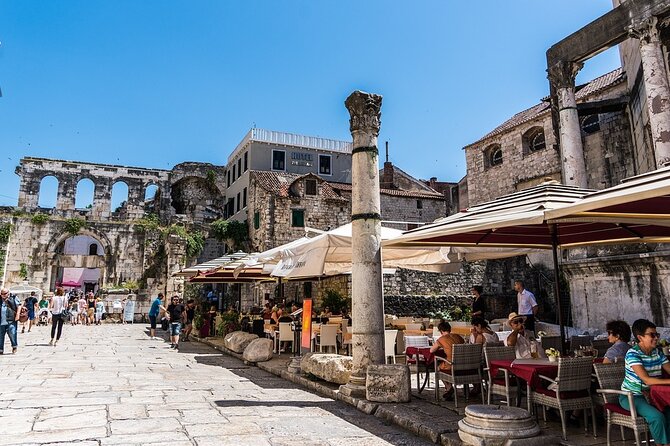
I like the logic of the sequence: Peristyle first, then the cathedral, then the temple. It gives your brain a pathway.
- The Peristyle sets the scene: this is Diocletian’s palace core.
- The Cathedral of Saint Domnius shows adaptation: new religious meaning built into older structure.
- The Temple of Jupiter gives the religious origin story: how the palace world worked at the start.
That matters because Split’s center can feel like a collage if you don’t have a guide building connections. A short tour like this gives you enough framework to interpret what you’ll see the rest of the day—without overloading you with details you can’t hold.
Also, the pace hits a sweet spot. The tour is long enough to be educational, but short enough that you don’t burn your whole morning. That’s perfect when Split is also competing with beaches, ferry schedules, and the inevitable need to snack.
The guide experience: what makes it feel personal
The overall feedback highlights how much guests appreciated the guide’s communication style. Nikol is repeatedly described as extremely informative, answering questions clearly and keeping the pace comfortable.
That “just right” pacing is underrated. If a tour is too fast, you miss the little clues that make landmarks click. If it’s too slow, you start zoning out and you stop caring about details. This one aims for the middle.
And because the group cap is 15, you’re not just listening from the back of the pack. You’ll likely hear enough to ask follow-ups and get answers while you’re standing right in the context.
Who should book this (and who might not)
This tour is a strong choice if:
- you want a first-pass orientation to Split Old Town
- you like Roman architecture and want it explained in plain language
- you want an efficient experience without committing half a day
- you’re traveling in English and want a real guide
It might be less ideal if:
- you want to spend long hours inside a museum-like setting
- you strongly dislike stairs or rough stone streets (there are some, but not described as extreme)
Practical tips before you go
- Wear grippy shoes. Old stone + steps = the only “danger” you should take seriously.
- Arrive a few minutes early. Split’s center is easy to get turned around in, especially if it’s your first morning.
- Bring a phone charger if you like photos. You’ll likely want to capture the bell tower and architectural details.
- Plan to do your own wandering after. This tour gives context; your free time is where you turn context into discovery.
And if you’re a question person, this is the type of tour where asking works. The guide’s whole style is built around answering.
Should you book? My take
If you’re planning a trip to Split and you want your day to start with clarity, I’d book this. For $41.70 and about 90 minutes, you get an efficient guided walkthrough of three major sites tied together by Diocletian’s palace story. The included admission tickets for the stops covered add to the value, and the small group size keeps it from feeling crowded.
The only real reason to skip is if you know stairs and uneven old-town walking will frustrate you. Otherwise, this is exactly the kind of tour that helps you see more during the rest of your time in Split because you’re not guessing what you’re looking at.
FAQ
How long is the Discover Split’s Hidden History guided walking tour?
It’s about 1 hour 30 minutes.
What language is the tour offered in?
The tour is offered in English.
Where do I meet, and when does it start?
The meeting point is Obala Lazareta 3, 21000, Split, Croatia, and the tour starts at 9:00 am.
How many people are in the group?
The tour has a maximum of 15 travelers.
Are admission tickets included?
Admission tickets are indicated as included for the stops on the route. Optional entrance fees beyond what’s included may not be covered.
Is coffee or tea included?
No, coffee and/or tea are not included.
Is the tour suitable for most travelers?
Most travelers can participate, though there are some stairs.
What’s the weather requirement?
It requires good weather. If canceled due to poor weather, you’ll be offered a different date or a full refund.