REVIEW · SPLIT
History & Cultural Walking Tour of Split and Diocletian’s Palace
Book on Viator →Operated by Ancient Tours · Bookable on Viator
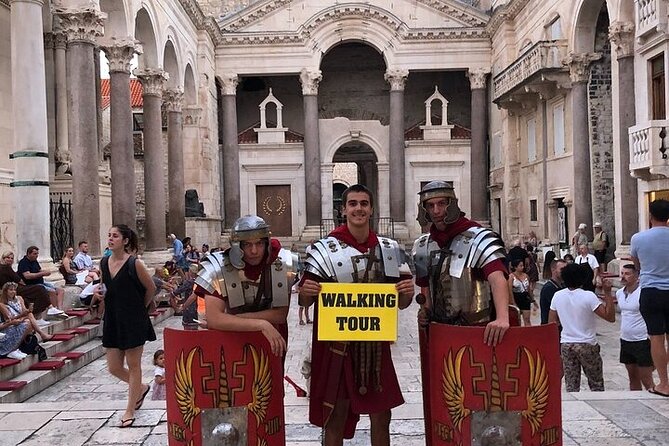
Split’s palace walls explain everything fast. In about 1 hour 30 minutes, this small-group walk turns the UNESCO old town into a clear story, starting inside Diocletian’s Palace and moving outward to places you’ll keep noticing after the tour. I especially like the way the route sticks to the most meaningful sights without feeling rushed, and I like that major areas of the palace route use free admission tickets during the stop times.
The flip side: it’s a walking tour with some steps, so it’s not recommended if you struggle with high steps. Still, the pace works for most people, and the cap of 15 keeps the guide’s attention focused (with guides like Darko, Ivana, and Ante/Anthony showing strong command of the material and plenty of personality).
In This Review
- Key things you’ll enjoy most
- Where Diocletian’s Palace fits into your first hours in Split
- Meeting at Peristil and the practical rhythm of the walk
- Stop 1: The Peristyle of Diocletian’s Palace (the main square)
- Stop 2: The vestibule, plus the chance for traditional Dalmatian singing
- Stop 3: Diocletian Palace substructures (what’s underneath and why it matters)
- Stop 4: The Golden Gate and Gregory of Nin (language history you can see)
- Stop 5: Riva Harbor and the bronze model of the palace
- Stop 6: Fruit’s Square (Trg Brace Radic) and Marko Marulić
- Stop 7: The Split Synagogue—what’s included and what’s extra
- Guide quality is the real engine here
- Price and value: $22.98 for a tight, high-impact route
- Who this tour is best for (and who should reconsider)
- Final verdict: should you book the Split Palace history tour?
- FAQ
- How long is the History & Cultural Walking Tour of Split?
- How much does the tour cost?
- What language is the tour offered in?
- Where is the meeting point?
- How big is the group?
- Is admission included for the sights?
- What is the cancellation option?
Key things you’ll enjoy most
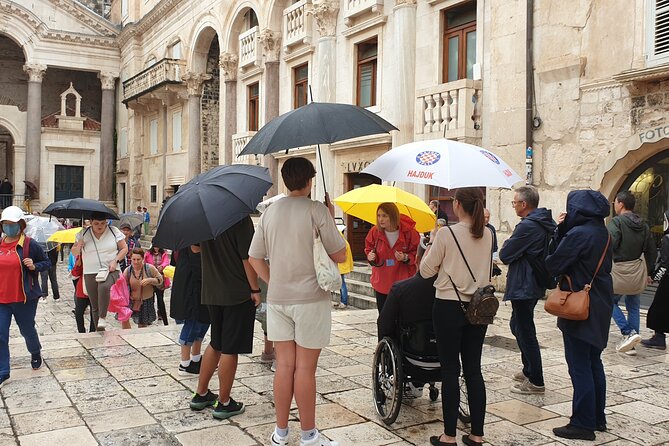
- A 1.5-hour orientation to Split’s UNESCO city center that helps you connect the dots fast
- Diocletian’s Palace highlights in a logical order: Peristyle, Golden Gate, and the substructures
- Free-entry stops for most of what you’ll see, plus an optional extra at the synagogue
- Potential Dalmatian singing moment during the palace vestibule stop
- Small group limit (max 15) for questions and better guide pacing
Where Diocletian’s Palace fits into your first hours in Split
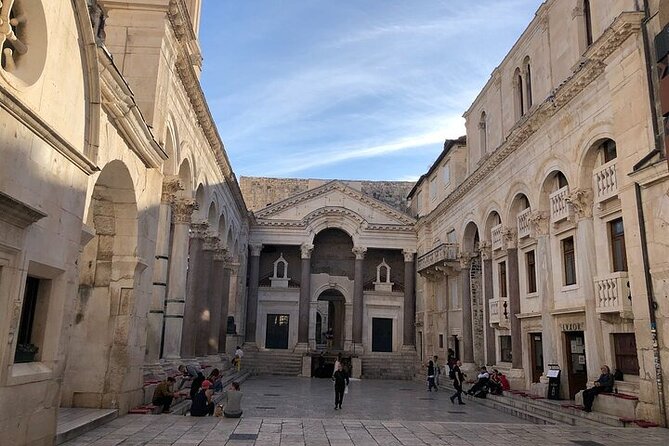
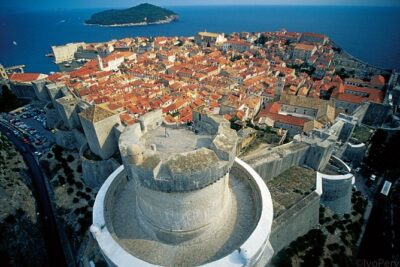
Split can feel like a maze at first—walls, arches, tiny lanes, and sudden big-open squares. The trick is knowing what you’re looking at. This tour gives you that frame quickly by starting in the heart of Diocletian’s Palace and then walking outward to the surrounding old town sights.
What I like most is the “structure” of the experience. You’re not just sightseeing. You’re building a map in your head: palace center → palace entrances → harbor and promenade mood → neighboring squares → the Jewish history site you pass along the way. Once you understand that flow, you’ll feel less lost during the rest of your trip.
And because the group is capped at 15, the guide can steer the conversation. If you’re the type who likes to ask why something is positioned where it is, you’ll get more than canned facts.
You can also read our reviews of more walking tours in Split


Meeting at Peristil and the practical rhythm of the walk
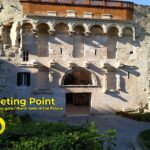
You’ll start at Peristil ul., 21000, Split, Croatia, and the tour ends back at the same meeting point. That matters more than it sounds: you’re not spending your limited energy trying to figure out where the route dumps you.
The walking format is set up for about 1 hour 30 minutes total (approx.). Most of the stops are in the 5 to 15 minute range, so the schedule stays punchy. It’s long enough to get context at each place, short enough that you can still enjoy your afternoon without feeling like your day is locked into a single plan.
Also worth noting: it’s offered in English, uses a mobile ticket, and the meeting area is near public transportation. Service animals are allowed too. If you’re planning your first day in Split, this is the kind of “use your energy wisely” tour that pairs well with later wandering.
Stop 1: The Peristyle of Diocletian’s Palace (the main square)
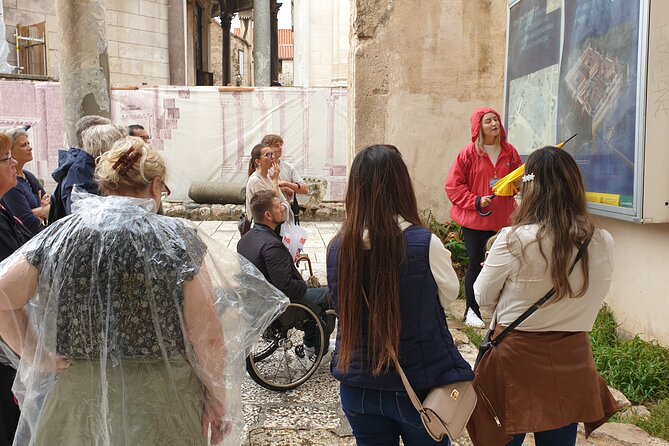
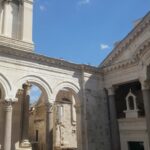
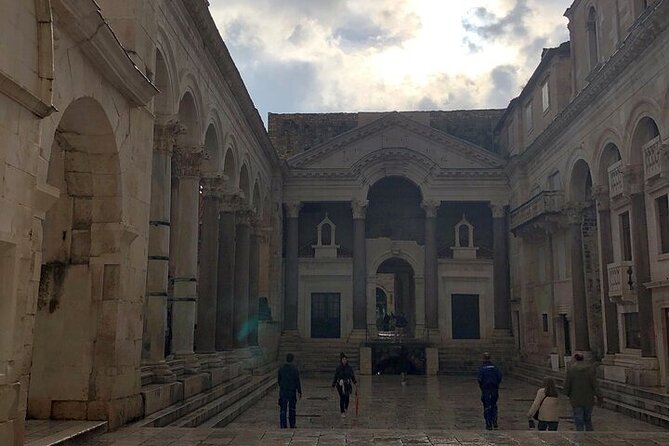
Your first landmark is the Peristyle—the central square inside Diocletian’s Palace. This is the best place to start because it functions like the palace’s hub. From here, you can reach many of the other palace areas, so your brain instantly understands where everything fits.
You get about 15 minutes here, with admission ticket access marked free for this stop. In plain terms: this is where you learn how to look. The guide points you toward the key parts you’ll see again later, which makes the rest of the route feel less like random sightseeing and more like following a story.
If you like Roman-era architecture but also want the human explanation—what people did in these spaces and how the meaning changed over time—this stop sets that tone.
Stop 2: The vestibule, plus the chance for traditional Dalmatian singing
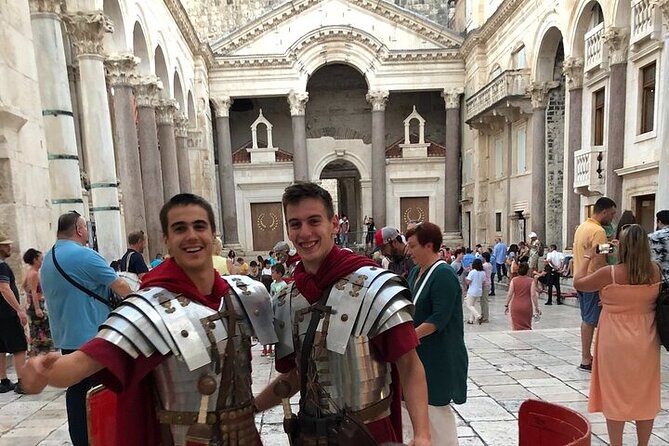
Next comes the vestibulum of Diocletian’s Palace. This is a shorter stop—about 5 minutes—but it’s one of those places that can make the whole tour feel alive.
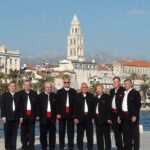
The big selling point is that you’ll learn about the vestibule’s history, and you might even hear traditional Dalmatian singing during this segment. Because it’s described as potentially happening, don’t treat it as guaranteed. Still, even if you don’t catch singing in that exact moment, the guide’s explanation helps you understand why the sound and the stone both matter here.
This stop is small on time, but it often feels big on atmosphere.
Stop 3: Diocletian Palace substructures (what’s underneath and why it matters)
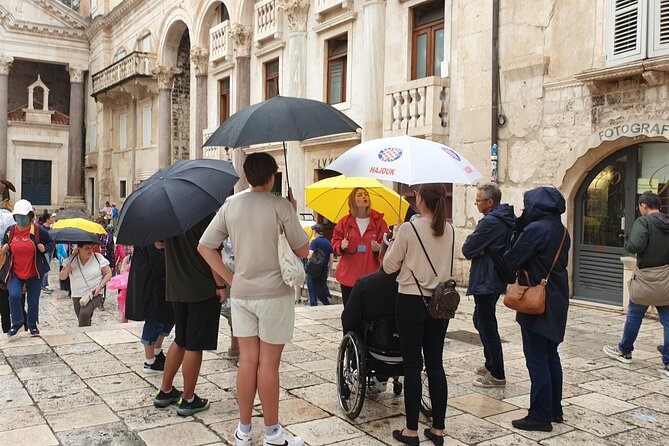
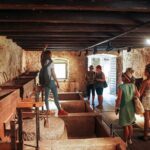
Then you move through the substructures of Diocletian’s Palace for about 10 minutes. This is where the guide shifts from “what it looks like” to “what it did and how it changed.”
You’ll learn about the history of how these spaces were constructed and what they were used for over time. One important detail: you’ll not visit the museum part of the substructures during the tour. That said, you can visit it later on your own if you want to go deeper.
Why this stop is valuable even without the museum visit: it gives you context for what you’re already seeing. A palace isn’t just a pretty exterior. It’s systems—levels, functions, and practical uses that shaped daily life.
You can also read our reviews of more historical tours in Split
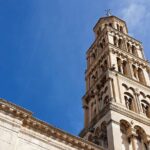
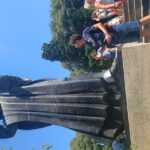

Stop 4: The Golden Gate and Gregory of Nin (language history you can see)
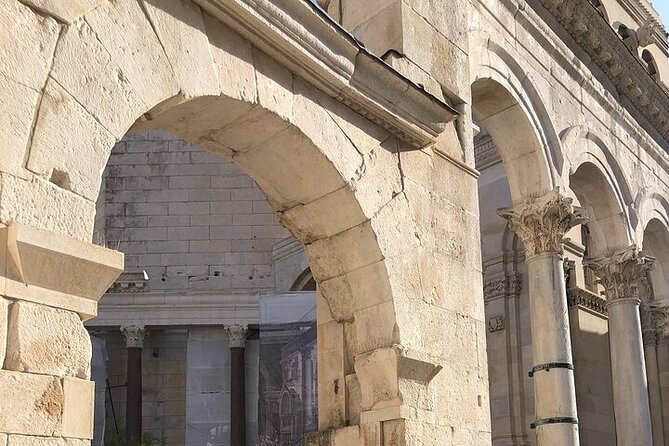
The tour heads to the Golden Gate, the main entrance of Diocletian’s Palace, with about 10 minutes here. This is another good “anchors of orientation” stop: you can picture where someone would arrive, and how the palace connects outward into the city.
The guide also brings in Gregory of Nin, including a statue you’ll see at this point, plus why Gregory matters to history and language. That’s a smart inclusion for a walking tour because it prevents you from treating the area as only Roman stone. You’re seeing layers—palace power, later cultural identity, and the way public monuments communicate meaning.
If you’re the type who wants your photos to mean something later, this is one of the stops that helps.
Stop 5: Riva Harbor and the bronze model of the palace
Next is Riva Harbor, about 15 minutes. This shift is more than a break from stone walls. It’s where Split’s atmosphere becomes obvious.
You’ll see a bronze model of Diocletian’s Palace, which is incredibly helpful. When you’re inside the palace environment, it’s easy to lose the big-picture layout. The model helps you connect the palace pieces into one coherent plan.
The guide also explains the history of Split’s Riva promenade, which is useful because that promenade is where the city’s everyday pulse shows up. After this stop, you’re better prepared to navigate the seaside stretch with purpose rather than just drifting along.
Stop 6: Fruit’s Square (Trg Brace Radic) and Marko Marulić
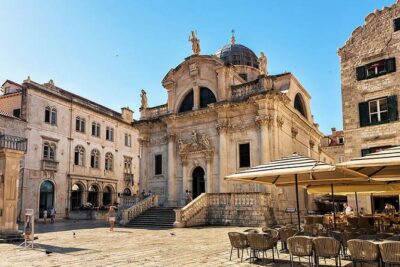
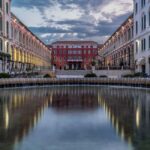
Fruit’s Square—Trg Brace Radic—is another short, high-value stop at about 10 minutes. Instead of staying strictly in palace territory, the tour moves into the civic-cultural side of Split.
You’ll learn about an 15th-century Venetian citadel and why Marko Marulić matters, including that he’s described as the father of Croatian literature. Even if literature isn’t your main interest, this kind of stop gives you a wider understanding of how Split’s identity formed beyond one emperor and one fortress.
It also keeps the tour from feeling repetitive. After gates and substructures, a city square feels refreshing—and easier to absorb.
Stop 7: The Split Synagogue—what’s included and what’s extra
Near the end, you pass by the Split Synagogue (about 10 minutes). It’s described as a 16th-century synagogue. This is a “see it from outside / pass by” style stop, not a full museum-style visit.
Admission to the synagogue is not included. So if you want to go in deeper after the tour, you’ll need to handle that separately on your own.
This final segment is still useful because it broadens the story. Diocletian’s Palace can dominate your attention in Split, but the city’s cultural identity doesn’t end there. You’ll leave with a more complete sense of what Split includes.
Guide quality is the real engine here
You can build a strong walking tour around monuments, but the difference between a mediocre experience and a memorable one is how the guide tells the story.
This tour is led by an educated guide with strong command of the locations around the palace. In practice, that means you’re not stuck with one-note explanations. The guide keeps the group engaged with humor, and the pacing stays steady from stop to stop.
I also like how the experience supports questions. One of the most helpful styles I’ve seen on tours like this is when the guide uses short Q&A moments to help you retain details. Here, that kind of interaction is part of the experience feel, which is exactly what you want on a 1.5-hour orientation tour.
And yes, you may run into guides such as Darko, Ivana, and Ante/Anthony. The names matter because they’re a quick signal: you’re likely getting more than a scripted lecture.
Price and value: $22.98 for a tight, high-impact route
At $22.98 per person, this tour sits in the “worth it if it saves you time” category. The best value comes from how much you cover in a short window and how many stops have free admission ticket access listed right in the stop details.
A big chunk of the tour focuses on Diocletian’s Palace areas (Peristyle, vestibule, substructures, Golden Gate, plus Riva Harbor and Fruit’s Square). That means you’re paying for interpretation and guided timing—not just entry fees.
There’s one possible cost consideration: the Split Synagogue admission is not included. For most people, that’s fine. Even if you skip it, the pass-by stop still adds context. If you’re specifically curious about Jewish history in Split, just plan for the potential extra.
On top of that, it’s max 15 travelers. For group experiences, smaller size usually means better interaction, not just better selfies.
Who this tour is best for (and who should reconsider)
This is ideal if:
- You’re on your first visit to Split and want a fast orientation to the UNESCO old town core
- You like architecture but also want the “why this place matters” explanation
- You want a short guided plan that won’t eat your whole day
- You enjoy asking questions and getting real answers, not just a monologue
You might want to reconsider if:
- You have trouble with high steps, since the route is not recommended for those situations
- You prefer fully independent sightseeing and don’t want a guided schedule at all
The good news: the walk is paced for a broad range of people, and the tour design keeps stops brief enough to stay comfortable for most.
Final verdict: should you book the Split Palace history tour?
I’d book it if you want to understand Split instead of just moving through it. The route hits the palace heart early (Peristyle), connects to the entrance symbolism (Golden Gate and Gregory of Nin), then balances the Roman core with city identity stops like Riva Harbor and Fruit’s Square. Add in the chance of traditional Dalmatian singing and the tight 1 hour 30 minute timing, and it becomes a strong “first-night” or “first-morning” choice.
If you’re hoping for a long, museum-heavy experience, you may feel it’s too short, because the substructures museum portion is not visited during the tour. But as an orientation tool—especially with a small group and free-access stops—it’s the kind of booking that pays off later when you’re wandering on your own.
FAQ
How long is the History & Cultural Walking Tour of Split?
It runs for about 1 hour 30 minutes.
How much does the tour cost?
The price is $22.98 per person.
What language is the tour offered in?
The tour is offered in English.
Where is the meeting point?
The tour starts at Peristil ul., 21000, Split, Croatia.
How big is the group?
The tour has a maximum of 15 travelers.
Is admission included for the sights?
Admission is free for the listed palace-related stops and the city stops (Peristyle, vestibule, substructures, Golden Gate, Riva Harbor, and Fruit’s Square). The Split Synagogue admission is not included.
What is the cancellation option?
You can cancel for a full refund if you cancel at least 24 hours before the experience’s start time. Free cancellation is available up to that cutoff, and changes made less than 24 hours in advance aren’t accepted. If the minimum traveler requirement isn’t met, the experience may be canceled and you’ll be offered another date or a full refund.