REVIEW · SPLIT
Salona & Amphitheater – Private guided tour – Admission incl.
Book on Viator →Operated by Split Guide · Bookable on Viator
Roman ruins make Split feel bigger. This private tour strings together the key sites of ancient Salona with a human guide who keeps the walk from feeling like homework. I especially loved the way the route moves from city life to sacred ground, and then saves real payoff for the Amphitheatre Salona at the end. One thing to budget for: the open-air museum entry for Ancient Salona is about 10 euros for adults and is not included in the tour price.
I also like that it is truly private, so you can ask questions as you go instead of waiting for a group. The pace is steady, with short stops that still give you enough time to look closely and understand what you are seeing. The only real consideration is the weather: this experience requires good conditions, and if it gets canceled due to poor weather you’ll be offered another date or a full refund.
In This Review
- Key things that make this tour worth it
- Salona just outside Split: the setting and the rhythm
- Ancient Salona and the main entrance: where the story starts
- Manastirine, Domnius, and the early Christian layer you can still sense
- Tusculum and the bishop’s palace: power and administration in stone fragments
- Roman baths and the five bridges: daily life beyond the temples
- Porta Caesarea and the ruts: the Roman road details you can still spot
- The forum, temple, and theater remnants in the Hram area
- From sarcophagi to Kapljuc: getting toward the amphitheater with a purpose
- Amphitheatre Salona: why this is the tour’s real payoff
- Value and price: what $203.50 buys you (and where it might feel pricey)
- Who this tour suits best
- Quick practical notes that matter on the day
- Should you book this private Salona and Amphitheater tour?
- FAQ
- How long is the Salona and Amphitheater private guided tour?
- Is this tour private?
- What language is the tour offered in?
- Where do we meet, and where does it end?
- Is admission included for all sites?
- What ticket type do I get?
- Is this experience accessible for everyone?
- Are service animals allowed?
- What happens if the weather is bad?
- Can I cancel for a full refund?
Key things that make this tour worth it
Private only for your group, so your questions matter.
Amphitheatre Salona is the grand finish, with a clear explanation of what survived and what was taken.
Most stops are free on-site, so you’re paying mainly for expert guidance and time.
Roman details you can actually spot (like wheel ruts at Porta Caesarea).
A focused religious route, tied to martyrs and early Christian burial grounds.
Short walk, big context, with multiple viewpoints across the old city.
Salona just outside Split: the setting and the rhythm
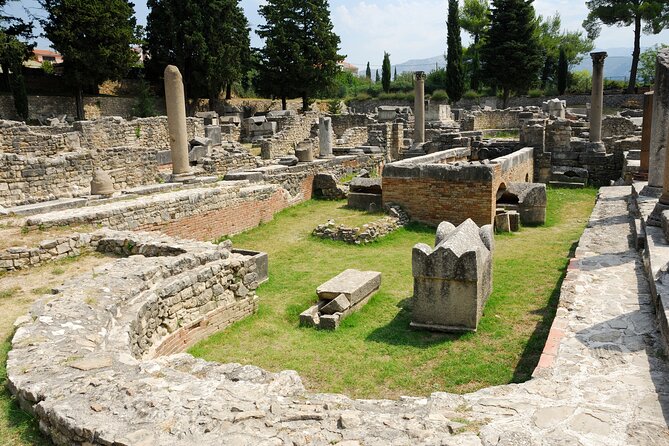
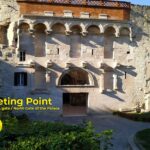
This tour takes place in the Salona area (today in Solin, near Split). You meet at the Salona main entrance on Ul. don Frane Bulića 58, and the experience ends back at the meeting point, which is handy because you don’t have to solve the return logistics.
The total time is about 2 hours 30 minutes. In practice, that means you are walking at a “comfortable study pace” rather than a sprint. Each stop is short—often around 10 to 15 minutes—so you get movement, but not that constant shuffling where you never really look at anything. It is also offered in English, which matters here, because Roman and early Christian sites need names and dates to click.
One practical note: you will be outdoors for most of the tour. Even if the ruins are fascinating, bring what you need for shade, water, and sun protection. And if rain is in the forecast, check in on the day—this experience requires good weather.
You can also read our reviews of more guided tours in Split

Ancient Salona and the main entrance: where the story starts
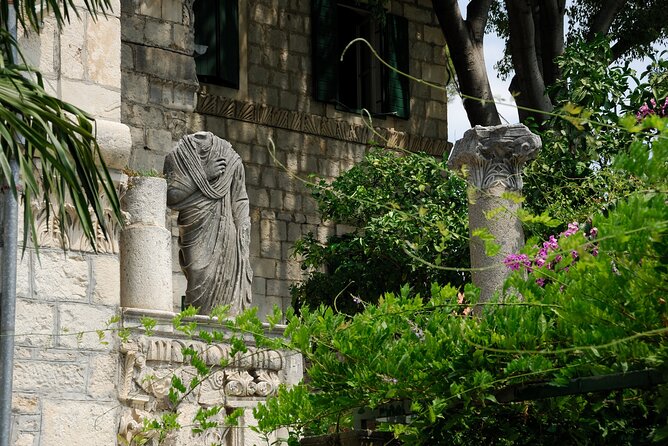
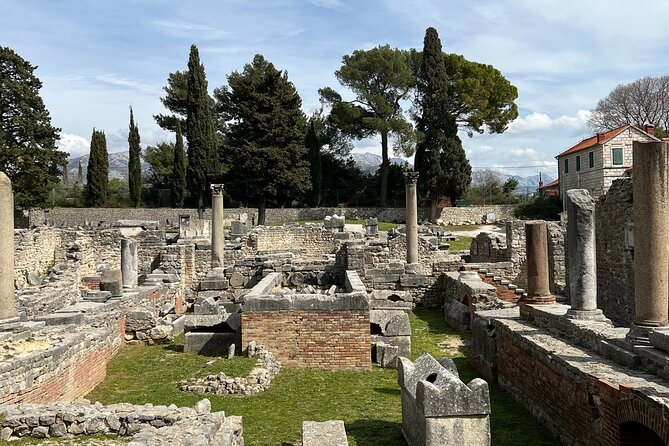
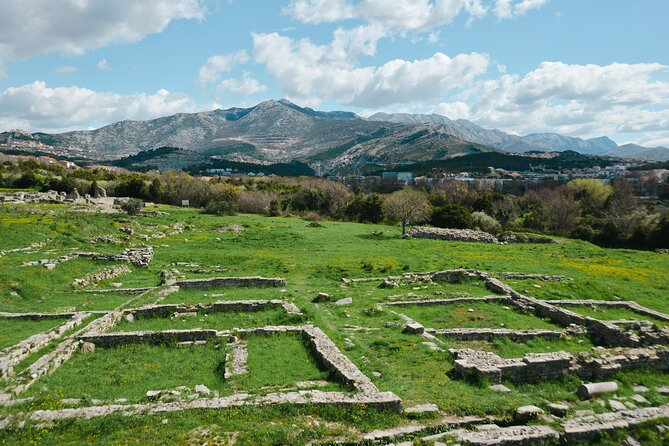
The heart of the walk begins with Ancient Salona, once a Roman metropolis with about 60,000 inhabitants. The big takeaway I’d want you to remember is the scale followed by the shock: Salona was completely destroyed in the 6th century by the Avars. That single detail gives you a reason to pay attention to everything you see here, because you are looking at what time left behind.
You explore Salona on foot, and you get general information at the entrance. The open-air museum entrance fee is about 10 euros for adults, and it is not included in the tour. That is not a deal-breaker, but it is part of the math.
What I liked is that this stop doesn’t try to cram everything into one lecture. It gives you orientation—where you are, why the place matters, and what kind of ruins you are about to see—so later stops feel connected rather than random.
Quick tip for value: if you know you’ll spend time reading signs at each stop anyway, a guided route is usually a better use of your hours than wandering with only a map.
Manastirine, Domnius, and the early Christian layer you can still sense
Next comes Manastirine, a necropolis that goes back to Roman times and later becomes a Christian cemetery. Here, St. Dominius—Split’s martyr and city patron—is buried. That detail matters because Salona isn’t just an empire-city story. It becomes a survival-and-reuse story, where older places get a new sacred meaning.
This stop is short (around 15 minutes), so you want to make your time count. I’d suggest you pause, look, and then let the guide connect the dots: Roman burial customs, Christian shifts, and why patron saints show up in the places that did.
Then the tour keeps moving through other sacred remnants nearby, setting up a theme: you’re seeing Salona as both civic space and religious space, often overlapping in the same landscape.
Tusculum and the bishop’s palace: power and administration in stone fragments
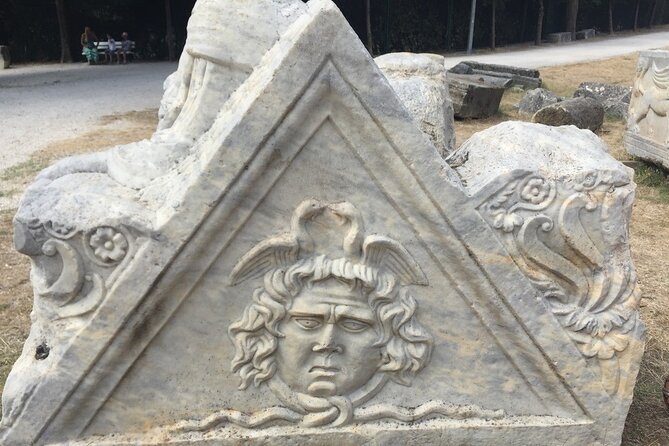
After the cemetery layer, the route turns toward “who ran things” in Salona. The Tusculum was built by Don Frane Bulić, a famous clergyman and archaeologist from Split. He used it as an office and meeting place, which is a fun detail because it ties the modern-day study of ruins to the physical space you’re visiting.
Some rooms can be visited here, and it is one of those stops where you see that archaeology isn’t only about the distant past. It also depends on the people who studied and protected these remains.
From there, you reach Biskupska palača (Palatium episcopi), the bishop’s palace and remains of two cathedrals from the time when Christians could practice their religion freely. Today, what you see are mainly foundation walls. That sounds limited until you understand what foundations do: they show scale and layout even when the upper parts are gone.
My practical advice: at places like this, focus on proportions. Even if the walls are low or fragmented, the shape tells you where important structures once stood.
Roman baths and the five bridges: daily life beyond the temples
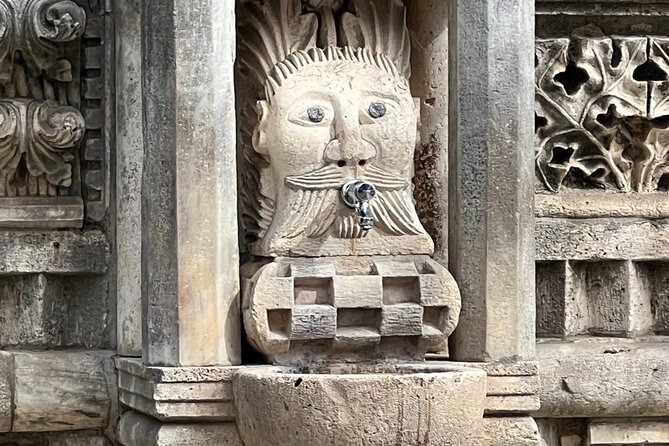
One of the more enjoyable stops for me was the Large urban spa—Roman baths used for several hundred years. The guide’s point is clear: these baths were not only for washing; they were a social and cultural hub in Roman times.
This is one of those locations where it can help to shift your thinking. Don’t treat it like a dead monument. In your head, imagine conversations, daily routines, and people gathering for news and public life.
Then you walk to Pet mostova, the “five bridges,” linked to an industrial area outside the old city center. The idea of an industrial waterfront or utility zone right outside a major historic city is a good reminder that cities don’t separate into neat categories. A place can be administrative, sacred, and practical all at once.
You can also read our reviews of more private tours in Split



Porta Caesarea and the ruts: the Roman road details you can still spot
Next up is Town Gate – Porta Caesarea. In Roman times, it was the capital gate. The standout clue here is visual: the ruts of old Roman chariots can still be seen today.
This is the kind of detail I love because it’s physical evidence. You can literally picture how carts and chariots moved over the same tracks. It’s also a quick stop (around 10 minutes), which means you get a high-impact moment without losing time.
When you’re at a gate like this, look for the alignment of the ruts and imagine traffic flowing through. That mental image turns ruins into infrastructure.
The forum, temple, and theater remnants in the Hram area
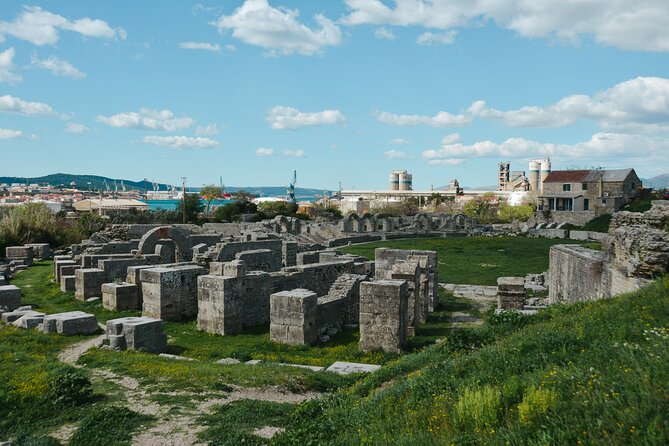
The tour then reaches Hram, located in the oldest part of the city. Here you see remains of the forum, a temple, and an ancient Roman theater.
This stop is short (about 10 minutes), so the goal isn’t to memorize everything. It’s to recognize what each function likely served: forum space for public life, a temple for worship, and a theater for entertainment.
I find this is where guided storytelling really pays off. Roman cities were designed for public movement and public participation. Without context, you might see three separate ruins. With context, you see one connected urban ecosystem.
From sarcophagi to Kapljuc: getting toward the amphitheater with a purpose
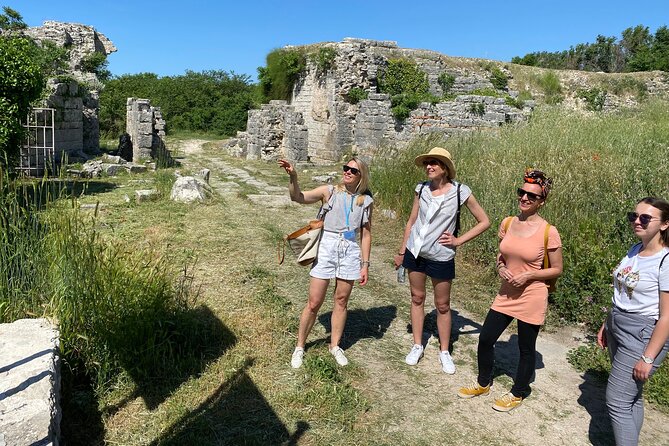
As you make your way to the grand finale, the tour adds two necropolis-and-martyr stops that help set the stakes for the amphitheater.
First is Ul. don Frane Bulića 91, the so-called “Cemetery of the 16 Sarcophagi.” Roman cemeteries were built outside city walls, and this stop reinforces the idea that the outskirts held important burial grounds.
Then comes Kapljuc, another basilica and necropolis. Here were buried five martyrs who died in the amphitheater of Salona at the beginning of the 4th century during persecution of Christians by Diocletian. This is not the most comfortable subject, but it is historically important—and it adds weight to what you’ll see next.
Both stops are about 10 minutes each. That timing keeps the route efficient, but it also means you should stay present. Let the guide’s framing sink in before the amphitheater, because it changes how you read the space.
Amphitheatre Salona: why this is the tour’s real payoff
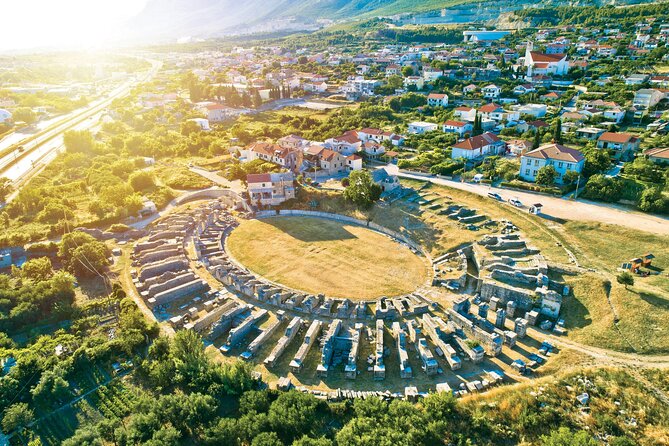
The highlight is Amphitheatre Salona, with around 30 minutes here. It is relatively well preserved, and it is still impressive even if you’ve seen bigger arenas elsewhere. The point isn’t only size—it’s survival.
A key story the guide explains is how the Venetians removed most of the stones to build churches in Venice. That detail is both fascinating and a little frustrating. It also gives you a reason to appreciate what remains, because it is not guaranteed that ruins last intact.
If you want to get the most out of the amphitheater segment, do it like this:
- Pause at a few different angles rather than only one viewpoint.
- Think of it as a setting for public events, not just an object to photograph.
- When you feel the connection to the martyrs from Kapljuc, you’ll probably “read” the space differently.
This is also the moment where the tour’s structure makes sense. Earlier stops are about context. The amphitheater is where the story becomes dramatic.
Value and price: what $203.50 buys you (and where it might feel pricey)
The tour costs $203.50 per person for about 2 hours 30 minutes, and it is private. For many travelers, that pricing can feel high until you factor in the private nature and the fact that only one stop has a separate adult admission fee (about 10 euros for the open-air museum).
So what are you really paying for?
- Exclusive time with a guide who can explain what’s hard to interpret on your own.
- A route that covers civic, religious, and entertainment spaces without you wasting time guessing what matters.
- A finish at the amphitheater where the context makes the site hit harder.
If you’re the kind of person who reads guidebooks and enjoys stopping for details, this kind of private guided route often feels fair. If you prefer self-guided wandering and you already have strong Roman history knowledge, you might choose to go independently and only add a museum ticket.
But if you want your hours to feel efficient and meaningful, a guided private walk here is a solid bet.
Also, this is typically booked about 84 days in advance on average, so plan ahead if your dates are tight.
Who this tour suits best
This experience fits well if you want an organized introduction to Salona that does not drag. You’ll enjoy it most if you like:
- Roman ruins that still show function (gates, foundations, baths).
- Early Christian history tied to names like St. Dominius and the martyrs linked to Diocletian’s persecution.
- A guide who keeps the story chronological enough that the sites feel connected.
It is also a good option for travelers who don’t want to manage a self-made route across multiple scattered areas. And since it is private, it works nicely for couples or small groups who want a calmer pace than a larger tour.
Quick practical notes that matter on the day
This is offered in English, and you’ll use a mobile ticket. Service animals are allowed, and the meeting area is near public transportation. The tour is designed so that most travelers can participate.
One more day-of reality: the tour requires good weather. If the sky turns, it may be rescheduled or refunded. I’d treat this like an outdoor walking plan, not a “rain or shine” museum tour.
Should you book this private Salona and Amphitheater tour?
If your goal is to understand what you’re looking at—not just to stand in front of stones—then yes, I’d book it. The itinerary mixes civic life, sacred spaces, and the amphitheater finale, and the guide’s framing makes the route feel like one story instead of eleven separate stops. The amphitheater segment is strong, and the early Christian stops add emotional and historical weight.
If, on the other hand, you don’t care about context and you’re happy reading on-site signage, you could do it independently and skip the private guide cost. But for most people visiting Salona for the first time, paying for guidance here saves time and turns ruins into something you can actually explain later.
FAQ
How long is the Salona and Amphitheater private guided tour?
The tour lasts about 2 hours 30 minutes.
Is this tour private?
Yes. It is a private tour/activity, and only your group participates.
What language is the tour offered in?
The tour is offered in English.
Where do we meet, and where does it end?
You start at the Salona Main entrance, Ul. don Frane Bulića 58, 21210 Solin, Croatia, and the tour ends back at the meeting point.
Is admission included for all sites?
Most of the stops have admission listed as free, but the Ancient Salona open-air museum entrance fee is about 10 euros for adults and is not included.
What ticket type do I get?
You receive a mobile ticket.
Is this experience accessible for everyone?
The information says most travelers can participate, but it also notes that good weather is required.
Are service animals allowed?
Yes, service animals are allowed.
What happens if the weather is bad?
If the experience is canceled due to poor weather, you’ll be offered a different date or a full refund.
Can I cancel for a full refund?
You can cancel up to 24 hours in advance for a full refund. If you cancel less than 24 hours before the start time, the amount paid is not refunded.