REVIEW · SPLIT
Split: History Walking Tour of the Old Town
Book on GetYourGuide →Operated by HI-story HiSTORY · Bookable on GetYourGuide
Split’s old stones tell stories fast. This 90-minute walk in Split’s Old Town uses Diocletian’s Palace as the backbone, with stops like the Golden Gate and Peristyle that make the Roman layout feel real. I also like the ending on the Riva promenade, where the guide ties history to smart day-planning with food and island ideas.
The main drawback is simple: it’s a walking tour through hot stone. If you hate sun and uneven ground, pack a hat and water, and expect little time to sit.
In This Review
- Key highlights at a glance
- Split Old Town and Diocletian’s Palace: Why This Walk Works
- Golden Gate and Đardin Park: Getting Oriented in 15 Minutes
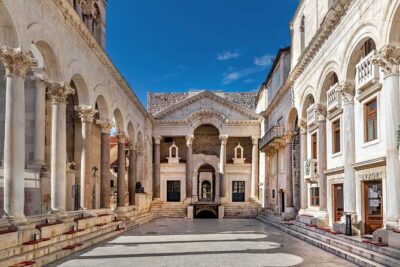
- Peristyle, Mausoleum, and the Roman Heartbeat
- Temple of Jupiter: The Story Behind the Headless Sphinx
- Vestibule and People’s Square: Where Civics and Daily Life Meet
- Diocletian’s Cellars: Cool Air, Big Drama, and Pop-Culture Clues
- The Humor Factor: Guides Who Teach Without Making You Want to Escape
- Price and Time: Is $41 for 90 Minutes Good Value?
- What You’ll Do After the Tour at the Riva
- What to Bring (and Why It Matters in Split)
- Who Should Book This History Walk, and Who Might Skip It
- Should You Book It?
- FAQ
- How long is the Split Old Town History Walking Tour?
- What languages are available?
- Where does the tour start, and is pickup available?
- What should I bring?
- Is this tour available as a private group?
- Is there free cancellation, and can I reserve without paying right away?
Key highlights at a glance
- Golden Gate to Peristyle: Roman city-planning details you can actually see and place
- Temple of Jupiter and the Vestibule: quick stops with memorable symbolic touches
- Diocletian’s Cellars: cooler air and darker stories, plus pop-culture nods
- Human mousetrap and Sphinx riddles: playful teaching moments that keep it fun
- People’s Square and Fruit Square: the daily-life side of the historic core
- Riva promenade wrap-up: palm-lined waterfront plus recommendations for what’s next
Split Old Town and Diocletian’s Palace: Why This Walk Works
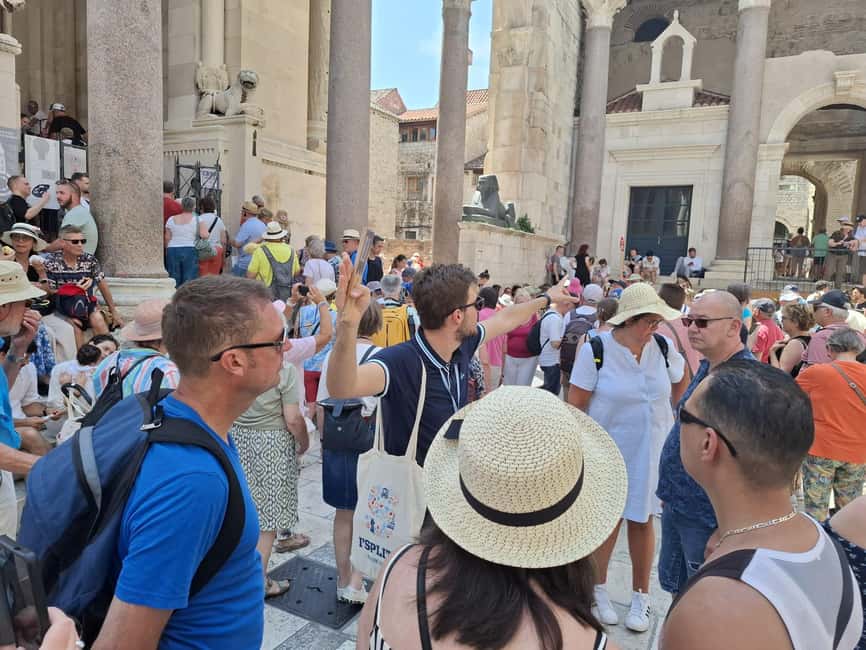
If you want a history tour that doesn’t feel like homework, this one hits a good balance. You’re walking inside an area shaped by power, then watching how the city continued after the Romans—so the streets don’t read like a museum. Instead, they feel like a living neighborhood built on top of an ancient stage.
The real win is the structure: each stop ties to the next. You start at the Golden Gate and move through the heart of Diocletian’s palace world—then you drop down into the cellars, where the mood changes fast. By the time you reach the Riva, you’ve seen why Split’s old core stays such a magnet, even for people who think they already know Roman ruins.
And it’s not just dates on a timeline. The guide uses entertaining questions, riddles, and humor to keep you paying attention. Names you hear include Emperor Diocletian, plus stories that explain how different groups shaped Split over time.
You can also read our reviews of more walking tours in Split



Golden Gate and Đardin Park: Getting Oriented in 15 Minutes
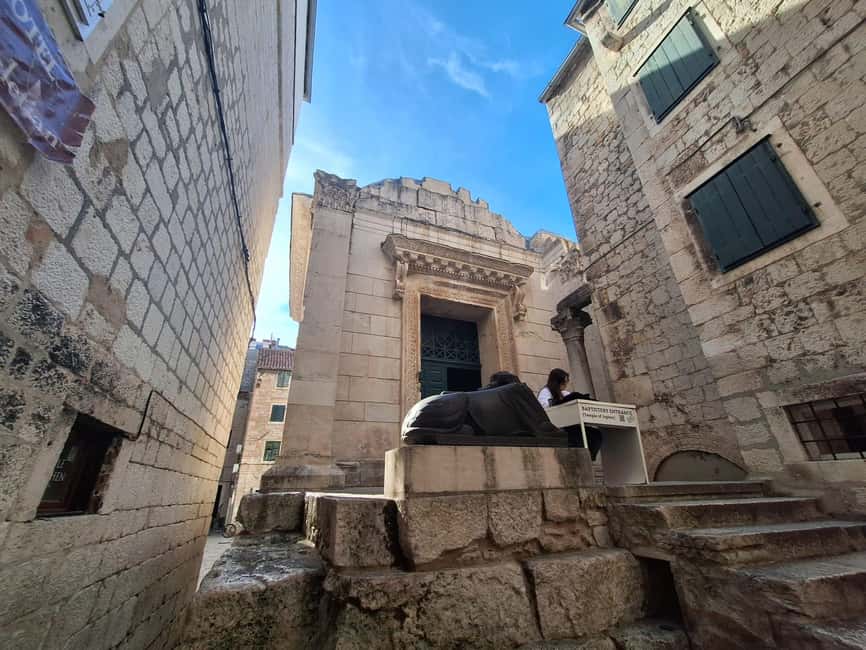
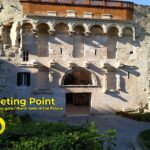
Most cities start with a view. Split starts with a gate. At the Golden Gate, you get your bearings and learn how people once moved between the palace’s protected inside world and the city outside.
From there, the walk flows toward Đardin Park. It’s a small shift, but it matters. It helps you understand that this palace complex wasn’t isolated—it shaped where gardens, movement, and public space could exist in later centuries. This is the kind of context that makes the rest of the tour click, because you stop seeing random stones and start seeing a plan.
In practical terms, this early section is also useful if you’ve just arrived and feel a bit turned around. You learn the palace geometry fast, so you won’t spend the rest of the day guessing what you’re looking at.
Peristyle, Mausoleum, and the Roman Heartbeat
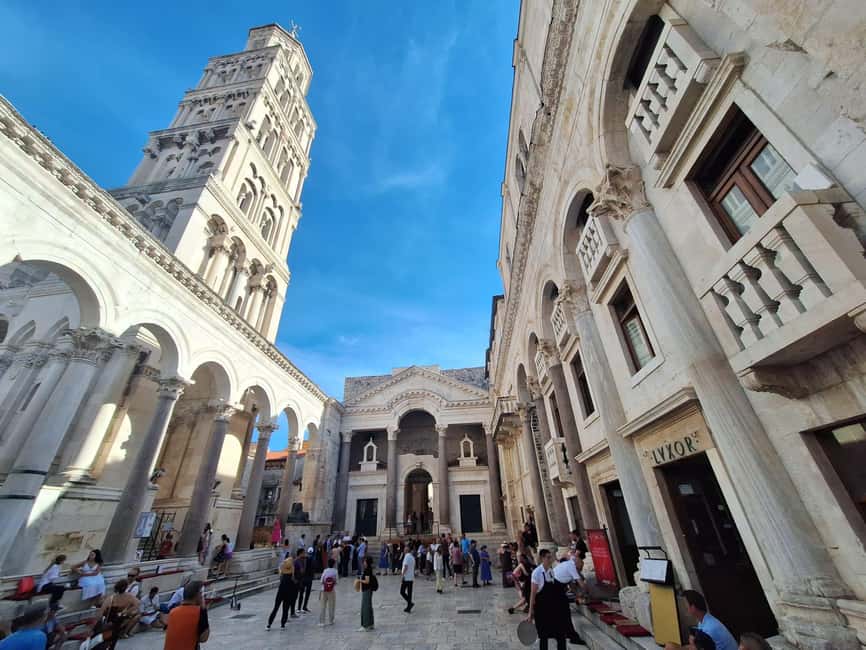
The Peristyle area is where the “palace inside” becomes unmistakable. You’re shown the layout and purpose of spaces that weren’t meant for casual strolling. The guide helps you read how authority worked here—who belonged, where movement mattered, and why the design carried political weight.
Then you move to the mausoleum area, where the tone gets more personal. Even if you don’t memorize every detail, you’ll feel the difference between open ceremonial space and places built for a ruler’s lasting presence.
I like how the tour doesn’t rush this part. You’re given just enough explanation to connect the dots, then you’re left with clear visual anchors: columns, thresholds, and the way space funnels you onward.
Temple of Jupiter: The Story Behind the Headless Sphinx
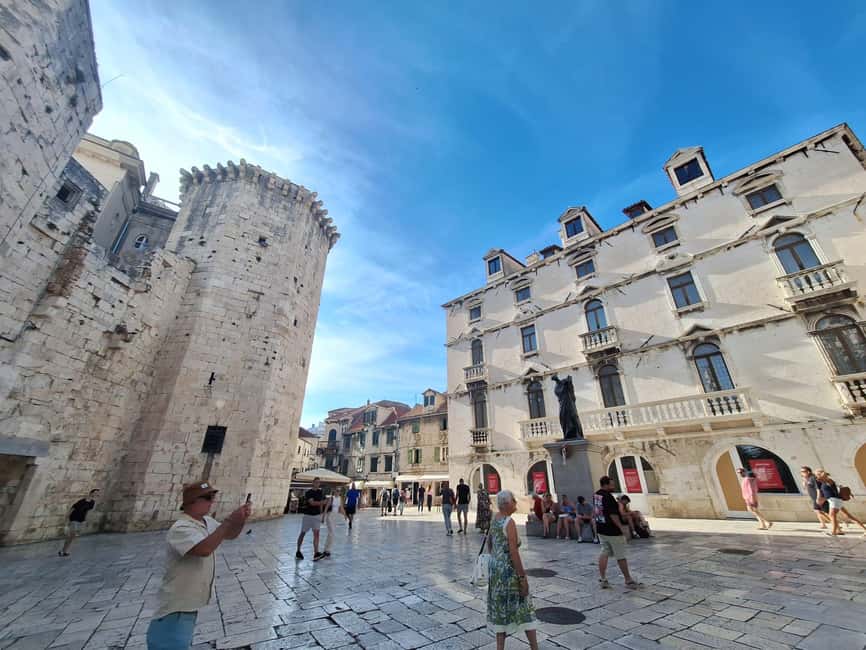
The quick stop at Jupiter’s Temple is one of those moments that’s easy to miss if you’re going solo. Here, the guide turns an odd detail into a reason to pay attention. You’ll hear why a headless Sphinx guards the entrance to the temple, and the symbolism becomes less mysterious and more meaningful.
This section also teaches you how to look. Instead of treating it like a pretty backdrop, you start noticing how entrances, figures, and placement were meant to frame belief and identity. It’s short—just a few minutes—but it lands because it’s memorable.
If you like tours that use small surprises to keep you engaged, you’ll appreciate this stop. It’s the kind of knowledge that makes you feel smarter while you’re standing right there, not after you’ve left.
Vestibule and People’s Square: Where Civics and Daily Life Meet
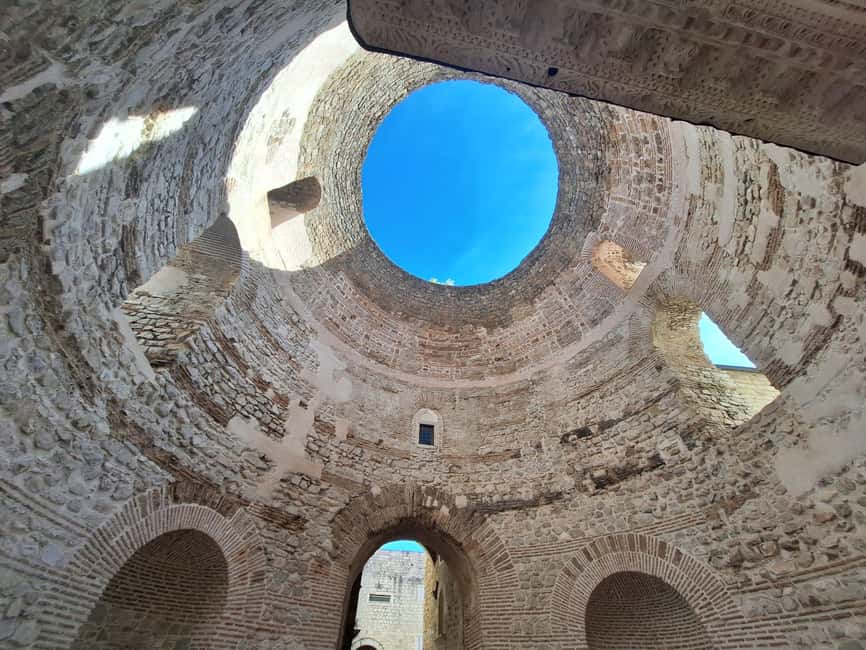
The Vestibule stop adds another layer to the “you are inside the palace” feeling. Even when it’s just a few minutes, the explanation gives you a sense of purpose—why spaces like these weren’t built for show alone.
Then you shift toward Pjaca (People’s Square) and Fruit Square (Voćni trg). This is important. Without these stops, Split could feel like an endless parade of monuments. With them, you remember that people still live here, shop here, and pass through the historic core every day.
On the tour, you also learn how Split’s story isn’t only Roman. You hear about later influences, including why Venetian involvement mattered to the city’s development. It’s a quick snapshot, but it gives you a way to interpret the mixed architectural vibe you’ll see all over town.
These square stops also help you reset your brain after the darker cellars. You get light, open space, and a clearer sense of what you’ll come back to later when you explore on your own.
You can also read our reviews of more historical tours in Split





Diocletian’s Cellars: Cool Air, Big Drama, and Pop-Culture Clues

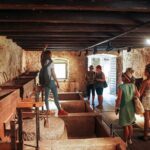
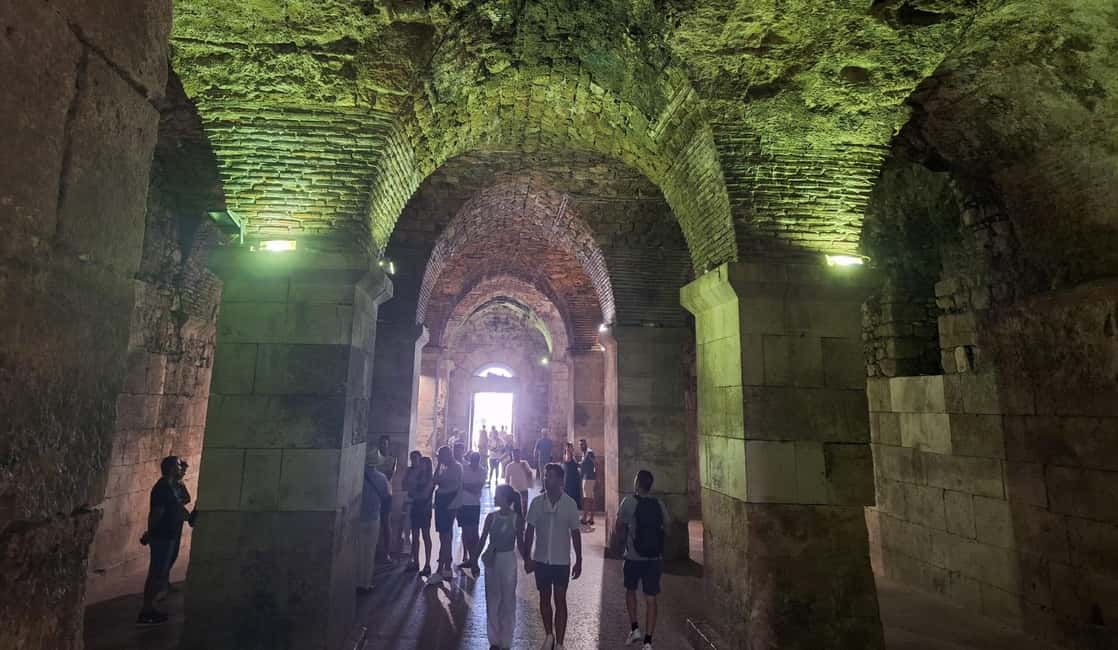
This is where the tour changes temperature and mood. In Diocletian’s Cellars, the guide leads you through darker, tighter spaces tied to the palace’s underworld logic. It’s not just dramatic sightseeing. The explanations help you understand how the palace worked behind the public-facing walls.
And yes, the tour uses pop-culture references to make the setting stick. You’ll hear about cellars where Daenerys Targaryen’s dragons were chained in Game of Thrones, and where the Unsullied fought the Sons of the Harpy. Whether you’re a fan or not, the point is practical: the guide uses recognizable stories as signposts so you remember what you’re seeing.
You’ll also encounter playful learning moments like the human mousetrap. It’s the sort of detail that turns a historical walkthrough into an experience you’ll talk about afterward.
One extra bonus: these cellars tend to feel like a break from the sun. Even on hot days, they can be the most comfortable part of your tour. That matters in Split, where midday walking can drain you fast.
The Humor Factor: Guides Who Teach Without Making You Want to Escape
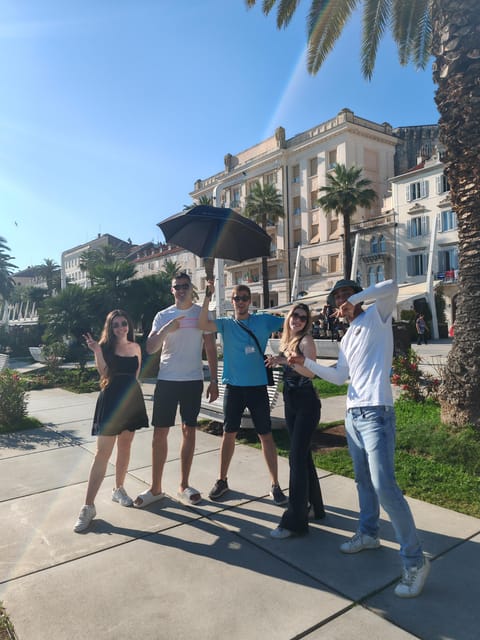
The guides are a big part of what makes this tour consistently rate well. You can expect licensed storytelling, and the tone tends to be lively rather than stiff. In different guide styles, you’ll hear jokes, riddles, and questions that pull you into the explanation.
I also like that some guides come prepared with practical tools, like a folder with photos and maps. That kind of support helps you connect what you see in front of you to what you’ll remember later when you’re walking independently.
The guide is also the one who helps you avoid common tourist traps in a place like Split. In one standout example from the same tour style, a guide managed crowds and found shaded spots, which makes the walk feel less like a survival test and more like a pleasant stroll with good context.
If you want a history tour where you feel guided, not lectured, this is the right format. The information stays anchored to real places instead of drifting into generic lecture territory.
Price and Time: Is $41 for 90 Minutes Good Value?

$41 for a 90-minute guided walk is solid value in a city where many top sites charge more and give you less time with a competent local guide. You’re paying for someone to translate the palace layout into something you can read as you walk—plus help with the city beyond the ruins.
For value, the best part is how you get two kinds of payoff. First, you see major landmarks packed into a tight route: Golden Gate, Peristyle, Jupiter’s Temple, Vestibule, and the cellars. Second, you finish with real-world city guidance—what locals eat, where to find Dalmatian specialties, and recommendations for beaches and ice cream.
You also gain time back. Instead of spending your first day in Split guessing what to prioritize, you get a path that shows you where the city’s meaning lives. Then the guide points you toward what fits your remaining hours and your interests, including which islands to consider.
What You’ll Do After the Tour at the Riva
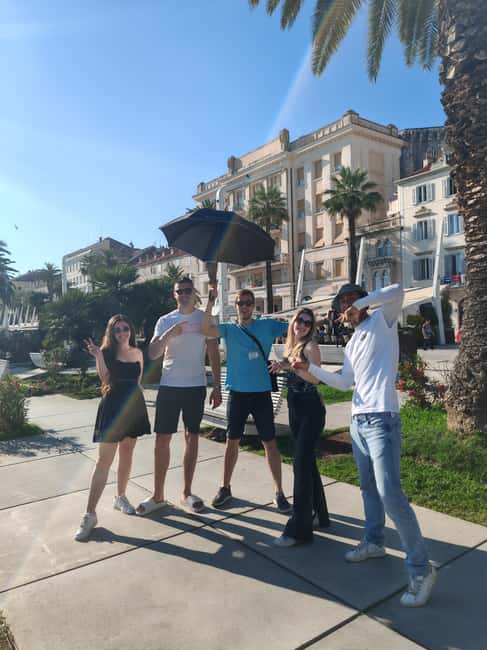
Ending at the Riva is smart. You come out from the palace and cellars, then you’re placed at a lively seafront promenade lined with tall palm trees. It’s the easiest place to reorient yourself and decide what comes next.
The guide also gives recommendations to spend the rest of your day, including which islands to visit. That’s useful because Split is surrounded by choices, and islands aren’t all equal for time, vibe, and boat schedules.
You also get local-food direction. The tour includes insight into local eating habits and where to find Dalmatian specialties. Even if you don’t follow every recommendation, it gives you a starting point that’s better than walking in blind.
If you want to turn this into a full day, the Riva finish is where you can do it. You’re close to waterfront energy, but you’re also positioned to head back toward the old town for dinner or to continue exploring at a slower pace.
What to Bring (and Why It Matters in Split)
This walk is short, but Split weather can push you anyway. Plan for heat and sun. The essentials are straightforward: comfortable shoes, hat, sunscreen, and water.
Even if you’re in good shape, you’ll be moving through uneven historic surfaces. Sturdy shoes prevent the trip-up feeling and let you focus on the places you’re learning.
A hat and sunscreen are about comfort, not just safety. When you’re shaded and cool enough to listen, the guide’s jokes and riddles land better—and you remember more.
Who Should Book This History Walk, and Who Might Skip It
This tour is great if you:
- Want a guided overview of Split’s Old Town without wasting time
- Like Roman sites but need help connecting them into a story
- Enjoy guides who use humor, questions, and pop-culture hooks
- Want local food and island suggestions by the end
You might consider skipping it if you prefer long, unstructured exploration where you control every stop. This is a guided route with a set flow, and the value comes from not having to guess what to see first.
Also think about your tolerance for walking in sun. The itinerary moves through major stops efficiently, but it won’t feel leisurely.
Should You Book It?
I’d book this tour if it’s your first time in Split or if you want your first day to feel organized. For $41, you’re getting a tight 90-minute route through the most important parts of Diocletian’s Palace complex, plus cellars that most visitors can only appreciate more fully with explanation.
The biggest reason to choose it is guide quality. The best versions of this tour lean into lively teaching—riddles, jokes, and clear interpretation—so the ruins don’t stay silent.
If your goal is to understand Split quickly, then spend the rest of your time making smart choices, this is one of the easiest ways to do it.
FAQ
How long is the Split Old Town History Walking Tour?
It lasts about 90 minutes.
What languages are available?
The live guide offers English and Spanish.
Where does the tour start, and is pickup available?
The meeting point can vary based on the option you choose. Pickup is optional, and you can provide the name of your hotel and street, or message if you’re arriving by boat or cruise.
What should I bring?
Bring comfortable shoes, a hat, sunscreen, and water.
Is this tour available as a private group?
Yes, private group options are available.
Is there free cancellation, and can I reserve without paying right away?
You can cancel up to 24 hours in advance for a full refund, and there is a reserve now & pay later option.