REVIEW · SPLIT
Split Walking Tour: History, Legends & Tales
Book on GetYourGuide →Operated by Tour4You · Bookable on GetYourGuide
Split history hits differently when you walk it. This tour threads Diocletian’s world into today’s streets, using a local perspective and a steady pace. I especially like the focus on the must-see stops in the Old Town—Diocletian’s Palace, Vestibul, Peristil, and the Golden Gate—without turning it into a long lecture. The small-group format also means you can actually ask questions and keep moving at a human speed.
One practical consideration: it lasts about 1.5 hours, and entrance tickets to cultural or religious sites aren’t included, so if you want to go inside anything more than the guided walk-through, you’ll need to plan for that afterward. Also, it’s not suitable for wheelchair users and runs with weather in mind.
In This Review
- Key highlights at a glance
- Split in 90 Minutes: the smart way to get your bearings
- Starting at Obala Hrvatskog narodnog preporoda: why the meeting point matters
- Riva and Split’s waterfront: the city’s front porch
- Diocletian’s Palace: walking inside a 1,700-year plan
- Vestibul and Peristil: the palace heart you can feel
- Golden Gate and People’s Square: legends tied to movement
- Fruit Square and the calm end back at Obala
- What you actually pay for: $28 of guide time and orientation
- The local-guide advantage: stories that answer real questions
- Who should book this Split Old Town walk
- Quick practical notes so your day runs smoothly
- Should you book this Split Walking Tour: History, Legends & Tales?
- FAQ
- Where is the starting point for the tour?
- How long is the Split walking tour?
- What language is the tour conducted in?
- What is included in the ticket price?
- Are entrance tickets to attractions included?
- Is the tour suitable for wheelchair users?
- What should I bring?
- Is it a small group tour?
- What happens if the weather is bad?
- Can I cancel for a full refund?
Key highlights at a glance
- A small group, guided step-by-step pace through Split’s core sights
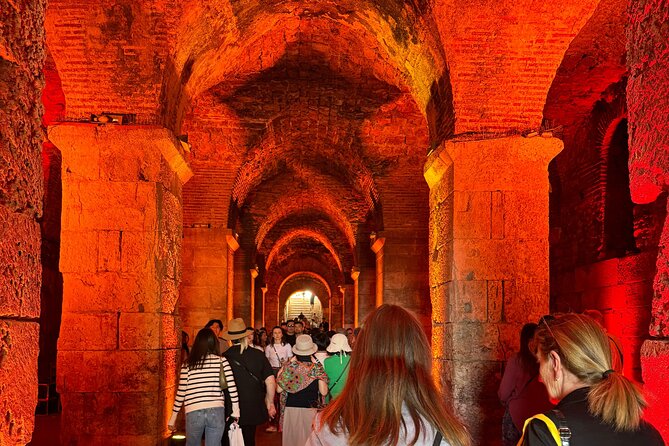
- Diocletian’s Palace explained in plain terms as an active part of the city
- Legends and tales tied to real places like the Golden Gate and People’s Square
- Old Town walking route built for first-time orientation
- Local insights from a guide like Lucija who answers questions about daily life
Split in 90 Minutes: the smart way to get your bearings
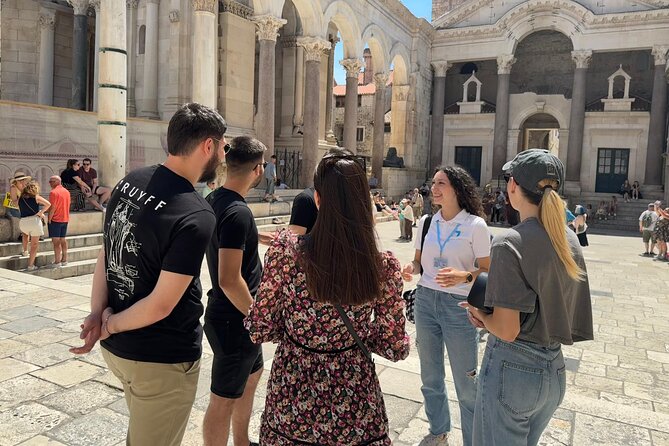
Split is a lot at first glance: stone streets, layered architecture, and landmarks that seem to appear from nowhere. That’s exactly why a short guided walk works so well early in your trip. In about 1.5 hours, you’ll cover the key spine of the Old Town and learn how the city morphed from Emperor Diocletian’s residence into a working town of today.
Think of this tour as your map with a soundtrack. You’re not just looking at walls and gates. You’re learning why they were built, how they shaped movement through the city, and what kinds of stories people kept telling there over centuries. Even if you only catch a few details, you’ll start connecting places you might otherwise treat like a checklist.
It’s also a great value style for solo travelers or couples who want structure but hate rushing. At $28 per person, you’re paying for a licensed local guide and a focused route rather than paying entrance fees you may or may not use.
You can also read our reviews of more walking tours in Split



Starting at Obala Hrvatskog narodnog preporoda: why the meeting point matters
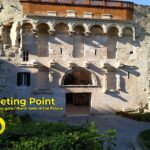
The tour begins back at Obala Hrvatskog narodnog preporoda 22. Your guide waits next to the model of Split, holding a Tour4You sign. That’s more helpful than it sounds. Split’s Old Town can be confusing the first day, and having a clearly marked start point reduces the stress of trying to find your group mid-street.
From that starting area, the walking flow naturally leads you toward the Old Town’s waterfront and into the palace complex. Because the tour loops back to the same meeting spot, you’re not stuck at the far end of nowhere when you’re done. It makes it easier to grab lunch or continue exploring on your own without backtracking.
Practical tip: wear shoes you feel good walking in. The tour stays on cobbled streets, and you’ll be happier if your feet aren’t negotiating with the stones.
Riva and Split’s waterfront: the city’s front porch
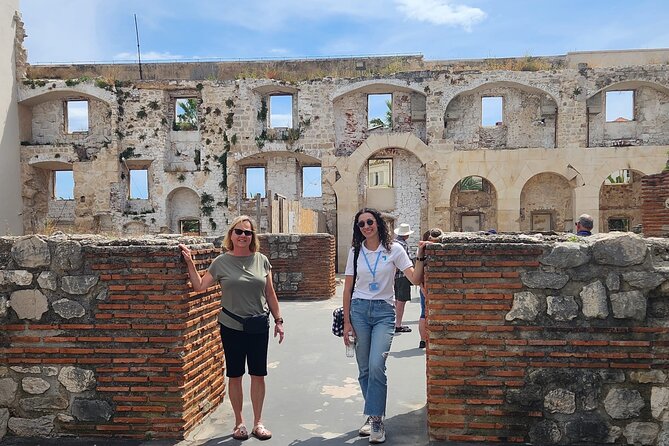
The tour’s first guided stop takes you along Riva, Split. This waterfront stretch is where you’ll sense Split’s rhythms fast: strolling, watching the sea, and spotting the mix of old architecture with modern life. Your guide uses the setting to frame how Split developed around the port and how people moved through the area over time.
Why this matters on a first visit: if you jump straight to interior sights, you can miss the way the city feels when it’s functioning. The Riva gives you that human context before you step into the palace world, which is a very different scale and mood.
Also, you’ll get a guided introduction that’s designed to stick. You’ll hear stories that help the landmarks make sense later when you’re on your own taking photos or popping into a side street.
Diocletian’s Palace: walking inside a 1,700-year plan
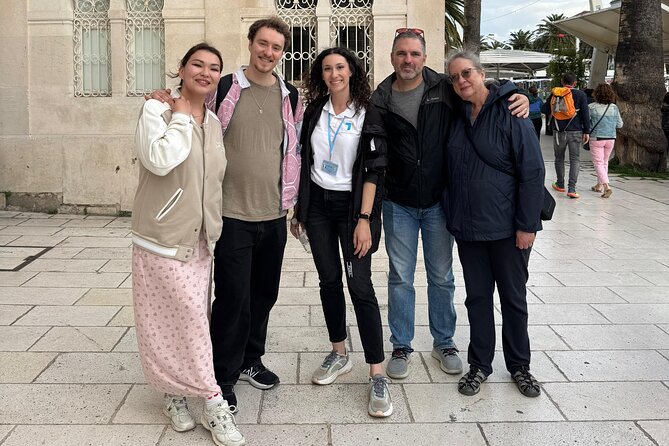
Then comes the heart of the show: Diocletian’s Palace. This is the massive palace complex Emperor Diocletian chose as his luxurious residence, and it’s still here over 1,700 years later. What makes this stop worth it is not just the size of the stones—it’s how the palace layout continues to shape daily life in Split.
Your guide helps you connect the architecture to the person who commissioned it and the era it represents. You’ll also hear how the palace transformed over time into an active part of the city. Instead of treating the palace like a museum shell, you’ll see it as a lived-in space that’s been repurposed again and again.
A tip for getting more out of this area: slow down when the guide points out walls, passages, and the way spaces connect. The palace is built like a system. Once you understand the logic, everything feels less random when you wander later.
Drawback to consider: if you want to go deep into any specific rooms or special sites that require paid entry, you’ll need tickets later. This walking tour provides context and direction, but entrance tickets aren’t included—so think of it as the guided map, not the full add-on ticket package.
Vestibul and Peristil: the palace heart you can feel
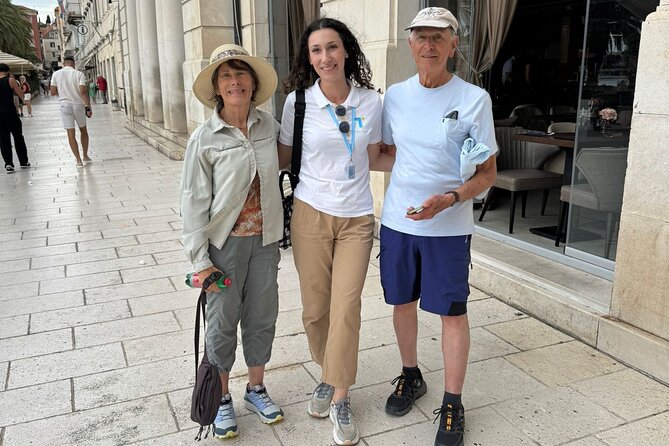
From Diocletian’s Palace, you move into key interior-adjacent spaces: the Vestibul and then the Peristil. These are the spots where the palace stops feeling like distant ruins and starts feeling like a place people once moved through with purpose.
Your guide brings the story into focus here, which is where a local perspective really pays off. Instead of you trying to translate architecture with guesswork, you get explanations as you walk. You’ll understand the purpose of these spaces and how their layout supported life within the palace.
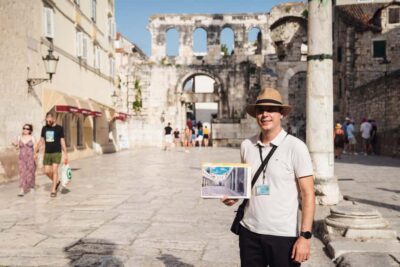
If you enjoy atmosphere—courtyards, proportions, and how light hits stone—you’ll likely love the Peristil area. Even without going inside every possible section, these stops help you grasp what made Diocletian’s plan so powerful.
Keep your camera handy but don’t forget to look with your eyes first. Courtyard architecture is easier to appreciate once you know what you’re looking for.
You can also read our reviews of more historical tours in Split




Golden Gate and People’s Square: legends tied to movement
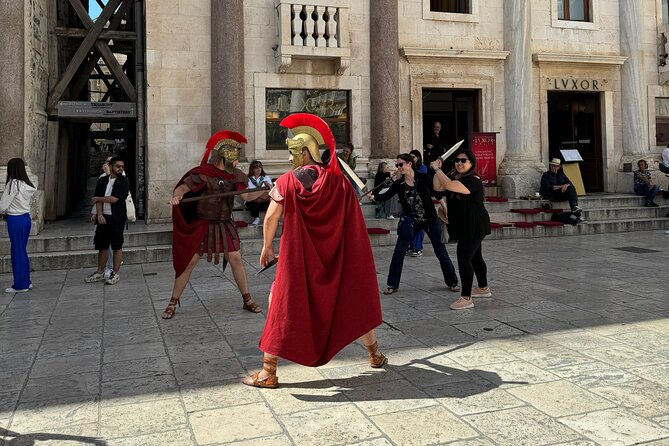
Next up are the Golden Gate and People’s Square. This is where the tour shifts from palace scale to city energy, and where stories start to feel more personal.
Golden Gate is a landmark people recognize instantly, but the tour helps you see it as more than a photo stop. It’s part of the palace-city boundary, and understanding that boundary makes the whole area click. Your guide also shares legends and tales connected to these spots, which adds color without replacing the real structure.
Then you arrive at People’s Square, a central point where daily life gathers. This is one of those places where you can feel the layers of Split at once: the ancient framework around you, and the modern movement filling it in. Your guide connects these layers so you’re not just standing in a plaza wondering where to look next.
The best part here is that the tour turns your brain on. You stop seeing only buildings and start seeing routes, transitions, and how history shapes what’s convenient today.
Fruit Square and the calm end back at Obala

The tour finishes by arriving back at Obala Hrvatskog narodnog preporoda 22, with a stop at Fruit Square along the way. Fruit Square gives you a change of pace—more street-level life, more local energy, and a chance to see how old corridors and public spaces function in real time.
What I like about the ending: it feels practical. You don’t end in a random location. You end where you can step out, reset, and decide what you want to do next—whether that’s finding a café, checking out another site, or wandering off the main path.
For many first-time visitors, this tour also works as a soft landing into Split. You leave with names you can recognize and a sense of direction that makes the city less intimidating.
What you actually pay for: $28 of guide time and orientation
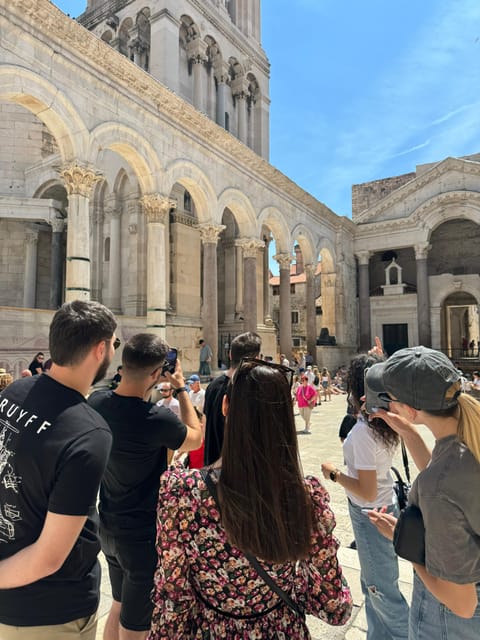
At $28 per person for about 1.5 hours, you’re buying three things:
First, you get a licensed tour guide who can connect landmarks to story and explain what you’re seeing as you walk. That’s the part that turns a place you could Google into a place you can understand in the moment.
Second, you’re buying time-saving structure. Split’s Old Town is gorgeous but easy to overdo on your own if you don’t know what matters most. This route hits the core highlights without stretching into a half-day commitment.
Third, you get a “what to do next” feeling. Since entrance tickets aren’t included, you’re encouraged to use the info you receive to explore at your own pace after the tour. That can be better value for you if you don’t want to pay for entrances you’ll barely have time for.
If you love museums and want to spend hours inside buildings, this may not replace a ticket-based plan. But for getting oriented fast and learning the logic of Diocletian’s Palace, it’s a strong setup.
The local-guide advantage: stories that answer real questions
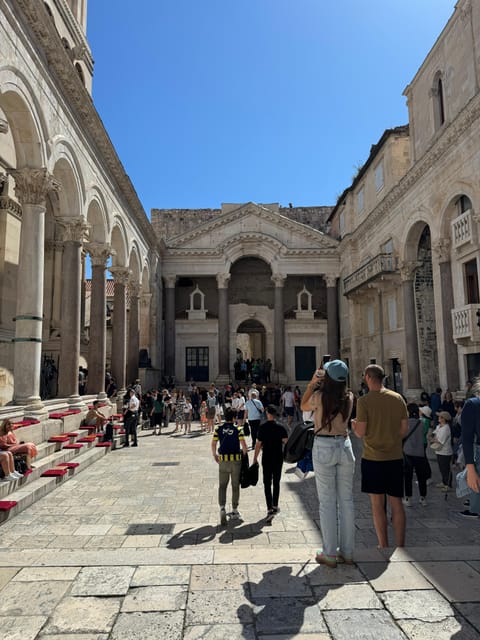
The tour is built around a local perspective, and the guide’s style clearly matters. One guide name that comes up often in feedback is Lucija—praised for being kind, very strong at explaining, and for going beyond dates and stones into how Split feels day to day. That blend is exactly what makes a short tour feel longer in the best way: you walk away with context.
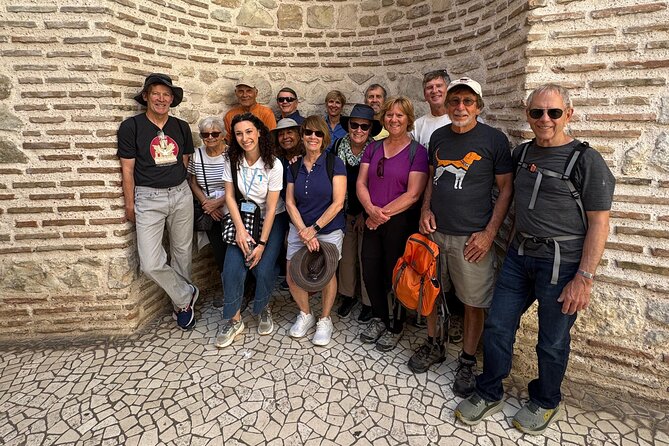
It also helps that the tour is in English, with a small group size so you’re not competing for attention. If you’re the type who likes asking why something is arranged the way it is, this format gives you room to do that.
And yes, the legends and tales element is part of the value here. When legends attach to real locations—like the palace approach, the Golden Gate, or central squares—they make the city more memorable. You’ll remember places because you remember what you were told about them.
Who should book this Split Old Town walk
This tour is ideal if you:
- Are visiting Split for the first time and want an efficient orientation
- Want the big-ticket sights of Diocletian’s Palace explained in a guided flow
- Prefer a short, structured walk with chances to ask questions
- Like history that connects to everyday life, not just facts on signs
It might not be the best fit if:
- You need wheelchair accessibility (it’s not suitable for wheelchair users)
- You hate walking cobbled streets, even for a short time
- You’re hoping this will include paid entry to cultural or religious sites (tickets aren’t included)
Quick practical notes so your day runs smoothly
- Bring comfortable shoes for uneven cobbles.
- The tour runs in English and is suitable for most travelers.
- It’s subject to weather, with an option to reschedule or receive a full refund if poor weather cancels the tour.
- Confirmation is sent immediately after booking.
- Children must be accompanied by an adult throughout.
If you’re planning other stops after the tour, keep the rest of your day flexible. The point is to get your bearings first, then choose how much you want to see next.
Should you book this Split Walking Tour: History, Legends & Tales?
I’d book it if you want a first-day win: a compact route through Riva, the palace complex (including Vestibul and Peristil), plus landmarks like Golden Gate, People’s Square, and Fruit Square. At $28 for about 1.5 hours, the price makes sense because it’s mostly about the licensed local guide experience and fast understanding of how Split evolved.
Skip it only if you already feel fully confident navigating the Old Town and you’re mainly looking for long interior visits with included tickets. For everyone else, this tour is a smart starting move—get the story and the layout, then explore the rest of Split with way less guesswork.
FAQ
Where is the starting point for the tour?
The guide waits next to the model of Split, holding a Tour4You sign, in the area of Obala Hrvatskog narodnog preporoda 22.
How long is the Split walking tour?
The tour lasts about 1.5 hours.
What language is the tour conducted in?
The tour operates in English.
What is included in the ticket price?
You get a licensed tour guide.
Are entrance tickets to attractions included?
No. Entrance tickets to cultural and religious sites are not included, but the guide will share information so you can check them out later at your own pace.
Is the tour suitable for wheelchair users?
No, the tour is not suitable for wheelchair users.
What should I bring?
Wear comfortable shoes.
Is it a small group tour?
Yes, it’s described as a small group so you can enjoy the experience at each step.
What happens if the weather is bad?
The tour is subject to weather conditions. If it’s canceled due to poor weather, you can choose to reschedule or receive a full refund.
Can I cancel for a full refund?
Yes. You can cancel up to 24 hours in advance for a full refund.