REVIEW · SPLIT
Split: Walking tour of Split with a ‘Magister’ of History
Book on GetYourGuide →Operated by HISTORY TOURS SPLIT, vl. Toni Šare · Bookable on GetYourGuide
Walking Split feels like reading a book. This tour centers on Diocletian’s Palace, then moves through the Roman-to-Venetian layers with a history master guide who makes the past click through 3D reconstructions and constant conversation.
I especially like that the tour is built for real understanding, not just site names. You’ll start at the Bronze Gate, pass through key palace spaces, and repeatedly see how today’s streets sit on top of Roman design. One thing to consider: it’s a steady walk in rain or shine, and it isn’t suitable for wheelchair users or people over 95.
In This Review
- Key Takeaways Before You Go
- Why Diocletian’s Palace Is Split’s Time Machine
- Meet Toni Šare: A Local History Teacher, Not a Script Reader
- Start at the Bronze Gate on the Riva Promenade
- Through Cellars and Into the Roman Plan
- Peristyle: Where the Palace Opens Up
- Cathedral of Saint Domnius and Jupiter’s Temple Stops
- Golden Gate Finale: Leaving Roman Core, Reaching Later Split
- How the 3D Reconstructions Make Ruins Understandable
- Pace, Shade, and Asking Questions Without Feeling Lost
- Price and Value: Is $33 Worth It?
- What This Tour Covers (Stop by Stop, Without the Confusion)
- Who Should Book This Split History Walk
- Should You Book This Tour?
- FAQ
- How long is the walking tour of Split with a History Magister?
- Where do I meet the guide?
- Is the tour in English?
- Are there any paid sites or museums included?
- Is food and drinks included?
- Will the tour run if it rains?
Key Takeaways Before You Go
- Toni Šare is a Split-born history master with an ex-teacher style that turns ruins into lessons.
- 3D reconstructions make the palace readable when the stone ruins alone would leave you guessing.
- Q&A is part of the structure, not an optional add-on at the end.
- You move chronologically: Roman core first, then Medieval and Venetian layers, ending in the present-day pulse.
- Expect pacing with comfort in mind, including efforts to use shade and avoid the heaviest crowd flow.
Why Diocletian’s Palace Is Split’s Time Machine
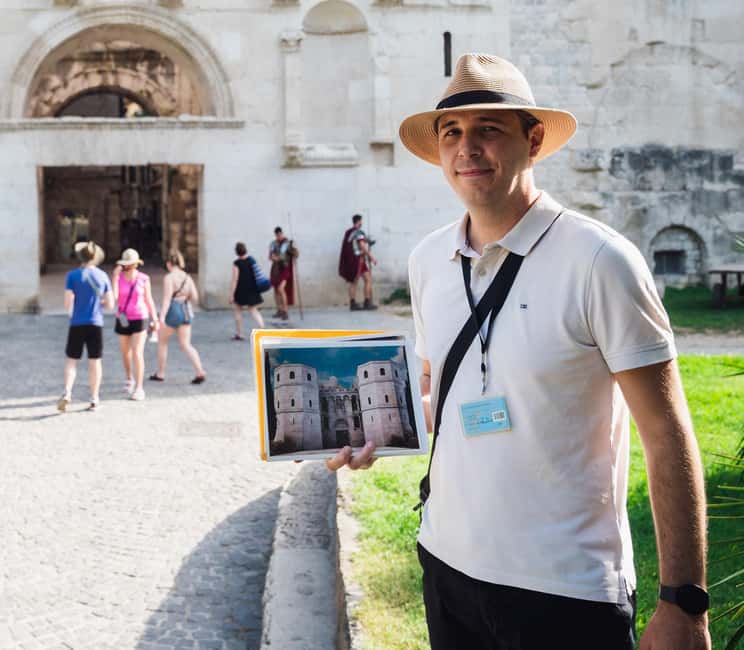
Split’s old core doesn’t feel like a museum. It feels like living infrastructure—Roman walls and medieval homes packed into the same streets you’ll walk today. That’s why this tour works so well: it doesn’t treat the palace as a dead monument. It treats it as the origin point of the city and explains how everything else grew around it.
You’ll get a clear sense of the palace as both a fortress and a home—an emperor’s world designed for control, movement, worship, and privacy. Then, as the tour continues, you’ll see the practical reality: later periods didn’t replace the Roman structure. They reused it, carved into it, and built their own identity on top.
That “layers” concept is the whole payoff. Once you understand how the Roman plan shaped later streets, Split starts making sense fast—so your self-guided wandering afterwards feels smarter, not random.
You can also read our reviews of more walking tours in Split


Meet Toni Šare: A Local History Teacher, Not a Script Reader
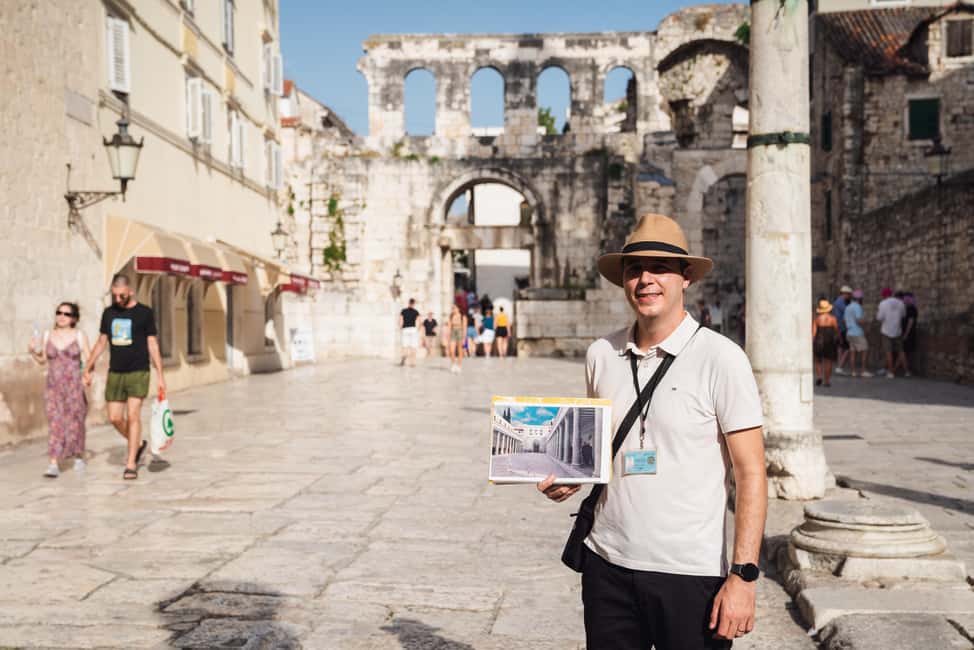
This guide is Toni Šare, a local born and living in Split his whole life, with a Master’s degree in history and a background as an ex teacher. That combo matters. Toni doesn’t just answer questions—he can explain why people cared, how design choices affected daily life, and what later eras did with the same physical space.
From the way the tour is described, you can expect him to keep the group engaged with questions. The tour isn’t silent walking with facts dropped at you. It’s more like guided class time outside, with space to ask, challenge, or ask for extra context.
And because he’s teaching-trained, he tends to deliver at a pace that feels manageable. People who want to understand architecture and timelines usually love that. If you’re the type who gets lost in vague “ancient history,” Toni’s approach is designed to stop that from happening.
Start at the Bronze Gate on the Riva Promenade
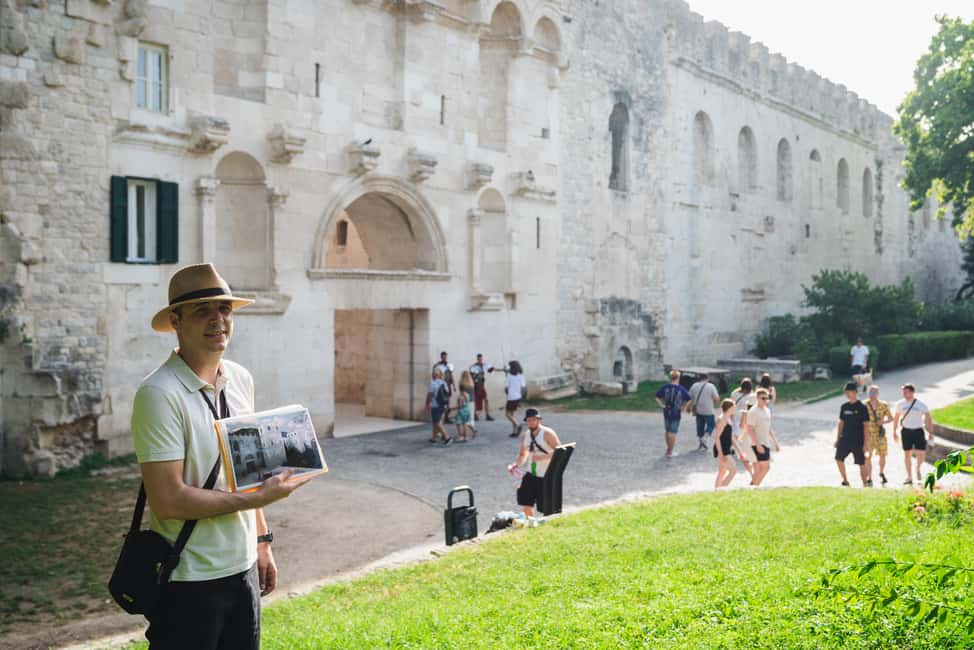
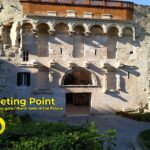
Your tour begins in the oldest stretch of town, at Obala Hrvatskog narodnog preporoda 22, with the main meeting point at the Bronze Gate—also called the Brass Gate. It’s the southern seaside entrance from the Riva (the promenade) into Diocletian’s Palace.
This matters more than it sounds. Starting at the gate gives you an immediate orientation: you see how entry into the palace worked, then you work inward through the spaces that shaped authority and movement.
A simple practical tip: arrive on the earlier side. The route is in the palace quarter, which can get busy, and the best learning happens when the guide isn’t constantly battling the tightest crowd pockets.
Through Cellars and Into the Roman Plan
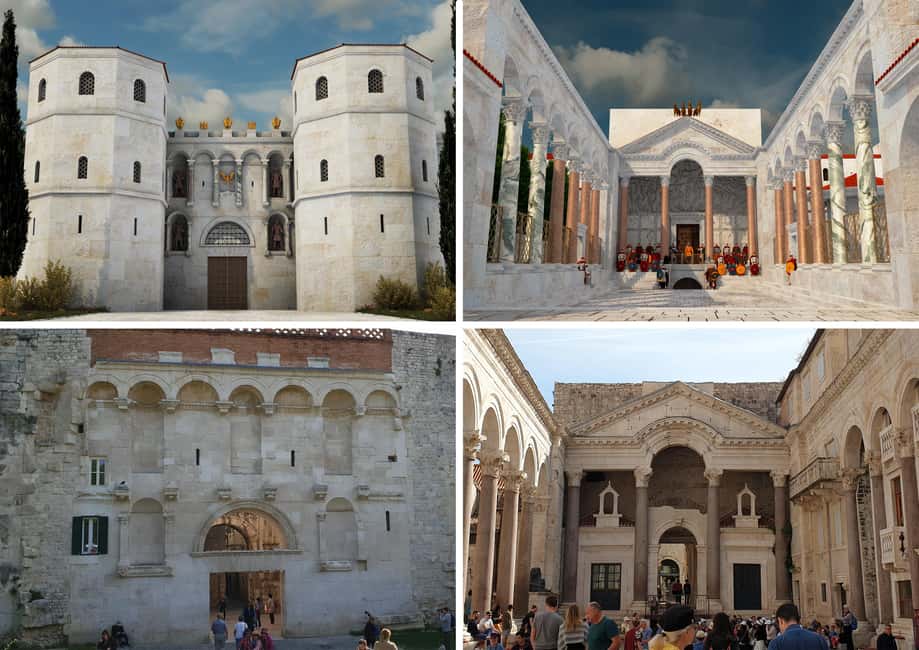
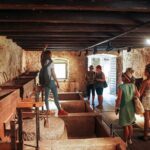
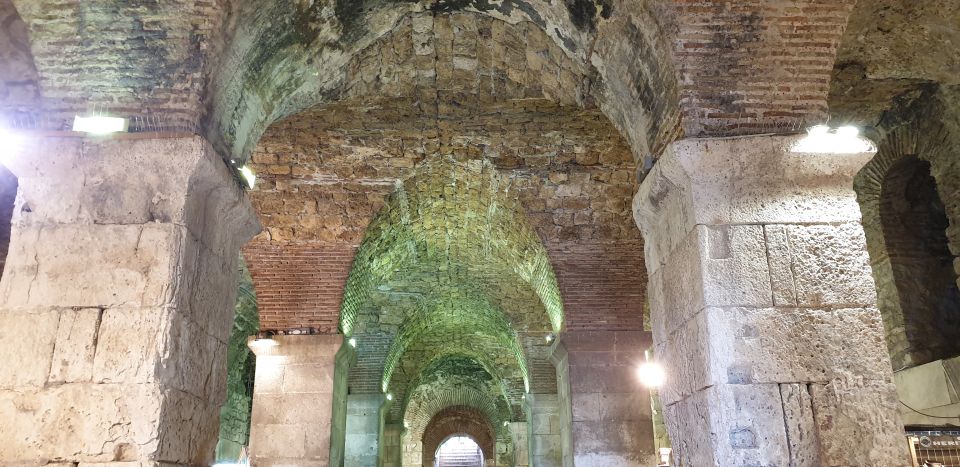
After a short guided introduction at the gate, the tour moves past Diocletian’s Cellars. These basement spaces are a great example of why this tour is more than “look at old stuff.” Cellars often feel like leftovers—dark, confusing, and easy to skip. But here they’re positioned as part of the palace’s system: storage, function, and the hidden work behind what you see above.
You’ll then spend a full hour focused on Diocletian’s Palace itself: sightseeing and guided walking through the palace core. This is where the guide’s history background pays off. He can point out how the Roman design created order, and how later use changed the meaning of those spaces.
One smart expectation setting: you won’t be wandering aimlessly through the palace quarter. The tour is structured to take you through the logic of the complex, then out through the gates that marked transitions between public, private, and later civic life.
Peristyle: Where the Palace Opens Up
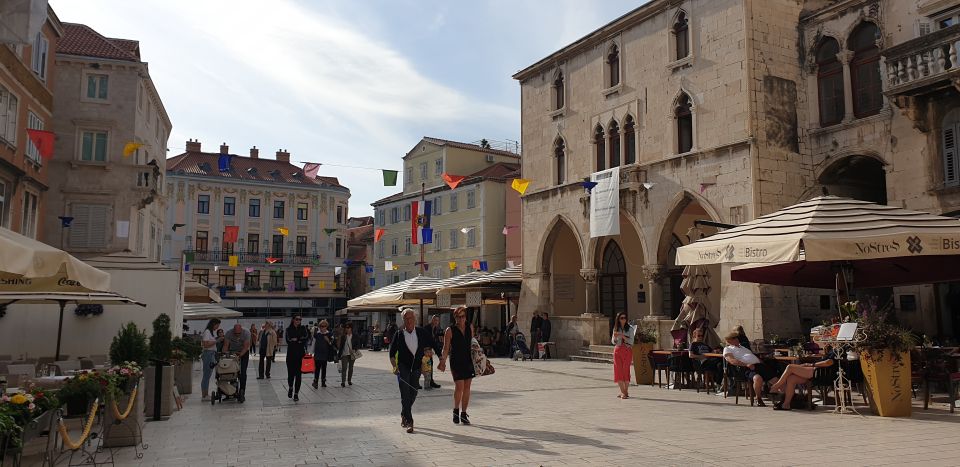
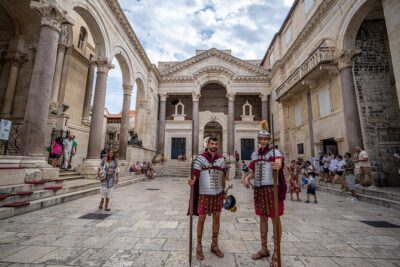
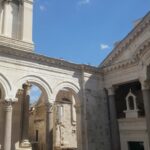
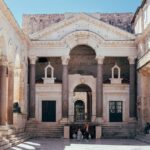
The Peristil (Peristyle square) is one of the key “see-it-click” stops. It’s the phenomenally preserved Roman-made open space in the palace compound. Standing there, you can understand why this palace became the city’s center over time: it’s spacious, iconic, and built for gathering.
From there, the tour continues to the nearby ceremonial and residential spaces, including the Vestibul and Triklinij. Even if you only catch fragments, the guide’s job is to help you reconstruct the original meaning—what these rooms were used for and how the palace’s layout structured life.
The biggest benefit here is how the tour handles scale. Roman spaces can feel huge or confusing depending on how you’re standing. With explanation and visual support, you’ll start to see relationships: corridor to room, room to courtyard, private to public.
You can also read our reviews of more historical tours in Split


Cathedral of Saint Domnius and Jupiter’s Temple Stops
The tour then passes by the Cathedral of Saint Domnius. You won’t be stuck inside a long museum-style stop, but you’ll still get the historical framing that makes the building feel anchored rather than random.
Next up, you pass by Jupiter’s Temple. This is one of those places where the stone doesn’t automatically tell the story. The guide’s descriptions help connect it back to the larger palace worldview—religion, power, and Roman identity built into the city’s earliest structure.
What I like about these pass-by stops is their timing. They appear after you’ve already learned the palace layout, so they function like checkpoints. You understand what you’re looking at, not just that you’re looking at it.
Golden Gate Finale: Leaving Roman Core, Reaching Later Split
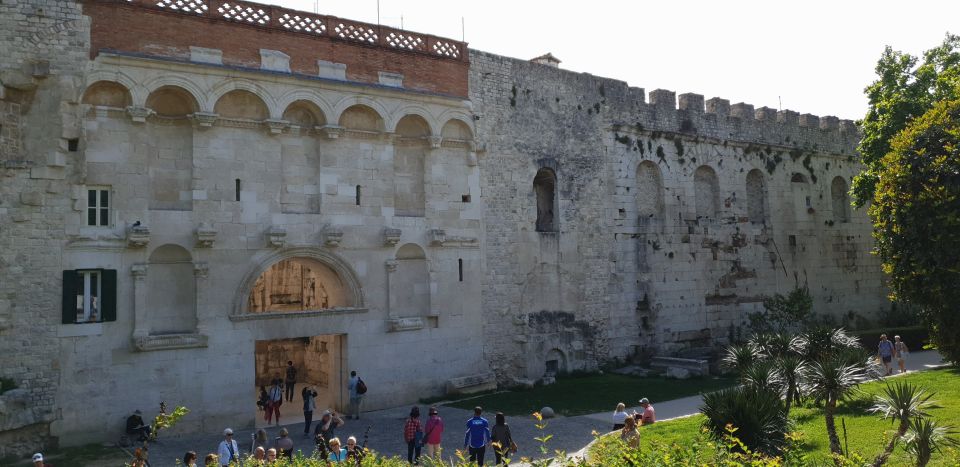
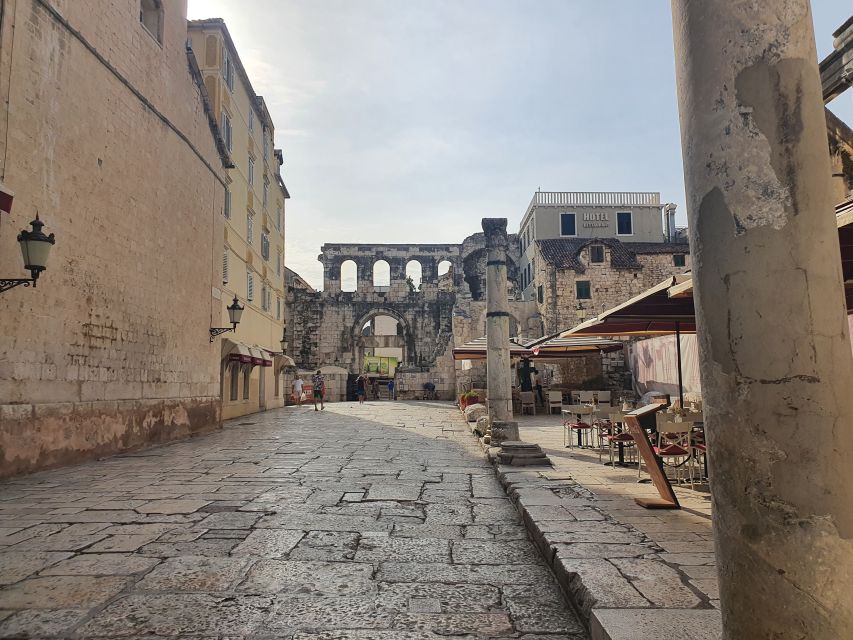
The tour continues through palace boundaries and exits via major gates, including the Silver Gate and the Golden Gate. You’ll get guided time at these gateways, which is a smart choice because gates are where architecture meets movement—exactly what you need to understand when ruins are surrounded by living streets.
The experience ends at the Golden Gate. That finish point is practical: you’re placed back at the edge of the palace core, with an easy path to keep exploring Split on your own.
Along the way, you’ll also see the statue of Bishop Gregory of Nin. It’s an instantly recognizable landmark on the palace quarter’s North Wall approach to the piazza area, and it connects the Roman foundation to later civic identity.
How the 3D Reconstructions Make Ruins Understandable
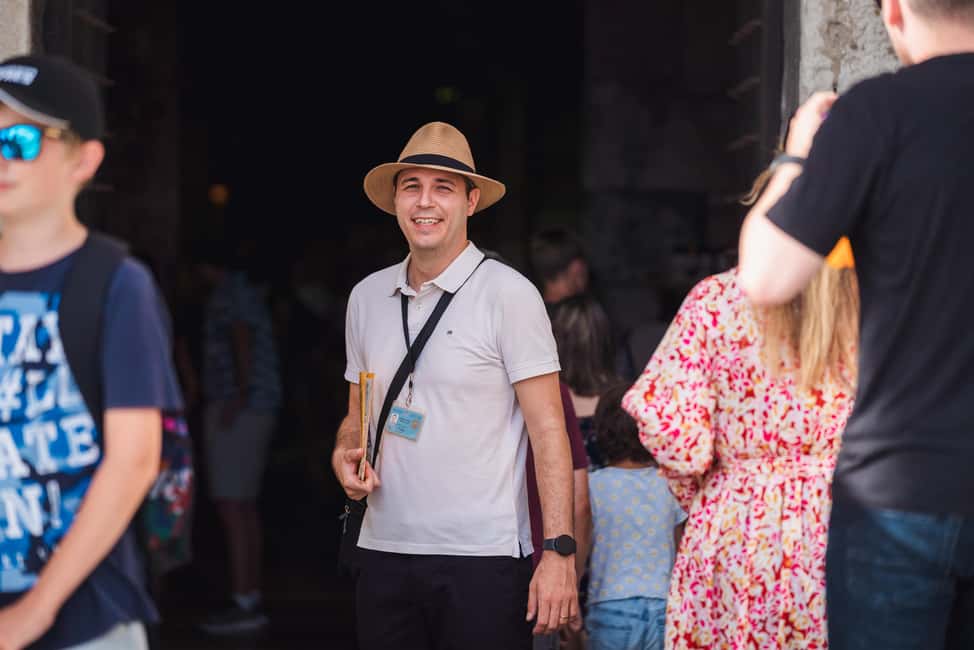
The included 3D reconstructions are a major reason this tour earns such consistent praise. When you’re standing in front of ruins, your brain wants to answer basic questions: What did this look like in full form? Where were doors? What was inside these rooms? How did the space function day-to-day?
The guide uses the reconstructions to answer those questions in context—right as you’re looking at the original location. That timing turns abstract restoration into something practical.
Some visual aids are described as printed CG images showing how the palace looked in its original form. That’s especially helpful if your attention flags when stone details get repetitive. A clear visual reference gives you a mental “before” image, then you can compare it to what survived.
The best part is that the tour doesn’t pretend everything is perfectly known. You’ll be guided on what is established versus what has to be inferred, which makes your understanding more trustworthy—not just more exciting.
Pace, Shade, and Asking Questions Without Feeling Lost
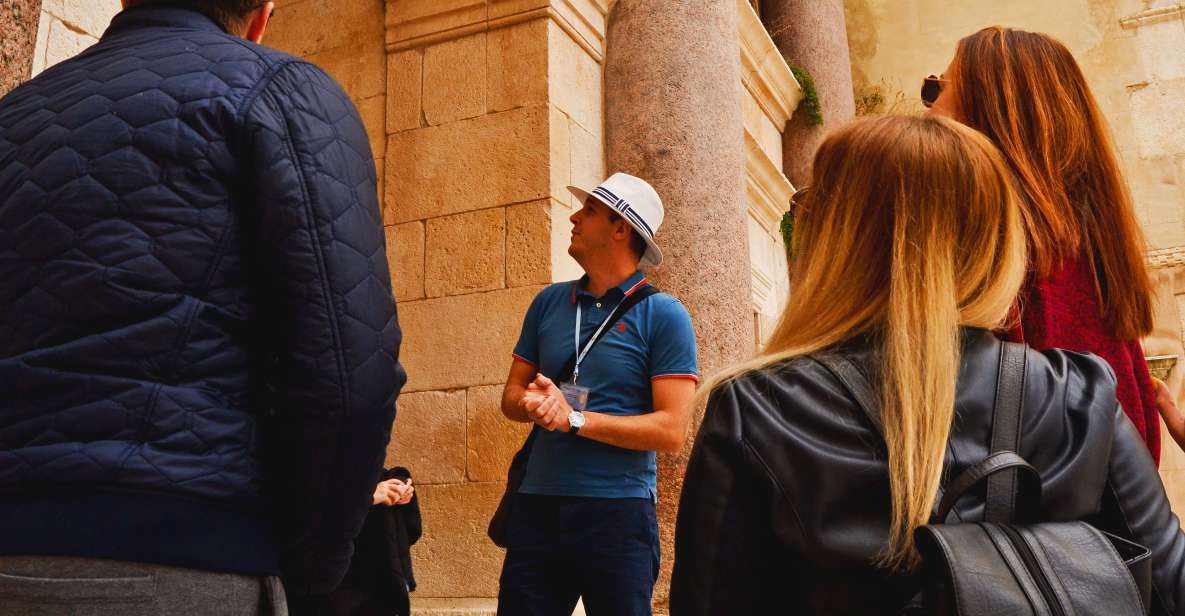
This tour runs about 110 minutes, long enough to build a real narrative, short enough to stay energetic. The guide’s structure encourages dialogue, so if something feels unclear—why a space matters, how one era changed another—you can ask.
From the practical tone of feedback, Toni tends to manage the group flow carefully: looking for shade when possible and steering the group away from the worst crowd pressure. That’s not just comfort. It improves learning. When you’re squished, you hear less and you miss details.
If you want the smoothest start, it’s worth choosing an earlier time slot if you have flexibility. Crowds build through the day in old-town core areas, and starting sooner usually means more room to hear and see.
Price and Value: Is $33 Worth It?
At $33 per person for a 110-minute English-language walking tour, you’re paying for more than access to landmarks. You’re paying for a trained educator (Master’s degree in history, ex teacher) plus built-in visual aids in the form of 3D reconstructions.
Here’s how I think about the value:
- If you only want Instagram snapshots, you could self-walk for free. But you’ll likely miss the “how” and “why.”
- If you want Split’s old core explained as a functioning system—Roman design, later reuse, and modern consequences—this format can save you time. You learn quickly, then your independent walking gets more rewarding.
Also, the tour doesn’t require you to pay extra to enter museums. The palace area you walk through is described as not needing admission, and the tour also avoids paid sites.
Is it the cheapest option? Probably not. But for many people, this is the kind of tour that becomes the foundation for everything you see next in Split.
What This Tour Covers (Stop by Stop, Without the Confusion)
You’ll pass through the palace spaces in a logical sequence:
- Bronze Gate: your entry point and orientation.
- Diocletian’s Cellars: functional underlayers that add meaning to what you see above.
- Diocletian’s Palace (main guided block): the core Roman complex explained through walking, not just talking.
- Peristil: the open centerpiece that clarifies the palace as a civic nucleus.
- Vestibul and Triklinij: residential and ceremonial zones that benefit a lot from visual reconstruction.
- Cathedral of Saint Domnius and Jupiter’s Temple (pass by): contextual anchors once you already understand the palace logic.
- Silver Gate and Golden Gate: transitions outward, ending near the best “continue exploring” spot.
One practical note: you should bring drinks, because it’s rain or shine and you’ll be outdoors for the whole session.
Who Should Book This Split History Walk
You’ll be happiest on this tour if you:
- Want real explanations of what you’re seeing, not just dates and names.
- Like architecture and how buildings shape daily life.
- Enjoy asking questions and getting answers in plain language.
- Want a strong starting point for Split so the rest of your trip makes more sense.
It’s also a good pick for families who can handle walking and listening. The tour has enough teaching skill to keep younger attention in mind, as long as everyone is comfortable with a compact, outdoor route.
It’s not suitable for wheelchair users, and it’s not designed for visitors over 95.
Should You Book This Tour?
Yes, if Split’s old core is on your must-see list and you want it explained with 3D support and a teacher-style guide. This is the kind of tour that turns “I walked around Diocletian’s Palace” into “I understand how Split started, and why the streets look the way they do.”
Skip it only if you’re mainly after quick photo stops and you don’t want to spend time listening and asking questions. Also, if you dislike walking in rain or dislike outdoor guided tours, you might find the format challenging—bring water and plan layers.
If you’re on the fence, I’d choose it as your first big history experience in Split. It gives you a framework, and then the city feels easier to read from every angle.
FAQ
How long is the walking tour of Split with a History Magister?
It lasts about 110 minutes.
Where do I meet the guide?
Meet at the Bronze Gate (Brass Gate) of Diocletian’s Palace. The address is listed as Obala hrvatskog narodnog preporoda 22.
Is the tour in English?
Yes, the tour is conducted in English.
Are there any paid sites or museums included?
No. The tour does not include entering paid sites or museums. Diocletian’s Palace itself does not require admission as described.
Is food and drinks included?
No. Food and drinks are not included, so bring your own drinks.
Will the tour run if it rains?
Yes, it runs rain or shine.