REVIEW · SPLIT
History Split Walking Tour in French -Small group
Book on Viator →Operated by Ancient Tours · Bookable on Viator
A Roman palace, explained in plain French. You’ll walk Split’s old core around Diocletian’s Palace, then stitch the scenes together with stories about power, faith, and the layers of the city. It’s timed for maximum seeing without rushing, and it’s built for a small group that keeps questions moving.
I especially liked how the guide connects the site to the bigger arc of Diocletian’s rise, from nobody to the most powerful man in the world. I also enjoyed the mix of “inside-the-palace” stops plus quick looks outward at real Split landmarks like Riva Harbor and Fruit’s Square.
One drawback to consider: the route isn’t recommended if you have trouble with high steps, so if that’s you, choose another way to tour the area.
In This Review
- Key highlights to look for
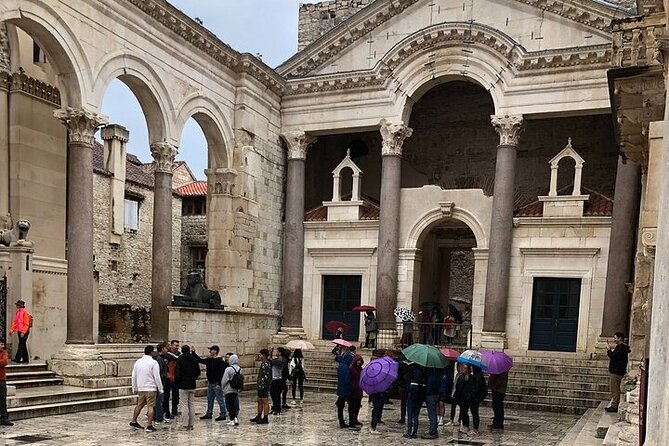
- Diocletian’s Palace starts at the Peristyle square
- Vestibulum moments: Diocletian’s entrance vibe
- Substructures of the palace: the city working underground
- The Golden Gate and Gregory of Nin’s statue
- Riva Harbor: the palace in miniature, and the promenade story
- Fruit’s Square (Trg Brace Radic): Venice, plus Marko Marulić
- Split Synagogue: a pass-by stop with context
- French language: what to expect and how to get the most out of it
- Price, value, and how long you’ll be walking
- Who this tour is best for (and who should skip it)
- Should you book History Split Walking Tour in French?
- FAQ
- How long is the History Split Walking Tour in French?
- Where does the tour start, and does it end there too?
- Is the tour in French?
- What’s included in the tour price?
- Are tickets for the Split Synagogue included?
- Is this a small-group tour?
Key highlights to look for
- Small group size (max 30): easier pacing and more time for questions without a huge crowd crush.
- Multiple palace stops, all free on the tour: Peristyle, Vestibulum, Golden Gate, and the substructures area are covered without extra admission at each point.
- Great French guidance: names like Antonela and Irene show up for their strong French and engaging way of explaining.
- A practical route that starts and ends together: you meet at Peristil ulica and return to the same spot.
- A smart “not the museum” choice: you skip the museum part of the substructures so the tour stays focused, with an option to visit afterward.
Diocletian’s Palace starts at the Peristyle square
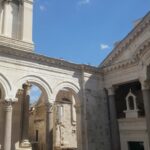
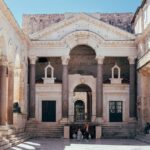
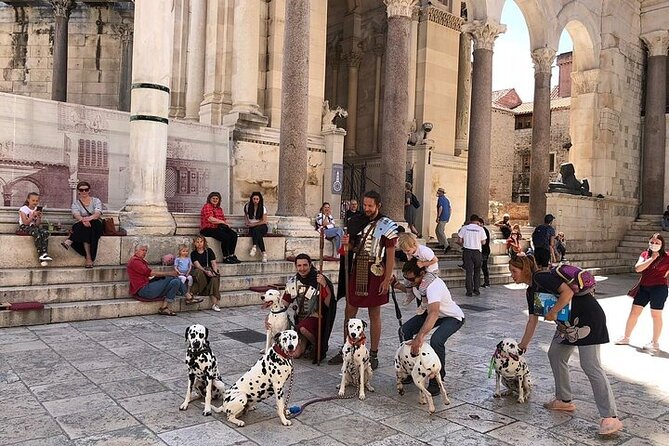
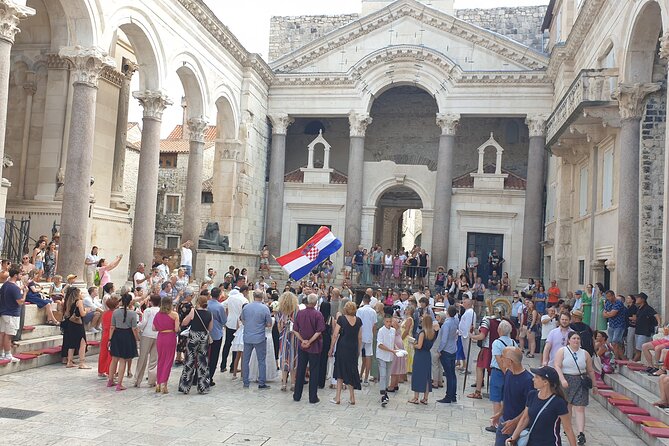
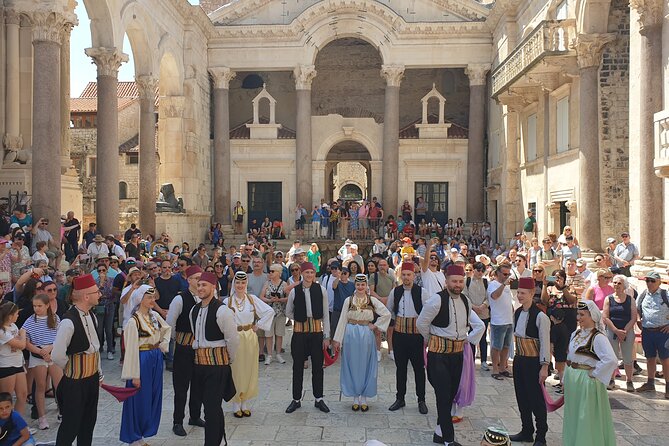
Your walk begins at the Peristyle area, the central square inside Diocletian’s Palace. This is the hub where so many other spots connect, so the first minutes feel like you’re getting your bearings fast.
I like this setup because you learn the palace layout before you get lost in it. From the Peristyle, your guide can point out how the palace wasn’t just a dramatic residence; it was a machine for living, controlling, and protecting a world-scale leader.
A quick note on time: even though the tour runs about 1 hour 30 minutes on paper, plan for it to take longer if your guide is fielding questions. Several guide reports mention it running past the stated time, and in this kind of city, that extra time often comes from real interest.
You can also read our reviews of more walking tours in Split

Vestibulum moments: Diocletian’s entrance vibe
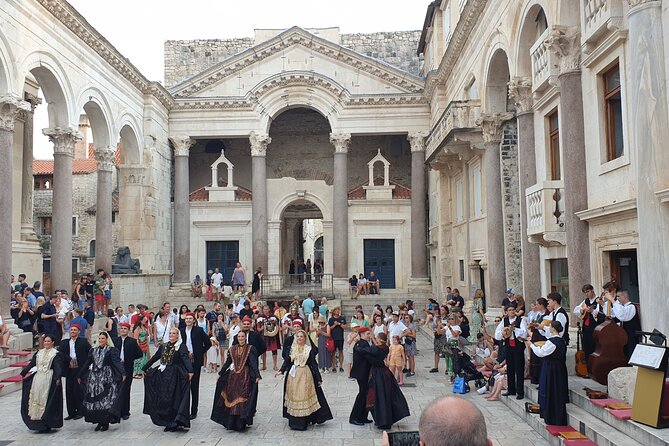
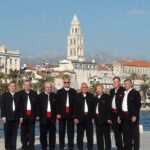
Next up is the Vestibulum of Diocletian’s Palace. This is where you hear about the emperor’s role and how the palace worked as a statement of authority. The guide also points out the chance of traditional Dalmatian singing during this stop, which adds a local flavor that you don’t get from guidebooks alone.
This part is short, but it matters because it sets the tone. You’re not just looking at stones; you’re learning what the spaces were meant to communicate. Even if you already know the basics, the guide’s framing usually makes you notice new details in plain sight.
If you’re the type who likes atmosphere as much as architecture, this stop is a good payoff for a small time investment.
Substructures of the palace: the city working underground
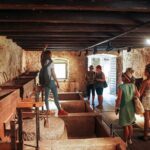
One of the best segments is the pass-through of the Diocletian Palace substructures. This area explains how the palace was constructed and how those spaces served different functions across the centuries.
I like stops like this because they answer the question you’re probably silently asking: where did everyday life and logistics go? You get a sense that the palace wasn’t only grand rooms and entrances, but also hidden corridors and practical spaces that supported the whole complex.
There’s also a smart boundary here: you won’t visit the museum part of the substructures during the tour. That’s not a downside if you’re doing this as an orientation walk. It keeps the pacing smooth, and it leaves you free to return later (if you want the museum experience) with a clearer sense of what you’re seeing.
The Golden Gate and Gregory of Nin’s statue
At the Golden Gate, you get the main entrance view that feels like a real threshold. This is where the guide ties architecture to symbolism: why people made certain statements at certain points, and what those choices meant over time.
You’ll also see the statue of Gregory of Nin. The guide explains his importance to history and language, which is a helpful twist. It’s easy to treat churches and statues as isolated objects, but here you learn how this figure connects to identity in the region.
If you’re trying to understand Split beyond the postcard angles, the Golden Gate is a key moment. It’s the kind of stop where you start to see the city’s story as more than one straight timeline.
Riva Harbor: the palace in miniature, and the promenade story
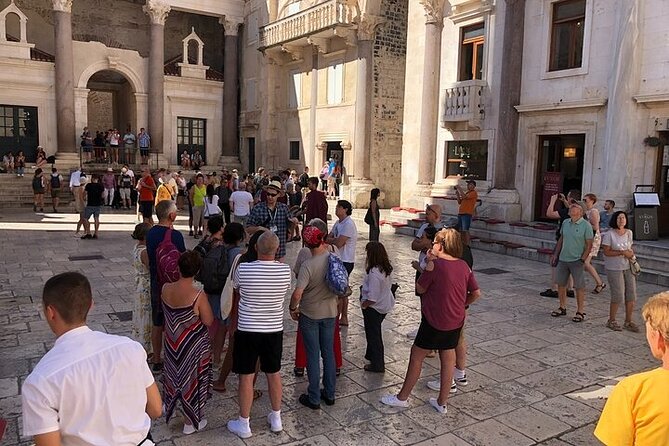
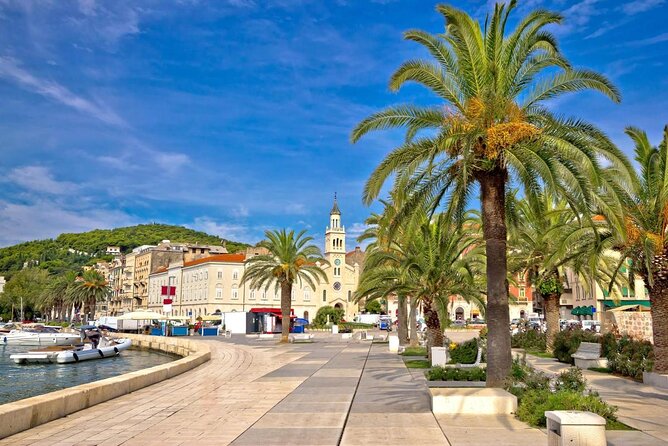
From the palace core, the tour moves toward Riva Harbor. Here you’ll see a bronze model of Diocletian’s Palace. Models sound “small” until you realize they do something practical: they turn confusing ruins into an organized picture in your head.
Right after that, you learn about the history of Split’s Riva promenade. I like this because it connects the ancient site to the modern city walk you’re likely to enjoy later. You leave this stop with a sense of why Riva is where people gather and stroll, not just that it’s there.
If you plan to spend time along the waterfront after the tour, this is a nice head start. You’ll know what you’re looking at and why it’s historically meaningful.
You can also read our reviews of more historical tours in Split
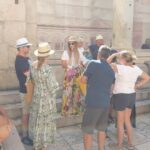

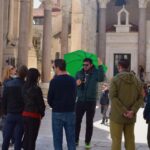
Fruit’s Square (Trg Brace Radic): Venice, plus Marko Marulić
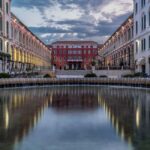
Fruit’s Square, also known as Trg Brace Radic, gives you a different kind of context. The guide shares the story of a 15th-century Venetian citadel and connects that influence to the city’s development.
Then the focus shifts to Marko Marulić, described as the father of Croatian literature. This is where the tour does something subtle but valuable: it broadens from Roman stone to Croatian cultural identity. You’re not only learning who built what; you’re learning who wrote, shaped ideas, and carried language forward.
This stop works well if you want to go beyond “ancient ruins” and understand what locals celebrate and remember.
Split Synagogue: a pass-by stop with context
You’ll pass by the Split Synagogue, a 16th-century site. The guide explains the history of the Jewish people in the city of Split.
Important practical detail: the synagogue admission is not included. Based on how the tour is structured here, this tends to mean you’ll learn from the exterior and the story tied to the building, rather than being in the synagogue itself as part of the tour.
Even so, I think this pass-by moment is worthwhile because it expands your mental map of Split. Ancient palace tours can sometimes feel one-note, and this stop adds a different thread.
French language: what to expect and how to get the most out of it
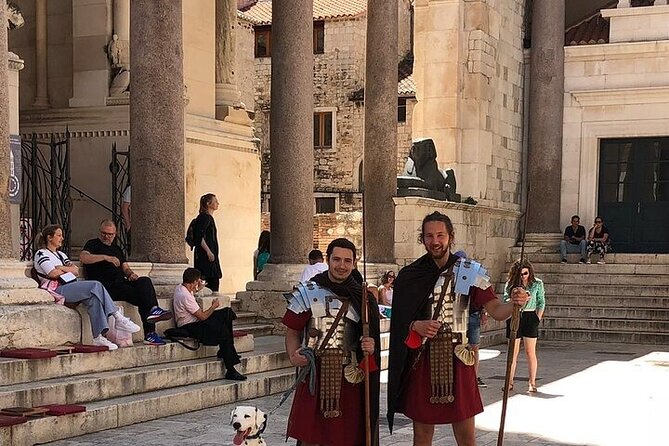
This tour is in French, and the quality of the French guidance is a major theme in the guide experiences people report. Names like Antonela and Irene come up with a consistent pattern: friendly delivery, clear explanations, and the confidence to answer questions that go off script.
I’d treat that as an invitation. If your French is basic, you’ll still likely follow the main story because it’s built around the visible spaces. If you’re more comfortable in French, ask questions as you go. This kind of small-group pace makes it realistic to turn curiosity into answers.
One small “bring your brain” tip: as you walk, try to keep one mental thread going—Diocletian’s rise and the palace as his power project. Once you hold that idea, every gate, square, and underground segment starts to click.
Price, value, and how long you’ll be walking
The price is $69.14 per person for about 1 hour 30 minutes. On paper, that sounds like a modest spend for a short walk, but in cities like Split the real value comes from focus: you’re not paying to wander. You’re paying to get the meaning of the stones while you’re still close enough to see the details.
Here’s where the value stacks up:
- Several stops are ticket-free on the tour, including the key palace areas like the Peristyle, Vestibulum, substructures portion, and Golden Gate.
- The route also covers Riva Harbor and Fruit’s Square, giving you a wider Split context than a pure palace-only walk.
- The group size is limited to a maximum of 30, so your time doesn’t get eaten by crowd bottlenecks.
Time can run longer than the advertised duration. If you’re trying to plan a tight schedule, give yourself buffer afterward. If you’re on vacation with flexible hours, that extra time is usually the best kind: less rushing, more understanding.
Also, gratuities aren’t included, so keep that in mind for your overall cost. And you’ll receive a mobile ticket, which is useful if you’re trying to travel light.
Who this tour is best for (and who should skip it)
This is a strong fit if you want an efficient orientation to Split that makes Diocletian’s Palace understandable. You’ll enjoy it most if you like stories tied to buildings—how power shaped space, how faith left marks, and how later centuries layered their own meaning.
It’s also a good choice for families, since multiple reports highlight kids enjoying the explanations. The short stops help keep energy up.
Skip or reconsider if you have issues with high steps, since the tour isn’t recommended in that case. Also, if you only want a quick photo walk with zero explanation, this format may feel a bit “talk-heavy.” But if you’re there to learn and get context, it’s exactly the right pacing.
If you’re doing other museum visits that day, remember the substructures museum part is not visited during the tour. That can be a benefit (you keep your day organized) or a reason to plan a separate museum stop if you want the indoor deep content.
Should you book History Split Walking Tour in French?
I think you should book this tour if you want to understand Split fast, in French, with a guide who makes the palace story coherent instead of fragmented. The strongest reason to choose it is the combination of key palace highlights—Peristyle, Vestibulum, substructures area, Golden Gate—plus the city connections at Riva Harbor and Fruit’s Square.
If you’re worried about steps, double-check your comfort level before booking. And if you want to enter the synagogue specifically, note that admission there isn’t included, so you’d need to plan that separately.
One more practical reason to feel confident booking: you can cancel for free up to 24 hours in advance for a full refund. That makes it easier to match the tour to your travel day without feeling trapped.
FAQ
How long is the History Split Walking Tour in French?
It lasts about 1 hour 30 minutes.
Where does the tour start, and does it end there too?
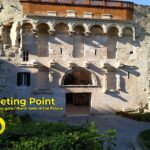
The meeting point is Peristil ulica, 21000, Split, Croatia, and the tour ends back at the same meeting point.
Is the tour in French?
Yes, it’s a French walking tour.
What’s included in the tour price?
The tour is led by a guide, and the stops include admission tickets for several locations along the route. Gratuities are not included.
Are tickets for the Split Synagogue included?
No. The synagogue stop is a pass-by, and admission is not included.
Is this a small-group tour?
Yes. The maximum group size is 30 travelers.