REVIEW · SPLIT
Split Diocletian Palace Highlights – Private walking tour
Book on Viator →Operated by Split Guide · Bookable on Viator
Split’s palace walls still run the show. This private walking tour makes sense of Diocletian’s complex in about 90 minutes, and I love how the guide turns architecture into stories you can actually picture. I also like that you’re not stuck buying a stack of tickets; most key spots are viewed without entrance fees, so you keep moving and stay on schedule (and yes, guides like Dana are especially good at that).
The main thing to consider: this is mostly an outside-looking, orientation-style visit. If you’re hoping for full interior access to everything inside Diocletian’s world, your expectations may need a tweak—especially since the tour focuses on seeing highlights from gates, courtyards, and terraces.
In This Review
- Key highlights you’ll care about
- Starting at Split Riva: where you learn the rhythm of the city
- Diocletian’s Palace: not a museum, more like a neighborhood
- The palace cellars: the scale lesson you can actually feel
- Peristyle and the Jupiter idea: power shown in stone
- Saint Domnius Cathedral: the pagan-to-Christian transformation
- Gates of power and gates of markets: Iron Gate, Silver Gate, and Pjaca
- Triclinium and the dining-room idea: what an emperor ate
- Vestibulum and the Temple of Jupiter: private entry and public religion
- Golden Gate and the Green Market: Rome’s road to Salona meets today’s produce
- The return to Split Riva: from gates back to the sea breeze
- Price and value: what $137.80 really buys you
- Who this tour suits best
- Should you book the Split Diocletian Palace Highlights private walk?
- FAQ
- How long is the Split Diocletian Palace highlights private walking tour?
- What’s the group size for this private tour?
- Do I pay entrance fees for the sights on this tour?
- Is the tour offered in English, and do I get a ticket electronically?
- Where does the tour start and end?
- What’s the cancellation and weather situation?
Key highlights you’ll care about
- A tight loop through the palace essentials: Riva to gates to cellars to the Peristyle area—then back out.
- No entrance-fee strategy: many stops are free to view from the outside, which helps the price feel more “worth it.”
- Roman scale is the point: the cellars and gate design show you how big and strategic the palace really was.
- Worship and daily life side-by-side: Peristyle, Triclinium, and the Jupiter temple areas connect how power looked and ate.
- Markets live right inside the story: the Green Market and Pjaca square sit next to the palace walls today.
Starting at Split Riva: where you learn the rhythm of the city
Most people come to Split looking for postcard views, and the Riva promenade is where you get them fast. You start here among cafes and restaurants, where locals and visitors mingle in that classic see-and-be-seen way.
Why this opening works: it gives you context before you hit the Roman shell. When you later walk through the palace gates and courtyards, you’ll understand what’s been built over and around—rather than treating it like random ruins.
One practical tip: if the morning sun is strong, take a short break at the Riva end of the route. It’s an easy place to reset before the palace’s stone paths and tighter streets start.
You can also read our reviews of more walking tours in Split


Diocletian’s Palace: not a museum, more like a neighborhood
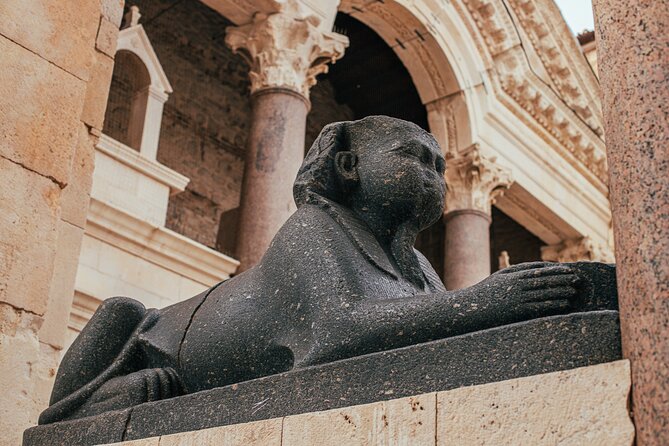
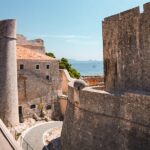
Next you reach Diocletian’s Palace itself, the Roman structure Emperor Diocletian built and lived in more than 1700 years ago. Today, it’s not a museum in the usual sense. Inside the palace walls, there are homes and shops, so the feel is human and current—not frozen behind ropes.
I love the way this stop changes your mindset. Instead of thinking of the palace as something you visit from the outside only, you start realizing it functions like part of the city’s DNA. That’s why the walk is so satisfying even when you’re mostly viewing from open areas.
The downside of this format is also simple: if you expect quiet, controlled exhibits, you won’t get that. The palace is active, so you’ll be working with real street life rather than a staged environment.
The palace cellars: the scale lesson you can actually feel
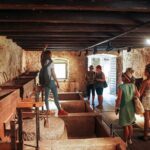
You head through a south gate into Diocletian’s Cellars—also well preserved and over 1700 years old. This is one of those stops where you start to grasp scale without needing a lecture.
Even a short visit here gives you a strong mental model of how much space the palace required and how the palace’s layout supported daily life. When you later look back at gates and courtyards, the design starts to click.
Possible watch-out: cellars and shaded stone spaces can feel cooler than the open streets. If you’re packing light, a thin layer helps you stay comfortable as the temperature changes.
Peristyle and the Jupiter idea: power shown in stone
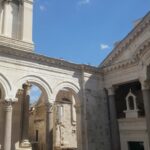
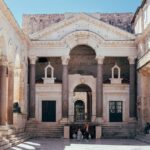
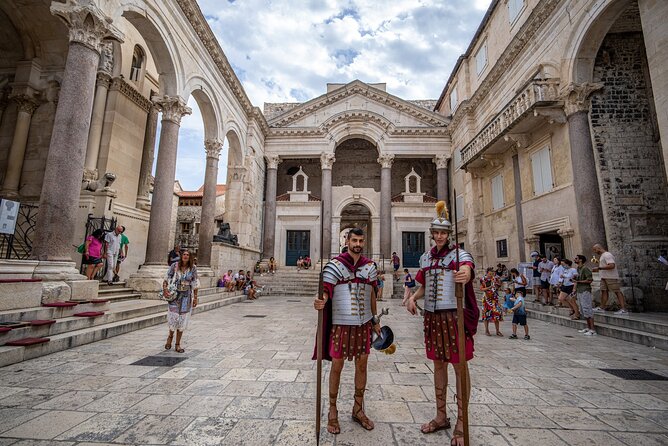
Then you move to the Peristyle of Diocletian’s Palace, described as the sacral meeting place in Diocletian’s time. This is where he presented himself to subjects and connected his rule to Roman religion—specifically worship as the son of Jupiter.
This is the architectural “why” behind what you’re seeing. The Peristyle isn’t just pretty space; it’s stagecraft. Once you know that, you read the layout differently and you stop treating it like a random courtyard.
Tip for enjoying this part: keep your attention on sightlines. The Peristyle’s meaning comes through in how people would have gathered and how power would have been performed.
Saint Domnius Cathedral: the pagan-to-Christian transformation
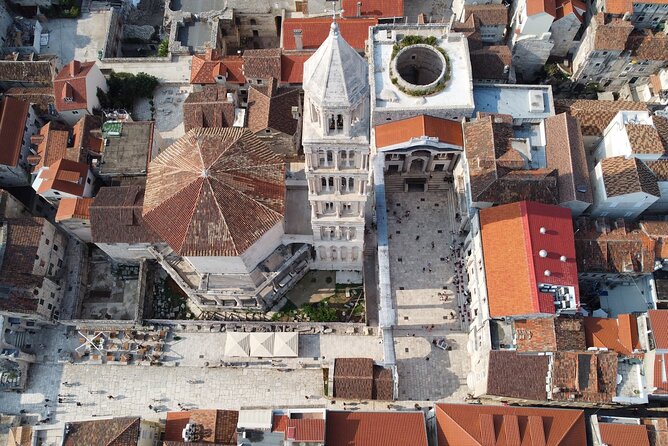
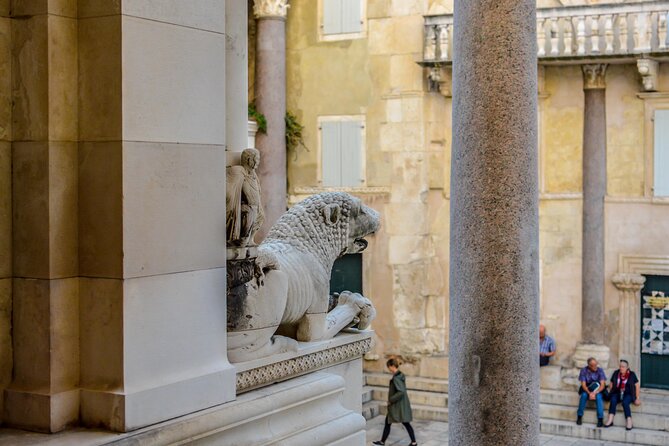
Next is Cathedral of Saint Domnius. The key detail here is the timeline twist: for a period, Split Cathedral functioned as Diocletian’s mausoleum. Later, as Christianity spread, the coffin and mortal remains disappeared, and the pagan mausoleum became a Christian cathedral.
You’ll look at it from the outside, with no entrance fee for this stop. Even exterior viewing still helps, because you can see how later generations repurposed older sacred space instead of erasing it.
If you like historical continuity, this is one of the most satisfying moments on the walk. It shows how layers of belief can stack in the same place across centuries.
You can also read our reviews of more private tours in Split
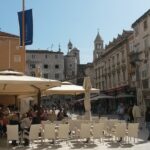





Gates of power and gates of markets: Iron Gate, Silver Gate, and Pjaca
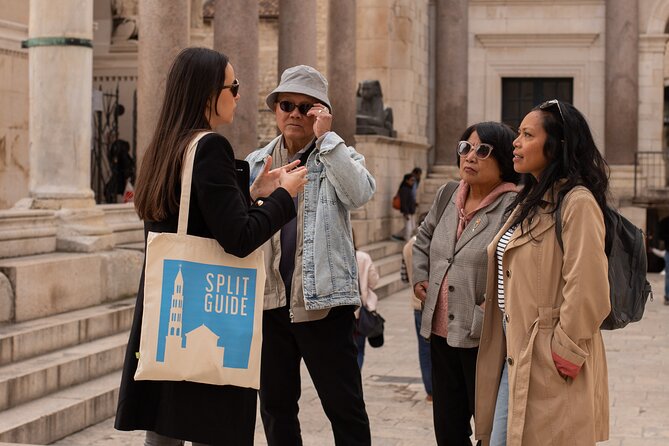
The next stretch is about thresholds—literal gates with real strategy behind them, plus today’s everyday life beyond.
You’ll pass through the Silver Gate (east gate), which was walled up multiple times and then reopened in the 1940s. From there, the gate leads to the market where local products are offered. That contrast is the fun part: ancient fortification suddenly becomes a modern shopping shortcut.
A bit later, you’ll also see the Iron Gate (west gate), built as a double gate called Propugnaculum. The area between the two gates was designed so attackers could be trapped and hit with stones, arrows, and even hot oil. That detail can feel intense, but it explains why this site is so defensible.
Leaving the gate brings you into Pjaca, a beautiful square that shifts the mood from military thinking to social life. If you only know Split from the main promenade, this is how you understand why Old Town feels like a living engine.
Triclinium and the dining-room idea: what an emperor ate
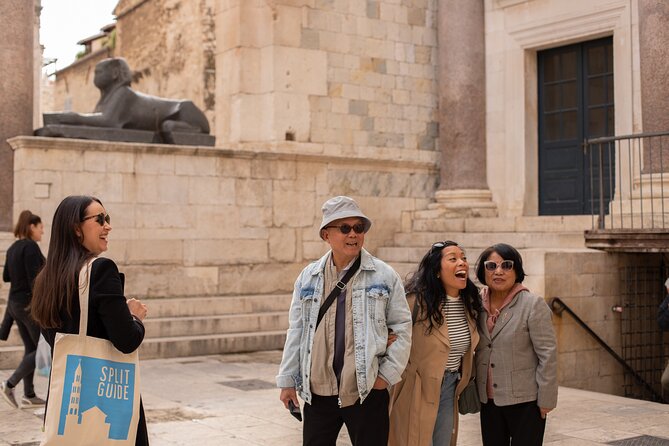
One of the most memorable stops on the route is Triclinium, the dining room where Diocletian dined with guests. The guide’s focus here is on the food culture, not just the name.
The table featured mainly Mediterranean dishes. Wine and fish show up, and honey was popular too. The most interesting detail is scale: sometimes up to 20 different courses were served in one evening.
Why I think this matters: it humanizes the palace. You go from thinking about emperors as distant rulers to picturing a specific kind of evening—long, multi-course, and full of flavor logic.
If you’re hungry by then, your timing is perfect. Your brain will be in the right frame for food recommendations that your guide can suggest for after the tour.
Vestibulum and the Temple of Jupiter: private entry and public religion
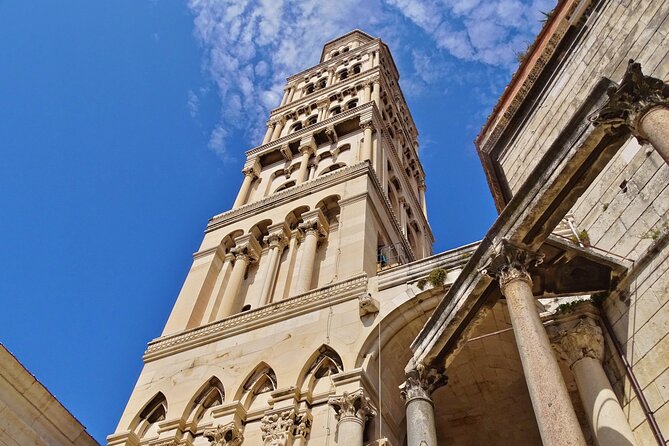
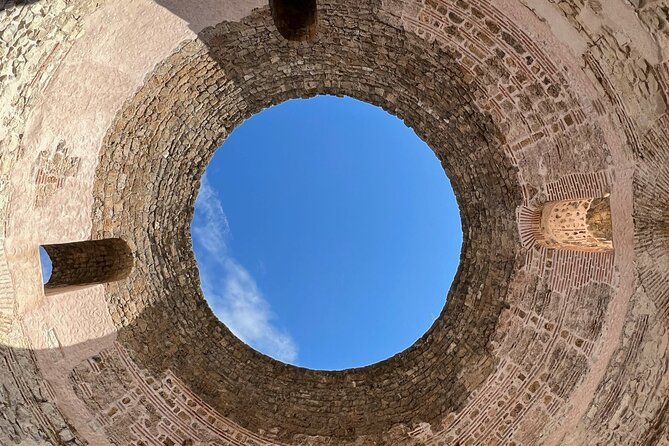
You’ll also see the Vestibulum of Diocletian’s Palace, the entrance area to Diocletian’s private chambers. Even as a short stop, it’s useful because it signals that not all spaces were public. The palace had boundaries, movement rules, and a hierarchy you can sense from the layout.
Then comes the Temple of Jupiter, which today is a baptistery. You’ll look from the outside with no entrance fee for this part, but the transformation keeps the theme going: Roman worship spaces didn’t disappear—they got re-used and reinterpreted.
If you enjoy tracing religious and political themes, this is a strong pairing. Private threshold in one moment, sacred adaptation in the next.
Golden Gate and the Green Market: Rome’s road to Salona meets today’s produce
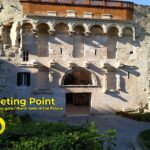
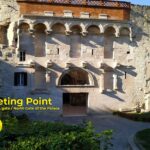
The walk continues to the Golden Gate, the north gate of the palace and the most important gate in Roman times. From here, the road led to Salona, which was the capital of the Roman province. That’s a simple fact, but it gives you a bigger picture: the palace wasn’t isolated. It was connected to regional power networks.
Right after, you step into the Green Market area on the east side of the palace. Every day it sells fresh fruits, vegetables, and other traditional foods.
This is one of the best “modern payoffs” in the entire loop. You’re literally standing where the palace meets the city’s daily needs. You’ll finish the history section and then immediately feel the present.
Practical note: if you want to buy snacks, do it here rather than trying to find food later when you’re already tired. The timing fits the tour’s rhythm.
The return to Split Riva: from gates back to the sea breeze
To close the tour, you reach the promenade again by following the palace walls back toward Split Riva. This is where the day feels complete. The same cafes and restaurants that greeted you at the start now feel earned, because you’ve learned what surrounds them.
It’s also the easiest place to take photos without feeling rushed by the next stop. You’ll be in the open air again, with the sea and city energy right in front of you.
If you’re planning your evening meal, this is a smart moment to ask your guide for suggestions. The tour includes recommendations for restaurants, bars, and leisure activities, and you can use that firsthand local context right away.
Price and value: what $137.80 really buys you
At $137.80 per person for about 1 hour 30 minutes, the price is mainly paying for two things: private attention and a route that hits the key palace beats without turning into a ticket-and-wait grind.
A big value driver is that many stops are free to visit because you’re viewing sights from the outside. You’re not paying entrance fees to access the highlights. That matters in Split, where the timing can get messy when you’re bouncing between sights.
This is designed for small groups—maximum 6 participants—so you’re not squeezed into a loud crowd. The experience also notes an overall maximum of 10 travelers, but in practice, small group size is the point: you should feel like you’re getting guidance, not just walking behind a flag.
English is supported, and it uses a mobile ticket, which helps you keep things simple on the day. The tour is also adaptable to special needs if you inform them in advance, and service animals are allowed.
One more “real-life” value point: the tour is typically booked about 22 days in advance. That’s a clue that people plan ahead here. If your dates are fixed, it’s worth reserving early so you get a time that matches good weather.
Who this tour suits best
This tour is ideal if you want a fast, focused way to understand the big Diocletian Palace story without spending your whole day in lines. You’ll get plenty of named stops—Peristyle, Triclinium, multiple gates, cellars—and you’ll connect them into one narrative about power, religion, and everyday city life.
It’s also a good fit if you prefer guided context over wandering alone. The reviews strongly point to the guide experience, with Dana highlighted as exceptional for sharing history and stories and making Old Town easier to read.
If you want full interior museum-style access to everything, you might feel limited by the outside-view approach. But if your goal is understanding and orientation, this format is exactly the point.
Should you book the Split Diocletian Palace Highlights private walk?
Yes—if you’re short on time and you want the palace highlights in a tight loop with expert guidance. The combination of small group, outside-only sights with no entrance fees, and the focus on named spaces (Peristyle, Triclinium, key gates, cellars) makes this one of the more efficient ways to get meaning from Old Town Split.
Skip it or adjust expectations if your top priority is going inside every major site. This tour is built for seeing, connecting, and moving on—then enjoying Split’s streets afterward.
If you book, bring comfortable shoes and plan for weather. Since the experience needs good weather, having a flexible mindset helps you get the best version of the walk.
FAQ
How long is the Split Diocletian Palace highlights private walking tour?
It lasts about 1 hour 30 minutes.
What’s the group size for this private tour?
It’s designed for a group of maximum 6 participants, and the experience also lists a maximum of 10 travelers.
Do I pay entrance fees for the sights on this tour?
No entrance fees are included. The sights are visited from the outside, and several specific stops note that there is no entrance fee.
Is the tour offered in English, and do I get a ticket electronically?
Yes, the tour is offered in English, and you receive a mobile ticket.
Where does the tour start and end?
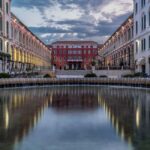
It starts at the Model of the historical core of the city of Split on Obala Hrvatskog narodnog preporoda 23 and ends at Republic Square, Prokurative.
What’s the cancellation and weather situation?
You can cancel for free up to 24 hours in advance for a full refund. The tour requires good weather, and if it’s canceled due to poor weather, you’ll be offered a different date or a full refund.