REVIEW · SPLIT
Private History Split Walking Tour in Italian – Small group
Book on Viator →Operated by Ancient Tours · Bookable on Viator
Diocletian’s Palace feels like a city inside a city. This small-group, Italian-led walk connects the palace’s most important spots to the bigger story of Split, from Diocletian’s rise to the way everyday life still fits inside ancient walls.
I especially like the pace: about 90 minutes that hits the must-see highlights without turning into a marathon. I also love the guide focus—people have praised guides like Maria and Doris for speaking clear Italian and making the details click fast.
One thing to consider: the route isn’t for everyone, since it’s not recommended for travelers with issues with high steps. If you’re sensitive to stairs, I’d plan for slower movement or skip this type of itinerary.
In This Review
- Key highlights you’ll actually feel during the walk
- Why Split’s Diocletian Palace fits a 90-minute format
- Meeting at Peristil ulica and using the small-group advantage
- Stop 1: The Peristyle of Diocletian’s Palace (your palace map in 15 minutes)
- Stop 2: The Vestibulum and the human side of Diocletian’s world
- Stop 3: Diocletian Palace Substructures (and why you skip the museum)
- Stop 4: The Golden Gate, the Gregory of Nin link, and a language clue you won’t forget
- Stop 5: Riva Harbor and a bronze model that makes scale click
- Stop 6: Fruit’s Square (Trg Brace Radic) and Marko Marulić’s 15th-century thread
- Stop 7: Split Synagogue pass-by and the Jewish story in the city mix
- Guide style in Italian: what “good” feels like on this route
- Price and value: what $69.39 buys you here
- Who should book this tour, and who might skip it
- Should you book this Italian walking tour of Diocletian’s Palace?
- FAQ
- Is this a private tour?
- How long is the tour?
- Is the tour in Italian?
- Do I need to buy tickets for the stops?
- Where does the tour start and end?
- What’s the cancellation rule?
Key highlights you’ll actually feel during the walk
- Small-group/private format that keeps the story targeted and the pace comfortable
- Peristyle first so you instantly understand the palace layout
- Golden Gate + Gregory of Nin for a history-and-language connection that’s easy to remember
- Riva Harbor stop with a bronze palace model that helps you grasp scale
- Fruit’s Square (Trg Brace Radic) tying Venetian power and local literature together
- Split Synagogue pass-by for the Jewish story in the city’s mix of influences
Why Split’s Diocletian Palace fits a 90-minute format
Diocletian’s Palace is big in idea, not in walking distance. The good news is that the most meaningful sights cluster closely enough that you can understand the palace’s “how it works” logic in a short time.
This tour is built around getting your bearings quickly. Instead of starting with random corners, you begin at the palace’s central reference point and then move outward—so each stop makes sense in relation to the last one.
Also, you’ll learn why Diocletian matters beyond stone. You’ll hear the storyline of how he went from a nobody to one of the most powerful men in the world, and you’ll see how that ambition shaped the space people still live through today.
You can also read our reviews of more walking tours in Split


Meeting at Peristil ulica and using the small-group advantage
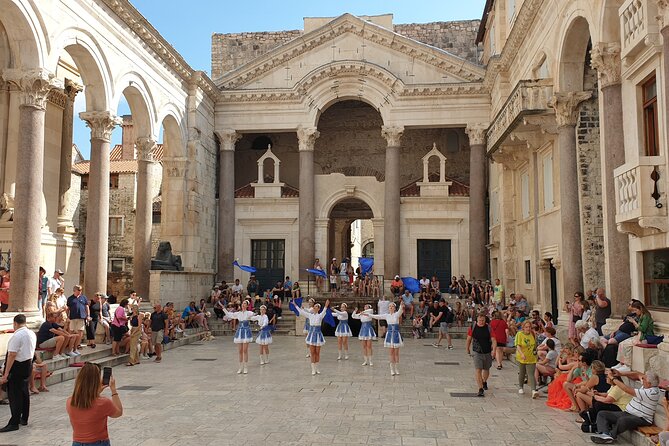
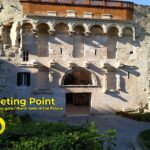
You meet at Peristil ulica (Peristil ul., 21000, Split), and the tour ends back at the same point. That means you’re not stuck figuring out transit or backtracking through the old city after the walk.
Because it’s described as a private experience with only your group, the guide can slow down when people want a second look—or speed up if you’re ready to move. In practice, the best effect is conversational: you get explanations that feel aimed at your pace, not a rushed lecture for a crowd.
Language matters here too. The tour is in Italian, and multiple guide mentions in the feedback suggest guides consistently speak good Italian, like Maria, Doris, and Mia Anica.
Stop 1: The Peristyle of Diocletian’s Palace (your palace map in 15 minutes)
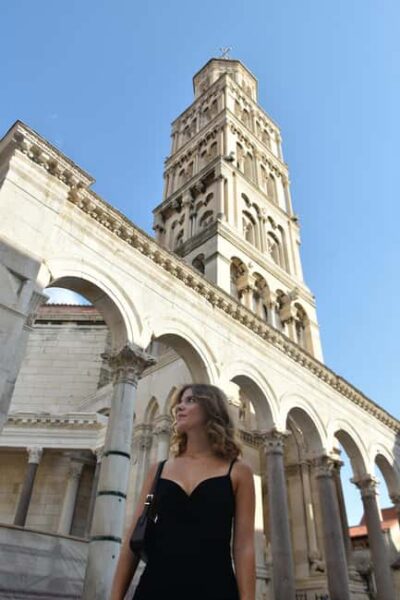
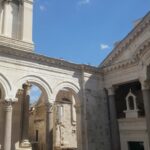
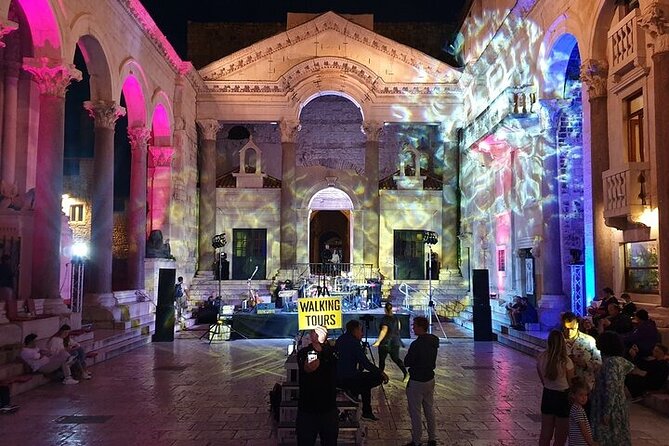
The first stop is the Peristyle, the central square of Diocletian’s Palace. This is where you start to see the whole plan: from here, you can get to almost all other locations inside the palace.
I love starting at the Peristyle because it turns the palace from chaos into structure. Even if you’ve seen photos, being in the middle of the space is what makes it feel real—the scale, the openings, and the way the layout channels movement.
It’s also marked as admission free, so you’re not burning time on ticket lines. In a 90-minute tour, that matters.
Stop 2: The Vestibulum and the human side of Diocletian’s world
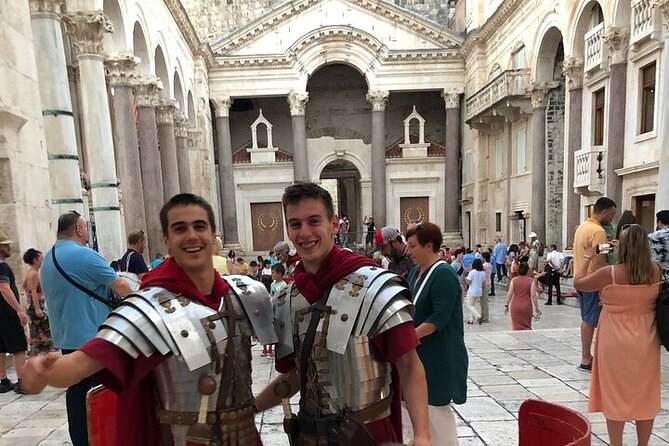
Next comes the Vestibulum, the vestibule linked to Emperor Diocletian. You’re there for the story of the space and what it meant in daily movement through the palace complex.
One detail I find charming: the tour notes you may hear traditional Dalmatian singing here. It might not happen every time, but even the possibility adds a living-culture layer to a very stone-heavy stop.
This section is short—about 5 minutes—and that’s intentional. It works like a scene change in a film: quick, focused, and meant to keep momentum.
Stop 3: Diocletian Palace Substructures (and why you skip the museum)
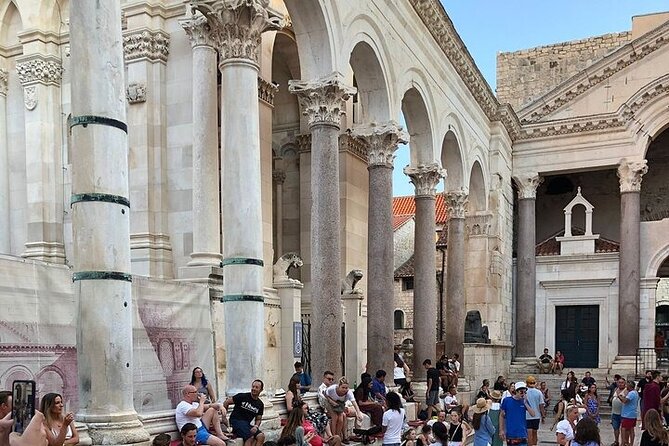
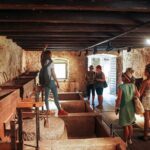
Then you move through the substructures of the palace. This is a smart stop if you like architecture with purpose, because you’ll learn about how these areas were constructed and what they did over time.
Important practical note: you won’t visit the museum part during this tour. You can visit it afterward if you want more detail, and that split is useful. You get the big storyline first, then you decide if the museum level is your kind of deeper research.
This stop is also marked admission free. In other words, you can focus on understanding what you’re seeing instead of juggling extra entrances.
You can also read our reviews of more private tours in Split





Stop 4: The Golden Gate, the Gregory of Nin link, and a language clue you won’t forget
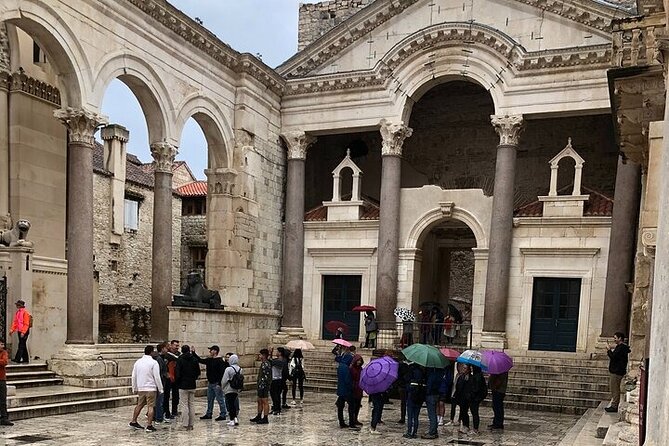
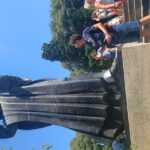
At the Golden Gate, you learn about the palace’s main entrance and see the statue of Gregory of Nin. The tour also connects him to importance in history and language, which is a memorable way to ground an artwork in everyday meaning.
I like this kind of historical “translation.” It’s not just who built what—it’s how later people used symbols, names, and language to carry power and identity forward.
This stop runs about 10 minutes and is marked admission free, which keeps the pace tight and efficient. You’ll leave with at least one standout image and one takeaway idea.
Stop 5: Riva Harbor and a bronze model that makes scale click
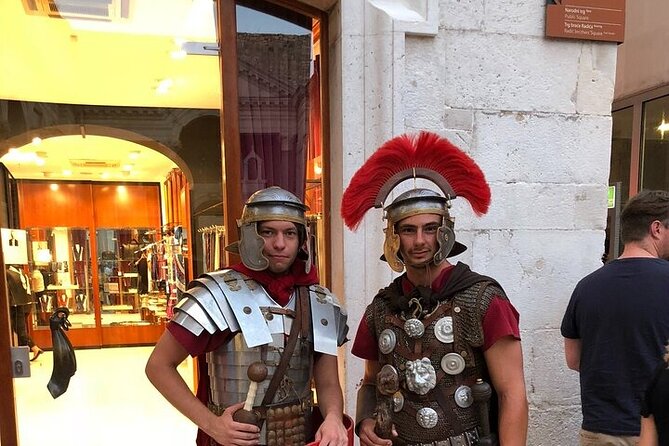
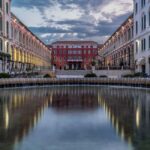
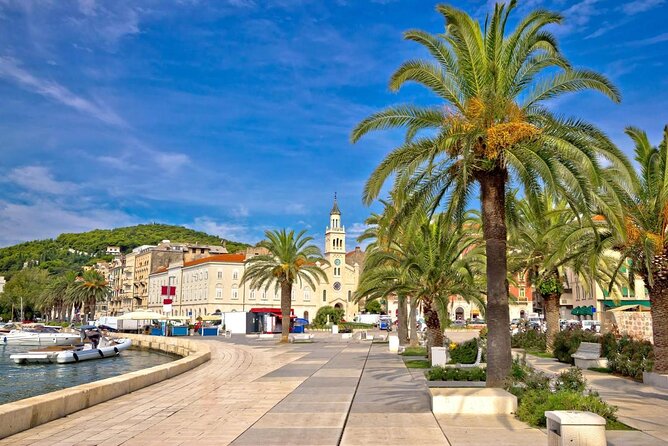
After the palace core, you’ll head to Riva Harbor, a classic promenade area in Split. Here, the tour points out a bronze model of Diocletian’s Palace, which is a huge help if you’ve struggled to picture what you just walked through.
This is one of those moments where a small object fixes a big problem. The bronze model helps you connect “where I stood” with “how large the whole system was,” which makes the earlier stops feel less abstract.
You’ll also learn about the history of Split’s beautiful Riva promenade during this 15-minute segment. Admission is listed as free, so you’re paying for explanation, not entry fees.
Stop 6: Fruit’s Square (Trg Brace Radic) and Marko Marulić’s 15th-century thread
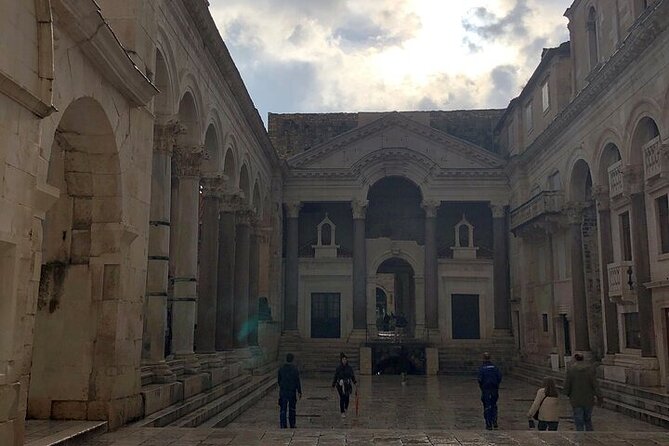
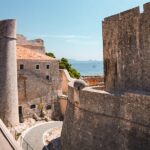
At Fruit’s Square (Trg Brace Radic), the tour shifts from Roman-era power to later layers of European influence. You’ll learn about a 15th-century Venetian citadel and how that shaped the area.
Then comes a local literary anchor: Marko Marulić, described as the father of Croatian literature. I appreciate this stop because it shows how Split’s identity isn’t only ancient. It’s also built from education, writing, and cultural memory that moved forward long after Diocletian’s time.
This segment is about 10 minutes and is listed as admission free. It’s short, but it changes the flavor of the tour from stone-and-stories to place-and-people.
Stop 7: Split Synagogue pass-by and the Jewish story in the city mix
The last major stop is a pass-by of the Split Synagogue, which dates to the 16th century. You’ll learn about the history of Jewish people in Split, and the tour keeps this as a respectful overview rather than a long formal visit.
Practical catch: the synagogue’s admission ticket is not included. So if you want to go inside, plan on paying separately.
This segment takes about 10 minutes. For me, it works best as a reminder that Split isn’t one-era-only. Different communities left their traces, and the city is still reading those layers out loud.
Guide style in Italian: what “good” feels like on this route
This tour lives or dies by the guide’s ability to connect details into a story you can repeat later. Based on guide names that have come up—Maria, Doris, and Mia Anica—the common thread is clear Italian and confidence explaining what you’re looking at.
I also like that the content isn’t just dates. You’ll hear how Diocletian’s rise shaped the palace, then you’ll see symbols and spaces that still influence how Split functions today. When a guide does that well, you don’t feel like you’re collecting facts. You feel like you’re understanding a place.
If you’re choosing this tour for language reasons, you’ll likely appreciate that the guide talks directly and stays connected to the stops instead of speaking at you while you stare at walls.
Price and value: what $69.39 buys you here
At $69.39 per person for about 1 hour 30 minutes, you’re paying for three things: a focused route, guide interpretation, and the convenience of a set walk that ends right where it starts.
What makes it feel like value is the way the tour is structured around admission-free stops for most segments, with only the synagogue explicitly not included. That reduces the “hidden costs” feeling you can get on walking tours in historic areas.
Also, this is designed as a small-group/private experience, which usually means you spend less time waiting and more time learning. If you’re the type who likes to ask questions, that format can be worth more than the base price.
If you want the museum experience, the substructures museum isn’t part of the tour, so you’d likely add that separately later. Think of this walk as the map and the story, not the full archive.
Who should book this tour, and who might skip it
You’ll enjoy this most if you:
- like history that explains what you’re physically seeing
- want the palace highlights in a tight time window
- prefer an Italian-language guide and learn best by walking
Skip it or plan carefully if:
- stairs and uneven steps are a problem for you (the tour notes it’s not recommended for issues with high steps)
- you want a long museum-heavy day (this is about key palace sights, not a full museum schedule)
Should you book this Italian walking tour of Diocletian’s Palace?
Yes, if you want a smart, readable overview of Split’s core without getting lost in too many places at once. This is the kind of tour that helps you return to the palace afterward and finally understand what you’re looking at.
I’d book it especially if you like guide-led storytelling and want a layout-first approach: start at the Peristyle, walk outward through the palace structure, and end with later Split layers like Fruit’s Square and the synagogue area.
If stairs are an issue, double-check your comfort level before committing. Otherwise, this is a solid way to get your bearings fast and leave with a few standout images you can’t unsee.
FAQ
Is this a private tour?
Yes. It’s listed as a private tour/activity, so only your group participates.
How long is the tour?
It runs about 1 hour 30 minutes (approx.).
Is the tour in Italian?
Yes. It’s a Private History Split Walking Tour in Italian.
Do I need to buy tickets for the stops?
Most stops are marked admission ticket free. The Split Synagogue admission ticket is not included.
Where does the tour start and end?
It starts at Peristil ulica (Peristil ul., 21000, Split, Croatia) and ends back at the same meeting point.
What’s the cancellation rule?
You can cancel for a full refund if you cancel at least 24 hours before the experience starts. Free cancellation is offered, and if a minimum traveler number isn’t met, you’ll be offered a different date/experience or a full refund.