REVIEW · SPLIT
Private Walking Tour in Split Old Town (ENG, FRA, ITA, ESP)
Book on Viator →Operated by Sanja - Tour Guide in Split · Bookable on Viator
Split makes more sense with one good guide. This private Old Town walk in Split is built around Diocletian’s Palace, then fans out into the medieval streets so you see the layers instead of just the sights.
I particularly like two things: the substructures visit (the most useful place to understand how the palace was made), and the way guide Sanja keeps the story clear and organized as you move.
One consideration: the Diocletian Palace Substructures have a separate €10 per person entrance fee, so the tour price isn’t the full cost you’ll pay.
In This Review
- Key highlights worth your time
- Why this Split Old Town tour works so well (and for whom)
- Meeting at Riva Harbor: start with the view, not the trivia
- Diocletian’s Palace: the 9-acre “why is everything here” moment
- The Substructures (internal visit): where the details actually pay off
- Saint Domnius, Triklinij, and the dining-and-burial connection
- Peristyle and the “wow factor” pieces: Egyptian sphinx and the emperor’s view
- From Jupiter Temple to the Golden Gate: outside views that add structure
- The medieval core: Grgur Ninski to Fruit’s Square
- Fish Market timing, then streets shaped by French and Austrian eras
- Price and value: what you’re really paying for
- Practical expectations: how the pace feels
- Should you book it? My straight answer
- FAQ
- How long is the private walking tour in Split Old Town?
- Is this tour private or shared?
- Where do we meet, and where does the tour end?
- Do I need to pay any extra entrance fees?
- What language is the tour offered in?
- What if the weather is bad?
Key highlights worth your time
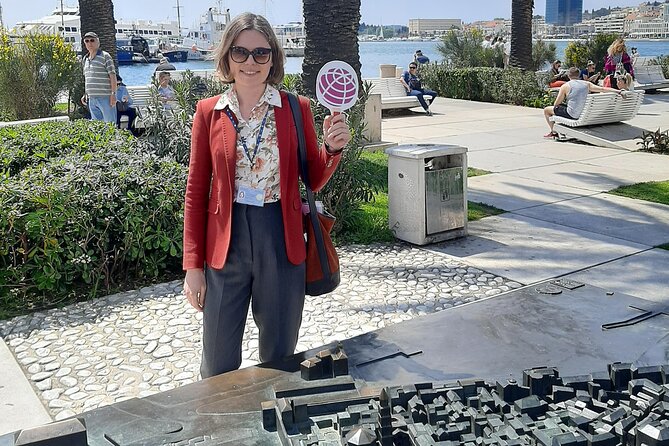
- Riva Harbor as a visual warm-up: start with the big-picture view of palace walls, the medieval town, and Marjan hill/park.
- Diocletian’s Palace, walked in detail: you cover the main 9-acre Roman complex and how it’s used today.
- Substructures with extra meaning: the best-preserved area for construction and original purpose.
- Cathedral of Saint Domnius: see the Roman imperial burial connection from the outside.
- Acoustics at Vestibulum: in summer, traditional Dalmatian singing can be possible there because of the sound setup.
- Medieval streets in the same route: you hit key squares and landmarks, not random photo stops.
Why this Split Old Town tour works so well (and for whom)
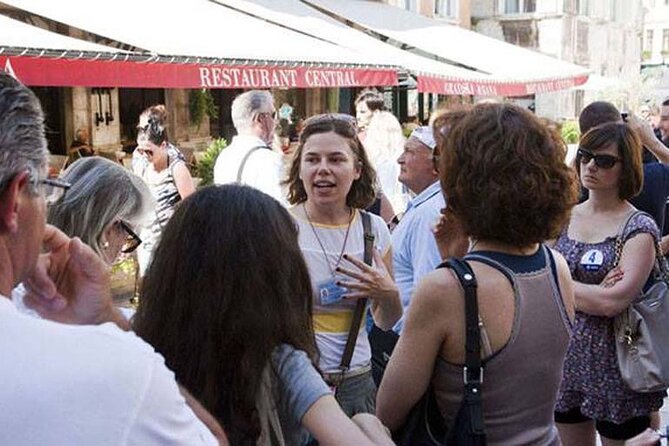
This is the kind of tour I recommend for your first day in Split—especially if you want the city to click fast. Split’s Old Town can feel like a maze: narrow lanes, grand stone, and Roman walls everywhere. This route gives you a logical path from the waterfront to the Roman core, then out into medieval and later-period landmarks.
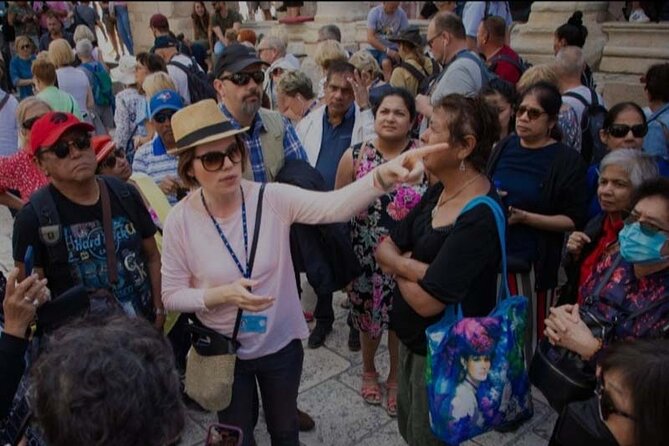
The format is private, so you’re not stuck listening through a crowd. The tour runs about 1 hour 45 minutes, which is long enough to cover the essentials and still short enough that you’re not dragging yourself by the end.
It’s also a strong fit if you like your history in plain language. Sanja is the guide here, and the common theme across the experience is clarity plus a steady pace that doesn’t rush people.
You can also read our reviews of more walking tours in Split
Meeting at Riva Harbor: start with the view, not the trivia
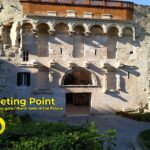
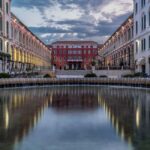
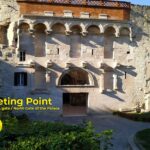
You meet at Obala Hrvatskog narodnog preporoda 22 in Split, and the tour starts at 9:00 am on the Riva promenade. This is a smart choice. From here you can orient yourself immediately.
At Stop 1, Riva Harbor, you get a full view that ties multiple eras together: the Roman palace presence, the medieval town shape, and the nearby Marjan hill/park. It’s the easiest place to understand where you are before you start walking into the palace walls.
This stop also matters because it’s where the tour ends. You’ll finish back at the same promenade point, which makes the whole walk feel like a loop, not a one-way shuffle.
Diocletian’s Palace: the 9-acre “why is everything here” moment
Stop 2 is Diocletian’s Palace, and it’s the heart of the tour. You’re walking through a Roman complex of about 9 acres, with the guide pointing out how Roman architecture is still being used in modern life.
This is not just a drive-by. The idea is to help you see how the palace functions as a city inside a city. You’ll be directed to multiple internal areas and given context so you understand what you’re looking at—rather than just recognizing the big words.
If you love architecture, this is where your eyes will start doing the work. Roman stonework, passageways, and structural choices become much easier to read when somebody shows you what to look for first.
The Substructures (internal visit): where the details actually pay off
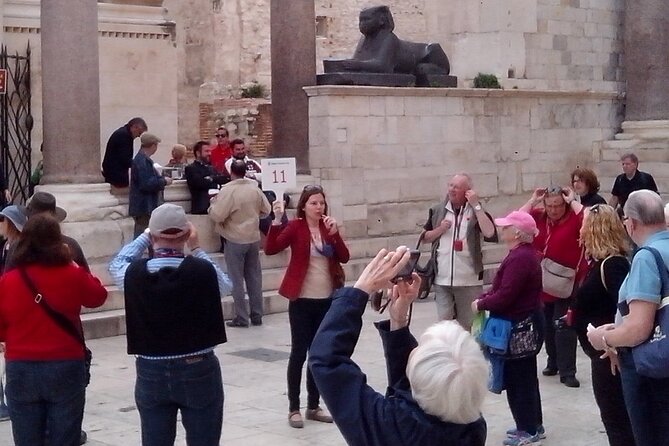
Next is Stop 3: Diocletian Palace Substructures, an internal visit. This is also the part with the separate admission fee: €10 per person, not included in the tour price.
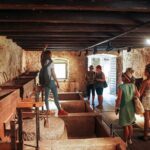
Why it’s worth it: the substructures are described as the best preserved segment of the palace. For you, that means the story becomes visible in a physical way. Instead of hearing general explanations, you can connect construction choices to the palace’s original purpose.
This is the stop that tends to turn history from abstract to practical. If you’re the type who likes to understand how buildings worked, you’ll likely come out with a stronger mental model of the palace than you’d get from looking only at the main surface-level areas.
Saint Domnius, Triklinij, and the dining-and-burial connection
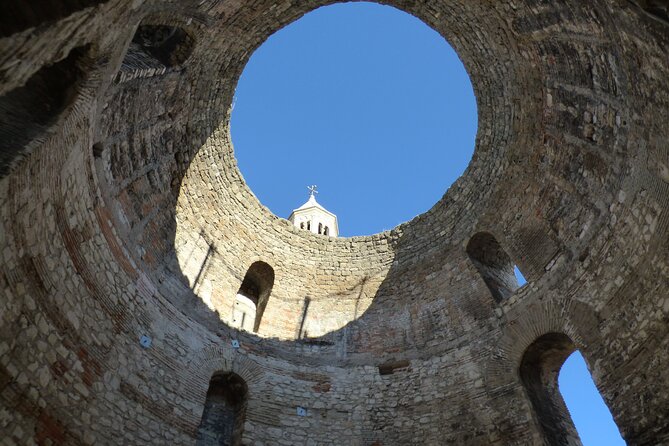
After the Roman complex, the tour shifts to specific anchor points:
- Stop 4: Cathedral of Saint Domnius (external visit). This cathedral is connected to the emperor’s burial site and mausoleum concept. Even without going inside here, you get a clear sense of the overlap between religious and imperial Rome.
- Stop 5: Triklinij, the area of the emperor’s apartment and especially the dining hall complex. This matters because Roman power wasn’t only military or administrative. It was also social—meals, reception, status.
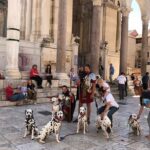
- Stop 6: Vestibulum of Diocletian’s Palace. Here the guide explains its importance, and there’s a special note: in summer months, you might have traditional Dalmatian singing possible at this site because of great acoustics.
That cluster of stops helps you see the palace as more than stone. It’s a working system—power expressed through ritual, dining, and monumental space.
You can also read our reviews of more private tours in Split


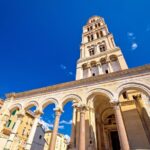

Peristyle and the “wow factor” pieces: Egyptian sphinx and the emperor’s view

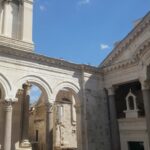
Stop 7 is the Peristyle of Diocletian’s Palace, the imperial square. This is where you get a sense of scale and symbolism at once.
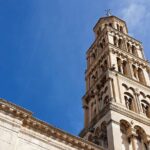
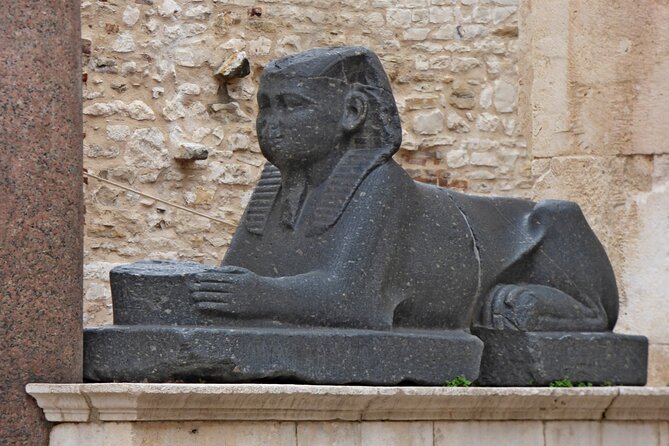
You’ll admire the view toward the emperor’s mausoleum, which today connects to the cathedral and its belltower. You’ll also see an original Egyptian sphinx, which is a standout moment because it signals how Roman authority pulled in influences far beyond local materials and styles.
This section is one of the best places to slow down and look up and around. It’s not just about snapping a photo; it’s about understanding why this square worked as the palace’s social and visual center.
From Jupiter Temple to the Golden Gate: outside views that add structure
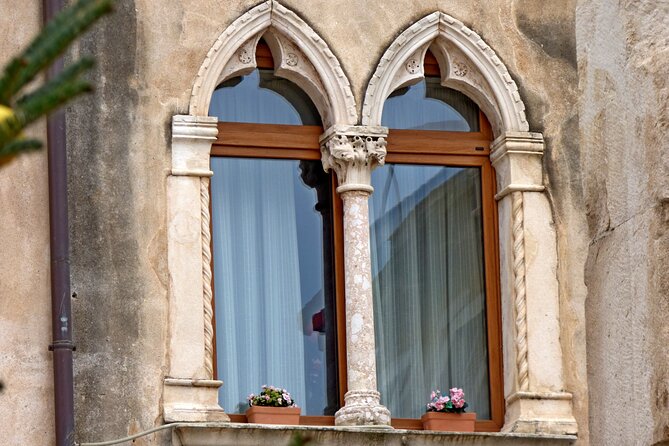
Then you transition back to the palace’s outer-facing elements:
- Stop 8: Temple of Jupiter (external visit). You see the spot dedicated to the main Roman god.
- Stop 9: Golden Gate. You pass through and admire the full view of the palace fortifications from outside.
These stops are short, but they help in a key way: they give you reference points. When you later look at the palace walls around you, you’ll know what parts are gates, what parts are religious focal points, and how the fortifications frame the whole complex.
The medieval core: Grgur Ninski to Fruit’s Square
Once you’re out of the palace flow, the tour turns toward medieval Split, still staying on a route that makes sense.
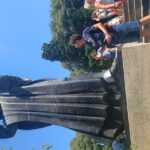
- Stop 10: Grgur Ninski Statue, the iconic giant figure that anchors your understanding of modern Split identity tied to older tradition.
- Stop 11: Narodni Trg, the main square of medieval Split, where you discuss its importance.
- Stop 12: Old Town Hall on Pjaca square. You see it as a Republic of Venice era structure.
From there:
- Stop 13: Fruit’s Square (Trg Brace Radic), including the gigantic tower once part of medieval fortifications, plus discussion of noble families tied to that period.
- Stop 14: Marko Marulic Sculpture, the writer statue on Fruit’s Square.
This middle-to-late portion is where the tour becomes more like a guided walk through “why these places mattered.” Instead of trying to read every plaque on your own, you get the big connections explained while you’re standing right there.
Fish Market timing, then streets shaped by French and Austrian eras
Stop 15 is Split Fish Market. The key practical detail: it may be passed by or visited, and it’s open only in the morning. If you’re booked for a 9:00 am start, you’re in a good timing window for seeing it when it’s active.
After that you walk the streets that show Split’s changing rulers and influences:
- Stop 16: Marmontova Ulica, associated with French rule in the 19th century.
- Stop 17: Prokurative, the famous square from the Austrian-Hungarian monarchy period in the 19th century.
This ending arc is useful because it prevents the tour from ending like a museum visit. You leave with a sense of how the city’s power and design changed over time, not just how it looked during one empire.
Price and value: what you’re really paying for
The price is $156.19 per group (up to 15 people) for about 1 hour 45 minutes. That’s the biggest value clue here: you’re not paying per head for the guide’s time. If you’re traveling as a couple or a family, this can be very cost-effective compared to per-person tour pricing.
That said, plan for one extra expense: €10 per person for the Diocletian Palace Substructures internal visit. The tour structure makes sense—most of the route is free to enter—but that one stop is the one place you should budget for if you want the best-preserved part of the palace.
If you want a straightforward rule: treat the base price as the guide + route value, then add the substructures fee as the main optional add-on.
Practical expectations: how the pace feels
You’ll hit a lot of stops, but many are short (some are only a few minutes). The rhythm is designed for a walking tour that still feels manageable: you get a clear explanation at the big hitters, then a quick orientation at the supporting landmarks.
There’s also a useful built-in “story order”: waterfront orientation, Roman core, imperial daily life and religious anchors, palace perimeters, then the medieval squares and later-era streets.
If you want a tour that helps you get your bearings fast, this is built for that.
Should you book it? My straight answer
Yes—if you’re the kind of traveler who wants your Split visit to make sense from the first day. This private route centers on the palace spaces that explain the city, and it keeps the focus on walking areas where you can actually see what the guide is talking about.
I’d think twice only if you strongly dislike guided history or you’re trying to avoid any extra entrance fees (because of the €10 per person substructures ticket). Also note the experience is described as requiring good weather, so plan for an outdoor walking day.
If your goal is a clean “Roman-to-medieval” orientation with Sanja leading the way, this one is a smart pick.
FAQ
How long is the private walking tour in Split Old Town?
It lasts about 1 hour 45 minutes (approximately).
Is this tour private or shared?
It’s private, meaning only your group participates.
Where do we meet, and where does the tour end?
You meet at Obala Hrvatskog narodnog preporoda 22, 21000 Split. The tour ends back at the same meeting point.
Do I need to pay any extra entrance fees?
Yes. The Diocletian Palace Substructures internal visit requires an entrance fee of €10.00 per person and it’s not included.
What language is the tour offered in?
The tour is offered in English.
What if the weather is bad?
This experience requires good weather. If it’s canceled due to poor weather, you’ll be offered a different date or a full refund.