REVIEW · SPLIT
Split Walking Tour: History, Legends & Tales
Book on Viator →Operated by Tour4You · Bookable on Viator
Three layers of Split in 90 minutes. This walking tour strings together Diocletian’s Palace in your head (and on your feet), then finishes in the city’s public squares so you understand how Roman power turned into everyday life. I especially loved the way Lucija makes the story feel practical, not just academic, and how legends fit naturally into the route.
One possible drawback: you’ll spend most of the time outside and moving along uneven old-stone paths, so bring comfy shoes and pick a time when you’re feeling good.
In This Review
- Key things that make this tour worth it
- Riva Harbor first: get your bearings fast
- Diocletian’s Palace substructures: the underground maze feeling
- Vestibulum and the entrance hall energy
- The Peristyle and the 3,500-year-old sphinx
- Golden Gate to Gregory of Nin: legends you can do on the spot
- People’s Square (Pjaca) and how the city spilled beyond the walls
- Fruit’s Square (Trg Brace Radic): Venetian defense and Baroque drama
- Price and value: why $30.17 feels fair here
- The guide makes the difference: Lucija’s style
- Timing and weather: how to pick the right moment to go
- Who should book this Split walking tour?
- Should you book Split Walking Tour: History, Legends & Tales?
- FAQ
- How long is the Split walking tour?
- What language is the tour offered in?
- How big is the group?
- Where do I meet, and where does the tour end?
- Do I need a mobile ticket?
- What’s included in the price?
- Are any museum or paid-site tickets included?
- Are the stops themselves free to see?
- What happens if the weather is bad?
- What is the cancellation policy?
Key things that make this tour worth it
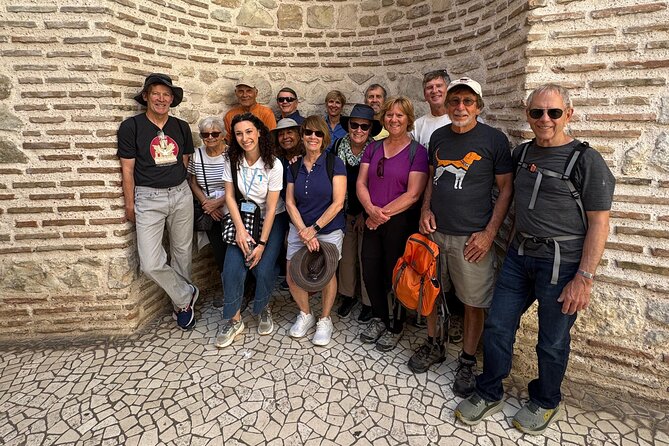
- Small group size (max 12) means you get more personal pacing and easy questions
- No museum-ticket hunting: you’re guided through major sites without paying for paid entrances
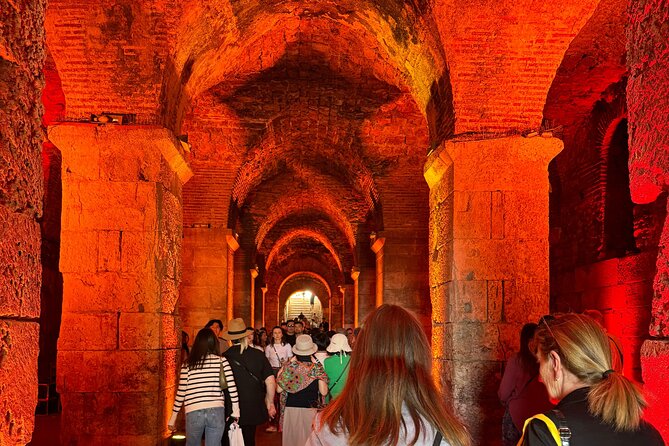
- Underground palace substructures show the engineering and scale you miss from street level
- The Peristyle courtyard and its ancient sphinx give you a real-feeling connection to history
- Gregory of Nin’s toe-rubbing legend turns a statue stop into a fun, easy moment to remember
- Lucija’s food and gelato recommendations help you keep exploring after the walk
Riva Harbor first: get your bearings fast
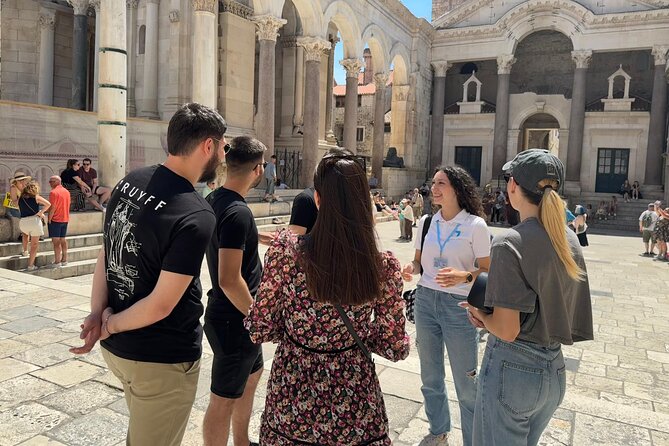
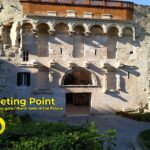
Most Split walks start in the middle of the chaos. This one starts at Riva Harbor, where it’s easier to see the big picture before you disappear into stone alleys. You begin on the main promenade and get an intro to Diocletian, his palace, and why Split grew around that one massive project.
There’s also a model of Split at the start. It sounds simple, but it helps you map what you’ll see later. When you hit the palace complex, you’re not guessing. You know what area you’re in and why it matters.
The tour also loops back to where you began—same meeting point—so the end of your walk feels like a reset, not a new problem to solve. And if you’re arriving by cruise, the meeting point being easy to find is a real quality-of-life perk.
You can also read our reviews of more walking tours in Split



Diocletian’s Palace substructures: the underground maze feeling
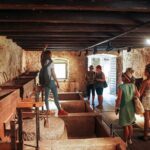
The most memorable switch-up here is going underground. You move through the palace substructures, a labyrinth of corridors and rooms that once supported Emperor Diocletian’s grand residence. It’s not “dark for dark’s sake.” The space is presented as living infrastructure—how Romans engineered a palace to function in the real world.
As you walk, you’re meant to connect the dots: this wasn’t just fancy decoration above ground. This is where the palace’s system worked—circulation, support spaces, the everyday logic behind imperial grandeur. The best part is that the guide doesn’t treat it like a history lecture. You come away picturing life inside those spaces, even though most of us will never step into something that old.
Practical note: underground parts can feel cooler, and you’ll be navigating narrow passages. If you’re traveling with tight timing, this stop is great because it packs a lot into the schedule without needing extra tickets.
Vestibulum and the entrance hall energy
Next comes the vestibulum area—framed as the grand entrance hall of Diocletian’s Palace. This is where the walk shifts from “hidden engine room” to “this is where power announced itself.”
You pass through southern parts of the palace complex connected to Diocletian’s apartments. You also hear about spaces like the Triklinium, the dining hall, plus palace gardens. Even if you only catch fragments of layout from your angle, the guide’s job is to make the space feel connected: where a ruler could receive people, where meals happened, and where the palace’s rhythms moved between formal rooms and open air.
This stop is a good reminder that the palace wasn’t one single room you “visit.” It was a whole mini-world. You start noticing how the palace plan influenced what’s still around today.
The Peristyle and the 3,500-year-old sphinx
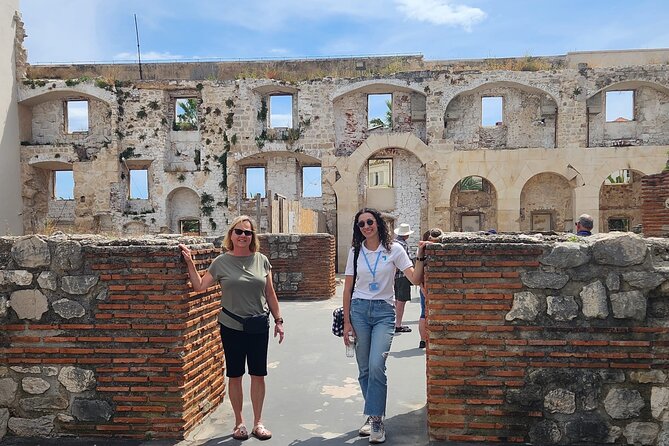
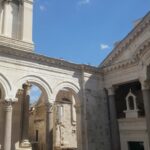
Then you reach the Peristyle. It’s the kind of stop that makes you pause because it feels like a stage set built for centuries.
The guide highlights that Peristyle is a rare bridge between modern eyes and ancient heritage. One standout detail here is the sphinx: around 3,500 years old and described as perfectly preserved, watching over the courtyard. That single object changes the mood of the stop. It’s not just Roman architecture anymore. It’s a reminder that history travels with people, not just buildings.
The Peristyle also helps you understand why Split feels the way it does. The city isn’t built on top of ruins like a clean layer-cake. It’s built around them. The Peristyle stop is where you start to feel the overlap between old stone and present-day streets.
Golden Gate to Gregory of Nin: legends you can do on the spot

From the Peristyle you move toward the Golden Gate, described as a magnificent entranceway that welcomed visitors into Diocletian’s Palace. You can see how the design would steer movement and expectations—this is the kind of threshold that says, Pay attention. You’re entering something important.
Then comes a much more human, playful moment: the statue of Gregory of Nin. The guide tells the legend that rubbing the statue’s big toe brings good luck and grants wishes. The beauty of this part is that it doesn’t feel forced. It’s one quick action that turns “history” into a memory you’ll repeat to friends.
It’s also an easy way to measure whether the tour is working for you. If you’re still engaged at this point, you’ll likely enjoy the remaining city-square stops even more, because you’ll be able to follow the logic of the town’s growth.
You can also read our reviews of more historical tours in Split





People’s Square (Pjaca) and how the city spilled beyond the walls

Outside the walls of Diocletian’s Palace sits Pjaca, also called People’s Square. This is one of the best stops for understanding how the palace era transitioned into civic life. The guide frames it as the first area developed beyond the palace walls as the population grew—starting in the 14th century.
You also hear about what came next: a former 15th-century city hall and a long role as a gathering space. That matters because it explains why this square still feels like a meeting point, not a dead postcard spot.
The practical value here is that the tour stops giving you pure “palace facts” and starts giving you “how people live around this.” If you want to know where to sit for a coffee later, this is the kind of place the guide is pointing you toward.
Fruit’s Square (Trg Brace Radic): Venetian defense and Baroque drama
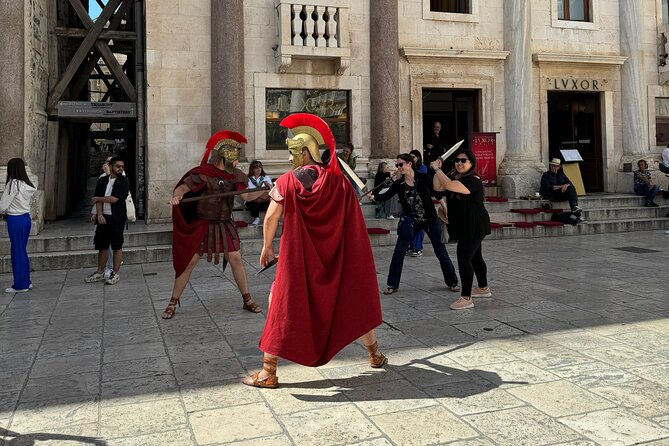
The final square stop is Fruit’s Square, or Trg Brace Radic. Even with limited time, the guide makes it clear why this area is more than a name on a map. The square holds landmarks tied to defense and changing architectural tastes.
The big feature is the octagonal Venetian tower, built in the 15th century for defense of what was then a small town. Across from it is the Palace of the old family Milesi from the 17th century, with a spectacular Baroque facade noted as one of the best examples in Dalmatia. If you like architecture, this is where the walk gives you something to look at instantly.
At the same time, the square is described as a working part of city life—bars, restaurants, shops, and even a venue for fairs. That mix is exactly what you want after spending an hour-and-a-half in palace spaces. You come out with places to eat, not just sites to photograph.
Price and value: why $30.17 feels fair here

At $30.17 per person for about 1 hour 30 minutes, this tour sits in the “good starter” category. You’re paying for a licensed guide and for the kind of interpretation that helps you actually read the buildings as you walk.
The value is stronger because the experience avoids paid-ticket dependency. The tour doesn’t enter museums or other payed sites, and you’re not expected to buy admissions along the way. That means your money goes toward guidance, pacing, and storytelling—not toward extra lines and extra fees.
The small group limit (up to 12) also matters for value. In a big group, you get rushed and you lose questions. In a small group, you can ask something like: Why does this entrance matter? What were these underground spaces for? That’s when a walking tour turns from “facts” into clarity.
One more practical detail: the tour is offered in English and uses a mobile ticket. If you prefer not to juggle printouts while you’re on foot, it’s a small win.
The guide makes the difference: Lucija’s style
The standout name you’ll hear in the experience is Lucija. People describe her as engaging, personable, and able to compress a lot of information into something you can carry while you’re walking. That’s not a small skill. Old places can overwhelm you fast. A good guide makes it feel like a route, not a test.
You’ll also get concrete recommendations, including food ideas—one mention specifically calls out pasticada—and sweet stops like gelato. Those details matter because the best tour moments don’t end when you return to Riva Harbor. They carry you into what you do next.
Another theme in the feedback is that she takes questions seriously and answers them patiently. And if you’re traveling with kids, one note says she was responsive to small children joining the walk—useful if your group isn’t made up of “museum-only” adults.
Timing and weather: how to pick the right moment to go
This experience requires good weather. If it’s canceled due to poor weather, you’ll be offered another date or a full refund. Since the walk is outdoors for much of the time, this policy is a real comfort.
Also, there’s a practical planning clue: this tour is commonly booked ahead (on average, about 24 days). That’s usually a sign the schedule fills. If you’re trying to fit this into a tight day—especially if you’re on a cruise—it’s smart to book early rather than assume space.
If you have the option to choose a start time, one review notes a morning tour can feel cooler and less crowded. That’s worth considering if you’re sensitive to heat or simply want a calmer pace.
Who should book this Split walking tour?
Book this if you want an efficient orientation to Split’s most important layers—Roman palace power, the underground workings, and the city life that grew around it.
It’s especially good for:
- First-time visitors who want to understand what they’re looking at
- People who dislike museum ticketing but still want the big landmarks
- Travelers who like stories that connect architecture to everyday life
- Anyone who wants clear food and sightseeing suggestions right after the tour
You might skip it if you already know Diocletian’s Palace deeply and you’re looking for a long, ticket-based museum-style day. This walk is designed for overview and interpretation, not for deep document-level study.
Should you book Split Walking Tour: History, Legends & Tales?
Yes, if you want a smart, time-efficient way to get the main ideas of Split into your head and your legs. The big advantages are the small-group pace, the licensed guide, and the focus on seeing major palace features without paying for museum admissions.
I’d book it early in your trip. You’ll return to the streets later with a different understanding, and those squares—Pjaca and Trg Brace Radic—will stop feeling like random stops on a loop.
If the weather cooperates and you’re comfortable walking for about 90 minutes, this is a very solid “start here” experience in Split.
FAQ
How long is the Split walking tour?
It lasts about 1 hour 30 minutes.
What language is the tour offered in?
The tour is offered in English.
How big is the group?
The maximum group size is 12 travelers.
Where do I meet, and where does the tour end?
It starts at Obala Hrvatskog narodnog preporoda 22, 21000, Split, Croatia, and it ends back at the same meeting point.
Do I need a mobile ticket?
Yes, the tour uses a mobile ticket.
What’s included in the price?
A licensed tour guide is included.
Are any museum or paid-site tickets included?
No. The tour does not enter museums or other paid sites, and no admission tickets are included.
Are the stops themselves free to see?
The stops described are listed as admission ticket free, and the tour does not require paid entries.
What happens if the weather is bad?
This experience requires good weather. If it’s canceled due to poor weather, you’ll be offered a different date or a full refund.
What is the cancellation policy?
Free cancellation is available up to 24 hours in advance for a full refund. Changes made less than 24 hours before the start time aren’t accepted.