REVIEW · SPLIT
Private History tour – small group
Book on Viator →Operated by Ivan Fistanić · Bookable on Viator
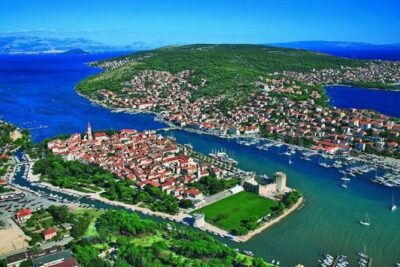
Split history is right under your feet. This short, private walking tour threads together the big hitters of the old town with clear stops and a smart pace. I really like that the guide, Ivan Fistanić, brings history with a formal background (he has a Master’s Degree in History), and I also like that you spend real time in the spaces that explain how the palace worked, not just how it looks. One thing to keep in mind: it’s outdoors for long stretches, and the tour needs good weather.
You’ll meet at Ul. kralja Tomislava 15 and get a mobile ticket, then walk your way through Diocletian’s Palace and the squares just outside it. Expect about 1 hour 30 minutes to 2 hours, small-group style (up to 10 people). Most stops have no ticket cost, but two major sights along the route do not include admission.
In This Review
- Key highlights that make this tour worth your time
- First stop: starting inside the story at Diocletian’s Palace
- Golden Gate: the palace’s main door into the Roman world
- Small consideration
- The Peristyle: where the imperial square turns architecture into meaning
- Cathedral of Saint Domnius: one of the best-preserved Roman structures, seen up close
- Watch-outs
- Temple of Jupiter: late Roman power, later Christian reuse
- Vestibulum and Triclinium: your chance to understand how the palace worked
- Riva Harbor: where locals and visitors meet under the palace wall
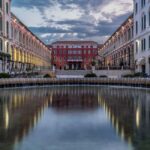
- Fruit’s Square (Trg Brace Radic): picturesque outside the palace walls
- Pjaca: the old town hall square and the city’s medieval heartbeat
- Grgur Ninski Statue: the memorable ending with a good-luck toe
- Price and value: what you’re really paying for
- Who this is for (and who might want something else)
- Quick tips to get the most from the walk
- Should you book this Private History tour in Split?
- FAQ
- How long is the Private History tour?
- How large is the group?
- Where does the tour start and end?
- Is this tour walking only, or are there indoor stops?
- Are entrance tickets included?
- Who will guide the tour?
- Do I get a ticket on my phone?
- What if the weather is bad?
Key highlights that make this tour worth your time
- A Master’s Degree history guide who can answer hard questions without hand-waving
- Diocletian’s Palace, explained in walking order, from the gate into the imperial core
- Roman-to-Christian transformations, including a late Roman temple turned into a baptistery
- Stop-by-stop context, so you know what you’re looking at (and why it mattered)
- Central, easy meeting point near public transport, then back to the same place
- Most entrances are free, with a clear heads-up on the couple that are not included
First stop: starting inside the story at Diocletian’s Palace
A good Split introduction doesn’t start with random photos. It starts with the palace logic: gates, squares, power, and everyday life inside the walls. This tour does that by placing you at the most meaningful entry points early, so the city stops feeling like a maze.
The vibe is small-group and private, which matters here. With up to 10 people, you can ask questions and actually get answers tied to what you’re standing next to. And with a time window of about 90 minutes to 2 hours, you avoid that tiring feeling of “we’re still walking… are we done yet?”
You can also read our reviews of more private tours in Split



Golden Gate: the palace’s main door into the Roman world
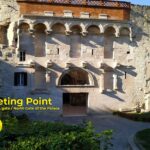
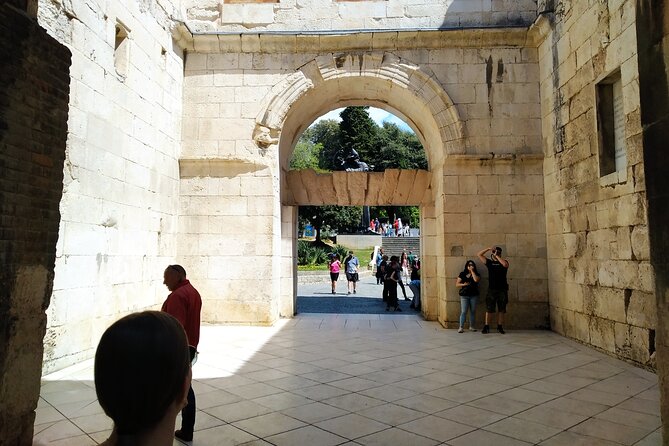
Your tour begins at the Golden Gate, the main entrance to Diocletian’s Palace. This is one of the four major Roman gates, and it sits on the road heading north toward Salona, the Roman province capital and Diocletian’s birthplace.
What I like about leading with this is simple: it sets direction. Once you know which way the gate points and what Salona represents, the rest of the palace feels less like ruins and more like an organized plan. It’s also a quick stop, roughly 15 minutes, and the admission here is free—so you get payoff fast without dragging time.
Small consideration
You’re standing outdoors near a busy historic zone. If you’re sensitive to heat or wind, plan for it, because early in the day the sun can hit hard in Split.
The Peristyle: where the imperial square turns architecture into meaning
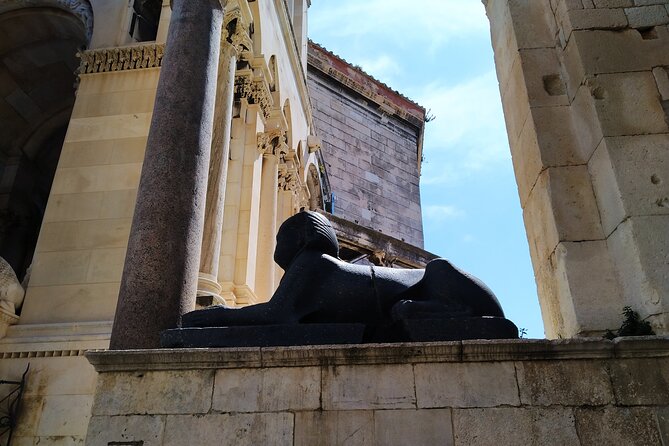
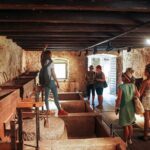
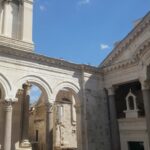
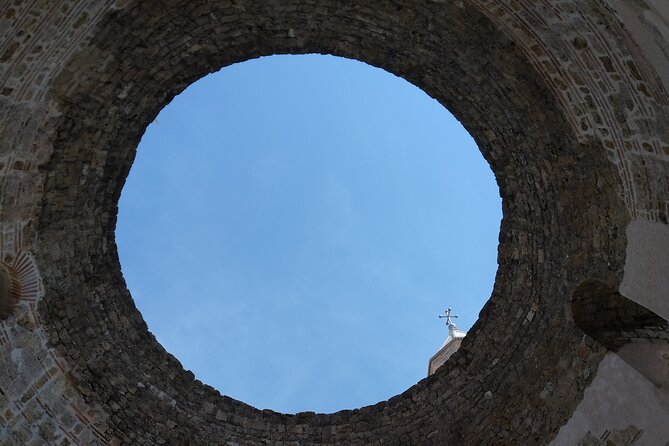
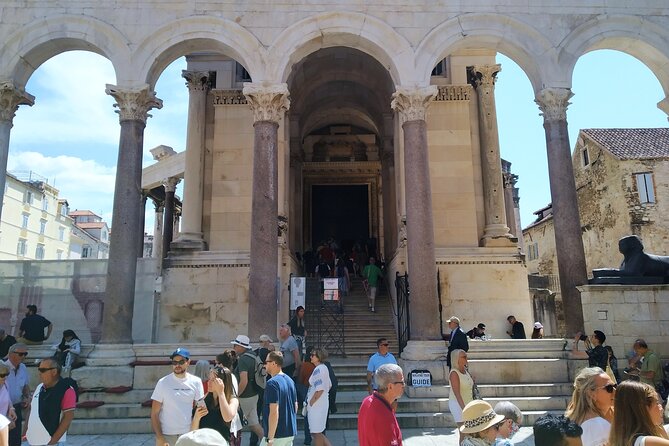
From the waterfront-side area, you move into the core of the palace story at the Peristyle. The route includes a section in the cellars of Diocletian’s Palace where your guide explains how these spaces were used over time. Then you step into the open imperial square framed by monumental arcades.
This stop is beautiful, but it’s also practical. A lot of people see columns and assume it’s just decoration. Here, you learn how the palace expanded and how later changes—especially Christianity’s growing role—affected the building transitions and daily life.
You get around 15 minutes at this highlight, and admission is free for this part. That’s one of the smartest value points on the route: you’re paying for interpretation, not just access.
Cathedral of Saint Domnius: one of the best-preserved Roman structures, seen up close
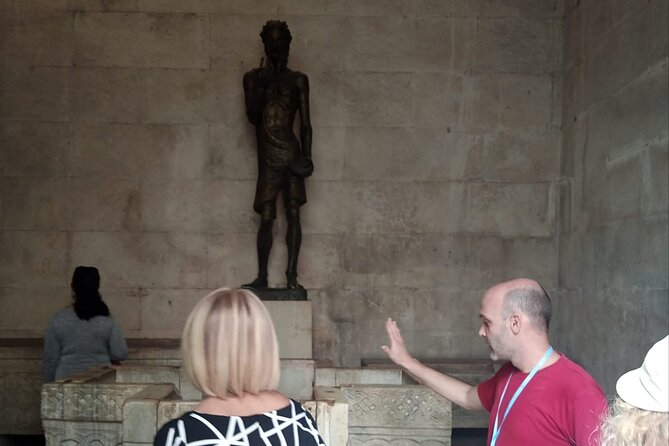
Next up is the Cathedral of Saint Domnius. You’re positioned on the Peristyle so you can’t miss it, and your guide points out significant parts while explaining the story. The key detail: you do not enter inside the cathedral, but you do get the context you’d normally look for on your own.
This is still a strong stop because it gives you a way to understand continuity. The cathedral is described as one of the best-preserved Roman structures in Split and it’s still in use today. Even without going in, you can connect what you see to why Diocletian-era architecture kept shaping the city’s identity long after the Roman period.
You can also read our reviews of more historical tours in Split


Watch-outs
This stop does not include admission, so if you were hoping for an inside visit, you’ll want to plan expectations. Still, the outdoor viewing and explanation can be enough for many people who want the big story more than the interior details.
Temple of Jupiter: late Roman power, later Christian reuse
The Temple of Jupiter is one of the best-preserved late Roman temples in the world, and the tour uses that fact to talk about power. The location is tied to the idea of a divine connection between Emperor Diocletian and Jupiter.
Then your guide brings in the Middle Ages twist: during that period, the temple was converted into a baptistery dedicated to St. John the Baptist. This is the kind of transformation that makes Split feel like a living timeline. You’re not just looking at old stones; you’re seeing how new communities repurposed old spaces.
It’s a 10-minute stop with admission not included. For most people, that timing works. You get the meaning without burning your whole tour budget or stretching the walking time too far.
Vestibulum and Triclinium: your chance to understand how the palace worked
One of the more interesting stops on this route is the Vestibulum—the pre-entrance to Diocletian’s private chambers. The tour explains what it looked like and what its function was. This is where the details start to click: you realize the palace wasn’t just a fortress; it was a carefully arranged environment for authority and ritual.
From here, you also check up the Triclinium, which is connected to dining and formal entertaining. The wording on the tour indicates you’ll be able to view it from this place, which is great if you’re visiting on a tight schedule and don’t want your time eaten up by extra indoor exploring.
Admission for this portion is free, and the stop is about 10 minutes. It’s a good breather too: you get key information, then you move on before your legs protest too loudly.
Riva Harbor: where locals and visitors meet under the palace wall
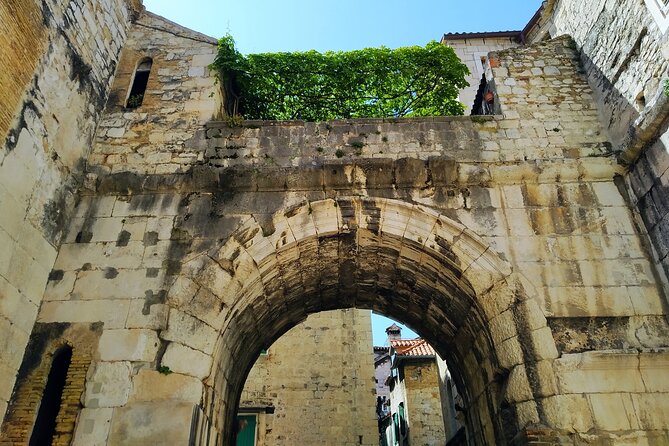
The tour shifts from palace architecture to city life at Riva Harbor, the main city promenade. Here’s the smart part: you don’t just get scenery. Your guide explains how the Riva was built over centuries and what it became for locals as the city grew around the palace.
You also get a clear view of the southern wall of Diocletian’s Palace from this spot. That visual connection helps everything you saw earlier make more sense. It’s like your guide is drawing a map in your head: gate here, imperial space there, and the wall that anchors it all.
This is a 10-minute stop with admission free. If you like photos, it’s also a nice moment to catch them without rushing, because you’re not inside a ticketed site.
Fruit’s Square (Trg Brace Radic): picturesque outside the palace walls
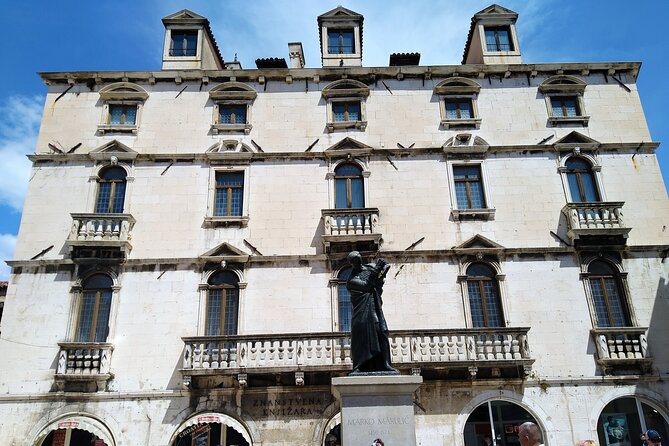
Next comes Fruit’s Square, a scenic spot just outside the palace of the Roman emperor Diocletian. The tour frames it as one of the more picturesque squares nearby, and the center of attention is the remains of a Venetian fort from the 15th century.
The square is also your reminder that “historic center” doesn’t mean “museum-only.” This area sits in the kind of everyday urban life where markets and neighbors live alongside monuments. Your guide points out the significant centerpiece monument and also how the surrounding sights relate to the broader city layout.
It’s about a 20-minute stop, with admission free. The longer time here is useful because squares are where stories feel less technical and more human.
Pjaca: the old town hall square and the city’s medieval heartbeat
Then you reach Pjaca, the main square of Split since medieval times. It’s located in front of the old Town Hall, outside the western wall of the Diocletian’s Palace. This stop gives you the “city as a stage” feeling, with 14th-century structures and other interesting buildings around you.
The tour keeps this at around 10 minutes, and admission is free. That short duration works well if you’re pairing this walking tour with other sights later. You get your bearings and a sense of where the city’s center has been for centuries.
Grgur Ninski Statue: the memorable ending with a good-luck toe
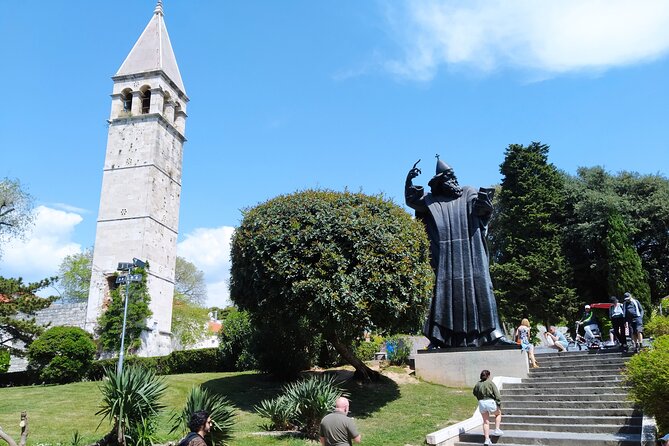
No Split highlights list is complete without the Grgur Ninski Statue, and this tour uses it as a quick, satisfying finale. Your guide explains the landmark figure Gregory of Nin, including the story behind the statue and details about the sculptor, Ivan Mestrovic.
Then there’s the practical, fun cultural moment: you can rub the toe for good luck. It’s silly in the best way, and it also gives you something to do with your hands while your brain absorbs the timeline.
This stop is about 10 minutes, admission free. It’s a strong final beat because it ties a recognizable figure to the city’s identity, rather than ending on another wall or gate.
Price and value: what you’re really paying for
The tour costs $238.28 per group (up to 10 people). That’s not $238 per person. If you’re traveling with friends and fill close to the maximum group size, the cost per person can be quite reasonable for an expert-led, high-logic walk through Diocletian’s Palace core areas.
Even if your group is smaller, the value still comes from what’s included: guided explanation at nearly every key sight, a planned route that connects palace structure to city evolution, and multiple stops with free admissions along the way. Also, the guide’s history background is a real asset on a tour like this. When buildings are this old, interpretation is everything.
Duration is another value point. With 1 hour 30 minutes to 2 hours, you get a solid hit of meaning without losing your entire day to walking.
Who this is for (and who might want something else)
This tour is great if you want a fast, structured introduction to Split’s old town and the palace without getting lost in guidebook trivia. It also suits people who like asking questions and getting direct answers, not just listening to a script.
It may be less ideal if you want lots of long stops or deep interior time inside ticketed sites. The cathedral is not entered, and the Temple of Jupiter has admission not included. If you’re hoping for a heavy “museum mode” day, you might prefer a different format that includes more inside access.
Finally, it’s weather-dependent. If conditions are poor, the tour can be rescheduled or refunded, so keep an eye on the forecast.
Quick tips to get the most from the walk
Bring comfortable shoes. The route involves walking through historic zones and you’ll be spending time standing and looking around at multiple stops. Also, keep a little water in your daypack; the route can feel longer than the clock once the sun ramps up.
If you’re the type who likes history timelines, you’ll do well here. The stops are arranged so the story builds: gate, imperial square, major religious conversions, palace function areas, then city squares and landmarks.
And if you’re traveling with family or mixed ages, the small-group setup usually helps. You’re not stuck in a long line or watching the guide speak to someone else’s pace.
Should you book this Private History tour in Split?
I’d book it if you want an efficient, guided walk that makes Diocletian’s Palace feel understandable fast. The strongest reason is the combination of a history-trained guide and a route that connects specific architecture (gate, Peristyle, vestibule function, visible harbor wall) to how the city changed over time.
Skip it only if you want lots of inside ticketed time or you’re visiting on a day where weather is uncertain and you can’t be flexible. Otherwise, this is a solid way to get your bearings in Split and leave with real context, not just photos of pretty stone.
FAQ
How long is the Private History tour?
It runs about 1 hour 30 minutes to 2 hours.
How large is the group?
It’s a private small-group experience, up to 10 people.
Where does the tour start and end?
You meet at Ul. kralja Tomislava 15, 21000, Split, Croatia. The tour ends back at the same meeting point.
Is this tour walking only, or are there indoor stops?
It’s a walking tour with stops that include time in palace areas such as the central part of the cellars of Diocletian’s Palace. The Cathedral of Saint Domnius is not entered inside.
Are entrance tickets included?
Admission is free for several stops (such as the Golden Gate, Peristyle, Vestibulum, Riva Harbor, Fruit’s Square, Pjaca, and the Grgur Ninski Statue). Admission is not included for the Cathedral of Saint Domnius and the Temple of Jupiter.
Who will guide the tour?
The local guide is Ivan Fistanić, who has a Master’s Degree in History.
Do I get a ticket on my phone?
Yes, it uses a mobile ticket.
What if the weather is bad?
This experience requires good weather. If it’s canceled due to poor weather, you’ll be offered a different date or a full refund. Free cancellation is available up to 24 hours in advance.