REVIEW · SPLIT
Private Split Walking tour with a Photo session
Book on Viator →Operated by Costumed Tours · Bookable on Viator
Split looks different when a photographer walks with you. This private walking tour in Split blends Roman sights, city-life squares, and a lifestyle photo session so you get memories that feel connected to place. I liked how the route is timed well for a short day walk, then leaves you free for the rest of the afternoon.
I especially like two things. First, the meeting point is straightforward: you start right on Obala Hrvatskog narodnog preporoda, and the pace makes it easy to settle in fast. Second, the tour feels built for photos without turning into a rush. You pause at key stops inside and outside Diocletian’s world, then keep moving with guidance from the local story behind each spot.
One drawback to consider: the price is premium, and at least one major stop (the Cathedral of Saint Domnius and related areas) has an extra entrance cost. If you’re watching costs, plan for that add-on so the math feels clear from the start.
In This Review
- Key highlights to look for
- Riva Harbor: Split’s living room by the water
- Diocletian’s Palace: Roman power made walkable
- Vestibulum stop: the palace entry hall with serious acoustics
- Saint Domnius Cathedral: Roman mausoleum to living church
- Grgur Ninski statue: a medieval message in stone
- Narodni Trg (Pjaca): the square where Split still does daily life
- Fruit’s Square: Venetian tower meets Baroque drama
- Prokurative: arches and Roman-to-Venetian taste in one square
- How the photo session changes the whole walk
- Price and value: what you’re paying for
- Weather matters for a walking-and-photo route
- Should you book this private Split photo walking tour?
- FAQ
- How long is the Private Split Walking Tour with a Photo session?
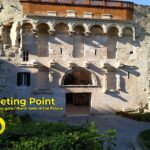
- What is the meeting point for the tour?
- Is this tour private or shared with other groups?
- What language is the tour offered in?
- What’s included in the price?
- Are any entrances or tickets extra?
- Does the tour include lunch?
- Is good weather required?
- What’s the cancellation policy?
- When should I expect confirmation of my booking?
Key highlights to look for
- Riva Harbor start at the city’s social heart, near a bronze model of Split
- Diocletian’s Palace focus on the architecture that made it feel like a city within a city
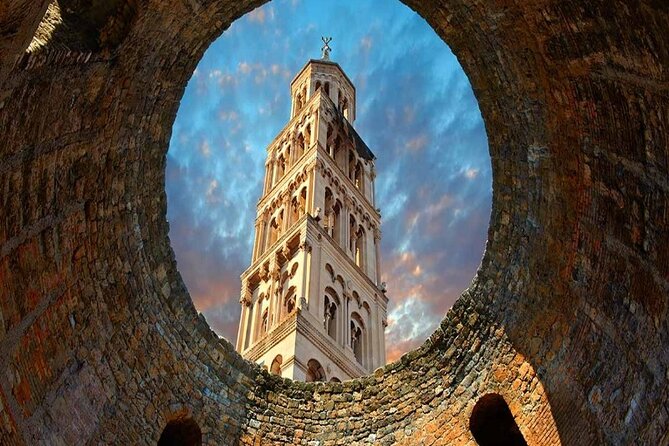
- Vestibulum acoustics plus mosaic details you can actually frame in photos
- Cathedral entry included for key areas beyond the main church (extra fee still applies)
- Squares that locals use like Narodni Trg (Pjaca) and Fruit’s Square (Trg Brace Radic)
- Professional lifestyle photographer Ivan Gudić for your photo session
Riva Harbor: Split’s living room by the water
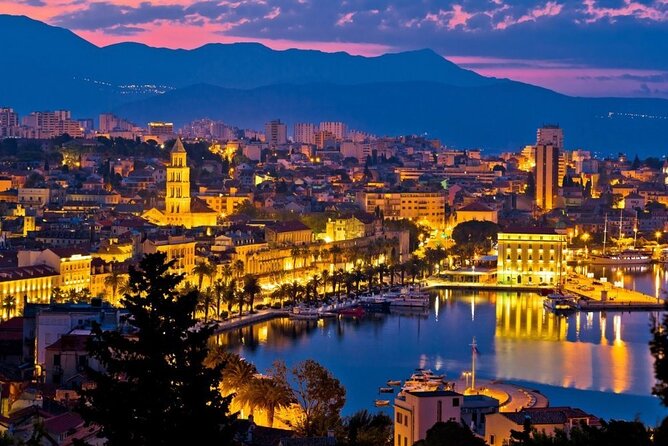
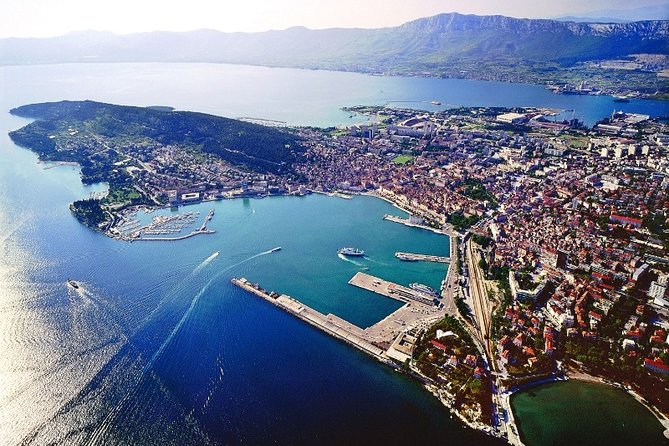
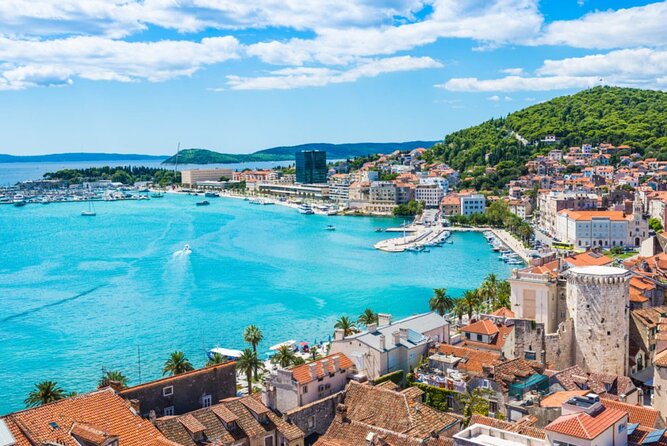
Your tour begins on the Riva promenade, the waterfront locals use like a daily gathering spot. This isn’t just a pretty walk. It’s a central stage for events across the year, including major celebrations like City Day, Carnival, Christmas, and New Year. The stretch is about 250 meters long and roughly 55 meters wide, lined with coffee stops and restaurants—perfect for a quick breather between photo poses.
You’ll start near a bronze model of the city of Split, which helps you get oriented quickly. That tiny detail matters more than you’d think. When you can picture how the old core connects to the rest of the city, the next steps—Roman walls, cathedral continuity, and the squares—make more sense as one connected story rather than random landmarks.
Photo tip: treat Riva like your warm-up. Take a few wide shots first (sea, promenade lines, and the open public space), then switch to tighter portraits as the background changes.
You can also read our reviews of more walking tours in Split
Diocletian’s Palace: Roman power made walkable
Next comes Palazzo di Diocleziano, one of the best-preserved Roman architectural complexes in the world. It’s easy to think of it as ruins, but it’s more interesting than that: the palace was designed as a mix of luxury villa and Roman military camp. It was split into four parts, with two main streets organizing daily life and functions.
The building is roughly 215 by 180 meters, with four large corner towers. There are also doors on each side and smaller towers along the walls. What you’ll feel in your walk is that the scale is real. The palace doesn’t just look historic. It holds a sense of planning—controlled space, strong geometry, and that “built to last” Roman confidence.
This is also where the private format helps. You can linger when something catches your eye—an opening, a facade, a street alignment—without the pressure of a group march. You’re moving at your pace for about half an hour here, which is enough time to understand the big idea and still keep energy for the next stops.
Vestibulum stop: the palace entry hall with serious acoustics
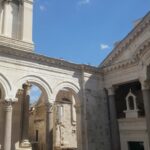
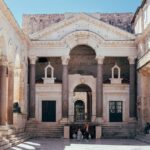
The Vestibulum is one of those stops that looks good in a quick glance and then gets better as you slow down. From outside it reads as a rectangular structure, but inside it shifts into a circular plan. That contrast is what makes it feel special.
Inside, you’ll notice the semicircular niches made for statues and the large cupola with colorful mosaic. There’s also the whiteness of the round wall, which gives the space a bright, almost clean feel even centuries later. It’s also a reminder that historic places often had practical lives. Not long ago (historically speaking), this area was used for living—people kept poultry and cultivated gardens.
One detail you can appreciate immediately: Vestibulum is known for its acoustics. Even if you don’t catch a specific performance, the space is famous for how sound carries there. If you’re with a guide who understands the place, you’ll likely learn how groups singing traditional dalmatian a capella songs can sound especially clear in this setting.
From a photo perspective, the Vestibulum is excellent for frames within frames: curves, niches, and the dome pattern give you natural structure without needing a single fancy trick.
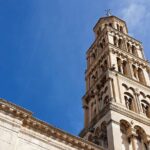
Saint Domnius Cathedral: Roman mausoleum to living church
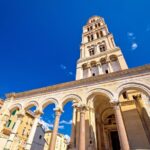
The Cathedral of Saint Domnius sits in the oldest building in Split connected to Diocletian’s original power: the emperor’s mausoleum. Over time, what began as a Roman structure became a Christian site in the 7th century, and that long timeline is the heart of the experience.
This stop is more than sightseeing. Cathedral today is primarily a place of liturgy, and the sense of continuity is part of why the building still matters. You’ll also hear about the connection between ancient pagan and Christian heritage, and the way modern celebrations link back to older ritual days, including St Domnius’s day and the procession tradition.
The famous artistic highlight is the cathedral gates carved in walnut by Andrija Buvina from Split. That’s the kind of detail you want a moment for—especially if you’re planning to photograph architectural textures rather than only taking postcard wide shots.
Entrance note: there’s an admission fee for the cathedral area—listed as 25 Croatian kuna (about 3.5 euros). That fee also includes access to the Temple of Jupiter and the Crypt of St Lucy. So while the cathedral isn’t fully “free,” you’re not paying only for a single room. You’re paying for a cluster of connected spaces tied to the same Roman-to-Christian transformation.
Grgur Ninski statue: a medieval message in stone

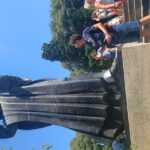
Outside the Golden Gate (one of the principal Roman gates into Diocletian’s Palace), you’ll find the Grgur Ninski statue. This is Gregory of Nin, a medieval bishop known for challenging church practices and pushing for the use of the Croatian language in Catholic services across Croatia.
The story matters because it connects politics, religion, and language—things that can feel abstract until you stand beside the monument. The statue also has a commemorative layer: it was crafted by renowned Croatian sculptor Ivan Meštrović in 1929 to mark one thousand years since Gregory of Nin historically defended Croatian culture.
And yes, there’s a ritual detail: it’s said that rubbing his big toe will grant you your wish. I’d treat this as a light moment, not a serious superstition. If the area is busy or the ground is slick, keep it quick and respectful.
This is a great photo stop because you get a clear subject against the stone and gate geometry, which makes portrait-style shots look grounded rather than floating against generic backgrounds.
You can also read our reviews of more private tours in Split



Narodni Trg (Pjaca): the square where Split still does daily life
Now you shift from Roman stone power to civic life. Narodni Trg is also known as Pjaca, and locals don’t always use the official name. This square has been central for centuries, mentioned as St. Lawrence’s Square as early as the 13th century. It was the first inhabited area outside the Diocletian Palace that leaned against the western wall.
A key building here is the Old Town Hall, a Gothic structure now serving as an exhibition center. The square also has layers of noble family presence around it—families whose names show up in the city’s historic fabric.
What makes Narodni Trg feel real today is how it’s still used for everyday gathering. It’s filled with bars, restaurants, and shops, and it’s a natural place to pause and reset. For you, that means less time rushing between highlights and more time turning them into a story with your own rhythm.
Photo tip: aim for variety. Take one shot showing the square’s openness, then take a closer portrait near architectural details on the surrounding buildings.
Fruit’s Square: Venetian tower meets Baroque drama
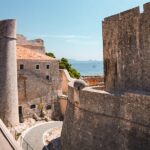
Fruit’s Square (Trg Brace Radic) may be smaller than the big names nearby, but it’s packed with visual variety. One standout is the octagonal Venetian tower, a leftover from a 15th-century fortress built to defend a smaller town at the time.
Opposite you’ll spot the Palace of the old family Milesi from the 17th century. Its Baroque facade is one of the best examples of that style in all Dalmatia. That’s a lot of artistry in one frame, which makes it ideal for photos that show texture—corners, carved details, and the way light hits stone and plaster.
In front of the palace stands a monument to Marko Marulić, one of Split’s most important literary figures and a 15th-century philosopher and intellectual. The monument work, like other pieces across the city, is tied to sculptor Ivan Meštrović.
This stop is also a good example of why the tour feels worth doing privately. If you’re interested in architecture, you can spend longer matching the story (Venetian defense, Baroque power, and literary identity) to what you see. If you’re more portrait-focused, you can shorten the time and keep the day moving.
Prokurative: arches and Roman-to-Venetian taste in one square
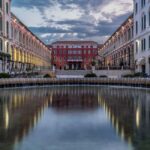
Your final stretch heads to Prokurative, officially called Republic Square. It’s designed to resemble Venice’s St. Marks Square, but with Split’s own architectural language. The name Prokurative comes from arches found on the neo-Renaissance buildings surrounding the square on three sides.
This is where the city’s 19th-century ambitions show up. The Prokurativa building project started under Antonio Bajamonti, one of Split’s most renowned mayors in the mid-1800s. He wanted to show Split’s connection to Italian tradition, which is visible in the Venetian-style colonnade and relief work above windows.
There’s even a cultural footnote: Bajamonti also planned a major theatre on the square, but it was destroyed by fire. That kind of “planned then lost” story adds character and keeps the square from feeling like only an aesthetic stop.
As you stand there, you’ll see why it works as a cultural stage. It’s a venue for events, especially a pop music festival, and the surrounding bars and restaurants make it a lively place for an end-of-tour drink or a slow sit-down.
How the photo session changes the whole walk
The tour’s most distinctive advantage is the combination of guided storytelling and a professional lifestyle photographer, Ivan Gudić. This isn’t just a quick selfie stop. The photo session is built into the rhythm of the walk, so you get images tied to each setting: promenade sea views, palace geometry, a cathedral entrance feel, and the composition of squares.
That matters because Split’s best scenes are not always the easiest to photograph on your own. The old streets and stone architecture reward angles and timing. Having a photographer with you nudges you toward better viewpoints without you having to guess.
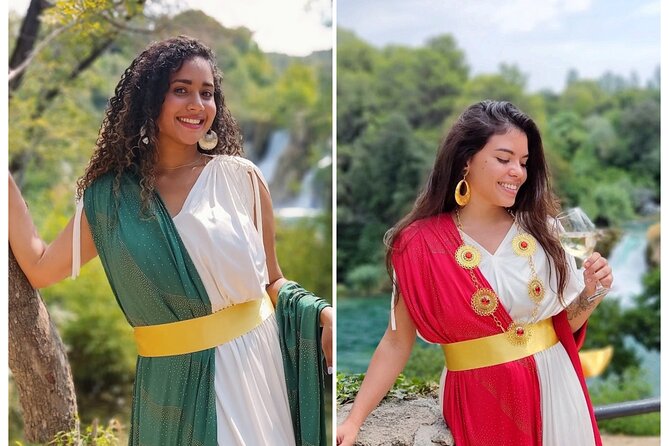
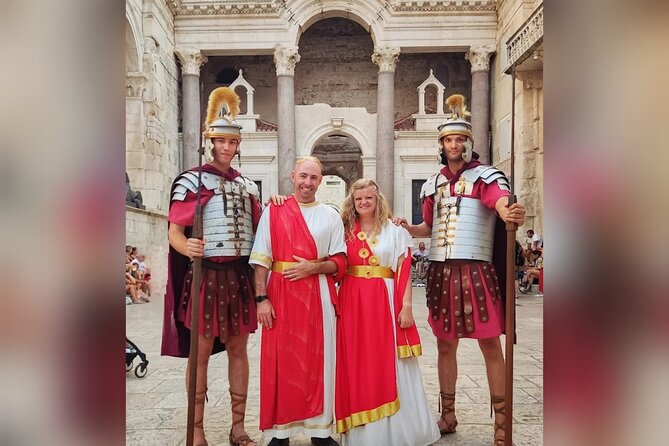
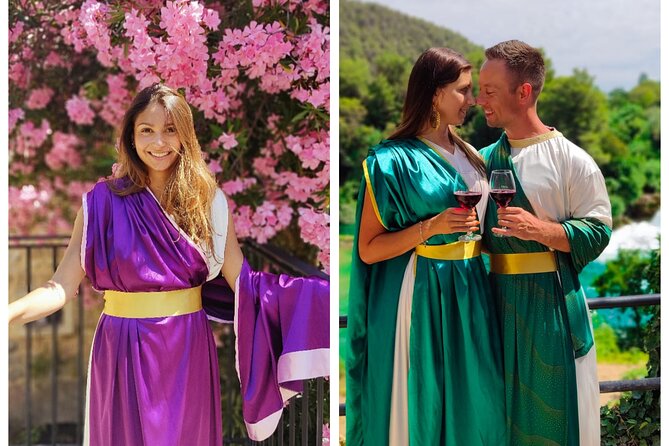
One nice touch I’ve seen with this kind of experience (and it fits the Roman theme of the route): at the end, you might be offered Roman-style outfits for a playful photo moment that actually connects to the stories you heard along the way. Even if you skip that part, you still benefit from the photo prompts throughout the walk.
You should also expect a more relaxed, flexible pace. It’s private, so your group is the only group participating, and you can go at your own pace during the 2.5-hour window.
Price and value: what you’re paying for
At $300.73 per person for about 2 hours 30 minutes, this is not a budget walking tour. You’re paying for three big elements: a live guide, a private professional photographer (Ivan Gudić), and a curated route that hits both Roman monuments and everyday squares.
Here’s how I’d think about value:
- If you’re traveling solo and want standout photos and context in a short time, the photographer piece alone can justify the cost.
- If you’re a couple or small group, the private format helps. You get more attention per stop than a larger group tour would provide.
- Your main additional cost to plan for is the cathedral admission fee (25 kuna), since it also covers related areas like the Temple of Jupiter and the Crypt of St Lucy.
Also note what isn’t included: lunch is not included. So treat the last square as a cue to find food after the tour rather than expecting a meal built into the schedule.
Weather matters for a walking-and-photo route
This experience requires good weather. If the day turns rainy or miserable, the tour may be canceled and you’d be offered a different date or a full refund. Since it’s a walk-heavy route with photo time, it’s worth checking the forecast and dressing for pavement and sun.
Should you book this private Split photo walking tour?
If you want a short private Split experience that mixes Roman architecture with the city’s living squares, this is an easy yes. The route is designed for photos and understanding, and the photographer adds real value if you care about results, not just seeing sights.
Book it if:
- You like guided context, not just self-guided wandering
- Photos matter to you and you’d rather not coordinate angles alone
- You want an easy start at Riva and then a clean finish with the rest of the day free
Skip it (or consider another option) if:
- You’re extremely price-sensitive, since cathedral admission adds an extra fee and the overall cost is premium
- You want a long multi-hour deep historical tour; this one is built to be about 2.5 hours, then you’re on your own
FAQ
How long is the Private Split Walking Tour with a Photo session?
It runs about 2 hours 30 minutes.
What is the meeting point for the tour?
The meeting point is Obala Hrvatskog narodnog preporoda, 21000, Split, Croatia, and the activity ends back at the meeting point.
Is this tour private or shared with other groups?
It’s a private tour/activity, so only your group participates.
What language is the tour offered in?
The tour is offered in English.
What’s included in the price?
A live guide is included, along with a private professional lifestyle photographer, Ivan Gudić, plus a mobile ticket.
Are any entrances or tickets extra?
Yes. Cathedral of Saint Domnius, Temple of Jupiter, and the Crypt of Saint Lucy require payment of 25 Croatian kuna (about 3.5 euros). Other listed stops do not show an admission fee.
Does the tour include lunch?
No, lunch is not included.
Is good weather required?
Yes. The experience requires good weather. If it’s canceled due to poor weather, you’ll be offered a different date or a full refund.
What’s the cancellation policy?
Free cancellation is available. You can cancel up to 24 hours in advance for a full refund.
When should I expect confirmation of my booking?
Confirmation is received at the time of booking. You’ll also receive a mobile ticket.