REVIEW · SPLIT
Split Palace & Old Town -Private walking tour- Entrance included
Book on Viator →Operated by Split Guide · Bookable on Viator
Split feels like a puzzle you can walk through. You start on the Riva and end in Old Town, while your guide ties each street and doorway to what life was like here centuries ago. I especially like how the tour takes you inside the Diocletian’s Palace complex instead of stopping at the outside walls, and I also like the finish through major Old Split squares where it all clicks as a living city. One thing to consider: some parts may be limited if there are events or church services, so the plan can shift a bit.
This is a private tour, booked by people who want straight answers fast. Guides like Dana and Jana are praised for clear explanations and for helping with next-step directions after the walk. Since it’s weather dependent, plan on bringing a light layer and staying flexible.
In This Review
- Key things to know before you go
- Getting your bearings on Split’s Riva promenade
- Diocletian’s Palace: seeing the palace as a whole, not a checklist
- The major palace sights: Cathedral, Temple of Jupiter, and the Peristyle
- Cellars through the South Gate: why the underground feels so big
- Gates and vestibules: the palace as a city within a city
- Old Split after the palace: Narodni Trg, Voćni trg, and Pjaca
- The fish market and sulfur baths: where the science explains the smell
- Marmontova ulica and Prokurative: finishing in a Venice-like square
- Price and value: what you’re really paying for
- Who should book this Split private tour
- Quick decision: should you book?
- FAQ
- FAQ
- Is this a private tour?
- How long is the tour?
- What language is the tour offered in?
- Are entrance tickets included?
- Do I get a mobile ticket?
- Where does the tour start and end?
- Can the route change during the tour?
- What happens if the weather is bad?
- Can this tour work for people with special needs?
Key things to know before you go
- Private group: only your group participates, so you can ask questions as you walk
- Entrance fees included: ticket costs are covered for several palace attractions
- Start at the Riva, not a random hotel: easy way to get your bearings early
- Palace + Old Town in one loop: you see how the “Roman core” connects to medieval Split
- English tour: offered in English with a mobile ticket
- Plan adjusts when needed: events or church services can change what’s accessible
Getting your bearings on Split’s Riva promenade
Most first-timers feel a little spun around in Split. The streets curve, the alleys funnel you toward a big wall, and suddenly you’re staring at ruins that look permanent. This tour starts at the Riva, the waterfront promenade, which is smart. You get city context before you hit the heavy hitters, so the palace stops don’t feel like separate photos—they feel like one system.
From the Riva, your guide sets the tone: how this city grew from a Roman emperor’s palace into a dense medieval and then modern town. It’s also a practical warm-up. You can take a breather, watch the sea air do its thing, and settle into walking pace before the palace complex starts.
You can also read our reviews of more walking tours in Split


Diocletian’s Palace: seeing the palace as a whole, not a checklist

You’ll spend a big chunk of the tour inside one of Europe’s most dramatic adaptive reuses of old stone. The palace isn’t just ruins. It’s a layout—gates, sacred spaces, civic spaces, and private areas—that still shapes how you move today.
The tour targets the “key stations” that help you understand that layout:
- You look at the palace complex and, when open, you can include interior highlights like the Cathedral area and the Temple of Jupiter.
- You move into the South Gate area to reach the palace cellars, which show how massive the palace really was.
- You return to the public and sacred “center” spaces like the Peristyle, so you can grasp where authority and ritual met.
This matters because Diocletian’s Palace is easy to romanticize from the outside. The best payoff is seeing how different zones had different purposes—and then noticing those differences reflected in the modern town.
The major palace sights: Cathedral, Temple of Jupiter, and the Peristyle
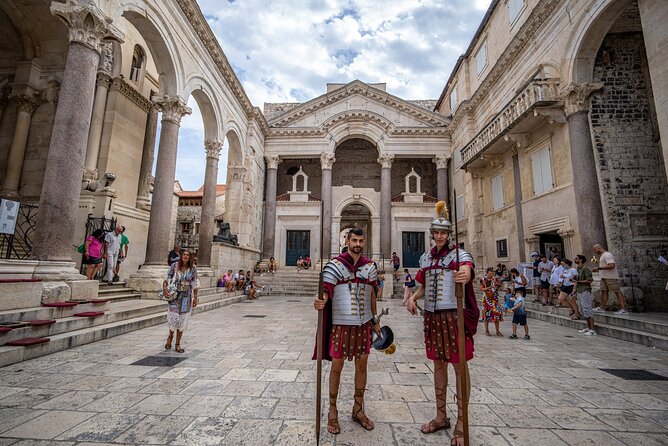
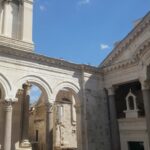
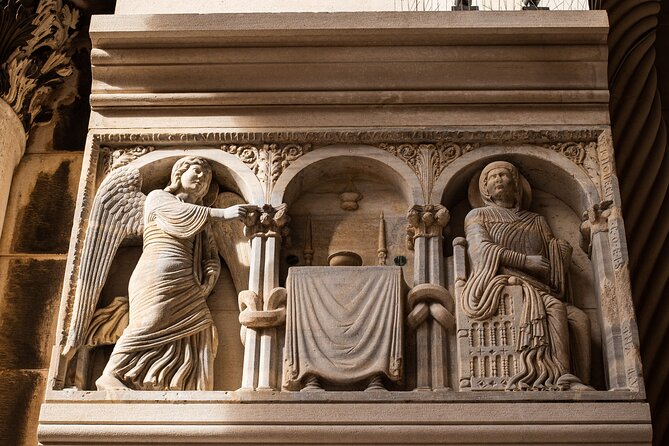
One of the strongest parts of the experience is that it connects Roman and Christian layers without turning it into a lecture. At the Temple of Jupiter, the tour explains what happened after Roman rule: the temple is now a baptistery. You’ll also get a quick lesson on the ceiling design—its decorative style influenced later Renaissance architects in Dalmatia. That kind of detail makes you look up instead of only forward.
Then comes the Cathedral of Saint Domnius. The core idea is clear and useful: this site used to be the mausoleum for Emperor Diocletian. When Christianity spread, the emperor’s coffin and remains disappeared, and the pagan mausoleum became a Christian cathedral. Standing here, the building’s survival feels less like luck and more like the city’s constant re-use of what already worked.
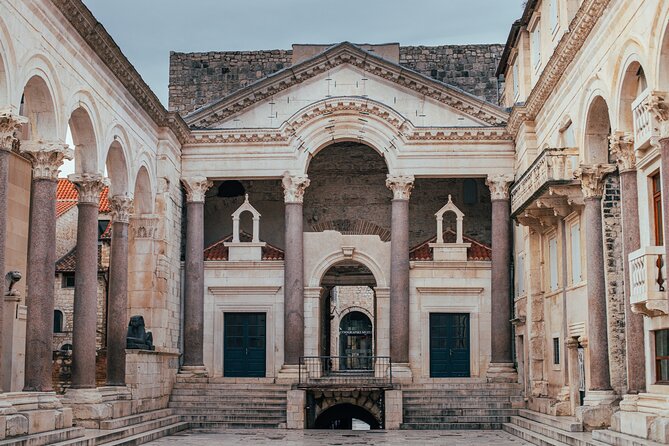
The tour also takes you to the Peristyle, described as Diocletian’s sacral meeting place. You’ll hear how the ruler presented himself as part of the Roman religious worldview—linked to Jupiter. It’s a key stop because it explains why this isn’t just “architecture,” it’s political theater built in stone.
If you want one simple takeaway: these stops help you stop seeing random monuments and start seeing function.
Cellars through the South Gate: why the underground feels so big
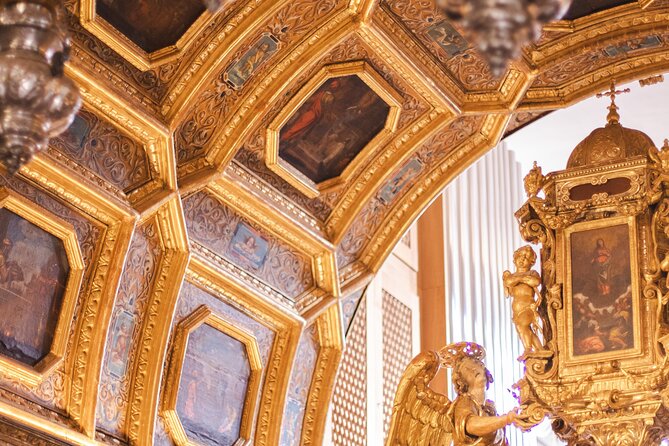
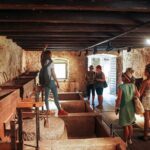
After you’ve seen the sacred and ceremonial zones, the mood shifts when you enter the Diocletian’s Cellars. Going underground changes your sense of scale. These spaces were built more than 1700 years ago and are described as very well preserved, and the result is that the palace suddenly feels engineered, not just impressive.
The tour’s timing at this point also works. You’ve already been oriented at the Riva and you’ve seen the main “meaning” areas. Now the cellars give you the physical backbone: storage, operations, or practical infrastructure that made a ruler’s complex function as a real world.
Even if you’re not a “ruins person,” this stop helps you understand why locals still live inside the palace shell. Without the cellars, the palace can look too decorative. With them, it looks built to last—and built to operate.
Gates and vestibules: the palace as a city within a city
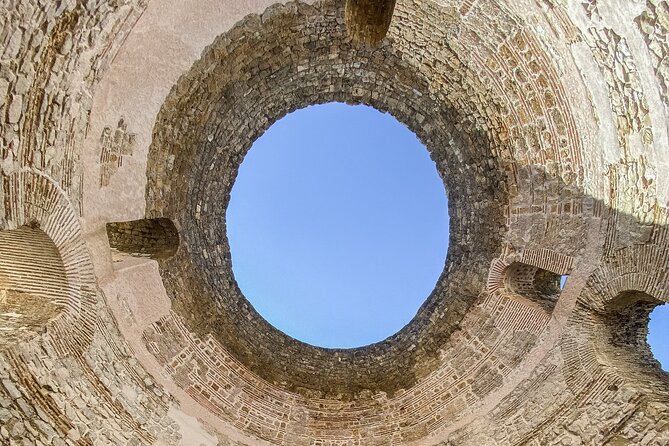
The palace had rules about movement. Your tour hits that idea in two places.
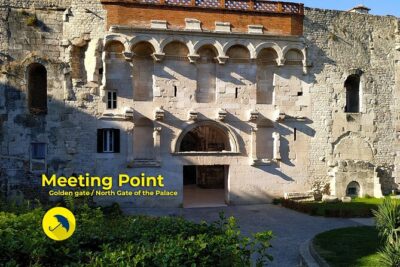
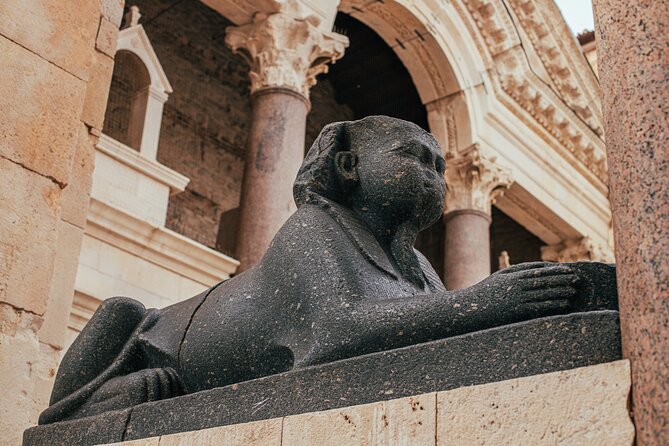
First, you’ll pass through the palace gates area, including the Golden Gate (the North Gate in Roman times). The key detail here is directional: from this gate, the road led to Salona, the capital of the Roman province. That’s a small fact with a big effect. It makes you think beyond Split as an island of sights and toward Split as a node in an empire-wide network.
Second, you’ll stop at the Vestibulum, the entrance space to Diocletian’s private chambers. This isn’t just a pretty hallway. It helps you picture the palace as layered privacy—public approach, ceremonial areas, then private access. In a place this old, that kind of mental map saves you from getting lost in the aesthetics.
You can also read our reviews of more private tours in Split





Old Split after the palace: Narodni Trg, Voćni trg, and Pjaca
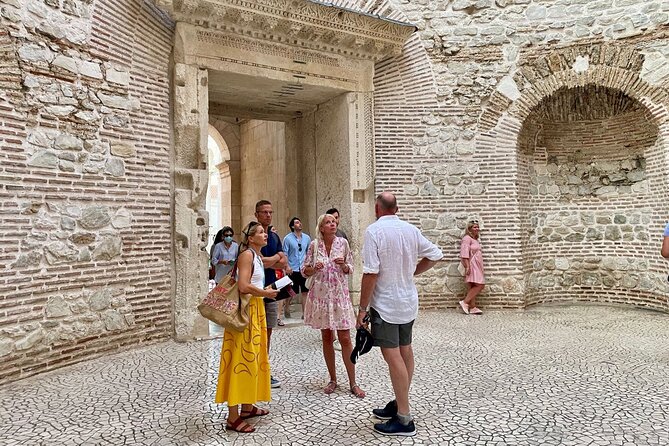
Once you’re out of the palace “inside,” you keep walking along the palace walls to reach the heart of Old Town. This transition is one of the tour’s best pacing choices. You don’t just bounce from attraction to attraction; you move from Roman scale to medieval street life.
You’ll head toward Narodni Trg and continue to Voćni Trg (the former fruit market). The tour notes that this part of Old Split developed west of the palace since the Middle Ages, which helps explain why the town’s center didn’t just freeze in place after the Romans.
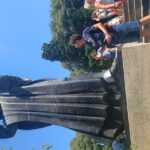
At Trg Brace Radic, you’ll see a monument to Marko Marulić, a major Renaissance author in Split. It’s the kind of stop that’s quick but meaningful. It gives you a local cultural anchor, so you’re not only treating Split like a set of ancient stones.
Then comes People’s Square (Pjaca), the historic center of the city since the Middle Ages. You’ll get pointed out old Venetian palaces and an old city hall in neo-Gothic style. The practical value is that you can look at these buildings and feel the timeline—Venetian influence, medieval roots, and later architectural taste all sitting side by side.
The fish market and sulfur baths: where the science explains the smell
In most cities, food markets are a nice break. In Split, the fish market is also a lesson in how the environment shapes daily life. Your tour stops at the fish market and notes something locals use as a practical explanation: sulfur smell is why there are no flies. That’s the kind of detail that turns a quick stop into a memorable one.
The tour also mentions that next door are sulfur baths, with the idea that sulfur baths can bring relief for rheumatism and other diseases. Even if you don’t plan to book a bath session, it’s useful context. It helps you understand why this area feels both touristy and “local necessary”—people come here for comfort, not just souvenirs.
If you’re sensitive to strong smells, this is the moment to be mentally prepared. It’s short, but it’s real.
Marmontova ulica and Prokurative: finishing in a Venice-like square
Your walk then moves to Marmontova ulica, a busy shopping street in the pedestrian zone. The tour gives you the origin story: it was built by the French under Napoleon’s rule in the early 19th century. Knowing that changes how you read the street. You start seeing it as a layer of empire and politics, not just a place to buy things.
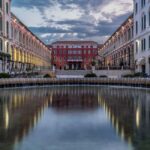
Finally, you end at Prokurative, a square that’s described as reminiscent of St. Mark’s Square in Venice. This is a smart ending because you can actually use it. You’re not forced to wander aimlessly looking for coffee. You’ll find cafes and restaurants right there, so it’s easy to top off the experience with a meal or a slow drink while the history is still fresh in your head.
Price and value: what you’re really paying for
At $203.95 per person for about 2.5 hours, you’re paying for a private guide, a focused route, and included entrances to key palace areas. That’s the value equation that matters here.
Why it can be worth it:
- Private format means you can ask questions and get real-time answers as you face the building
- Entrances are included for several main palace stops, so you don’t spend time figuring out what to buy or where
- The route connects Roman palace design to medieval Old Split squares, instead of stopping at the most famous point and calling it a day
The biggest “watch-out” is simply match of interests. If you only want quick exterior views, this isn’t the most economical choice. If you want to understand what you’re seeing—especially inside the cathedral/temple areas and in the cellars—this price starts to make sense.
Who should book this Split private tour
I’d point you toward this tour if:
- You want a guided, structured walk through Diocletian’s Palace and then into Old Split squares
- You appreciate details that connect layers of time (Roman to Christian to Venetian and beyond)
- You like having a guide help with next steps and directions after the tour
You might skip it if:
- You prefer only open-air sights and don’t want ticketed interior stops
- You’re traveling during a period when events or services frequently affect access, since the route can be adjusted
Also note: the tour is in English, uses a mobile ticket, allows service animals, and can be adapted to special needs if you inform the provider in advance. If you’re relying on public transportation, it’s described as near public transport.
Quick decision: should you book?
Book it if you want Split to make sense. This is the right kind of guided walk for first-timers who don’t want to feel like they’re just collecting monuments. The palace portions and included entrances are a big part of the payoff, and the guides named Dana and Jana are praised for clarity and helpful post-tour directions.
Skip or consider alternatives if your trip is short and you only want the easiest exterior photo stops. With a tour like this, the value comes from understanding, not from speed.
FAQ
FAQ
Is this a private tour?
Yes. It’s a private walking tour, meaning only your group participates.
How long is the tour?
It lasts about 2 hours 30 minutes.
What language is the tour offered in?
The tour is offered in English.
Are entrance tickets included?
Entrance tickets are included for several palace attractions, including stops like the interior areas of the palace and specific listed attractions such as the cathedral area and the Temple of Jupiter, plus the cellars.
Do I get a mobile ticket?
Yes. A mobile ticket is included.
Where does the tour start and end?
It starts at the Model of the historical core of the city of Split at Obala Hrvatskog narodnog preporoda 23, Split, and ends at Republic Square (Prokurative).
Can the route change during the tour?
Yes. Some sights might not be visited due to events or church services, and the program may be slightly changed.
What happens if the weather is bad?
The experience requires good weather. If it’s canceled due to poor weather, you’ll be offered a different date or a full refund.
Can this tour work for people with special needs?
The tour can be adapted to special needs if you inform the provider in advance. Most travelers can participate, and service animals are allowed.