REVIEW · SPLIT
Jewish Heritage & Diocletian’s Palace Private Split Tour
Book on Viator →Operated by Jelena Vrancic Private Tourist Guide · Bookable on Viator
Jewish Split hides in plain sight. This private tour connects Jewish life in the city with Diocletian’s Palace sights, from Roman-era clues in the substructures to the synagogue where you can hear local stories firsthand. I especially like the chance to see menorah-related carvings in the palace basements, and I also like meeting the synagogue’s community caretaker (often Albert) for the kind of context you just don’t get from reading plaques.
One thing to keep in mind: the route includes Old Town walking and some indoor levels, so if mobility is an issue, message your guide ahead of time so the pacing can be adjusted.
In This Review
- Key things to know before you go
- From Rome to the ghetto: what this tour is really about
- Diocletian’s Palace substructures: the Jewish clues under the stone
- Vestibule and peristyle: Roman space that still feels usable
- Grgur Ninski statue and the rhythm of Old Town history
- Walking the Jewish ghetto: history you can see on the street
- The synagogue and Jewish cemetery: a complete sense of continuity
- Narodni Trg bronze plaque: remembering 12 June 1942
- Fruit’s Square, Marulić, and the warm everyday streets of Split
- Riva Harbor and Prokurative: where locals actually linger
- Marmontova Ulica and the fish market: a quick peek at daily life
- Price and value: is $187.05 per person worth it?
- Who this tour fits best
- Should you book this Jewish Heritage & Diocletian’s Palace private tour?
- FAQ
- How long is the Jewish Heritage & Diocletian’s Palace private Split tour?
- Where does the tour start and end?
- Is pickup available?
- What language is the tour in?
- Is this a private tour?
- What’s included in the price?
- Are any admission tickets included?
- Are meals and drinks included?
- Is there a cancellation deadline for a full refund?
- Is the tour suitable for children?
Key things to know before you go
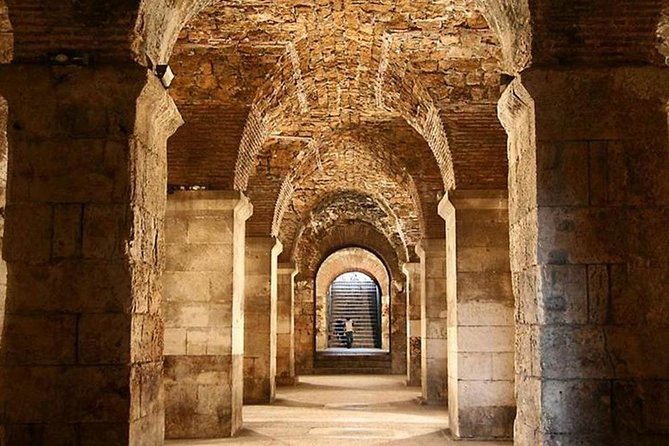
- Basements with Jewish clues: You spend real time in the palace substructures, including Jewish symbols carved in stone.
- Synagogue visit with a guide from the community: You’re not just looking—you’re listening to stories about life in Split.
- A tight, logical walk through Old Town: Major sights are close enough that 2.5 hours feels full, not rushed.
- Jewish memory marked in the city center: A bronze plaque recalls the destruction of synagogue items and archives on 12 June 1942.
- Roman + local Split in one loop: You’ll also see Diocletian’s public-space areas and key city squares and promenades.
From Rome to the ghetto: what this tour is really about
Split’s Old Town is a maze built on top of earlier cities. Diocletian’s Palace is the headline, sure—but the story you can miss without a guide is how many layers of people lived, worshiped, worked, and survived here. This is exactly why I like this tour: it ties the Jewish timeline into the same walls and streets you’ll already be staring at.
It’s also a private guided format, so the guide can shape the flow. In past tours, guides like Jelena Vrancic (and others such as Emil, Vinka, and Pero) have been praised for adjusting to the group, answering lots of questions, and keeping the mood easy—not stiff or lecture-heavy. If you want history with breathing room, this is the style to look for.
And yes, it’s practical. The tour is about 2 hours 30 minutes, offered in English, and you get a licensed guide. Pickup is possible on request, which matters in Split because the Old Town streets can be a little tricky with bags and timing.
You can also read our reviews of more private tours in Split


Diocletian’s Palace substructures: the Jewish clues under the stone
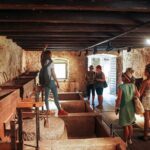
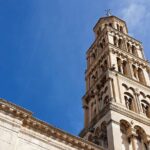
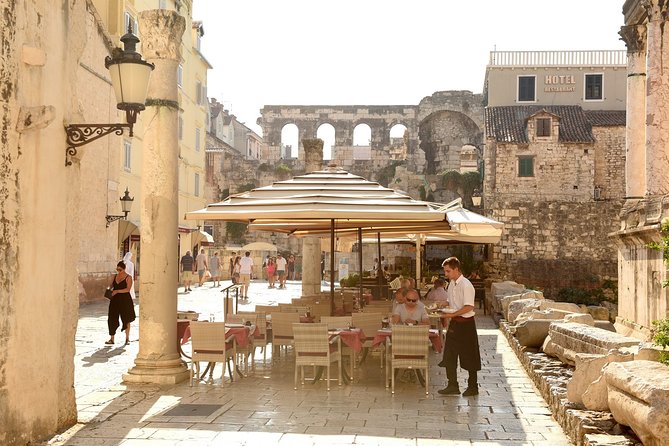
You start where Split’s story starts: in and around Diocletian’s Palace, right at the core of the Old Town. The biggest “wow” moment here is the time in the substructures—the palace basements—where you see evidence that Jewish presence in Split goes back many centuries.
The guide frames it clearly: archaeological findings from nearby Salona suggest Jews lived there during the Roman period (around the 2nd–3rd century AD). When the inhabitants fled later upheavals, they helped shape new life in Split, including within the palace complex. That connection—Salona to Split—gives meaning to what you’re looking at, instead of turning it into random sightseeing.
Inside the substructures, you’ll also see menorah-related carvings. This matters because it’s tangible. It’s not just a story; it’s something set into the architecture. You’ll get context for what those symbols represent and how they fit into the broader palace setting.
Practical note: the palace substructures are older spaces, so you’ll want comfy shoes. If it’s rainy (Split can do that), the guide in this kind of tour has a habit of adapting on the fly—one review highlighted umbrellas being used to keep the timing workable—so you won’t lose the day to weather.
Vestibule and peristyle: Roman space that still feels usable
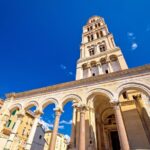
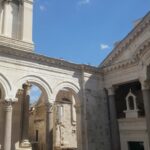
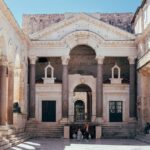
After the basements, the tour moves into the palace’s major public areas: the vestibule and the peristyle. Even if you’ve seen photos of Diocletian’s Palace, these spots are different when a guide points out what they used to do and how they’re used now.
The vestibule is a former foyer—a transition space between inside and outside life. That’s a subtle detail, but it helps you read the palace rather than just walk through it.
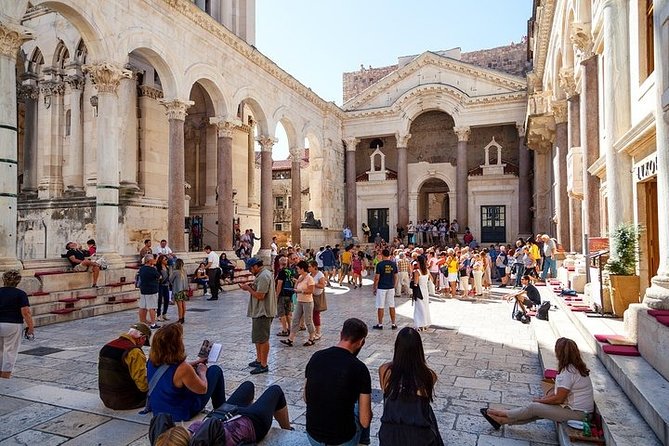
Then you get to the peristyle, the palace’s central square space. This is where architecture tells stories: columns brought from different parts of the empire were used when the palace was built in 305 AD. You’ll also hear how this central square functioned then, and why it still matters now.
These segments are shorter—together they don’t swallow your whole morning—but they’re important. They connect the underworld (the substructures) to the everyday (the spaces people can actually stand in and imagine life around).
Grgur Ninski statue and the rhythm of Old Town history
From Roman palace space, the tour shifts to a key local monument: the statue of Grgur Ninski, designed by Ivan Meštrović. This stop sounds simple, but it’s a good pivot. It reminds you that Split isn’t only Roman; it’s also Croatian religious and civic life layered over centuries.
A guide will explain who Grgur Ninski was and why he matters in the city’s identity. This part helps the day feel like one continuous story instead of a checklist of separate sights.
Walking the Jewish ghetto: history you can see on the street
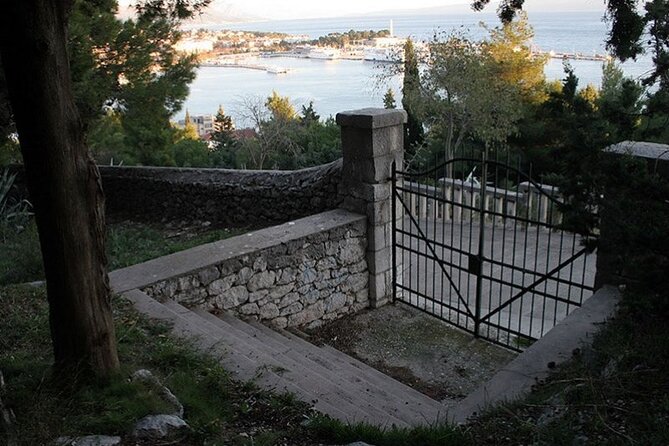
Now you move from palace stone to city street life, through the Jewish quarter. The tour includes time built around the Jewish ghetto area, with explanations tying buildings and location to the lived experience of the community.
This is the point where the tone often becomes more personal. The guide doesn’t just tell dates. You’re walking through the kind of urban layout that shaped daily routines—where people could be seen, where they gathered, and how the city’s layers affected them.
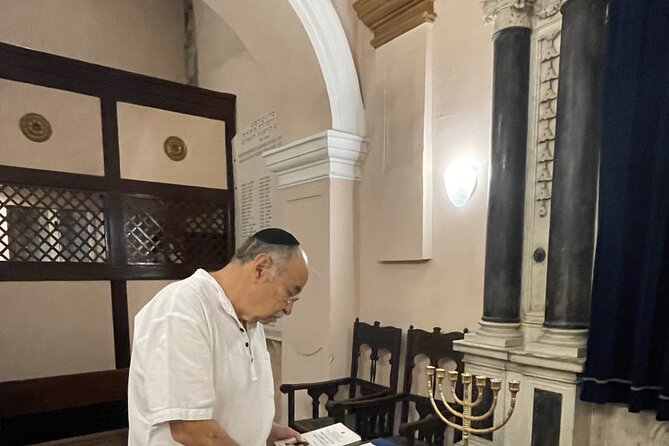
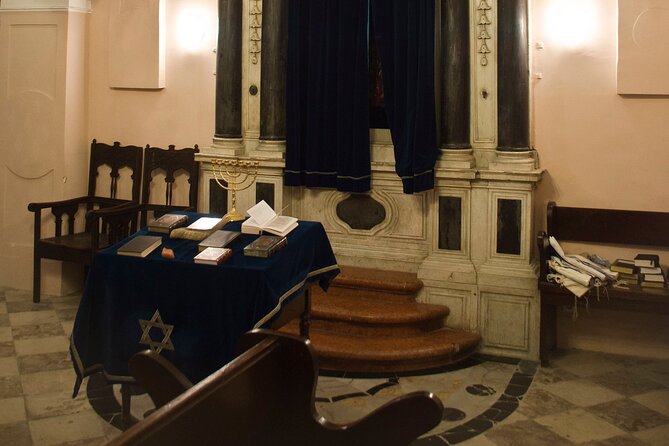
From there, you visit the synagogue. In this tour format, you don’t only tour from the doorway. You get time inside and the chance to speak with a member of the Jewish community who shares stories about Jewish life in Split. In reviews tied to this experience, people often mention meeting Albert, the caretaker who helps explain the synagogue’s significance and history.
You can also read our reviews of more historical tours in Split

The synagogue and Jewish cemetery: a complete sense of continuity
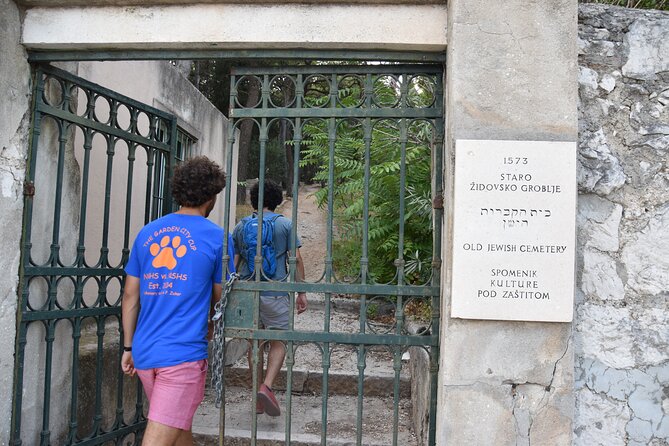
This tour is designed to cover more than a single building. Alongside the synagogue visit and ghetto walk, it includes time for the local Jewish cemetery as well.
That pairing is powerful. A synagogue can make you think about worship, community, and continuity in daily life. A cemetery brings in the other side: memory, generations, and the cost of history. Together, they make the story feel whole rather than one-sided.
The value here is the presence of a real community voice during your visit. When you hear a caretaker or community member explain what the place means now, it turns “heritage site” into something more human.
Narodni Trg bronze plaque: remembering 12 June 1942
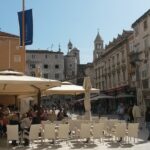
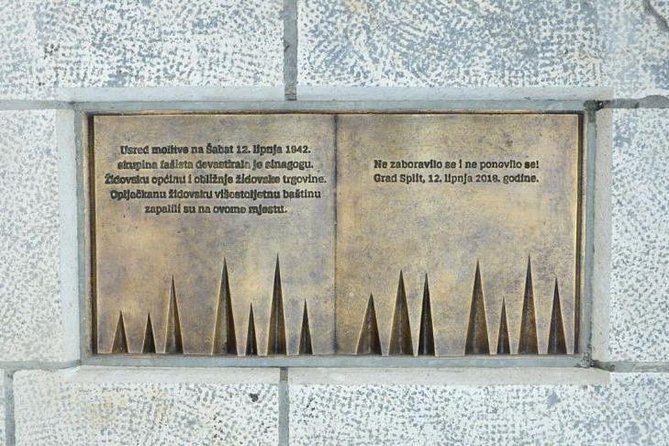
In the center of Split, the tour pauses at Narodni Trg. You’ll see a bronze plaque placed on the square to remember the destruction of precious items and archives from the synagogue on 12 June 1942.
This is one of those stops that doesn’t take long, but it does something important: it anchors the day’s stories in a specific moment. You’ll get the meaning of what was lost and why communities keep memory alive through these markers.
You also get a quick look at the square’s Venetian-style architecture. That contrast—beauty in the streets above, trauma in the archives below the story—hits harder because the tour doesn’t rush past it.
Fruit’s Square, Marulić, and the warm everyday streets of Split
Next comes a quieter, local-feeling stop at Fruit’s Square (Trg Brace Radic) just outside the Diocletian Palace area. You’ll hear about Marko Marulić, often described as the father of Croatian literature, and you’ll see his statue in the middle of the square.
This isn’t a “major landmark” in the blockbuster sense, but it adds texture. It also helps you understand how the Roman palace became part of a living Croatian city where people still meet, talk, and walk through the same urban spaces.
Riva Harbor and Prokurative: where locals actually linger
After the heavier history, the tour eases into the classic Split waterfront mood.
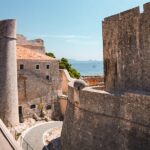
At Riva Harbor, the guide explains why locals call it their living room. It’s pedestrian-friendly, lined with cafés and restaurants, and it’s the kind of place where you can watch life move without needing a ticket.
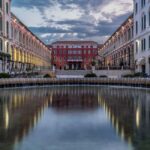
Then you head to Prokurative (Republic Square), which is compared visually to St. Mark’s Square in Venice. You’ll notice the arches of the neo-Renaissance buildings around the square and the harbour view. The south-side openness makes the space feel like a long viewpoint rather than a fenced-off plaza.
Even if you don’t stop for a drink during the tour (meals and beverages aren’t included), these segments help you recharge. After walking through palace stone and synagogue history, it’s a nice shift back to real-time Split.
Marmontova Ulica and the fish market: a quick peek at daily life
Finally, you stroll along Marmontova Ulica, another popular promenade. If you want a peek, the guide can point out the fish market nearby, where locals buy fresh Adriatic fish.
This is a small “reality check” after the big historical sites. It reminds you that Split didn’t stop centuries ago. It keeps cooking, buying, chatting, and living.
Price and value: is $187.05 per person worth it?
At $187.05 per person for a 2.5-hour private tour, this isn’t the budget option. But it isn’t priced like a generic history walk either.
You’re paying for a licensed guide, a private format, and the paid access component for the Diocletian Palace substructures, plus the synagogue visit that includes time and a conversation with someone from the community. Those are the parts that turn this from “see a building” into “understand a place.”
If you’re traveling with a small group and can share pickup timing and attention, the private format can feel like good value. If you’re a solo traveler looking to get maximum context with minimal guesswork, it can also be worth it because the itinerary is tight and the guide’s job is to connect the dots.
My practical take: if Jewish heritage and Roman Split are your top interests, this is money well spent. If you only care about the palace and you’re not interested in the synagogue story, you might feel the cost more than the payoff.
Who this tour fits best
This tour is a strong match if you:
- want specific Jewish heritage sites tied into Split’s physical landmarks
- like small-group attention where you can ask questions
- prefer a guide who keeps history understandable and human
It’s also a good choice for families and mixed-age groups, since guides in this experience have been praised for keeping tours engaging for both adults and teenagers. If you have mobility concerns, the guide’s flexibility has shown up in real feedback—just make sure you mention needs early.
Should you book this Jewish Heritage & Diocletian’s Palace private tour?
If you want Split to feel like more than postcard walls, book it. The combination of Diocletian’s Palace basements (with Jewish symbols), the synagogue visit with a community member, and the historic memory marker at Narodni Trg gives you a balanced, grounded view of the city.
I’d skip it only if you’re chasing a “fast hits” tour that stays entirely outdoors or if you’re not interested in the Jewish story of Split at all. Otherwise, this is one of the better ways to connect Roman architecture to real human lives—without turning it into a dry list of facts.
FAQ
How long is the Jewish Heritage & Diocletian’s Palace private Split tour?
It lasts about 2 hours 30 minutes.
Where does the tour start and end?
It starts at Obala Hrvatskog narodnog preporoda 23, 21000, Split, Croatia, and ends back at the same meeting point.
Is pickup available?
Pickup is offered. The start time is on request since this is a private tour. Ship guests are met at the port, and other guests are picked up at apartments in the Old Town; if you’re staying outside the Old Town, you meet at Riva.
What language is the tour in?
The tour is offered in English.
Is this a private tour?
Yes. It’s private, so only your group participates.
What’s included in the price?
A private guided tour with a licensed guide, visit to the synagogue and Jewish ghetto, and the fee for Diocletian’s Palace substructures.
Are any admission tickets included?
Yes. The Diocletian Palace substructures admission ticket is included, while other listed stops are free.
Are meals and drinks included?
No. Meals and beverages are not included.
Is there a cancellation deadline for a full refund?
Free cancellation is available up to 24 hours in advance for a full refund.
Is the tour suitable for children?
Children must be accompanied by an adult.